Last updated
The Cost of a Lost USV: Remote Reset for Uncrewed Surface Vessels
When an uncrewed surface vessel (USV) is working offshore, everything you know about it arrives over a data link. If that link drops, telemetry flatlines and there’s nobody aboard to check a breaker or cycle a power supply, you either send a crewed vessel to find it, or wait and hope it comes back.
Sometimes it doesn’t. In 2018, a University of Otago team working in the sub-Antarctic Auckland Islands was asked to recover a vessel stranded on Enderby Island. It was Saildrone SD 127, which had lost contact shortly after rounding Cape Horn, found almost three years after it launched. Saildrone SD 1023 went silent in the Antarctic ice pack in 2019 and washed up in Victoria, Australia around 18 months later. Both were found by chance, long after their missions had ended.
A vessel that won’t stop can be worse than one that goes silent. In June 2025, a US Navy Global Autonomous Reconnaissance Craft (GARC) under tow received an inadvertent command that turned its engine on. It overtook and capsized its support boat; the Coast Guard and Harbor Patrol recovered the skipper from the water, and the Navy halted testing for a safety stand-down.
This article looks at why USVs lose contact, what a lost or runaway vessel costs, and how an independent out-of-band satellite channel lets onshore teams reset frozen hardware, or cut power altogether, without sending a ship.
Why Do Uncrewed Surface Vessels Lose Communication?
Any layer of a USV’s electronics stack can take the link down with it, and the most common culprit is the primary high bandwidth terminal. Low Earth Orbit (LEO) broadband terminals, very small aperture terminal (VSAT) modems, LTE routers and mesh radios can all suffer firmware crashes, buffer overruns or network stack lockups that leave the hardware powered but unresponsive.

Network Outages
Even a healthy terminal depends on the network behind it. In August 2025, a global Starlink outage left two dozen US Navy USVs adrift off California for almost an hour, according to Reuters. An earlier Navy safety report had already flagged Starlink’s limitations under multiple-vehicle load. Broadband can still be a primary link, but any single link, however capable, is a single point of failure.

Computer and Power Faults
Mission computers and autopilots can freeze through memory leaks, software bugs or command conflicts, taking their communication interfaces with them. Voltage spikes, brownouts and battery management system (BMS) faults can leave payload subsystems hung.

Sea State and Environmental Wear
Heavy seas add antenna washouts, misalignment and salt spray degradation, any of which can trigger timeout loops that terminals never recover from on their own. When these faults combine, the results can be dramatic, as the following examples illustrate.
In December 2022, a NOAA research glider off the Antarctic Peninsula suffered a sensor failure and a battery voltage spike that sent it into repeated resets. By the time it went quiet, it had erased its own files, including the configuration that told it it had a satellite antenna. Recovery was only possible because a research ship happened to be nearby.
A study of 205 European underwater glider deployments put a deep glider’s chance of completing a 90 day mission without ending early at roughly 50%, and found that factors other than available energy limited these platforms. Gliders aren’t USVs, but the lesson holds for any long endurance uncrewed platform: faults are normal, and you need a way to recover from them.
Why a Software Reboot Command Isn’t Enough
A reboot command sent over the failed link, or to the hung computer, can’t arrive. Software watchdogs catch many faults but are far less reliable when the fault sits outside the processor, such as a peripheral holding, a shared CAN or serial bus, or a power rail fault. Restarting the processor won’t clear a device that only a power cycle will reset, and the NOAA glider shows how a reset loop can make things worse. Without a physical path that runs independently of the main processor and primary network stack, there is no route left to the vessel.
What Does a Lost USV Cost?
Once automatic recovery fails, the largest cost is usually ship time. The Marine Institute in Ireland lists 2026 research charter rates of €21,500 ($24,000) per day for the RV Celtic Explorer and €18,000 per day for the RV Tom Crean, including crew, fuel and basic equipment. A smaller coastal vessel such as the University of Connecticut’s RV Connecticut costs $10,937 per day. A three day recovery with a vessel like the Celtic Explorer would cost around €64,500 in charter alone, before mobilization, transit or the cost of the abandoned mission.
If the authorities get involved, the resources scale up. US Coast Guard reimbursable standard rates from 2021 put a Fast Response Cutter at $7,560 per hour and an MH-65 helicopter at $15,014 per hour for customers outside the federal government. The Coast Guard doesn’t normally bill for search and rescue, but the figures show what a callout really costs.
Losing the Uncrewed Advantage
A recovery trip also undoes the case for going uncrewed. At a 2022 industry webinar, SEA-KIT’s commercial director put USV operating costs at around 10% of a crewed vessel, and XOCEAN’s founder estimated a crewed survey vessel’s emissions at around 24 tonnes of CO₂ per day, against about 0.02 tonnes for one of its USVs. Every day a crewed ship spends chasing a silent USV puts those costs and emissions back on the books.
The worst case is losing the vessel, its sensors and any data not yet offloaded. The Liquid Robotics Wave Glider that washed up on the Scottish Isle of Tiree in 2020 was valued at upwards of $250,000 before sensors, and nobody immediately claimed it.
A vessel in trouble can also endanger others. In September 2025, XOCEAN’s survey USV X18 collided with the crew transfer vessel Iceni Legend at the Greater Gabbard offshore wind farm. The USV sank and the transfer vessel took on water through its damaged bow. The UK Marine Accident Investigation Branch (MAIB) has completed its investigation, though its findings are not yet published.
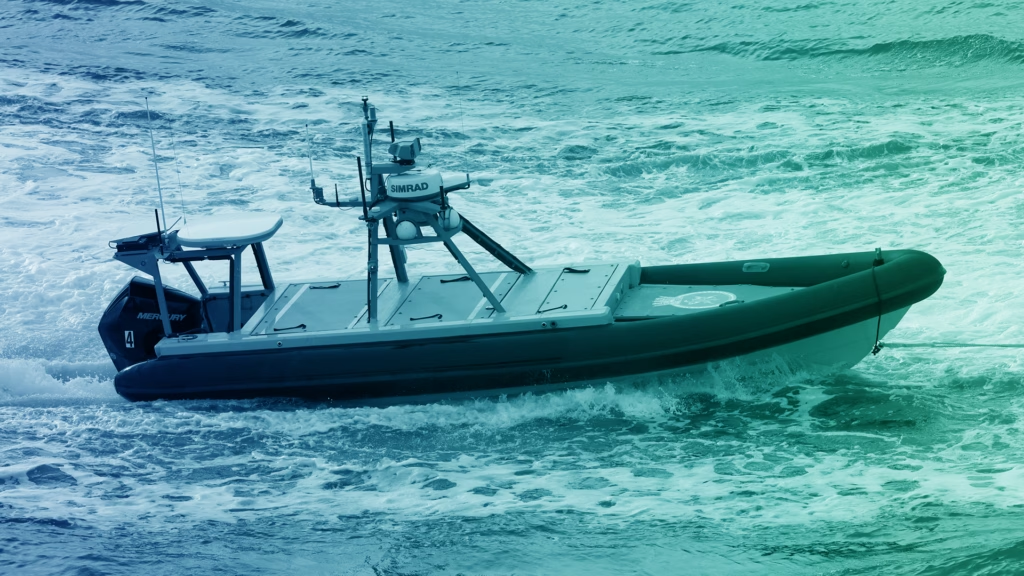
When a USV Won’t Stop: The Case for a Remote Kill Switch
The US Navy’s GARC incident, where an inadvertent command started the engine of a craft under tow and capsized its support boat, shows the other side of out-of-band control. If a vessel is behaving unpredictably, you need to remove propulsion power by a route that doesn’t depend on the system that’s misbehaving. A remote kill switch uses the same principle as a remote reset: an independent satellite device drives an external relay that can isolate propulsion as readily as it restarts a frozen router. What differs is the wiring, the configuration and your operating procedures.
Protecting Sensitive Data If a Mission Goes Wrong
A lost USV also puts its data at risk. Survey vessels may carry high resolution seabed mapping, video footage or the precise routes of subsea cables and pipelines, information that infrastructure owners, governments and defense customers can’t afford to lose control of. Lost vessels do end up in other hands. The Tiree Wave Glider was taken home by the person who found it, and in the Philippines, fishermen have handed the Coast Guard at least six foreign uncrewed underwater vehicles since 2022.
An out-of-band channel lets operators act first. If a vessel is drifting toward the wrong waters, has been interfered with or can’t be recovered, a command over the independent link can trigger whatever protective action the vessel’s own systems are designed to take, from aborting the mission and returning to a safe point, to powering down payloads or starting a data protection routine on the host computer. The out-of-band device provides the trusted path and the switching. The protective behavior itself is defined by the vessel designer.
How Out of Band Remote Power Control Works
An out-of-band architecture adds a small, low power satellite device on its own isolated power circuit, with its own backup battery, wired to relays that control power to critical -onboard systems. It typically uses a short message service such as Iridium Short Burst Data (SBD), which suits small, infrequent command messages, over a constellation that covers the whole globe, including the polar regions.

Recovery and Remote Reset
When the primary link or mission computer freezes, an onshore engineer sends a command over the separate path. The device switches its output, the relay cycles power to the broadband terminal, LTE router or autonomy computer, and the cold reboot brings the primary system back online. A frozen terminal becomes a short delay instead of a recovery mission.

Power Management on Longer Missions
The same switching lets solar, wind or hybrid-powered USVs shut down high draw payloads such as multibeam echosounders, side-scan sonar or broadband terminals in transit, then bring them online in the survey area.

Health Checks Before You Switch
Digital and analog inputs can report battery voltage, bilge alarms, hatch contacts or temperature over the independent channel, so engineers understand the failure before deciding what to switch.
Hardening USVs with RockBLOCK RTU
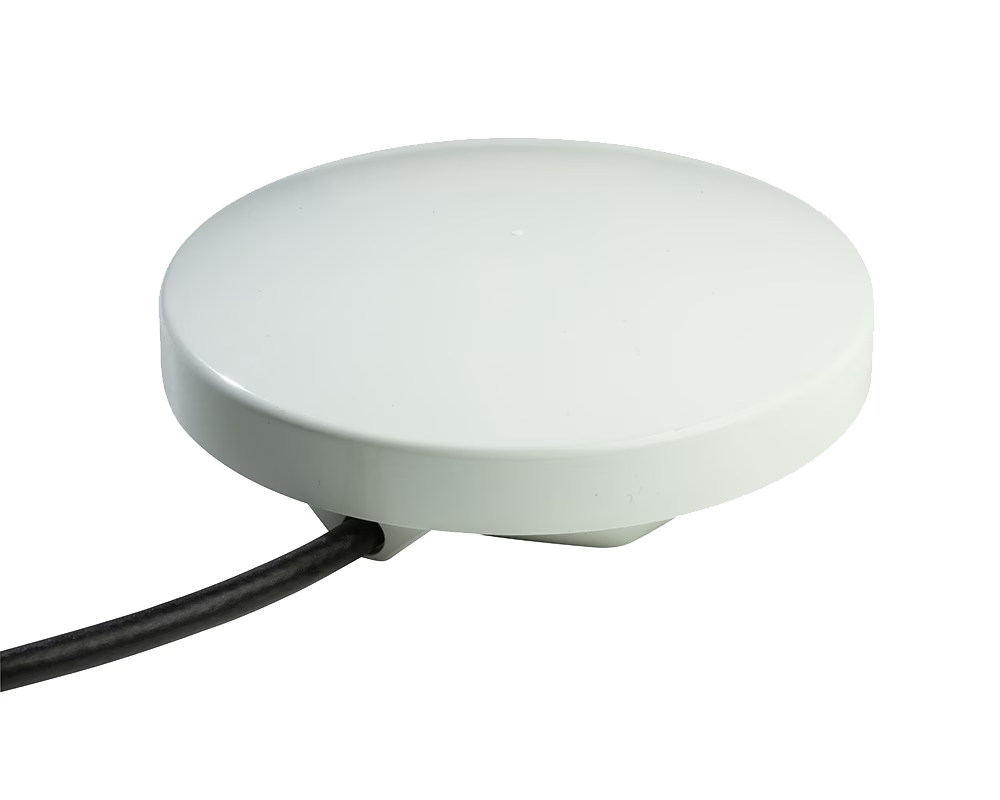
RockBLOCK RTU was designed for remote monitoring and control beyond reliable terrestrial coverage, and its switching capability suits USV out-of-band management. It’s built around an Iridium modem for SBD, with LTE Cat-M1 cellular and SBD failover options.
The IP67 rated unit includes an internal lithium-ion backup battery supporting up to a month of unpowered operation, depending on configuration and reporting frequency, so it can still receive a command if the vessel’s main power bus drops out. Its configurable digital outputs can drive properly rated external relays to switch heavy loads, while its inputs handle the health checks described above.
Data and commands are managed through Cloudloop Data, with delivery to your onshore applications via HTTPS, MQTT, webhooks or APIs. Configuration, including check-in intervals, can be updated over the air.
Keep a Way Back to Your Vessel
A silent or runaway USV means recovery charters running to tens of thousands of euros or dollars, lost survey data, risk to other vessels and, in the worst case, the loss of the asset and the information it carries. High bandwidth links give USVs the throughput their missions demand. An independent, out-of-band remote power switch keeps you in control when those links fail.
Add Reliable Out-of-Band Control to Your USV
Building a USV or upgrading your fleet? Our RockBLOCK RTU delivers satellite based remote power control, with expert support for integration and Cloudloop connectivity. We’re also developing a smaller, four channel solution for space constrained vessels. Get involved early and help shape its design.
Interested in either solution? Complete the form or email hello@groundcontrol.com. We’ll respond within one working day.