RockBLOCK 9604
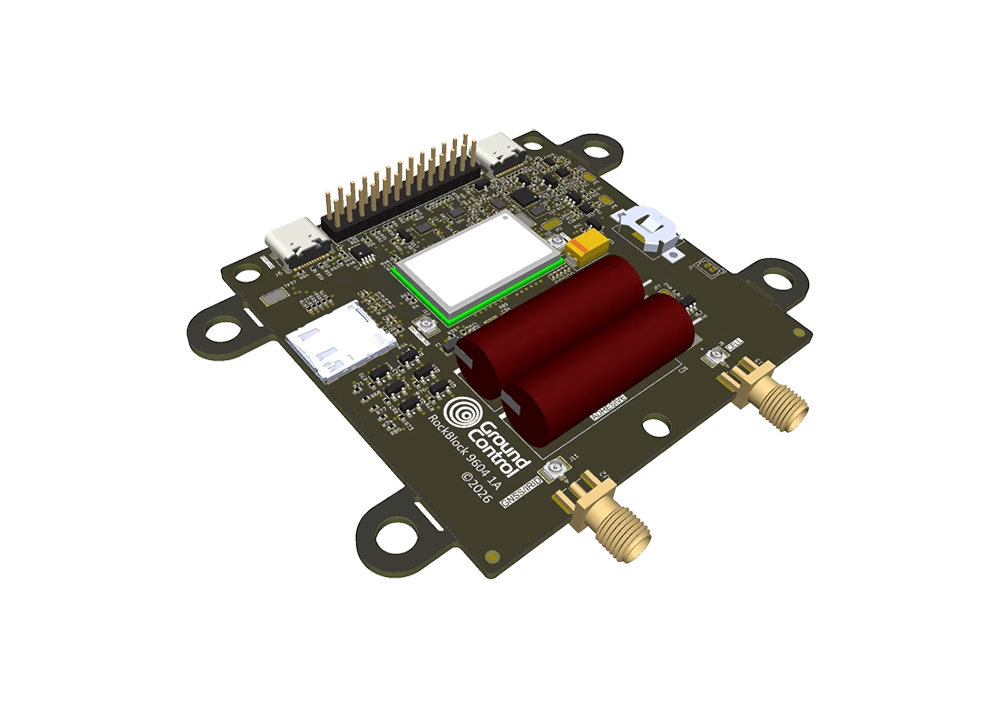
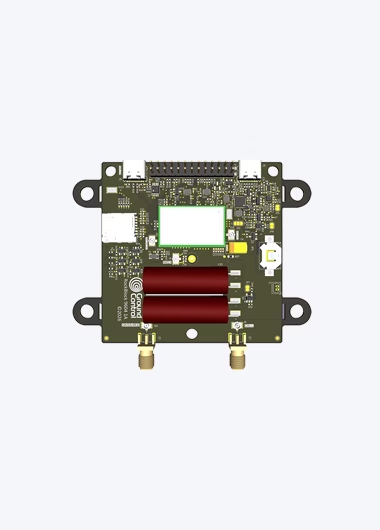
RockBLOCK 9604 gives developers hybrid satellite and cellular connectivity through the Iridium Short Burst Data service and LTE-M, combining an Iridium 9604 transceiver with integrated GNSS positioning, flexible antenna options, USB-C and pin header connectivity, and Ground Control data delivery services.
Beta testing begins November 2026, with deployment following in December 2026. Contact us now to join the beta program or place a pre-order.
Key Capabilities
A single board bringing satellite, cellular and GNSS connectivity to devices that need to stay connected wherever they operate.

Hybrid Iridium SBD satellite and LTE-M cellular connectivity

Integrated GNSS positioning sharing the satellite antenna

Up to 340 bytes sent and 270 bytes received per SBD message
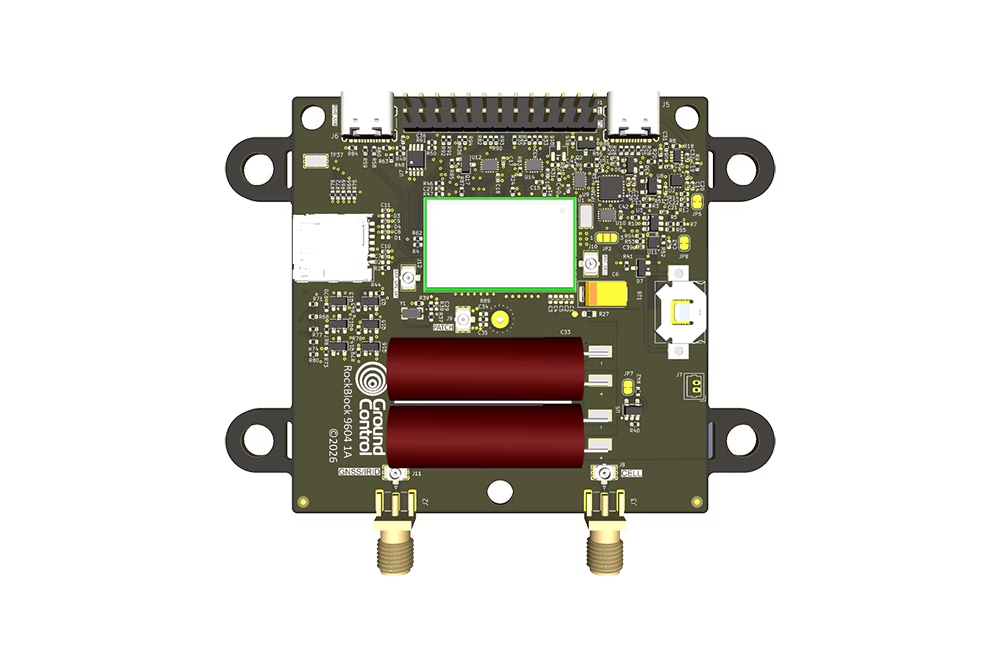
Compact 72 x 72 mm PCB with integrated or external antenna options

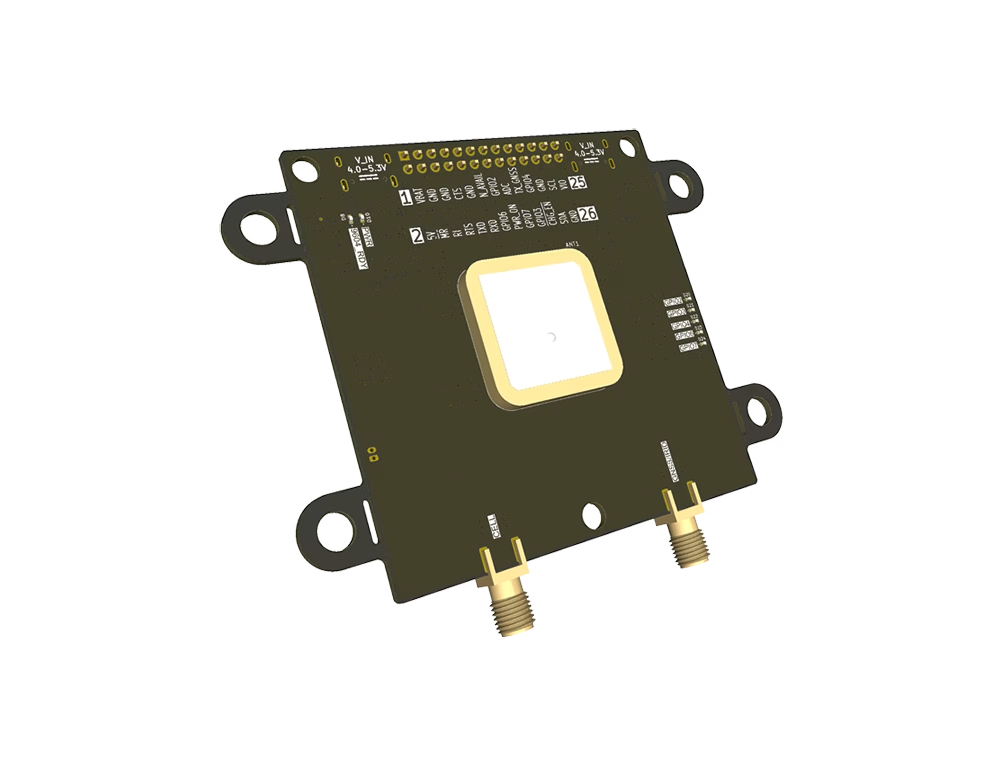
USB-C and a 26 way pin header for power, serial and GPIO access
One Board, Three Networks
Building satellite, cellular and GNSS into a single product usually means three separate modules, three antenna paths, three power domains and three certification runs, stitched together on one board and hoping they behave. RockBLOCK 9604 starts from a chipset that already fuses Iridium Short Burst Data, LTE-M cellular and GNSS into one transceiver, cutting that down to one power architecture, one connector strategy and two antenna paths: one shared between satellite and GNSS, one for cellular.
The result draws less power than a RockBLOCK 9603 at transmit and at idle, and it removes an entire integration project from your design, not just a few components. Your firmware still decides, message by message, whether to reach for the cell network or the satellite constellation, so you keep full control over that decision without inheriting the cost of building the hybrid part yourself.
From Device to Destination
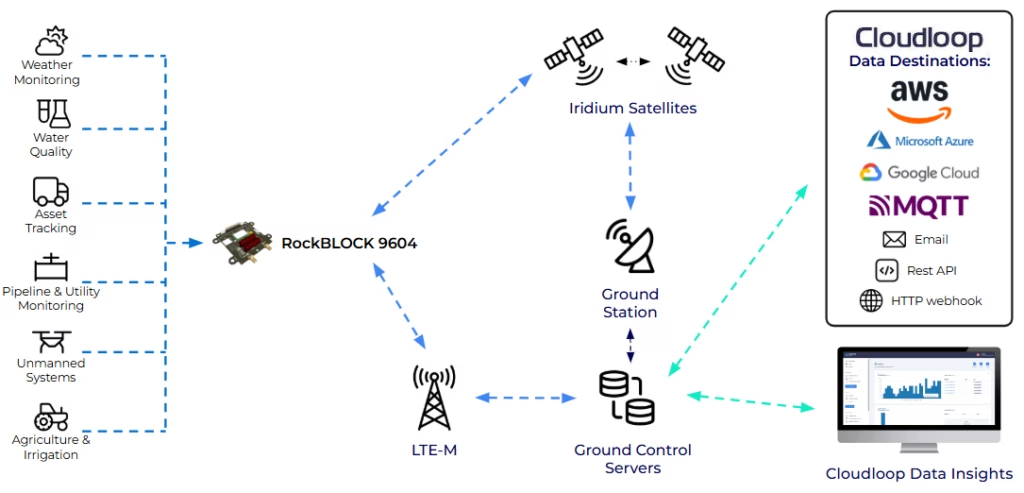
RockBLOCK 9604 gets your data off the device; Cloudloop Data gets it where it actually needs to go. Rather than writing your own decoder for Iridium’s message format, Cloudloop Data automatically decodes each payload into structured JSON and delivers it to the destination you choose, including AWS, Azure, Google Cloud, MQTT, REST API, webhook or email, with the option to route the same message to several destinations at once.
You get real time visibility of every message in transit, the original HEX and ASCII alongside the decoded version for debugging, and Mobile Terminated support where you need to send commands back down to the device, all without standing up your own message-handling infrastructure first.
Iridium SBD Hardware Comparison
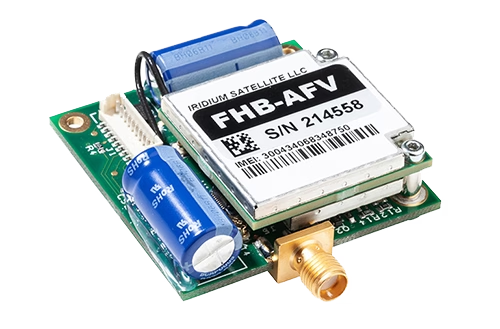
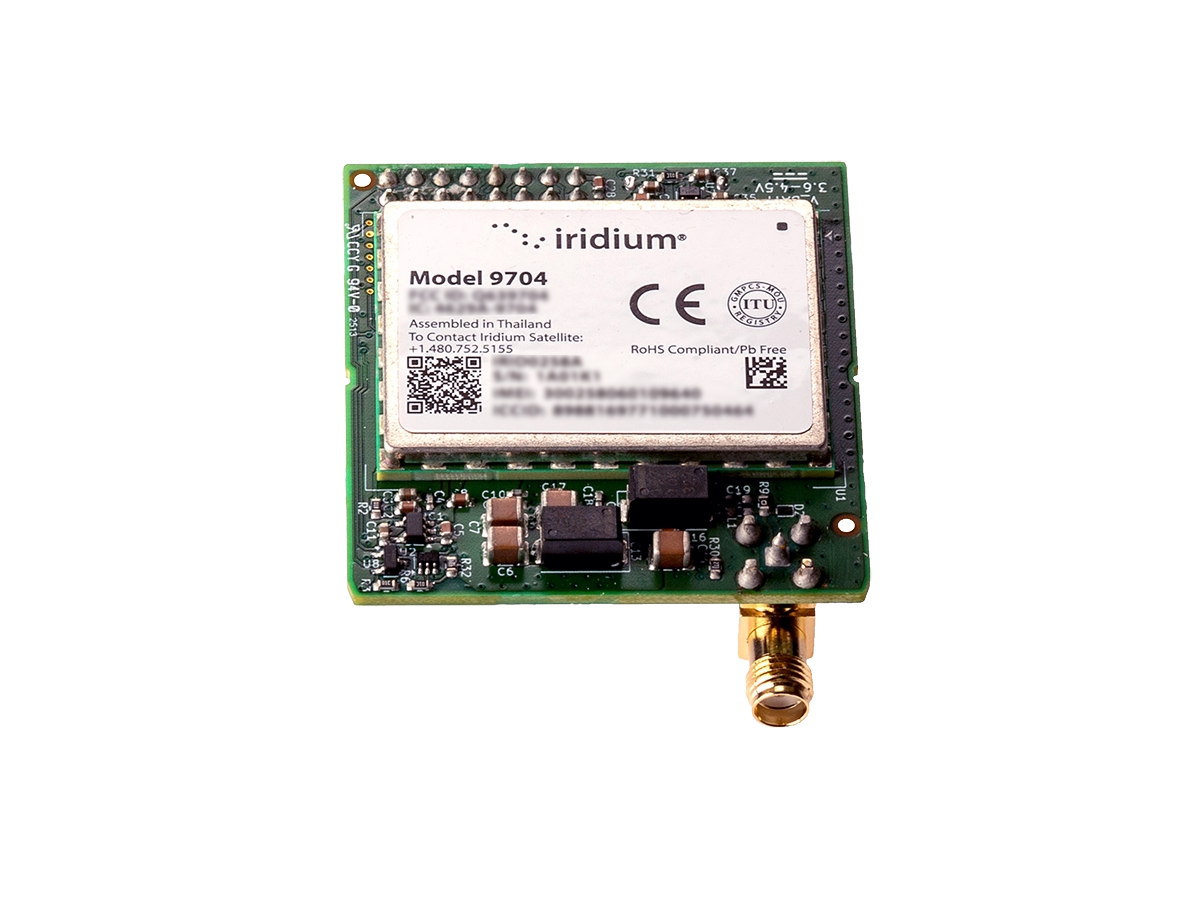
All three boards connect to the Iridium network, but they solve different problems. RockBLOCK 9603 is the simplest way to add Iridium Short Burst Data messaging, up to 340 bytes sent and 270 bytes received, to a compact, satellite-only design. RockBLOCK 9604 keeps that same SBD messaging but folds in LTE-M cellular and GNSS on one board, so a single product can use cellular where it’s available and fall back to satellite where it isn’t. RockBLOCK 9704 trades SBD’s small payload for Iridium Messaging Transport, handling messages from 25 bytes up to 100 KB, for applications with heavier data needs than SBD can comfortably carry.
|
RockBLOCK 9604
|
 RockBLOCK 9603 RockBLOCK 9603
|
 RockBLOCK 9704 RockBLOCK 9704
|
|
|---|---|---|---|
| Best Suited To | Teams that would otherwise need to design in three separate modules for satellite, cellular and GNSS | Compact, satellite-only designs where space and weight are tight | Data volumes higher than SBD messaging can comfortably carry (up to 100 KB per message) |
| Product Type | PCB satellite/cellular/GNSS module | PCB satellite modem | PCB satellite modem |
| Dimensions | 72 x 72 mm | 45 x 45 x 16 mm | 48 × 52 × 16 mm (SMA) / 72 × 72 × 16.5 mm (patch) |
| Weight | <50 g (inc. patch antenna) | 39 g (inc. patch antenna) | <35 g (SMA) / <50 g (inc. patch antenna) |
| Power | 5 V via USB-C, or 3.7 V Li-ion battery input | 3.0-5.4 V DC (5 V input) / 3.5-5.4 V DC (Li-ion input) | 4.0-5.3 V DC; 3.6-4.5 V battery; 5 V USB-C |
| Antenna | Integrated Iridium/GNSS patch antenna, plus SMA for external satellite/GNSS and cellular | Integrated patch and SMA connector | Integrated patch or external SMA version |
| Host or Sensor Interface | UART via 26 way pin header (full access) or USB-C (power and basic serial) | 3.3 V LVTTL UART through Molex connector | 5 inputs & 3 outputs via 16 way cable assembly |
| Onboard Processing | Controlled by the host system | Controlled by the host system | Controlled by the host system |
| Learn More | View Product | View Product |

Pipeline & Utility Monitoring
Send pressure, flow and status data from infrastructure spread across areas with patchy or non-existent cellular service.

Fleet & Asset Tracking
Report location and status from vehicles, containers and equipment that move between cellular coverage and open terrain, switching to satellite when the network drops out.

Water Quality
Return river, reservoir and coastal monitoring data from installations too remote or too exposed for a permanent cellular connection.
Agriculture & Irrigation
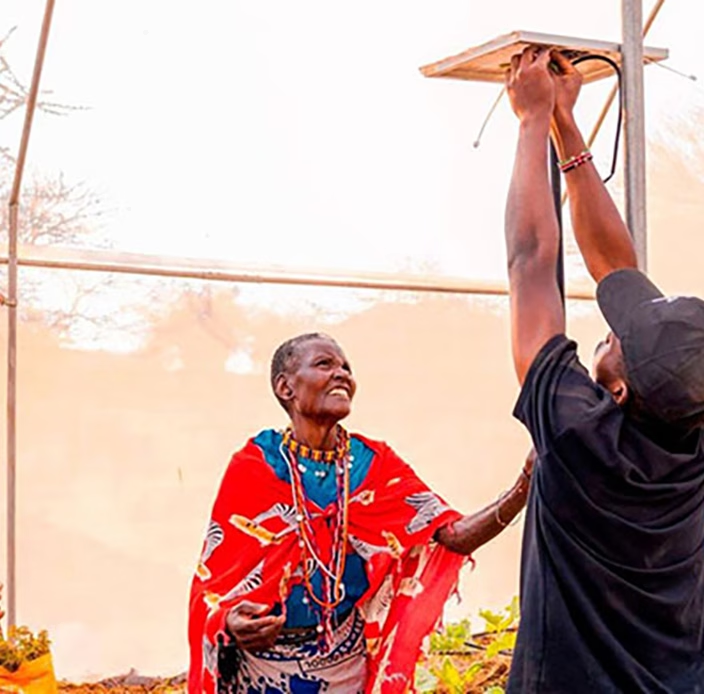
Connect soil sensors, irrigation controllers and farm equipment across large sites where cellular coverage varies by field.
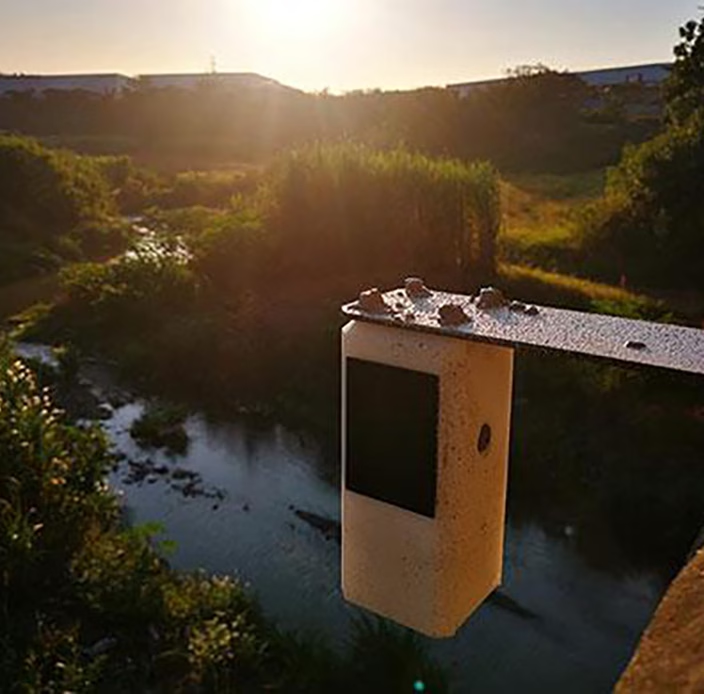
Environmental Monitoring
Deliver readings from remote weather stations on a schedule your application controls, over whichever network reaches the site.
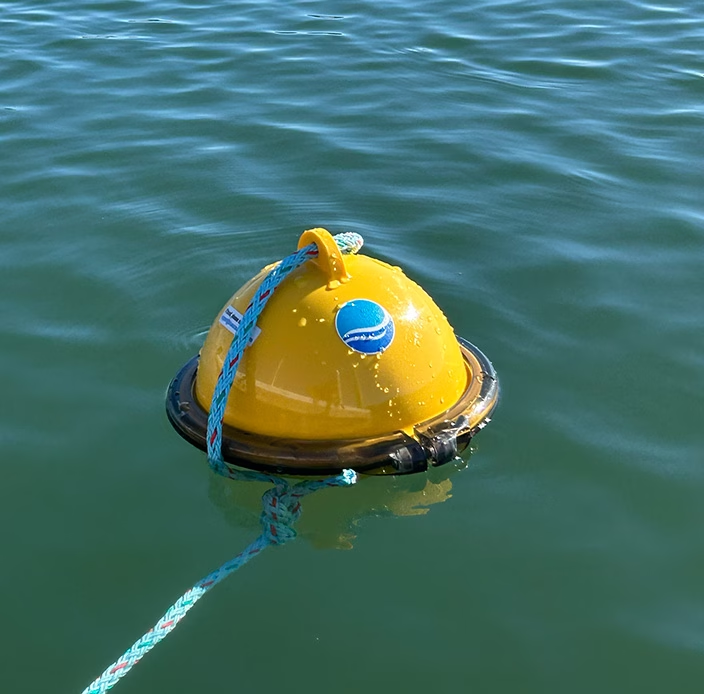
Buoy / Maritime Telemetry
Return position, sea state and instrument readings from drifting buoys and marine platforms operating far outside cellular range.

Unmanned Systems
Exchange status, telemetry and low bandwidth commands with UAVs, USVs and other autonomous platforms operating beyond line of sight and cellular range.

Scientific Research
Connect field instruments used for oceanographic, polar and other remote research, where cellular is occasionally available but can’t be relied on.
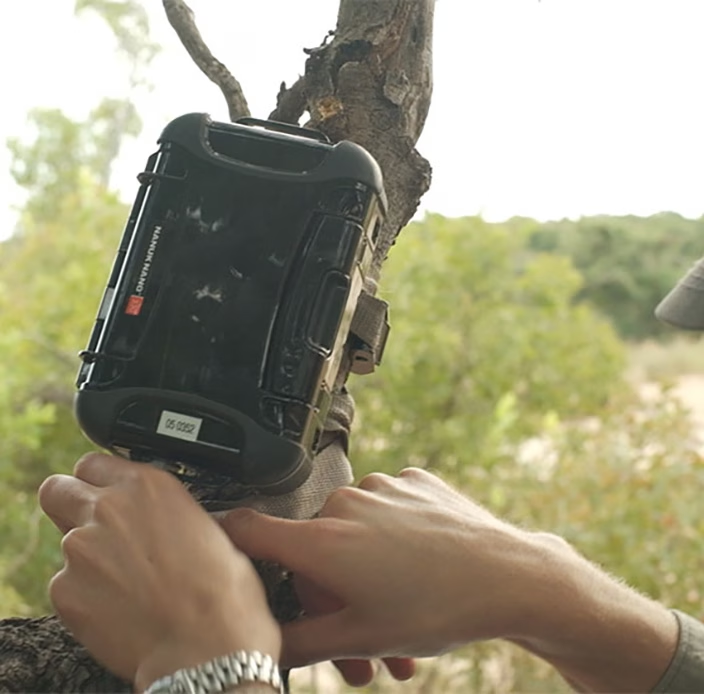
Conservation and Wildlife Monitoring
Retrieve data from sensors studying habitats and wildlife activity in locations chosen for the animals, not for network coverage.
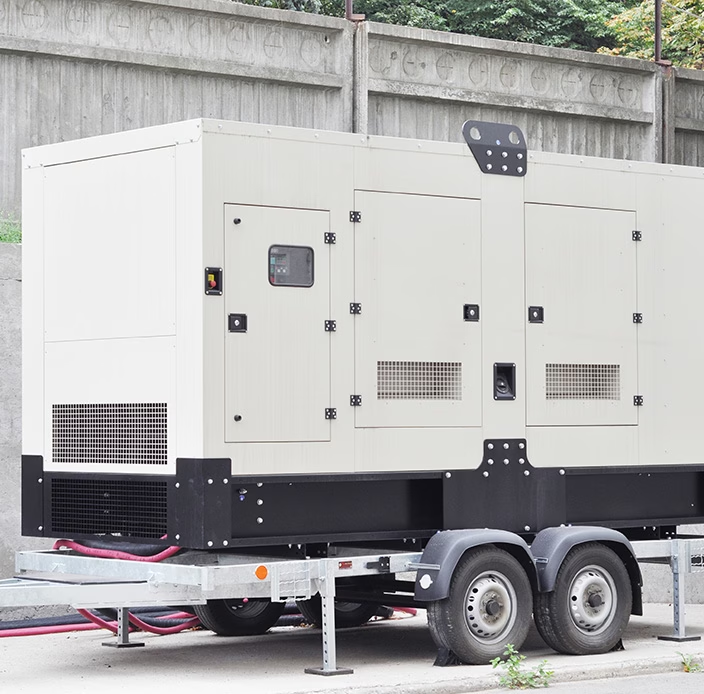
Remote Equipment Monitoring
Track the condition of generators, pumps and mobile plant operating on sites where cellular coverage is inconsistent or entirely absent.
Technical Essentials
Key details to help you assess whether RockBLOCK 9604 is the right fit for your design.

Hybrid SBD and LTE-M Connectivity
Satellite and cellular messaging on one board, selected by your application rather than switched automatically.
GNSS Positioning
GNSS receiver shares the satellite antenna, adding location data without extra hardware.
72 x 72 mm (2.83 x 2.83 in) Integration PCB
A single footprint for satellite, cellular and GNSS, sized to keep mounting points accessible in your enclosure design.

<50 g (1.76 oz) Including Patch Antenna
Light enough for drones, buoys and other payload-sensitive builds, even with three networks on board.

-40°C to +85°C (-40°F to +185°F) Operating Range
Rated for the board alone; final performance depends on your enclosure and overall thermal design.

USB-C or DC Power with Buffering
Built-in super capacitors absorb the transmit current spike, so your host supply only needs to handle steady-state load.

340 Bytes Sent and 270 Bytes Received
Exchange compact two way messages using the Iridium Short Burst Data service.
Patch or External Antenna Options
Integrated Iridium/GNSS patch antenna, with SMA connections for external satellite/GNSS and cellular antennas.
Product Specifications
Communications
- Satellite Service
- Iridium Short Burst Data
- Mobile Originated Message
- Up to 340 bytes from RockBLOCK
- Mobile Terminated Message
- Up to 270 bytes to RockBLOCK
- Satellite Tx Power
- 32 dBm at the antenna terminal
- Cellular Service
- LTE-M (LTE Cat-M1)
- Cellular Tx Power
- 25 dBm at the antenna terminal
- Positioning
- Integrated GNSS receiver, sharing the Iridium/SBD antenna
- Modem
- Iridium 9604
- Host Control
- AT commands
Physical and Environmental
- Dimensions
- 72 x 72 mm (2.83 x 2.83 in)
- Weight
- <50 g (1.76 oz) including patch antenna
- Mounting
- 3 mounting holes inboard, 4 on removable mounting lugs
- Operating Temperature
- -40°C to +85°C (-40°F to +185°F)
- Ingress Protection
- None
Electrical
- Power Input
- 5 V via USB-C, or 3.7 V Li-ion battery input (470 mA limit on each)
- Power Consumption, Transmit
- 1.4 W (peak)
- Power Consumption, Idle
- Approximately 200 mW
- Power Consumption, Sleep
- Less than 0.5 mW
- Peak Current
- Up to 2.8 A on VBAT_IN; otherwise supplied by onboard super capacitors
- Inrush Current
- 470 mA
Interfaces and Integration
- Host Interface
- UART dedicated to 9604 AT command exchange, 3.3 V LVTTL, 5 V tolerant
- USB
- 2 x USB-C (power and RXD/TXD only)
- GPIO
- Via 26 way pin header only, includes Network Available, Ring Indicator and dedicated On/Off input (LVTTL, 3.3 V, 5 V tolerant)
- I2C
- 1 port via 0.1 inch pitch header
- SIM
- Nano SIM (push-push)
- Antenna Connectors
- SMA (Iridium/GNSS, shared) and SMA (cellular)
- Power / Serial Connector
- USB-C (power, RXD/TXD) or 26 way, 0.1 inch pitch pin header (full power, serial and GPIO)
Developer Support
- Configuration
- AT commands via serial
- Device Management
- Cloudloop Subscription Manager and Device Manager
- Data Delivery
- Cloudloop Data (HTTPS, MQTT, APIs)
Resources
Documentation, guides and supporting materials to help evaluate, integrate and deploy RockBLOCK 9604.
FAQs
RockBLOCK 9604 enters beta testing in November 2026, with deployment following in December 2026. If you’d like to take part in the beta program or place a pre-order, get in touch with our team now using the form or phone numbers below.
The Iridium 9604 is the bare transceiver chipset. RockBLOCK 9604 puts that same chipset on a fully integrated board, with antenna paths, power regulation and connectors already designed, so you don’t need to do your own RF and power design work. RockBLOCK 9604 will also be Iridium-certified, whereas a design built directly around the bare module needs its own certification (Ground Control can help with this if you go that route), and it comes with full developer documentation, which isn’t publicly available for the bare chipset.
RockBLOCK 9603 provides Iridium Short Burst Data satellite messaging only. RockBLOCK 9604 adds LTE-M cellular and an integrated GNSS receiver on the same board, letting your application choose between satellite and cellular and report position without an external GPS module.
No. RockBLOCK 9604 operates in a single mode at any given time, either satellite or cellular. Your application controls which mode is active.
No. GNSS shares the Iridium/SBD antenna. A separate antenna is only needed for the LTE-M cellular connection.
Yes, for cellular connectivity. RockBLOCK 9604 takes a Nano SIM (push-push) for LTE-M access through your chosen mobile network operator. Satellite connectivity does not require a SIM.
Either through USB-C, which provides power and basic serial access, or through the 26 way pin header, which provides full power, serial and GPIO access along with the option of a 3.7 V Li-ion battery input.
Messages can be routed through Cloudloop Data, which decodes the payload and delivers it to AWS, Azure, Google Cloud, MQTT, REST API, webhook or email, your choice, including multiple destinations at once.
Talk to Us About RockBLOCK 9604
Still deciding between satellite-only, hybrid connectivity or building directly around the bare Iridium 9604 module? Our engineering team can talk through your coverage requirements, power budget and integration timeline, and let you know where RockBLOCK 9604 currently stands ahead of launch.
Complete the form, email hello@groundcontrol.com, or call us directly: +44 (0) 1452 751940 (Europe, Asia, Africa, Oceania) or +1.805.783.4600 (North and South America).