Satellite connectivity makes it possible to collect data from equipment and sensors beyond terrestrial coverage. However, transmitting data over satellite generally uses more power and costs more than sending it over a cellular or fixed network.
Efficient satellite IoT starts with deciding what data you actually need, how quickly you need it and how much processing can be completed at the remote site.
This guide explains how data optimization and edge computing can reduce airtime use, lower power consumption and help essential information reach your application more efficiently.
Why Does Satellite Data Need to Be Optimized?
Terrestrial networks often allow devices to transmit data with relatively few constraints. This can encourage systems to send more information, and send it more frequently, than the application genuinely requires.
A simple temperature sensor, for example, may transmit the reading alongside its device ID, software version, configuration settings, protocol information and other metadata. Some of that information may be useful occasionally, but it does not necessarily need to accompany every measurement. Sending unnecessary data increases airtime use and drains the device’s power supply more quickly. The aim of data optimization is to preserve the information that matters while removing avoidable data and transmissions.
What Data Do You Actually Need?
Begin by separating the useful information from the overhead surrounding it.
Consider whether every message needs to include:
- Device and software information
- Configuration settings
- Repeated identifiers
- Human-readable labels
- Protocol metadata
- Measurements that have not changed.
Machine-to-machine communications do not always need data to be formatted in a way that is easy for a person to read. Using a compact format can reduce the size of each message without changing the information available to the receiving application.

How Often Does the Data Need to Be Sent?
Reducing reporting frequency can have as much impact as reducing individual message sizes. A sensor reporting every two minutes will generate 15 times as many transmissions as one reporting every 30 minutes. The right interval will depend on how quickly conditions change and how urgently the information is needed.
Some applications may need frequent operational updates. Others can send hourly summaries or a daily batch.Another option is to report by exception. Rather than sending repeated messages to confirm that conditions remain normal, the device transmits when a reading falls outside an agreed range.
Should You Use IP or Messaging?
Satellite IP services allow remote equipment to use familiar protocols and maintain an internet connection. This can make integration straightforward, particularly when the equipment has been designed to use an always-on terrestrial network.
However, IP communications can include more overhead than a message-based service.
Messaging allows the system to transmit a defined payload without maintaining a continuous IP session. For applications sending intermittent sensor readings, alerts or batches of data, this may provide a more efficient use of satellite airtime.
The most appropriate approach will depend on the protocols used by your equipment, the volume of data and whether a continuous connection is required.
How Does Edge Computing Reduce Data Use?
Edge computing processes information at or close to the point where it is collected. Instead of sending all raw data to the cloud for analysis, the remote device can decide what needs to be transmitted, when it should be sent and whether any local action is required.
Report by Exception
The device can compare readings against predefined parameters and transmit only when something changes or moves outside the expected range.
Prioritize Different Data
Urgent information can be sent immediately, while lower-priority readings are stored and transmitted later. For example, alarms could be sent as soon as they occur, while routine monitoring data is grouped into a daily report.
Analyze Data Locally
The remote system can interpret sensor readings without waiting for instructions from the cloud. Where supported by the connected equipment, it may be able to alert an engineer or activate a local response when a threshold is reached.
Reduce, Average or Compress Data
Raw readings can be averaged, sampled, filtered or compressed before transmission. Rather than sending an entire data set, the system might initially send a representative sample. The receiving application can review that sample and request the complete file when further investigation is needed.
Using Applications at the Edge
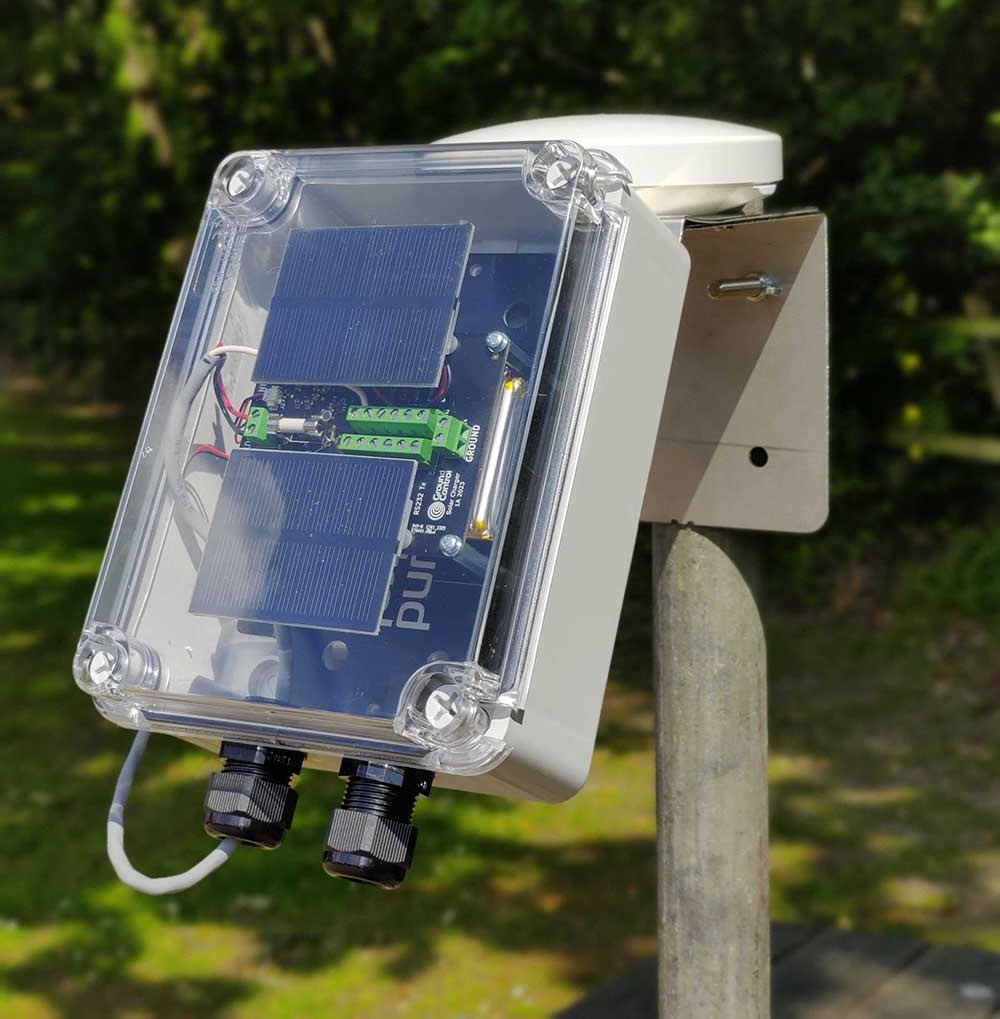
Some satellite IoT gateways can host applications that adapt the data produced by existing equipment. This can be particularly valuable where a sensor, logger or gateway was designed to use an unrestricted cellular connection and cannot easily be reconfigured.
An edge application can:
- Filter or compress outgoing data
- Convert between protocols
- Store information for later transmission
- Control when connected equipment can access the network
- Package data for a message-based satellite service
RockREMOTE devices support hosted applications, allowing data processing and integration functions to run alongside the satellite connection. RockBLOCK RTU also provides local data logging and processing for sensors connected directly to the device.
Data Optimization in Practice
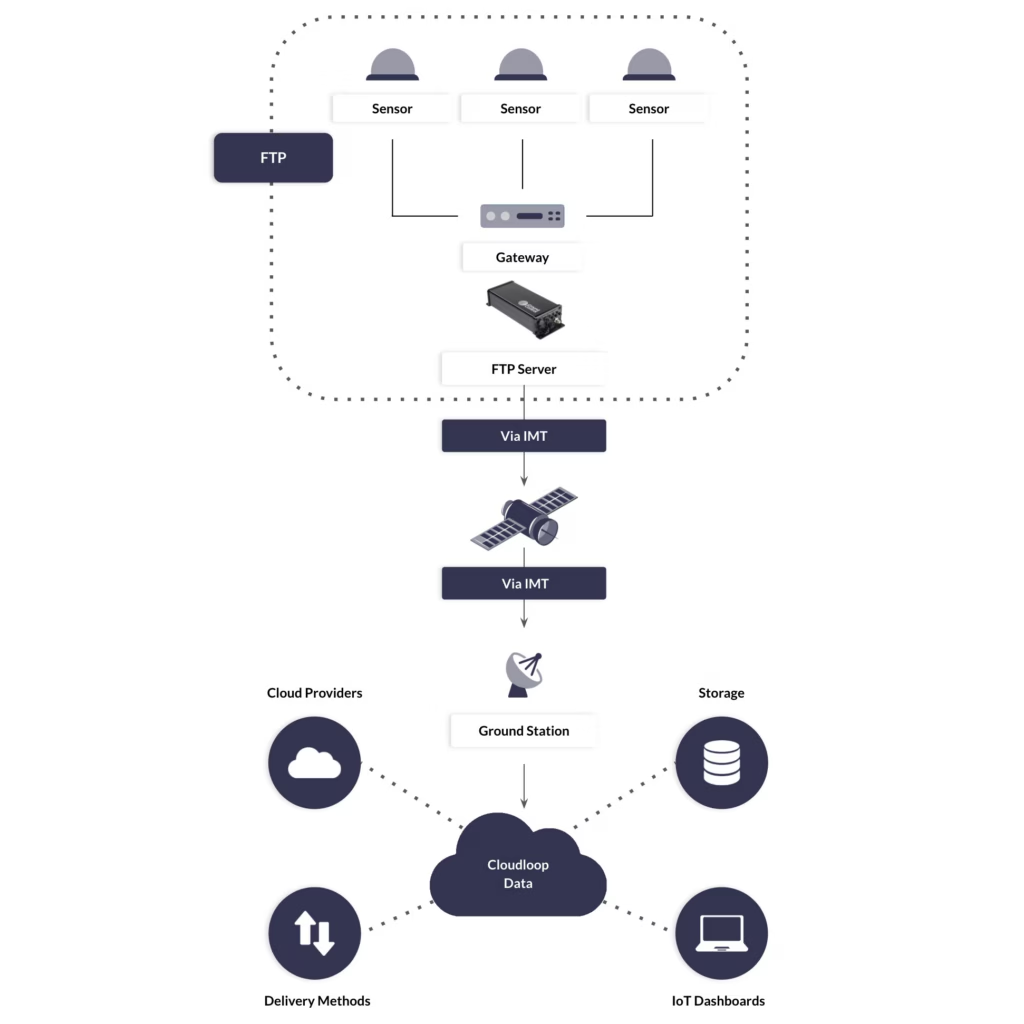
Optimizing FTP Transfers
FTP can be inefficient over an intermittent satellite connection because a failed transfer may require the complete file to be sent again.
For one remote energy monitoring application, an FTP server was added to RockREMOTE. The device receives files locally, divides the data into packets and sends them using Iridium Messaging Transport.
Cloudloop Data then receives and reformats the data for delivery to the required application.
Batching Data With a Timed Firewall
Some gateways are designed to use an always-on cellular connection and transmit data continuously.
In one renewable energy deployment, RockREMOTE uses a timed firewall to prevent the connected gateway from transmitting throughout the day. The firewall opens at a scheduled time, allowing the gateway to send its aggregated data as a batch.
This reduces unnecessary connection time and allows existing cellular equipment to operate over satellite without extensive modification.
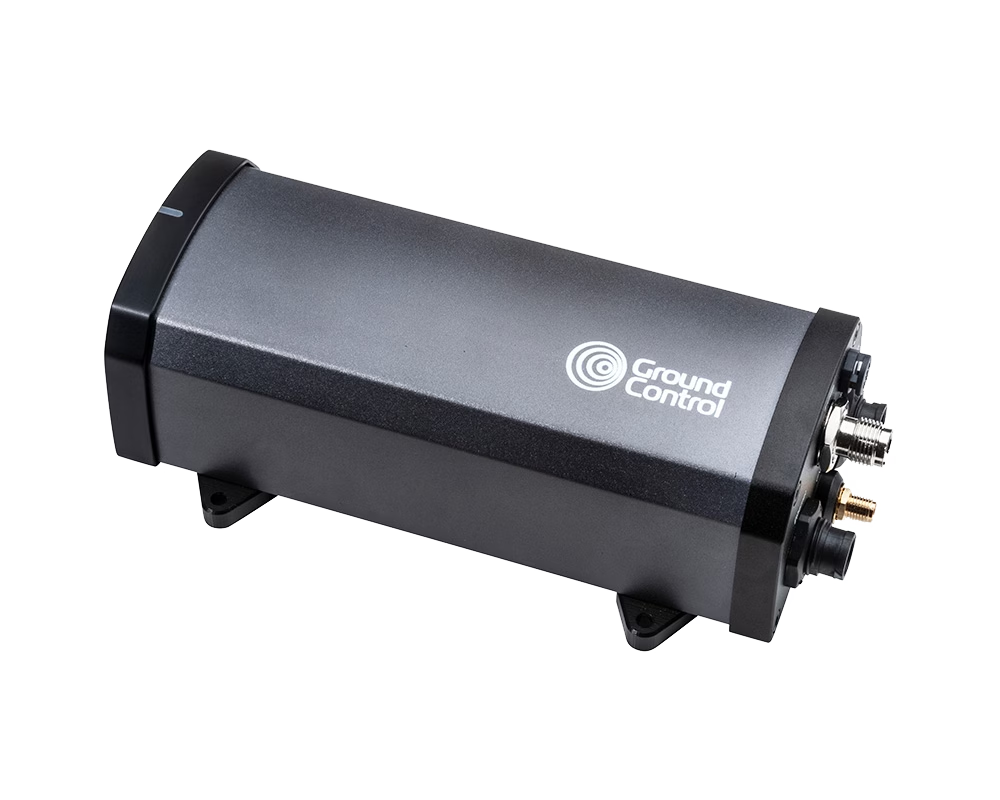
RockREMOTE Mini
RockREMOTE Mini provides Iridium Certus 100 IP connectivity and Iridium Messaging Transport in a compact, low power format.
Its hosted application environment can support protocol conversion, data filtering and other processing at the edge.
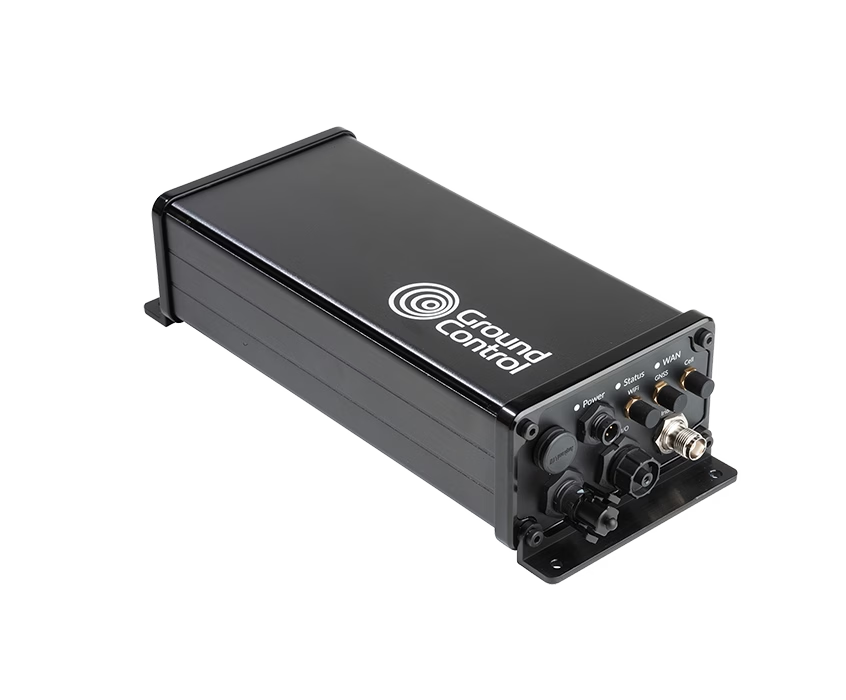
RockREMOTE Rugged
RockREMOTE Rugged combines satellite and cellular connectivity with local processing in a weather-resistant gateway.
It is suited to fixed or mobile applications requiring data optimization, hosted applications or cellular connectivity with satellite backup.
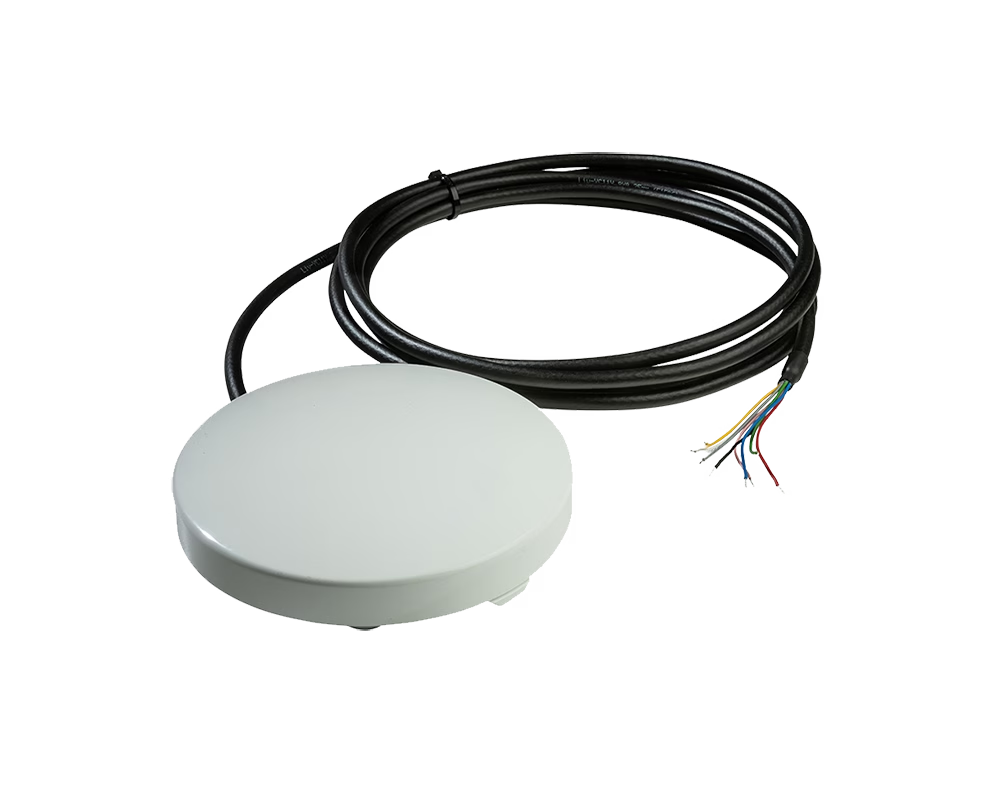
RockBLOCK RTU
RockBLOCK RTU connects directly to analog and digital sensors and can process readings locally before transmission.
It can filter, store and act on sensor data, helping reduce the number and size of messages sent over satellite.
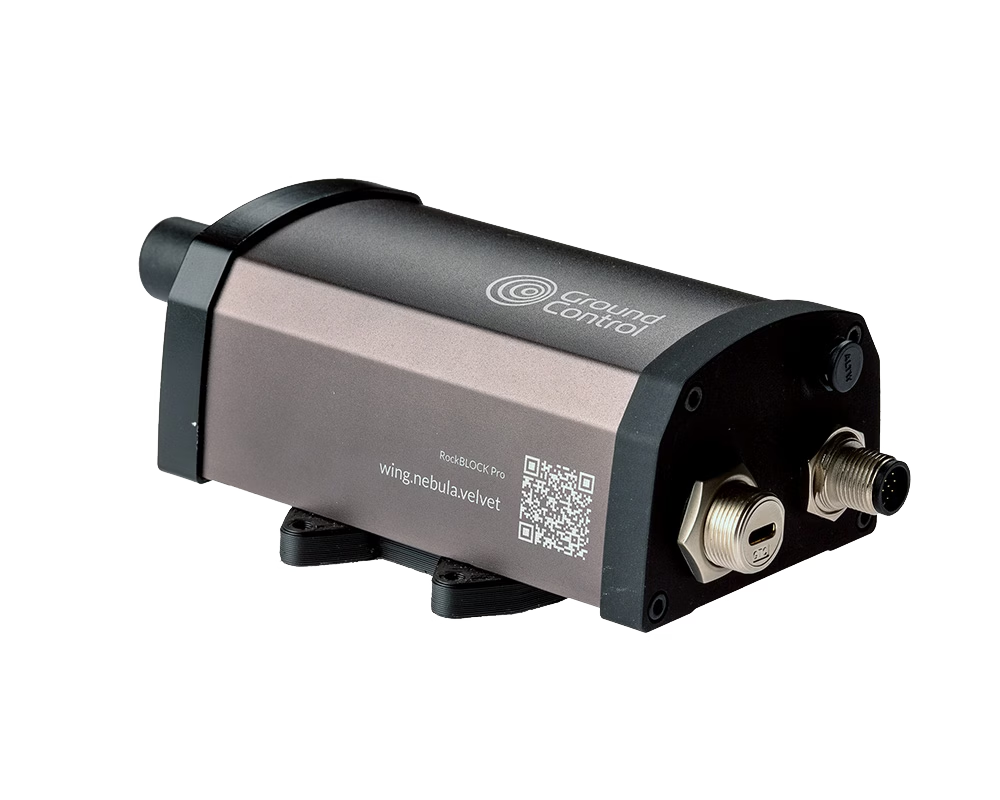
RockBLOCK Pro
RockBLOCK Pro supports edge processing for remote IoT applications, with serial and configurable I/O for connecting sensors and equipment and processing data locally before transmission.
Using Iridium IMT, it supports larger messages than SBD while consuming less power than an IP-based Certus 100 device.
Here to Help
We’re experts in optimizing data transmissions over satellite, helping to save our customers money and conserve battery life. We work with sensor and data logger manufacturers, and end users alike, to help ensure your application is cost effective and efficient.
Please call us on us on +44 (0) 1452 751940 (Europe, Asia, Africa, Oceania) or +1.805.783.4600 (North and South America); email hello@groundcontrol.com, or complete the form.