Topic: Utilities & Renewables
Resolving the Data Communications Challenge for Water and Wastewater Service Providers
The provision of water to homes and businesses as well as wastewater treatment is essential. In fact, water utility companies need to provide billions of litres of fresh water to residential and commercial customers and to recycle equal amounts every day. As a result, water and wastewater service providers are under more pressure than ever to improve operational efficiencies. There’s one key area in which improvements can be made and that is effective monitoring and control of water production and treatment assets and other remote sites.
Increasingly, such sites are found in remote parts of a country, particularly as demand for water is increasing. Similarly, the infrastructure required to deliver water to users and to take it away for treatment must cross challenging terrain. The equipment needed to manage this infrastructure and the various water plants needs constant supervision and generates significant volumes of data that must be recorded and conveyed to operations centres to ensure the smooth functioning of the cycle and to enable action to be taken in the event of any problems that might emerge.
Effective monitoring and control of such assets requires complete visibility. One type of monitoring system frequently deployed is known as a supervisory control and data acquisition, or SCADA. Often within a SCADA system there’ll be wireless telemetry media that transmit data gathered by equipment sensors via radio, cellular, or satellite networks. For water and wastewater plants in remote locations, the most successful way to convey this critical data to operations centres is via satellite. The VSAT, or very small aperture terminal, is particularly suitable for deployment in remote monitoring applications because it’s optimised for low-bandwidth two-way data transmission – in other words, the kind of data conveyed in SCADA and telemetry applications.
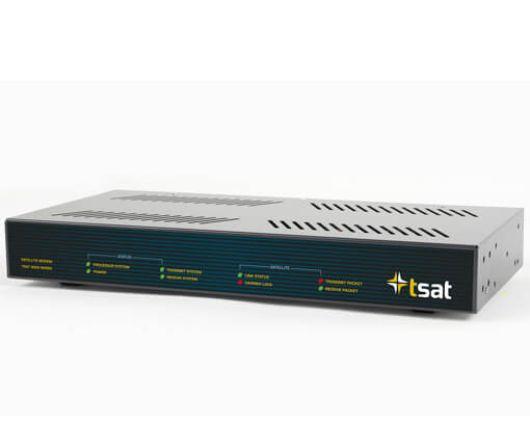
TSAT, is a variant of VSAT that’s been further optimised for mission-critical communications, offering a private satellite communications network in water and other utility industries. For this reason, it’s the ideal choice for SCADA and telemetry applications in water and wastewater plants.
SCADASat by TSAT
By locating a private TSAT3500 HUB at a control centre, complete independence of any public infrastructure is obtained, and secure and reliable communication is assured. Reliability can be enhanced further with implementation of the load-sharing redundant HUB option.
Here to help
Ground Control can deliver complete, turnkey solutions for all satellite communications, such as the TSAT3000 / SCADASat, involving SCADA and telemetry systems.
If you’d like a no pressure call to talk through some of your current challenges, our expert team are here. Simply complete the form.
The Challenge of Remote Locations for the Renewables Industry
Renewable energy generation sites for hydro, wind and solar farms can often be in remote or hostile locations. There are many challenges in providing data backhaul from such sites, whether they’re in the development or deployment stages. Ground Control has deployed full end-to-end solutions for renewable energy sites in over 100 countries, working with equipment manufacturers and electricity generation companies alike.
As the deployment of renewable energies grows, so does the investment. Billions of dollars are currently being invested in a range of new and innovative technologies designed to reduce our dependence on fossil fuels and carbon-related sources.
For investors it’s a high-risk strategy, as many of these new technologies are yet to be proven. While the potential dividends from a successful trial are massive, the sums involved are huge and the potential losses are significant. So what can investors and manufacturers of renewable energy devices do to lower that risk?
One of the most important stages in a renewable energy deployment is the feasibility stage. Unlike traditional energy sources, renewable sources cannot be relied on to provide a consistent and predictable energy output. This is the same for most renewable sources. Solar energy can be affected by cloud cover and other high-level weather conditions. Tidal energy suffers from similar problems, where output can be irregular and unpredictable. Wind energy is subject to the random fluctuations of cloud and air pressure patterns. All of these things make the location and efficiency of renewable installations quite unpredictable. This is where the resource assessment stage is critical.
Resource assessment is a preliminary stage designed to assess the average potential output of a renewable energy site. Trial equipment is located at the prospective site and regular measurements are taken of that site’s potential energy output. It’s a long and complex process. The measurements are sometimes taken over a period of months and years and there are significant challenges to face in accessing suitable locations. Wind resource assessment, for example, may require a company to monitor numerous hilltops and offshore sites.
Remote telemetry systems are essential for this stage of any renewable energy project. With a remote telemetry system, data can be collected and transported by radio, GSM, or over satellite using the Viasat Go-anywhere Pro network. It’s a safer and more cost-effective way of planning the renewable economy and is essential to the successful deployment of renewable energy sources.
Can We Help You?
With 20 years of experience, we can help you make the best choices for your remote renewables connectivity infrastructure.
We’re not invested in selling you a specific product or connections, just the best solution for your needs.
Call us on +44 (0) 1452 751940 (Europe, Asia, Africa, Oceania) or 800 773 7168 (North and South America), complete the form, or email hello@groundcontrol.com.