LoRaWAN allows low-power sensors to communicate with a nearby gateway over several kilometres. However, the gateway still needs a reliable connection to send that data to a network server or cloud application.
In remote locations, cellular and fixed internet services may be unavailable or unreliable. Satellite connectivity can provide the backhaul link, allowing data from an entire LoRaWAN sensor network to be delivered from almost anywhere with a suitable view of the sky.
This guide explains how satellite backhaul for LoRaWAN works, the main connectivity options available and the factors to consider when designing a deployment.
How Does Satellite Backhaul for LoRaWAN Work?
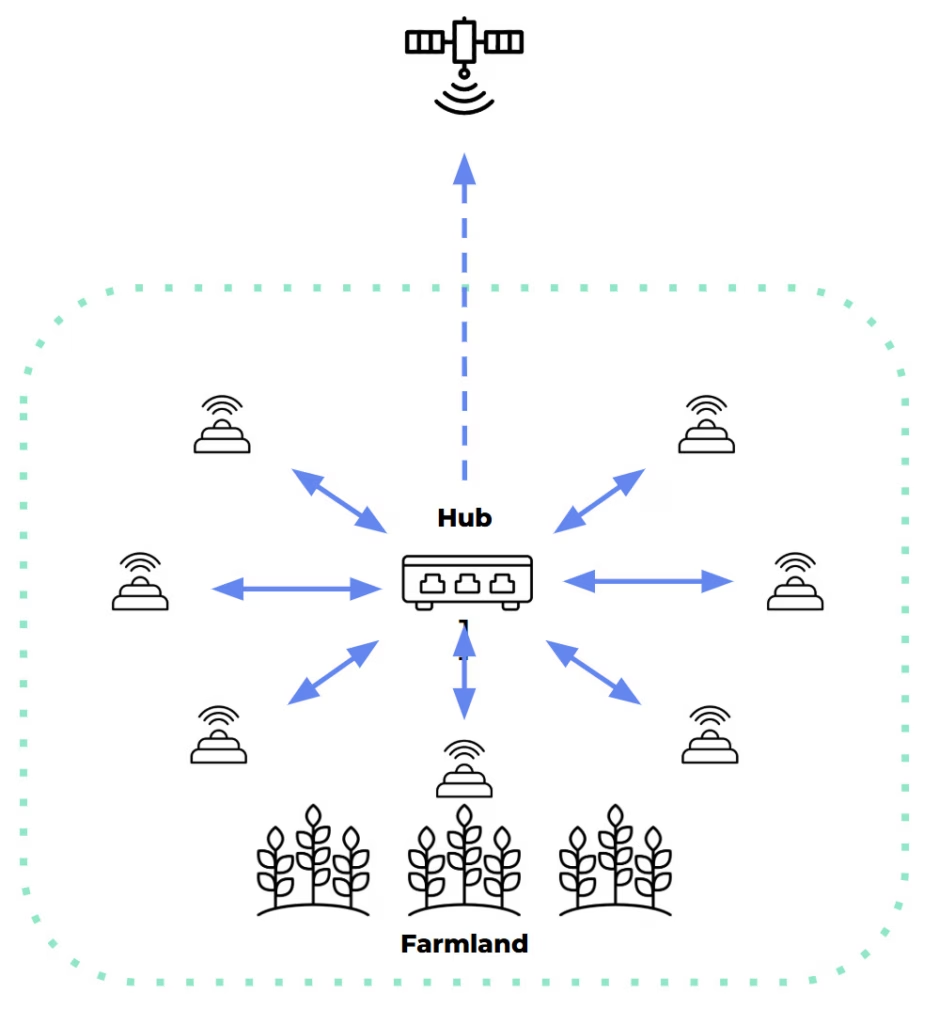
A typical deployment includes:
- Sensors or end devices that collect data
- A LoRaWAN gateway that receives the sensor transmissions
- A satellite terminal that provides the backhaul connection
- A network server or application where the data is processed and used.
The sensors communicate with the gateway using LoRa radio. The gateway then forwards their messages over satellite instead of relying on cellular, fibre or another terrestrial connection.
Because the gateway may be handling data from many sensors, its backhaul requirements are usually greater than those of a satellite device connected to a single sensor. The satellite service must support the combined data volume, reporting frequency and protocol requirements of the network.
When Is Satellite Backhaul Useful?
Satellite backhaul is particularly useful where a LoRaWAN network is deployed in an area with little or no terrestrial communications infrastructure.
Typical applications include:

Environmental and weather monitoring

Water infrastructure

Agriculture and irrigation

Pipelines and utilities

Forestry and conservation

Maritime and coastal monitoring

Disaster detection and warning systems

Mining and remote industrial sites
Satellite may provide the gateway’s primary connection or operate as a backup when cellular or fixed infrastructure fails.
What Should You Consider?
Total Data Requirements
The first step is to calculate how much data the complete LoRaWAN network is likely to generate.
Consider:
- The number of connected sensors
- The size of each message
- How often each sensor reports
- Whether downlink commands are required
- Protocol and network overheads
- Expected growth in the deployment
A small network sending occasional measurements may use relatively little satellite data. A gateway receiving frequent reports from hundreds of sensors will require a more capable connection.
Local processing can help reduce the volume transmitted by filtering unnecessary readings, combining messages or sending alerts and summaries rather than every raw measurement.
IP or Message-Based Backhaul
LoRaWAN gateways commonly use IP protocols to communicate with a network server. An IP-based satellite service may therefore provide the simplest integration, allowing the gateway to operate much as it would over cellular or fixed internet.
However, maintaining a conventional IP connection is not always the most efficient use of satellite airtime.
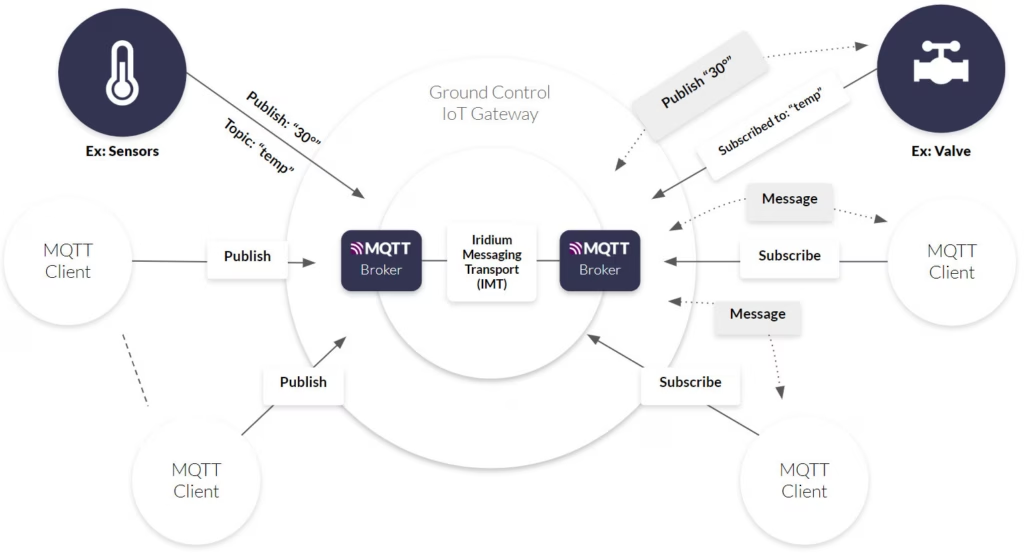
Where the gateway architecture allows it, data can instead be packaged into satellite messages. This may reduce airtime use for networks sending small or intermittent sensor reports.
Ground Control’s Satellite IoT Gateway allows MQTT applications to use Iridium Messaging Transport by converting between MQTT traffic and an efficient message-based satellite connection.
The right approach will depend on the gateway software, the amount of data being sent and whether a continuous connection is required.
Power and Data Optimization
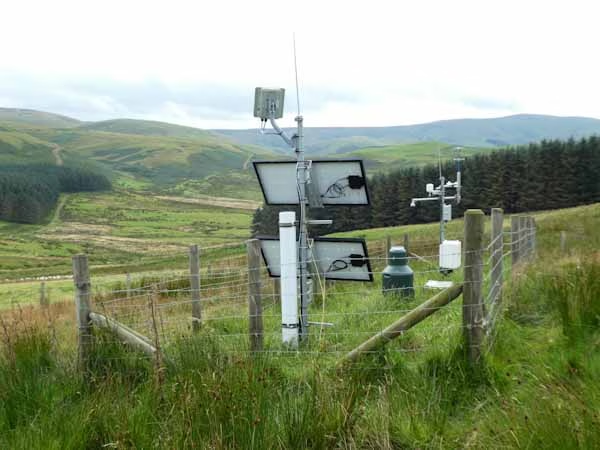
Remote gateways are often powered by batteries, solar panels or another limited energy source.
The full power budget should include the LoRaWAN gateway, satellite terminal, sensors, local processing and any supporting equipment.
Power and airtime can be reduced by:
- Storing readings locally
- Transmitting data in batches
- Filtering or processing data at the edge
- Prioritizing alarms
- Using sleep modes between transmissions
- Avoiding unnecessary protocol overhead
A system that wakes, sends a batch of useful information and returns to sleep can operate far more efficiently than one maintaining a continuous connection.
Location, Resilience and Antenna Position
The gateway and satellite terminal must be suitable for the conditions in which they will operate, including temperature, water, dust, humidity, corrosion and vibration.
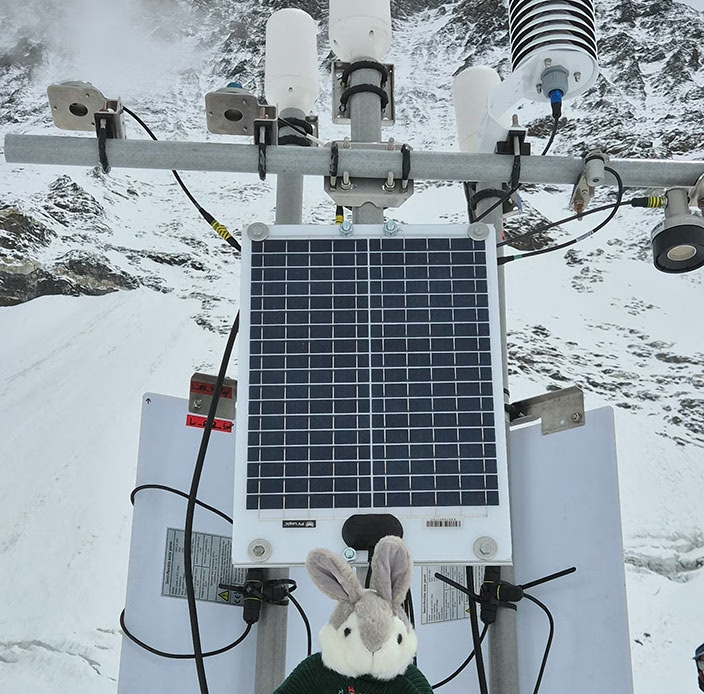
The antenna also needs a sufficiently clear view of the sky. Trees, buildings, terrain, metal structures and the equipment’s own enclosure can reduce signal availability.
Geostationary satellite services can work well for fixed gateways with a clear view towards the satellite. Low Earth Orbit constellations may be more suitable where precise alignment is difficult, the site is at a high latitude or part of the sky is obstructed.
For practical installation guidance, read our article on what a clear view of the sky means for satellite communications.
Where terrestrial connectivity is available some of the time, cellular and satellite can also be combined. The gateway uses cellular as its primary connection and switches to satellite when the terrestrial network is unavailable.
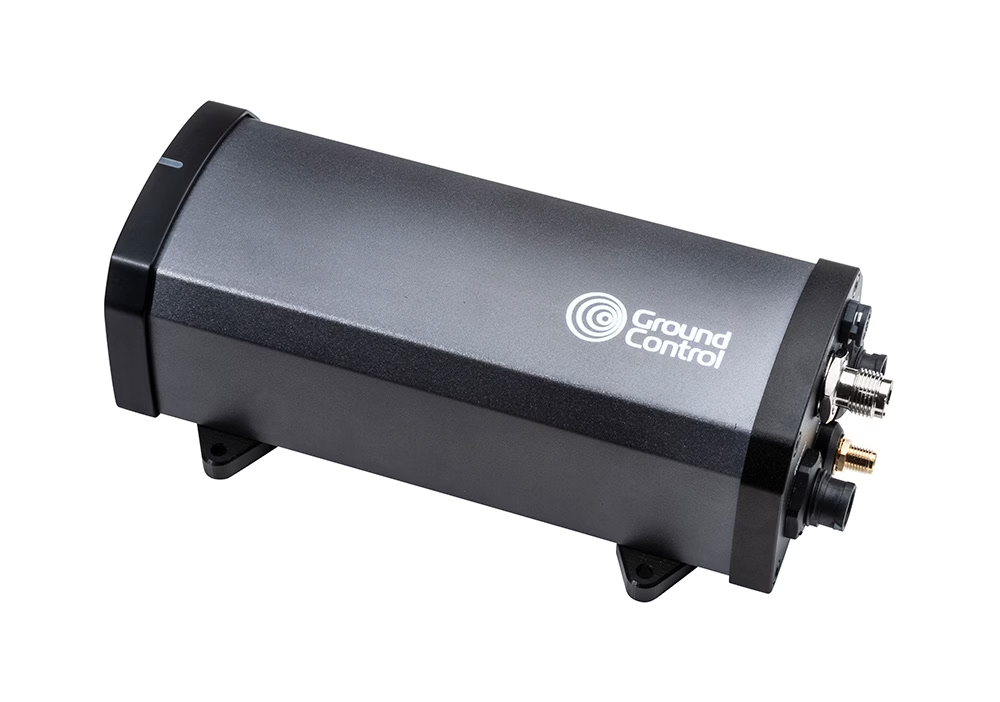
Low Power Iridium Connectivity
RockREMOTE Mini provides Iridium Certus 100 IP connectivity and Iridium Messaging Transport in a compact, low-power format.
It’s suited to remote gateways where power efficiency, global coverage and flexible data delivery are important.
RockREMOTE Mini OEM provides the same core connectivity for integration into another manufacturer’s gateway, enclosure or control system.
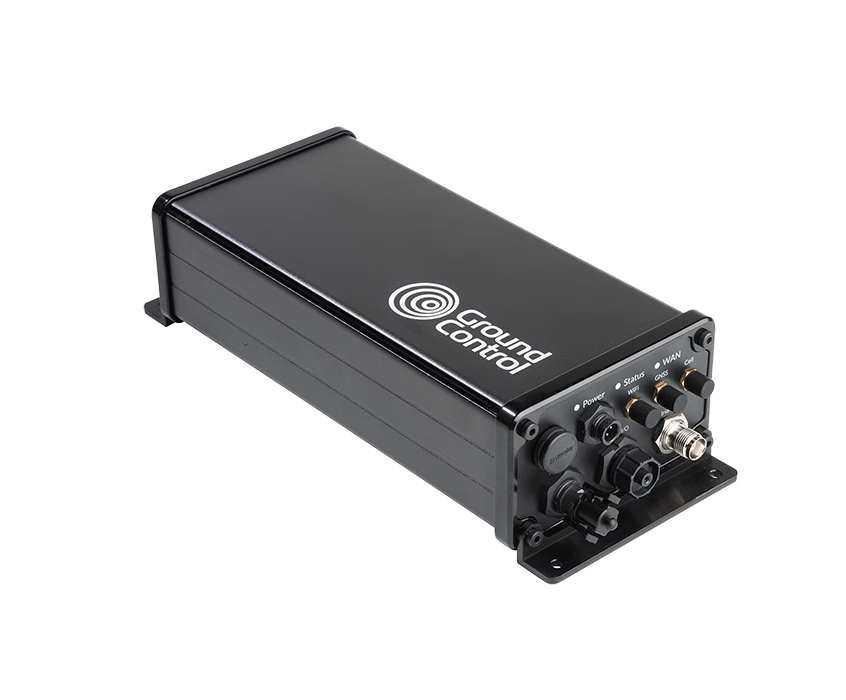
Rugged Cellular and Satellite Gateways
RockREMOTE Rugged combines Iridium Certus satellite connectivity with cellular networking in a weather-resistant gateway.
It is suitable for deployments that need cellular-first communications with automatic satellite backup, as well as local processing or hosted applications.
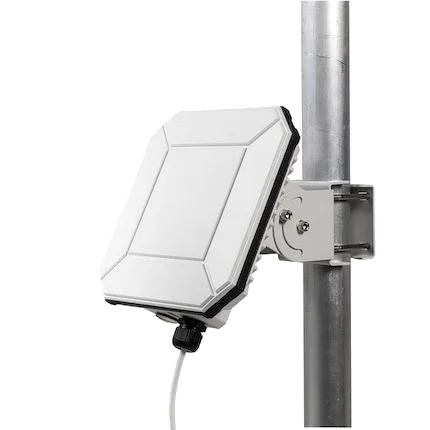
Fixed Viasat IoT Pro Terminals
Viasat IoT Pro (BGAN M2M) provides satellite IP connectivity for fixed remote monitoring and control systems.
EXPLORER 540 combines Viasat IoT Pro with optional cellular support in a rugged terminal, while the Hughes 9502 provides a satellite-only option for fixed installations.
Both are suited to sites with a suitable view towards the geostationary satellite.
Here to Help
If you need help backhauling your gateway data from remote locations, please get in touch! With 20 years of experience, we can help you make the best choices based on your requirements.
Please call us on us on +44 (0) 1452 751940 (Europe, Asia, Africa, Oceania) or +1.805.783.4600 (North and South America); email hello@groundcontrol.com, or complete the form.