Iridium 9604
The Iridium 9604 combines Iridium SBD, LTE-M cellular and integrated GNSS in an exceptionally small, low power module for hybrid IoT applications. It gives developers control over how and when each network is used, making it well suited to compact tracking, monitoring and safety devices that need low cost cellular connectivity with global satellite coverage available when required.
Key Capabilities
Designed to simplify the development of compact hybrid IoT devices for use across cellular and satellite coverage.

Hybrid Satellite and Cellular
Combine LTE-M with global Iridium SBD connectivity.

Integrated GNSS
Add location data without a separate GNSS receiver.

Developer-Controlled Routing
Define when devices use cellular or satellite.
Compact, Lightweight Design
Measures 16 × 26 × 2.4 mm and weighs less than 3 g.

Familiar AT Commands
Build on established Iridium SBD development methods.
Build Smaller, Smarter Hybrid Devices
At just 16 x 26 x 2.4 mm and less than 3 g, the Iridium 9604 reduces the space and component count needed to add satellite, cellular and location capabilities to a connected product. Its familiar AT command interface also gives teams with existing Iridium SBD experience a more straightforward route into hybrid development.
Your application remains in control of the routing logic. Devices can prioritize LTE-M where coverage is available, switch to Iridium for critical updates beyond terrestrial networks, or make decisions based on location, message priority, power use or cost.
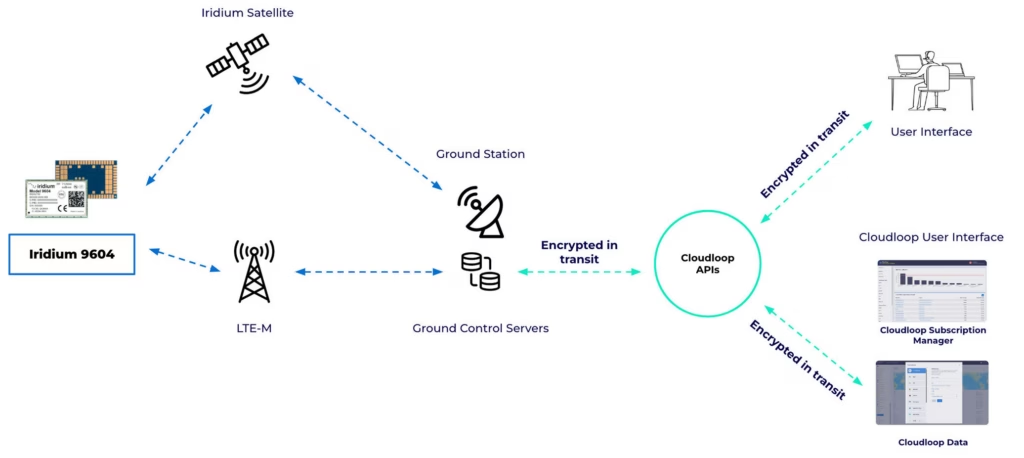
Ground Control can support the wider deployment with hardware, SBD airtime, device registration, APIs and Cloudloop Data for routing satellite messages into your own systems

Connect and Manage with Cloudloop
Cloudloop Data handles the delivery of Iridium messages from the 9604 into your application, with support for APIs, MQTT, webhooks, email and cloud integrations.
Cloudloop Subscription Manager gives you one place to register devices, manage airtime, monitor usage and set alerts as your deployment grows.
Explore Cloudloop Satellite IoT PlatformIridium Bare Module Comparison
 Iridium 9603N Iridium 9603N
|
Iridium 9604
|
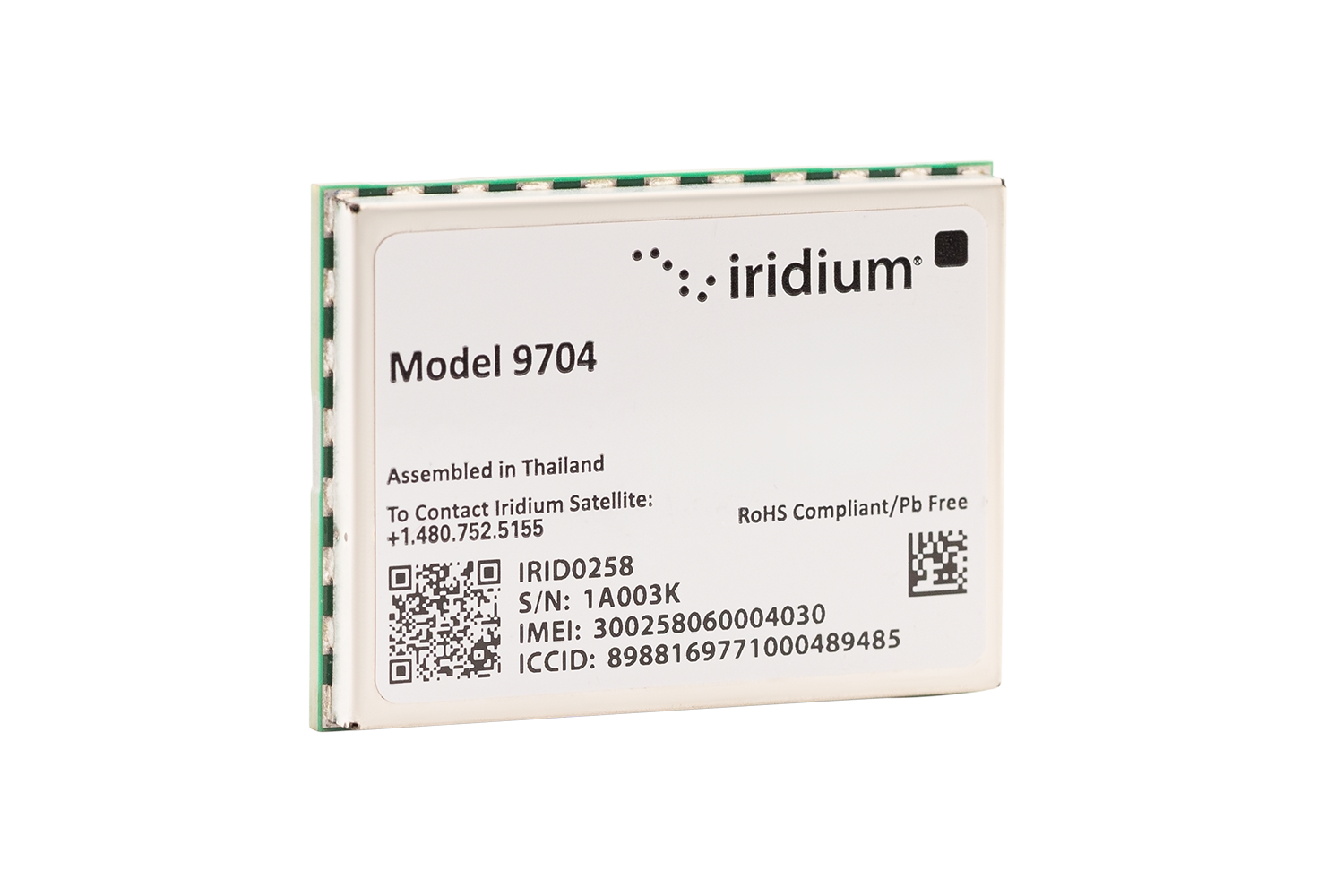 Iridium 9704 Iridium 9704
|
|
|---|---|---|---|
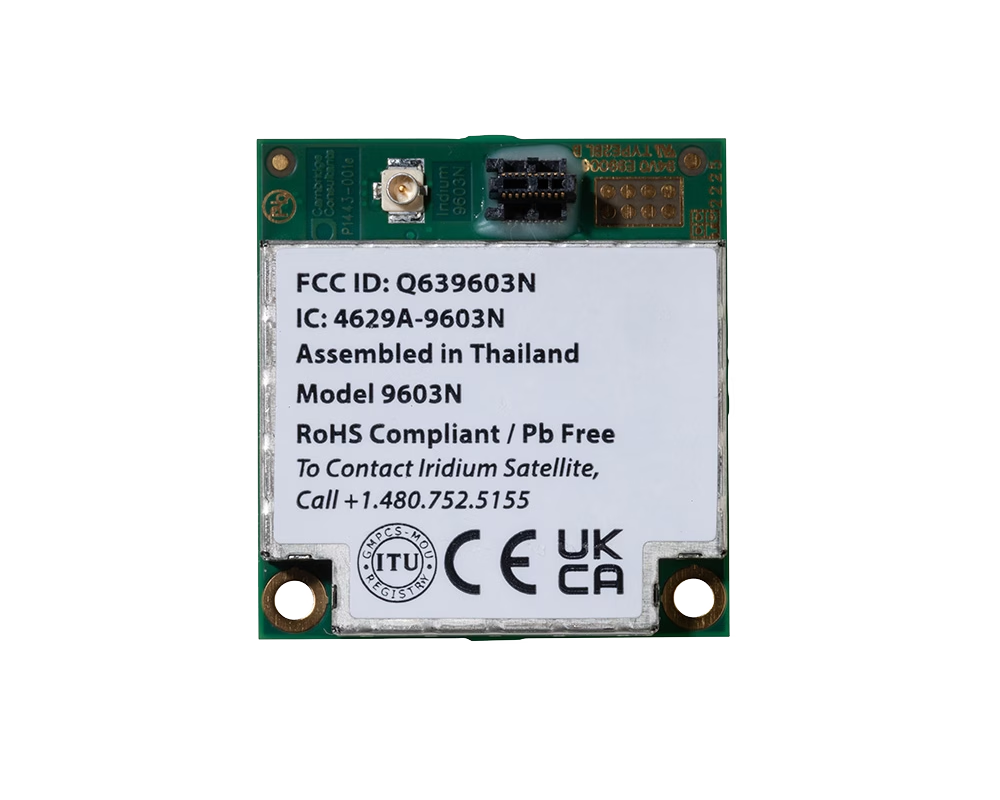
| Dimensions | 31.5 x 29.6 x 8.1 mm | 16 x 26 x 2.4 mm | 31.5 x 42 x 3.9 mm |
| Weight | 11.4 g | <3 g | 12 g |
| Protocol | Iridium SBD | Iridium SBD + LTE-M | Iridium Messaging Transport (IMT) |
| Message Size | 340 bytes MO, 270 bytes MT | 340 bytes MO, 270 bytes MT | Up to 100 KB (MO / MT) |
| Command Interface | AT commands | AT commands | JSPR (or utilize Ground Control's C and Python libraries) |
| GNSS | No integrated GNSS | Integrated GNSS | GNSS pass-through |
| Cellular / Hybrid | Satellite only | Hybrid LTE-M, Iridium SBD and GNSS | Satellite only |
| Ground Control Option | RockBLOCK 9603 | RockBLOCK 9604 coming soon | RockBLOCK 9704 |
| View Product | Buy Now | Learn More |
Asset Tracking
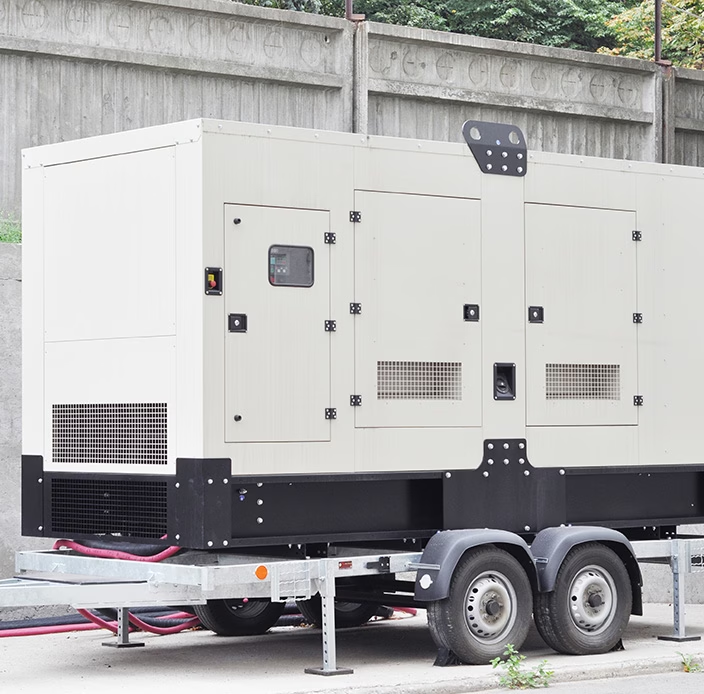
The Iridium 9604 is well suited to compact tracking devices for trailers, containers, generators, field equipment and other high value mobile assets. Devices can use LTE-M where coverage is available, then rely on Iridium SBD for small, critical updates beyond terrestrial networks.

UAVs and Autonomous Systems
The 9604’s small size, low weight and hybrid connectivity make it useful for UAVs, autonomous platforms and mobile machinery that need periodic status, location or health messages. For real time C2 or always-on IP connectivity, RockREMOTE UAV OEM may be a better fit.

Remote Sensor Reporting
For remote sensors sending small readings or alerts, the 9604 provides satellite-backed connectivity in a compact module. Integrated GNSS also supports applications where location and sensor data need to be reported together.

Industrial Telemetry and SCADA Alerts
The 9604 can support low data industrial telemetry, including machine status, alarms, small SCADA readings and periodic reports. LTE-M can be used where coverage exists, while Iridium SBD provides the satellite route for remote sites.

Lone Worker Safety
The combination of satellite, cellular and GNSS makes the 9604 useful for compact safety devices that need to send check-ins, alerts or location updates from areas where cellular coverage may not be reliable.

Environmental Monitoring
The 9604 is well suited to compact telemetry devices used on environmental monitor devices such as weather balloons and data buoys, where payload size, power use and reliable position reporting all matter.
Product Specifications
Connectivity and Positioning
- Satellite Network
- Iridium Low Earth Orbit satellite network
- Coverage
- Global, including oceans and polar regions, with a clear view of the sky
- Satellite Service
- Two way Iridium Short Burst Data
- Cellular Connectivity
- LTE-M (Cat-M1) with global band support
- GNSS
- Integrated GPS, GLONASS, Galileo and BeiDou
- Satellite Message Size
- Up to 340 bytes mobile-originated and 270 bytes mobile-terminated
- Network Control
- Independent application control of the Iridium SBD, LTE-M and GNSS subsystems
- Routing Logic
- Developer-defined cellular and satellite selection; automatic switching is not imposed by the module
Power and Physical
- Dimensions
- 16 x 26 x 2.4 mm (0.63 x 1.02 x 0.09 in)
- Module Footprint
- Approximately 400 mm² (0.62 in²)
- Operating Temperature
- -40°C to +85°C (-40°F to +185°F)
- Power Architecture
- Unified power architecture across the satellite, cellular and GNSS subsystems
- Low Power Operation
- Optimized sleep modes for power-sensitive IoT applications
Integration and Interfaces
- Command Interface
- Unified AT command set for satellite, cellular and GNSS functions
- Host Integration
- Single host interface for controlling all three subsystems
- Development Support
- SDK, development kit and reference designs available
- Module Platform
- Based on the u-blox SARA-R5 form factor
- RF Connections
- Two antenna connections: one shared by Iridium and GNSS, and one for LTE-M
Cellular Certifications
- Carrier Support
- Designed for global LTE-M carrier certification
- United States
- FirstNet certified
Frequently Asked Questions About Iridium 9604
The Iridium 9604 is supplied as a bare module in multi-unit packs, rather than as a single individual module. Ground Control will offer smaller pack sizes to help developers start prototyping and evaluation with a lower initial quantity than Iridium’s standard DevPak. Speak to us about smaller evaluation quantities, availability and the right route for your prototype or deployment.
Yes. Ground Control is developing RockBLOCK 9604, which is expected to be available in Q4 2026. It will bring the Iridium 9604 module into our RockBLOCK ecosystem, giving developers a simpler way to prototype and deploy hybrid SBD, LTE-M and GNSS connectivity with Ground Control airtime, Cloudloop Data, documentation and APIs.
Yes. RockBLOCK 9604 will be available with an integrated patch antenna option for Iridium SBD and GNSS. This antenna will support both satellite messaging and GNSS signal reception.
An SMA version will also be available for customers who want to use an external antenna. In this case, the customer-supplied antenna will need to support both Iridium and GNSS frequencies.
LTE-M will always require a separate customer-supplied external antenna, connected via SMA.
It depends on what you want to achieve. The 9604 uses the same Iridium SBD message sizes as the 9603N, but adds LTE-M cellular connectivity and integrated GNSS in a much smaller module. It’s a strong option if you want to reduce size, add cellular failover, or remove the need for a separate GNSS receiver.
Moving from 9603N to 9604 is not a simple drop-in replacement. You will need to consider antenna design carefully, as the 9604 brings together satellite, LTE-M and GNSS. However, if you do not need the cellular or GNSS functionality, the 9604 may still be worth considering as a smaller, lower cost SBD alternative.
No. The 9604 does not force automatic switching between LTE-M and Iridium SBD. Developers can define their own connectivity logic, from simple satellite failover when cellular is unavailable to more advanced routing based on location, coverage, message priority, power use or cost.
Choose Iridium Messaging Transport (IMT) if your application needs to send larger satellite messages or higher monthly data volumes. As a general guide, we usually steer customers toward RockBLOCK 9704 and Iridium Messaging Transport if they expect to send more than 10 KB of satellite data per month, or if they need to move data from multiple sensors, aggregated gateway data, compressed images or richer telemetry.
The 9604 is designed for small SBD messages, with LTE-M and GNSS added for hybrid connectivity. The 9704 is designed for larger message based satellite IoT payloads.
Start building with the Iridium 9604
Speak to our team about whether the Iridium 9604 is the right fit for your application. We can help you compare it with the 9603N and 9704, think through antenna and integration requirements, and plan how your data will move from device to Cloudloop and into your own systems.
Ground Control supports developers with Iridium hardware, airtime, self-service device management, documentation, APIs and Cloudloop Data, helping you get from first prototype to live deployment faster.