Sensors are getting smarter, and the data they produce is getting heavier. Image-based sensors, cameras and LiDAR are now the fastest growing category in the IoT sensor market, expanding at roughly 25-28% per year as autonomous vehicles and AI-powered inspection systems move from prototypes into full development.
This shift shows up in projects lightyears removed from self-driving cars: Okala’s smart bird boxes need compressed photographs, not just weight and temperature readings. Green Stream Technologies expanded its flood monitoring network by adding field imagery to water level alerts, so emergency managers could see conditions on the ground, not just read a number.
In both of these applications, and many, many more like them, they can’t afford the power draw or cost of a full IP-based satellite connection, but equally, couldn’t pack the data into the constrained message sizes of services like Iridium Short Burst Data, Viasat IoT Nano, or Globalstar.
That gap – more data than a simple message service can hold, but less than an always-on IP link requires – is exactly where Iridium Messaging Transport lives. In this guide, the goal is to help you decide if it’s the right solution for your remote IoT or tracking application.
Where IMT Sits Among Satellite IoT Services
We’ve been very selective here; Iridium and Viasat stand out in the field of satellite IoT as having tried, tested and reliable services with hundreds of thousands of endpoints. Iridium is truly global; Viasat is global save for the polar regions, and both offer two way connectivity, so you can be confident that data has been received. Here’s how they compare.
| Iridium SBD | Viasat IoT Nano | IMT | Iridium Certus 100 | |
|---|---|---|---|---|
| Connection Type | Message-based | Message-based | Message-based | IP-based |
| Maximum message size | 340 bytes | 10 KB | 100 KB | 22/88 Kbps continuous |
| Orbit | Low Earth Orbit (LEO) | Geostationary Orbit (GEO) | LEO | LEO |
| Latency* | ~10s | 15-60s | ~10s | 700ms |
| Power draw (transmit)** | 2.5 W | 7.8 W (0.65 A @ 12V) | 1.4 W | 7.25 W |
| Typical payload | Single sensor reading or status flag | Simple to moderate sensor readings | Aggregated readings from multiple sensors, compressed images, diagnostics | Real time command and control, continuous data streams |
*Latency figures are indicative. SBD and IMT figures are from Ground Control’s own testing. Certus 100 and IoT Nano figures are from Iridium’s and Viasat’s published data respectively. All figures vary with antenna positioning and sky visibility; see our signal strength guide for details.
**Figures are drawn from published specifications for a representative device on each service: RockBLOCK 9603 (SBD), ORBCOMM ST 6100 (IoT Nano), RockBLOCK 9704 (IMT), and RockREMOTE Mini (Certus 100). Different manufacturers measure and report power differently, so treat these as indicative of relative power draw rather than directly interchangeable numbers. Actual consumption depends on message size, antenna conditions, and ambient temperature.
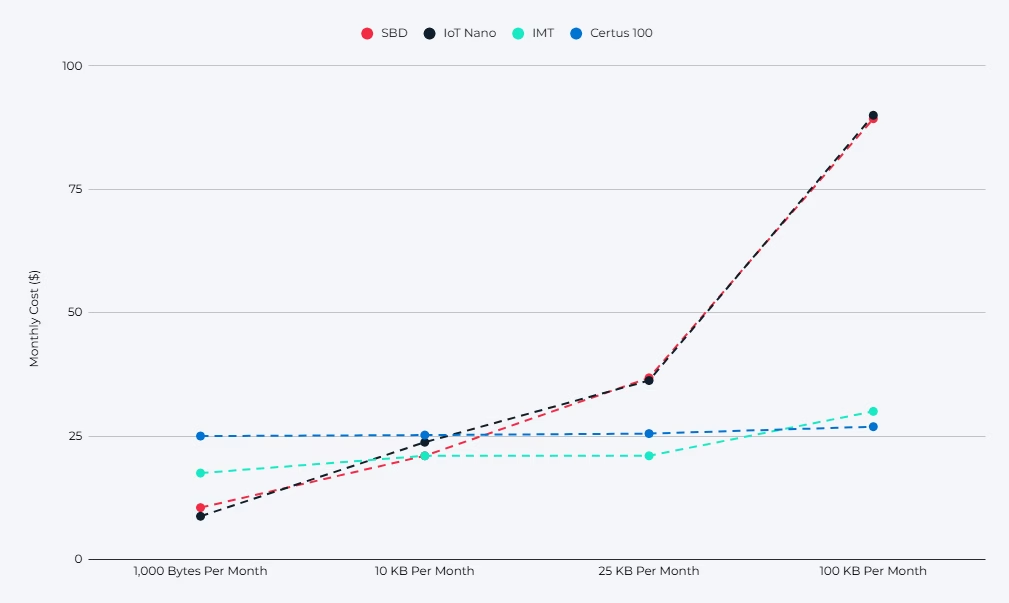
Comparison charts only tell you what’s technically possible, not what it will cost you to run at your actual data volume. That’s where the numbers get more interesting, and where the right choice can shift depending on how much you’re sending each month.
As a simple rule of thumb, if you’re sending <10 KB of data per month, Iridium SBD or Viasat IoT Nano will be most economical. Between 10-50 KB of data per month, IMT is most economical. The pivot is around 50-60 KB of data per month; at this point, Iridium Certus 100 becomes the most affordable choice (although there is still the power budget to consider).
It’s also worth noting that data pooling – where you share data across all of your connected devices – is offered by some airtime vendors, Ground Control included. This effectively gives you a buffer against incurring overage fees, which can be quite punitive in satellite IoT.
IMT vs NTN
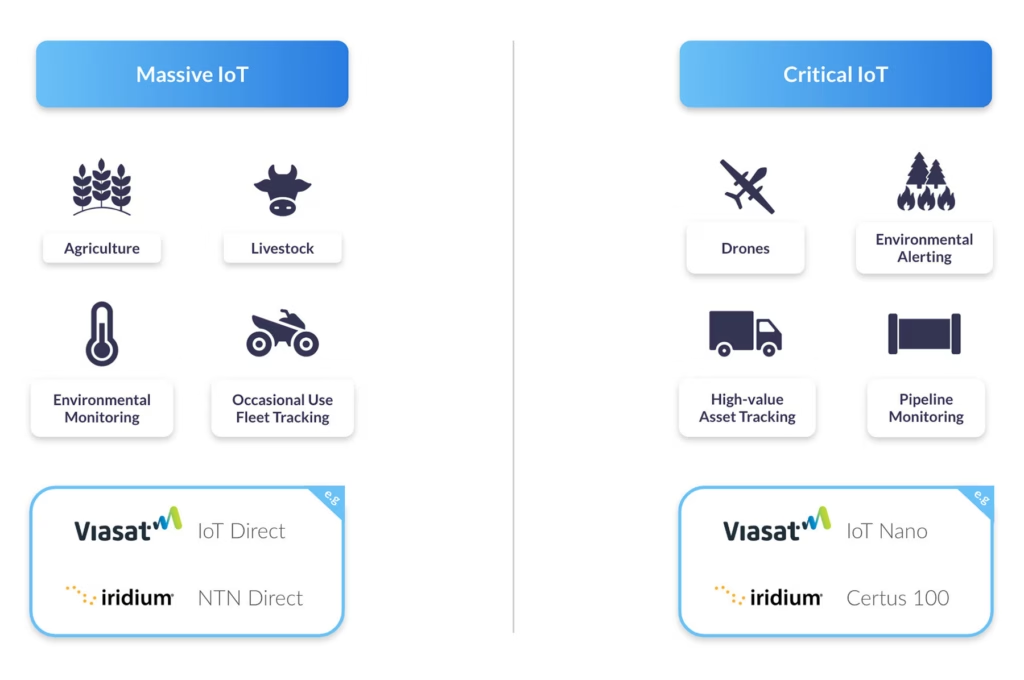
NTN is the umbrella term the industry has adopted for devices that can roam from cellular on to satellite networks, and back again, with (in principle!) no additional hardware required. The big news stories are focused around this capability being added to cellphones and cars; IoT is much more muted, with dates for commercial availability regularly slipping by six-12 months as the satellite networks focus on the most profitable applications.
However, when NTN services for IoT do materialise, they are expected to unlock a new area of satellite connectivity that’s been under-served to date: thousands of endpoints, moving very small volumes of data, very economically. Think wildlife or livestock tracking; connected mega-farms; hundreds of miles of oil, gas or water pipelines; smart forestry; remote railway track monitoring.
NTN’s sweet spot is transmitting simple sensor data such as a location or status update. IMT will transmit compressed images, or could pass the aggregated data from a LoRaWAN gateway over satellite; they’re at opposite ends of the scale when it comes to passing packet data, and there’s not a lot of point in putting these two head-to-head when their use cases are materially different.
How IMT Delivers the Balance
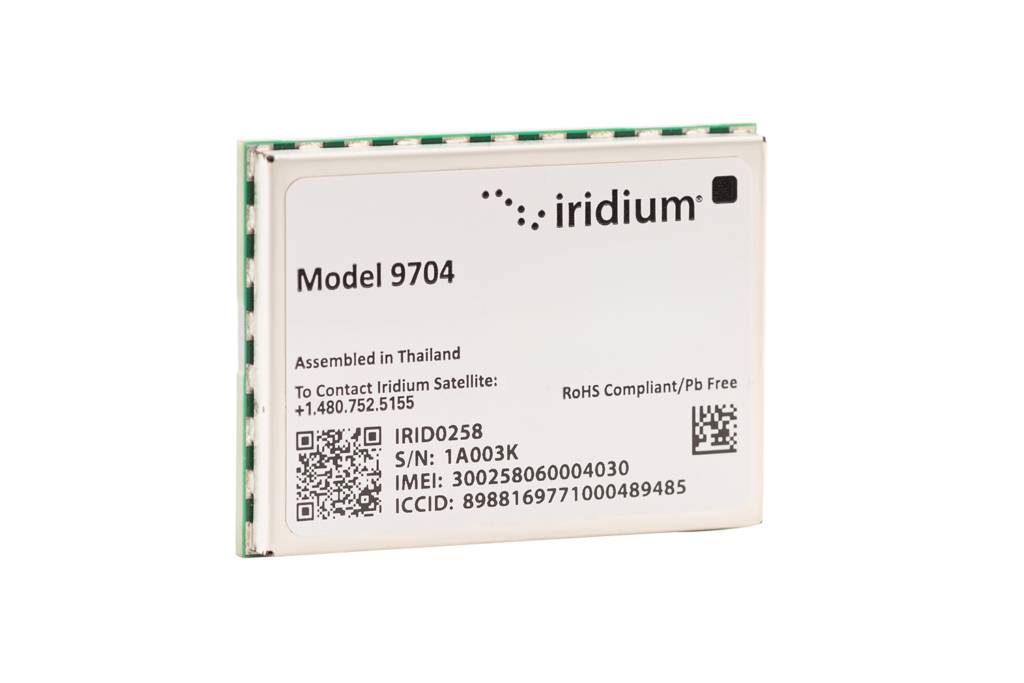
1. IMT runs on Certus hardware, without a Certus-style connection. The Iridium 9704 module is an IMT-only device, while the Iridium 9770 can support both IMT and the full IP-based Certus 100 service. IMT itself doesn’t hold an IP session open.
A device wakes, sends a discrete message using that higher-bandwidth Certus link, and goes back to sleep, rather than maintaining a continuous connection the way an IP session does.
That’s the actual mechanism behind the numbers in the table: payload capacity that approaches Certus 100’s ceiling, because IMT uses the same newer generation Iridium network architecture, but power draw that stays close to a small message-based device.
This doesn’t remove the discipline satellite demands, but it does soften it. Teams moving from cellular to satellite for the first time often expect data to behave the way it does terrestrially, continuous, cheap, effectively unlimited, and that assumption is usually the first thing satellite forces them to unlearn, regardless of which service they choose.
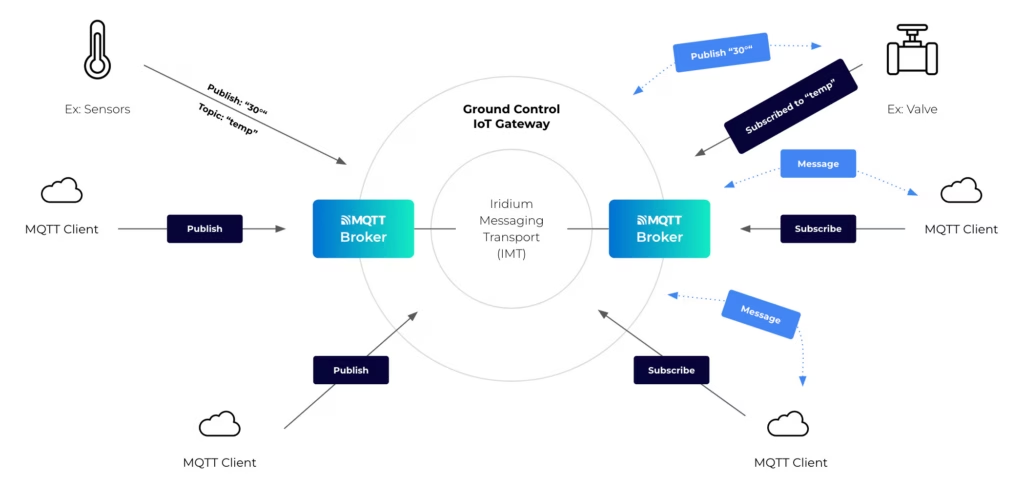
IMT doesn’t exempt you from that; you still need to think about payload size and transmission frequency in a way cellular rarely demands. What it does change is how much re-engineering that discipline costs you. If your application already speaks MQTT, Ground Control’s IoT Gateway places a broker on each side of the satellite link and uses IMT underneath it, so your application can keep working the way it already does, without being rebuilt around a proprietary messaging format the way a raw SBD or IoT Nano integration typically requires.
2. Delivery is confirmed, not assumed. A message sent over IMT is queued, transmitted, and acknowledged back to your cloud application, so your system knows definitively whether a message arrived rather than inferring it from silence.
3. Two hardware paths, depending on what else you need. IMT is available on two different kinds of device, and the right one depends on whether you ever need more than messaging.
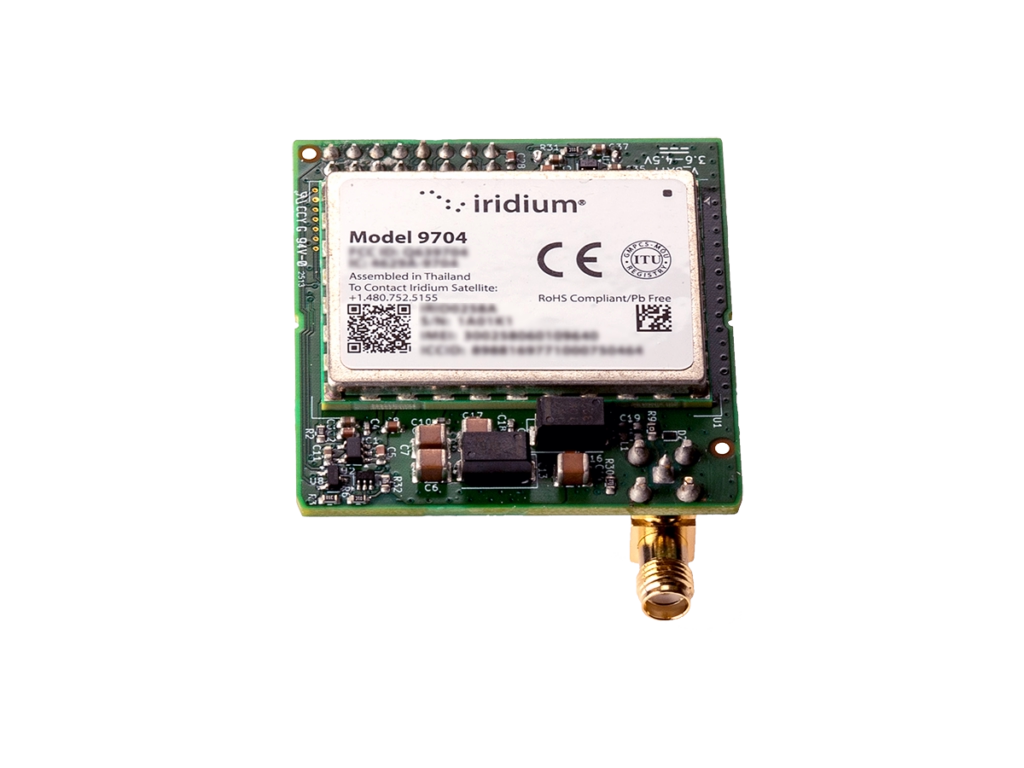
RockBLOCK 9704 is a message-only developer PCB, leveraging the Iridium 9704 module. It has no IP capability at all, which keeps power draw and cost as low as possible. This is the right choice if your application only ever needs to send and receive discrete messages.

RockREMOTE Mini OEM carries the same IMT capability, but uses the Iridium 9770 module, which also supports full Certus 100 IP connectivity. There are two distinct reasons to choose this over the message-only module. The first is flexibility: an occasional need for an open IP session, a firmware update, a diagnostic check, an ad hoc data pull, even if the bulk of traffic runs over IMT day to day.
The second is more deliberate: some applications split traffic by type on purpose, running routine payload data over IMT to keep costs and power draw low, while reserving Certus 100’s IP connection specifically for command and control. That split lets you get the economics of message-based transport for the data you send constantly, without giving up a proper IP channel for the moments you need to actively manage the device.
Both devices come in enclosed options with environmental protection and plug-and-play capabilities, if you aren’t building this connectivity into your enclosure.
Pulling It All Together
Answer these four questions to narrow down your options, and speak to the Ground Control team to confirm your judgement; we’ve over 20 years of experience and we are here to help.
1. How much data are you actually sending, and what kind?
A single sensor reading or status flag points toward SBD or IoT Nano, or potentially, an NTN service if available in your region. Aggregated readings, compressed images, or diagnostic bundles point toward IMT. Continuous data streams or live control point toward Certus 100.
2. How many endpoints, sending how little each?
High volume, low-per-endpoint deployments point toward NTN as it matures; fewer endpoints with richer payloads point toward IMT.
3. What’s your power budget?
Solar and battery-powered sites may not be able to support Certus 100’s power draw. IMT’s message-only hardware sits meaningfully lower; RockBLOCK 9704 draws roughly half of an SBD device’s transmit power while carrying a far larger payload.
4. Messaging only, or might you need an open IP session too?
A message-only device keeps things simple; devices leveraging the Iridium 9770 module, such as the RockREMOTE Mini OEM, add the option to use IP or messaging, whether as a fallback or a deliberate cost-splitting design.
IMT in the Field: Three Real Deployments
Mobilis: Years of Offshore Visibility, Without the Airtime Bill Spiraling
Mobilis builds offshore monitoring buoys deployed across more than 90 countries, tracking sea conditions, water quality, and system health for ports, dredging operations, and environmental compliance projects. Many of these buoys sit beyond dependable terrestrial coverage for months or years at a stretch, so losing the connection means losing operational visibility entirely.
Mobilis built its architecture around a deliberate split. Routine telemetry runs over IMT, with sensor measurements compressed into compact binary payloads before transmission, replacing verbose text with short identifiers and efficient numeric formats. That compression alone has dramatically cut data volumes, keeping airtime costs predictable as Mobilis adds more sensors and more buoys.
When an engineer needs to actually get into a deployed system, for diagnostics, configuration, or SSH access, Mobilis switches to a Certus 100 IP connection instead. The result is a fleet where shore-based teams can investigate and often resolve issues without a costly offshore visit, and where the architecture is repeatable enough to roll out across new international projects without rethinking it each time.
Read Case Study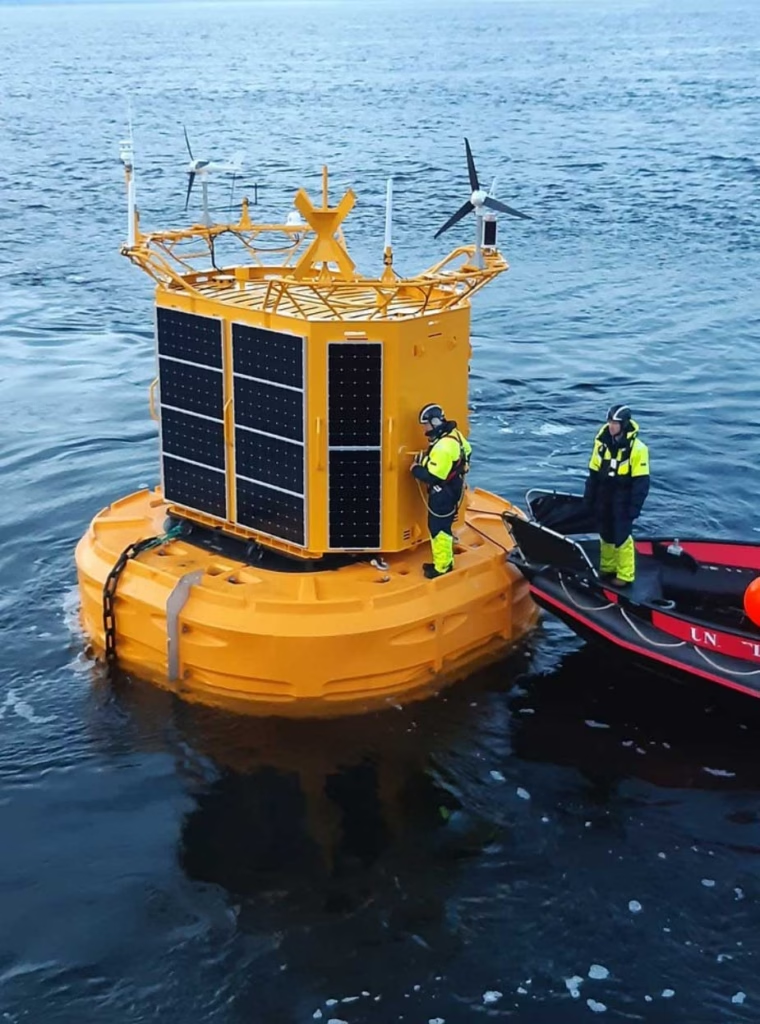
Green Stream: Five Minute Flood Alerts, With No Missed Windows
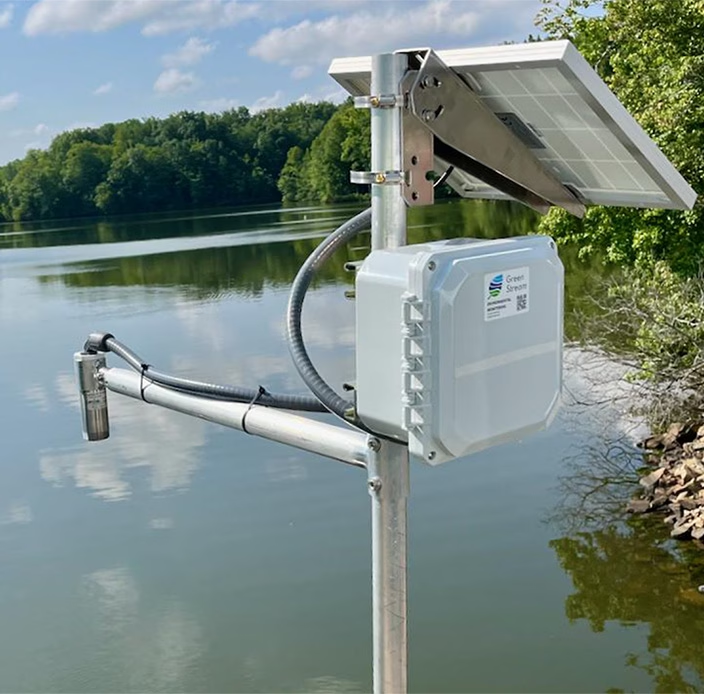
Green Stream’s flood monitoring network already worked well on Iridium Short Burst Data, reporting water levels, rainfall, and device status from rural riverbanks and coastal plains every five minutes, with no missed windows, even when severe weather knocked out cellular coverage nearby.
What Green Stream wanted next was more context alongside those readings; specifically, field imagery, so that emergency managers could see what conditions looked like during a fast moving event, not just read a number. SBD’s message size couldn’t carry a photograph. Moving to RockBLOCK 9704 on IMT solved that specific gap: the same five minute reporting cadence, on the same Iridium network, but now with room for messages up to 100 KB, enough to add compressed field imagery to the water level data Green Stream’s customers already relied on.
Read Case StudyOkala: A Bird’s Entire Life Cycle, Tracked From Anywhere on Earth
Okala’s smart bird boxes are very smart. A digital scale inside the box tracks weight changes closely enough to detect when a bird enters, how many birds are present, when eggs are laid, and when chicks fledge, with each meaningful change triggering an automatic photograph. All of it runs off-grid, in locations with no mains power and no cellular coverage, and reports back to Okala’s conservation platform from anywhere in the world.
Delivering that from a genuinely remote, unpowered location is what made IMT the right fit. RockBLOCK 9704’s power profile, under 5 mW asleep, peaking at 1.4W only during the brief moment of transmission, meant the system could run for extended periods without mains power or a large battery. And a message ceiling of up to 100 KB gave Okala room to send compressed photographs alongside the sensor data, not just a status flag. The result is a system now being explored well beyond its original bird box, for wildlife monitoring, ecological research, and anti-poaching applications, built around the same low power, image capable connectivity.
Read Case Study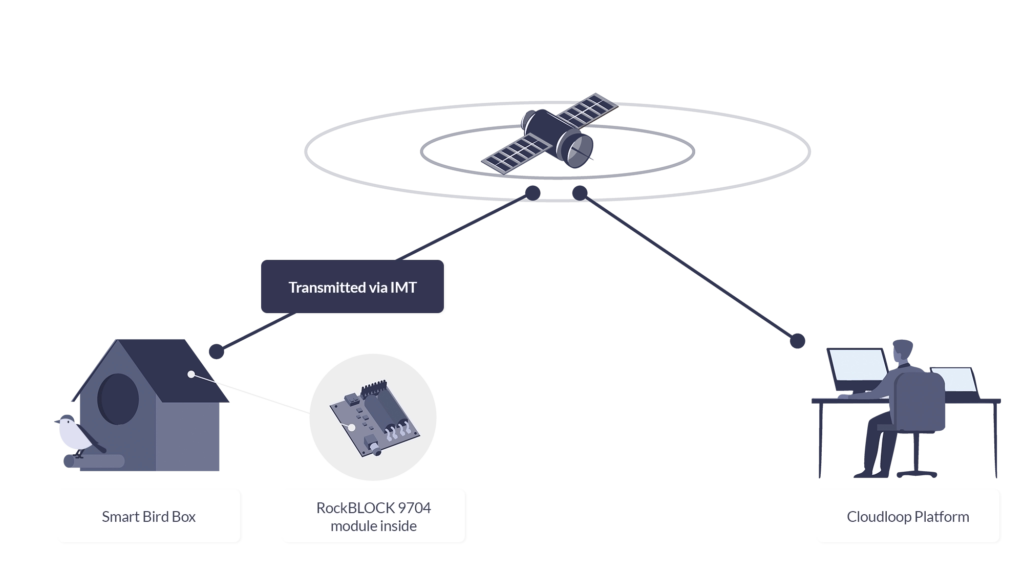
Getting Started
Remote connectivity options are proliferating, which is both good and bad news for systems integrations and IoT engineers; on the one hand, there’s almost certainly a solution that meets your data requirements and budget. On the other hand, there’s a huge amount of information – and some misinformation! – to wade through to figure out what will actually work for you.
We hope this guide has gone some way to ruling IMT in or out of your considerations, but ultimately, we’re here to help; we’ve over 20 years’ experience in satellite IoT, and we are satellite-network agnostic, so we’ll provide you with objective, expert advice on the network and service options that are the best fit for your application.
Contact us at hello@groundcontrol.com to get the conversation started.