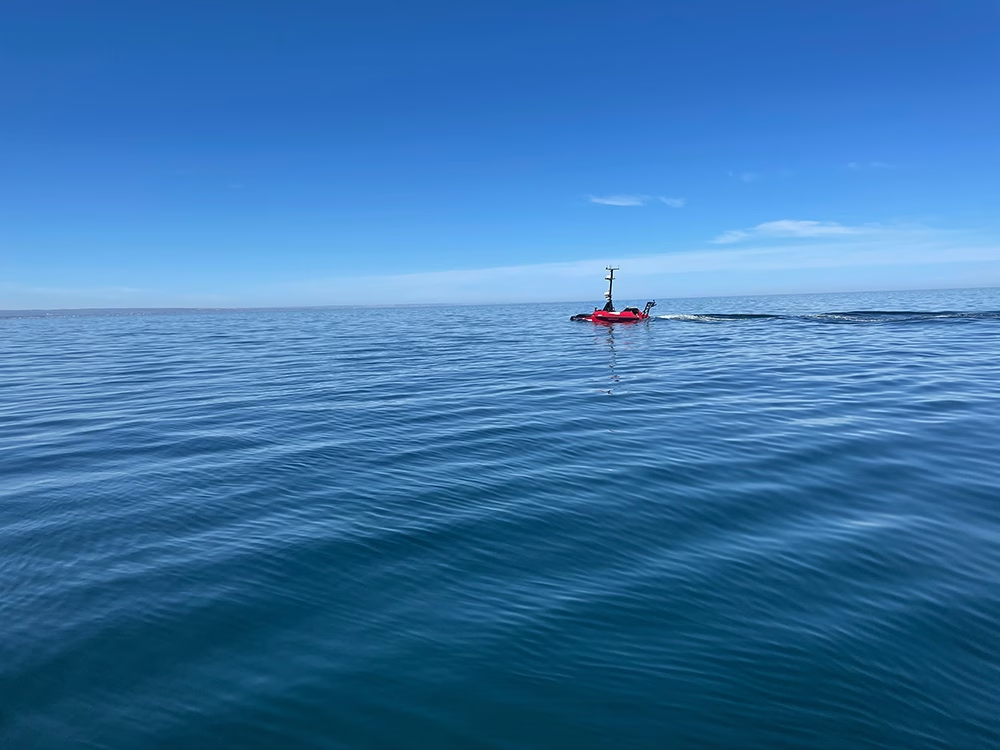
Satellite Connectivity for Uncrewed Surface Vessels
USV manufacturers need reliable communications beyond terrestrial and line-of-sight coverage.
Ground Control provides satellite connectivity for failover communications, real time remote C2, and resilient positioning in environments where GNSS may be jammed or spoofed.
Build Resilient Connectivity Into Your USV

Stay Connected When Primary Communications Fail
Maintain a reliable backup connection for essential commands, vessel status and telemetry when primary broadband, cellular or radio communications are unavailable.

Maintain Remote Command and Control
Keep operators connected to uncrewed vessels beyond terrestrial coverage, with reliable communications for remote control, mission updates and real time operational visibility.

Navigate Safely Through GNSS Disruption
Maintain access to trusted positioning and timing information when conventional GNSS signals are jammed, spoofed, degraded or otherwise unavailable.

Build Greater Resilience Into the Vessel
Combine complementary communications and positioning technologies to reduce reliance on any single system and strengthen resilience across the vessel’s wider architecture.
Choose the Right Satellite Link for Your USV
Not every USV needs the same kind of satellite connection, and not every type of data needs to travel in the same way.
A simple command or status update may only require a small, message-based connection. Remote command and control needs a more responsive, always-on IP link. Vessels operating where GNSS interference is a concern may also need an independent source of positioning and timing.
Ground Control offers technologies for each of these requirements, so you can build the right combination around your vessel and its mission.
Message-Based Control Modules
Not every communication between a USV and its operator requires a continuous IP connection. Commands, alerts, position reports and vessel health data can often be exchanged efficiently using message-based satellite communications, either as part of the vessel’s primary communications architecture or as an independent failover path.
For these workflows, we recommend Iridium SBD and IMT. Both provide highly reliable, global satellite coverage, making them particularly valuable when a USV needs to maintain essential communications beyond terrestrial networks or when its primary connection is unavailable.
SBD is suited to small, essential messages, while IMT supports larger messages for richer telemetry, mission updates and other structured data. Where the mission requires a continuous, interactive connection for remote C2, an IP-based satellite service may be more appropriate.
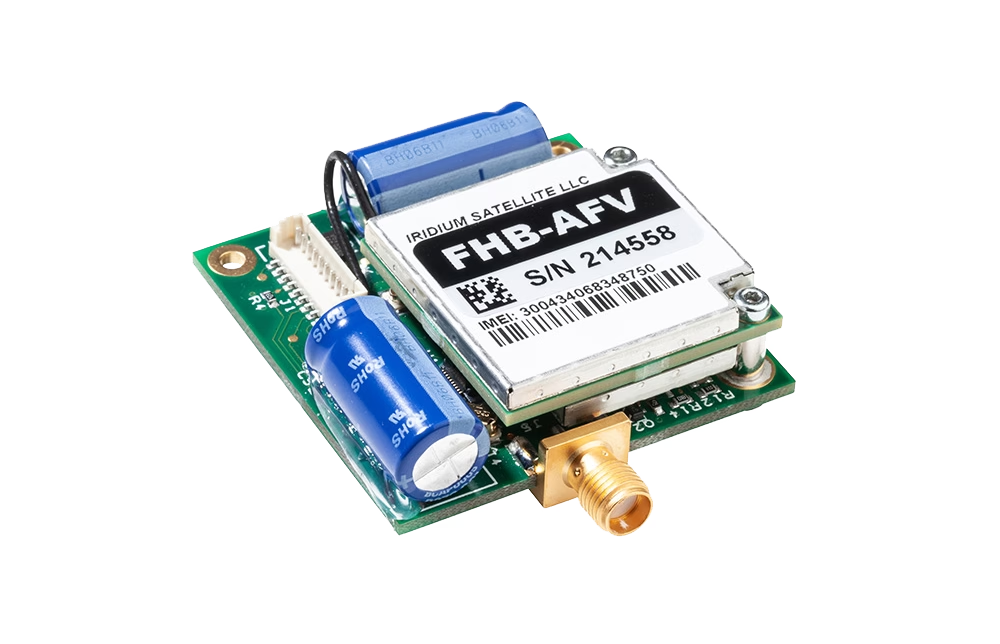
RockBLOCK 9603 (SBD)
A compact, low power satellite module using Iridium SBD for simple commands, alerts, position reports and essential telemetry.
Best suited to: Small messages, low data applications and simple backup communications.
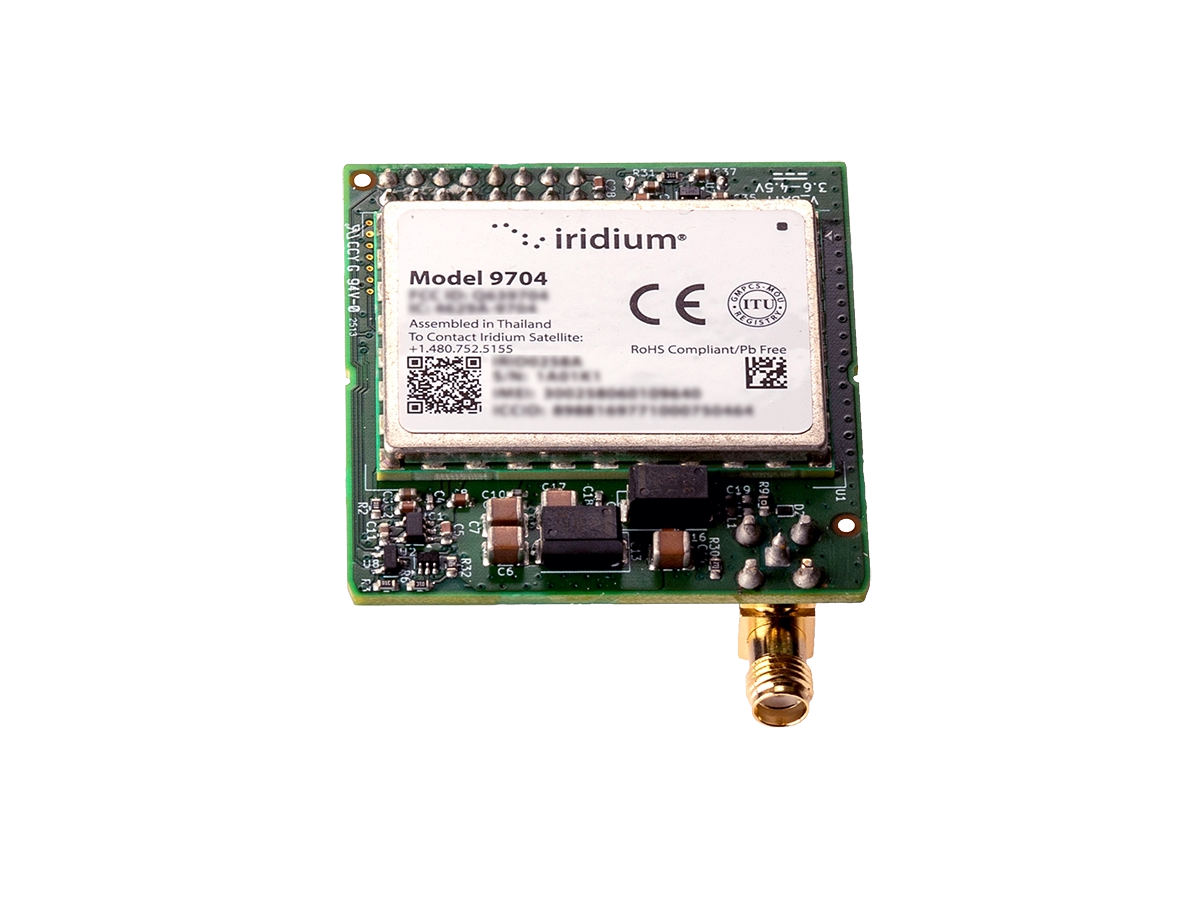
RockBLOCK 9704 (IMT)
A compact satellite module using Iridium IMT for larger messages and more capable message-based communications.
Best suited to: Richer telemetry, mission updates, logs and failover communications where more data needs to be exchanged.
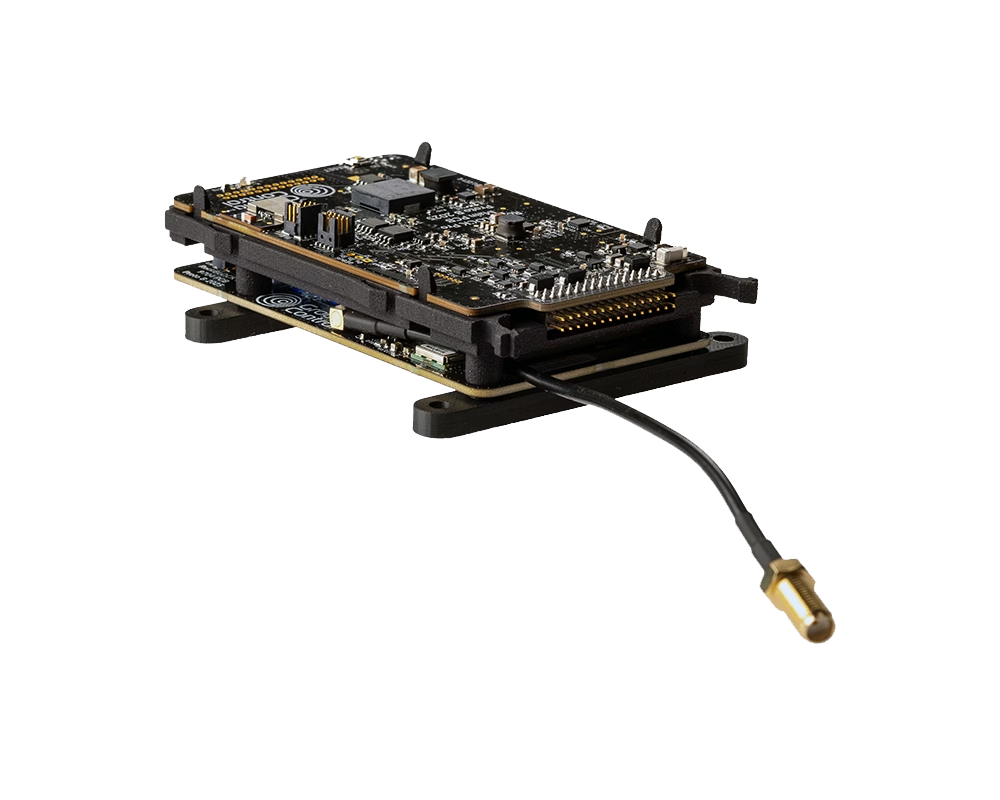
RockBLOCK Pro OEM (IMT)
A developer-ready Iridium IMT module with onboard processing to simplify integration into USV platforms.
Best suited to: OEMs that want capable message-based connectivity with less integration complexity.
IP-Based Satellite Connectivity
For remote command and control, a USV needs a responsive, continuous connection between the vessel and its operator.
Iridium Certus 100 provides always-on IP connectivity over the Iridium network, supporting remote C2, live telemetry, mission updates and operational oversight beyond terrestrial coverage.
It can be used as a primary communications link for lower bandwidth operations, or as a resilient secondary path alongside broadband satellite, cellular or radio services.
For manufacturers, this provides a dependable IP-based option that can be integrated into the vessel’s wider communications architecture.
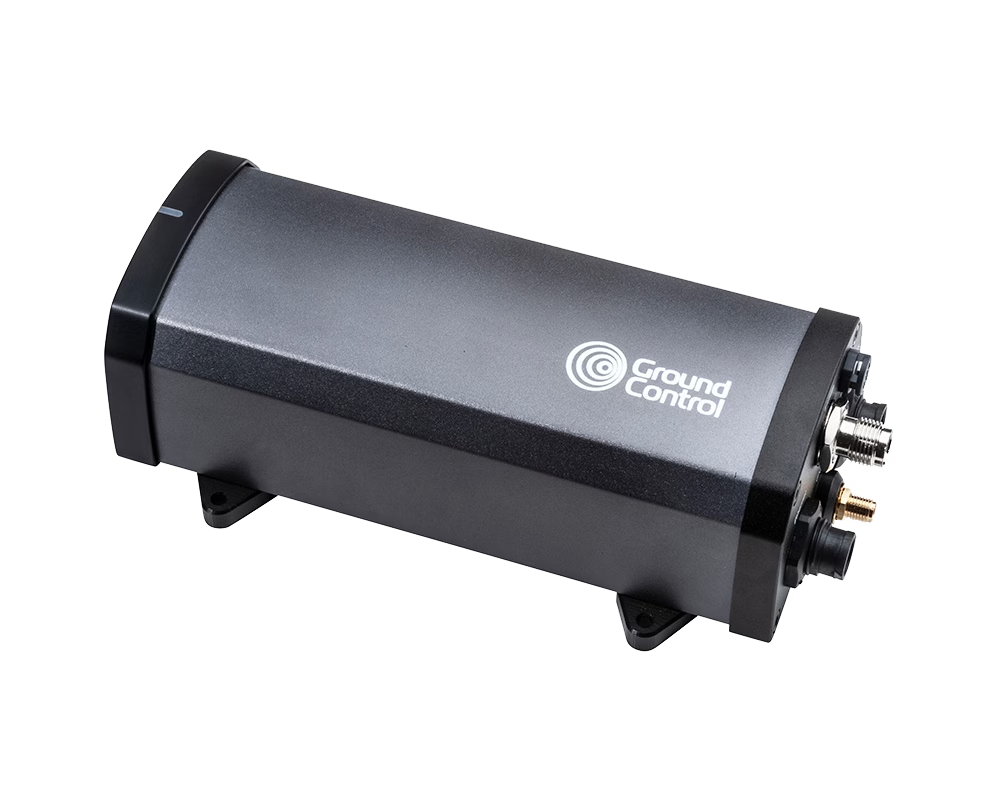
RockREMOTE Mini
Compact Iridium Certus 100 connectivity for remote command and control, live telemetry and other IP-based applications.
Best suited to: Remote operations that require a continuous, responsive satellite connection.
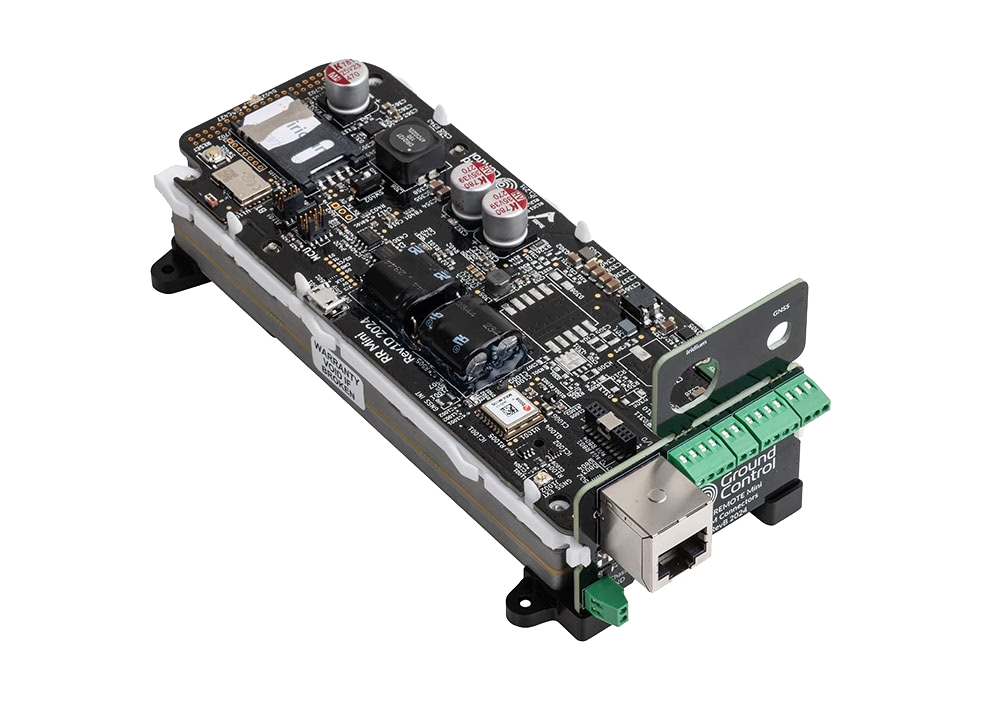
RockREMOTE Mini OEM
The same core Certus 100 capability in a board-level format designed for integration directly into an OEM platform.
Best suited to: USV manufacturers integrating IP-based satellite connectivity into their own vessel architecture.
Assured Positioning in GNSS-Denied Environments
Reliable communications are only part of the resilience challenge. USVs also depend on GNSS for positioning and timing, which can become a vulnerability in environments affected by jamming or spoofing.
For vessels expected to operate in these conditions, an independent source of positioning and timing can provide an additional layer of resilience within the wider navigation system.
Iridium PNT uses signals from the Iridium satellite network to provide an alternative source of position and timing information. This can complement conventional GNSS and help manufacturers develop systems that are better prepared for operations where GNSS cannot always be trusted.
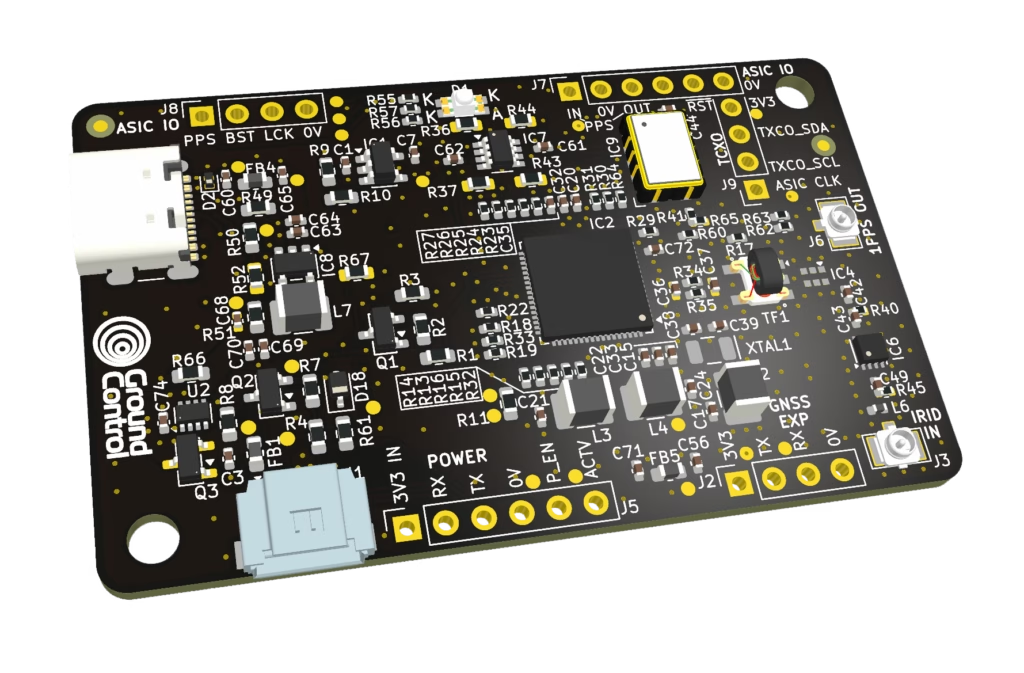
RockBLOCK APNT – Coming Soon
An evaluation and integration platform for Iridium-based assured positioning, navigation and timing.
Best suited to: USVs designed for defense, security and other operations where GNSS jamming or spoofing is a concern.
USV Satellite Communication Use Cases
Offshore Survey & Inspection
Keep survey, hydrographic and inspection USVs connected beyond coastal networks, with resilient communications for vessel status, C2 and mission data.

Intelligence, Surveillance & Reconnaissance
Support persistent maritime ISR with reliable C2, telemetry and positioning, including in remote or contested operating environments.
Maritime Security & Critical Infrastructure
Maintain oversight of USVs protecting ports, offshore energy, subsea assets and other critical maritime infrastructure.

Long Endurance Autonomous Missions
Keep autonomous vessels connected on extended missions, with communications designed to maintain visibility and control far offshore.

GNSS-Contested Operations
Add resilient positioning and timing for USVs operating where GNSS may be jammed, spoofed or otherwise unreliable.

Environmental & Ocean Research
Connect autonomous research vessels collecting ocean, weather and environmental data in remote waters for extended periods.
USV Satellite Connectivity FAQs
Because different satellite services solve different problems, and relying on one creates a single point of failure.
A high bandwidth link may handle payload data, video and other demanding applications, while a separate satellite path preserves essential C2, vessel status and telemetry if the primary service is interrupted or degraded.
For many USV architectures, resilience comes from combining complementary satcomms services rather than expecting one link to do everything.
The satellite link can be integrated as an independent path that takes over selected traffic when the primary connection is unavailable.
The switching logic sits within the wider communications architecture, so manufacturers can decide which data moves automatically to satellite, which traffic is deprioritized, and what should happen when the primary link returns.
Antenna placement has a major impact on link performance. The priority is a clear view of the sky, with as little masking as possible from masts, payloads or other vessel structures (read more about antenna placement).
For compact USVs in particular, it’s worth considering antenna location, cable runs and the effect of vessel motion early in the design rather than treating the satellite terminal as a late stage addition.
Message-based services are designed to cope well with intermittent connectivity.
Traffic can be queued and transmitted when the satellite link becomes available again, which is useful for telemetry, alerts and commands that need reliable delivery but don’t require a permanently open session.
Yes. We regularly work with OEMs during prototype and integration stages to help validate coverage, service behavior, data flows and hardware choices before a design is finalized.
That’s particularly useful where satellite is being used as a failover path, or where the vessel needs to support more than one type of satellite service.
Talk to a USV Satcom Expert
Tell us about your vessel, mission requirements and existing communications architecture. We’ll help you identify the right combination of satellite services and hardware for resilient USV operations.
Short lead times, OEM integration support (mechanical & electrical), and global airtime options are all available. Complete the form or email hello@groundcontrol.com, and we’ll respond within one working day.