Tag: Security & Defence
Military Satellite Communications: From IDSCS to Space Force and Beyond
With their reliable, secure and global connectivity, satellites have been instrumental in military communications for over half a century. Applications have covered everything from surveillance to operation support, and monitoring personnel to facilitating mobile command centers. A 2022 report revealed that the government and defense sector accounted for a staggering 42% of the $78.22 billion global satellite communication market. Looking ahead, the global military communication market is projected to reach $54.11 billion by 2029, driven by advancing technologies, including the Military Internet of Things (MIoT).
Throughout history, military personnel have relied on secure and dependable channels to transmit vital information across vast distances. Satellites have played a transformative role in revolutionizing military communications, empowering rapid data transfer, real-time intelligence gathering, and precise targeting. To fully grasp the significance and influence of military satellite communications on the defense industry, it’s essential to delve into its evolutionary journey.
Initial Defense Communications Satellite Program (IDCSP)
Official efforts to create a military communications satellite started in 1960 and since then, the United States has relied largely on four different satellite constellations to deliver timely, reliable communications. The Initial Defense Communications Satellite Program (IDCSP) created the Pentagon’s first near-geosynchronous communications system – the Initial Defense Satellite Communication System (IDSCS). The first satellite of this constellation was launched in 1966, and by July 1967 consisted of 19 satellites in total. These satellites enabled the transfer of high-resolution photographs during the Vietnam War, allowing for near real-time battlefield analysis.
Defense Satellite Communications System II (DSCS II) and DSCS III
Subsequently, constellations Defense Satellite Communications System II (DSCS II) and DSCS III, were launched between 1971 and 2003. The constellations comprised 16 and 14 satellites respectively. The transition from IDCSP to DSCS II and DSCS III marked a significant modernization of military satellite communication systems. Advantages included increased communications privacy and better compatibility with ground-portable units, enabling satellite communications in more dynamic environments.
Wideband Global SATCOM (WGS) Network
Initiated in 2002 by the Department of Defense, the Wideband Global SATCOM (WGS) network holds a significant position within military satellite communications today – welcoming a new era of capabilities and flexibility. First, each WGS satellite offers more SATCOM capacity than the entire DSCS constellation, providing a quantum leap in communications capacity.
Recognizing the system’s potential, in 2012 the WGS network expanded internationally, attracting partner countries including Canada, Denmark, Luxembourg, the Netherlands, and New Zealand. According to Heidi Grant, Deputy Under Secretary of the Air Force for International Affairs, these collaborations aimed to enhance interoperability, bolster trust, and increase capabilities and capacity for all partners.
The WGS system operates through three principal segments: Space (satellites), Control (operators), and Terminal (users). The space segment consists of 10 cost-effective, high-throughput Ka- and X-band satellites; controlled and managed by the USSF Space Delta 8’s 4th Space Operations Squadron and 53rd Space Operations Squadron. The ground segment boasts thousands of tactical SATCOM terminals. Today the system provides worldwide, high-capacity communications for various government agencies, the Department of Defense (DOD), international partners, and NATO.
The WGS network is a critical part of the US military’s communications infrastructure, but it’s important to note that it is not the only network they use. The US military utilizes a variety of other networks, including the Defense Information Systems Network (DISN) and the Joint Tactical Radio System (JTRS).
Satellite Military Communications Today: Introducing United States Space Force
The United States Space Force (USSF) was officially established in December 2019, when President Trump signed the National Defense Authorization Act for Fiscal Year 2020 into law. With a mission to “secure our Nation’s interests in, from, and to space”, the USSF became the sixth branch of the U.S. military.
The establishment of the United States Space Force had been proposed and discussed for several years prior, with many recognizing the growing importance of space within the larger context of military and national security concerns. Its creation consolidated satellite acquisition, budget and workforce, across more than 60 organizations enabling a more efficient, effective service for space operations.
One of the early successes of the Space Force was its role in providing early warnings of missile strikes against U.S. troops. Most recently, in August 2023, the USSF formed a new combative unit the 75th Intelligence, Surveillance and Reconnaissance Squadron (ISRS). The ISRS unit was formed with a clear mission: targeting adversary satellites, ground stations, and counter-space forces that can disrupt satellite systems during conflicts.
Russia and China, possessing ground-based anti-satellite weaponry, both pose significant threats to the WGS. Additionally, they’re developing a “peaceful” spacecraft, designed to reduce orbital debris. However, this “peaceful” spacecraft could, in theory, dismantle U.S. satellites, siphon fuel, and damage components including antennae and solar panels, raising concerns regarding the true intentions and implications for space security.
The Future of Military Satellite Communications
In the ever-evolving landscape of military satellite communications, the demand for robust and widespread connectivity is surging. As Mike Tierney, industry analyst at Velos puts it – “the one thing that is always needed is more comm… We never have enough comm to get after what we need to do. We need more comm to support the fight.” Notably, the government and defense sector’s increasing reliance on satellite communications, driven by the transformation of operational environments and a growing dependence on sensor data and ISR platforms, further propels this growth. This shift is evident in the escalating demand for High Throughput Satellite (HTS) capacity to meet the evolving requirements of government and military applications.
Charting the Course of Military Satellite Communications
- Security: Safeguarding the Final Frontier
- The Future Hub of Space Operations
- Combination of Commercial and Owned Communications
Security: Safeguarding the Final Frontier
As satellite reliance grows, security becomes not only paramount but also twofold. First, the war in Ukraine underscored satellite systems’ vulnerability to cyber warfare. In February 2022, a cyberattack disrupting Viasat’s satellite communications network was attributed to Russia’s military. Using wiper malware, the attack “bricked” KA-SAT modems across Europe, impacting tens of thousands of users, including Ukraine’s military. With cyber attacks becoming integral to military arsenals, the imperative for a robust defense strategy intensifies.
Second, the physical security of satellites demands attention. China’s pursuit of satellites with on-orbit repair capabilities raises concerns, as some could double as weapons. Similarly, Russia is developing laser weapons to target adversary satellites. DARPA’s (Defense Advanced Research Projects Agency) robotic arm, set to launch in 2024, aims to repair satellites in geosynchronous orbit and could serve as “bodyguards” against threats. Safeguarding satellites requires a comprehensive approach, addressing both cyber vulnerabilities and physical defense mechanisms.
The Future Hub of Space Operations
Beyond Space Force, plans for a military space station are underway. The Defense Innovation Unit (DIU) is soliciting proposals for an autonomous orbital outpost, laying the foundation for potential human habitation and docking with manned spacecraft. The DIU envisions the outpost supporting diverse functions, from microgravity experimentation to logistics and training. While its primary goal is currently experimentation, the solicitation hints at broader ambitions, including a military presence in geosynchronous orbit.
Combination of commercial and owned communications
The war in Ukraine also highlighted the agility and responsiveness of commercial satellites, particularly in critical infrastructure support and imaging during conflict. Commercial providers like SpaceX’s Starlink played pivotal roles. Lt. Gen. Michael Guetlein emphasizes a pragmatic approach: “buy what we can and only build what we must.”
However, in allocating nearly $13 billion over the next five years, the Pentagon signals a continued commitment to the importance of government-owned capabilities. As Mike Tierney from Velos notes: “this budget doesn’t reflect a pivot to a greater adoption of commercial capabilities in lieu of government-owned and operated capabilities.” Suggesting that the delicate balance between security, innovation, and pragmatic resource utilization is steering the future trajectory of military satellite communications.
Need a Defense Communications Solution?
At Ground Control our dedication to supporting defense and government organizations reflects our ongoing efforts to evolve with the dynamic landscape of the defense sector. As a trusted partner, we are committed to offering the highest level of service, straightforward procurement processes, and around-the-clock support.
So if you’re looking for reliable and cutting-edge satellite communication solutions tailored to the unique requirements of the defense industry, contact our team today to explore how our solutions can enhance your communication capabilities and contribute to the success of your mission.
Harnessing Water, Defending Data: Cybersecurity in Hydropower and Dam Facilities
Dams and hydropower facilities have long been attack targets, with a history that spans wartime conflicts. During World War II, the British Royal Air Force formed a group of pilots known as the Dambusters. Their mission: to destroy critical dams in Germany; considered ideal targets due to the significant disruption they could inflict on both water and power supplies.
In 2023 however, the landscape has somewhat shifted. The global cost of cybercrime is projected to soar to $8 trillion. Due to the immense value of data and the potential for widespread disruption, energy and utility companies continue to be prime targets.
Today, the hydropower and dam industries, like many others, stand at a crossroads where innovation and cybersecurity converge. Even a seemingly minor misstep, for instance, untimely dam operations, can unleash havoc upon nearby towns, significantly hampering supply chains and inflicting widespread destruction upon adjacent regions.
Types of cyber threats: State-sponsored and hobby
Cyber threats can be split into two main types. The first is state-sponsored cyber attacks. Those that are planned and funded by governments or nation-states. Kevin Curran, professor of cyber security at Ulster University, recently described cyberattacks by the UK’s enemies as becoming “relentless”. As an example, the Cozy Bear and LockBit hacker groups are believed to be associated with one or more intelligence agencies of Russia, the latter having known links to Russian nationals.
Secondly, hobby-hacker attacks. These hackers are usually motivated by either monetary gain or a wish to cause mischief. One of the most notorious examples is the Colonial Pipeline attack. The company paid the hacker group known as DarkSide 75 bitcoin ($4.4 million) to obtain a decryption key which enabled the company’s IT staff to regain control of its systems.
Growing intricacies of infrastructure create more vulnerabilities
The rising integration of Internet of Things (IoT) devices and sensors within the hydropower and dam sector has brought greater infrastructure complexity, creating more vulnerabilities for several reasons:
- Increasing number of attack surfaces: Every device connected to the network becomes a potential target for attackers. The more IoT devices, sensors and so on that are introduced, the further the range for potential attacks is increased.
- Device security: The substantial volume and often remote location of IoT devices increases the difficulty of keeping firmware and software up-to-date. Moreover, their physical dispersion can expose them to theft and tampering.
- Lack of standardization: Different manufacturers exercise varying levels of security. The lack of standardisation can make it challenging to implement consistent security practices across all devices.
- Legacy systems: Many critical infrastructure systems still rely on older, legacy technology that may not have been designed with modern cybersecurity standards in mind. These systems are often more vulnerable to attacks.
- Interoperability challenges: Ensuring that different IoT devices and systems work together can be challenging. This can lead to security compromises to enable connectivity, potentially weakening overall security.
- Network visibility: Depending on the network’s connectivity and device location, a 360 view can be difficult to achieve and maintain, making it more difficult to detect and respond to cyber attacks.
- Data privacy: IoT devices often collect and transmit sensitive data. Inadequate data protection measures can lead to data breaches, compromising privacy and potentially providing valuable information to attackers.
The convergence of operation and information technology
Traditionally operational technology (OT) and information technology (IT) data streams remained distinct, which had the benefit of keeping OT systems ‘air gapped’ from the internet, and therefore at limited risk from hacking. As technology unifies OT and IT, it brings both efficiencies and risks. The efficiencies are numerous: by combining SCADA data with the systems that manage physical infrastructure, you can autonomously optimise performance.
But because OT systems haven’t been targets in the past, they’re not always built with security in mind. Passwords are often left at the default character string; remote monitoring for suspicious behaviour hasn’t been implemented; patches are not implemented as frequently as they should be.
In this evolving landscape, it’s critical that security teams are aware of these vulnerabilities and take steps to address them, safeguarding critical infrastructure in the hydropower and dam sector.
Lessons from successful cyber attacks
A successful cyber attack involved Queensland’s Sunwater, a water supplier targeted in a nine-month-long breach. The breach, occurring between August 2020 and May 2021, exploited vulnerabilities in an older system version, granting unauthorised access to customer information stored on their web server. While the hackers didn’t compromise financial or customer data, they left behind suspicious files, redirecting visitor traffic to an online platform.
The subsequent Water 2021 report underscored the importance of immediate action to rectify ongoing security weaknesses, emphasising software updates, stronger passwords, and vigilant network traffic monitoring as crucial safeguards.
In another notable case, the LockerGoga ransomware group inflicted significant damage upon Norsk Hydro. Norsk Hydro was forced to shut down multiple production facilities, impacting 35,000 employees, across 40 countries and resulting in approximately $71 million in financial losses. The cyberattack stemmed from an employee unknowingly opening an infected email three months prior.
Norsk Hydro’s response, however, garnered accolades. The company chose not to pay the ransom, instead engaging with Microsoft’s cybersecurity team to restore operations and remained committed to transparency throughout the ordeal. As Torstein Gimnes, Corporate Information Security Officer emphasised – “You need to rebuild your infrastructure to be safe and be sure that the attacker is not still part of it.”
An immediate IT shutdown was implemented to prevent further spread and only trusted backups facilitated by Microsoft’s team were used. Following the attack, a commitment to employee training, multi-factor authentication, regular updates, and resilient backup solutions were introduced to bolster security.
These cyber attacks underscore the importance of proactive measures and resilience in the face of evolving threats and crucially, they highlight the importance of engaging and sharing knowledge between peers. As Eric Doerr, General Manager of the Microsoft Security Response Center puts it – “When companies do this, it makes us all better and makes the attackers work harder.”
Ensuring the security of critical components in hydropower and dam facilities
Assess cyber risks
- Identify critical assets: Which assets are most important within the facility/network?
- Assess potential risks: What are the potential threats to the identified critical assets? Data breaches, malware attacks, etc.
- Prioritise risks: Which potential risks are more likely to occur and which would have the most significant impact? By prioritising risks, companies can focus resources accordingly.
Mitigate cyber risks
1. Safeguard data
Ensuring data security encompasses data encryption and authentication protocols, coupled with monitoring and restricting physical access to facilities. While firewalls and VPNs serve as effective safeguards when data traverses public internet infrastructure, companies can mitigate these risks entirely with the deployment of private lines or a secure private satellite network like TSAT – designed specifically for SCADA data.
In addition, as mentioned above, recent trends show organisations gravitating toward a unified data stream for both IT and OT. Companies wishing to do this must ensure they have appropriate control system boundary protection to prevent unauthorised access, for example, SD-WAN coupled with a next generation firewall.
2. Secure physical access
Physical security measures not only deter potential threats but also serve as the first line of defence against cyberattacks. By strictly limiting and monitoring who can physically access a facility, organisations can significantly reduce the risk of malicious actors gaining direct entry to sensitive systems and data.
Further, when physical access is under surveillance, companies can identify unauthorised access or unusual activity, allowing them to swiftly intervene and halt a hacker’s progress.
3. Prioritize firmware and software updates
Software and firmware updates are essential tools in addressing known vulnerabilities, strengthening system resilience, and ensuring the integrity of critical software components. By regularly applying updates, organisations stay ahead of cyber threats that often exploit outdated software to breach systems and steal sensitive information.
Firmware updates for hardware devices, on the other hand, enhance device functionality and bolster security by patching potential vulnerabilities. Emphasising the importance of prompt updates and establishing a structured update management process is key. If your dam or hydropower facility is in a remote, unmanned location, ensure that you have the ability to remotely protect your infrastructure with over-the-air (OTA) firmware updates.
4. Staff training
Human errors often open the door to cyber incidents, so it’s crucial organisations equip their employees with the latest cybersecurity knowledge. Early detection and response, facilitated by well-informed and vigilant employees, can prove instrumental in preventing breaches. A prime example is a vigilant staff member who thwarted an attempt to tamper with sodium hydroxide levels in Florida’s water supply last year.
Moreover, robust incident response plans are essential. Employees must know how to contain incidents, restore systems, and investigate root causes. Ultimately organisations need to be confident that if their facility does experience a cyber attack, staff can react efficiently and effectively. Bolstered by continuous training, workshops, webinars, and the cultivation of a security-conscious culture, enhances cybersecurity resilience. It also promotes information sharing among peers, strengthening collective efforts to combat cyber threats.
5. Redundancy and backup
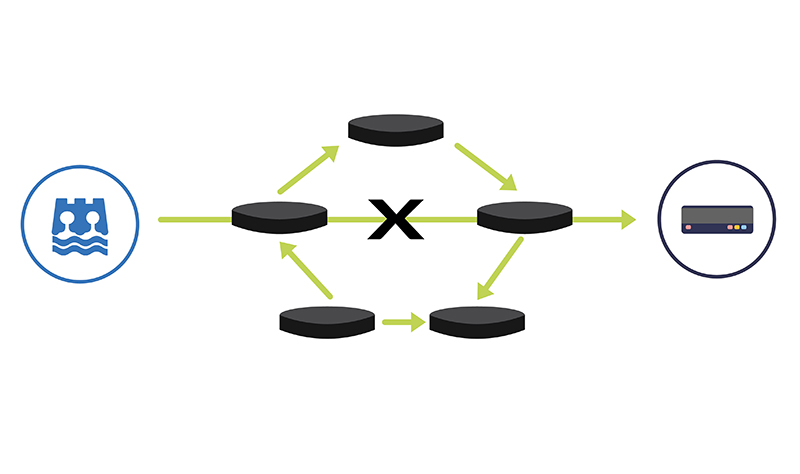
Redundancy and backup systems serve as critical safeguards against unforeseen vulnerabilities and disruptions within network infrastructure. By creating duplicate or alternative pathways for data transmission and network operations, redundancy measures ensure that even if a primary system or connection fails, there’s an immediate and seamless switch to a secondary, secure option. This not only mitigates the risk of single points of failure but also enhances the overall reliability of the system.
One of our largest clients has satellite implemented as their third connectivity failover (cellular first, fibre second). Their satellite setup hasn’t failed once in 27 years and is the system they consider the most reliable. With the hydropower and dam sector increasingly reliant on interconnected digital systems, redundancy and backup solutions stand as formidable defences, ensuring continuous operations and protecting against potential cyber threats and disruptions.
The above list is by no means exhaustive, but it does highlight a fundamental truth: In the constantly evolving landscape of cybersecurity, proactive measures are a necessity. Anticipating and addressing vulnerabilities before they become threats is pivotal to achieving and maintaining robust cybersecurity practices. If you would like to explore your connectivity and/or data security options with our experienced team, don’t hesitate to get in touch by emailing hello@groundcontrol.com.
Secure Your Infrastructure
Our team are experts in getting data from hard-to-reach places – so you don’t have to be.
To talk to the team about your connectivity options, challenges and associated data security, simply fill in the form.
How RockSTARs Are Being Used to Keep Remote Personnel Safe
Most of us are familiar with the limitations of terrestrial networks. However, for those working as a field engineer or as part of an expedition team; who have been a competitor in a yacht race or taken part in military training; you’ll also know how important it is to overcome this limitation. Cellular connectivity only covers 15% of the globe and there are many reasons why someone may take the roads less travelled. For the purpose of this blog, the term remote personnel refers to anyone travelling outside cellular coverage regularly, or for an extended period of time – be that for work or leisure.
For both safety and well-being, it’s essential that remote personnel have access to two-way communication that functions both in and out of cellular range. Determining a tracking and communication plan will reduce the chance of accidents and ensure swift response times in the case of an emergency; and by encouraging the use of two-way notifications and alerts, deliver peace of mind. This is where Ground Control’s RockSTAR device can help.
Introducing the RockSTAR
The RockSTAR is a lightweight, rugged, handheld device that can be used to send and receive short messages (like SMS and short emails) and track GPS location, through the Iridium satellite network and back to Earth. Simply, if the unit has a clear view of the sky, it’ll deliver two-way communications and virtually real-time tracking, anywhere and everywhere.
How do RockSTAR devices work?
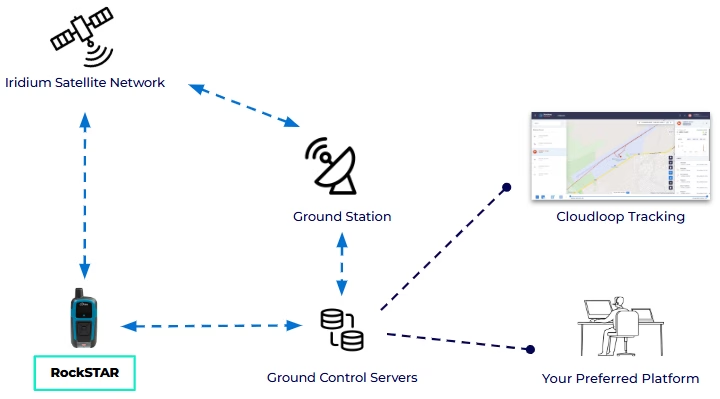
Each RockSTAR unit houses an Iridium 9602 modem. This modem allows the device to leverage the Iridium Satellite network – using the ‘short burst data’ (SBD) service, to support location and messaging data transmission.
The RockSTAR can be set to ‘wake up’ and transmit your location anywhere between 15 seconds and once a day. It’ll obtain a position using the GPS satellite network, and then transmit that position back to Ground Control HQ using the Iridium satellite network. In 1-2 seconds, the position can then be visualised on our easy-to-use web-based system or automatically set up to relay this information direct to your application.
For example, if you’re a field technician working in a remote area, location data can be sent direct to whichever security tracking application your employer is using. What’s more, RockSTAR units have a great battery life. Even transmitting location data every 15 minutes, a device will last 3 weeks between charges.
In addition to SBD being relatively low cost, there are no annual contracts, delivering flexibility for those who only require a satellite device like the RockSTAR for a specific trip or project. In short, if you or your team don’t need to use a device for a month or more, there won’t be any monthly fee, simply pay ‘per month, per device’.
Additional RockSTAR features
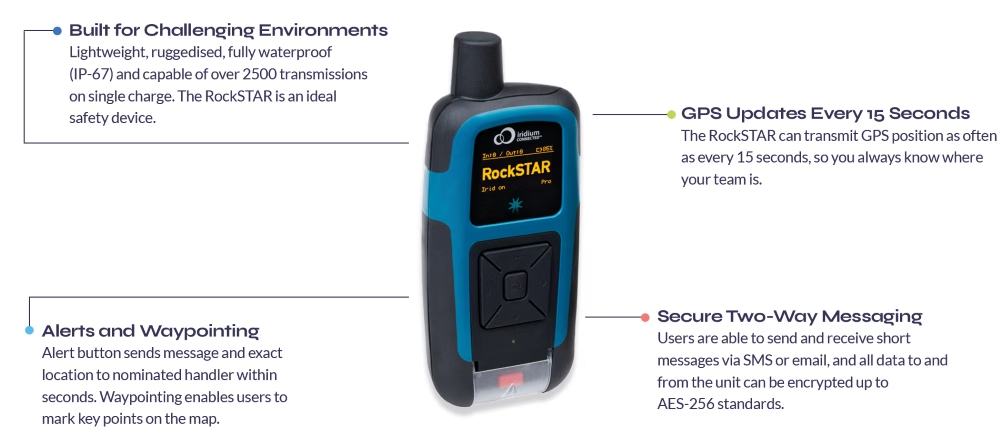
Designed and built in the UK, the RockSTAR satellite device has also evolved throughout the years to better meet customer needs. The form factor has noticeably contracted, with the current device standing at just 144mm; other developments have helped create a feature-packed handheld unit.
RockSTAR units can be used to send and receive short messages, including SMS and short emails to nominated groups. Groups are created and amended in the device’s settings and can include mobile phone numbers, email addresses and servers. Using the device itself, you can send pre-set messages or free text; the RockSTAR can also be paired with a mobile or tablet via bluetooth, enabling truly global two-way communications.
The RockSTAR unit is configured with a number of alert options; for full details please see our article on RockSTAR alerts. All six device buttons can be activated by a user in gloves and the main SOS function is initiated via the button at the bottom of the device. When pressed, the unit immediately transmits your location and pre-set emergency message to those nominated within the device’s first-responder group.
The RockSTAR unit can also be used for waypointing, so key points of interest or concern (in the case of wildland firefighting) can be marked while you’re out in the field, and then viewed on our web-based system.
Common RockSTAR applications
Because the RockSTAR device is ruggedized and waterproof, with a great battery life, the applications are vast. Our RockSTAR customers aren’t just worldwide, they’re travelling by land, air and sea. Operating in some of the most remote and harsh environments on Earth. To demonstrate this range, we’ve collated some of the most common remote personnel use cases supported by our RockSTAR devices today.
MILITARY EXERCISE MONITORING
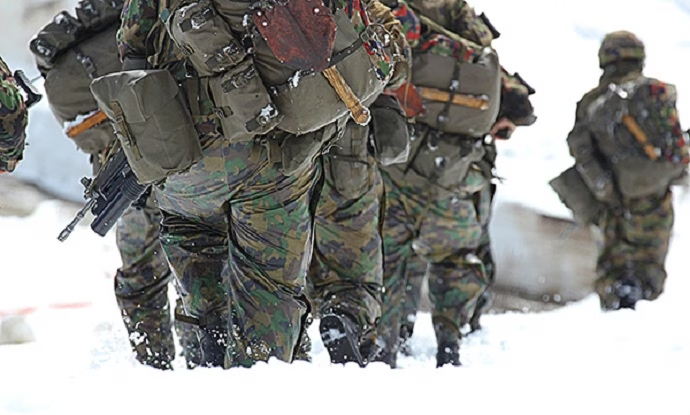
Military training exercises are often held in remote locations, under challenging conditions. This can place significant strain on soldiers, thus tracking services are often employed for peace of mind and if needed, timely, mission-critical response. Ground Control worked in partnership with JCSys to tailor the RockSTAR hardware and firmware to meet the very specific and stringent requirements of the UK’s Ministry of Defence. The result? A compact and durable device able to track soldiers in all weather and military attire, and pair with BLE heart rate monitors. Additionally, developer-friendly APIs meant JCSys were able to securely receive telemetry data and add the required context to support a safe training environment.

TRACKING ANTARCTIC EXPLORERS & RESEARCHERS
RockSTAR devices are ideal for use in extreme environments where wifi or cellular coverage isn’t widely available. As well as being waterproof, units can operate in temperatures between -30 to 60 degrees Celsius and be operated by users in gloves. What’s more, currently Iridium is the only network able to offer truly global coverage – including both poles. We’re proud to have supported both researchers and explorers on multiple Antarctic trips, and our RockSTAR devices have even been used to monitor icebergs across Northern Canada.
SUPPORTING RURAL-BASED POLICE OFFICERS
It is the duty of all law enforcement to “protect life and property through the enforcement of laws and regulations”. This includes serving those in rural-based communities, where cellular coverage may not be available, or intermittent. As all data to and from RockSTAR units can be encrypted up to AES-256 standards, the RockSTAR can be a great, relatively inexpensive solution for two-way communications. We’ve worked with various police units and law enforcement rangers, ensuring personnel maintain connected and tracked at all times.


SAFEGUARDING REMOTE MEDICAL WORKERS
It’s essential that when medical personnel are caring for patients in remote areas, they can be reliably tracked and monitored. To ensure their safety, devices which are lightweight and discreet, with a long battery life are essential. Many security firms have specific applications for remote and lone worker safety, that can be utilised alongside devices such as the RockSTAR to provide a complete, secure solution. We have worked with many companies, creating/enabling specific alert criteria via our RockSTAR devices, even simplifying our menu to ensure it’s as easy as possible for users to access key functions.
What sets the RockSTAR apart from other satellite devices?

Flexible, Secure APIs
We understand many customers will have their own remote worker and/or security applications – so we make getting that data easy. All data to and from the unit can be encrypted up to AES-256 standards, but we’re still able to give customers access to some of the lowest lines of code. This ensures all data transmissions are available in the required format, without compromising security.

Truly Ruggedized
The RockSTAR has been built to withstand the most challenging environments. Tried and tested everyday, everywhere from the Antarctic to the Australian desert, the Pacific Ocean to Rocky Mountains in North America. The device has a number of certifications including FCC and CE MIL-810 F/G for ruggedness, and is waterproof to IP-67.

Customization Opportunities
As manufacturers we have the flexibility to customise the device on larger orders. These ensure the RockSTAR is the best fit for our client’s project. They also enrich the device’s functionality for future users. For example, when working with JCSys, to better safeguard soldiers in the UK, RockSTARs were adapted to disable switch off without a PIN code.
GPS Tracking for Teams
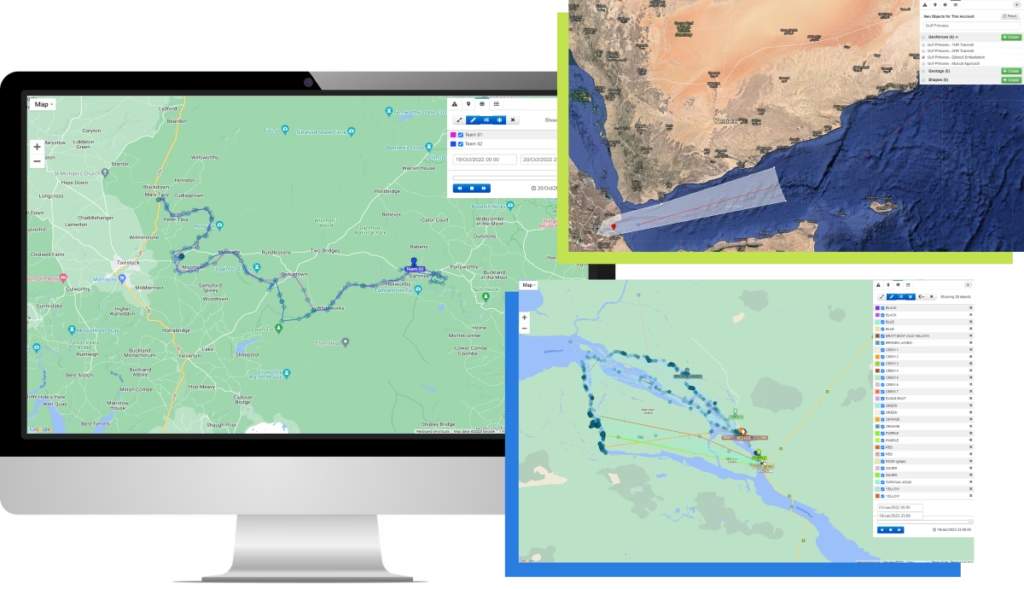
Whether you and your team have one RockSTAR or 1,000, Ground Control’s easy-to-use web platform simplifies device management. From the platform, you can track all of your field workers’ positions simultaneously, both in real-time and across set periods of time.
Users can divide devices into relevant groups and set up multiple platform users with differing permissions. For example, some team members may only need to ‘view’ RockSTAR positions, while others could be allowed to send commands and configure devices in the field.
Within the platform users are also able to:
- Add line rental and credits
- Monitor alerts from all devices
- Set up relevant geofences, ensuring teams receive early warning if a device enters/exits specified areas.
If you’re interested in learning more about the RockSTAR device and how units are supporting remote personnel with ubiquitous connectivity, take a look at our related content: RockSTAR Alerts | Case study – RockSTAR Provides Vital Tracking Telemetry for Soldiers and Ultra Runners | RockSTAR Used in Iridium Certus Demo.
Likewise, if you have any queries you’d like to discuss with our team, simply fill in the contact form below.
Got questions?
Ground Control’s RockSTAR device helps deliver peace of mind to anyone working or travelling within remote locations – unit’s have literally saved lives. From security personnel to armed forces, humanitarian aid workers to aviators, the RockSTAR might be just what you need.
For more information on how we can help solve your remote communication challenges and better safeguard you and your team, fill in the form and we’ll match your enquiry with one of our experts.
Powering Tomorrow: Challenges and Opportunities in Utilities
In this webinar, recorded live on 26th January 2022, four experts in the field of IoT / M2M connectivity discussed the challenges Utilities and Renewables companies face over the next decade, from ageing infrastructure to cyber security to climate change.
Industrial IoT in the time of COVID-19
First, Damian Lewis from Inmarsat revealed the findings from a recent research project into “Industrial IoT in the time of COVID-19“. In Electrical Utilities, Inmarsat discovered that IoT projects represented the highest proportion of overall IT budgets. When executed, IoT projects were delivering a 30% cost saving over a five year period.
But connectivity was plaguing these projects. 75% of the electrical utilities companies surveyed encountered connectivity problems, and 59% of respondents stated that terrestrial networks like fibre and cellular are not entirely suitable for their needs. Despite this, only 32% are using satellite connectivity – far below the survey average of 47%.
Unpredictability is the new normal
Christian Strarup from Cobham Satcom looked at the challenges Utilities companies face, with more and longer outages due to extreme weather. There is also governmental pressure to fix the issue without raising costs for consumers. Christian’s slides include a list of considerations Utilities companies need to make in order to shore up their infrastructure, and ensure that they can continue to deliver services under increasingly unpredictable weather conditions.
You can download Cobham Satcom’s eBook which goes into more detail on these topics here.
Weathering the storm – case studies
Liz Wilson from Ground Control looked at three examples from the Utilities and Renewables sectors, where companies have already started to respond to these challenges. In the first case study, we hear about a critical gas pipe which needs reliable sensor data in order to operate safely, and utilises satellite connectivity for reliability and security.
The second case study sees renewable energy company RWE using real-time data on water levels and precipitation to know when to increase the amount of energy they can supply to the grid. Because their reservoirs are out of terrestrial connectivity range, they’re leveraging satellite in a clever and cost effective way to extract the data.
Finally a community windfarm in the Shetland Islands who’ve anticipated that extreme weather *will* impact their infrastructure, and taken proactive steps to minimise the damage.
PSTN end of life – case study and impacts
Finally, Nigel Garnham from Atos looks at how British Utilities companies are responding to the switch off of the PSTN network, exploring a range of connectivity options. Ageing infrastructure impacts many Utilities companies worldwide, and the technologies that Nigel advocates you should investigate to future-proof your infrastructure are widely applicable.
We hope you enjoy the webinar!
Get in touch
We understand the challenges facing Utilities and Renewables companies. Our team are experts in getting data from hard-to-reach places – so you don’t have to be.
We are proud to have provided one of our utility customers, 27 years uninterrupted service, making satellite, that company’s most reliable system. To learn more about our solutions and how these can help you consistently provide better for your customers, get in touch today.
Lone worker safety: a snapshot of operations in North America
In its most basic term, lone workers are defined as employees who perform an activity in isolation from other workers, without close or direct supervision. Working in numerous industries, there are an estimated 53 million lone workers across the globe, with almost half (25 million) operating within North America.
In addition to safety concerns faced by lone workers simply as a result of being alone, many also work in remote areas. Communication plans and tracking can reduce the chance of accidents when lone working and ensure swift response times in the case of an emergency. While there are regulatory and contractual standards in place for lone workers, procedures surrounding lone worker safety are very much evolving.
With rapidly changing needs and increasingly challenging environments, it’s imperative organisations continually evaluate their strategies, hardware and software to ensure they are able to maintain worker safety and operational efficiency.
To better understand how lone workers in North America currently remain safe and connected when out of cellular range, Ground Control in partnership with TracPlus, surveyed almost 250 lone workers and individuals responsible for the safety and supervision of lone workers.
Lone worker operations in North America today
How often do lone workers travel out of mobile phone range?
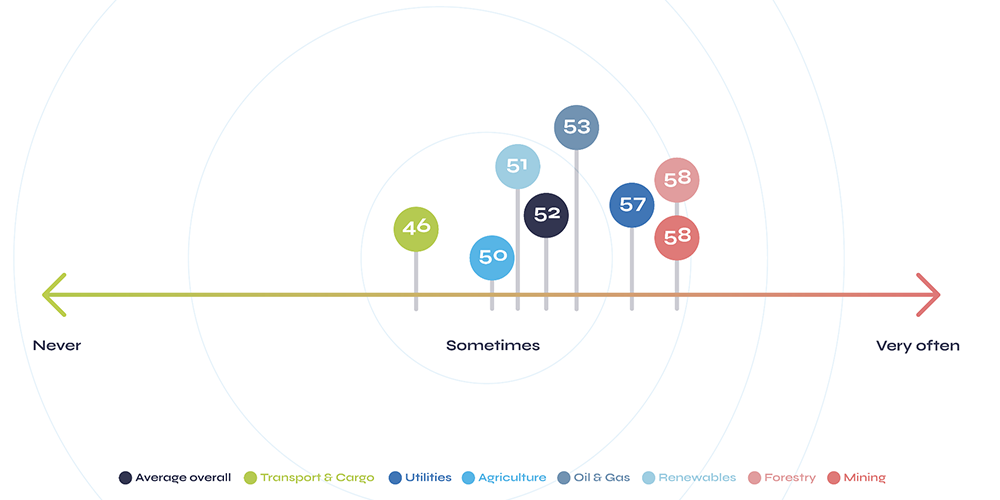
Lone workers and lone worker supervisors were asked to indicate on a scale from 0 – 100, whether they ever travelled out of mobile phone range. As can be seen in the above graph, on average, lone workers sometimes travel out of mobile phone range. It’s also worth noting that lone workers actually responded with a lower than average figure than those responsible for them (52 vs 58).
Our data also indicates that 10% of respondents are quite often out of mobile phone range, as these reported a figure of 75 or above.
When analysing the data grouped by industry, recipients from the Mining, Forestry and Utilities sectors provided the highest average scores, and those within Transport & Cargo, the lowest. This indicates that those working within Mining, Forestry and Utilities, are more likely to travel out of mobile phone range than those in the Transport & Cargo sector.
How many lone workers have experienced the following situations?
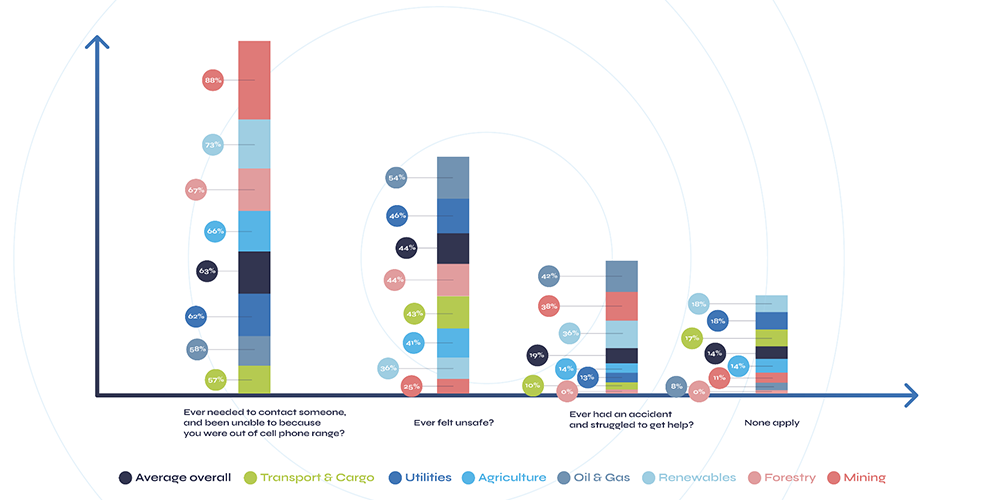
Results show over 60% of lone workers surveyed have been in a situation where they have needed to contact someone and were unable to, due to lack of mobile phone reception. Comparatively, for those within the Mining and Renewables industries, this figure rose to 88% and 73% respectively.
Further, almost one fifth (19%) of those surveyed reported having an accident, and struggling to get help. Encouragingly, none of the lone workers from the Forestry sector indicated having an accident when lone working, but this increased to over 40% within the Oil and Gas industry. Subsequently, workers within Oil and Gas were also most likely to report having felt unsafe (54%); 10% above the overall average.
How frequently do those responsible for lone workers check in with them?
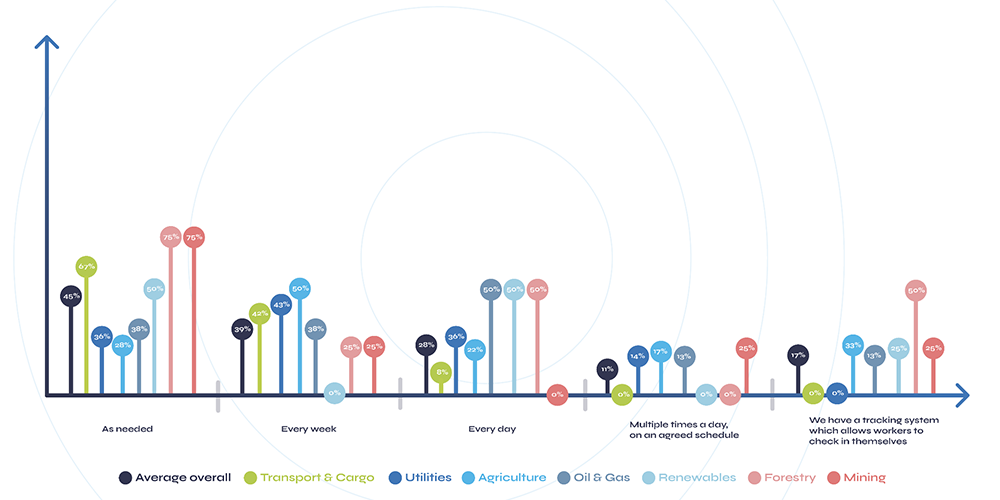
Overall 28% of respondents reported daily check-ins with their lone workers, 39% weekly and 45% as needed on a demand basis. Just 17% confirmed having a tracking system which allows lone workers to check in themselves, and over 10% disclosed checking in multiple times per day.
Interestingly, those within the Forestry sector were most likely to report more frequent check-ins – 75% indicating as needed and 50% every day. Additionally, 50% of those within Forestry also confirmed having a tracking system whereby their workers could check themselves in. This is particularly significant, considering the overall average reported was just 17%. In contrast, none of the respondents within the Transport & Cargo nor Utilities industries, indicated having a tracking system lone workers could use. Given the operational efficiency benefits these types of systems can deliver, this is quite surprising.
How robust are current lone worker communication strategies?
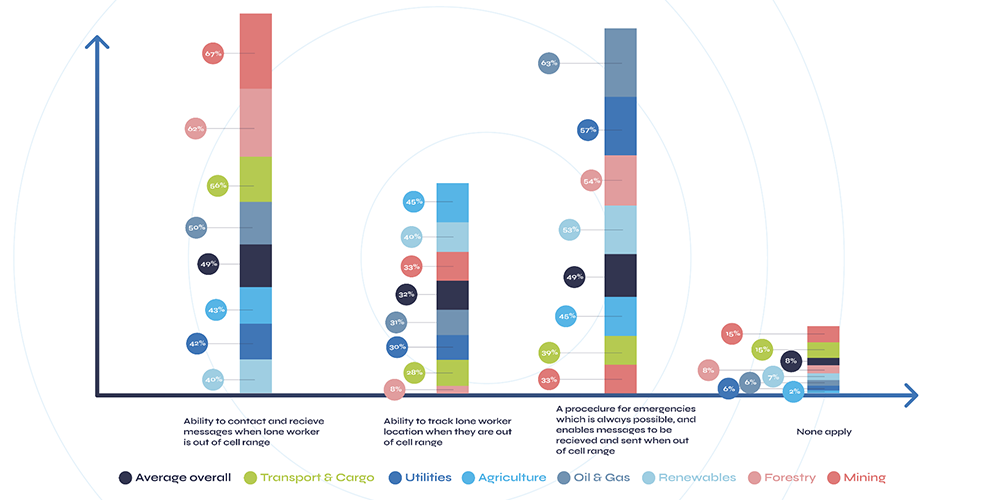
As illustrated above, only 49% of respondents reported having the ability to both send and receive messages while lone workers were out of mobile phone range. This figure remained the same when recipients were asked whether they had a procedure which could always be followed (even if there had been an accident or equipment failure), that enabled messages to be sent and received without mobile phone reception. Interestingly for those within the Mining industry, despite 67% reporting the ability to send and receive messages while out of mobile range, just 33% confirmed the ability to do this under all circumstances, for example in the event of an accident or equipment failure.
Additionally, less than one third (32%) of respondents overall confirmed they were able to track the location of a lone worker out of mobile phone range. This fell to just 8% in the Forestry industry.
Finally, 8% of respondents overall and 15% of those within the Transport & Cargo and Forestry sectors, indicated that they were unable to support any of these communication scenarios.
In summary, although our research represents just a snapshot of lone worker operations in North America, it does highlight that organisations still have some way to go in terms of safeguarding lone workers; a sentiment which holds true across all surveyed industries.
The future of lone worker safety: The RockSTAR
Communication plans and tracking are imperative to lone worker safety and increasing operational efficiency. With this in mind, it would be remiss of us to not talk about the RockSTAR device by Rock Seven (now trading as Ground Control). This powerful, handheld device allows the user to send and receive short messages from anywhere on Earth with a clear view of the sky. The unit is waterproof, ruggedized, and built to withstand the most challenging environments. And perhaps most importantly, the RockSTAR is able to transmit every minute with 15-second updates, ensuring teams know the whereabouts and safety of their lone workers at all times.
What is TracPlus?
TracPlus is a trusted real-time tracking and communication platform of first responders, government agencies, militaries, and other critical operators around the world. It has been developed to deliver situational awareness to first responders, irrespective of who owns the asset, what the asset is, who provides the tracking, or what the platform or signal type is – be it radio, cellular or satellite.
Get in touch
Ground Control and TracPlus have worked in partnership for over eight years, developing essential, cost-effective solutions for organisations and their remote field workers all over the world.
If you’d like to get in touch with our expert team, simply complete our online form, or you can email sales@groundcontrol.com or phone us on +1.805.783.4600 (USA) or +44 (0) 1452 751940 (UK).
How to Improve Satellite IoT Network Security
The IoT M2M Council recently reported a potential threat to “millions of routers and IoT devices”; malware named BotenaGo, identified by Alien Labs. This comes after a Zscaler report that IoT malware attacks rose 700% during the pandemic, 59% of which came from devices in manufacturing and retail.
Fortunately, there’s plenty of great advice to help mitigate the threat of IoT malware, and we’ve adapted this specifically for relevance to satellite IoT.
1. Monitor network traffic and unreasonable bandwidth usage
Can you review and analyze the amount of data each device in your network is using? Can you set alerts to ensure any unauthorized or unexpected data surges are shut down quickly? There are solutions available today that make this easy, such as Cloudloop; investing in one of these won’t prevent attacks but they will help you limit the damage.
2. Ensure minimal exposure to the internet / isolate IoT networks
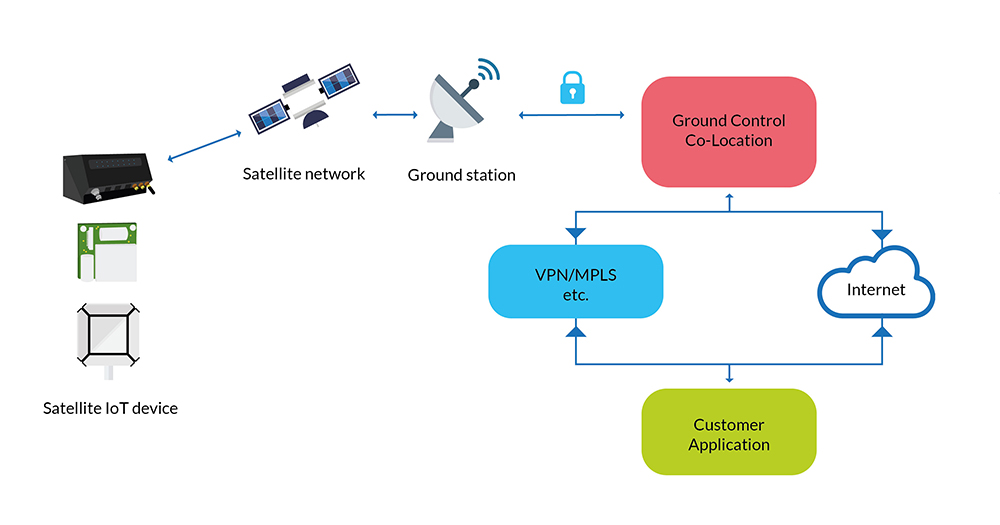
Most satellite IoT users, whether you’re using satellites in low earth orbit (LEO) or geostationary, retrieve your data from your satellite service provider’s ground station using the internet at some point – and you have choices over how secure you make that connection. For example, this diagram shows a very simplified networking diagram for the RockREMOTE, a satellite IoT connectivity device.
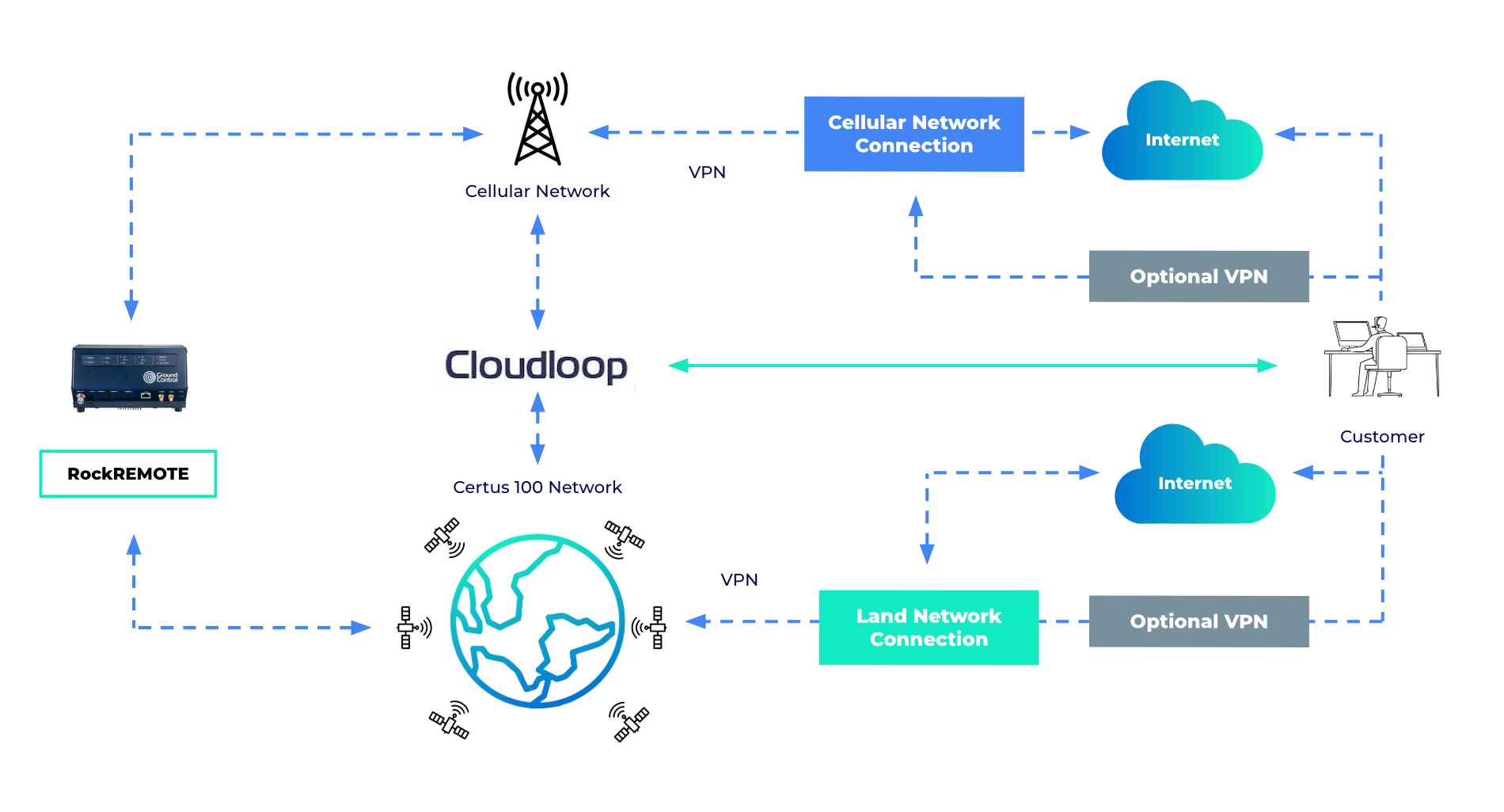
After the data from either the satellite or cellular network is sent to the land network connection, users choose between delivering that data via the internet, or using a VPN; the latter minimizes your exposure to the internet and is recommended for critical applications.

There is a further option for companies concerned with critical national infrastructure, such as Oil & Gas and Utilities, and that is to operate an entirely private networking solution. This service, from TSAT, is designed specifically for SCADA / telemetry networks, and essentially places a ground station at your premises; it does not use any public infrastructure connectivity such as the internet.
Further, the TSAT system has many features to prevent unauthorized access to traffic communicated via the satellite link, regardless of the traffic type (TCP/IP or serial), including the option of AES-256 encryption. In our view, it’s certainly worth exploring. The hardware is more expensive than your average satellite connectivity device, but once you’ve taken into account the simplified networking and lower data transmission costs, it can deliver, and has delivered, lower operating costs.
3. Use a properly configured firewall
An effective firewall will protect against:
- Network threats: DDoS (Distributed Denial of Service) and application-layer attacks which may disrupt the integrity and availability of the Service Provider’s network.
- Device threats: preventing devices from connecting to unknown services. This reduces the chances of devices being compromised.
- Service abuse: preventing IoT devices from being used unexpectedly, which can result in revenue leakage for the Service Provider or the application owner.
4. Update your passwords
Clearly not specific to satellite IoT but this is such an important point, we couldn’t leave it out. Remember, the infamous Colonial Pipeline hack in April 2021 was made possible because of a single compromised password which allowed the hackers to gain entry through an (unused but still viable) VPN account.
If you could use some objective advice on improving the security within your satellite IoT network, please get in touch with the Ground Control team. We have customers providing critical national infrastructure services globally, and have delivered secure, reliable connectivity in multiple applications.
Get in touch
We’ve implemented satellite IoT infrastructure for decades, and there’s very rarely been an obstruction issue we couldn’t overcome with a bit of knowledge and ingenuity.
We’d be happy to talk to you about your project and offer impartial advice on the best antenna and satellite service for your particular requirements. Call or email us, or complete the form.
RockSTAR Alerts
Navigating to the ‘Alerts’ section within the main menu of your RockSTAR, you’ll be greeted by six alert types and an alert cancel. Here’s what each one means:
1. Timer Alert
The idea behind the timer alert is a one-time alert after a set time limit has expired. Set the timer for a time interval of your choosing. Once that time has expired, a ‘timer alert’ is sent from the RockSTAR to the server/first responders. They’re now aware that the timer has expired without human interaction turning it off. This is a one-time alert. The timer doesn’t reset afterwards.
Possible Use Case:
You’re in a remote location and are expected to be doing a job for 30 minutes. Set the timer for 60 mins and if it goes off then your responders know that you have taken twice the amount of time expected and they should do their level best to make contact.
2. Dead Man’s Switch
This is similar to the timer alert, except this is a recurring alert. Once the timer has been set, you’ll have 20 seconds before that time frame reaches its limit to push the ‘ok’ button to cancel the alert from being sent. You’re notified of this 20-second window by loud, consistent beeping from the unit. Once the timer cycle has completed, or you’ve pressed the ‘ok’ button during the beeping sequence, it refreshes and starts again.
Possible Use Case:
If you’re in an unsafe territory or doing a dangerous task, the dead man’s switch is a brilliant idea to ensure that you are constantly checking in with your team to assure them you’re ok and unharmed. As RockSTARs have set frequencies to send position reports, the dead man’s switch guarantees the unit hasn’t been left lying around giving off the impression that you’re safe, when you actually need assistance.
3. Temperature Alert
This is triggered when the values you have set are exceeded. You can set the high and low temperatures to values you think reflect the environment you’re operating in. These values relate to the RockSTAR board and circuitry, so the exterior might be incredibly hot or cold, but it’s the interior components that are being monitored. Once these temperatures are exceeded, an alert is sent so you can regulate the temperature.
Possible Use Case:
If you’re fighting fires or doing research in a cold environment, this alert is perfect to ensure you don’t damage your device.
4. Power Alert
If you’ve connected your RockSTAR to an external power source, then once the external power is removed, the unit detects ‘power loss’ and will send a message accordingly. If you have set your unit to ‘power mode’, so it only turns on with external power, and you remove the power source, then it will stay awake long enough to send a ‘power loss alert’ to the server. This way, each time the unit is turned off, someone is alerted.
Possible Use Case:
If you’re driving long distances in remote areas and require tracking without having to worry about battery life, then power loss alerts are a great way to inform you if your tracking has stopped, without having to wait for the scheduled report to be missing from the mapping.
5. Geofence Alert
There are two options for Geofence Alert – user and polygon. We’ll talk about user here. To learn about polygons, contact our support team and they’ll explain further.
A geofence draws an imaginary circle around a center point, and if that circle is left, an alert is sent notifying you of that breach. By pressing ‘centre point’ in this menu, you’re allowing the RockSTAR to record your GPS location. It then draws a circle based on the distance you’ve chosen. You then select how often you want the unit to check to see if you’re still in that circle. As soon as you leave it, an alert is sent.
Possible Use Case:
If you’re assigned an area for a specific reason – research, pest control, etc. – then geofences are a great way to ensure you keep to your assigned area and don’t encroach on prohibited or protected land.
6. Collision Alert
Inside each RockSTAR is an accelerometer. If you set the threshold of the unit to an appropriate G-force value and the duration that the unit sustains that G-force is exceeded, the accelerometer measures this and will send an alert notifying of this exceedance.
Possible Use Case:
Any situation that the unit is installed in a vehicle, this alert is a great tool to determine if the vehicle has sustained a server impact. By altering the threshold and duration, you can ensure that the unit only triggers when a crash occurs, as opposed to hitting uneven ground at speed.
Send Alert Cancel
Any time that an alert has been sent that you couldn’t stop in time, sending a cancel message will allow the responders to know not to misinterpret the alert that was just received.
If you’d like to know anything further about these alerts, or geofence polygons, don’t hesitate to reach out to our support team and we’ll do our best to assist.
Get in touch
We take pride in designing and building the RockSTAR ourselves. Over the years we’ve enhanced and added features based on feedback and specific customer requests, to ensure our device meets your needs.
Simply complete the form to find out whether the RockSTAR is the right fit for your organization. With our 20 years of expertise, we’ll guide you in making the optimal choices for your critical communication requirements. If you prefer to speak to someone directly, call us on +44 (0) 1452 751940 (Europe, Asia, Africa) or +1.805.783.4600 (North and South America).