Topic: Agriculture
How Satellite IoT Makes Predictive Maintenance Possible Anywhere
Manufacturing and Heavy Industry operations around the world rely on their machinery to get the job done, efficiently and effectively. The cost of equipment failure and the resulting unplanned downtime has serious consequences for the bottom line, with medium unplanned downtime costs approximately $125,000 per hour. When inflationary pressures, supply chain demands and raw material costs are factored in, unplanned downtime costs for Heavy Industry were calculated as $59 million per year in 2023.
Faced with the need to minimize the business impact of unplanned downtime for critical equipment, industries with heavy assets and significant downtime costs, such as oil & gas and mining, are leading the way in adopting Predictive Maintenance solutions.
By incorporating satellite connected IoT sensors, Heavy Industries operating in remote locations can reliably monitor machinery in real time and react quickly to avoid equipment failures and keep assets operational. The data from satellite-connected sensors on equipment forms a vital component of deploying Predictive Maintenance programs in industries with high asset costs.
What is Predictive Maintenance?
Predictive Maintenance (PdM) is a proactive, data-driven approach that uses advanced technologies – such as condition monitoring, machine learning (ML) and IoT devices – to anticipate equipment failures and schedule maintenance before disruptions occur. By analyzing real-time data from sensors installed on machinery, PdM identifies early signs of wear, faults, or deterioration, enabling timely intervention to prevent costly downtime.
Unlike time-based or reactive maintenance, PdM optimizes equipment performance by triggering maintenance tasks only when specific conditions indicate a need. This approach improves equipment reliability, reduces maintenance expenses, and extends the lifespan of assets. AI-powered analytics and IoT-enabled sensors track key metrics like temperature, pressure or vibration, providing continuous insights into machine performance. When thresholds are exceeded, PdM systems issue alerts or initiate maintenance work orders.
The goal of PdM is to enhance operational efficiency by minimizing unplanned downtime, lowering maintenance costs, and ensuring asset reliability. Industries such as manufacturing, energy, and transportation rely on PdM to align maintenance activities with actual equipment conditions, maximizing productivity and supporting cost-effective, sustainable operations.
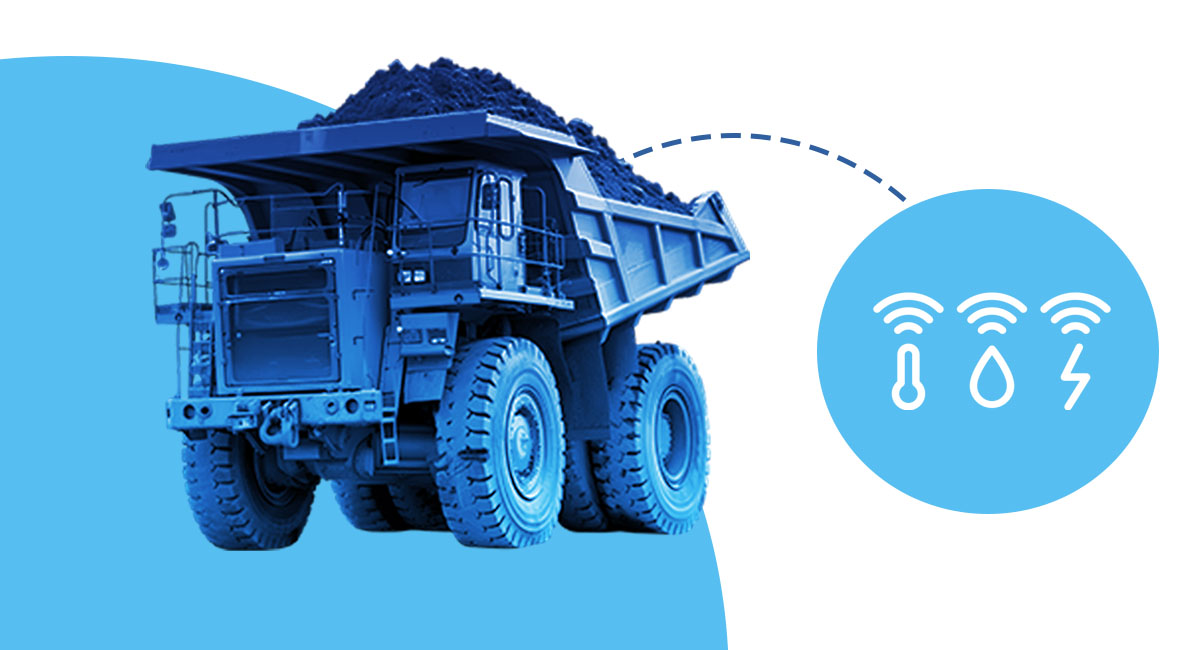
What is the Difference between Predictive and Preventive Maintenance?
Although often used interchangeably, Predictive Maintenance (PdM) and Preventive Maintenance (PM) are distinct approaches to equipment upkeep, each suited to different operational needs.
Preventive Maintenance follows a scheduled approach, performing maintenance at regular intervals based on time or measurable usage units, such as engine hours or production cycles. This method ensures equipment is inspected and maintained before issues arise, but it does not consider the actual condition of the asset.
For instance, a Mining operation may replace drill components every six months, regardless of whether those components show signs of wear. While this minimizes the chance of failure, it may result in premature replacements or unnecessary downtime.
Predictive Maintenance leverages real-time data from IoT sensors and advanced analytics to monitor the actual condition of assets. Maintenance is performed only when necessary, based on insights into potential failures or performance degradation.
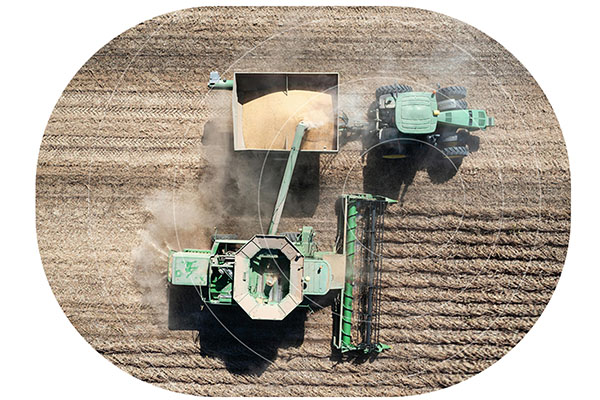
For example, IoT sensors on a Combine Harvester may detect rising temperatures or irregular vibrations, indicating wear and tear. Predictive maintenance enables technicians to address the issue before a failure occurs, minimizing downtime and repair costs.
Comparing the Two Approaches
| Preventative Maintenance | Predictive Maintenance | |
|---|---|---|
| Basis for Maintenance | Time or Usage Intervals | Real Time Condition Monitoring and Analysis |
| Frequency | Regular, Fixed Schedule | As Needed, Based on Data Insights |
| Costs | Lower Initial Costs, Higher Cumulative Costs | Higher Initial Investment, Lower Long Term Costs |
| Downtime | May Require Equipment Stoppage | Often Avoids Downtime by Scheduling During Low Impact Periods |
| Efficiency | May Result in Unnecessary Maintenance | Targets Specific Issues, Optimizing Resources |
Types of Predictive Maintenance
There are three distinct types of Predictive Maintenance: Indirect Failure Prediction, Anomaly Detection, and Remaining Useful Life (RUL). Each approach differs in its desired objectives, the analytical methods used, and the type of information output provided.
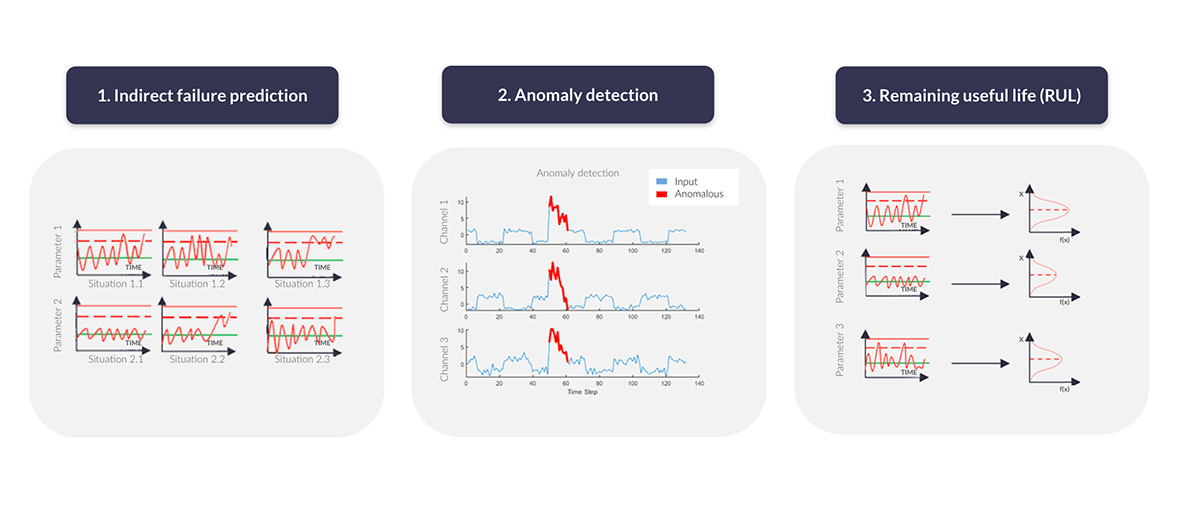
Image adapted from the IoT Analytics Asset Performance & Predictive Maintenance Market Report 2023–2028
Indirect Failure Prediction
Estimates equipment health by calculating a ‘health score’ based on known maintenance requirements, operating conditions and historical performance data. When sufficient data is available, supervised machine learning can be applied to refine the predictions. This approach is scalable since it relies on manufacturer specifications, and it is cost-effective because it uses existing sensors.
Its dependence on large volumes of historical data may render it unsuitable for industries like heavy machinery, where high downtime costs necessitate more immediate and accurate insights.
Anomaly Detection
Identifies potential failures by detecting deviations from normal operating conditions in real time. Unlike methods that require historical data, it relies on current sensor data, making it particularly suited to organizations without extensive machinery usage records. This approach improves predictive accuracy by considering real-time environmental and operational factors rather than predefined maintenance parameters set by the manufacturers.
The risk of false positives can pose challenges, as unnecessary alerts may disrupt operations and complicate machine learning algorithm performance.
Remaining Useful Life (RUL)
Focuses on predicting the time left before equipment failure based on specific machine metrics such as operational hours, distance traveled, or activity cycles. By analyzing sensor data, this method identifies condition indicators that highlight whether the equipment is performing as expected or if faults have accelerated its degradation. RUL models are trained using system data collected under known conditions and applied to predict outcomes under new or variable circumstances.
While this method is highly robust and reliable, it requires detailed, high-quality data for accurate predictions, making it particularly effective for critical equipment in complex environments.
The Benefits of Predictive Maintenance
Predictive Maintenance brings many benefits to organizations through its advanced approach to equipment upkeep, using technology and data analysis to improve asset reliability and efficiency. By identifying potential issues before they lead to failures, PdM helps organizations reduce downtime, optimize resources, and maintain safer working environments.
Research, including findings from the US Department of Energy, highlights the tangible impact of Predictive Maintenance. Compared to preventive maintenance programs, it offers cost savings of 8% to 12%, and when compared to reactive maintenance, cost savings increase to 30% to 40%. These programs also enable a reduction in maintenance costs by 25% to 30% and minimize equipment breakdowns by 70% to 75%.
In addition to cost savings, PdM improves operational efficiency by reducing downtime by 35% to 45% and increasing production capacity by 20% to 25%.
How to Implement Predictive Maintenance
1. Establish Baselines and Data Collection
Baseline performance metrics are identified for the assets by monitoring its condition to set the normal performance benchmarks. Once the baseline is established, sensors are installed to capture real-time data, enabling continuous performance monitoring.
2. Install IoT Sensors on Equipment
IoT sensors are installed on critical equipment to monitor various parameters such as vibration, temperature, pressure, and noise. These sensors continuously collect data on the equipment’s condition and the data gathered is then transmitted to a centralized system for analysis.
3. Data Integration and System Setup
The data collected from the IoT sensors needs to be integrated with the PdM system. This involves connecting the sensors to a computerized maintenance management system (CMMS) or a remote dashboard which allows for real-time monitoring and data analysis.
4. Set Maintenance Thresholds and Automate Alerts
Organizations need to define thresholds for acceptable performance levels. When these thresholds are exceeded, the system automatically triggers maintenance alerts, enabling timely interventions before equipment failure occurs.
5. Select and Implement the Right Analytics Tools
An analytics platform is required to handle the large volumes of data, apply predictive models, and generate actionable insights. Machine learning and AI algorithms are crucial for analyzing sensor data and predicting future equipment failures based on historical data.
6. Develop Predictive Models and Train the System
Predictive models are developed using historical data, maintenance logs and sensor data to forecast future equipment behavior. These models are trained to identify patterns in the data that may signal the onset of failure.
7. Integration with Existing Maintenance Systems
The PdM system is integrated with existing workflows, maintenance management systems, and enterprise resource planning (ERP) systems. This enables seamless communication across platforms and allows for data-driven decision-making.
8. Monitor and Optimize the Program
After implementation, the PdM program should be monitored to evaluate its effectiveness. Continuous data collection and model refinement will help improve prediction accuracy over time.
Industrial Applications of Predictive Maintenance
Predictive Maintenance is becoming increasingly common practice in asset-intensive industries that depend on their large, complex machinery. For industries with assets in remote locations or critical communication requirements, satellite connected IoT devices can transmit real-time sensor data for PdM programs.

Energy and Utilities
The risk of equipment failure in energy production and utilities management can lead to significant financial losses and customer dissatisfaction. Power plants, wind farms, and utility grids employ PdM programs to ensure the continuous operation of critical assets like turbines, generators, and transformers. IoT sensors monitoring parameters such as vibration, temperature, and pressure are used to detect early signs of failure.
By analyzing these data points in real time with advanced predictive models, utility providers can prevent catastrophic failures, optimize energy production, and ensure compliance with regulatory standards. This is particularly important in industries where unexpected downtime can have widespread consequences on both financial performance and customer trust.

Railways and Transportation
PdM is crucial in the transportation industry for ensuring the safety and reliability of infrastructure such as railway tracks, trains, and airport ground equipment. IoT sensors on trains and other critical assets monitor parameters like pressure, temperature, and vibration to detect early signs of wear or failure.
For example, PdM can be used to monitor brake systems or detect track deformations, preventing accidents and service interruptions. By integrating sensors with automated maintenance management systems (CMMS), transportation companies can schedule repairs before a component fails, enhancing passenger safety and reducing operational disruptions.

Oil and Gas
In remote locations such as offshore platforms or desert pipelines, Oil and gas operations face unique challenges in maintaining equipment. PdM is highly beneficial in these situations, as it helps companies remotely monitor the condition of critical machinery like pumps, compressors, and valves.
Satellite-connected IoT sensors track parameters such as pressure, temperature, and vibration to detect signs of imminent failure. Real-time data is sent to cloud-based platforms for analysis, and predictive algorithms generate alerts to maintenance teams, allowing them to address issues before they result in costly downtime or safety hazards.

Mining
With Mining machinery operating in harsh conditions, the risk of unexpected breakdowns can lead to costly delays and safety hazards. Predictive maintenance helps to monitor heavy equipment such as crushers, drills, and loaders, which are critical to mining operations.
Satellite-enabled IoT sensors measure variables like temperature, pressure, and vibration, providing continuous health checks of the machinery. Predictive models analyze these data streams to identify wear patterns and predict when maintenance is required.
Sensor Technologies in Predictive Maintenance
Predictive Maintenance utilizes a range of sensor technologies to monitor the condition of equipment and to detect and address potential failures before they lead to unplanned downtime.
Infrared Thermography
Also known as thermal imaging, infrared cameras identify heat spots which can indicate issues such as friction, electrical resistance, or misalignment in mechanical systems. It is particularly valuable in identifying worn-out components or malfunctioning circuits that tend to overheat.
Infrared thermography allows for real-time monitoring without disrupting machine operation and is frequently used in industries like power generation to track turbine blade conditions and ensure equipment runs efficiently.
Acoustic Monitoring
Using specialized equipment, maintenance personnel can detect ultrasonic or sonic emissions from machinery, which may indicate leaks, electrical discharges, or mechanical wear. Sonic monitoring is typically applied to lower-speed equipment, while ultrasonic analysis is more accurate and applicable to both low- and high-speed machinery.
Ultrasonic analysis is widely used in industries like construction and heavy equipment operations, where hydraulic systems and machinery require constant monitoring to ensure seamless operation and prevent project delays.
Vibration Analysis
Sensors track vibration patterns that help technicians identify potential issues like misalignment, unbalanced components or bearing failures in high-speed rotating equipment, such as motors, drills and fans.
Each machine has a unique vibration signature, and deviations from this pattern can be a strong indicator of mechanical problems. The ability to monitor vibration in real-time allows for early intervention, preventing costly repairs and downtime.
Oil Analysis
By analyzing oil for contaminants, viscosity changes, and particle counts, technicians can pinpoint wear and tear in machine components. Chemical analysis of oil can also reveal overheating or chemical degradation, providing early warnings of issues that could lead to failure.
This technology is often used in heavy industries, such as energy production or oil drilling, where machinery components are subject to extreme operating conditions.
Current and Voltage Sensors
These sensors track electrical characteristics like overloads, short circuits, and failing components. In industries such as mining or energy, where electrical systems are critical, monitoring these parameters ensures safety and minimizes downtime caused by electrical failures.
For example, real time analysis of electrical data in mining operations can help identify potential issues in equipment like excavators or conveyors, allowing operators to address problems before they cause equipment failure and disrupt production.
Predictive Maintenance and Satellite IoT
For remote operations, such as those found in mining or offshore environments, Satellite IoT becomes a crucial part of the Predictive Maintenance Program. When assets are located in areas with unreliable or no cellular connectivity, traditional IoT solutions relying on cellular networks may fail to transmit vital data. Satellite IoT solutions overcome this challenge by enabling real-time data transmission via satellite, ensuring that assets can be monitored regardless of their location or environment.
Beyond just sensor data collection, Satellite IoT can enable remote control of assets. If an asset is detected to be operating in an unsafe condition, it can be remotely shut down to prevent catastrophic damage or safety incidents. This combination of real-time monitoring and remote intervention significantly enhances worker safety and helps avert equipment breakdowns before they escalate into more serious issues.
Get in Touch
At Ground Control, we design and build Satellite IoT devices leveraging the Iridium global network, providing reliable real-time data transfer from anywhere on Earth. Our feature-rich IoT platform, Cloudloop, can monitor and analyse sensor data and offers a simplified and well-documented API to connect to your existing Predictive Maintenance and Asset Performance Management (APM) toolkits.
With over 20 years of experience, we can help you make the best choices based on your requirements.
Monitoring Heavy Equipment Fleets with Satellite IoT Connectivity
Heavy industrial sectors have continued to push the boundaries of what is possible in some of the most remote and challenging locations on the planet. Industry 4.0 has been a transformative technological leap for the traditional industries of mining, agriculture, forestry and construction, bringing new monitoring and automation capabilities to the heavy equipment that these sectors rely on.
In remote mining, farming, forestry or construction sites, an equipment breakdown can cost thousands in downtime. For industries operating far from cellular coverage, ensuring machinery stays operational is a challenge that Satellite IoT is solving with real-time data and monitoring. In this blog, we’ll explore how IoT can enable the transformation of heavy machinery operations, tackling issues like maximizing cost of ownership, preventing downtime, and safety and environmental compliance.
 Heavy Equipment Total Cost of Ownership (TCO)
Purchasing specialized heavy equipment is a significant investment, and in recent years those costs have been steadily climbing as manufacturers pass on their increased raw material and labor costs. The Capital Expenditure (CapEx) involved means that each machine must be operated effectively, efficiently and within agreed tolerance limits to reduce maintenance costs and prevent costly downtime.
The theft of heavy equipment is also commonplace, with over 11,000 incidents of construction theft reported annually in the US and an average average loss of $35,000 to $45,000 per machine. Theft also has a considerable impact on operational timescales, as well as increased costs to replace or lease equipment.

Hazardous Work Environments
With heavy industry recognised as one of the most hazardous places to work (accounting for 63 per cent of all fatal occupational injuries) worksite safety requirements have, quite rightly, been improving on a global scale as Governments enforce a duty of care on industry operators.
However, it remains that despite these improvements, a diminishing workforce is entering these physically challenging industries based in remote locations. This has led to increased Operational Expenditure (OpEx) to attract high quality skilled candidates.

Environmental and Sustainability Targets
Heavy industry accounts for around a third of global energy consumption and emits a quarter of global Greenhouse Gas emissions. Pressures from Governments to hold businesses to account for their carbon emissions and environmental impacts particularly affect these industries.
To meet agreed environmental commitments, operations may need to invest in technology to analyse the worksite’s impact on the surrounding area and consider upgrading heavy machinery to meet emissions targets.

Operational Complexity
Keeping to contractual timescales on any large project involving heavy machinery is ultimately reliant on the equipment being reliable. Delays in specialist heavy equipment arriving on-site and unexpected breakdowns can lead to extensive project delays and wasted resources, all of which lead to an increased OpEx.
Without clearly-defined logistical operation data to coordinate fuel deliveries and material transport, an entire site could come to a standstill.

Connectivity Limitations
Mining, forestry, farming and construction operations often take place in remote locations with limited or no mobile or cable internet coverage. The cost of connecting fixed or cellular telco equipment or laying cables for site connectivity is often very expensive, especially when real-time communication is required for equipment operations or emergency protocols.
The return on investment for installing a dedicated network on a site which may only be operational for 10-15 years is often poor and can become a negative cost.
Six Innovations in Heavy Machinery Operations
Many of the issues facing industries using heavy machinery can be mitigated against by using technology, data and connectivity.
With satellite connectivity more reliable than cellular in remote locations and increasingly more competitively priced, the cost-effectiveness and profitability of mining, forestry, construction and agriculture operations can be significantly improved and many of the key issues facing the industry can be resolved.
1. Predictive Maintenance
Predictive maintenance is a data-driven approach to keeping heavy machinery operating at peak performance and efficiency. By continuously monitoring on-board sensors for feedback on tire wear, oil and fuel consumption, engine temperatures, hydraulic pressures, vibrations, stability and acceleration, machinery can be proactively inspected and maintained according to usage, rather than reactively when a breakdown occurs.
Satellite IoT devices can transmit real time data on machine usage and even enable a shutdown of equipment if thresholds are exceeded. By planning machine maintenance downtime, preventing failures that could lead to accidents, and monitoring machinery operatives driving behaviour, the operation expenditure of the site can be effectively managed and optimized.
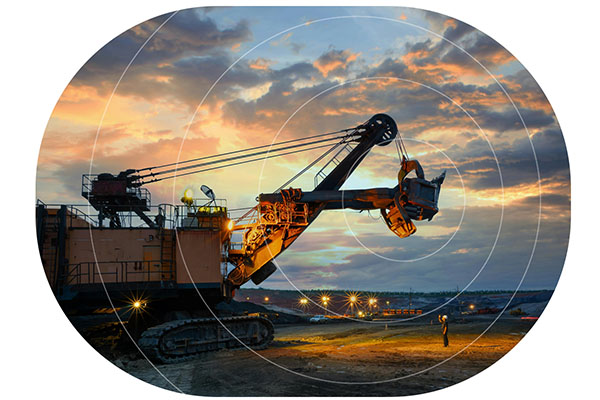
The 2021 McKinsey & Company ‘The Internet of Things’ Report highlighted that in the construction sector, employing IoT applications can improve uptime by 30 to 50 percent and increase throughput by 1 to 5 percent.
An additional benefit of monitoring machinery usage is to provide a better return on the CapEx of the machinery when the equipment is sold at the end of the project.
2. Remote Monitoring
Remote monitoring of site personnel and equipment can enable the operational efficiency of worksites, as well as ensure the safety of all workers on-site. With satellite-connected asset trackers on equipment and team members, remote operations centres can use geo-fencing capabilities to keep personnel and heavy machinery apart using safety zone alerts. Should a team member stray into the path of an oncoming vehicle, both the individual and the driver can be alerted to the potential risk.
Satellite IoT enabled sensors can detect worksite ambient conditions to ensure staff and machinery are not exposed to extreme working temperatures, strong winds, excessive rainfall or poor air quality. By encouraging and demonstrating a commitment to site safety, labor recruitment can be improved.
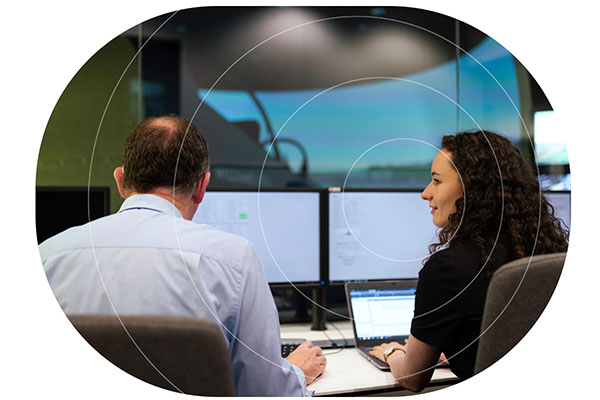
Site operations can be further optimized through monitoring of raw material tanks and silos (e.g. concrete and chemical reagents), machinery fuel consumption, generator fuel levels and final product storage and collection (e.g. metal ores, timber, grain). By integrating satellite IoT sensors across the work site, logistics managers can ensure fuel and raw material deliveries and product collections are planned according to site requirements, reducing bottlenecks and improving operational efficiency.
According to McKinsey and Company, operators which have more than 50% of their vehicle fleet connected to the internet have 23% better financial performance than peers with less than 50% connected. Companies with more than 75% of their fleet connected have 51% better financial performance.
3. Telematics
Monitoring heavy equipment on-site is integral to operational performance, and can also ensure the worksite is remaining committed to its safety, sustainability and environmental goals.
Aside from monitoring onboard sensors for predictive and reactive maintenance, telematics can also improve driver behavior, which in turn can reduce fuel consumption and carbon emissions. Heavy industry equipment by its nature burns fossil fuels and emits greenhouse gases during operation, but there are opportunities to limit these effects.
In the construction industry alone, machinery idle time averages 36% which increases fuel consumption by up to 5%. The biggest operational opportunity for reducing the potential for idling is ensuring vehicles are dispatched to their collection or drop-off locations according to requirements rather than on a continuous cycle, thereby preventing fleet waiting times.
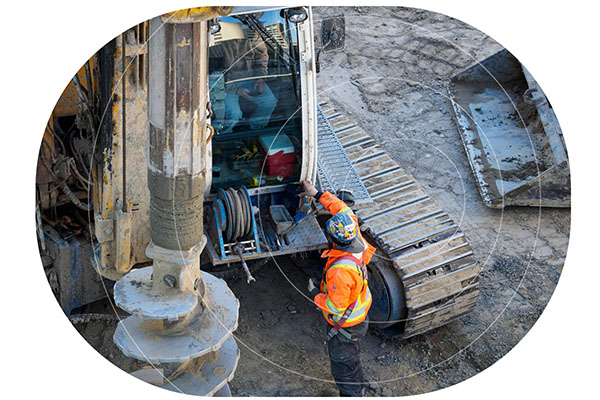
There is also driver behavior to consider, with some operators leaving machinery idling during their break periods. Using real-time telematics, Site Managers can address the machinery operator actions immediately and encourage them to turn the machine off when not in use.
Through these two simple actions it is possible to reduce fuel costs, decrease carbon emissions, limit noise pollution and improve worksite air quality. When industry profit margins are challenging, evidence has shown that operators who lag behind their peers in reducing downtime are losing future business, wasting time and money, and increasing their ecological impact on the environment.
4. Theft Prevention
Heavy equipment theft costs the USA construction and agricultural industry an estimated $300 million to $1 billion annually, and is especially prevalent during the National Holidays of Labor Day, Memorial Day, Independence Day and Thanksgiving when worksites are closed and machinery is left unattended.
Satellite-connected video surveillance can enable real-time monitoring and recording of remote worksites and storage areas to protect both staff and equipment from unauthorized access.
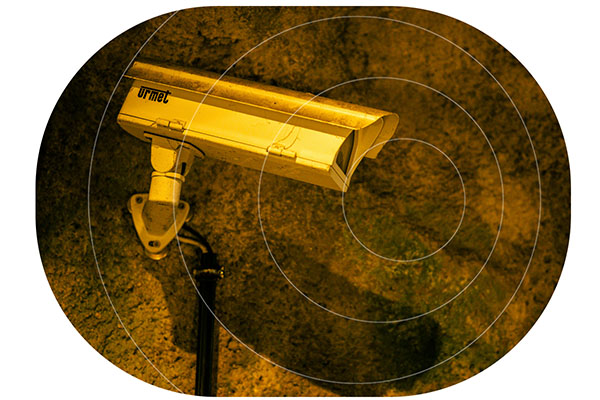
Heavy equipment can be fitted with discreet satellite asset trackers which can alert the operations team when equipment has moved out of a geofenced area or the machinery is being operated outside of normal worksite hours. Satellite assets trackers are especially effective at tracking stolen heavy machinery as they can keep connected across borders, and in the case of the Iridium network anywhere on Earth. Improvement in asset tracking capabilities has led to an increase in machinery recovery rates from 5% to 20% in the last 15 years.
5. Machine Learning and AI
Incorporating AI and machine learning capabilities into the mining, forestry, agriculture and construction industry has the potential to transform how these sectors address the challenges of CapEx and OpEx, as well as their environmental impacts. By leveraging data-driven analysis, businesses can optimize workforce and heavy machinery productivity, identify opportunities for fuel savings and emission reduction, limit raw material wastage and improve final product quality and volumes. Insights from these analyses can be replicated across multiple work site locations and integrated into cost projections for future projects, driving efficiency and sustainability.
Heavy equipment can be fitted with discreet satellite asset trackers which can alert the operations team when equipment has moved out of a geofenced area or the machinery is being operated outside of normal worksite hours. Satellite assets trackers are especially effective at tracking stolen heavy machinery as they can keep connected across borders, and in the case of the Iridium network anywhere on Earth. Improvement in asset tracking capabilities has led to an increase in machinery recovery rates from 5% to 20% in the last 15 years.
6. Autonomous and Remote Control Heavy Machinery
One of the most significant challenges facing the mining, agriculture, construction, and forestry industries is an aging workforce, with many skilled workers nearing retirement and fewer new recruits stepping into these roles. Technological advancements in developing and implementing autonomous and remote operation of heavy equipment are helping to manage labor shortages while enhancing productivity and safety.
Autonomous Haulage Systems (AHS) are already in use across large-scale mining operations, enabling unmanned dump trucks to optimize hauling cycles, improve payload accuracy, and increase operational efficiency. However, not all scenarios are suitable for full automation, which is where remote control solutions come into play.
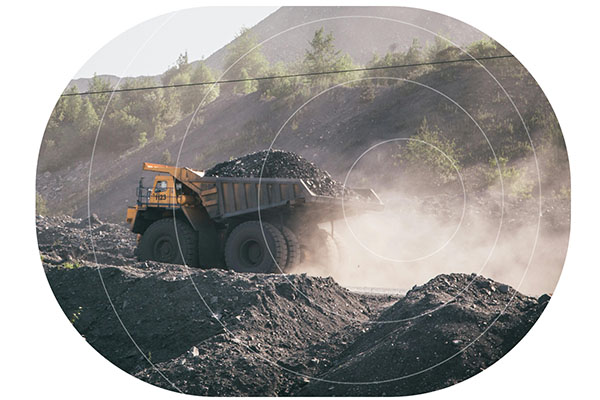
In hazardous environmental conditions or working on difficult or sloping terrain, controlling heavy machinery via remote control allows operators to manage equipment from a safe distance nearby or within a central operations hub. This minimizes risks to personnel while maintaining operational efficiency.
Both autonomous and remote-controlled systems rely on a continuous flow of real-time data, including video feeds and telemetry data, to ensure precise operation and avoid collisions. Satellite connectivity provides reliable and seamless data exchanges in remote locations, enabling the integration of automation and remote operation of heavy machinery in complex environments.
Satellite IoT Solutions for Heavy Machinery Monitoring
Satellite IoT is supporting innovation within the heavy machinery industry, addressing critical challenges such as remote connectivity, safety, and operational efficiency. By leveraging real-time data through predictive maintenance, telematics and remote monitoring, businesses can reduce costs, improve productivity, and meet stringent environmental goals. As automation and AI continue to transform the sector, embracing satellite-enabled solutions is essential for staying competitive in an increasingly connected world.
Get in Touch
Contact us to discover how our satellite IoT solutions can drive efficiency and profitability for your heavy machinery fleet.
With 20 years of experience, we can help you make the best choices based on your requirements.
Please call us on us on +44 (0) 1452 751940 (Europe, Asia, Africa, Oceania) or +1.805.783.4600 (North and South America); email hello@groundcontrol.com, or complete the form.
Satellite IoT use cases: truly global connectivity for real world applications
Satellite IoT is growing in popularity, providing reliable connectivity to remote locations that would otherwise be challenging or even impossible to reach with terrestrial networks. As the world becomes more connected, the demand for real-time data from even the most remote locations has increased. Satellite IoT provides the solution to this need by offering truly global connectivity for real-world applications.
Satellite IoT is being used in a variety of industries, including healthcare, agriculture, workforce safety, and more. Let’s dive into just some of the most prominent use cases for satellite IoT…
1: Healthcare
IoT has revolutionised the healthcare industry by providing innovative solutions to improve patient care, reduce costs, and increase efficiency. IoT in healthcare refers to the use of connected devices, sensors, and data analytics to collect and analyse patient health data in real-time. This could include remote patient monitoring, smart medical devices and wearable technology like fitness trackers and smart watches.
Satellite IoT can also facilitate medical and healthcare accessibility to patients in remote areas who are unable to travel. For example, utilising the RockBLOCK 9603 technology, satellite IoT has enabled the transportation and delivery of emergency and essential medical supplies to vulnerable people who are at high risk if they travel.
Read Healthcare By Drone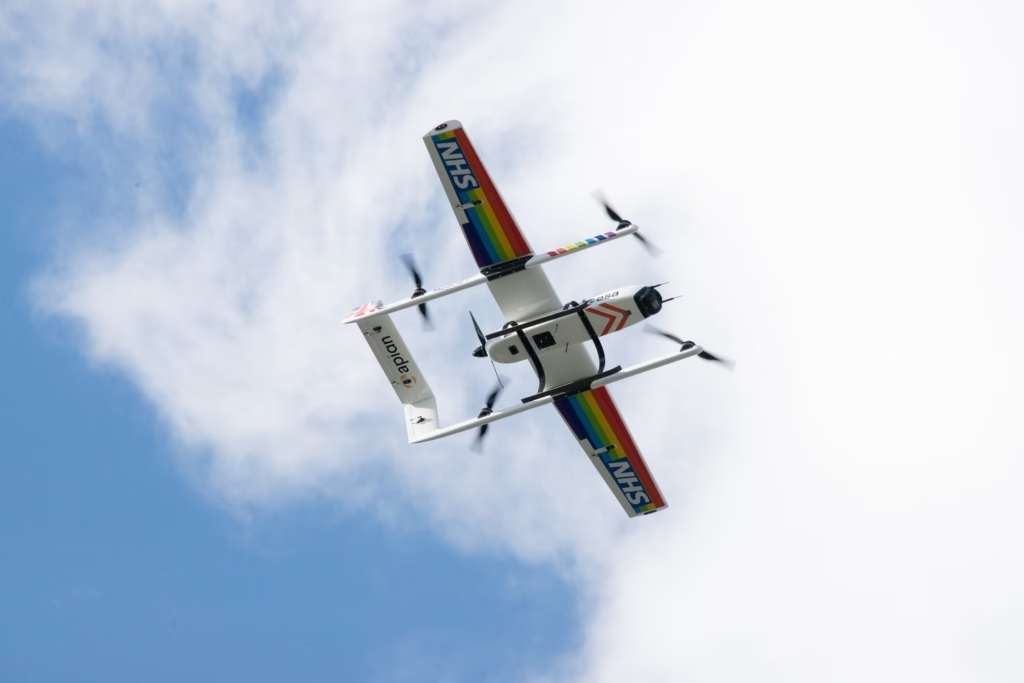
2: Agriculture
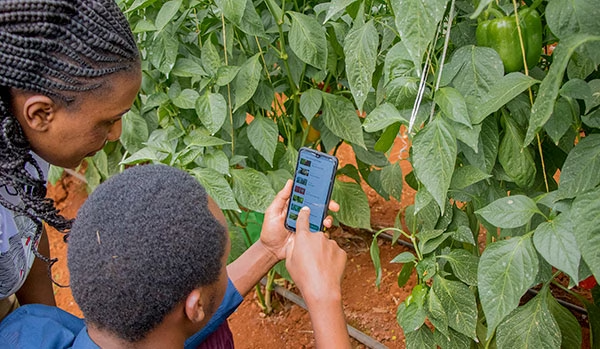
The agriculture industry is utilising satellite IoT to enhance productivity and lower expenses. By monitoring soil moisture, temperature, and other environmental factors, farmers can optimise their crop yield and reduce waste. This is sometimes referred to as Smart Farming. Satellite IoT can also be used to track livestock and monitor their health – improving overall animal welfare and reducing losses.
COSMOS-UK has installed Viasat IoT Pro terminals at remote soil moisture monitoring locations, to help combat climate change. The soil moisture data intelligence delivered by the Hughes 9502 specifically, to agricultural and environmental scientists, has the potential to transform the way we understand and model the natural environment.
Furthermore, satellite IoT has supported Synnefa in Kenya, to operate outside of terrestrial infrastructure by transmitting sensor data to enable smarter predictions for optimum harvesting times. The introduction of precision farming has been so successful, Synnefa has been able to help farmers:
- Save water by over 50%
- Reduce fertiliser application rates by 41%
- Increase production by 30% when compared to yields prior to the use of their devices.
3: Asset Tracking and Monitoring
Tracking and managing assets in real-time, providing valuable data on asset location at any given time is made possible with IoT technology. With satellite-enabled tracking devices, businesses can keep track of their assets no matter where they are in the world, even in the most remote locations. But here, it’s not just vessels, wind turbines and remote workers who can be tracked – animals can be too!
Illegal poaching is a big problem in Gabon, Africa. RockREMOTE with IMT enablement has equipped the rangers in Gabon with the latest in AI-powered camera trap technology to effectively monitor and prevent illegal poaching in the forest. With this advanced technology, endangered African species and iconic African wildlife have greater protection from poachers for this generation and the next.
Read More About Poaching in Gabon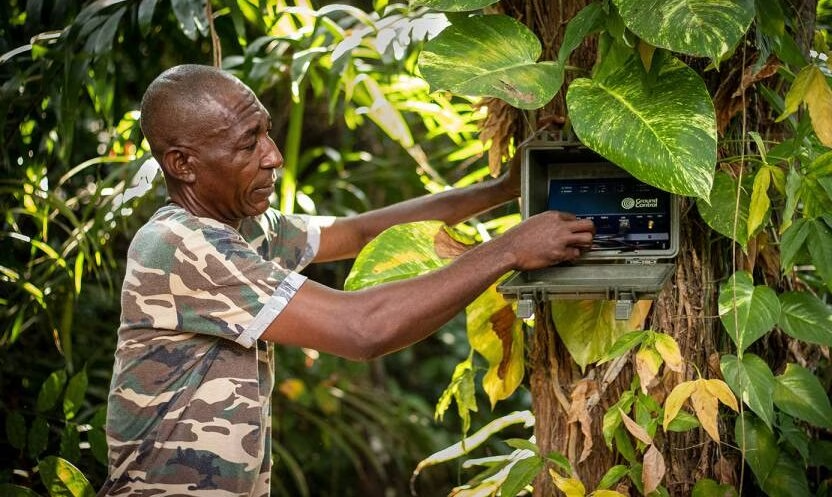
4: Workforce and Personnel Safety
Satellite IoT can be harnessed to monitor the safety of lone or remote workers in hazardous environments. By providing real-time alerts in the event of an incident or emergency, companies can respond quickly and potentially save lives. For example, workers in mining or oil and gas operations can wear wearable devices that monitor their location and vital signs, alerting supervisors in the event of an accident or injury. In addition, monitoring remote military personnel and natural disaster response teams is critical to their safety and well-being.
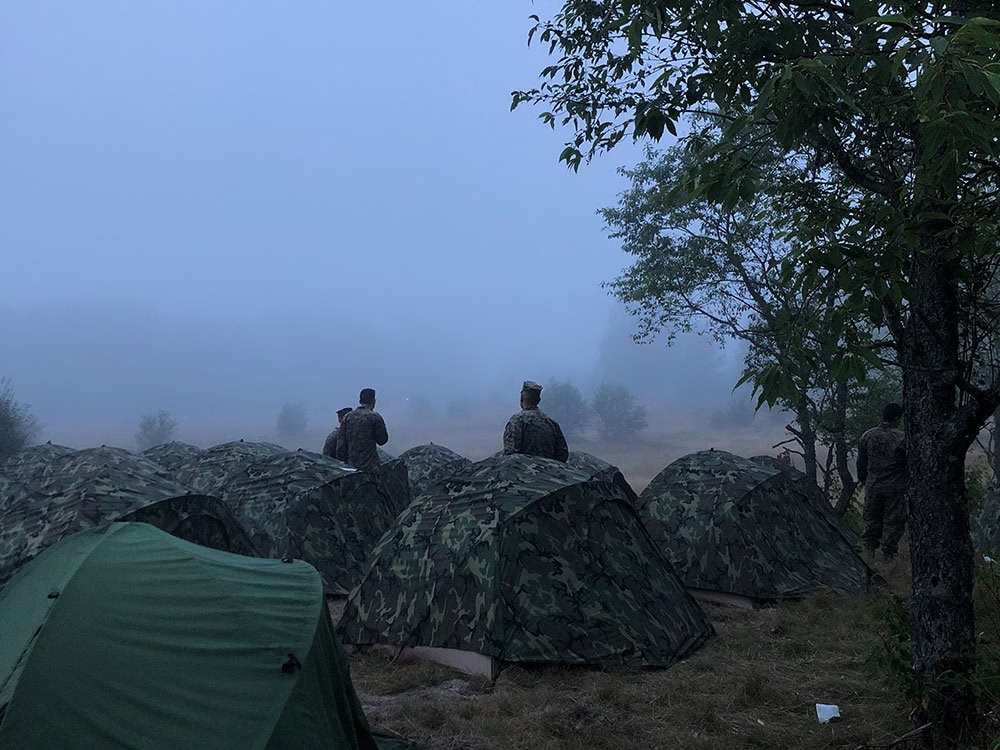
For example, the RockSTAR device has been used by the Ministry of Defence in their training. The RockSTAR was paired with bluetooth heart rate monitors, meaning biometrics could be monitored throughout with the added benefit of worldwide tracking and two-way communications. As well as critical monitoring, satellite IoT can also be leveraged for more leisure-based tracking and monitoring applications – including ultra-marathon runners via the RockSTAR tracking and two-way communications device.
See Tracking in Action5: Energy and Renewables
The energy sector is also seeing the benefits of satellite IoT. The technology enables remote monitoring of renewable energy infrastructure in real-time, allowing for early identification of any faults or issues, thus preventing downtime and maximising energy output. The performance of renewable energy assets is also optimized by collecting and analysing data on weather patterns, energy production, and equipment performance. This data can be used to improve efficiency, reduce costs, and even enhance the lifespan of renewable energy assets.
With five hydroelectric power stations in Snowdonia, North Wales, RWE maximises its renewable energy output from the reservoirs with a remote IoT solution – the Hughes 9502.
Read About Facilitating Renewable Energy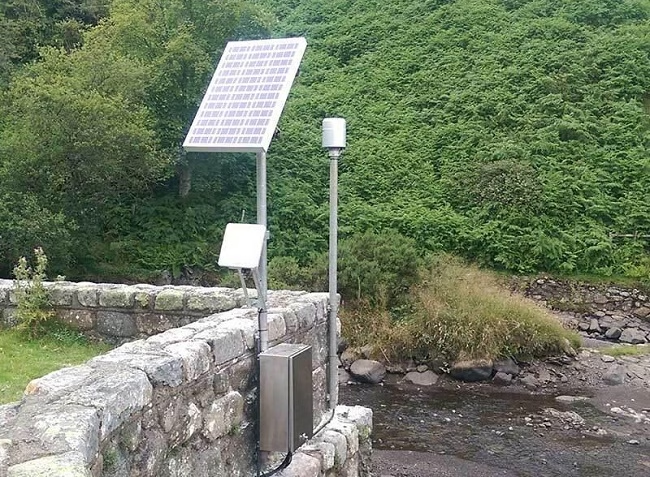
Satellite IoT vs. Traditional Cellular Networks
While traditional cellular networks are sufficient for many use cases, they have limitations when it comes to remote locations.
One of the biggest advantages of satellite IoT is that it provides truly global connectivity, even in the most remote and inaccessible locations. Unlike traditional cellular or Wi-Fi networks, satellite signals can reach anywhere on the planet, making it ideal for industries where assets are remote or located in harsh environments.
With satellite IoT, data can be transmitted from quite literally anywhere in the world, making it ideal for applications where cellular coverage is limited or even non-existent. Satellite IoT is also more reliable than cellular networks in many cases, as it is resilient to interference or disruption from extreme weather events.
However, it’s not necessary to choose either terrestrial or satellite connectivity. Satellite networks can be deployed quickly and easily, using the same messaging protocols as terrestrial networks, allowing businesses to scale their operations up or down as needed without having to worry about the limitations of traditional networks. What’s more, for businesses and industries that require global connectivity, the cost of deploying and maintaining satellite IoT devices can often be less expensive than building and maintaining traditional terrestrial networks from scratch. It can also be cheaper than deploying remote field engineers to remote sites.
In Summary…
Satellite IoT provides reliable connectivity to remote locations; bridging the connectivity gap that would otherwise be difficult or impossible to achieve with traditional cellular networks alone.
From reliable communication to real-time data collection and analysis, satellite IoT is changing the game for businesses and entire industries that need to stay connected no matter where their assets are located. Furthermore, as satellite technology continues to evolve and become more affordable, we can expect to see even more innovative use cases emerge in the coming years.
Unlock the Full Potential of Your IoT Project
Incorporating satellite IoT into your existing business operations can revolutionise what you can achieve. With satellite IoT, you can access data and insights that were previously unavailable or difficult to obtain with traditional networks and connectivity options.
Contact us to discover the added value of satellite IoT to your business today. We’re here to help and provide solutions to your connectivity challenges.
Resilient Communications via Satellite for Autonomous Agricultural Robots
The Agriculture industry is facing a number of significant challenges, not least, providing food security to a growing population. The United Nations Food and Agriculture Organisation has estimated that food production will need to increase by 70% by 2050, to meet the needs of the expected 9 billion population.
Labour remains key to harvest, especially with specialty crops – typically representing 20-50% of the overall crop budget. But factors such as an ageing workforce, increasing competition for labour from other industries and foreign labour costs continue to widen the gap between available and required labour. A challenge further exacerbated by Brexit and more recently, the pandemic.
Moreover, Agriculture is highly water dependent and the impacts of Climate Change are contributing to scarcity and shortages. In short, there are many trials facing the Agriculture sector. All necessitate an increase in Agricultural productivity.
Technology has long provided solutions and there has been an increase in interest and investment in AgriTech solutions. Predicted to reach $46,372 million by 2030, global AgriTech is a well established yet fast developing market.
What is AgriTech?
AgriTech describes the use of technology to produce more with less. This spans tractors to drones, milking machines to vertical farming and automation. These help farmers and agriculturalists increase efficiency from field monitoring, to the food supply chain itself.
AgriTech includes the Internet of Things (IoT) which has and continues to transform almost every sector – Agriculture is no exception. IoT refers to a network of connected devices that collect and share data with other devices and communications networks, allowing for real-time monitoring and control of various systems.
In Agriculture, IoT devices include sensors that measure soil moisture, temperature, and other environmental factors, as well as weather stations, drones, animal tracking collars, and other connected devices that can provide valuable data about crops and livestock. This data can then be used by farmers to make more informed decisions, for example, when to irrigate.
IoT in Agriculture
Ground Control is proud to work with a number of customers driving IoT in Agriculture forward. Just one great example is Synnefa. Synnefa provides IoT devices integrated with farming software to 8,726 farmers across Kenya.
The combination of data from IoT devices in the field, farmer activity and trend analysis, help deliver insight to either enable the farmer to make more informed decisions; or use Synnefa’s smart greenhouses to automatically complete tasks, for example fertilisation, based on sensor data.
The results:
• 50% reduction in water usage
• 41% reduction in fertilizer application rates
• 30% average increase in production when compared to yields before IoT device implementation.

What are Autonomous Agricultural Robots?
Autonomous Agricultural Robots (AAR) are machines that can perform agricultural tasks without human intervention. Equipped with various sensors, cameras and other technologies, they can navigate fields and perform specific tasks, including planting and monitoring and managing livestock.
The sensors, software and connectivity which enable these machines to collect and exchange data, means AARs can be considered a type of IoT. So these machines are able to communicate with other IoT devices, such as irrigation systems, enabling farmers to create more integrated and efficient farm management systems.
Common applications of Agricultural robots
1. Harvesting crops
Through detection and classification of plants and their characteristics, robots can be programmed to harvest crops based on factors that indicate ripeness, for example colour. Those with GPS systems can be used in tandem with pickers working in fields. As these robots benefit from speed and accuracy, they can improve yield size and reduce waste while reducing workforce reliance.
2. Drones
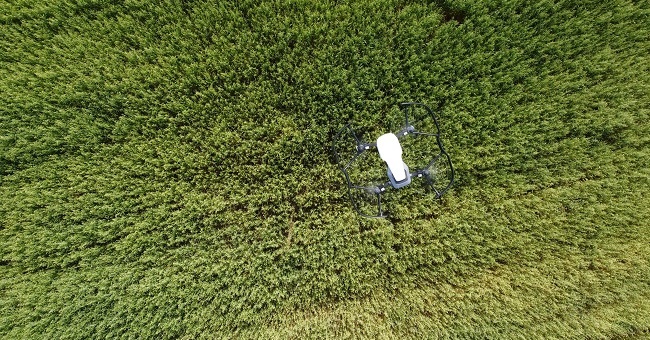
Can be used in multiple ways within Agriculture to automate tasks and improve crop yields. Some examples include:
Crop monitoring: equipped with sensors or cameras, drones can be flown over fields to collect data on crop growth, health and water stress. This data can then be used to create detailed maps enabling farmers to identify areas which need attention and adjust irrigation or fertilizer application.
Crop spraying: fitted with spray nozzles, drones can apply pesticides and other chemicals with high accuracy, minimising the amount needed.
Livestock monitoring: utilizes drone cameras to allow real-time information on animal health and behaviour. This can be used to help track grazing patterns or even identify stressed or sick animals.
3. Weed control
Ag operators can use autonomous robots to control weeds in a more precise, efficient and environmentally friendly method when compared to traditional methods. Just three common examples:
Automated mechanical weeding: soil-based weeders can navigate autonomously around fields, detecting plants via infrared sensors or cameras. Once weeds are detected, machines use a rotary cutter to cut these at ground level.
Chemical spraying: uses autonomous robots to apply herbicides to weeds in a targeted manner. The robot can use computer vision to identify weeds and spray only the areas where weeds are present, reducing the amount of chemicals used and minimizing the impact on the environment.
Thermal weeding: similarly to the above, autonomous robots use computer vision to identify weeds and target them with an appropriate amount of heat to kill the weed, negating the use of chemicals.
4. Autonomous tractors
Using a combination of sensors, GPS technology and cameras, these self-driving vehicles can perform tasks such as ploughing, tilling, and spraying crops.
They can also be used to collect data regarding soil health, crop growth and weather conditions while they work, enabling farmers to focus on other tasks, for example ensuring proper drainage.
5. Planting crops
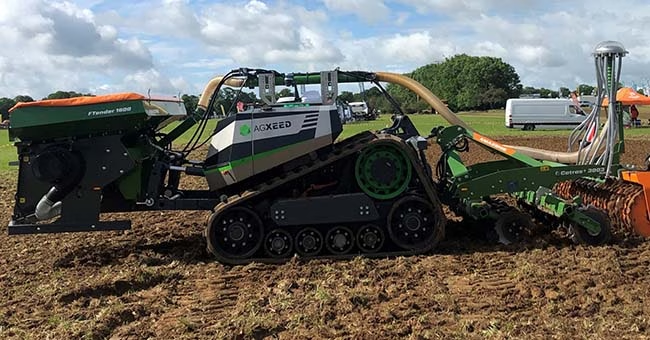
Agricultural robots are able to track the position of rows while planting, adjusting their trajectory accordingly, to ensure precise spacing between each seedling. GPS-based equipment also allows farmers to program the AAR with desired planting depth based on field location to give the crops the best chance of survival.
The opportunities associated with the use of autonomous agricultural robots as part of precision agriculture systems are significant – improved efficiency, labour productivity, minimised environmental impact, all while increasing crop yields.
Though AARs are still very much within their evolutionary infancy, autonomous tractors and drones in particular have become increasingly popular tools. A recent report valued the global autonomous farm equipment market at $62.89 billion and went on to predict market value would reach $250.6 million by 2028.
As with any relatively new technology, there are a number of challenges. Not least, connectivity. As Rohan Rainbow of Grain Producers Australia puts it – “more than half the farmers in Australia have no access to cellular phone connectivity… That’s actually quite a challenge if you want to service your machine or just run diagnostics on whether this machine is performing correctly and providing that information back to the operator.”
Beyond data transmission, the main issue associated with poor or no connectivity is when machines in the field detect an obstacle. When this happens, without the connectivity to receive a go/no go command the machine will sit still until either the perceived obstacle moves, or the Ag operator notes the machine isn’t where expected and goes to find and then reset it. To put this into context, even in the UK those utilising autonomous agricultural robots found they were having to go into the field roughly once every 10 hours.
As connectivity specialists it would be remiss to not highlight the role of satellite connectivity in overcoming these challenges. After all, to gain the true value-add from any of these applications, resilient communications are essential and only satellite offers ubiquitous coverage.
Overcoming connectivity challenges with the RockREMOTE Rugged
Designed for permanent outdoor installation in harsh environments, the RockREMOTE Rugged is ideal for fixed or mobile environments anywhere in the world. Featuring a new form factor, waterproof and vibration tested, the RockREMOTE Rugged connects assets and machines with Iridium satellite or LTE networks.
Featuring an omni-directional antenna, the RockREMOTE Rugged is able to securely connect remote IoT assets using IP or message-based protocols. The powerful Linux-based operating system offers containerized hosting for edge-computing applications.
Having spoken with a number of manufacturers, we’re confident the RockREMOTE Rugged is a great solution for any Agricultural manufacturers or OEMs looking for a robust, reliable communications system.
Looking for a communication solution for your AgTech?
We’d love to hear from you. Ground Control has been delivering satellite connectivity solutions for over 20 years. Already proud to work with a number of OEMs and manufacturers, you can find out more about our partner programme following the button below.
To discuss further what satellite connectivity could look like within your machines, and how we might be able to make that process as simple as possible – fill in the form and one of our expert team will be in touch.
Lone worker safety: a snapshot of operations in North America
In its most basic term, lone workers are defined as employees who perform an activity in isolation from other workers, without close or direct supervision. Working in numerous industries, there are an estimated 53 million lone workers across the globe, with almost half (25 million) operating within North America.
In addition to safety concerns faced by lone workers simply as a result of being alone, many also work in remote areas. Communication plans and tracking can reduce the chance of accidents when lone working and ensure swift response times in the case of an emergency. While there are regulatory and contractual standards in place for lone workers, procedures surrounding lone worker safety are very much evolving.
With rapidly changing needs and increasingly challenging environments, it’s imperative organisations continually evaluate their strategies, hardware and software to ensure they are able to maintain worker safety and operational efficiency.
To better understand how lone workers in North America currently remain safe and connected when out of cellular range, Ground Control in partnership with TracPlus, surveyed almost 250 lone workers and individuals responsible for the safety and supervision of lone workers.
Lone worker operations in North America today
How often do lone workers travel out of mobile phone range?
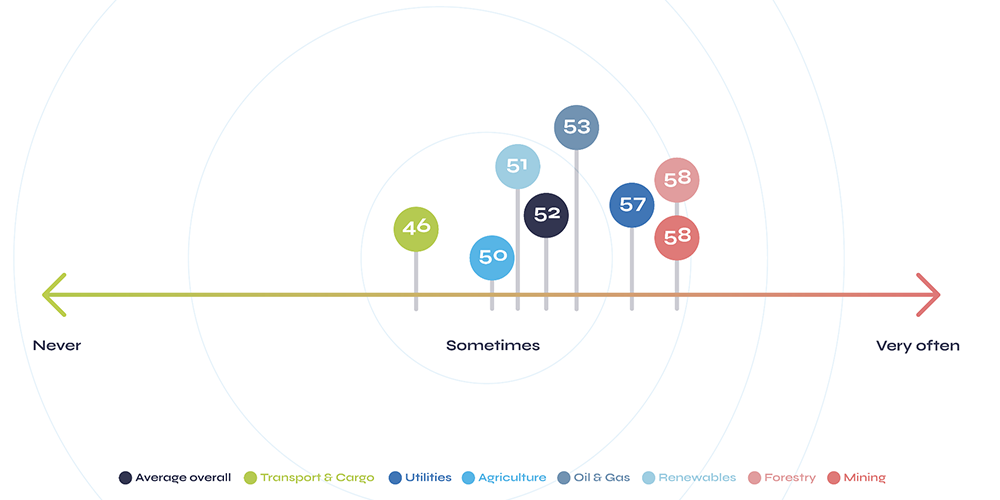
Lone workers and lone worker supervisors were asked to indicate on a scale from 0 – 100, whether they ever travelled out of mobile phone range. As can be seen in the above graph, on average, lone workers sometimes travel out of mobile phone range. It’s also worth noting that lone workers actually responded with a lower than average figure than those responsible for them (52 vs 58).
Our data also indicates that 10% of respondents are quite often out of mobile phone range, as these reported a figure of 75 or above.
When analysing the data grouped by industry, recipients from the Mining, Forestry and Utilities sectors provided the highest average scores, and those within Transport & Cargo, the lowest. This indicates that those working within Mining, Forestry and Utilities, are more likely to travel out of mobile phone range than those in the Transport & Cargo sector.
How many lone workers have experienced the following situations?
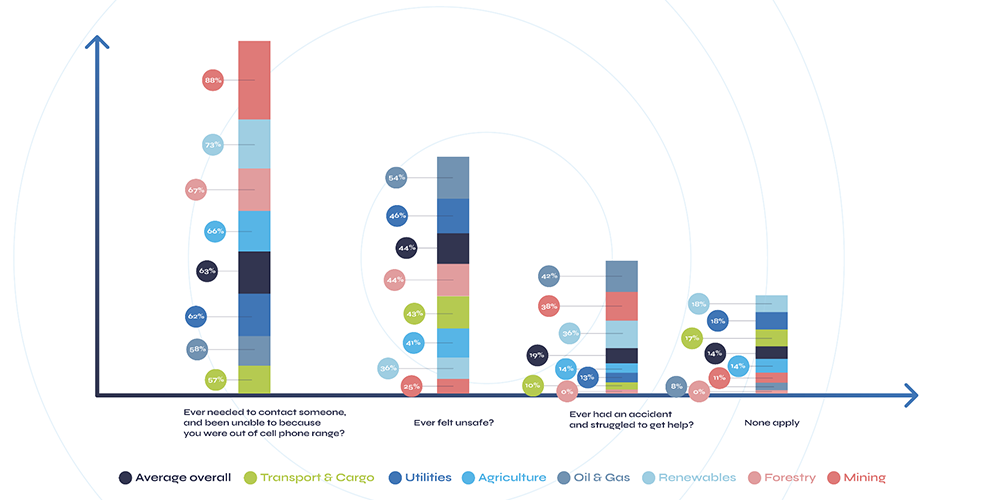
Results show over 60% of lone workers surveyed have been in a situation where they have needed to contact someone and were unable to, due to lack of mobile phone reception. Comparatively, for those within the Mining and Renewables industries, this figure rose to 88% and 73% respectively.
Further, almost one fifth (19%) of those surveyed reported having an accident, and struggling to get help. Encouragingly, none of the lone workers from the Forestry sector indicated having an accident when lone working, but this increased to over 40% within the Oil and Gas industry. Subsequently, workers within Oil and Gas were also most likely to report having felt unsafe (54%); 10% above the overall average.
How frequently do those responsible for lone workers check in with them?
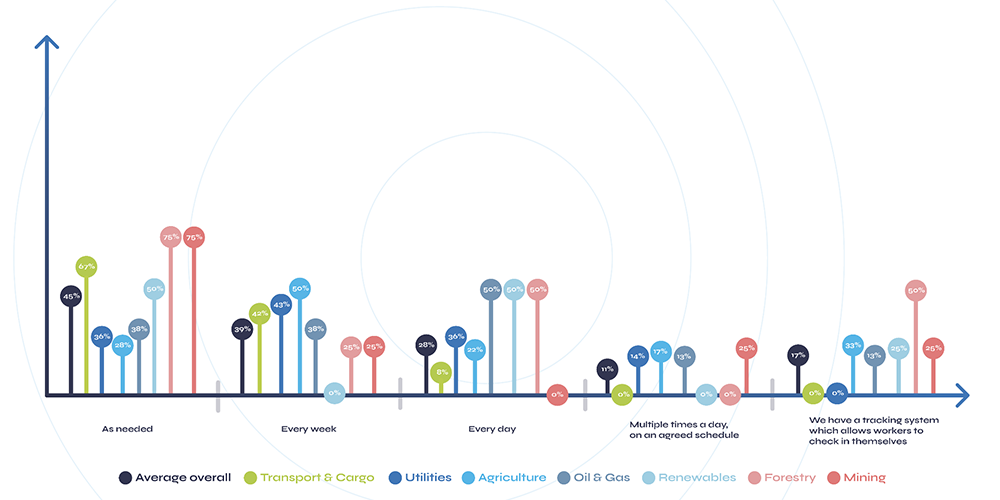
Overall 28% of respondents reported daily check-ins with their lone workers, 39% weekly and 45% as needed on a demand basis. Just 17% confirmed having a tracking system which allows lone workers to check in themselves, and over 10% disclosed checking in multiple times per day.
Interestingly, those within the Forestry sector were most likely to report more frequent check-ins – 75% indicating as needed and 50% every day. Additionally, 50% of those within Forestry also confirmed having a tracking system whereby their workers could check themselves in. This is particularly significant, considering the overall average reported was just 17%. In contrast, none of the respondents within the Transport & Cargo nor Utilities industries, indicated having a tracking system lone workers could use. Given the operational efficiency benefits these types of systems can deliver, this is quite surprising.
How robust are current lone worker communication strategies?
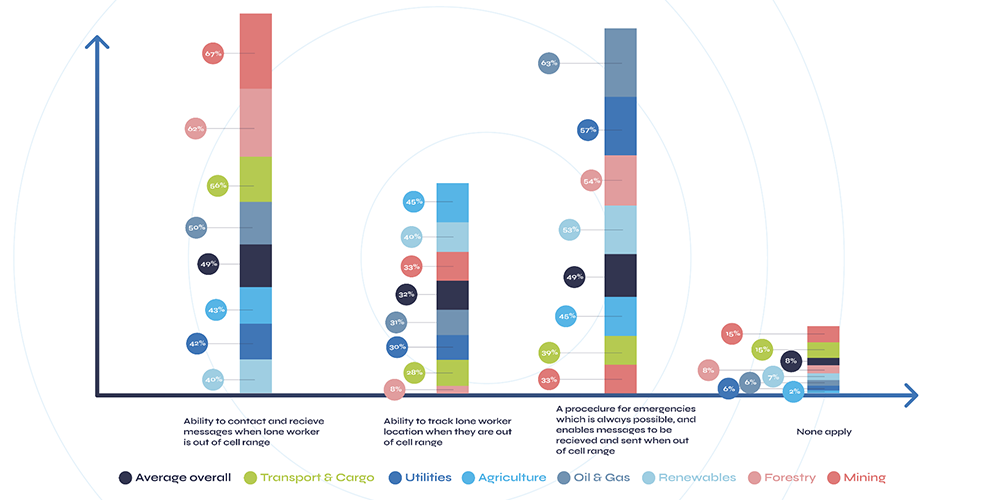
As illustrated above, only 49% of respondents reported having the ability to both send and receive messages while lone workers were out of mobile phone range. This figure remained the same when recipients were asked whether they had a procedure which could always be followed (even if there had been an accident or equipment failure), that enabled messages to be sent and received without mobile phone reception. Interestingly for those within the Mining industry, despite 67% reporting the ability to send and receive messages while out of mobile range, just 33% confirmed the ability to do this under all circumstances, for example in the event of an accident or equipment failure.
Additionally, less than one third (32%) of respondents overall confirmed they were able to track the location of a lone worker out of mobile phone range. This fell to just 8% in the Forestry industry.
Finally, 8% of respondents overall and 15% of those within the Transport & Cargo and Forestry sectors, indicated that they were unable to support any of these communication scenarios.
In summary, although our research represents just a snapshot of lone worker operations in North America, it does highlight that organisations still have some way to go in terms of safeguarding lone workers; a sentiment which holds true across all surveyed industries.
The future of lone worker safety: The RockSTAR
Communication plans and tracking are imperative to lone worker safety and increasing operational efficiency. With this in mind, it would be remiss of us to not talk about the RockSTAR device by Rock Seven (now trading as Ground Control). This powerful, handheld device allows the user to send and receive short messages from anywhere on Earth with a clear view of the sky. The unit is waterproof, ruggedized, and built to withstand the most challenging environments. And perhaps most importantly, the RockSTAR is able to transmit every minute with 15-second updates, ensuring teams know the whereabouts and safety of their lone workers at all times.
What is TracPlus?
TracPlus is a trusted real-time tracking and communication platform of first responders, government agencies, militaries, and other critical operators around the world. It has been developed to deliver situational awareness to first responders, irrespective of who owns the asset, what the asset is, who provides the tracking, or what the platform or signal type is – be it radio, cellular or satellite.
Get in touch
Ground Control and TracPlus have worked in partnership for over eight years, developing essential, cost-effective solutions for organisations and their remote field workers all over the world.
If you’d like to get in touch with our expert team, simply complete our online form, or you can email sales@groundcontrol.com or phone us on +1.805.783.4600 (USA) or +44 (0) 1452 751940 (UK).
Could your Business Achieve More with Better Connectivity?
In the world of industrial IoT, cellular connectivity is the default means of transferring sensor data back to your SCADA system. But what happens if the location your sensors are in is too remote to reliably connect to cellular? Or what if your sensors are on the move, dipping in and out of cellular range? In these scenarios, satellite-enabled IoT is an obvious choice, but has long been viewed as too expensive, too complicated, too fragile, or even not secure enough.
In this webinar, recorded in September 2021, Solutions Architect Matthew Ellison and Channel Partner Manager Rory Ashley seek to dismantle these perceptions, and give real-life examples of where the extra data provided by satellite IoT connectivity has materially improved outcomes – from smart farming to disaster management, environmental monitoring to renewable energy production.
Connectivity Challenges
Terrestrial networks only cover 15% of the Earth’s surface, and focus on populated areas. This leaves a number of businesses unable to reach their assets remotely, and having instead to resort to manpower – with the time delays and additional costs presented by that solution. In these scenarios, satellite connectivity is an obvious choice.
Further, the number one challenge The IoT Magazine stated that IoT faced was cybersecurity, and the risk of hacking. Satellite has a huge advantage over cellular here, as, if needed, an entirely private satellite network can be created with no reliance on, or exposure to, public networks at all.
Satellite vs Cellular from a Cost Perspective
Satellite is not as low cost as cellular, but it is moving in the right direction. Greater competition, better technology, and diversification of offerings has seen the wholesale price of high-throughput satellite tumble in recent years, and it’s our view that prices will continue to lower, as the established players – Inmarsat and Iridium, for example – come up against well funded new entrants like Elon Musk’s Starlink, and Amazon’s Kuiper satellite offerings.
That said, it’s improbable that satellite will replace cellular, as it is likely to always remain a little more expensive; so the applications for satellite IoT are, not unexpectedly, those where cellular networks are unavailable, such as ocean data buoys or remote farms, or where the asset is moving in and out of terrestrial connectivity – such as transport and cargo ships.
Make sure to watch the webinar to see great examples of satellite connectivity in action – and if you have any questions, we’re here to help.
Get in touch
We’ve implemented satellite IoT infrastructure for decades, and there’s very rarely been an obstruction issue we couldn’t overcome with a bit of knowledge and ingenuity.
We’d be happy to talk to you about your project and offer impartial advice on the best antenna and satellite service for your particular requirements. Call or email us, or complete the form.