Topic: IoT & M2M
The Bespin Project
In the spring of 2017, an international team of students from Luleå University of Technology in Sweden gathered together to brainstorm a REXUS/BEXUS program idea. The European program supports scientific and technological experiments on research rockets and balloons, sending two of each into space every year.
After some deliberation by the team, it was a scientific article on the potential of a manned mission to the upper Venusian atmosphere that gave the impetus for the Balloon Ejection Student Prototype INvestigation (BESPIN) Project. Though Venus’s runaway greenhouse effect makes the planet’s surface hot enough to melt lead, at a height of 50km temperature and pressure conditions are very similar to those found on Earth. This makes a balloon-assisted manned mission to Venus highly plausible.
That’s why the BESPIN experiment is made up of two parts – a flotation probe and a descent probe. At apogee (around 80km), both probes are ejected as a single free-falling unit (FFU) from the rocket’s nose-cone. The FFU freefalls until it reaches an altitude of about 5km, when a parachute is deployed on the descent probe.
When the FFU’s velocity has dropped below 7 m/s, a balloon on the flotation probe will inflate. Once it’s fully inflated, the descent and flotation probes will separate. The descent probe will continue parachuting down towards the ground, while the flotation probe uses its fully inflated balloon to attempt a controlled descent.
Following the deployment of the descent probe parachute, the team will be using a RockBLOCK 9603 to communicate housekeeping and positional data to a ground station. Like the rest of the equipment, the RockBLOCK will be undergoing rigorous testing to ascertain its suitability for vibration, shock, and pressure changes associated with the mission.
RockBLOCKs Measuring Glacier Movement
Professor Kirk Martinez and his team from the University of Southampton, UK, are using moving rover units equipped with RockBLOCKs to measure how Icelandic glaciers respond to small-scale changes in temperature and precipitation throughout the year.
Global warming has resulted not just in the melting of glaciers throughout the world, but in their accelerated movement as well. The increased temperatures mean that a larger amount of water is finding its way underneath glaciers, effectively acting as a lubricant and causing glaciers to speed up.
Using differential GPS (dGPS), Professor Martinez can accurately calculate glacier speeds by measuring location differences as small as 2cm. In the past, achieving such spatial resolution in remote locations and over the course of months was financially prohibitive.
But not anymore, thanks to the next generation of low-cost hardware being used in his Ice Tracker project. In previous research, sensor probes were also placed in and under glaciers, collecting data on conditions, pressure, stresses, and subglacial movement.
All of us at Rock Seven (now trading as Ground Control) wish Professor Martinez and his team the very best of luck.
RockBLOCK 9603
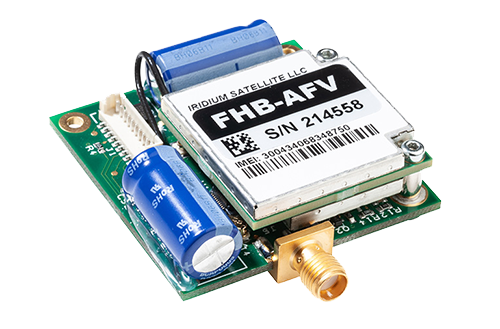
The smallest and lightest version in our RockBLOCK family, the RockBLOCK 9603 is targeted primarily at systems integrators and product developers where space inside your enclosure is at a premium.
RockBLOCKs can send and receive short messages from anywhere on Earth with a view of the sky.
Get in touch
Get in touch with us and find out if the RockBLOCK 9603 is the right device for your needs. Either complete our online form, or call us to be connected directly with one of our expert team. Call +44 (0) 1452 751940 (Europe, Asia, Africa, Oceania) or +1.805.783.4600 (North and South America).
With over 20 years experience in satellite tracking we have the knowledge and experience to ensure you are equipped with everything you need to make the right choice.
Balloon-Borne Imaging Telescope
Twinkling stars may be a gift for song writers and romantics, but they’re a bane for cosmologists who need a clear view of the sky to gather important data. Compensating for the many distorting kilometers of the Earth’s atmosphere is usually done by adaptive optics or by placing a telescope in orbit. But both solutions are notoriously expensive and difficult.
An international team of collaborators made up of the University of Toronto Physics and Astronomy Departments, the Dunlap Institute, and the Institute for Aerospace Studies, the Durham University Centre for Advanced Instrumentation, Princeton University, and the Jet Propulsion Laboratory, went for a tried-and-tested solution dating back to the late 1700s – and thus the Balloon-borne Imaging Telescope (aka. SuperBIT) was born.
Floating a 0.5m telescope above 30km (and 99%) of the Earth’s atmosphere required some heavy revising of 300-year-old ballooning technology. An array of precision gyroscopes, motors, and actuators, as well as a custom-built star tracker, were used to achieve advanced image stabilization. The result is crisp one- to five-minute exposures in the near-infrared, red, green, blue, and ultraviolet bands, as well as in broadband.
The SuperBIT can collect several gigabytes of data per night, and relaying it back to Earth is not just complex but expensive. One idea put on the table was to periodically offload the data via radio or microwave from an under-flying plane. The balloon’s remote position over the ocean though would make this logistically difficult.
Paul Clark, head of engineering at Durham CfAI, said: “Our slightly crazy idea is to carry out data drops whenever the balloon passes over land. Imagine a TB flash drive being dropped from the telescope gondola and coming down to the ground on a parachute. The challenge then is to track the data payload as it descends and find it once on the ground. That’s where the Iridium 9603N comes in.”
The SuperBIT beacon that tracks the payload uses a GPS receiver and an altitude/pressure sensor integrated with the Iridium 9603N modem. The beacon design has proved reliable, even at high altitudes where the temperature falls below -50C and the air pressure is very low. Battery chemistry has also been carefully chosen to withstand the extreme conditions. The beacon is robust enough to have been recovered from a tree and a lake.
The team is now getting ready for a third engineering flight from Palestine, Texas, while the main ultra-long-duration balloon flight (ULDB) is scheduled for 2020 in New Zealand. It’s this final mission that will demonstrate the SuperBIT’s capability as a facility-class instrument.
When fully operational, the SuperBIT will study strong and weak gravitational lensing and map out the distribution of dark matter around hundreds of galaxy clusters.
Photos (c) Department of Physics, University of Toronto.
Get in touch
We’ve implemented satellite IoT infrastructure for decades, and there’s very rarely been an obstruction issue we couldn’t overcome with a bit of knowledge and ingenuity.
We’d be happy to talk to you about your project and offer impartial advice on the best antenna and satellite service for your particular requirements. Call or email us, or complete the form.
Horizon Capital LLP Commits £20mn to M2M and IoT Buy and Build Strategy
Horizon Capital LLP, the leading investor in UK B2B services and technologies companies, have announced it has committed £20mn to a new buy and build strategy in the M2M and IoT market. This will start with the acquisition of Wireless Innovation, a UK-based M2M managed services connectivity provider (now trading as Ground Control).
Founded in 2004, Wireless Innovation provides connectivity as a managed service via its own platform to a range of end user clients. The business specialises in M2M data connectivity working in partnership with satellite and cellular connectivity providers across the globe.
Wireless Innovation’s clients are based in over 100 countries and across a wide range of sectors including renewables, utilities, oil & gas, telematics, aviation, and maritime. Clients include EDF Energy, Iberdrola, and Scottish Water.
Edward Spurrier, the former CEO of Alternative Networks, has joined as chairman and will lead the acquisition strategy alongside CEO and founder of Wireless Innovation, Phil Rouse. Horizon Capital LLP will work with the management team to capitalize on the significant opportunities for acquisition in this fast-growing market.
Commenting on the transaction, Simon Hitchcock, partner at Horizon Capital LLP, said: “Given its growth and fragmentation, the M2M and IoT connectivity market represents an attractive investment opportunity. Wireless Innovation has created an excellent connectivity platform through significant investment and development over a number of years. We look forward to partnering with Phil to scale the business both organically and through acquisitions.” He added: “Wireless Innovation is Lyceum’s third off-market platform investment in 2017 and further demonstrates our ability to identify and transact highly attractive technology and B2B outsourcing investments.”
Phil Rouse said: “Over the past 13 years, we’ve built a unique connectivity platform able to manage integrated cellular and satellite services seamlessly. Following five years of consistent double-digit organic growth, I’m delighted to be partnering with Horizon Capital LLP to continue our growth strategy and further accelerate it through acquisition. I’m deeply impressed by the calibre and expertise of the Lyceum team and look forward to working with them.”
Luke Kingston, director in Horizon Capital LLP’s origination team, commented: “Wireless Innovation operates in a highly fragmented market, both in the UK and internationally. We’ve committed significant additional capital to support Phil and the team in executing their ambitious acquisition strategy and are in active dialogue with several potential target businesses.”
The Horizon Capital LLP team comprised Simon Hitchcock, Luke Kingston, Tom Maizels, and Geoff Neville. Hitchcock and Neville will join the board.
Transmitting Sensor Data Back from Extremely Remote Locations with Gill Instruments
Ground Control offers users the ability to connect to all Gill meteorological sensors, taking key data on a regular basis and transmitting it over satellites at an affordable price.
Collecting data from extremely remote systems is now becoming commonplace, and there are a number of existing GSM/GPRS services which allow this. However, they assume that there’s some form of mobile network coverage, whereas a lot of extremely remote installations are far from civilization or in areas where there are gaps in the mobile network coverage.
Now, there’s a way to collect data from your remote sensors regardless of where the systems are installed, using the global network of Iridium satellites and the RockFLEET‘s M2M/IoT ability.
Alongside the meteorological data, the RockFLEET unit also transmits position data – particularly useful where installed on buoys or other equipment that may move position either accidentally or by design. By getting regular position reports, you can receive early warnings if your equipment is moving off-station. RockFLEET is designed to provide global tracking and M2M/IoT (machine-to-machine / internet of things) data communication from anywhere in the world.
RockBLOCK Support for ThingSpeak Announced
Rock Seven (now trading as Ground Control) has added compatibility with the ThingSpeak Open IoT (internet of things) platform for its RockBLOCK portfolio of plug-and-play two-way satellite communications systems.
Enabling users to aggregate, visualise, and analyse live data streams in the cloud, the combination of RockBLOCK and ThingSpeak will enable significant time and cost efficiencies for scientists and organisations deploying remote research and monitoring stations anywhere in the world.
With RockBLOCK providing a low-cost satellite data link and ThingSpeak’s ability to negate the need for an organisation to buy and manage its own servers, databases and associated infrastructure, the whole scientific process from data collection in the field and transmission through to analysis and communication of results can be significantly streamlined and automated. Data is transmitted direct to ThingSpeak servers via RockBLOCK, where users can access it using a sophisticated toolset that enables effective management and dissemination of the data.
With the ability to execute MATLAB® code in ThingSpeak, data can be quickly analysed and processed as soon as it arrives in the cloud. Storing data in the cloud provides easy access to data and using ThingSpeak’s online analytical tools, it can be easily explored and visualised, enabling faster discovery of relationships, patterns, and trends in data. Within ThingSpeak, data can be converted and combined, and new data can be calculated then visualised in plots, charts, and gauges. ThingSpeak also schedules calculations to run at certain times and enables data to be combined from multiple channels to build a more sophisticated analysis.
Before this, the innovative RockBLOCK system provides highly reliable delivery of the data from anywhere in the world. The system has been embraced by science and research users at sea and on land because of its low-cost, straightforward approach to adding data connectivity to almost any research platform or commercial product. It interfaces seamlessly with all mainstream computing platforms from Windows, Mac, and Linux through to the new breed of miniature computing hardware such as Arduino™, Raspberry PI™ and Intel Edison, which are widely used to power distributed scientific and environmental research nodes located in remote regions.
“RockBLOCK is the ideal complement to the ThingSpeak platform,” said Nick Farrell, Director, Rock Seven (now trading as Ground Control). “Together, they create a very low-cost yet powerful solution to collect data from remote locations, analyse it using industry standard technology and finally act on it through the use of automatic alerts or social media postings. While RockBLOCK is taking care of the connectivity side of remote monitoring, integration with ThingSpeak enables users to deliver data directly to the cloud and manage it quickly and securely”
ThingSpeak is compatible with the entire RockBLOCK portfolio, including the brand-new RockBLOCK 9603, an even smaller variant of the sophisticated RockBLOCK MK II solution. Thousands of RockBLOCK systems already provide machine-to-machine (M2M) data communication over Iridium’s global satellite network for thousands of professional users at sea and on land, in addition to providing a low-cost data link for private users in the burgeoning ‘maker community’.
Find out more about the ThingSpeak platform at https://thingspeak.mathworks.com.
SparkFun Distribution in the USA
We’re pleased to announce that SparkFun are now an official distributor of the RockBLOCK 9603 and RockBLOCK 9602 units in the USA.
The RockBLOCK 9603 allows you to send and receive short messages from anywhere on Earth, so long as you have a clear view of the sky. It works far beyond the reach of Wi-Fi and GSM networks. It’s perfect for the electronics hobbyist or maker who wants to transmit weather information from mid-ocean or use it to control their robot in the middle of the desert.
SparkFun is an online retail store that sells the bits and pieces to make your electronics projects possible. No matter what your vision is, their products and resources are designed to make the world of electronics more accessible to the average person.
In addition to products, SparkFun, through their Department of Education, offers classes and online tutorials designed to help educate individuals in the wonderful world of embedded electronics. Their ever-growing product catalog boasts over 3,500 components and widgets designed to help you unleash your inner inventor.
See the RockBLOCK 9603 and RockBLOCK 9602 on the Sparkfun website.
New Flexible Antenna and Interface Options for RockBLOCK Mk2
Already established as an innovative, low-cost satcom system for commercial M2M applications and internet of things (IoT) developers, Rock Seven (now trading as Ground Control)’s RockBLOCK plug and play two-way global communications system has been upgraded to offer more flexibility for commercial users. In addition to more standardised interfacing, RockBLOCK Mk2 now offers the choice of using an on board or external Iridium antenna.
Designed to work with any platform with a serial or USB port, including Arduino, Raspberry PI, Intel Edison, as well as Windows, Mac, and Linux computers, RockBLOCK is a simple and reliable way to integrate two-way communication into any sensor or automation focused product design. It can send messages of 340 bytes and receive messages of 270 bytes using Iridium short burst data (SBD), which offers global, pole-to-pole coverage.
New features in RockBLOCK Mk2 include the addition of an optional SMA connector, so external antennas can be used instead of the onboard patch antenna. Rock Seven has also changed its equipment interface approach, replacing the original RockBLOCK’s proprietary break-out connector with a standard 0.1″ pitch connector. Both developments are aimed at giving greater flexibility when developing communication capabilities at the design stage of a project, whilst enabling simpler installation and interfacing.
As an easy-to-implement and operate system suitable for all levels of technical expertise, RockBLOCK provides a diverse user-base with a reliable way to communicate with and control equipment remotely. RockBLOCK Mk2 is designed to support commercial organisations in their effort to extend the IoT to remote areas, from the deserts and poles to oilfields, wind farms, and near-space.
Launched alongside the ‘Naked’ RockBLOCK Mk2 is a new version delivered in a robust case, called RockBLOCK Plus. Designed for rugged applications, RockBLOCK Plus is encapsulated in a waterproof IP68 housing and includes a 3m lead. It takes 9-30v DC power (instead of 5v on the standard RockBLOCK Mk2) and RS-232 signals (instead of UART).
RockBLOCK Plus is ideally suited for use by commercial organisations operating in hazardous or inclement environments and is especially relevant for maritime application on workboats or ‘smart buoys’.
RockBLOCK Mk2 is a low-cost way to integrate remote machine-to-machine (M2M) communication functionality into any project.
Satellite Solutions for Solar Resource Assessment
Finding a suitable location is one of the biggest challenges in the renewable energy industry. For a solar installation to be successful, it has to deliver a consistent and reliable supply of energy. To do this, it must be situated in exactly the right place. To justify the investment that a solar thermal power plant requires, developers need detailed knowledge of the environment as well as data on the performance of installation equipment.
Since these sites are often in remote and inaccessible desert locations, data gathering stations have to be designed to withstand harsh conditions – they need to be robust, efficient, and low-maintenance. It’s impractical and hazardous to retrieve data manually so measurement stations also need to provide reliable and secure remote connectivity, ensuring data can be collected and equipment monitored.
To provide the reliable data backhaul required for a recent solar energy assessment project developer, organisations need a robust satellite, such as the RockREMOTE solution from Ground Control.
The RockREMOTE is an Iridium-based solution that provides secure, reliable satellite connectivity in places where GPRS coverage is poor. It’s a flexible and programmable solution that removes any reliance on the existing terrestrial infrastructure. RockREMOTE allows data logging solutions to be deployed in remote and hostile locations, seamlessly integrating with data loggers to provide secure, reliable connectivity over the Iridium satellite network.
Ground Control’s extensive experience in renewable energy and detailed technical understanding of the entire infrastructure ensures customers receive a complete end-to-end solution. So, instead of agonising about the challenges of installing a renewable energy resource, why not take advantage of our ‘solutions without strings’ approach?
Get in touch
Accurate solar resource assessment in remote areas depends on reliable data transmission. Ground Control’s RockREMOTE, powered by Iridium satellite connectivity, ensures continuous monitoring where terrestrial networks aren’t available.
Designed for integration with remote systems, RockREMOTE supports uninterrupted delivery of irradiance and environmental data—critical for site evaluation and performance modelling.
Whether you need a primary link or satellite failover, get in touch to find out how we can help you with your remote connectivity requirements.
M2M Communication for Smaller Vessels
‘Big data’ has become part of the Maritime lexicon in recent years. It’s hailed as the answer to achieving operational efficiencies, and is part of the reason that the demand for bandwidth at sea continues to grow.
The use of big data somewhat reflects how internet usage patterns at sea follow that of businesses on land. As satellite capacity grows, service providers, IT companies, and equipment manufacturer work out ways to use it to gain efficiencies and ultimately save costs for ship owners and operators. Many of these applications are based on the concept of machine-to-machine communication, also known as M2M. Sensors in onboard equipment can talk directly with applications on land via satcom – delivering automated reports and statistics, for instance, which can be leveraged to understand vessel performance better.
Though M2M applications can run over the VSAT equipment found on ships, the use of M2M communication isn’t limited to large commercial vessels. New systems have been developed that focus on understanding the challenges of communicating at sea for smaller vessels, especially in terms of cost, security, and the lack of space onboard, which may rule out the installation of a large satcom antenna. So with smaller, lower-cost equipment and lower-bandwidth services, the world of M2M is opening up for vessels of all types and size. ‘Small data’, if you like.
Ground Control is at the forefront of this scaling-down of satcoms for M2M applications, with its RockFLEET and RockBLOCK products.
RockFLEET
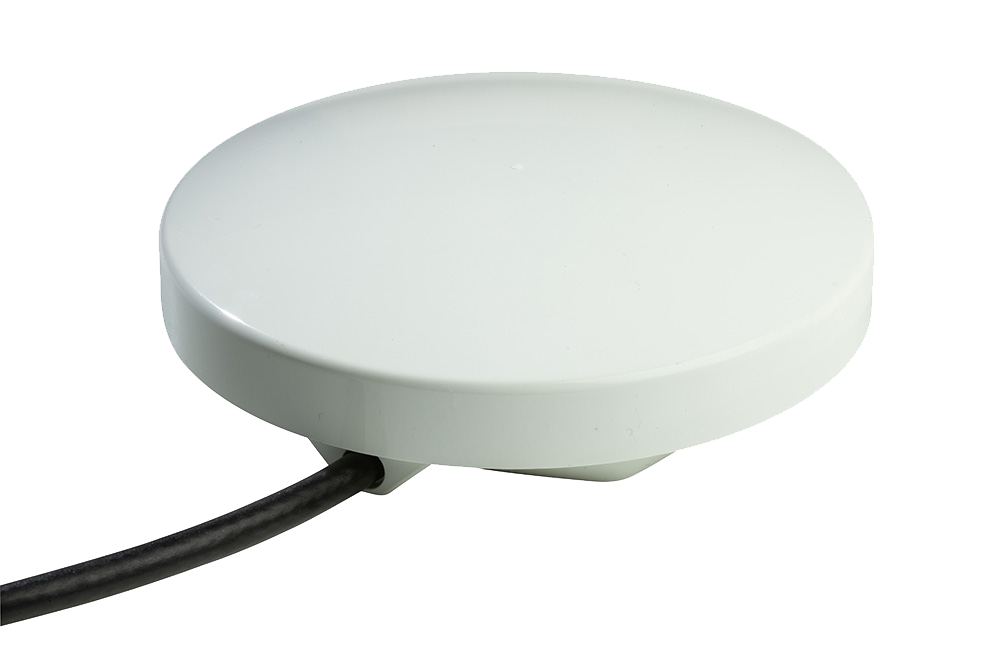
The RockFLEET Tracker is a truly global tracking device designed for permanent use aboard marine vessels and land vehicles. Its optional LTE Narrowband unit allows it to use mobile phone networks when possible, automatically switching to the global Iridium satellite network when necessary (lowest-cost routing).
RockBLOCK 9603
RockBLOCK 9603 is a plug-and-play two-way global communications system designed to work with any computing platform with a serial or USB port, including Arduino™, Raspberry PI™, Intel Edison, Windows, Mac, and Linux computers. It’s a simple, low-cost, and reliable way to integrate two-way communications into any M2M system. It can send messages of 340 bytes and receive messages of 270 bytes using Iridium short burst data (SBD), which offers global, pole-to-pole coverage. It can transmit commands and receive data from almost any equipment on board so the potential applications are huge.
The tiny RockBLOCK 9603 (7.6cm x 5.1cm x 1.9cm) device uses either an onboard patch or external antenna using an optional SMA connector and a standard 0.1″ pitch connector for easy interfacing of equipment. Both of these aspects give greater flexibility in terms of onboard configuration of an M2M network – a vital aspect considering that ship and boat design varies massively.
Also available is the RockBLOCK Plus, designed for rugged applications, encapsulated in a waterproof IP68 housing, and including a 3m lead. It takes 9-30v DC power (instead of 5v on the RockBLOCK 9603) and RS-232 signals (instead of UART). RockBLOCK Plus is ideally suited for commercial organisations operating in hazardous or inclement environments. Essentially, it’s ideal for installing outside on your vessel.
RockBLOCK originally became popular in the so-called ‘makers’ market, where engineers, students, and inventors develop creative projects using IT and electronics components. Everything from oceanology to homemade space planes have used the RockBLOCK system to send and receive commands and the simplicity of the system transfers well to the maritime sector.
As an easy to implement and operate system suitable for all levels of technical expertise, RockBLOCK 9603 provides a diverse user-base with the ability to cost-effectively extend the ‘Internet of Things’ to maritime arena. Thousands of RockBLOCK units have been sold to date. Some notable projects include two-way communication duties on high-altitude balloon launches, a rocket-powered aircraft project, tracking the position of marine buoys for the Poseidon Project, and a marine oil spill response system designed and built by students.
Potential applications on ships and boats include security, automation, and engine monitoring. But unlike the headline, million-dollar complex VSAT networks that are part of the big data and smart shipping concepts, M2M communication using RockBLOCK 9603 is achieved on far more modest budgets. This means privately owned workboats, fishing boats, and yachts can benefit from M2M communication, for basically any application they can think of, while larger fleets can save money and supplement their VSAT systems with an M2M-only solution.
The low initial outlay and airtime costs are also driving maritime technology companies to develop commercial products using RockBLOCK 9603 as a foundation. Although the bandwidth available over Iridium SBD is relatively low compared to VSAT, the potential for developing commercial products that can make a real difference is high.
One innovative application is the use of Ground Control’s M2M communication technology on hyperbaric lifeboats, which are designed to safely transfer divers currently in saturation and unable to decompress for days – should there be cause to abandon their diving ship. Decompression from saturation would cause certain death so modern saturation diving vessels are fitted with at least one hyperbaric lifeboat that can carry up to 18 divers to safety.
When on board the diving vessel, any occupants of the saturation diving chambers will be monitored closely to ensure their health and safety. This poses a challenge should the occupants have to be moved to a hyperbaric lifeboat in an emergency, as the conditions inside the lifeboat chamber have to be maintained to close tolerances of temperature, gas mixture and pressure. The resources available to maintain these conditions within the lifeboat chamber are strictly limited and to maintain the conditions stable for any amount of time is difficult. This makes the monitoring of available resources and conditions within the chamber critical.
A UK-based instrumentation and data logging company for the commercial diving industry is developing a system to make data from hyperbaric lifeboats available over satcom. Though hyperbaric lifeboats have been around for 30 years, this is the first serious attempt to connect them to a monitoring network by satcom. A key challenge until now has been the size and power requirements of satcom antennas. There’s also been a cost consideration, with the majority of satcom services locking users into annual contracts. Considering not a single hyperbaric lifeboat has ever been launched in a real emergency, funding a fleet of lifeboats with an open satcom connection could become costly if using VSAT or other L-band services.
So to enable satcom for data transmission from a hyperbaric lifeboat, the development team has chosen RockFLEET. The system offers the same functionality as RockBLOCK while addressing the size, power, and cost challenges of installation on hyperbaric lifeboats. Operating on the same Iridium SBD service as RockBLOCK, RockFLEET has primarily been designed as an innovative ship tracker. However, Rock Seven (now trading as Ground Control) launched an M2M module in December 2014, opening the RockFLEET system up for a wealth of new applications.
On the cost side, there’s no annual contract, only pay-as-you-go use. The system provides pole-to-pole global position data and each M2M data transmission costs as little as £0.03.
The RockFLEET unit is only 13cm diameter and 4cm high and can easily be integrated with onboard equipment using a variety of serial protocols, whilst RockFLEET’s open API ensures data in any format can easily be delivered to users’ own applications. It’s also the only system of its kind to feature an onboard battery, so if it loses power from the vessel, it can keep on working for approximately two weeks (depending on the application and environment).
These attributes are the drivers behind this project to enhance communication from hyperbaric lifeboats, and should one ever need to be launched for real, the occupants will stand a better chance of being recovered safely when their rescuers have critical data available.
While RockBLOCK provides a singular approach to M2M data, RockFLEET consolidates two key aspects of maritime communication systems – vessel tracking and M2M data. Many shipping companies are keen on the concept of vessel tracking; it’s vital to know where all ships in a fleet are at any one time. But with today’s IT-focused maritime world, it’s now not just possible to receive data from vessels but almost essential to do so in order to operate as efficiently as possible.
With the M2M data module, RockFLEET can provide both position data and any other kind of data required – an advanced feature set, but one that doesn’t cost the earth and can help operations on even the smallest vessel improve through the use of low-cost data communication.
Can we help?
If you are looking for a reliable, secure, and easy-to-use vessel tracking device, then the RockFLEET is a great option. It uses LTE networks where available, and the Iridium satellite network when your device is out of cellular coverage.
Start a chat with our team today and discover how RockFLEET can enhance your marine operations. Complete our online form, or if you prefer to speak to someone directly, call us on +44 (0) 1452 751940 (Europe, Asia, Africa) or +1.805.783.4600 (North and South America). We’re standing by to help.
Manufacturing Begins on Iridium NEXT Satellites
Production on 81 satellites for the Iridium Next programme has begun at the Orbital Sciences Corporation Satellite Manufacturing Facility in Gilbert, Arizona.
Orbital will manage production of the satellites under a contract between itself and Iridium’s prime contractor on NEXT, French-Italian aerospace company Thales Alenia Space.
This will include integration of a total of 81 satellites for the constellation, including 66 low-Earth orbit operational satellites, six in-orbit spares, and nine ground-backup spacecraft, over the next three years.
Orbital’s responsibilities under the project also include ground support equipment, primary and hosted payload integration, shipment, and launch integration services.
Scheduled to begin launching in 2015, Iridium NEXT will fully replace Iridium’s current satellite constellation of 66 cross-linked low-Earth orbit (LEO) satellites that cover 100 per cent of the globe.
Start Making the Most of M2M
Short Burst Data Transceivers
Short Burst Data (SBD) satellite transceivers, as defined by Iridium, are perfect for integration into complete wireless solutions and can be used for a wide range of applications in numerous markets. Designed to be scalable and to work anywhere in the world, SBD transceivers are generally small, light, and don’t cost the earth. They provide critical global data communications necessary for global solutions.
SBD modems are used for sending and receiving short data bursts, generally less than 2Kb at a time, and are most often used in applications that require low data rate or ‘heartbeat’ communications. They can connect to a global mobile satellite communications network and therefore work almost anywhere on the planet, with no expensive roaming charges that you may expect from a cellular network.
These factors make SBD transceivers ideal for machine-to-machine (M2M) solutions, such as offshore and onshore asset tracking, monitoring and control, automatic vehicle location, telematics, alarms, and more.
However, companies that operate such monitoring, tracking, and control systems may not be getting enough from their current solution. They may be limiting the role of their M2M solution by, for example, not upgrading the transceivers, or they may not have invested in M2M at all. It’s critical that organizations have real-time data and control over essential infrastructure and remote assets, today more than ever. A secure and robust satellite solution will help organisations achieve this goal while reducing costs attributed to creating new communications infrastructure.
Low data-rate satellite transceivers such as the Iridium 9602 SBD Transceiver are essential to monitoring, controlling, and tracking M2M solutions. The Iridium 9602 can be easily integrated into M2M communications solutions and can take advantage of the Iridium SBD service. From pole to pole, a device working with the Iridium SBD will always be connected.
The combination of Ground Control’s expertise in tailoring solutions for customers’ specific challenges and our broad range of products creates a wealth of possibilities to extend and enhance M2M deployments. Why not talk to us to see how we can help you make the most from your satellite M2M investments?
Can We Help You?
With 20 years of experience, we can help you make the best choices for your remote connectivity, whether you need one or several thousand devices!
We’re not invested in selling you a specific product or connections, just the best solution for your needs.
Call us on +44 (0) 1452 751940 (Europe, Asia, Africa, Oceania) or 800 773 7168 (North and South America), complete the form, or email hello@groundcontrol.com.