Topic: Iridium
Pivotel Meets Tracking Regulations with RockFLEET
The proven RockFLEET global tracking and messaging system has been selected by Queensland Fisheries as an approved device within mandated schemes to install Vessel Monitoring System (VMS) on all commercial fishing boats in Queensland, Australia. Pivotel has also released the RockFLEET into New Zealand, fulfilling similar VMS regulations implemented by New Zealand’s Ministry of Primary Industry for a range of different fisheries.
Under the terms of the scheme in Queensland, all commercial fishing and charter boats will require a vessel tracking device to be fitted and operational by the end of 2020. Meanwhile, trawl, net, crab, and line boats already require VMS tracking to comply with regulation that came into effect on 1st January 2019.
New Zealand’s VMS regulation has undergone a staged implementation with initial vessels requiring compliance as of the 1st May 2019 with the final group of operators needing to be compliant by the 1st December 2019. Pivotel has found the versatility and configurability of the RockFLEET to be key in meeting the different tracking regulations of both markets.
The RockFLEET’s proven reliability ensures skippers can always meet tracking requirements under the scheme. The comparatively low initial hardware outlay and ongoing airtime costs makes the RockFLEET a competitively priced VMS solution. Its compact and lightweight design makes it easy to mount, and installation is made simple through its ability to wire the terminal directly to a battery. The global two-way communication ability, low cost of ownership and the reliability of the Iridium network gives clear advantages over alternative VMS options.
Ground Control has been working successfully in partnership with leading remote communication provider Pivotel to support the RockFLEET devices deployed with Queensland and New Zealand fishers. To date, over 700 RockFLEET units have been installed on Queensland and New Zealand fishing boats. With additional fisheries coming under regulation in 2020, Pivotel will continue to support regulatory compliance for fishers and expects the number of deployed RockFLEET’s to exceed 1,000 units by the end of 2020.
Leveraging Pivotel’s online tracking portal, Tracertrak, the RockFLEET device provides real-time and historical location information to the licence holder. Currently, there is a focus on ensuring the device maintains effective tracking for all Queensland and New Zealand vessels. In 2020, Pivotel plans to expand the capabilities of its Ground Control devices to support SOS alarms, scheduled check-ins, remote messaging, and other device alarms.
Pivotel CEO, Peter Bolger, said: “The partnership between Rock Seven [now trading as Ground Control] and Pivotel has ensured fishers receive informative and timely support for all product queries. The RockFLEET device is a high-quality product that has proven easy to install and operate, but still offers the sophisticated data and coverage that the Queensland fishing industry requires.”
Rock Seven (now trading as Ground Control) CEO, Nick Farrell, said: “RockFLEET provides both Queensland Fisheries and New Zealand’s Ministry of Primary Industries with important information to ensure fishing practices remain sustainable for years to come. Pivotel is providing the highest quality customer service, supporting fishers during this ongoing transitionary period. As a company, Pivotel reflects Rock Seven’s values of quality, reliability and innovation.”
Maker Buoy Utilizes RockBLOCK for Communications
Rock Seven (now trading as Ground Control) Partner Maker Buoy has developed a new populated board to get people up and running using the RockBLOCK 9602 and RockBLOCK 9603 quickly for offshore buoy telemetry applications.
The Maker Buoy is a solar-powered, Arduino-based research buoy which measures ocean drift and sea temperature, and carries a RockBLOCK 9603 for communication via the Iridium satellite network. The unit can be built by hobbyists, researchers and organisations, and the data shared to further our understanding of our oceans.
The new populated board was made in response to customers wanting a time-saving and customizable board for maritime and land uses. The board has been made to be flexible with a variety of connections for I2C, serial and 1-wire sensors, all centred around a MOSFET-controlled connection to a RockBLOCK. There’s also an optional pad on the back to allow use of the RockBLOCK sleep pin.
Maker Buoy creator Wayne Pavalko said: “This board provides an easy way to get up and running with your RockBLOCK. Install a Feather M0, and you can be sending and receiving Iridium SBD messages from land or sea in minutes.”
Rock Seven CEO Nick Farrell said: “It’s great to see the next stage of development for Maker Buoy products as a result of customer demand. It’s always fascinating to see what our customers and partners are doing with our RockBLOCK products – Maker Buoy is a superb example of where adding two-way Iridium sat-comms to remote devices creates real value.”
The populated board includes an I2C header, watchdog timer, status LED, and flashing strobe circuitry and can be bought for $45 with domestic US shipping of $7.50, or international at $15. Purchase the board by emailing makerbuoyshop@gmail.com or find out more on the Maker Buoy website.
Get in touch
Get in touch with us and find out if the RockBLOCK 9603 is the right device for your needs. Either complete our online form, or call us to be connected directly with one of our expert team. Call +44 (0) 1452 751940 (Europe, Asia, Africa, Oceania) or +1.805.783.4600 (North and South America).
With over 20 years experience in satellite tracking we have the knowledge and experience to ensure you are equipped with everything you need to make the right choice.
Global Satellite Communication for Qwiic Projects from SparkFun
The SparkFun Qwiic Iridium 9603N has been developed in order to provide a method for Short Burst Data (SBD) global communication for Qwiic projects via the Iridium Satellite Network. If a customer is prototyping with I2C and is looking to transmit short messages outside of GSM or WiFi networks or when said networks may not always work, this could be the answer.
SparkFun’s Qwiic Connect System uses 4-pin JST connectors to quickly interface development boards with sensors, LCDs, relays and more. The Qwiic Iridium 9603N module hosts a 9603N modem and also provides an antenna and power supply requirements. The modem’s serial interface is translated into I2C commands by the ATtiny841 microcontroller.
With a clear view of the sky, SparkFun boasts: “Sending and receiving messages to the Iridium network is as easy as sending I2C commands from your RedBoard over a Qwiic connector. The Arduino library walks you through sending messages to the Iridium network using your Qwiic Iridium 9603. Ground Control’s online portal, Cloudloop, and APIs allow you to send messages from the Iridium satellite network to your modem.”
Ground Control CTO, Ric Searle said: “It’s great to see Ground Control services being used in SparkFun’s experimental products to further development in IoT and SBD – SparkFun is a key partner and US reseller of our RockBLOCK products. The Qwiic board is a great little piece of kit and we look forward to assisting in the further development of the Qwiic Iridium 9603N and its certification”.
Currently the Qwiic Iridium 9603N is being sold under the SparkX banner. SparkX hosts products that have been rapidly produced so that customers have access to the most cutting-edge technologies. However, because they have yet to be “polished” to completion, SparkFun manage a peer-to-peer forum for like-minded individuals to gain support and share knowledge.
SparkFun was founded on the ethos of making electronics more accessible to everyone. Products and resources have been designed with this premise at its heart. Its portfolio of over 2,000 source components and widgets is impressive and is complemented by curriculum, training, and online tutorials to ‘demystify the wonderful world of embedded electronics’.
Get in touch
Having partnered with satellite network providers such as Iridium and Inmarsat for well over a decade, we have access to competitively priced tariffs, and can also be very flexible in terms of bundled data.
So if you are working on an IoT project and would like some no pressure, objective advice, simply fill in the form and one of our expert team will get back to you.
RockSTAR Used in Iridium Certus Demo
British search and rescue charity SARAID hosted an immersive, natural disaster search and rescue live demonstration day in association with Ground Control and Iridium. Using RockSTAR devices to track team members, contributors were able to showcase how the Iridium Certus platform can work in the field.
The demonstration day was held at the Rig 5 incident ground at The Fire Service College. The unique 300-acre venue can be found at Moreton-in-Marsh in the United Kingdom. It has an impressive collapsed structure, vast rubble pile, and destabilized floors and walls. The enormous grounds and specialist facilities are the perfect environment for identifying where tracking systems would be needed most.

The main purpose of the demonstration was to show how the Iridium Certus platform can benefit a number of sectors, from military to search and rescue and utility companies. The advanced multi-service platform delivers a reliable connection for voice and data services, including telephony, satellite internet, land mobile radio, and location-based applications. All of which can now all be made possible by the upgraded Iridium constellation.
Rock Seven (now trading as Ground Control)’s RockSTAR device was given to each search and rescue (SAR) team member. Certus allowed the people on the ground to get a secure, strong internet connection, allowing them to tap into the RockSTAR tracking applications online. Each RockSTAR transmitted every minute with 15-second updates, giving the team leader a view on where their SAR team members were in the field at all times.
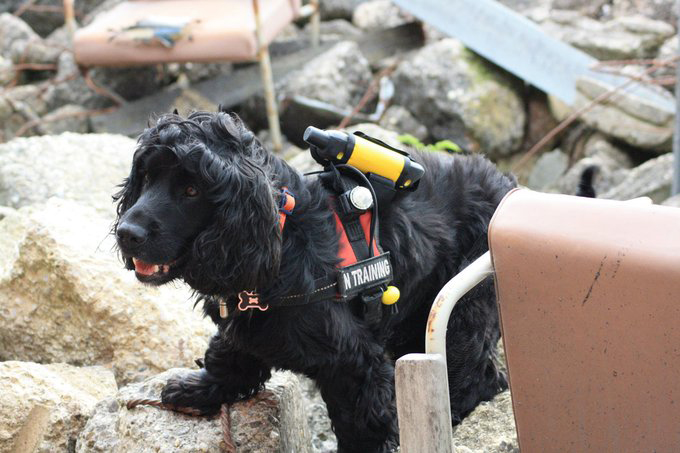
Even their rescue dog in training had RockSTAR strapped to its body to track its position during the exercise. This shows the versatility of our devices and how almost anything that moves can be tracked if it’s big enough to carry the product.
Rock Seven (now trading as Ground Control) CEO, Nick Farrell, bore witness to the demonstration. He said: “Seeing SARAID in action was so impressive. We rarely think about the brave men and women, all volunteers, who deploy into disaster zones to help those in need. They work for weeks at a time, helping to find and rescue people trapped in destroyed buildings, risking their own lives in the process – incredibly hard work, with relentless determination and total selflessness.
Anything we can do as a business to help provide better connectivity and situational awareness for SARAID and other similar organizations will hopefully translate into more lives saved.”
RockBLOCK selected for KTH Sweden Underwater Sensing Buoy
Professor Jakob Kuttenkeuler and Jari Krützfeldt of the KTH Maritime Robotics Laboratory at the Royal Institute of Technology of Sweden developed the LoTUS (long-term underwater sensing) buoy, a system for collecting oceanographic data from perhaps the most remote place on the planet – the polar region seafloor. Long-term data about the conditions there are vital for understanding complex processes such as ocean currents, melting and refreezing of ice, circulations etc.
In the past, the primary tool for investigating these entities were large ship-based expeditions that were both costly and logistically difficult to conduct. The idea behind the LoTUS system is to offer a small, affordable, lightweight and simple-to-use tool for monitoring conditions on the seafloor.
The LoTUS consists of a spherical polystyrene shell attached to an anchor, known as a bottom lander. The shell can withstand conditions found at depths down to 2000m and contains all the necessary hardware for long-term sampling of temperature, current, conductivity and pressure.
Upon reaching an area of interest, the LoTUS is launched from a ship (with an aircraft launch in the works) and quickly sinks to the seafloor. Data samples are taken every hour or so, and are stored in the LoTUS EEPROM memory which offers a data retention capability of over 100 years. After a pre-set duration, e.g. 1-10 years, the LoTUS buoy will separate from the anchor thanks to electrolytically accelerated corrosion of a steel coil. The LoTUS buoy will then float back up to the water’s surface which will hopefully be ice-free.
At the surface, the LoTUS buoy will be thousands of kilometers away from the closest research team and will likely not be collected by an expedition any time soon. Thus, it will be necessary to send its valuable data back wirelessly. It’s here that the RockBLOCK Mk2’s satellite communications capability comes into play.
As soon as a clear view of the sky is detected by the RockBLOCK, a couple of hundred SBD-messages containing compressed LoTUS data are transmitted up to Iridium. This data is then sent to Rock Seven (now trading as Ground Control) servers which, in turn, push it to an endpoint specified by the research team.
Following the completion of the first part of its mission as a bottom lander, the LoTUS now has a new lease on life as a drifter beacon. For the next few months, it will measure and transmit both buoy GPS positions and surface water temperature, sending data back to researchers in near real-time.
With the help of the newly established Iridium link and the Ground Control API, it will then also be possible to reconfigure the LoTUS buoy’s sampling interval and duration so as to save battery and extend the surface mission further.
Get in touch
If you have a remote IoT connectivity challenge, there’s a very good chance we can help! With over 20 years’ experience in satellite communications, and long-term relationships with trusted satellite constellation operators like Iridium, we’re well placed to help you backhaul your data cost-effectively and reliably from anywhere on Earth with a clear view of the sky.
Call or email us, or complete the form, and we’ll be happy to connect you with one of our solutions architects to discuss your requirements.
Iridium Network Enhancements
On March 28th 2019, Iridium announced that their new southern hemisphere ground station was brought online in the south of Chile. This new site is a significant breakthrough and improvement for the network, as it marks the first southern hemisphere station to be introduced. This location strengthens Iridium’s already renowned space and ground network by increasing their ability to maintain and manage traffic, capacity and availability rates.
This particular site was built in partnership with Kongsberg Satellite Services (KSAT) of Norway, who have long been a close partner with Iridium, working closely to improve and support celestial-to-terrestrial connectivity.
Thanks to Iridium’s status as the only satellite provider who can boast having a low-earth orbit commercial network to use intersatellite cross-links, satellite traffic can now be transferred in real-time via the most practical and efficient route, further enhanced by the new Punta Arenas site. These cross-links enable all data to be moved from satellite to satellite and finally down to various ground gateways automatically, with minimal delay. This ensures that Iridium remains the worlds first, and only, truly global network that allows users to communicate from any location including the north and south poles, and everywhere in between.
Though technically, Iridium can maintain all traffic simultaneously through a single gateway, they have always maintained multiple ground stations located throughout the northern hemisphere. With this new station in Chile, they have now increased visibility to their satellites as they pass through their southern hemispheric orbits, as well as further geographic diversity to further improve overall network resilience.
This site joins the existing stations in Alaska, Svalbard, and Arizona. Thanks to Iridium’s web-like coverage of the globe, achieved through 11 satellites for each of the six orbital planes, this architectural design ensures all corners of the globe have satellites in view at all times, minimising the need for local infrastructure or ground stations. Having multiple stations ensures that, should a station fail, there are four others to pick up the traffic to guarantee its timely and successful delivery.
If you’d like to read more about Iridium’s new station, as well as their revolutionary new upgrade, Iridium NEXT, and what this means for existing users, then visit their website here.
Get in touch
Ground Control is a Tier 1 Iridium Reseller. We have been working with Iridium for over 10 years, and also design and build hardware like the RockBLOCK that uses Iridium SBD to communicate. In short, you’re in safe hands.
Please get in touch for more information or to set up an account – we are here to help and assist. For large deployments, we are often able to create custom tariffs and pricing schemes, so don’t hesitate to ask.
Maker Buoy: Drifting buoy equipped with the RockBLOCK
The Maker Buoy is a low-cost, Arduino-based, solar-powered and open-source drifting buoy available to purchase ready-made or for the end-user to construct themselves following simple instructions.
The goal is to provide a tool so that we can gain invaluable knowledge about ocean currents, climate and to improve forecasting. Making sure it is easily accessible by hobbyists, researchers and organisations is the key to making the most of the vast amounts of information that can be gleaned from studying our oceans.
The primary purpose of these long-lasting buoys is to measure ocean currents and sea temperature. This information is usually transmitted over satellite networks to oceanographers who are back in their labs on the mainland. The current of the ocean surface and various temperature readings provide vital intel for weather and climate models. Some drifters are even thrown in the ocean in the path of typhoons and hurricanes to gain a better understanding of ocean behaviour, as well as bettering our understanding of intensity forecasting.
Created by engineer Wayne Pavalko, a mathematician by training and an engineer from John Hopkins University Applied Physics Laboratory in Maryland, these buoys are readily available and incredibly easy to build from scratch.
Comprised of a Ground Control RockBLOCK 9603, 1 W solar panel, custom board, a 2AH battery, 3D-printed internal frame, Adafruit GPS, a few cable ties, and its own waterproof case, you have an incredibly robust, low-impact buoy that will last a lifetime in the ocean and can be assembled in under 10 minutes. Early designs of the buoy deployed in 2016 lasted over two years and travelled more than 9000 miles, sending valuable data the whole time. Since 2016, the design has been made smaller, cheaper, and far easier to construct, without sacrificing its robustness.
If the idea of creating your own buoy, programming the RockBLOCK 9603 and retrieving your own oceanic data is appealing, head on over to the Maker Buoy website for a quick read up.
Get in touch
Get in touch with us and find out if the RockBLOCK 9603 is the right device for your needs. Either complete our online form, or call us to be connected directly with one of our expert team. Call +44 (0) 1452 751940 (Europe, Asia, Africa, Oceania) or +1.805.783.4600 (North and South America).
With over 20 years experience in satellite tracking we have the knowledge and experience to ensure you are equipped with everything you need to make the right choice.
Building Hot Shot Fire Prevention with the RockBLOCK
James Dziadulewicz B.S. Eng. Mech & electronics engineer has built a one of a kind home in Malibu, California. His incredible home is situated on 10 acres of land in a high fire risk zone. Knowing that his home is susceptible to bushfires, James wanted to install a system that would protect his home from any impending danger. As a result of the potential threat of fires, he created the Hot Shot system – an automated, off the grid fire prevention system.
He installed a solar system with a backup generator and, using their own water supply, trenched irrigation lines and setup 12 high-pressure sprinklers around the perimeter of the home and their powerhouse trailer. He connected it all up to a 2.0 HP irrigation pump and electronic solenoid. He also used Arduino components to take transmitted messages and use them to turn the pump and solenoid on and off at will.
Knowing that he lived in an area that could potentially be completely cut off from cell phone reception and power if the towers were disabled during a fire, James decided that he needed a 100% reliable communication system so that he could receive and send messages to enable his system. He discovered the RockBLOCK and, realising it ran off of the Iridium Satellite Network, installed one to be used as the transmitter. Paired with an external helical antenna, this guaranteed that any messages sent to or from the RockBLOCK would be transmitted reliably.
RockBLOCK 9603
The smallest and lightest version in our RockBLOCK family, the RockBLOCK 9603 is targeted primarily at systems integrators and product developers where space inside your enclosure is at a premium. RockBLOCKs can send and receive short messages from anywhere on Earth with a view of the sky.
With an app created by his friend, Matthew Jenks B.S. Eng. software & M.S. Eng. electrical engineer, James was able to activate the system 54 miles away from his home using his phone, when he received from the sensors attached to the system that the fire was getting closer. He activated the system 35 minutes before the fires hit the area. This was more than enough time for the high-pressure sprinklers to activate and douse his home and the surrounding area, effectively making the area impervious to the fires. His home was left completely unscathed.
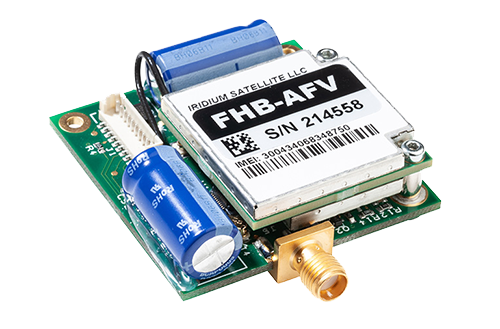
While the RockBLOCK is small, it’s a vital part of the system. It worked so well it is now patent pending, and we’re thrilled that we played a part in saving James’ beautiful home. We’re hoping that this system will start to roll out over areas with high fire risk, with one large home in Thousand Oaks, California, already signing up for one.
Can we help you?
Get in touch with us and find out if the RockBLOCK 9603 is the right device for your needs. Either complete our online form, or call us to be connected directly with one of our expert team. Call +44 (0) 1452 751940 (Europe, Asia, Africa, Oceania) or +1.805.783.4600 (North and South America).
With over 20 years experience in satellite tracking we have the knowledge and experience to ensure you are equipped with everything you need to make the right choice.
RockSTAR Alerts
Navigating to the ‘Alerts’ section within the main menu of your RockSTAR, you’ll be greeted by six alert types and an alert cancel. Here’s what each one means:
1. Timer Alert
The idea behind the timer alert is a one-time alert after a set time limit has expired. Set the timer for a time interval of your choosing. Once that time has expired, a ‘timer alert’ is sent from the RockSTAR to the server/first responders. They’re now aware that the timer has expired without human interaction turning it off. This is a one-time alert. The timer doesn’t reset afterwards.
Possible Use Case:
You’re in a remote location and are expected to be doing a job for 30 minutes. Set the timer for 60 mins and if it goes off then your responders know that you have taken twice the amount of time expected and they should do their level best to make contact.
2. Dead Man’s Switch
This is similar to the timer alert, except this is a recurring alert. Once the timer has been set, you’ll have 20 seconds before that time frame reaches its limit to push the ‘ok’ button to cancel the alert from being sent. You’re notified of this 20-second window by loud, consistent beeping from the unit. Once the timer cycle has completed, or you’ve pressed the ‘ok’ button during the beeping sequence, it refreshes and starts again.
Possible Use Case:
If you’re in an unsafe territory or doing a dangerous task, the dead man’s switch is a brilliant idea to ensure that you are constantly checking in with your team to assure them you’re ok and unharmed. As RockSTARs have set frequencies to send position reports, the dead man’s switch guarantees the unit hasn’t been left lying around giving off the impression that you’re safe, when you actually need assistance.
3. Temperature Alert
This is triggered when the values you have set are exceeded. You can set the high and low temperatures to values you think reflect the environment you’re operating in. These values relate to the RockSTAR board and circuitry, so the exterior might be incredibly hot or cold, but it’s the interior components that are being monitored. Once these temperatures are exceeded, an alert is sent so you can regulate the temperature.
Possible Use Case:
If you’re fighting fires or doing research in a cold environment, this alert is perfect to ensure you don’t damage your device.
4. Power Alert
If you’ve connected your RockSTAR to an external power source, then once the external power is removed, the unit detects ‘power loss’ and will send a message accordingly. If you have set your unit to ‘power mode’, so it only turns on with external power, and you remove the power source, then it will stay awake long enough to send a ‘power loss alert’ to the server. This way, each time the unit is turned off, someone is alerted.
Possible Use Case:
If you’re driving long distances in remote areas and require tracking without having to worry about battery life, then power loss alerts are a great way to inform you if your tracking has stopped, without having to wait for the scheduled report to be missing from the mapping.
5. Geofence Alert
There are two options for Geofence Alert – user and polygon. We’ll talk about user here. To learn about polygons, contact our support team and they’ll explain further.
A geofence draws an imaginary circle around a center point, and if that circle is left, an alert is sent notifying you of that breach. By pressing ‘centre point’ in this menu, you’re allowing the RockSTAR to record your GPS location. It then draws a circle based on the distance you’ve chosen. You then select how often you want the unit to check to see if you’re still in that circle. As soon as you leave it, an alert is sent.
Possible Use Case:
If you’re assigned an area for a specific reason – research, pest control, etc. – then geofences are a great way to ensure you keep to your assigned area and don’t encroach on prohibited or protected land.
6. Collision Alert
Inside each RockSTAR is an accelerometer. If you set the threshold of the unit to an appropriate G-force value and the duration that the unit sustains that G-force is exceeded, the accelerometer measures this and will send an alert notifying of this exceedance.
Possible Use Case:
Any situation that the unit is installed in a vehicle, this alert is a great tool to determine if the vehicle has sustained a server impact. By altering the threshold and duration, you can ensure that the unit only triggers when a crash occurs, as opposed to hitting uneven ground at speed.
Send Alert Cancel
Any time that an alert has been sent that you couldn’t stop in time, sending a cancel message will allow the responders to know not to misinterpret the alert that was just received.
If you’d like to know anything further about these alerts, or geofence polygons, don’t hesitate to reach out to our support team and we’ll do our best to assist.
Get in touch
We take pride in designing and building the RockSTAR ourselves. Over the years we’ve enhanced and added features based on feedback and specific customer requests, to ensure our device meets your needs.
Simply complete the form to find out whether the RockSTAR is the right fit for your organization. With our 20 years of expertise, we’ll guide you in making the optimal choices for your critical communication requirements. If you prefer to speak to someone directly, call us on +44 (0) 1452 751940 (Europe, Asia, Africa) or +1.805.783.4600 (North and South America).
Iridium NEXT-8 Launch and the Future of Satellite Communications
The Space Economy
Iridium is the only mobile voice and data satellite communications network that spans the entire globe pole to pole. It enables connections between people, organisations and assets to and from anywhere in the world, in real time. Wireless Innovation (now trading as Ground Control)’s partnership with Iridium helps us to deliver innovative end-to-end solutions, tailored for each of our client’s specific needs, to provide a complete view of their data to enable better business decisions.
SpaceX, who design, manufacture and launch advanced rockets and spacecrafts, are currently helping providers to launch satellites in their thousands, which means that the total number of satellites in orbit is set to double by 2027; reaching almost 20,000.
These satellites are bringing cost-effective internet connectivity to businesses and individuals in remote and challenging locations where it has previously been unavailable, opening up a host of new business opportunities and enabling more effective business management. The Economist anticipates that this increased accessibility will see the space economy grow from £275 billion (in 2016) to nearly £1 trillion by 2040. New internet satellites will account for half this increase.
Iridium NEXT-8 Launch Campaign
Approaching the end of a two-year campaign, Iridium has been working with SpaceX to replace their existing satellite constellation. This involves sending 75 Iridium NEXT satellites into space on a SpaceX Falcon 9 rocket during a series of eight launches.
65 of those satellites have already been placed into orbit and to complete deployment of Iridium’s second-generation constellation the final ten will lift off this month from California’s Vandenberg Air Force Base. Nine of the total NEXT 75 satellites launched will serve as on-orbit spares and another six will be left on the ground to serve as further spares, in case they are needed during the life-cycle of their new constellation.
Once the final ten are launched they will deploy into the same orbital plane, within a month, to complete a 100% Iridium NEXT network.
We are looking forward to the resolution of Iridium’s highly anticipated global satellite constellation refresh. This historic project is not only one of the most significant commercial space ventures, but the completion will welcome an unrivalled technological platform for innovation in data and communication solutions. The power of this constellation will facilitate a host of advanced services, which will utilise even smaller and more cost-effective terminals, turbocharging Iridium satellite connectivity and providing the world’s fastest global L-band broadband service.
The Ultimate Launch Soundtrack
In early 2019, Iridium created their very first satellite launch playlist on Spotify. They’ve been collating a new playlist to commemorate the final launch featuring songs that will complement the SpaceX launch webcast and reflect the Iridium story.
The completion of this Iridium NEXT constellation is redefining the capabilities of mobile satellite communications, powering Iridium Certus to deliver the next generation of broadband, critical safety, disaster recovery, L-band communications, and data solutions to businesses and individuals in every industry, all over the world.
Get in touch
Ground Control is a Tier 1 Iridium Reseller. We have been working with Iridium for over 10 years, and also design and build hardware like the RockBLOCK that uses Iridium SBD to communicate. In short, you’re in safe hands.
Please get in touch for more information or to set up an account – we are here to help and assist. For large deployments, we are often able to create custom tariffs and pricing schemes, so don’t hesitate to ask.
RockBLOCK 9603 used in MIRKA2-RX Mission
With the completion of the MIRKA2-RX mission, the student members of the Small Satellite Group of the University of Stuttgart field tested technology that will be used in a future CubeSat mission.
The MIRKA2-RX mission that launched on March 18th, 2016, consisted of a micro re-entry capsule (MRC) and the newly developed Low Orbit Technical Unit Separator (LoTUS) which were both integrated within a REXUS program rocket.
The European REXUS/BEXUS program supports scientific and technological experiments on research rockets and balloons, sending two of each into space every year.
132 seconds after lift-off, and while the REXUS rocket was at apogee, a pyro cutter onboard the separator would cut the wire securing the MRC to the separator carriage, thus ejecting it out into the upper atmosphere.
The ejection would also trigger a mechanical switch enabling battery-assisted data collection from pressure, temperature, acceleration and radiation sensors placed inside the MRC.
While the mechanical switch wasn’t successfully activated during the successful ejection, the MRC’s landing on snow-covered Swedish tundra, was. Now active, the MRC used its RockBLOCK 9603 modem and antenna to send back telemetry via Rock Seven (now trading as Ground Control)’s API and server to the MIRKA2-RX team’s own server, allowing the team to locate the device.
The separator integrated into the MIRKA2-RX mission was also designed to fit inside a forthcoming CubeSat Atmospheric Probe for Education (CAPE) mission developed by the University of Stuttgart Institute of Space Systems (IRS). The CAPE mission will test heat shield materials and a pulsed plasma thruster.
RockBLOCK 9603
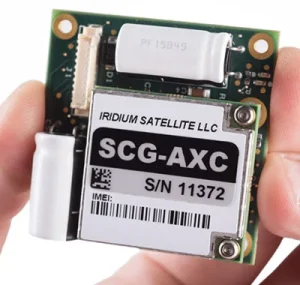
RockBLOCK 9603 is targeted primarily at systems integrators and product developers where space inside your enclosure is at a premium. RockBLOCKs can send and receive short messages from anywhere on Earth with a view of the sky.
Iridium Announces CloudConnect
Making the rounds in satcom news in October 2018 was the announcement that Iridium will join the Amazon Web Services (AWS) Partner Network with its newest offering, CloudConnect.
CloudConnect is a communications platform for IoT devices that gives developers access to AWS computing power, database storage, applications and other valuable IT resources. Thanks to CloudConnect, developers will be able to rapidly design and deploy scalable and cost-effective IoT solutions. Rock Seven (now trading as Ground Control) intends to be one of the early adopters of CloudConnect, and we’re working with both Amazon and Iridium to bring the first CloudConnect tools to market in early 2019.
The possibilities for IoT are staggering – a complementary IHS Technology whitepaper cited by Iridium in its CloudConnect press release forecasts 75.4 billion devices operating by 2025. An earlier McKinsey Global Institute report estimated that IoT devices will inject anywhere from 4 to 11 trillion USD a year into the global economy.
With such a bright future for IoT, it may come as a surprise that more than 80% of the world doesn’t even have access to cellular networks – and this is why Iridium’s announcement is a big deal. With CloudConnect and its nearly complete NEXT constellation, Iridium addresses the issues of interoperability and satellite data bandwidth – both key to future-proofing IoT services.
“Iridium CloudConnect will completely change the speed at which a satellite IoT solution can be deployed and will allow existing AWS customers to keep everything the same on the back end, while opening up the opportunity to quickly expand their coverage,” says Iridium CEO Matt Desch. “This is a major disruption for satellite IoT. Costs will drop, time to market will speed up, risk will be reduced, and AWS IoT customers that choose Iridium CloudConnect can now enjoy true global connectivity for their solutions.”
As more information is released to the public regarding CloudConnect, we will update you on how it will drive improve IoT services, including those offered by Rock Seven (now trading as Ground Control). One thing is certain – the 630,000 active Iridium devices counted by Iridium on June 30th of this year is only the beginning.
Get in touch
Ground Control is a Tier 1 Iridium Reseller. We have been working with Iridium for over 10 years, and also design and build hardware like the RockBLOCK that uses Iridium SBD to communicate. In short, you’re in safe hands.
Please get in touch for more information or to set up an account – we are here to help and assist. For large deployments, we are often able to create custom tariffs and pricing schemes, so don’t hesitate to ask.