Topic: IoT & M2M
RockBLOCK Pro is the World’s First Certified Iridium Certus 9704 Device
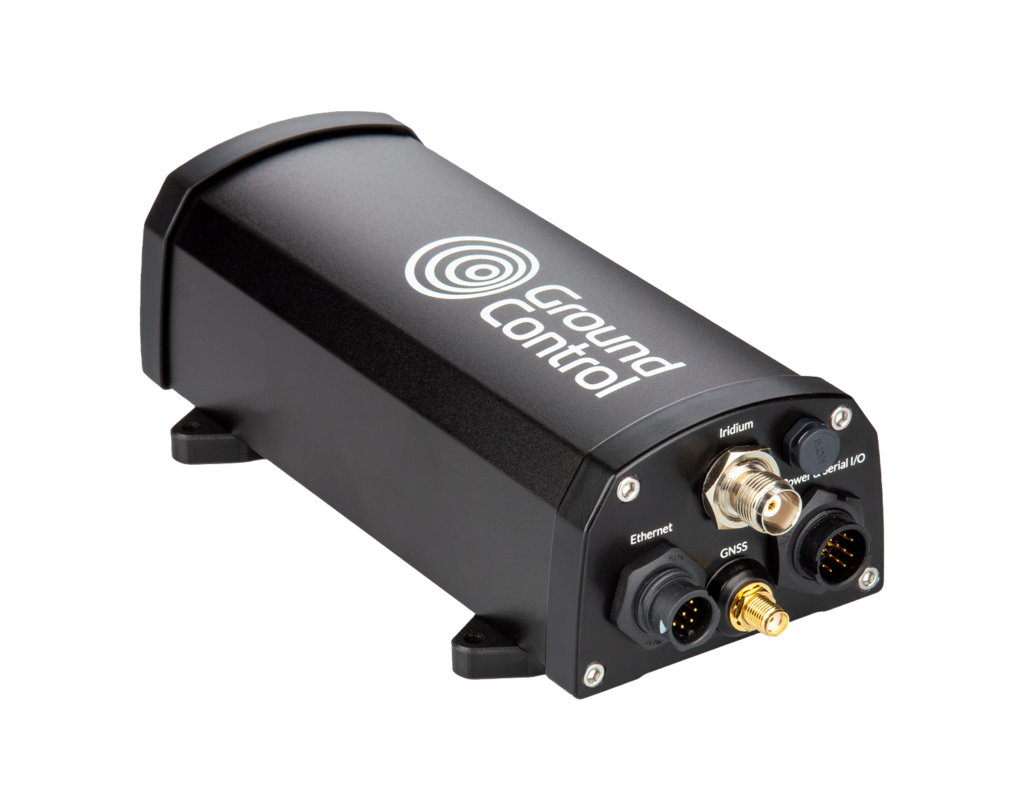
Ground Control has launched the RockBLOCK Pro, the first certified Iridium Certus 9704 device available through an Iridium partner. This rugged satellite IoT gateway utilizes the new Iridium Certus® 9704 module and Iridium Messaging Transport (IMT). The RockBLOCK Pro delivers enhanced performance compared to earlier RockBLOCK versions, and features faster speeds, substantially increased message size capabilities, and improved power efficiency. This makes it well-suited for critical remote operations.
RockBLOCK Pro utilizes the Iridium 9704 module to send bi-directional messages from 25 bytes up to 100 KB, supporting aggregated sensor data, imagery and audio clips while maintaining end-to-cloud latency under 10 seconds. Compared to the Iridium 9602 and 9603 modules, the 9704 achieves up to an 83% reduction in idle power consumption, making it the most power-efficient Iridium module ever.
Engineered for harsh outdoor and industrial use, RockBLOCK Pro is rated IP66 and can be specified with either the built-in high-gain antenna or an external antenna. Full support for the legacy Iridium AT command set ensures a drop-in upgrade path for existing SBD deployments, with no need to alter host firmware or development toolchains.
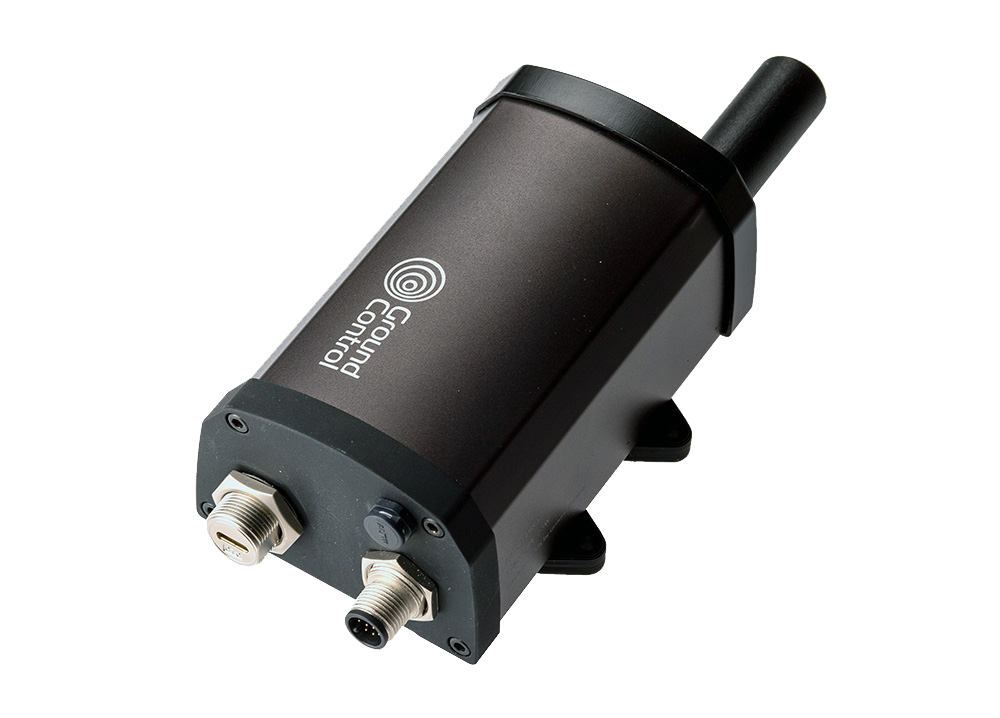
For seamless end-to-end messaging, RockBLOCK Pro integrates tightly with our Cloudloop Data platform, which delivers messages via direct cloud-platform integrations, including AWS, Azure and Google Cloud environment, or can be routed via HTTP webhooks, MQTT streams, or even email. Onboard GNSS, Bluetooth, and configurable digital I/O further expand its utility in telemetry, asset tracking, environmental monitoring, and autonomous applications.
Alastair MacLeod, CEO of Ground Control, said: “RockBLOCK Pro redefines the satellite IoT gateway category by bringing together power efficiency, rugged design, and data capacity in a compact footprint, unlocking smarter, more responsive systems in the world’s most remote places. As the first partner to bring a certified Iridium Certus 9704 product to market, we’re proud to lead the next chapter of global IoT.”
“The Iridium Certus 9704 packs a lot of power in a compact module, making it ideal for IoT applications that require real-time data analysis, analytics and automated decision-making,” said Tim Last, executive vice president of sales and marketing, Iridium. “Ground Control has been a trusted Iridium partner for many years, with a proven track record of delivering high quality developer hardware built on Iridium technology. We’re excited to see them leading the way with innovative solutions that bring high performance satellite IoT connectivity to the most remote parts of the world.”
Get in touch
Discover if the RockBLOCK Pro is the right device for your remote connectivity needs.
To learn more or to discuss your deployment, please complete the form.
Cutting Through the Hype: What Direct-to-Device (D2D) IoT Really Means
Direct-to-Direct (D2D) satellite connectivity is one of the most talked about innovations in IoT right now. It promises seamless global coverage, allowing connected devices, from smartphones to smart sensors, to communicate with satellites without the need for additional hardware such as a specialized antenna.
At first glance, D2D sounds like the ultimate solution for remote IoT applications. But there’s a problem: the term is being used too broadly and too optimistically. Many assume that D2D is synonymous with standards-based satellite IoT, like NTN NB-IoT or LTE Cat-1 over satellite. In reality, these are adjacent but distinct technologies, each with very different capabilities, timelines, and trade-offs.
In this post we’ll cut through the noise to discover what’s actually available today, and what will be available in six months, one year, and beyond. We’ll look at the benefits and limitations of D2D, and explore whether you would be better off focusing on standards-based satellite IoT as you consider what’s best for your IoT deployment.
What Direct-to-Device (D2D) Actually Means
Direct-to-Device (D2D) connectivity means that a device – typically a smartphone – can communicate directly with a satellite (part of a non-terrestrial network, or NTN) without requiring additional external hardware like a specialized antenna / dongle.
D2D is a capability, not a standard. It means a device can talk directly to a satellite, but that doesn’t necessarily mean it uses NB-IoT or LTE.
The most well-known example is Apple’s agreement with Globalstar. Newer iPhones embed chipsets that allow them to access the Globalstar satellite constellation where available. This is a proprietary technology, meaning iPhones cannot connect to other satellite networks.
While still relevant, the Globalstar/Apple partnership is an outlier. Today, D2D is often referenced in the context of standards-based connectivity – but that’s where definitions start to blur.
D2D and Standards-Based Connectivity: Not the Same Thing!
Standards-based NTN connectivity refers to satellite networks that adhere to existing cellular standards, e.g. NB-IoT and LTE Cat 1.
A key benefit of this is that you don’t have to modify your data to send it through a proprietary satellite protocol. Standards-based connectivity also opens the door to switching networks for broader coverage or better pricing – a flexibility not available with proprietary solutions.
But here’s the key distinction:
D2D
Standards-Based NTN
D2D is about the physical capability for a device (e.g., smartphone or sensor) to connect to a satellite without extra hardware.
Standards-based is about ensuring that the satellite connection adheres to existing cellular protocols like NB-IoT and LTE Cat 1.
The connection can be proprietary or standards-based.
Compatible devices may still require separate hardware to connect, especially today.
Pure D2D for IoT is limited today and requires ideal antenna positioning and sky visibility.
You can access standards-based NTN today, usually via an external transceiver / dongle.
What’s Available Now (Early 2025)?
There are two cellular standards being adopted by satellite network operators: NB-IoT and LTE Cat 1.
- NB-IoT uses very little bandwidth and is being rolled out by providers like Iridium and Viasat to complement their proprietary solutions.
- LTE Cat 1 requires more bandwidth and is being pursued by newer entrants like Starlink and AST SpaceMobile, who partner with mobile network operators (MNOs) to access spectrum.
The standard closer to delivery is NTN NB-IoT. Skylo is not a satellite network operator, but has done a lot of work to make NB-IoT work over existing satellite networks. They have partnered with multiple satellite networks, including Viasat and Ligado Networks, to bring a solution to market in the USA, Canada, Australia, New Zealand and Brazil.
Some satellite network operators are already offering this service in a limited capacity – Sateliot were among the first to market with a proposition. However, they’re in the process of scaling their satellite IoT services; initial store-and-forward services are available, but fully operational coverage will be c. 2028.
At the moment, the hardware being built for IoT tends to take the form of a unit that can be attached to a sensor or gateway to facilitate NTN connectivity.
Why is Separate Hardware Still Needed for IoT?
- Many sensors or gateways don’t yet support NTN NB-IoT or LTE Cat 1 and will need to pass data through a connected device which can re-format the data to work with the appropriate standard.
- Satellite connectivity requires a clear view of the sky. Devices embedded in machinery or under panels (like an OBDII port or solar-powered sensor) are unlikely to maintain a reliable satellite link.
What Will Be Available In Six Months (Mid-Late 2025)?
In terms of NB-IoT, Viasat’s “NB-NTN” is currently in beta mode, before a full release in the second half of 2025. This will deliver global NB-IoT capabilities for connected devices, and we’re particularly excited about this development.
We also expect the first LTE Cat 1 service for IoT from Starlink to be available before the end of 2025. Starlink’s “D2C” model depends on cooperation from mobile network operators, and rollout will begin in countries with large land masses and low population density, where unused spectrum is more available.
Current rollout countries are the USA, Canada, Australia, New Zealand, Chile, Peru, Ukraine, Switzerland, and Japan.
What Will Be Available in One Year?
We should see more integrated, true D2D devices that can connect to both cellular and satellite networks using standard protocols, without needing separate antennas. But these are unlikely to be materially lower cost than the current, proprietary options available. This is because it is both economies of scale and competition that drives prices down, and that will take a little longer to come to fruition.
Starlink will likely have its first competitor in the LTE space (no pun intended) with the commercial launch of AST SpaceMobile anticipated in early 2026. However, AST SpaceMobile is focused squarely on the cellphone market rather than IoT devices; it will probably be another 12 months (early 2027) before IoT devices can connect to the AST SpaceMobile network. It’s also worth mentioning that AST SpaceMobile also needs agreements with MNOs to deliver its service; it will not be global at launch.
The Future (2-5 Years)
The update that allowed cellular standards to be used over satellite is called 3GPP Release 17. While Rel-17 made it possible to use cellular standards in satellite communication, it didn’t make it easy, with companies like Skylo having to do a considerable amount of engineering to make NB-IoT transmissions over satellite a reality.
Iridium, currently the world’s only global satellite IoT network, was a little late to the party in developing a standards-based proposition, but now that it is, it’s working very closely with the 3GPP to extend the functionality of NTN NB-IoT. This collaboration means that 3GPP Release 19 (anticipated in late 2025) will remove many technical challenges and hasten the widespread availability of industry standard chipsets.
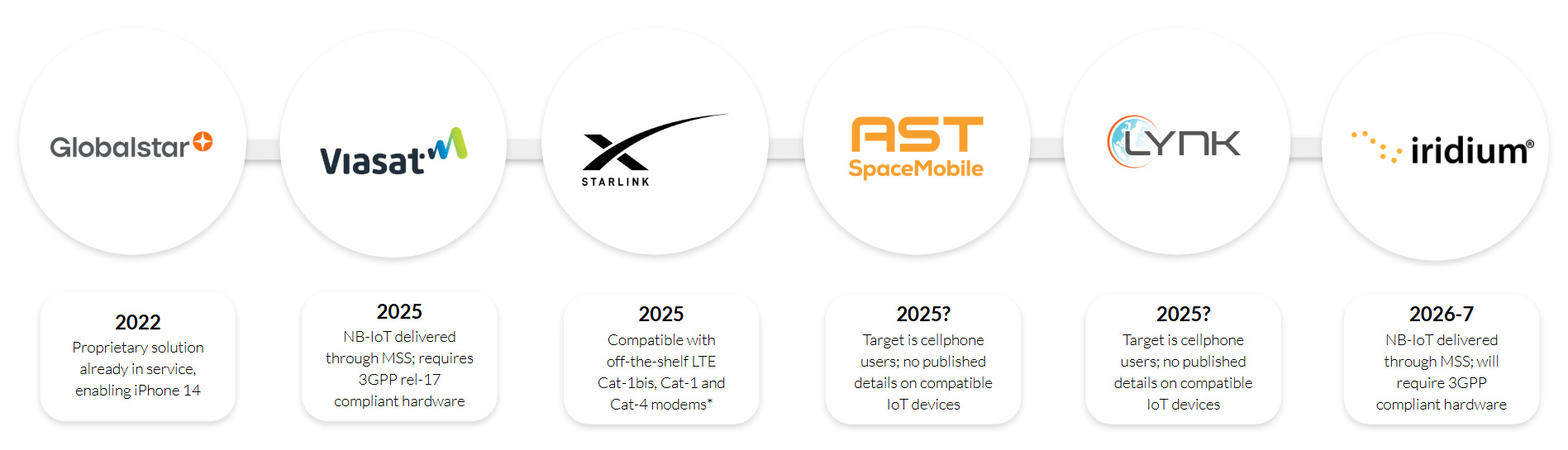
*3GPP compliant release 10 or newer, modem must support existing bands of operation in intended service countries
We also anticipate that we’ll see increased data throughput, greater power efficiency, and lower latency as these advanced protocols coupled with new satellite modems filter through, enabling smaller, lower cost and longer lasting IoT devices.
The reason this falls into the 2-5 years section is because the benefits take several years to reach end users. Firstly, network operators, device manufacturers and other industry stakeholders will need time to implement the new standards, which can involve significant hardware and software updates, plus extensive testing.
Deployment of the new technology across networks is often piecemeal, too, rolled out across regions and service providers at different times – meaning that it will take time to become widely available. And, of course, end users’ devices must be compatible with the new standards; this will include firmware changes to support the lower speeds and smaller message sizes available over NTN NB-IoT.
While NB-IoT remains the most popular choice for delivering NTN standards-based connectivity, by this time we’d anticipate also having IoT propositions from AST SpaceMobile and Lynk using the LTE Cat 1 standard. These new satellite network operators, along with Starlink, will undoubtedly create more commercial agreements with mobile network operators, extending the reach of NTN LTE Cat 1 services.
What Should IoT Businesses Do Now?
It depends on the criticality and data requirements of your application. While NTN NB-IoT services are reaching the market, the throughput is very small, and data transmission is infrequent, so it best serves applications where there are a high number of end points, but real-time information is not required (e.g., livestock tracking, environmental monitoring, agriculture, basic fleet management, and wearables).
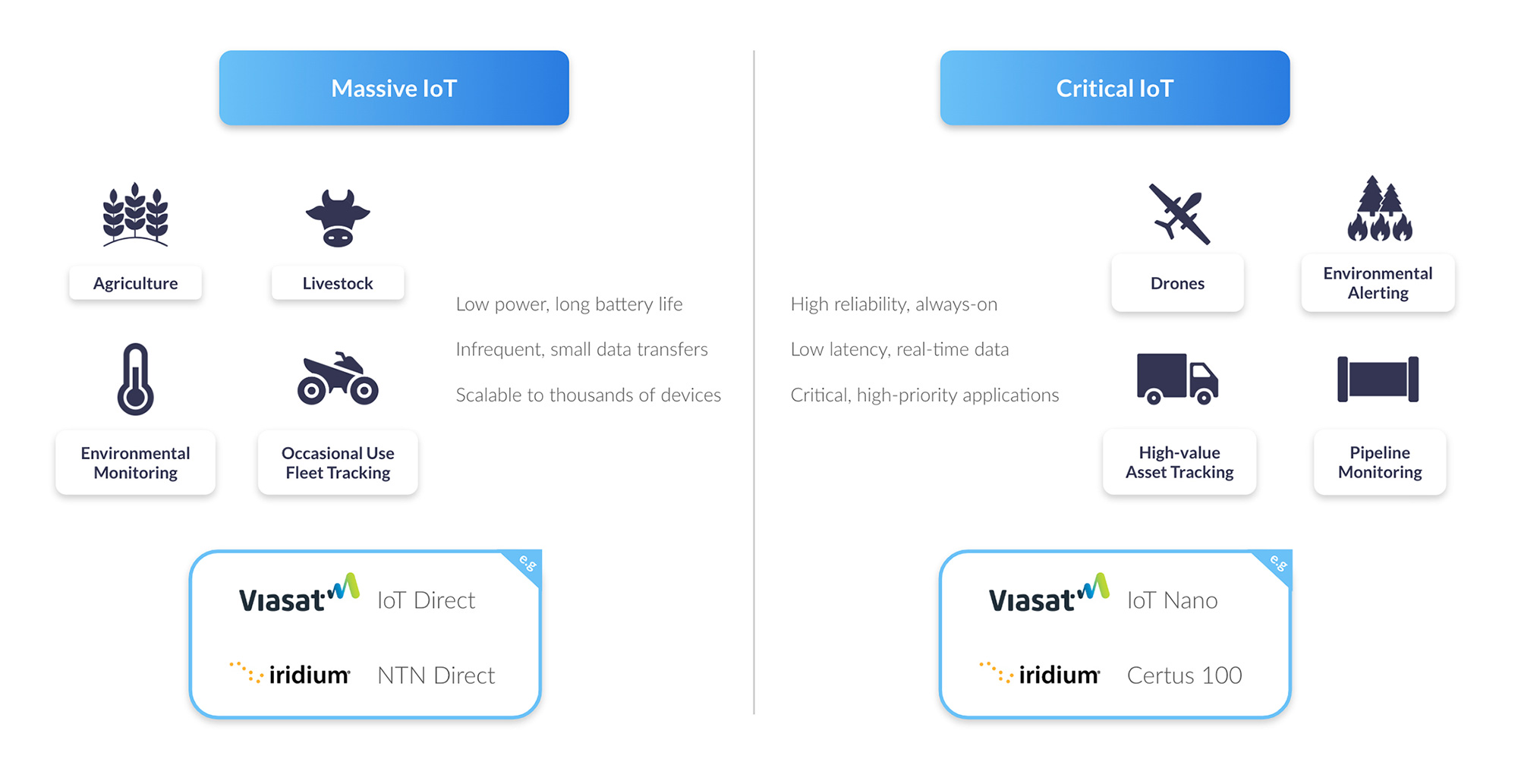
If this describes your application, get in touch with a service provider like Ground Control to get advice on the best network and hardware for your application. Note that this will almost certainly involve additional hardware, as the satellite industry is some way from solving the issues around device compatibility and antenna siting mentioned earlier.
If you need higher volumes of data and closer to real-time data, you will still be better served by a proprietary solution such as IMT / Certus 100 from Iridium, or IoT Nano from Viasat. These services are well established and globally available; they will co-exist alongside the standards-based solutions for the foreseeable future.
Finally, don’t get too preoccupied with D2D; it offers exciting possibilities, but it’s still a developing technology that won’t be widely available for some time, and will only be appropriate for certain use cases.
Ready to explore your options?
If you’re exploring how to keep your IoT devices connected beyond the reach of terrestrial networks, we’re here to help. At Ground Control, we work across both proprietary and standards-based satellite networks to recommend the best-fit solution for your use case – today, and in the future.
Whether you’re ready to deploy now or just starting to assess the landscape, we’d love to talk. Get in touch for practical, honest advice on devices, networks, and everything in between. Email hello@groundcontrol.com or complete the form, and we’ll be in touch within one working day.
Securing Remote Facilities: Cost-Effective Video Streaming Over Satellite
Critical national infrastructure is an increasingly attractive target for state-sponsored activists and extremist groups. Remote infrastructure – everything from outstations to wind farms, wellheads to pump stations, haul roads to transport hubs – is particularly vulnerable because of the challenges in creating robust security solutions in these locations. This blog post seeks to present a solution to these challenges, but first, let’s dig into the issues in more detail.
The Growing Threat to Remote Infrastructure
The vulnerability of utility and energy production sites to cyber attacks is well documented; from 2023 to 2024, US-based utilities experienced a 70% surge (Reuters). Less frequently reported is that physical attacks on infrastructure also rose 73% from 2020 to 2022 (Axios), with incidents including a gunfire attack on two substations in North Carolina, USA, which left 45,000 customers without power.
In Nigeria, in early 2024, the power sector faced escalating vandalism of high-voltage transmission infrastructure; incidents tripled during a 15 week span, including explosives being used to destroy transmission line towers (The Electricity Hub).
In Australia, thefts from unmanned construction sites reached a 10 year high in September 2024, with a 22% increase in theft-related offences during the same period (Herald Sun). And in the UK, the cost of theft of agricultural equipment escalated to an estimated £52.8 million in 2023, a 4.3% increase from the previous year (NFU).
In addition to a growth in isolated incidents is the underlying strategy to destabilize infrastructure, driven by alliances between state actors like Russia, and organized criminal gangs. These activities include sabotage, arson and cyber attacks, aimed at undermining critical infrastructure (The Guardian).
Attacks are increasing: companies, governments and individuals with hard-to-protect, high value assets are fighting a rising tide of criminal activity.
The Challenge of Traditional Security Measures
The infrastructure we’re describing here – transport, energy production, heavy industry – operates across vast areas, making it impractical to station physical security at every location which could be a target. Assuming a single security guard is stationed at a site for 8 hours a day, 7 days a week; the cost of an unarmed guard would be c. $3,600, and c. $6,000 for an armed guard (Deep Sentinel).
Statistically, most theft takes place after dark, and are more frequent in winter; long weekends and holidays are also attractive (Site Watch Group). Thus, 24 hour cover would be prudent at least over weekends, adding substantially to the cost.
Another option is to use fences coupled with cameras and sensors to detect intruders, and provide real-time alerts to a remote monitoring center. The security personnel there can monitor multiple sites remotely, reducing on-site staffing costs. Upon receiving an alert, they can choose to dispatch security personnel to the affected site, alert local law enforcement or trigger some localized deterrent such as alarms, voice sirens or lights.
The pros of this approach is that it’s lower cost, delivers 24/7 surveillance, and can be rapidly and cost-effectively scaled up. However, it requires a reliable, secure and cost-effective means of transmitting the video stream (and potentially also audio and movement sensors). Within cellular connectivity this is pretty straightforward, but in a remote site, satellite is often the only viable option.
Finding the Right Satellite Connection for Remote Surveillance
Satellite connectivity isn’t a homogenous blob. There are multiple radio frequencies used, and the type used strongly influences the form factor of the satellite transceiver. For example, people seeking broadband internet access over satellite – Starlink, Hughesnet, OneWeb etc. – will be using Ka-band, as this supports higher data rates, and there’s plenty of bandwidth available (i.e. limited congestion issues).
The drawback of Ka-band is that it is both susceptible to rain fade (signal loss in bad weather), and the antenna size is large, power hungry, and needs to be precisely positioned. This is not an issue for home installation, but in a remote outstation, there may be mountains, trees or the outstation itself preventing the ideal siting of the antenna.
The fix to this – phased array antennas which electronically steer themselves to optimal positions – has the drawback of consuming significantly more power. Indeed, it would be challenging to power any Ka-band antenna via a solar-powered battery, particularly for the sorts of continuous operation that a surveillance system requires.
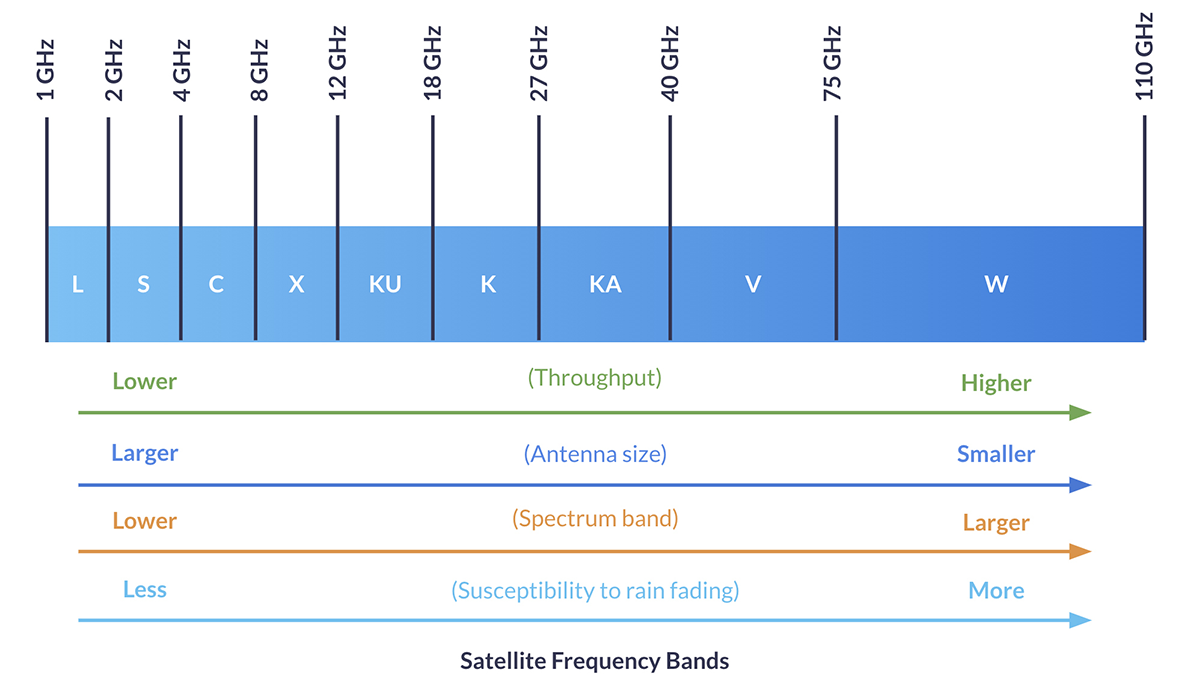
Satellite services that operate in the L-band spectrum, on the other hand, have very small antennae, and low power requirements compared to Ka-band. Iridium and Viasat (previously Inmarsat) utilize L-band for data transmission, which makes them perfect for IoT applications where the data requirements are lower, and a small, discreet, battery-operable antenna is an asset – sometimes a necessity. L-band transmissions are unaffected by weather conditions, and very hard to intercept, making them ideal, in principle, for mission critical applications like remote surveillance.
However, video streaming from remote, potentially unpowered locations, is an awkward fit for both Ka- and L-band. It’s a high bandwidth transmission, but as discussed, high bandwidth satellite services are power hungry, easy to identify (and therefore to put out of action), and difficult to position. L-band fixes all those challenges, but to send video over L-band, which is a much more constrained frequency band, is very expensive.
Until now…
A Breakthrough in Remote Video Surveillance
There have been two key developments that have made it possible to send video over an L-band satellite connection cost-effectively. The first is the advent of low bandwidth video. Our partner Videosoft has developed video compression and transmission technology that delivers real-time, low-bit rate video. They’ve coupled this with an image enhancement feature that lets users specify and download high-res pixels from an area of interest in a scene.
Videosoft’s technology works with most off-the-shelf hardware, including video cameras, CCTV, audio microphones, GPS tracking antennae, and other I/O devices.
The second development is the availability of midband (higher throughput) transmissions in the L-band spectrum; notably Viasat’s IoT Pro service, and Iridium’s Certus 100 service. The latter is particularly well suited to remote surveillance because the satellites are in Low Earth Orbit, which means the latency is very low – critical when you need real-time alerts if a facility has been penetrated, or an asset is moving outside of schedule.
Additionally, Iridium has a cross-linked network of 66 satellites, which means you don’t need to point your antenna at the satellite; if your facility or asset is in a wooded or mountainous area, this could be a critical advantage.
Watch our webinar recording to see a demo of Videosoft.
RockREMOTE Rugged: A Simple and Secure Solution
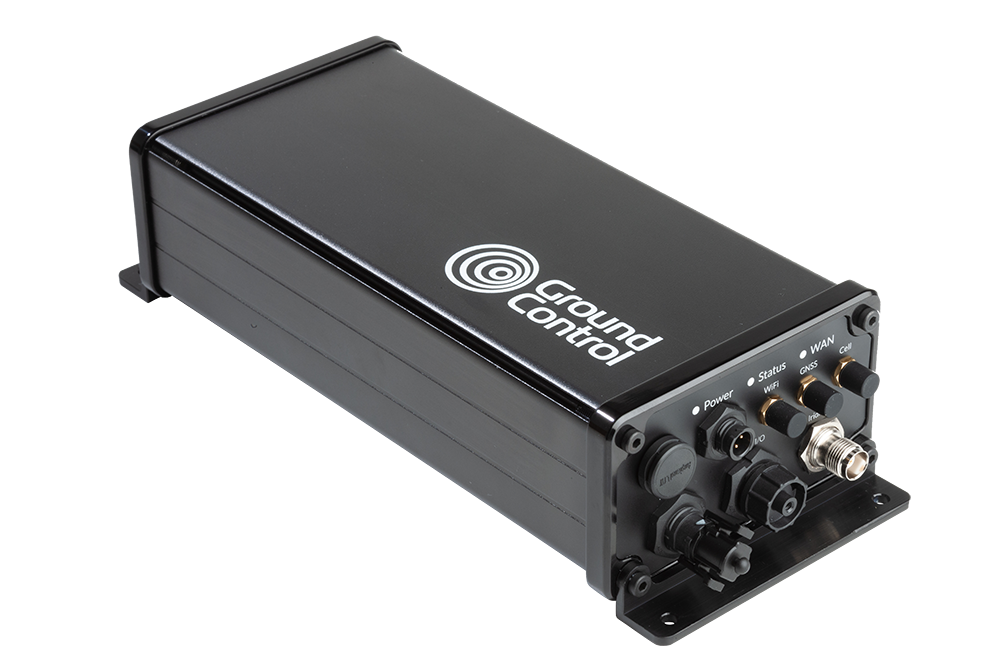
There are a number of Iridium Certus 100 transceivers available – we design and build several ourselves – but the one we’ve focused on for remote surveillance is the RockREMOTE Rugged. This is because, most importantly, it has the compute power to natively run the Videosoft program without needing any additional hardware. It’s simply a matter of plugging your camera into the RockREMOTE, and working through some simple config steps to get started.
RockREMOTE Rugged is very easy to install; it’s IP67 rated, and designed for permanent outdoor installation in harsh environments. Its omni-directional passive antenna is small and discreet, making it harder to identify by bad actors.
Thus, securing a remote site becomes smarter and more cost effective. Choose from a very wide range of cameras, audio equipment, motion detectors etc., then plug them in to the RockREMOTE Rugged. The onboard Videosoft technology will compress the data so it can be sent cost-effectively over the Iridium Certus 100 network, in real-time, to your remote monitoring center.
A Smarter Approach to Remote Security
Protecting remote infrastructure has never been more critical – or more challenging. While traditional security measures struggle to balance cost and coverage, the combination of low-bit rate video, real time image enhancement, and power efficient satellite connectivity presents a game changing solution.
With RockREMOTE Rugged and Videosoft’s technology, organizations can deploy surveillance systems that are reliable, cost effective, and optimized for remote environments. Whether safeguarding critical national infrastructure or protecting high value assets, this technology ensures security teams have the visibility they need, when they need it most.
Smarter Security for Remote Infrastructure
Protect your critical sites with real-time video surveillance over satellite. Our RockREMOTE Rugged, combined with Videosoft’s low-bandwidth streaming, delivers cost-effective, 24/7 monitoring, even in the most challenging locations.
Complete the form, or email hello@groundcontrol.com to learn more. We’ll reply to your inquiry within one working day.
Integrating RockREMOTE Mini with the CR1000 Data Logger
In this integration, we’re bringing together two proven technologies to solve a common challenge in remote monitoring: reliably transmitting environmental data from locations with no terrestrial connectivity.
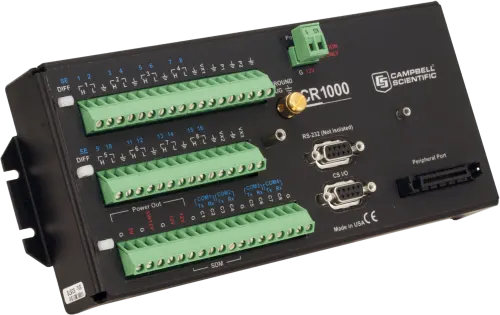
The Campbell Scientific CR1000 is a widely used data logger known for its durability and flexibility in harsh environments. By pairing it with the RockREMOTE Mini, a compact satellite device simultaneously supporting both IP and IMT communication over the Iridium Certus 100 network, we enable robust, low-power data transmission from virtually anywhere on Earth. This document outlines how the integration works, the benefits of each device, and the steps to get a system up and running.
Note: while our testing was with the CR1000, this solution will also work with the newer Campbell Scientific data logger models: CR1000x and CR1000Xe.
Why the Campbell Scientific CR1000 Series is so Prolific
The CR1000 and its successors are renowned for their versatility, reliability and robust performance in harsh environmental conditions. They support a wide range of sensors and communication protocols, making them the go-to choice for remote sensing applications. With CRBasic programming, data collection and processing can also be customized to meet specific needs, enabling bespoke, efficient, and reliable monitoring in a range of diverse scenarios.
Whether monitoring water quality or glacier temperatures at Mt. Everest, their ability to collect and process data has made them a cornerstone of environmental monitoring systems worldwide.
When paired with RockREMOTE Mini, the CR1000 becomes a truly global resource, capable of operating autonomously in even the most remote and harsh locations. By combining these two devices with a modest solar solution, users can deploy a fully self-sustaining system that ensures reliable data monitoring and access anywhere in the world, even in areas where no terrestrial networks are available.
Introducing RockREMOTE Mini
RockREMOTE Mini is an efficient and compact satellite communications device designed for connecting devices where terrestrial networks are unavailable. It utilizes the Iridium Certus 100 service and simultaneously can send data over both IMT (Iridium Message Transport) and IP (Internet Protocol). This allows you to take advantage of the easy and standards-based approach of IP for a PoC and then leverage the efficiency of IMT when scale is required.
With both Serial Communication (RS232/RS485) and Ethernet (with PoE+) available, the Mini is straightforward to integrate. The Mini’s Sleep pin allows for dynamic power management, which is particularly beneficial for solar-powered or battery-operated deployments. The Mini has a very low standby draw of only 300 mW while still being able to receive communications. It can be advantageous to put the Mini to sleep when power is at an absolute premium. An inbuilt GNSS receiver also allows the Mini to provide a time source for multiple connected devices over SNTP.
While it’s very straightforward to integrate the RockREMOTE Mini with your hardware, it is equally simple to get or view your data with our Cloudloop platform. You can use Cloudloop Data to view the data directly or have Cloudloop forward the data to your server. Crucially, Cloudloop functions as a translator between Iridium’s IMT protocol and many of the web standards that you are familiar with, for example, HTTP webhook, Azure Queue, MQTT, ThingsSpeak, AWS SQS & S3, to name a few. This means that integration is fast and efficient, allowing you to utilize the most efficient protocol for the satellite portion of the network and the most convenient one on the server side.
For IP, Cloudloop NOC provides clear packet tracing and troubleshooting, including the ability to set Inbound and Outbound firewall rules to ensure your device is protected and set up for your requirements.
Cloudloop Device Manager can also be used to manage devices by updating their firmware and configuration over the air, ensuring they remain up-to-date without requiring physical access.
Iridium Messaging Transport (IMT) vs IP
We have discussed using the most appropriate transport method for different parts of the network. This is crucial for keeping airtime costs down while also allowing for easy development. The table below gives a quick overview of the differences. Cloudloop enables you to benefit from the upsides of both.
| Iridium Messaging Transport (IMT) | IP-Based Communication | |
|---|---|---|
| Data Size | Small to medium data packets (max 100 KB per message) | Larger data transfers (unlimited size) |
| Cost | Lower cost per message (no headers, data only) | Higher cost per message (headers, TCP/UDP) |
| Use Case | Periodic sensor readings, status updates, scheduled reporting, configuration changes | Real time monitoring, program updates, large chunks of data transfers, and constant reporting |
| Integration | Requires CRBasic formatting to implement AT commands | Seamless – plug and play |
RockREMOTE Mini operates over Iridium’s Certus 100 Network, offering speeds of 22 Kbps up and 88 Kbps down to the remote terminal. IP is ideal for quick and easy integration with existing systems, leveraging standard TCP/UDP protocols, as well as Outbound, Inbound Port Filtering, and Port Forwarding.
In contrast, IMT is a message-based protocol that transmits data in Base64 format, eliminating the overhead of headers and limiting the message size to 100 KB. While IP requires no additional development work, IMT involves creating a CRBasic program to communicate with the Mini over a serial port using AT commands. This can add complexity, but it provides complete control over the transmitted data, making it a cost-efficient option for low-bandwidth applications.
For example, if an application involves transmitting temperature readings from a dozen sensors every hour, IMT would be the most cost-effective option. On the other hand, if you need to update the CR1000’s program remotely, retrieve a whole day’s worth of data, or monitor the data constantly, IP would be the better option. This highlights the flexibility of the RockREMOTE Mini since it can communicate both over IP and IMT at the same time.
How we Integrated the RockREMOTE Mini and CR1000
1. Connections:
- Connect the Mini’s brown Sleep pin to the CR1000’s C1 for power control
- Connect the Mini’s orange 0V-REF pin to the CR1000’s Ground
- Temperature sensor to 1H and 1L on the CR1000.
2. Serial Communication (for IMT):
- Mini communicates with the CR1000 via COM2 at 115200 baud
- Connect TX (CR1000) to RX (Mini) and RX (CR1000) to TX (Mini).
3. Ethernet Communication (for IP Inbound/Outbound Port Configuration):
- Connect the Mini’s Ethernet port to the CR1000 or a local switch
- Assign a static IP to the CR1000 in the Mini’s network range (e.g. 192.168.250.2).
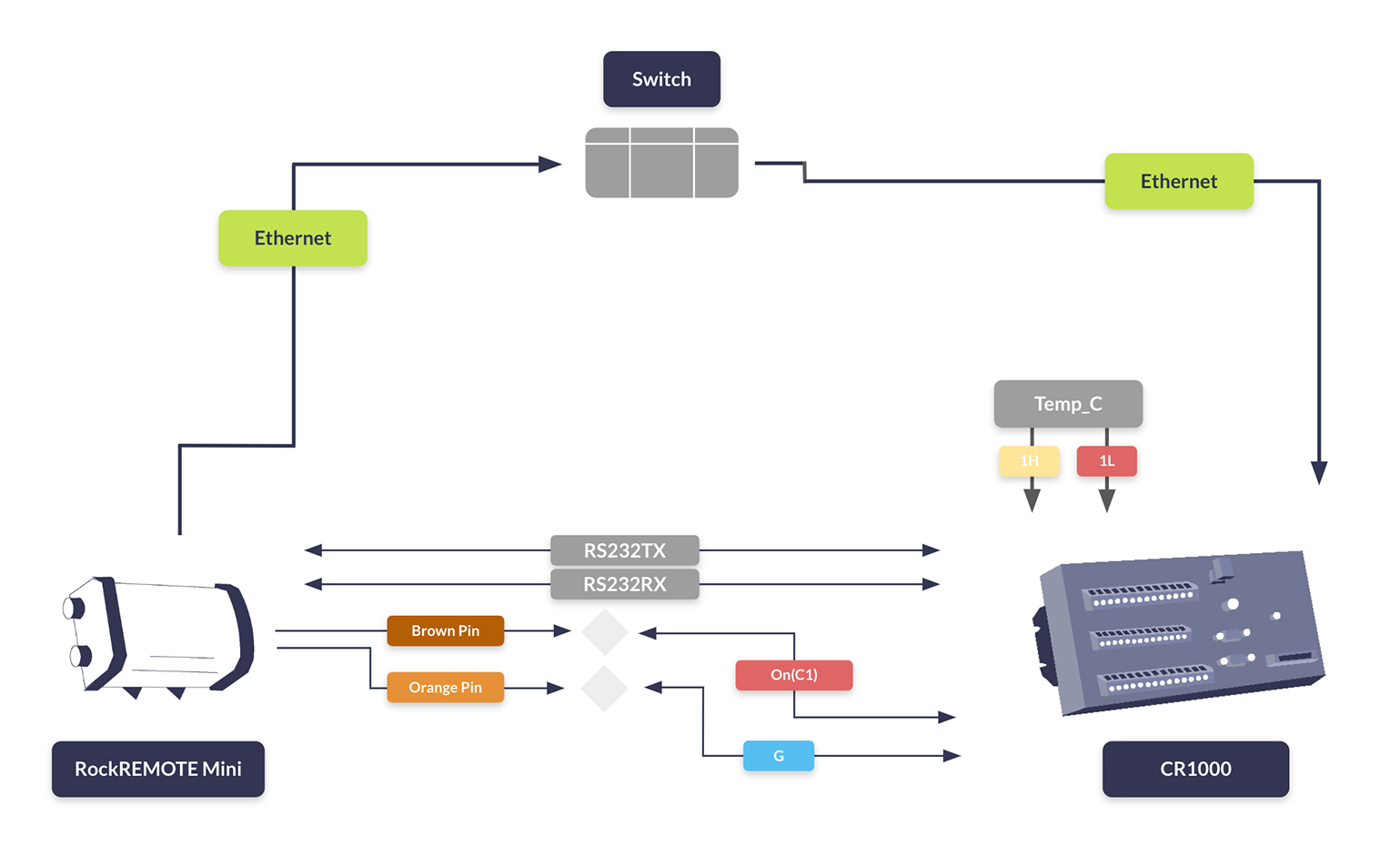
Whether you’re optimizing for cost, scalability, or accessibility, the RockREMOTE Mini and CR1000 can deliver a tailored solution that meets your needs.
This CRBasic code snippet runs on our CR1000 Logger, managing the Mini’s power state based on temperature thresholds. Initially, the Mini is in Sleep Mode. When the upper temperature threshold is exceeded, the Mini wakes up and begins transmitting data. It continues transmitting until the temperature drops below the lower threshold, at which point it returns to Sleep Mode.

Michael Mitrev – Solutions Architect
Graduating with a 1st Class Degree in Computer Systems and Networks Engineering and joining the team in 2024, Michael has been closely involved in the development of the RockREMOTE Mini and is passionate about its growth and success.
He’s also contributed to the RockBLOCK RTU, ensuring the device integrates seamlessly with data loggers to create highly sought-after solutions – primarily focusing on testing with Campbell’s CR1000.
Ready to get started?
If you’re interested in learning more about how the RockREMOTE Mini can transform your remote monitoring capabilities, contact us for a personalized consultation.
Complete the form, or email hello@groundcontrol.com, and we will reply within one working day.
Defending Utilities from Cyber Threats with TSAT
In today’s interconnected world, digital threats have reached a scale never seen before.
In 2023, rising global tensions led to a surge in cyber threats and disruptions to critical infrastructure worldwide. Escalating conflicts – such as those involving Ukraine and Russia, Israel and Hamas, and nations in the South China Sea – motivated hackers to exploit critical infrastructure for control and financial gain. Globally, ransomware incidents are increasing across every continent, as the map shows. At the same time, ransomware attacks targeted more industrial organizations, with reported incidents increasing by nearly 50 percent [Dragos report 2023].
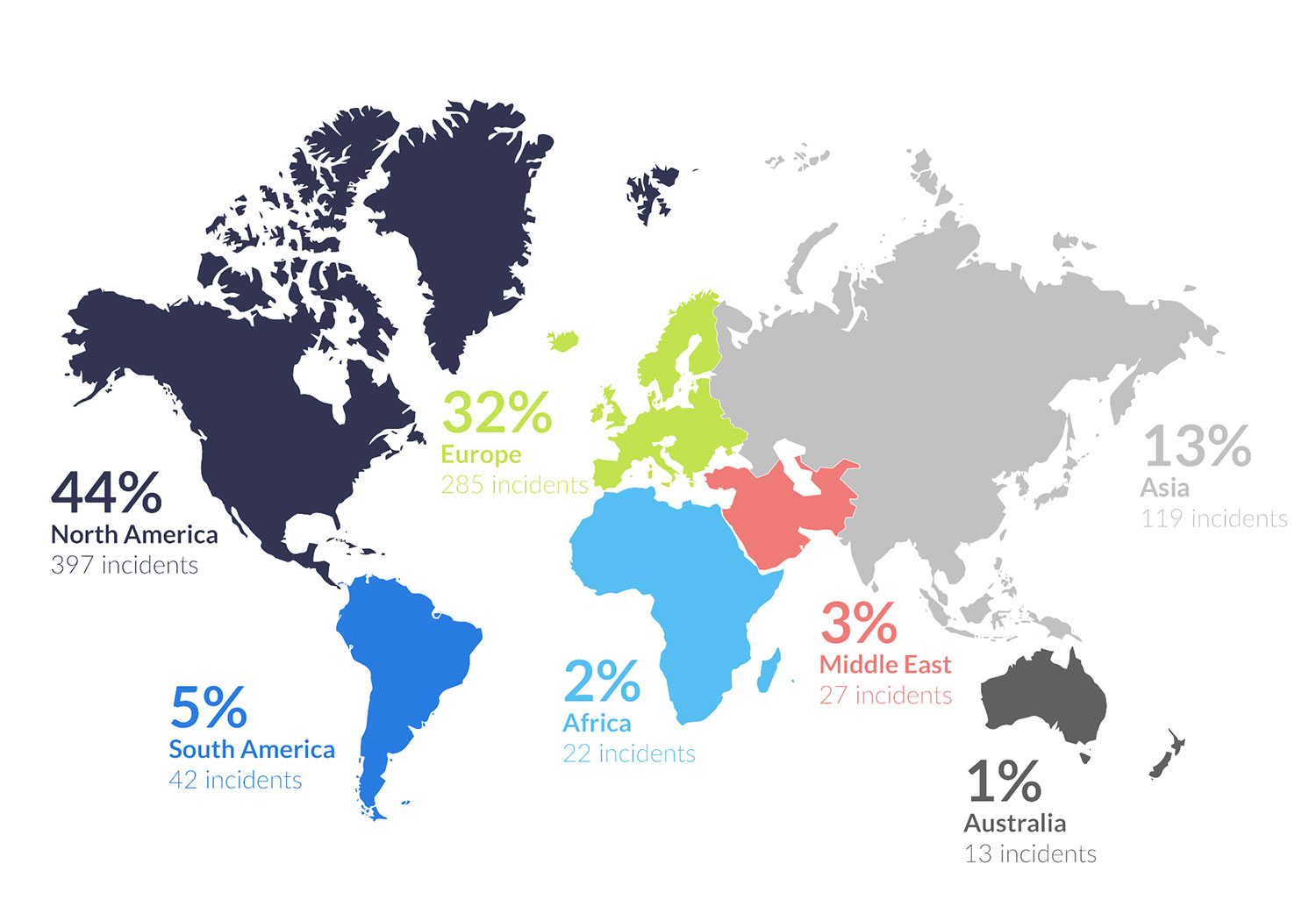 Illustration showing the number of reported ransomware attacks by continent
Cyber attacks can target everything from financial institutions to healthcare systems, transportation networks and power grids – and it’s of increasing concern to the general public. In January 2025, Ground Control conducted a survey of 500 US adults which revealed that over 65% were concerned about cyber attacks on critical national infrastructure, with 70% having limited to no confidence that essential services are protected from cyber attacks.
Utility providers are now facing an alarming new reality where cyber attacks increasingly threaten the safety of their operations. Indeed, Utilities is the second most targeted industry for ransomware attacks, experiencing a 270% increase in data violation cases between 2020 and 2023.
The 2021 Colonial Pipeline Attack
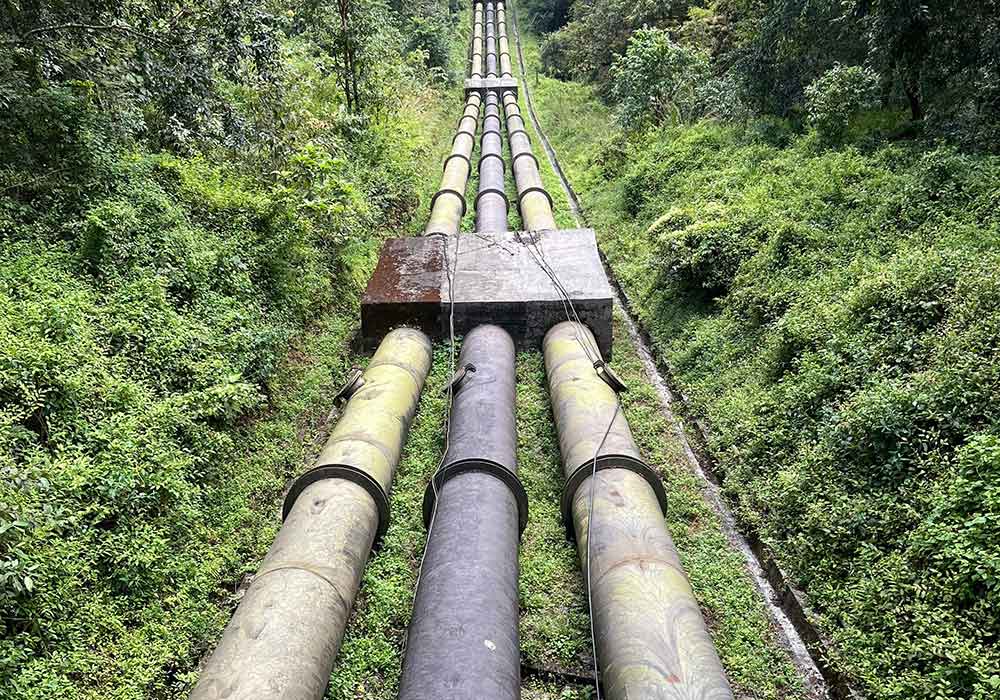
The 2021 Colonial Pipeline attack served as a wake-up call, underscoring the vulnerability of the utility sector to cyber threats. Hackers used a virtual private network (VPN) to infiltrate the pipeline’s control systems, causing widespread fuel shortages across the US East Coast. The incident led to a ransom demand of $5 million, which was ultimately paid to regain control of the pipeline.
The financial costs of data breaches are staggering. According to IBM’s 2021 report, the average cost of a data breach rose to $4.24 million. These costs go beyond the immediate exposure of data and include downtime, loss of revenue, and long-term reputational damage. Utilities must be proactive in defending against such threats to avoid crippling financial losses and operational disruptions.
The Hidden Vulnerabilities in Utility Networks
Utility companies depend heavily on SCADA (Supervisory Control and Data Acquisition) systems to monitor and control infrastructure. These systems collect and transmit data from Remote Terminal Units (RTUs), often located in remote or hard-to-reach areas. However, these RTUs present a significant security vulnerability. With 90% of utility customers reporting “limited to no visibility” into their industrial control systems, once a hacker gains access, they can easily monitor, manipulate, and potentially sabotage critical infrastructure [Dragos report, 2020].
It’s crucial for utilities to address this blind spot and implement solutions that safeguard the data extracted from RTUs and transmitted to SCADA systems.
How Remote Sites Become Prime Targets for Cyber Attack
Remote utility sites, such as offshore wind farms and oil and gas pipelines, are particularly vulnerable to cyber threats. With limited or no access to terrestrial connectivity such as cellular or fiber networks, these remote locations are often the last to receive attention when it comes to cybersecurity. Cybercriminals exploit this vulnerability, targeting sites that lack secure and reliable communications infrastructure. The risk is further compounded by the fact that many utility providers rely on lone workers or contractors to maintain and monitor these remote operations, leaving these sites exposed to cyber threats.
The Role of Satellite Connectivity in Improving Data Security in Utilities
Satellite connectivity has some inherent advantages over cellular networks when it comes to data security; with limited ground infrastructure, it’s less susceptible to physical attacks, and signals are more difficult to intercept. There’s also a reduced risk of infiltration via local Internet Service Providers (ISPs) as these are typically bypassed by satellite communications. But with satellite services diversifying, and more networks being launched, there are now many varying options for data security.
Our Recommended Solution
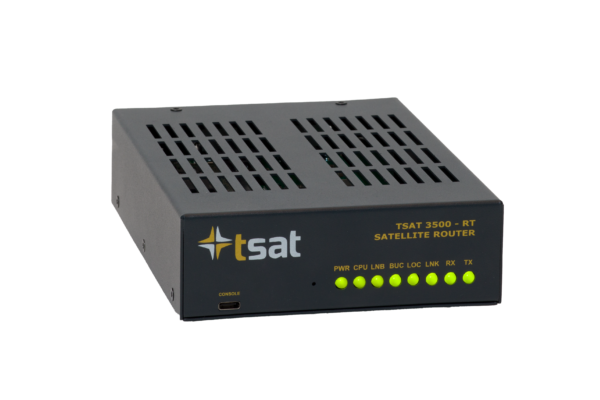
TSAT is a satellite-based communication system designed specifically for secure, resilient remote monitoring and control of SCADA systems. Unlike traditional ground-based communication networks which can be easily compromised by cyberattacks, the TSAT satellite communication solution provides a more secure and tamper-resistant infrastructure.
How TSAT Protects Critical National Infrastructure
The ability to remotely monitor and control systems via satellite communication is essential in maintaining the integrity of critical infrastructure. TSAT’s secure transmission capabilities ensure that communication between central control centers and field sites remains uninterrupted, even in the face of large scale cyber threats.
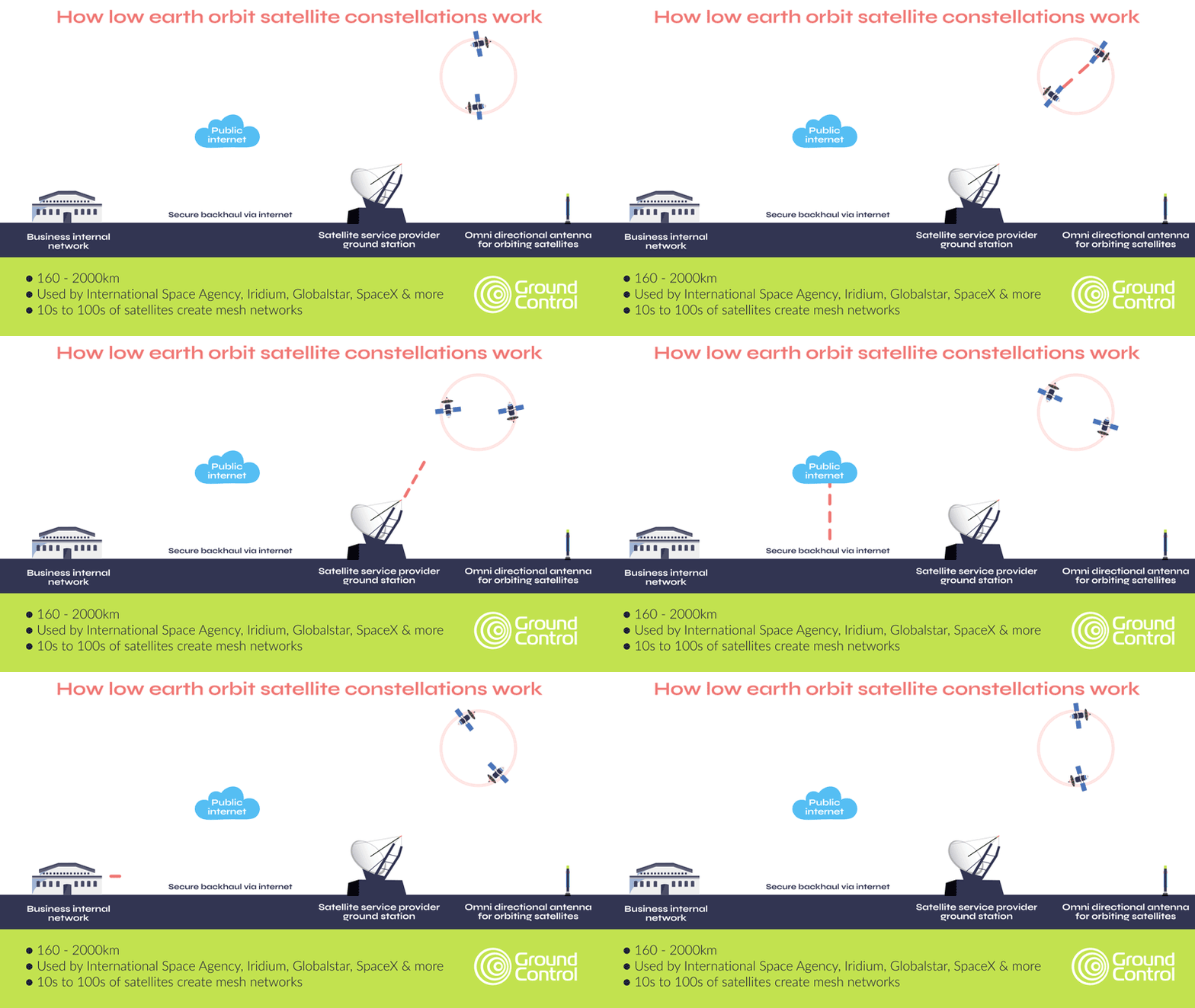
As mentioned earlier, satellite connectivity has several security advantages over terrestrial networks; a reduced attack surface, plus limited reliance on the public internet to move data being two examples. However, most satellite networks, whether in low earth orbit or geostationary orbit, leverage the internet to move data from the ground station to your application. This process is protected via VPNs and firewalls, which, in addition to AES-256 encryption of data, satisfies most organizations’ requirements.

Critical National Infrastructure, however, often benefits from, and may even require, complete independence from public infrastructure, and that’s how private satellite networks like TSAT function. Here, as shown in the diagram below, data from the satellite comes to a ground station on your premises, rather than into the satellite network’s ground station. This means that your data is air gapped from external networks.
Part of the TSAT service is dedicated satellite bandwidth that prevents interference from other users, ensuring consistent and secure connectivity. TSAT also has no reliance on GPS timing, making it immune to GPS jamming. What’s more, its geo-redundant hubs and frequency diversity allow terminals to automatically switch frequencies if interference occurs, ensuring uninterrupted communication.
Real-World Applications of TSAT
A major energy infrastructure operator connects gas markets between the UK and continental Europe, managing a bi-directional gas pipeline with terminals in two key locations.
To maintain operations, a series of pressure and temperature sensors must continuously transmit data to the company’s SCADA system, which authorizes gas transmission.
If this sensor data becomes unavailable, production must halt, and gas venting procedures are required; an expensive process with significant operational and environmental impact.
To ensure real-time, reliable sensor data transmission, the company requires multiple active communication pathways at all times. They maintain a dedicated fiber connection alongside two satellite connections, all tasked with delivering critical data to the SCADA system. To further reduce reliance on public infrastructure, they have implemented TSAT ground stations at each terminal, eliminating the need for internet-based backhaul.
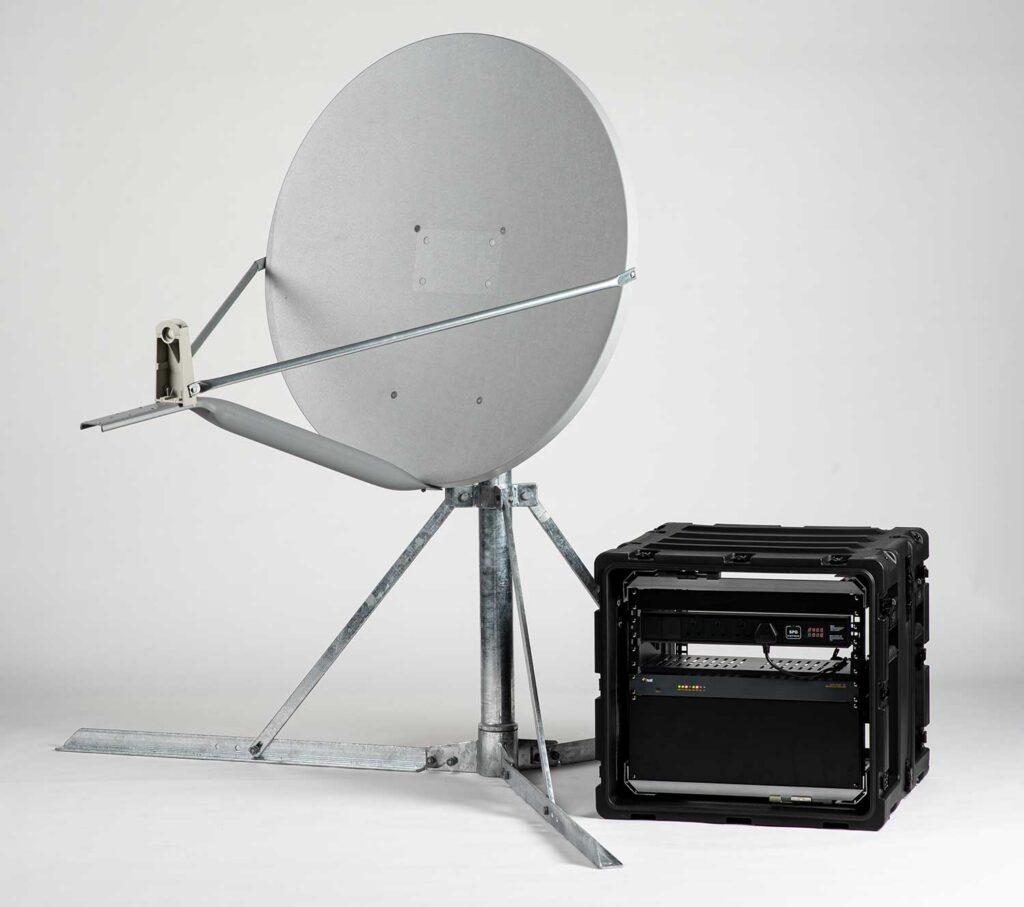
Each satellite link consists of two antennas: a hub and a remote. Typically, the remote antenna is positioned in a more isolated location near the sensors, transmitting data to the hub at the operations center. However, in this case, both satellite dishes are located in close proximity but pointed at different satellites, ensuring redundancy in case of a satellite failure.
Additionally, the company has implemented a unique failsafe: at each terminal, the hub and remote antennas are pointed at opposing satellites relative to the other terminal. This setup provides resilience against localized weather disruptions or signal degradation.
This system has been in place for over 16 years, with hardware upgrades along the way, and in that time, the satellite connectivity has never failed. Ground Control supports the company with a full turnkey service, including setup, training for routine maintenance, and periodic site visits for system health checks.
Embracing Satellite Technology for Cyber Defense
With the growing threats posed by cyber warfare, the time to act is now. TSAT offers a solution that is robust, resilient, and adaptable to the evolving threats of the digital age to utilities. It’s time for utility providers and organizations worldwide to adopt secure satellite enabled technologies, like TSAT, to protect their most vital assets and ensure uninterrupted services to customers. The question isn’t whether you can afford to adopt this technology – it’s whether you can afford not to.
Can we help?
Our satellite-enabled solutions offer robust security features designed to protect your critical data, coupled with reliable connectivity.
Partner with us to explore satellite solutions that safeguard your operations and enhance your secure data transfer capabilities.
Complete the form or email hello@groundcontrol.com and we’ll get back to you within one working day.
Report: How Satellite IoT Connectivity Supports Data Security
Securing IoT Data: Why Satellite Connectivity Matters
As industries become more reliant on IoT technology to monitor and manage remote operations, the security of IoT data has never been more critical. From energy infrastructure to national utilities, Critical National Infrastructure (CNI) organizations handling sensitive data are prime targets for cyberattacks. While cellular and terrestrial networks have long been the backbone of connectivity, their vulnerabilities are increasingly being exposed.
This is where satellite connectivity stands apart. Satellite networks offer global coverage, operate independently of local terrestrial infrastructure, and provide enhanced security features to mitigate cyber threats. However, like any technology, they’re not without risk. Our latest report, How Satellite IoT Connectivity Supports Data Security Measures, delves into the specific security challenges and solutions that satellite connectivity offers for IoT applications.
Read Data Security Report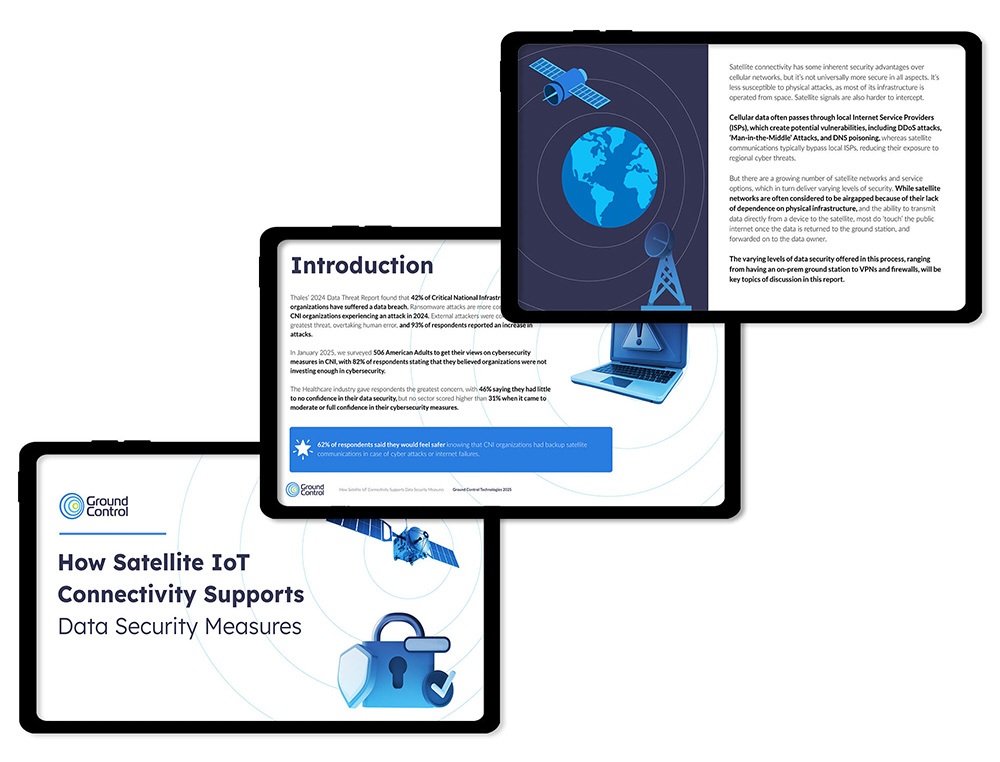
Key Insights from the Report
1. The Growing Cybersecurity Threat to IoT Networks
Critical national infrastructure sectors, including energy, utilities, and transportation, are facing an increasing number of cyber and physical threats. Attacks on property, plus DNS poisoning, DDoS attacks, and Man-in-the-Middle attacks are just a few of the risks that can disrupt operations or compromise data integrity. Organizations must adopt a proactive security strategy to safeguard their IoT deployments.
2. Why Satellite IoT Offers a More Secure Alternative
Unlike terrestrial networks, satellite connectivity does not rely on local ISPs or cellular towers, making it less susceptible to traditional cyberattacks. High encryption standards, private network options, and advanced threat detection make satellite communications a strong choice for securing IoT data.
3. How to Mitigate the Limitations of Satellite Data Security
While satellite networks provide strong security advantages, they are not immune to threats. The report explores best practices, such as end-to-end encryption, network segmentation, and failover protection, that organizations can implement to further strengthen their security posture.
4. Expert Insights from Leading Satellite Providers
The report includes expert perspectives from industry leaders, including Viasat, TSAT, and Iridium, highlighting the measures these providers take to enhance security for IoT applications. From private satellite networks to real-time monitoring and AI-powered threat detection, these insights help organizations make informed decisions about securing their satellite IoT deployments.
If your organization relies on IoT connectivity for critical operations, understanding the security implications of your network choice is essential. Our comprehensive report provides the insights and strategies you need to enhance your security posture and protect your data from emerging threats.
Download the full report now to learn how satellite can be a key component of your IoT security strategy.
- Discover the level of confidence the general public has in CNI organizations’ data security measures
- Learn from industry leaders about best practices for securing critical infrastructure
- See how past attacks have exploited vulnerabilities in terrestrial networks
- Compare security measures across different satellite networks
- Get the knowledge you need to make informed choices about secure connectivity.
Can we help level up data security for your organization?
We’ve delivered connectivity solutions for critical national infrastructure projects for over 20 years. Our expertise in satellite technology, combined with a deep understanding of mission-critical applications, allows us to tailor solutions to meet your specific needs.
By partnering with Ground Control, you gain access to a team that is not only well-versed in the latest satellite technologies but also dedicated to helping you secure your communications, mitigate risks, and ensure that your operations stay connected no matter the challenges.
Complete the form, or email hello@groundcontrol.com to be connected to one of our expert team.
How Satellite IoT Makes Predictive Maintenance Possible Anywhere
Manufacturing and Heavy Industry operations around the world rely on their machinery to get the job done, efficiently and effectively. The cost of equipment failure and the resulting unplanned downtime has serious consequences for the bottom line, with medium unplanned downtime costs approximately $125,000 per hour. When inflationary pressures, supply chain demands and raw material costs are factored in, unplanned downtime costs for Heavy Industry were calculated as $59 million per year in 2023.
Faced with the need to minimize the business impact of unplanned downtime for critical equipment, industries with heavy assets and significant downtime costs, such as oil & gas and mining, are leading the way in adopting Predictive Maintenance solutions.
By incorporating satellite connected IoT sensors, Heavy Industries operating in remote locations can reliably monitor machinery in real time and react quickly to avoid equipment failures and keep assets operational. The data from satellite-connected sensors on equipment forms a vital component of deploying Predictive Maintenance programs in industries with high asset costs.
What is Predictive Maintenance?
Predictive Maintenance (PdM) is a proactive, data-driven approach that uses advanced technologies – such as condition monitoring, machine learning (ML) and IoT devices – to anticipate equipment failures and schedule maintenance before disruptions occur. By analyzing real-time data from sensors installed on machinery, PdM identifies early signs of wear, faults, or deterioration, enabling timely intervention to prevent costly downtime.
Unlike time-based or reactive maintenance, PdM optimizes equipment performance by triggering maintenance tasks only when specific conditions indicate a need. This approach improves equipment reliability, reduces maintenance expenses, and extends the lifespan of assets. AI-powered analytics and IoT-enabled sensors track key metrics like temperature, pressure or vibration, providing continuous insights into machine performance. When thresholds are exceeded, PdM systems issue alerts or initiate maintenance work orders.
The goal of PdM is to enhance operational efficiency by minimizing unplanned downtime, lowering maintenance costs, and ensuring asset reliability. Industries such as manufacturing, energy, and transportation rely on PdM to align maintenance activities with actual equipment conditions, maximizing productivity and supporting cost-effective, sustainable operations.

What is the Difference between Predictive and Preventive Maintenance?
Although often used interchangeably, Predictive Maintenance (PdM) and Preventive Maintenance (PM) are distinct approaches to equipment upkeep, each suited to different operational needs.
Preventive Maintenance follows a scheduled approach, performing maintenance at regular intervals based on time or measurable usage units, such as engine hours or production cycles. This method ensures equipment is inspected and maintained before issues arise, but it does not consider the actual condition of the asset.
For instance, a Mining operation may replace drill components every six months, regardless of whether those components show signs of wear. While this minimizes the chance of failure, it may result in premature replacements or unnecessary downtime.
Predictive Maintenance leverages real-time data from IoT sensors and advanced analytics to monitor the actual condition of assets. Maintenance is performed only when necessary, based on insights into potential failures or performance degradation.
For example, IoT sensors on a Combine Harvester may detect rising temperatures or irregular vibrations, indicating wear and tear. Predictive maintenance enables technicians to address the issue before a failure occurs, minimizing downtime and repair costs.
Comparing the Two Approaches
| Preventative Maintenance | Predictive Maintenance | |
|---|---|---|
| Basis for Maintenance | Time or Usage Intervals | Real Time Condition Monitoring and Analysis |
| Frequency | Regular, Fixed Schedule | As Needed, Based on Data Insights |
| Costs | Lower Initial Costs, Higher Cumulative Costs | Higher Initial Investment, Lower Long Term Costs |
| Downtime | May Require Equipment Stoppage | Often Avoids Downtime by Scheduling During Low Impact Periods |
| Efficiency | May Result in Unnecessary Maintenance | Targets Specific Issues, Optimizing Resources |
Types of Predictive Maintenance
There are three distinct types of Predictive Maintenance: Indirect Failure Prediction, Anomaly Detection, and Remaining Useful Life (RUL). Each approach differs in its desired objectives, the analytical methods used, and the type of information output provided.
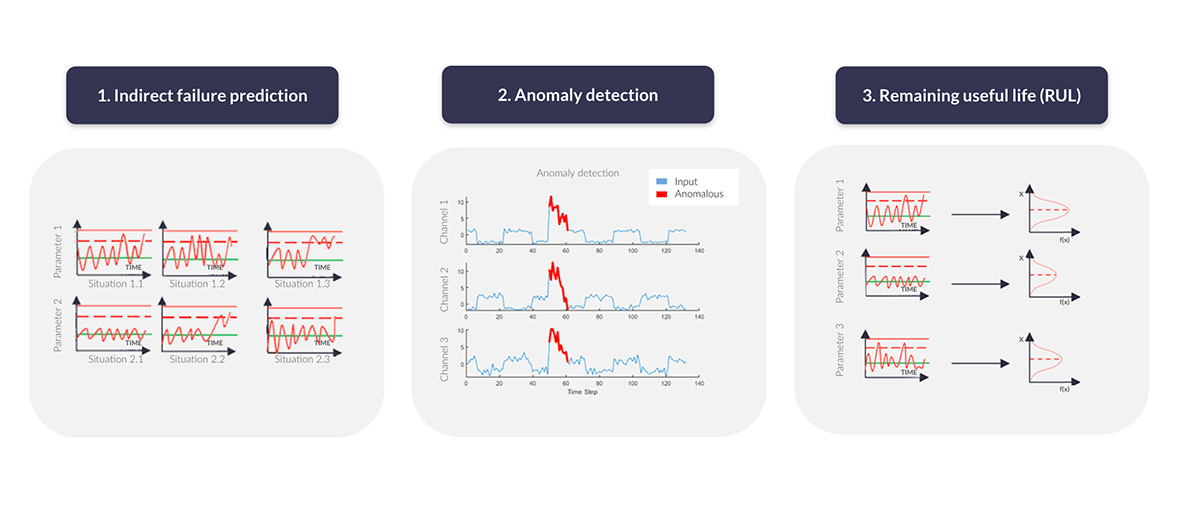
Image adapted from the IoT Analytics Asset Performance & Predictive Maintenance Market Report 2023–2028
Indirect Failure Prediction
Estimates equipment health by calculating a ‘health score’ based on known maintenance requirements, operating conditions and historical performance data. When sufficient data is available, supervised machine learning can be applied to refine the predictions. This approach is scalable since it relies on manufacturer specifications, and it is cost-effective because it uses existing sensors.
Its dependence on large volumes of historical data may render it unsuitable for industries like heavy machinery, where high downtime costs necessitate more immediate and accurate insights.
Anomaly Detection
Identifies potential failures by detecting deviations from normal operating conditions in real time. Unlike methods that require historical data, it relies on current sensor data, making it particularly suited to organizations without extensive machinery usage records. This approach improves predictive accuracy by considering real-time environmental and operational factors rather than predefined maintenance parameters set by the manufacturers.
The risk of false positives can pose challenges, as unnecessary alerts may disrupt operations and complicate machine learning algorithm performance.
Remaining Useful Life (RUL)
Focuses on predicting the time left before equipment failure based on specific machine metrics such as operational hours, distance traveled, or activity cycles. By analyzing sensor data, this method identifies condition indicators that highlight whether the equipment is performing as expected or if faults have accelerated its degradation. RUL models are trained using system data collected under known conditions and applied to predict outcomes under new or variable circumstances.
While this method is highly robust and reliable, it requires detailed, high-quality data for accurate predictions, making it particularly effective for critical equipment in complex environments.
The Benefits of Predictive Maintenance
Predictive Maintenance brings many benefits to organizations through its advanced approach to equipment upkeep, using technology and data analysis to improve asset reliability and efficiency. By identifying potential issues before they lead to failures, PdM helps organizations reduce downtime, optimize resources, and maintain safer working environments.
Research, including findings from the US Department of Energy, highlights the tangible impact of Predictive Maintenance. Compared to preventive maintenance programs, it offers cost savings of 8% to 12%, and when compared to reactive maintenance, cost savings increase to 30% to 40%. These programs also enable a reduction in maintenance costs by 25% to 30% and minimize equipment breakdowns by 70% to 75%.
In addition to cost savings, PdM improves operational efficiency by reducing downtime by 35% to 45% and increasing production capacity by 20% to 25%.
How to Implement Predictive Maintenance
1. Establish Baselines and Data Collection
Baseline performance metrics are identified for the assets by monitoring its condition to set the normal performance benchmarks. Once the baseline is established, sensors are installed to capture real-time data, enabling continuous performance monitoring.
2. Install IoT Sensors on Equipment
IoT sensors are installed on critical equipment to monitor various parameters such as vibration, temperature, pressure, and noise. These sensors continuously collect data on the equipment’s condition and the data gathered is then transmitted to a centralized system for analysis.
3. Data Integration and System Setup
The data collected from the IoT sensors needs to be integrated with the PdM system. This involves connecting the sensors to a computerized maintenance management system (CMMS) or a remote dashboard which allows for real-time monitoring and data analysis.
4. Set Maintenance Thresholds and Automate Alerts
Organizations need to define thresholds for acceptable performance levels. When these thresholds are exceeded, the system automatically triggers maintenance alerts, enabling timely interventions before equipment failure occurs.
5. Select and Implement the Right Analytics Tools
An analytics platform is required to handle the large volumes of data, apply predictive models, and generate actionable insights. Machine learning and AI algorithms are crucial for analyzing sensor data and predicting future equipment failures based on historical data.
6. Develop Predictive Models and Train the System
Predictive models are developed using historical data, maintenance logs and sensor data to forecast future equipment behavior. These models are trained to identify patterns in the data that may signal the onset of failure.
7. Integration with Existing Maintenance Systems
The PdM system is integrated with existing workflows, maintenance management systems, and enterprise resource planning (ERP) systems. This enables seamless communication across platforms and allows for data-driven decision-making.
8. Monitor and Optimize the Program
After implementation, the PdM program should be monitored to evaluate its effectiveness. Continuous data collection and model refinement will help improve prediction accuracy over time.
Industrial Applications of Predictive Maintenance
Predictive Maintenance is becoming increasingly common practice in asset-intensive industries that depend on their large, complex machinery. For industries with assets in remote locations or critical communication requirements, satellite connected IoT devices can transmit real-time sensor data for PdM programs.

Energy and Utilities
The risk of equipment failure in energy production and utilities management can lead to significant financial losses and customer dissatisfaction. Power plants, wind farms, and utility grids employ PdM programs to ensure the continuous operation of critical assets like turbines, generators, and transformers. IoT sensors monitoring parameters such as vibration, temperature, and pressure are used to detect early signs of failure.
By analyzing these data points in real time with advanced predictive models, utility providers can prevent catastrophic failures, optimize energy production, and ensure compliance with regulatory standards. This is particularly important in industries where unexpected downtime can have widespread consequences on both financial performance and customer trust.

Railways and Transportation
PdM is crucial in the transportation industry for ensuring the safety and reliability of infrastructure such as railway tracks, trains, and airport ground equipment. IoT sensors on trains and other critical assets monitor parameters like pressure, temperature, and vibration to detect early signs of wear or failure.
For example, PdM can be used to monitor brake systems or detect track deformations, preventing accidents and service interruptions. By integrating sensors with automated maintenance management systems (CMMS), transportation companies can schedule repairs before a component fails, enhancing passenger safety and reducing operational disruptions.

Oil and Gas
In remote locations such as offshore platforms or desert pipelines, Oil and gas operations face unique challenges in maintaining equipment. PdM is highly beneficial in these situations, as it helps companies remotely monitor the condition of critical machinery like pumps, compressors, and valves.
Satellite-connected IoT sensors track parameters such as pressure, temperature, and vibration to detect signs of imminent failure. Real-time data is sent to cloud-based platforms for analysis, and predictive algorithms generate alerts to maintenance teams, allowing them to address issues before they result in costly downtime or safety hazards.

Mining
With Mining machinery operating in harsh conditions, the risk of unexpected breakdowns can lead to costly delays and safety hazards. Predictive maintenance helps to monitor heavy equipment such as crushers, drills, and loaders, which are critical to mining operations.
Satellite-enabled IoT sensors measure variables like temperature, pressure, and vibration, providing continuous health checks of the machinery. Predictive models analyze these data streams to identify wear patterns and predict when maintenance is required.
Sensor Technologies in Predictive Maintenance
Predictive Maintenance utilizes a range of sensor technologies to monitor the condition of equipment and to detect and address potential failures before they lead to unplanned downtime.
Infrared Thermography
Also known as thermal imaging, infrared cameras identify heat spots which can indicate issues such as friction, electrical resistance, or misalignment in mechanical systems. It is particularly valuable in identifying worn-out components or malfunctioning circuits that tend to overheat.
Infrared thermography allows for real-time monitoring without disrupting machine operation and is frequently used in industries like power generation to track turbine blade conditions and ensure equipment runs efficiently.
Acoustic Monitoring
Using specialized equipment, maintenance personnel can detect ultrasonic or sonic emissions from machinery, which may indicate leaks, electrical discharges, or mechanical wear. Sonic monitoring is typically applied to lower-speed equipment, while ultrasonic analysis is more accurate and applicable to both low- and high-speed machinery.
Ultrasonic analysis is widely used in industries like construction and heavy equipment operations, where hydraulic systems and machinery require constant monitoring to ensure seamless operation and prevent project delays.
Vibration Analysis
Sensors track vibration patterns that help technicians identify potential issues like misalignment, unbalanced components or bearing failures in high-speed rotating equipment, such as motors, drills and fans.
Each machine has a unique vibration signature, and deviations from this pattern can be a strong indicator of mechanical problems. The ability to monitor vibration in real-time allows for early intervention, preventing costly repairs and downtime.
Oil Analysis
By analyzing oil for contaminants, viscosity changes, and particle counts, technicians can pinpoint wear and tear in machine components. Chemical analysis of oil can also reveal overheating or chemical degradation, providing early warnings of issues that could lead to failure.
This technology is often used in heavy industries, such as energy production or oil drilling, where machinery components are subject to extreme operating conditions.
Current and Voltage Sensors
These sensors track electrical characteristics like overloads, short circuits, and failing components. In industries such as mining or energy, where electrical systems are critical, monitoring these parameters ensures safety and minimizes downtime caused by electrical failures.
For example, real time analysis of electrical data in mining operations can help identify potential issues in equipment like excavators or conveyors, allowing operators to address problems before they cause equipment failure and disrupt production.
Predictive Maintenance and Satellite IoT
For remote operations, such as those found in mining or offshore environments, Satellite IoT becomes a crucial part of the Predictive Maintenance Program. When assets are located in areas with unreliable or no cellular connectivity, traditional IoT solutions relying on cellular networks may fail to transmit vital data. Satellite IoT solutions overcome this challenge by enabling real-time data transmission via satellite, ensuring that assets can be monitored regardless of their location or environment.
Beyond just sensor data collection, Satellite IoT can enable remote control of assets. If an asset is detected to be operating in an unsafe condition, it can be remotely shut down to prevent catastrophic damage or safety incidents. This combination of real-time monitoring and remote intervention significantly enhances worker safety and helps avert equipment breakdowns before they escalate into more serious issues.
Get in Touch
At Ground Control, we design and build Satellite IoT devices leveraging the Iridium global network, providing reliable real-time data transfer from anywhere on Earth. Our feature-rich IoT platform, Cloudloop, can monitor and analyse sensor data and offers a simplified and well-documented API to connect to your existing Predictive Maintenance and Asset Performance Management (APM) toolkits.
With over 20 years of experience, we can help you make the best choices based on your requirements.
How to Choose the Right Satellite IoT Network for Your Application
As the world of satellite IoT connectivity rapidly evolves, selecting the right network for your remote application has never been more important — or more complex. Whether you’re deploying environmental monitoring devices, controlling unmanned systems, or tracking remote assets, understanding your options can save you significant time, money, and operational effort.
That’s why we created a comprehensive guide to help you navigate this dynamic landscape and make informed choices. The highlights are in this blog post; read the eBook to digest the in-depth version.
Read Free eBook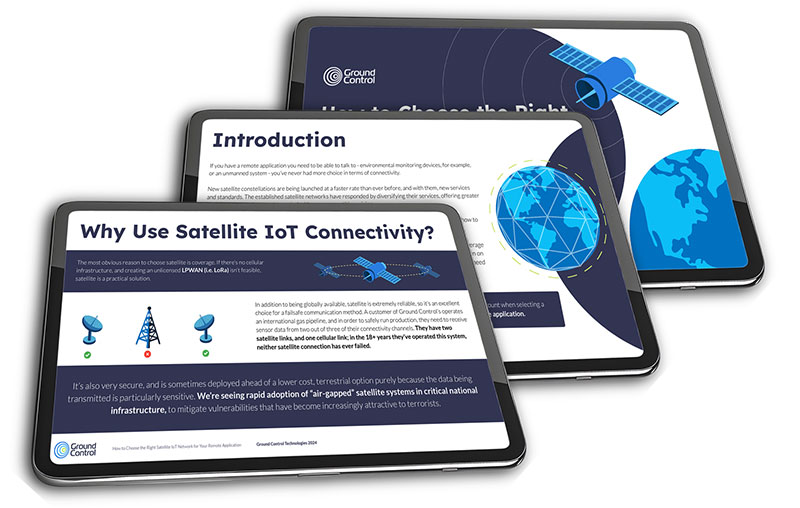
The Expanding Satellite IoT Landscape
In recent years, satellite networks have undergone a transformation. Established players have diversified their services, offering greater flexibility and more competitive pricing. At the same time, new satellite constellations are launching at a faster rate than ever, introducing innovative services and standards that promise even more possibilities for IoT applications.
This abundance of options is great news, but it also presents a challenge: with so many variables at play, how do you select the best network for your specific needs? That’s where our expertise comes in. Ground Control has spent over 20 years testing and integrating satellite networks to ensure optimal connectivity for our customers. We’ve distilled our knowledge into an easy-to-follow eBook that covers everything you need to consider.
Key Considerations for Choosing a Satellite Network
When evaluating satellite IoT networks, there are several critical questions to ask:
- How data-intensive is your application? Understanding your data volume needs is crucial. For instance, message-based services like Iridium Messaging Transport (IMT) are ideal for low-volume, energy-efficient data transmission. On the other hand, IP-based services such as Iridium Certus 100 are better suited for high-data applications like real-time control or video streaming.
- Where are your sensors located? Coverage matters. While some networks like Iridium offer truly global coverage, others may not reach polar regions or other remote areas. Additionally, factors like terrain and obstructions can affect the choice between Low Earth Orbit (LEO) and Geostationary (GEO) satellites.
- Is your application stationary or mobile? Mobile applications often require LEO networks, as they don’t rely on precise antenna alignment. Conversely, stationary deployments with a clear line of sight to a GEO satellite may benefit from the stability and cost-effectiveness of GEO-based solutions.
- How time-critical is your data? Applications requiring real-time data transmission will need well-established LEO networks with IP-based connections. For less time-sensitive use cases, store-and-forward technologies used by some newer LEO networks might be a cost-effective alternative.
Standards-Based vs. Proprietary Networks
One of the most exciting developments in satellite IoT is the emergence of standards-based technologies like LTE Cat 1 and NB-IoT over satellite. These allow a single modem to connect to both cellular and satellite networks, promising cost savings and supplier flexibility. However, these technologies are still in their infancy and come with trade-offs, such as higher power consumption or limited data volumes.
Where you have a combination of relatively high data volumes plus no mains power, proprietary networks offer optimized performance tailored to their specific satellite systems. For instance, message-based protocols like Iridium’s Short Burst Data (SBD) deliver efficient, low-power communication for small data packets, making them ideal for battery-powered IoT devices.
What You’ll Learn in the eBook
Our eBook, How to Choose the Right Satellite IoT Network, dives deeper into these topics and provides actionable insights, including:
- A detailed comparison of leading satellite networks like Iridium, Viasat, Starlink, and Globalstar.
- Real-world examples of how different networks excel in specific use cases.
- A practical framework for evaluating networks based on coverage, latency, power efficiency, and mobility.
- Insights into emerging technologies and how they may impact your future connectivity strategy.
By the end of this guide, you’ll have the tools you need to select a satellite IoT network that aligns with your technical and operational requirements.
Read Free eBook
Can we help with your remote IoT application?
We have decades of experience designing and building satellite IoT connectivity solutions, and work with multiple satellite networks to ensure our customers get the right service for their needs.
If you would like expert, impartial advice on your remote IoT application, please get in touch! Complete the form or email hello@groundcontrol.com. We will reply within one working day.
Exploring the New Iridium Certus 9704: Compact, Low Power, and Built for IoT
Iridium have just launched their latest satellite transceiver, the Iridium Certus 9704. In this post we’re going to explore how this module compares with other satellite IoT modems, the Iridium 9603 and Certus 9770. We’ll look at ideal use cases for the new transceiver, how to get the best out of the device, and how to get started.
What is the Iridium Certus 9704?
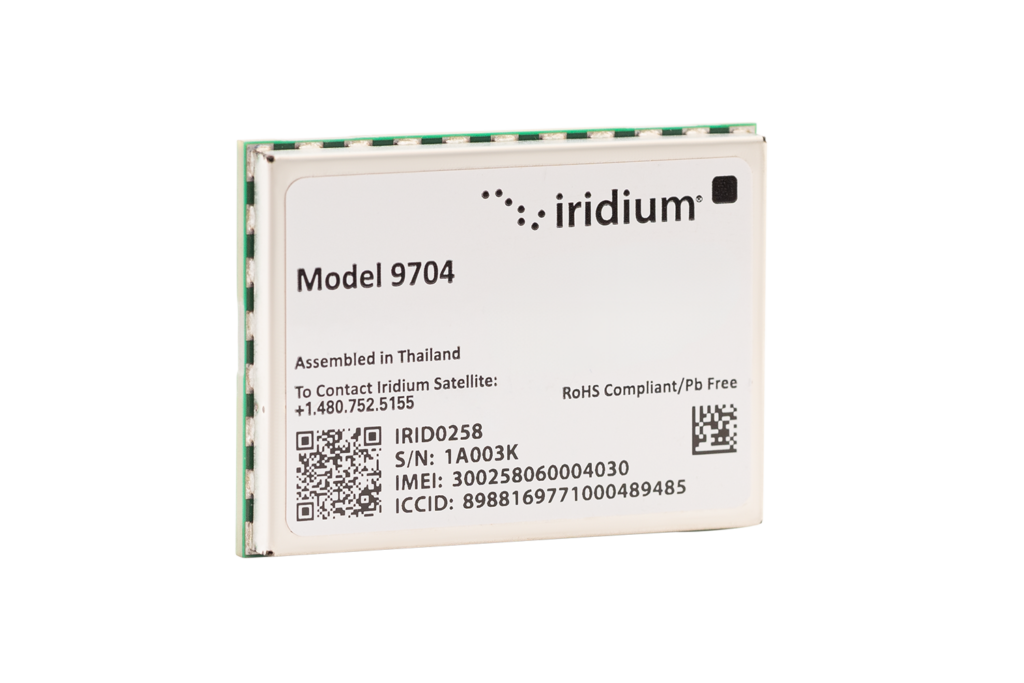
The 9704 is a small, lightweight and low power satellite IoT transceiver that connects to the globally available Iridium satellite constellation.
It leverages Iridium Messaging Transport (IMT), a message-based service which allows users to transmit data packets of up to 100 kB. What is IMT?
What Applications are Suited to the 9704?
The 9704 has been designed to consume very little power, so it’s ideal for remote, battery-powered applications. For example, telemetry from heavy machinery; SCADA readings from unmanned substations or infrastructure; aggregated gateway / hub data; data logger transmissions.
It can also be used for simple UxV commands; stop, start, return etc.
How Does the 9704 Differ from the 9603 Transceiver?
The 9704 module is 34% smaller than the 9603N modem: 31.5 x 42 x 3.8 mm vs. 31.5 x 29.6 x 8.1 mm, and 12 g vs. 11.4 g respectively*.
The 9704 also boasts an 83% reduction in idle power consumption compared to the 9603. The message size for the 9603 is considerably smaller compared to the 9704; 340 / 270 bytes (Short Burst Data) vs. 100 kB (Iridium Messaging Transport). The link speed is also doubled with the 9704; from 2.4 Kbps to 4.8 Kbps.
Applications best suited to the 9603 include asset tracking, environmental monitoring and fleet management; it remains the most cost-effective way to move very small volumes of data using the Iridium satellite constellation. But for many applications, IMT will be a more cost-effective means of transmitting IoT data.
View 9603-Based Products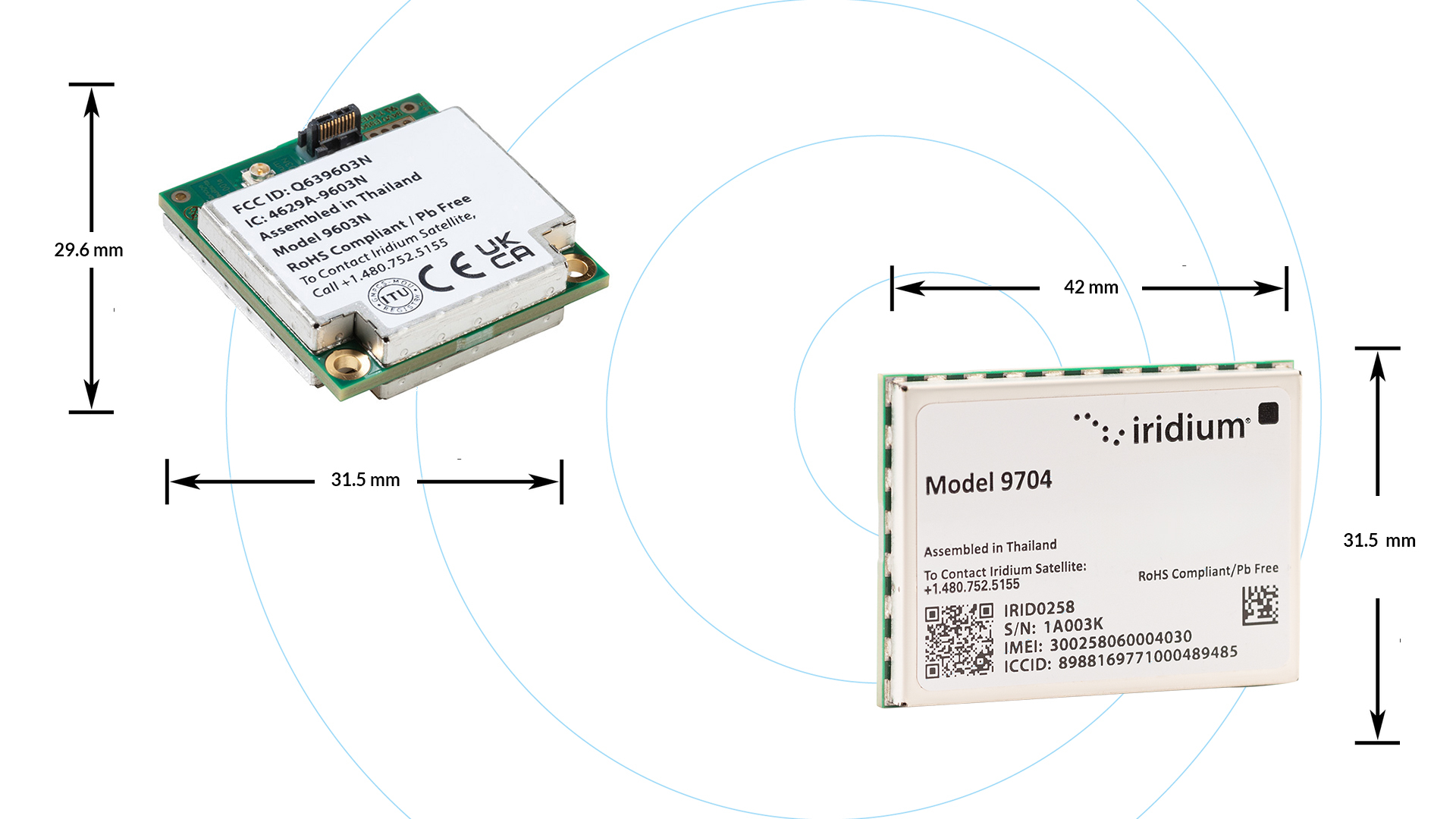
How Does the 9704 Differ From the 9770 Transceiver?
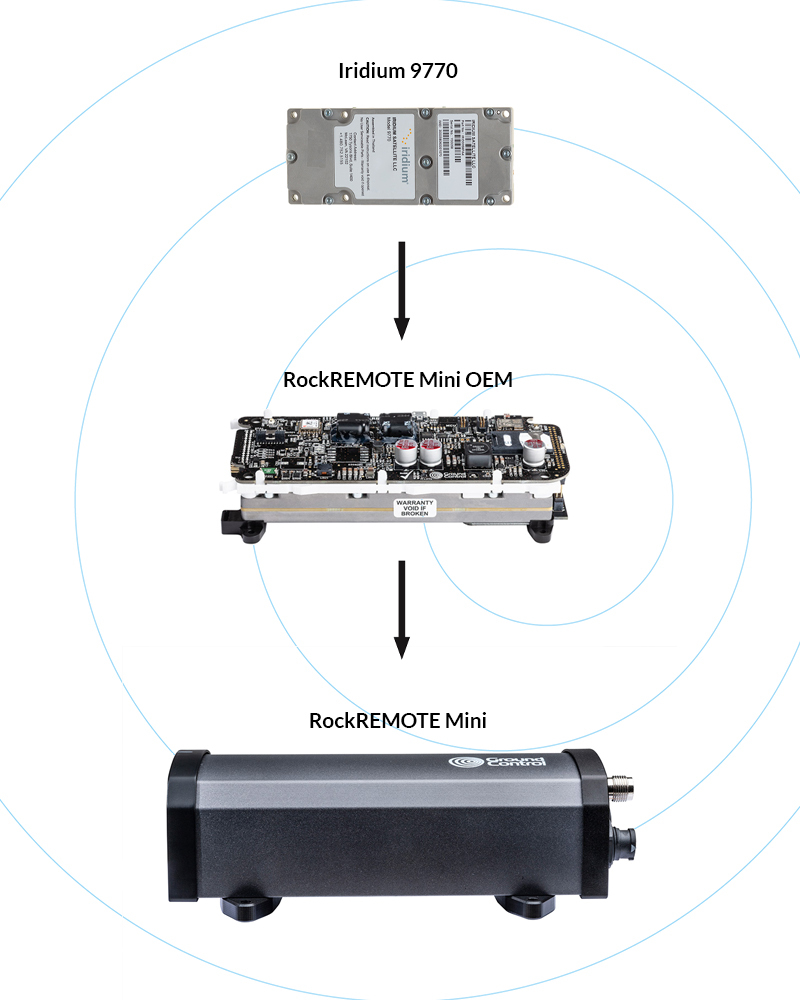
The Iridium Certus 9770 modem is a more powerful device. It can send data over IMT, but also over IP, creating greater flexibility and making it more suitable for applications where real-time command and control is required – for example, piloting a drone BVLOS.
The 9770 sends data far more quickly; 22 / 88 Kbps vs the 9704’s 4.8 Kbps (Tx/Rx). But this comes with a greater power draw; the 9770 requires 3.5 W to transmit/receive, whereas the 9704 requires roughly 0.9 W.
The 9770 is also larger and heavier than the 9704; 140 x 60 x 16 mm and 185 g vs. 31.5 x 42 x 3.8 mm and 12 g respectively.
The Certus 9770 can be used for voice communication, and the 9704 is data only.
Devices utilizing the 9770 transceiver are ideal for remote control of assets such as UAVs and USVs; or when it’s important that data is moved quickly, so any form of alerting mechanism such as remote security or systems failure alarms. They will also be the preferred choice of systems integrators who want the flexibility to switch between IP and message-based transmissions depending on the type of data being moved.
View 9770-Based ProductsWhich Devices Utilize the 9704 Transceiver?
At the time of writing, you can purchase an Iridium 9704 Developer Kit, which is a great way to evaluate Iridium Messaging Transport (IMT) in the lab and explore what the technology can do. We are IMT and Iridium experts, having worked with the Iridium development team for decades, and we are here to help you get the best out of Iridium Messaging Transport, whether you start with the Iridium kit or our own hardware.
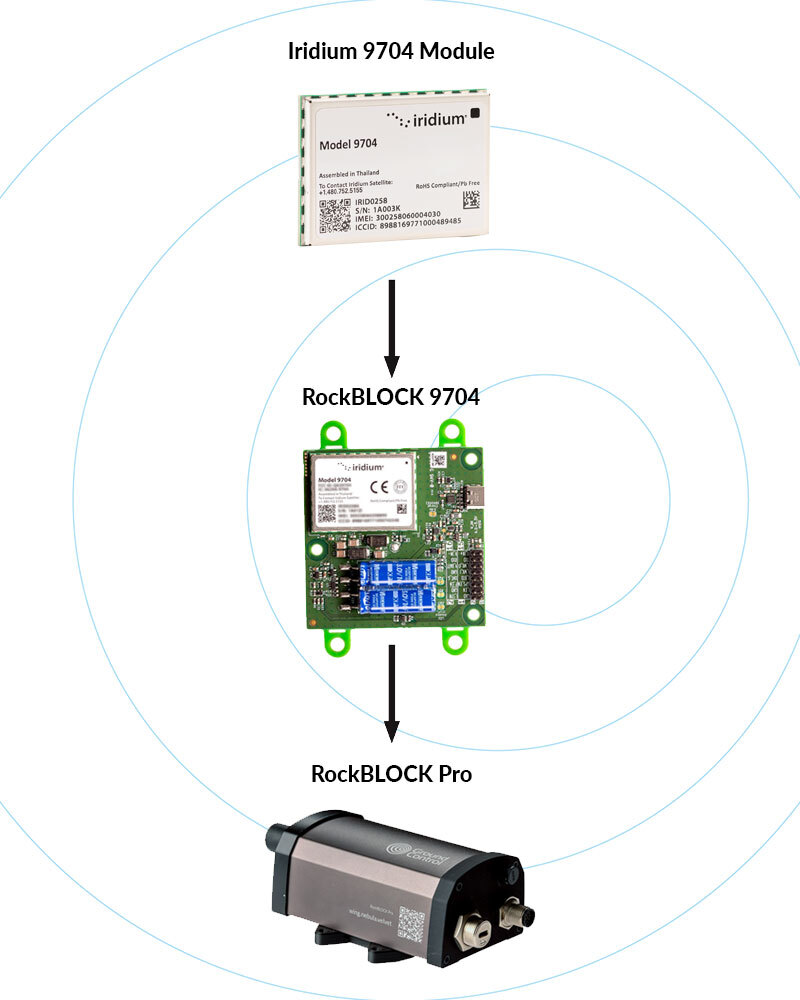
For projects that are likely to move beyond proof of concept into field deployment, we generally recommend looking at our RockBLOCK range as early as possible. RockBLOCK 9704 is designed specifically for integration into IoT products, with a production ready form factor, a lower unit cost than the Iridium developer kit, and a straightforward path from prototype to volume deployment. We’ve also built C, Python and Arduino libraries around the 9704 transceiver, so you can focus on your application logic rather than on low level protocol implementation.
We offer several devices that leverage the new technology, among them RockBLOCK 9704, for IoT applications, and RockBLOCK Pro, which is our multi-purpose, all-weather tracking and IoT device. If you’re unsure which route is best for your project, we’re always happy to talk through the options and trade-offs.
What is Iridium Messaging Transport (IMT)?
Launched in late 2022, IMT is Iridium’s most recent satellite IoT service. It is message-based, which is the most cost-effective and power-economical way to communicate with satellite networks (vs. an IP connection which has a substantial overhead).
With a message-based service, you pay only for the data you choose to transmit, and only when it’s successfully transmitted. However, a drawback of message-based services is that the data has to be reformatted before it reaches your preferred destination; unlike IP-based communication, it isn’t a commonly utilized format.
We built Cloudloop Data to address this challenge. This delivers simplified store and forward IoT messaging between your devices and cloud-based services. Messages can be fanned to multiple endpoints, from cloud providers like Azure and AWS, to IoT dashboards including ThingsBoard and ThingSpeak. You also have the option to consume the decoded data in your own system, through delivery methods including email, MQTT and HTTP webhook.
How to Get Started With the Iridium Certus 9704
We encourage you to contact us to discuss your application; we are Iridium experts, and will provide you with impartial advice on the best airtime, service and hardware to best meet your needs.
We’re responsive, friendly and helpful, and we genuinely love helping people solve their remote connectivity problems, so please get in touch!
*Information on the 9704 is subject to change.
Get in Touch
To get in touch with our team of Iridium experts, please complete the form, email hello@groundcontrol.com, or call us on one of the below numbers.
We will respond to your message within one working day.
UK: +44 (0) 1452 751940
USA: +1.805.783.4600
Monitoring Heavy Equipment Fleets with Satellite IoT Connectivity
Heavy industrial sectors have continued to push the boundaries of what is possible in some of the most remote and challenging locations on the planet. Industry 4.0 has been a transformative technological leap for the traditional industries of mining, agriculture, forestry and construction, bringing new monitoring and automation capabilities to the heavy equipment that these sectors rely on.
In remote mining, farming, forestry or construction sites, an equipment breakdown can cost thousands in downtime. For industries operating far from cellular coverage, ensuring machinery stays operational is a challenge that Satellite IoT is solving with real-time data and monitoring. In this blog, we’ll explore how IoT can enable the transformation of heavy machinery operations, tackling issues like maximizing cost of ownership, preventing downtime, and safety and environmental compliance.
 Heavy Equipment Total Cost of Ownership (TCO)
Purchasing specialized heavy equipment is a significant investment, and in recent years those costs have been steadily climbing as manufacturers pass on their increased raw material and labor costs. The Capital Expenditure (CapEx) involved means that each machine must be operated effectively, efficiently and within agreed tolerance limits to reduce maintenance costs and prevent costly downtime.
The theft of heavy equipment is also commonplace, with over 11,000 incidents of construction theft reported annually in the US and an average average loss of $35,000 to $45,000 per machine. Theft also has a considerable impact on operational timescales, as well as increased costs to replace or lease equipment.

Hazardous Work Environments
With heavy industry recognised as one of the most hazardous places to work (accounting for 63 per cent of all fatal occupational injuries) worksite safety requirements have, quite rightly, been improving on a global scale as Governments enforce a duty of care on industry operators.
However, it remains that despite these improvements, a diminishing workforce is entering these physically challenging industries based in remote locations. This has led to increased Operational Expenditure (OpEx) to attract high quality skilled candidates.

Environmental and Sustainability Targets
Heavy industry accounts for around a third of global energy consumption and emits a quarter of global Greenhouse Gas emissions. Pressures from Governments to hold businesses to account for their carbon emissions and environmental impacts particularly affect these industries.
To meet agreed environmental commitments, operations may need to invest in technology to analyse the worksite’s impact on the surrounding area and consider upgrading heavy machinery to meet emissions targets.

Operational Complexity
Keeping to contractual timescales on any large project involving heavy machinery is ultimately reliant on the equipment being reliable. Delays in specialist heavy equipment arriving on-site and unexpected breakdowns can lead to extensive project delays and wasted resources, all of which lead to an increased OpEx.
Without clearly-defined logistical operation data to coordinate fuel deliveries and material transport, an entire site could come to a standstill.
Connectivity Limitations
Mining, forestry, farming and construction operations often take place in remote locations with limited or no mobile or cable internet coverage. The cost of connecting fixed or cellular telco equipment or laying cables for site connectivity is often very expensive, especially when real-time communication is required for equipment operations or emergency protocols.
The return on investment for installing a dedicated network on a site which may only be operational for 10-15 years is often poor and can become a negative cost.
Six Innovations in Heavy Machinery Operations
Many of the issues facing industries using heavy machinery can be mitigated against by using technology, data and connectivity.
With satellite connectivity more reliable than cellular in remote locations and increasingly more competitively priced, the cost-effectiveness and profitability of mining, forestry, construction and agriculture operations can be significantly improved and many of the key issues facing the industry can be resolved.
1. Predictive Maintenance
Predictive maintenance is a data-driven approach to keeping heavy machinery operating at peak performance and efficiency. By continuously monitoring on-board sensors for feedback on tire wear, oil and fuel consumption, engine temperatures, hydraulic pressures, vibrations, stability and acceleration, machinery can be proactively inspected and maintained according to usage, rather than reactively when a breakdown occurs.
Satellite IoT devices can transmit real time data on machine usage and even enable a shutdown of equipment if thresholds are exceeded. By planning machine maintenance downtime, preventing failures that could lead to accidents, and monitoring machinery operatives driving behaviour, the operation expenditure of the site can be effectively managed and optimized.

The 2021 McKinsey & Company ‘The Internet of Things’ Report highlighted that in the construction sector, employing IoT applications can improve uptime by 30 to 50 percent and increase throughput by 1 to 5 percent.
An additional benefit of monitoring machinery usage is to provide a better return on the CapEx of the machinery when the equipment is sold at the end of the project.
2. Remote Monitoring
Remote monitoring of site personnel and equipment can enable the operational efficiency of worksites, as well as ensure the safety of all workers on-site. With satellite-connected asset trackers on equipment and team members, remote operations centres can use geo-fencing capabilities to keep personnel and heavy machinery apart using safety zone alerts. Should a team member stray into the path of an oncoming vehicle, both the individual and the driver can be alerted to the potential risk.
Satellite IoT enabled sensors can detect worksite ambient conditions to ensure staff and machinery are not exposed to extreme working temperatures, strong winds, excessive rainfall or poor air quality. By encouraging and demonstrating a commitment to site safety, labor recruitment can be improved.
Site operations can be further optimized through monitoring of raw material tanks and silos (e.g. concrete and chemical reagents), machinery fuel consumption, generator fuel levels and final product storage and collection (e.g. metal ores, timber, grain). By integrating satellite IoT sensors across the work site, logistics managers can ensure fuel and raw material deliveries and product collections are planned according to site requirements, reducing bottlenecks and improving operational efficiency.
According to McKinsey and Company, operators which have more than 50% of their vehicle fleet connected to the internet have 23% better financial performance than peers with less than 50% connected. Companies with more than 75% of their fleet connected have 51% better financial performance.
3. Telematics
Monitoring heavy equipment on-site is integral to operational performance, and can also ensure the worksite is remaining committed to its safety, sustainability and environmental goals.
Aside from monitoring onboard sensors for predictive and reactive maintenance, telematics can also improve driver behavior, which in turn can reduce fuel consumption and carbon emissions. Heavy industry equipment by its nature burns fossil fuels and emits greenhouse gases during operation, but there are opportunities to limit these effects.
In the construction industry alone, machinery idle time averages 36% which increases fuel consumption by up to 5%. The biggest operational opportunity for reducing the potential for idling is ensuring vehicles are dispatched to their collection or drop-off locations according to requirements rather than on a continuous cycle, thereby preventing fleet waiting times.
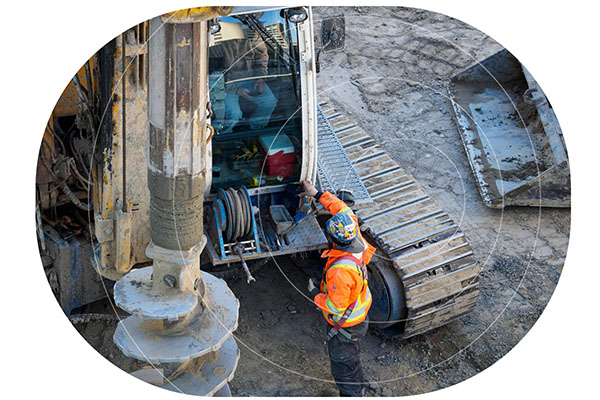
There is also driver behavior to consider, with some operators leaving machinery idling during their break periods. Using real-time telematics, Site Managers can address the machinery operator actions immediately and encourage them to turn the machine off when not in use.
Through these two simple actions it is possible to reduce fuel costs, decrease carbon emissions, limit noise pollution and improve worksite air quality. When industry profit margins are challenging, evidence has shown that operators who lag behind their peers in reducing downtime are losing future business, wasting time and money, and increasing their ecological impact on the environment.
4. Theft Prevention
Heavy equipment theft costs the USA construction and agricultural industry an estimated $300 million to $1 billion annually, and is especially prevalent during the National Holidays of Labor Day, Memorial Day, Independence Day and Thanksgiving when worksites are closed and machinery is left unattended.
Satellite-connected video surveillance can enable real-time monitoring and recording of remote worksites and storage areas to protect both staff and equipment from unauthorized access.
Heavy equipment can be fitted with discreet satellite asset trackers which can alert the operations team when equipment has moved out of a geofenced area or the machinery is being operated outside of normal worksite hours. Satellite assets trackers are especially effective at tracking stolen heavy machinery as they can keep connected across borders, and in the case of the Iridium network anywhere on Earth. Improvement in asset tracking capabilities has led to an increase in machinery recovery rates from 5% to 20% in the last 15 years.
5. Machine Learning and AI
Incorporating AI and machine learning capabilities into the mining, forestry, agriculture and construction industry has the potential to transform how these sectors address the challenges of CapEx and OpEx, as well as their environmental impacts. By leveraging data-driven analysis, businesses can optimize workforce and heavy machinery productivity, identify opportunities for fuel savings and emission reduction, limit raw material wastage and improve final product quality and volumes. Insights from these analyses can be replicated across multiple work site locations and integrated into cost projections for future projects, driving efficiency and sustainability.

Heavy equipment can be fitted with discreet satellite asset trackers which can alert the operations team when equipment has moved out of a geofenced area or the machinery is being operated outside of normal worksite hours. Satellite assets trackers are especially effective at tracking stolen heavy machinery as they can keep connected across borders, and in the case of the Iridium network anywhere on Earth. Improvement in asset tracking capabilities has led to an increase in machinery recovery rates from 5% to 20% in the last 15 years.
6. Autonomous and Remote Control Heavy Machinery
One of the most significant challenges facing the mining, agriculture, construction, and forestry industries is an aging workforce, with many skilled workers nearing retirement and fewer new recruits stepping into these roles. Technological advancements in developing and implementing autonomous and remote operation of heavy equipment are helping to manage labor shortages while enhancing productivity and safety.
Autonomous Haulage Systems (AHS) are already in use across large-scale mining operations, enabling unmanned dump trucks to optimize hauling cycles, improve payload accuracy, and increase operational efficiency. However, not all scenarios are suitable for full automation, which is where remote control solutions come into play.
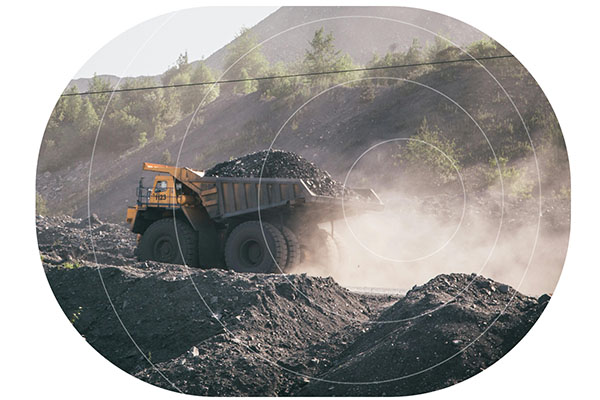
In hazardous environmental conditions or working on difficult or sloping terrain, controlling heavy machinery via remote control allows operators to manage equipment from a safe distance nearby or within a central operations hub. This minimizes risks to personnel while maintaining operational efficiency.
Both autonomous and remote-controlled systems rely on a continuous flow of real-time data, including video feeds and telemetry data, to ensure precise operation and avoid collisions. Satellite connectivity provides reliable and seamless data exchanges in remote locations, enabling the integration of automation and remote operation of heavy machinery in complex environments.
Satellite IoT Solutions for Heavy Machinery Monitoring
Satellite IoT is supporting innovation within the heavy machinery industry, addressing critical challenges such as remote connectivity, safety, and operational efficiency. By leveraging real-time data through predictive maintenance, telematics and remote monitoring, businesses can reduce costs, improve productivity, and meet stringent environmental goals. As automation and AI continue to transform the sector, embracing satellite-enabled solutions is essential for staying competitive in an increasingly connected world.
Get in Touch
Contact us to discover how our satellite IoT solutions can drive efficiency and profitability for your heavy machinery fleet.
With 20 years of experience, we can help you make the best choices based on your requirements.
Please call us on us on +44 (0) 1452 751940 (Europe, Asia, Africa, Oceania) or +1.805.783.4600 (North and South America); email hello@groundcontrol.com, or complete the form.
Protecting Bats at Wind Turbines: How Technology Is Reducing Wildlife Impact [Infographic]
As vital as wind energy is in reducing reliance on fossil fuels, it has created unintended challenges for wildlife, particularly bats. A 2021 survey found that 40% of people fear bats, though they play an essential role in pest control and pollination. By consuming insects, bats save U.S. agriculture billions of dollars in natural pest control each year, a service valued between 3.7 and 53 billion dollars. They also help pollinate crops like bananas, mangoes, and agaves (the central ingredient in tequila!), making them critical to both ecosystems and the economy.
Unfortunately, the growing number of wind turbines poses a real risk to bats. Tens, and possibly hundreds of thousands of bats are estimated to die each year due to wind turbines, with tree bats — species that migrate and roost in trees — being the most affected. These bats may confuse the towering structures with trees, bringing them dangerously close to the blades. While turbines can be temporarily slowed down to protect bats, this approach reduces the amount of clean energy produced, costing operators up to 3.5% of their annual output.
A more sustainable solution involves new technology that deters bats using ultrasound. Bats rely on echolocation to navigate, and the ultrasonic deterrent emits sound waves from the turbine that cause bats to alter their flight path, reducing collisions. The system monitors its own health to ensure reliability, and for remote locations, Satellite IoT transmits status data, ensuring operators can maintain its functionality, and demonstrate performance to regulatory authorities if needed.
Early results from this deterrent system show a 50-67% reduction in bat fatalities, with even greater results when combined with low-level curtailment. With continued innovation, wind farms can operate more harmoniously alongside bat populations, reducing wildlife impact while contributing to a greener energy future.
Enjoy our infographic, and please share to spread the word of this incredible innovation!
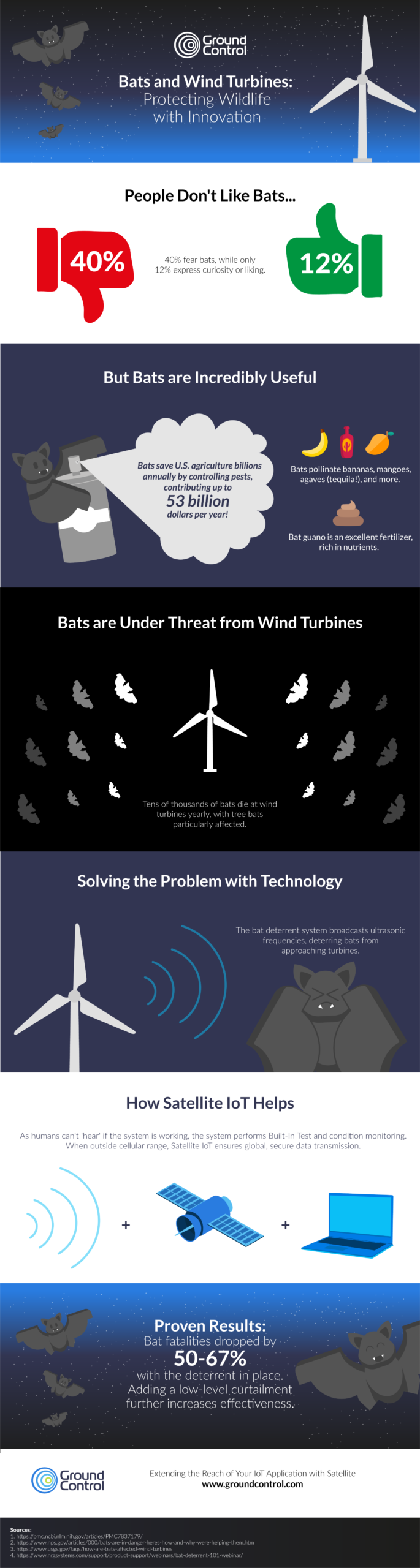
Can we help you with a remote IoT challenge?
We are specialists in remote connectivity. We work with several tried and trusted satellite network operators to deliver our customers with reliable, cost-effective solutions for communicating with your remote assets and sensors.
We’ve been doing this for more than 20 years, so if you’d like expert, impartial help with your IoT application, please email hello@groundcontrol.com, or complete the form.
Drones in Modern Warfare: Enhancing UAV Capabilities with Satellite Connectivity
Drones, or Unmanned Aerial Vehicles (UAVs), have become an integral part of modern military operations. Initially developed for reconnaissance and surveillance, drones have evolved into versatile platforms capable of executing various missions, from intelligence gathering to precision strikes. However, the full potential of UAVs is realized when enhanced with satellite connectivity, removing the limitations of traditional line of sight or terrestrial based communication, and enabling real time communication and coordination across vast distances and hostile environments.
While satellite connectivity has enhanced UAV capabilities, the utilization of UAVs in warfare is nothing especially new, and has instead, evolved significantly over the past century. Early concepts of UAVs emerged during World War I, with the development of rudimentary unmanned aircraft such as the “Kettering Bug”, – a drone prototype designed purely for bombing missions. However, these early models were not widely operational.
It wasn’t until World War II that UAV technology saw further development, particularly with the creation of the German V-1 flying bomb – essentially an early form of a cruise missile. The Cold War era spurred advancements in UAVs, primarily for reconnaissance purposes and the U.S. developed drones like the Ryan Firebee, which were used for surveillance during the Vietnam War.
The 1990s marked a turning point in UAV usage, particularly during the Gulf War, when drones like the RQ-2 Pioneer provided critical intelligence. Then in the early 2000s, UAVs like the MQ-1 Predator and MQ-9 Reaper – American remotely piloted aircrafts – gained worldwide attention for their role in counterterrorism operations. Powered by global satellite connectivity, these drones could carry out targeted strikes with high precision, far out of the reach of cellular and telecommunication networks. Step forward into 2024, and the role of UAVs in modern warfare has only continued to advance.
As the roles of UAVs broaden from strike and EW to logistics and ISR, the conversation is increasingly about how they’re used to protect people and infrastructure. Alongside the well known offensive missions, we’re seeing rapid growth in defensive and humanitarian applications enabled by resilient satellite links. Let’s explore some of these key roles in more detail.
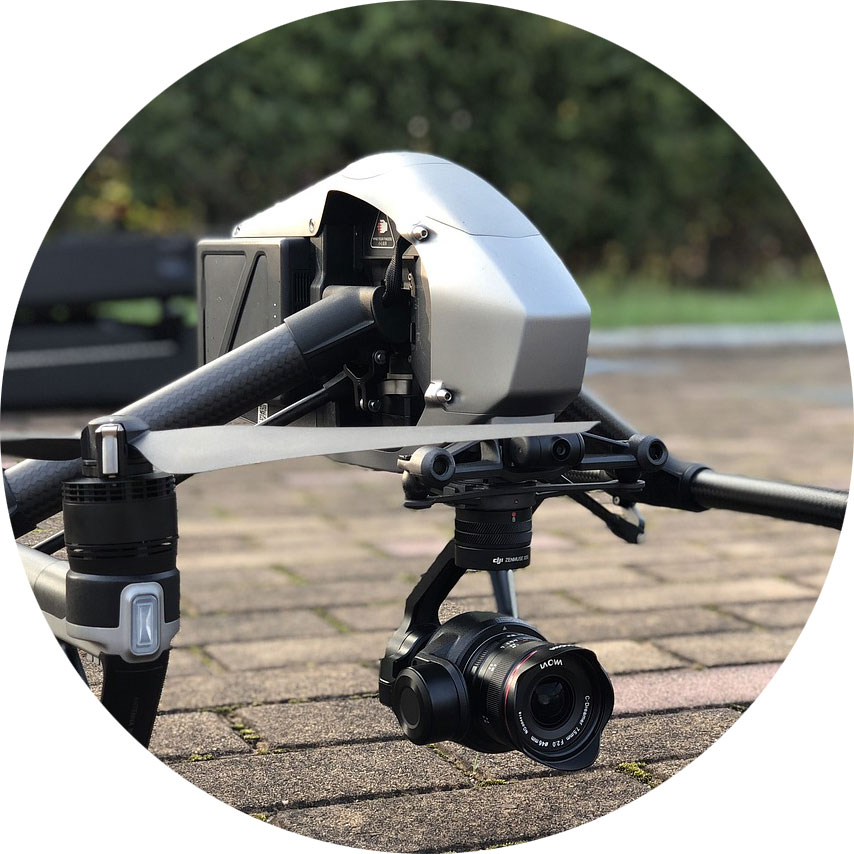
Surveillance and Reconnaissance
Drones are extensively used for Intelligence, Surveillance, and Reconnaissance (ISR) missions. UAVs have the ability to capture real time video and image data, which is transmitted back to command centers for analysis, without the need for soldiers to be physically present in hostile or rugged environments. The drones often operate at high altitudes, across multiple geographies.
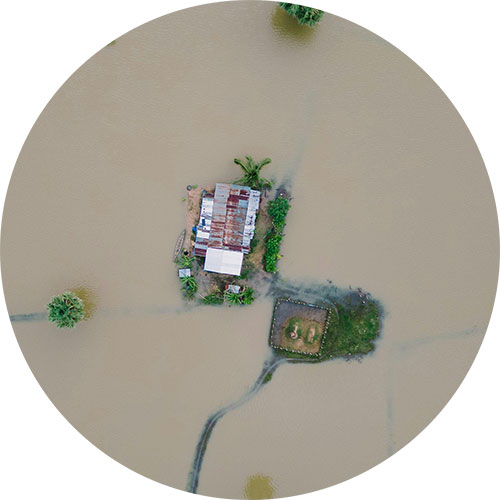
Search and Rescue
In post-conflict or disaster scenarios, UAVs can locate survivors and assess damage in areas too dangerous or inaccessible for physical teams. This can prevent further human loss and lead to the identification, location and administration of aid to ground-based defense teams. Drones have also been know to guide troops to safe areas, and away from enemy fire.
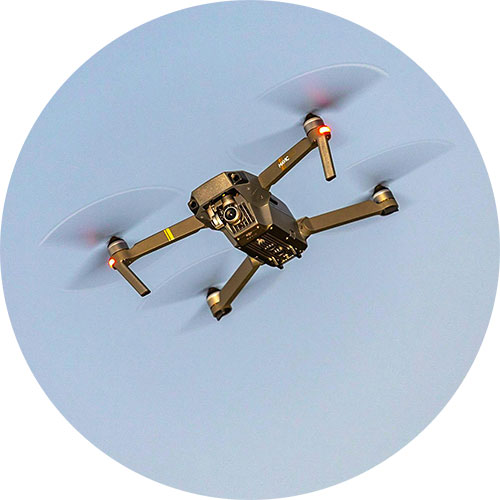
Aid and Supplies
UAVs can be adapted for resupply missions in hard to reach areas and have been deployed to help soldiers on the battlefield to receive essential supplies like food, water, and medical equipment. This capability becomes especially crucial in situations where ground convoys may face delays due to hostile terrain, enemy activity, or other logistical challenges.

Precision Strikes
UAVs equipped with precision-guided munitions allow military forces to carry out highly targeted strikes with minimal collateral damage. Their precision has made them instrumental in counter-terrorism operations and eliminating high-value targets while protecting civilian lives. Further, the remote strike action removes the need for ground forces.

Electronic Warfare
UAVs fitted with highly sophisticated sensor systems are designed to gather signals intelligence (SIGINT) by detecting and analyzing enemy radio transmissions, as well as electronic intelligence (ELINT) by monitoring radar emissions. This data can provide comprehensive insights into the structure, capabilities, and operations of enemy networks.
Satellite Devices Best Suited for Military Drone Applications
Satellite connectivity is a reliable, secure means of communicating with UAVs far beyond the reach of terrestrial networks. These devices are our top picks for command and control, piloting BVLOS, and transmitting real time video footage from UAVs, for civil and defensive applications only.
Simple Command and Control with RockBLOCK 9603
Command and control of UAVs requires stable, low latency communication channels.
RockBLOCK 9603 enables basic two way communication over the Iridium satellite network, allowing operators to send flight commands or adjust mission parameters approximately once every 10-15 seconds, regardless of their geographical location.
For example, RockBLOCK 9603 could send positional data, informing operators of any need to make altitude adjustments or course corrections during a mission. This level of sophisticated satellite-enabled C2 is essential for UAVs operating in areas where ground communication networks are compromised or unavailable.
RockBLOCK 9603 is especially suited to applications where space is at a premium. It’s designed to make adding Iridium Short Burst Data (SBD) satellite connectivity super easy.

Piloting BVLOS with RockREMOTE Mini OEM
One of the most significant challenges in drone warfare is piloting UAVs beyond visual line of sight (BVLOS) – a necessity for long range missions or operations in hostile areas.
Solutions like the RockREMOTE Mini OEM provide satellite-based connectivity designed for such operations involving on the move assets.
RockREMOTE Mini OEM is lightweight, designed to draw as little power as possible, and harnesses the Iridium Certus 100 satellite network service, delivering virtually real time IP connectivity.
This technology allows for piloting and navigation adjustments, crucial for UAVs conducting missions deep into enemy territory. Furthermore, satellite-based communication ensures the operator maintains constant control over the UAV’s flight path, even when thousands of kilometers away.

Capturing Real Time Video Footage with RockREMOTE Rugged
Arguably, one of the most critical functions of UAVs in modern warfare is real time video reconnaissance.
RockREMOTE Rugged coupled with Videosoft video compression technology facilitates the transmission of high definition video feeds from drones to ground stations, enabling military forces to monitor enemy activities and gather intelligence without delay. This helps military operators to respond to threats or gather information promptly, enhancing battlefield awareness and operational decision making.
RockREMOTE Rugged does not require antenna pointing, and even with a poor or changing view of the sky, RockREMOTE Rugged can reliably and securely transfer data in close to real time via the Iridium satellite network.
Selecting the Right Satellite-Enabled Solution
 RockBLOCK 9603 RockBLOCK 9603
|
RockREMOTE UAV OEM
|
RockREMOTE Rugged
|
|
|---|---|---|---|
| Size | 45 x 45 x 15 mm | 175 x 60 x 37 mm | 250 x 97 x 61 mm |
| Weight | 36 g | 287 g | 1.2 kg |
| Power | Max 450mA | <30mW (sleep), <0.25W (idle), <7.5W (average transmit) | 0W (sleep), 5W (idle), 9W (average transmit) |
| Satellite Service | Iridium Short Burst Data (340 bytes ↑ 270 bytes ↓ per message) | Iridium Certus 100 (22/88 Kbps) + IMT (100 kB per message) | Iridium Certus 100 (22/88 Kbps) + IMT (100 kB per message) |
| Interfaces | Molex PicoBlade 1.25mm pitch | Ethernet (available on pin out), Serial RS232, RS485, GPIO (2xI, 2xO) | Ethernet, Wi-Fi, Serial RS232, RS485 |
| Antenna | Built in 1621 Mhz tuned patch antenna (or use optional SMA connector for external antenna) | External – various approved options | External – various approved options |
| Hosted Applications | |||
| Ideal For | Simple Commands / Failover Comms | Piloting BVLOS; Sending Compressed Images | Transmitting Real Time Video Footage |
| View Product | View Product | View Product |
Edge AI, BVLOS, and the Next Wave of UAV ISR
UAV use is expanding across military missions, including kinetic applications; however, the fastest day to day gains we see are in defensive ISR and mission support; secure C2 beyond line of sight, wide area monitoring, and comms relay. Expect more drones running AI at the edge to spot “needles in the haystack” (changes on a perimeter, vessels of interest, wildfire flare-ups) before sending only the useful bits over constrained links, cutting bandwidth while speeding decisions. That’s already a theme in ISR tooling and video workflows.
Connectivity will remain the backbone. Iridium-powered BVLOS links, facilitated by devices like the RockREMOTE Mini OEM, are being adopted to extend C2 and push telemetry/video from places cellular can’t reach, central to safe separation concepts and multi-aircraft operations.
Swarm and multi-UAV teaming are also trending for search & rescue, disaster assessment, and wide area reconnaissance, using multiple small platforms to map faster, hand off targets, and maintain comms. Agencies are likewise exploring comms-relay roles so one asset can keep others connected in difficult terrain.
Looking ahead, one area we’re excited about is humanitarian demining. Drones can scan from above, use onboard AI to flag likely contamination, and then alert clearance teams over satcom. As those edge models improve, triage gets quicker and tasking more precise.
In short, whether it’s low rate C2, BVLOS piloting, or near-real time ISR video, pairing UAVs with reliable satellite links is unlocking new defensive capabilities, and doing it in ways that help reduce risk to people on the ground.
Can we help?
Working on UAV command and control, BVLOS piloting, or real time ISR video?
We can help you choose and integrate the right Iridium-powered solution, from RockBLOCK for simple C2 to RockREMOTE for IP video, so you get reliable, global connectivity faster. We support civil and defensive applications; tell us about your mission profile and we’ll recommend a build that fits.
Complete the form or email hello@groundcontrol.com and we’ll get back to you within one working day.