Topic: News
First Look at the New Iridium 9604 Module: What’s Changed from the 9603?
Iridium have just announced that they’ll launch their latest satellite IoT transceiver, the Iridium 9604, in June 2026. We’re exploring how this differs from its immediate predecessor, the 9603, and its “big brother”, the Iridium Certus 9704 module.
What is the Iridium 9604 module?
Iridium 9604 is a satellite IoT transceiver that utilizes Iridium’s Short Burst Data (SBD) service to send small volumes of data from remote applications operating outside cellular coverage.
In addition to SBD the 9604 module can also transmit using LTE-M cellular connectivity, making it ideal for mobile applications that cross in and out of cellular coverage, or where cellular coverage is unreliable, so a satellite failover is beneficial. The device doesn’t force automatic switching; it’s up to application developers to enable either simple failover rules or more advanced routing logic.
The 9604 module also features integrated GNSS (multi-constellation: GPS/GLONASS/Galileo/BeiDou), making it well-suited for tracking as well as IoT applications.
What Applications are Suited to the 9604?
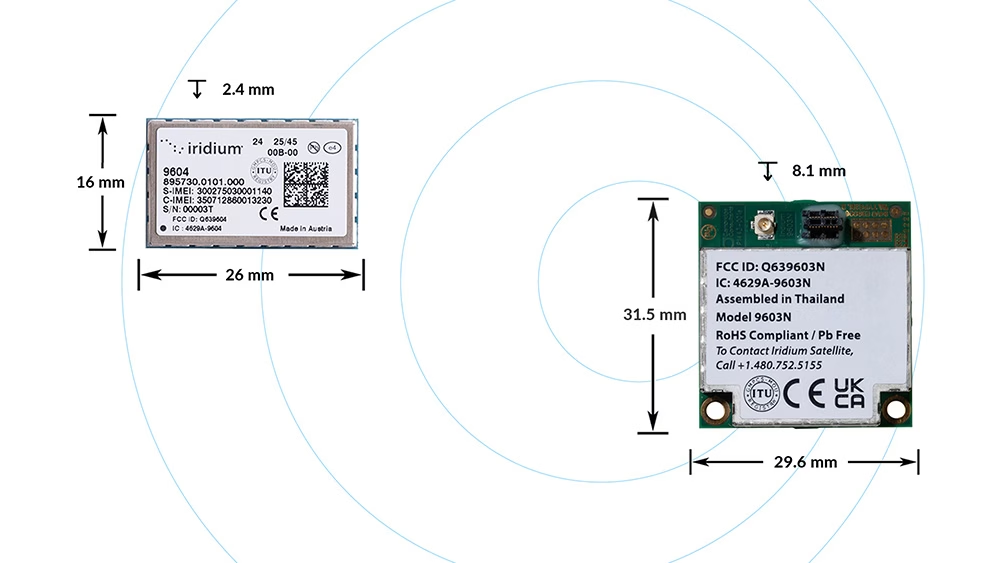
The new 9604 module is extremely small, measuring just 16 x 26 x 2.4 mm; the weight hasn’t yet been released but we can assume it will be similarly tiny. And while we don’t yet have detailed specifications,, Iridium have stated that it is designed for ultra low power applications.
Any mobile remote IoT application constrained by size, weight and power – e.g. drones/UAVs, animal tracking, data buoys, autonomous machinery – will benefit from the 9604’s form factor and dual-mode satellite/cellular capabilities.
How Does the 9604 Differ from the 9603 Transceiver?
- Connectivity: the 9603N uses Iridium SBD (340 bytes transmit; 270 bytes receive), as does the 9604, however the 9604 also adds LTE-M connectivity.
- Tracking: the 9603N needs to be paired with a separate GNSS receiver to transmit a location, whereas this capability is built into the 9604.
- Form factor: the 9603N measures 31.5 mm × 29.6 mm × 8.1 mm vs. the 9604’s 16 x 26 x 2.4 mm.
Will it be Easy to Upgrade from 9603 to 9604?
We anticipate a lot of teams will want to keep their familiar SBD workflow, but add cellular opportunism. We will be available to help make this migration process simple. And for teams outgrowing SBD message sizes, we can help make the jump from SBD to IMT.
How Does the 9604 Differ from the 9704 Transceiver?
Iridium relatively recently launched the Certus 9704 satellite IoT transceiver (December 2024), and the 9604 is not a direct competitor or successor to this device. 9604 is about hybrid connectivity for small messages, while 9704 is about bigger payloads.
The 9704 utilizes Iridium Messaging Transport (IMT), which will transmit up to 100 KB per message; up to the challenge of sending aggregated gateway data, audio, and compressed images. The 9604 uses Short Burst Data (SBD), which is intended for extremely small messages (340 bytes transmit / 270 bytes receive).
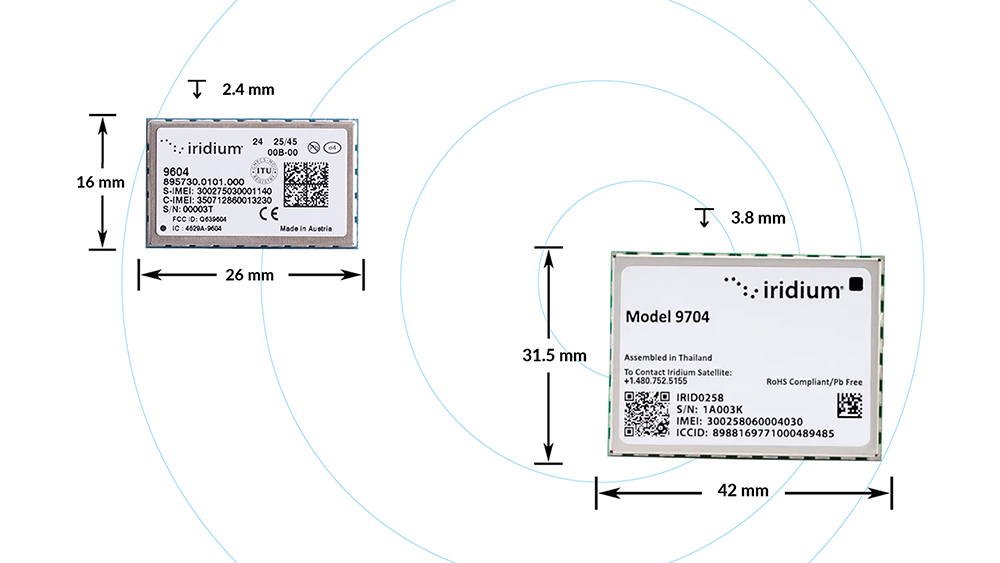
The 9704 module is larger – 31.5 mm × 42.0 mm × 3.8 mm – and does not have built-in GNSS or cellular capabilities; it is intended for fully remote deployments where you still need meaningful data volume.
Choose the 9604 if you’re sending small messages frequently; if you’ll benefit from its hybrid connectivity, and if your goal is optimized cost/performance in mixed coverage regions.
Which Devices Utilize the 9604 Transceiver?
We’re part of Iridium’s beta program, leveraging our decades of experience working with Iridium modules to build customer solutions that make it easy to benefit from the 9604’s extra capabilities – hybrid connectivity, low power consumption, and a tiny form factor.
Both the bare module and the Ground Control solutions will be integrated into Cloudloop, our cloud-based, API-first IoT platform which manages subscriptions, devices and data. Cloudloop Data is particularly useful for systems integrators, as it seamlessly routes uplinks and downlinks to your HTTPS or MQTT endpoint, and exposes a REST API and dashboard for device metadata, transmission status, and message history.
How to Get Started
We encourage you to contact us to discuss your application; we are Iridium experts, and will provide you with impartial advice on the best airtime, service and hardware to best meet your needs.
Fill in the form or email hello@groundcontrol.com, and we’ll reply within one working day.
Ground Control Joins CLS Group to Build a Connected, Sustainable Future
Ground Control has joined the CLS Group, a global leader in satellite-based monitoring and connectivity. Together, we bring decades of experience and a shared commitment to connecting people, places, and assets in the world’s most challenging environments.
CLS has been developing space-based technologies for nearly forty years. Their work helps governments, scientists, and industries protect and manage the planet’s resources. With 1,100 people across 35 locations worldwide, CLS combines satellite data, IoT connectivity, and advanced analytics to deliver insights that guide critical decisions.
Ground Control designs rugged devices like RockBLOCK 9704 and RockREMOTE Mini, and powers them with Cloudloop, our secure platform for managing devices and data. Our customers depend on us for mission-critical communications in sectors ranging from renewable energy to disaster response. By joining CLS, we gain access to greater resources and reach, enabling us to accelerate innovation and serve our customers better.
This partnership also strengthens our combined offering. Together, we can provide truly end-to-end solutions: hardware, global connectivity, and the data platforms needed to turn information into action. For example, a single project might now use CLS satellites to track environmental changes, Ground Control hardware to gather sensor data, and Cloudloop to manage and deliver that data to decision-makers.
“Joining CLS is a natural evolution for Ground Control,” says Alastair MacLeod, CEO of Ground Control. “Together, we offer end-to-end solutions – hardware, connectivity, platform, and support – with enhanced global reach through local representation and shared environmental values.”
Stéphanie Limouzin, President of CLS Group, adds, “Combining CLS’s space-based IoT services with Ground Control’s robust hardware and cloud platforms makes perfect sense. This move will allow us to better serve our clients with enhanced proximity, agility, and a broader portfolio of tools adapted to their operational environments.”
Ground Control will continue to operate under its own brand, with the same focus on reliable connectivity and customer service. With CLS’s global scale and environmental mission behind us, we’re ready to create new opportunities for our customers and help shape a more connected, sustainable future.
Ground Control was advised by HCR (legal) and IAGC (financial), while CLS was advised by Capital Law (UK) and Meister Seelig & Fein (USA).
About CLS Group
CLS is a global company dedicated to using space-based technologies to understand and protect our planet. Headquartered in Toulouse, France, CLS has been a pioneer in satellite-based monitoring and connectivity for nearly forty years. With more than 1,100 people across 35 locations worldwide, the company works at the intersection of science, technology, and sustainability.
CLS focuses on five key areas: environmental monitoring, maritime surveillance, sustainable fisheries management, mobility, and energy and infrastructure monitoring. Every day, CLS processes vast amounts of satellite and IoT data to help governments, NGOs, and industries make informed decisions that balance operational needs with the stewardship of natural resources.
Get in touch
Ground Control has entered an exciting new chapter as part of the CLS Group, and we look forward to sharing more about what this partnership will mean in the months ahead. If you have questions about the news, our solutions, or how we can support your organization, we’d love to hear from you.
Use the form below to get in touch. You can also email us directly at hello@groundcontrol.com – our team is ready to help.
Affordable BVLOS Drone Connectivity: Introducing Iridium Certus 100 Airtime Plans for Drone Operators
Flying drones Beyond Visual Line of Sight (BVLOS) is the new frontier for commercial and industrial operations. Whether you’re surveying expansive agricultural lands, monitoring critical infrastructure, or conducting environmental research in remote regions, reliable connectivity is the linchpin for mission success. Recognizing this need, we’re excited to unveil Iridium Certus 100 aeronautical airtime plans tailored specifically for drone applications.
Why Satellite Connectivity Matters for BVLOS
Traditional RF and cellular networks may falter once a drone ventures beyond visual range, leading to dropped links, latency spikes, and potential safety hazards. To mitigate these risks, many aviation authorities now mandate a secondary communication channel to serve as a failsafe if the primary link fails. For example, the EASA requires redundant communication systems for BVLOS flights to ensure operational resilience, while the UK Civil Aviation Authority’s guidance similarly calls for dual-link architectures as part of any BVLOS operational authorization. In the United States, the FAA’s UAS BVLOS Aviation Rulemaking Committee report recommends demonstrating multiple active command-and-control links – or an automated failover scheme combining cellular, radio, and satellite – to secure BVLOS waivers.
Why Iridium Works Best
Satellite networks offer coverage with no dependency on terrestrial infrastructure, but that doesn’t mean all satellite networks are the same. In this context, low latency – the time it takes for you to send a command to the drone, and for it to receive it and respond – is critical, and therefore, satellite networks in Low Earth Orbit (LEO) are preferable. This is simply because they are closer to Earth than networks in Geostationary orbit, and therefore the round trip of data takes less time.
Iridium’s satellite network is in Low Earth Orbit, and further, it utilizes the L-Band radio frequency. L-Band signals are extremely reliable, and penetrate poor weather conditions with ease; ideal for mission-critical applications where you can’t afford to lose contact with your asset.
With Iridium Certus 100, operators enjoy 22/88 Kbps of bi-directional data, low latency, and complete pole-to-pole coverage, so your drone’s telemetry, sensor data, and command/control signals remain rock solid. It can be used as a primary or failover means of communication.

Our new airtime plans capitalize on our decades-long partnership with Iridium to provide flexible data bundles that scale from single drone deployments to entire fleets. Whether customers prefer monthly subscriptions, pay-as-you-go usage, or annual commitments, each plan features transparent rates, with volume discounts available for larger scale operations.
Customers who already own an Iridium Certus 100-compatible device can simply activate their chosen plan through Ground Control, eliminating the need for additional purchases or complex installation processes.
Recommended Hardware for IP Over Satellite
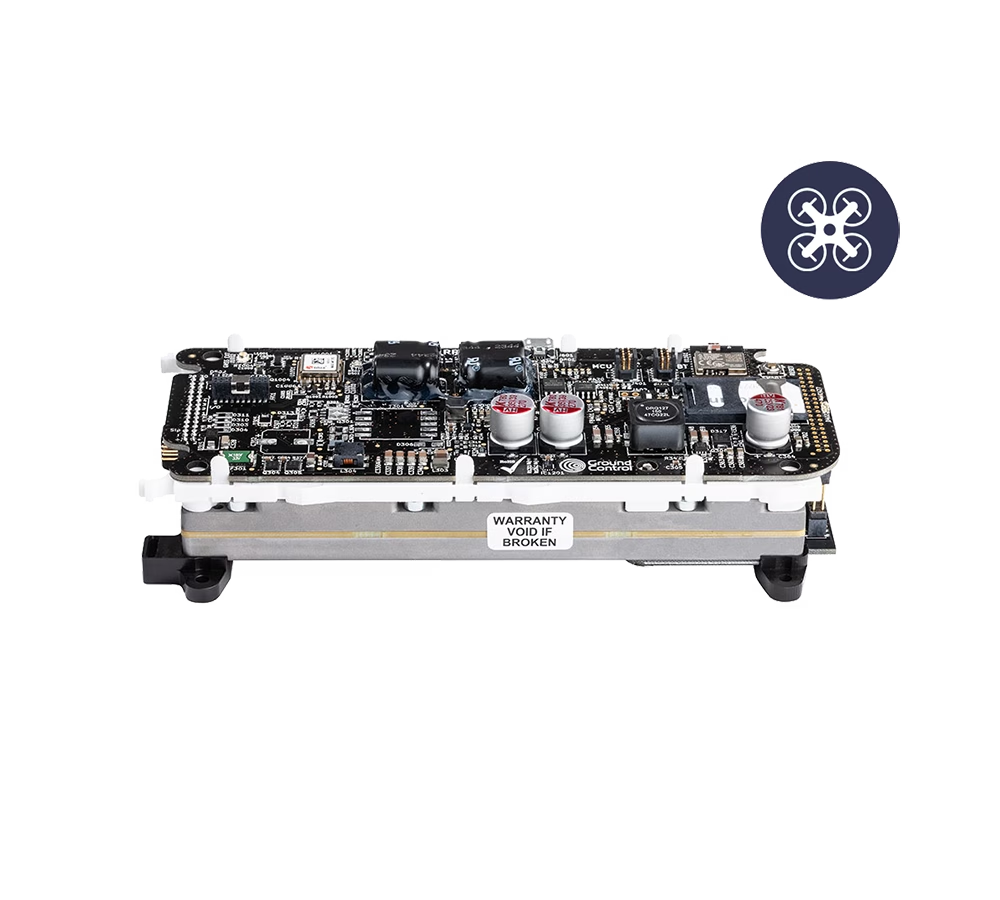
For those seeking an out-of-the-box solution, RockREMOTE UAV OEM provides direct board-level integration of the Iridium Certus 9770 module in a compact, 288 g form factor. Optimized for low power consumption, all non‑RF connections (Ethernet, serial, GPIO) are routed through a single 30‑way header, and installation is as simple as four screw mounts – no external gimbals or moving parts required.
Configuration and firmware updates are managed over Bluetooth LE via a companion app or API, and operators only need to attach the specified MMCX and U.FL antennas for Iridium and GNSS. Rated for operation from –40C to 70C and 95% humidity, RockREMOTE UAV OEM ensures mission-critical stability and performance across extreme environmental conditions.
Real-world use cases for these new airtime offerings span multiple industries. In agriculture, farmers can obtain real-time soil and crop health data from remote fields, optimizing inputs and maximizing yields. Renewable energy and utilities companies can conduct continuous inspections of pipelines, power lines, and wind turbines, preventing costly downtime and enhancing safety.
During emergency response missions, drones equipped with Iridium Certus 100 connectivity can relay critical situational data from disaster zones or search and rescue sites, accelerating decision-making when every second counts. Researchers performing environmental monitoring can gather long-range data on wildlife habitats, forestry conditions, and ocean patterns, undeterred by geographic isolation. And for jurisdictions that require communication redundancy, our plans serve as a reliable secondary link, providing an essential failsafe that keeps aircraft controllable even if the primary link is disrupted.
With affordable, reliable satellite connectivity and built-in redundancy now within reach, your BVLOS aspirations can become reality. Ground Control’s UAV-specific Iridium Certus 100 airtime plans can help extend your operational envelope, enhance safety, and unlock new business opportunities.
Would You Like to Know More?
If you’d like to get a quote for your UAV airtime, please complete the form, or email hello@groundcontrol.com, and we will respond within one working day.
It’s helpful if you can tell us more about your application, i.e. what sort of function do you need to perform (command and control in real-time, or the transmission of telemetry on demand, for example); any SWaP constraints; where you’ll be operating the drones etc.
RockBLOCK Pro is the World’s First Certified Iridium Certus 9704 Device
Ground Control has launched the RockBLOCK Pro, the first certified Iridium Certus 9704 device available through an Iridium partner. This rugged satellite IoT gateway utilizes the new Iridium Certus® 9704 module and Iridium Messaging Transport (IMT). The RockBLOCK Pro delivers enhanced performance compared to earlier RockBLOCK versions, and features faster speeds, substantially increased message size capabilities, and improved power efficiency. This makes it well-suited for critical remote operations.
RockBLOCK Pro utilizes the Iridium 9704 module to send bi-directional messages from 25 bytes up to 100 KB, supporting aggregated sensor data, imagery and audio clips while maintaining end-to-cloud latency under 10 seconds. Compared to the Iridium 9602 and 9603 modules, the 9704 achieves up to an 83% reduction in idle power consumption, making it the most power-efficient Iridium module ever.
Engineered for harsh outdoor and industrial use, RockBLOCK Pro is rated IP66 and can be specified with either the built-in high-gain antenna or an external antenna. Full support for the legacy Iridium AT command set ensures a drop-in upgrade path for existing SBD deployments, with no need to alter host firmware or development toolchains.
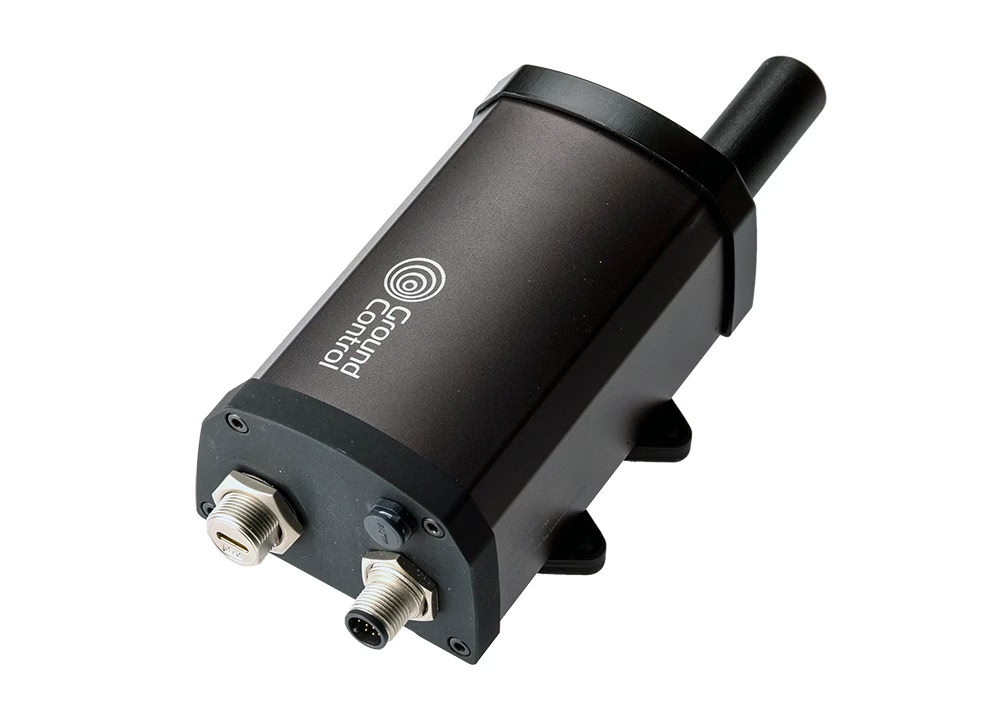
For seamless end-to-end messaging, RockBLOCK Pro integrates tightly with our Cloudloop Data platform, which delivers messages via direct cloud-platform integrations, including AWS, Azure and Google Cloud environment, or can be routed via HTTP webhooks, MQTT streams, or even email. Onboard GNSS, Bluetooth, and configurable digital I/O further expand its utility in telemetry, asset tracking, environmental monitoring, and autonomous applications.
Alastair MacLeod, CEO of Ground Control, said: “RockBLOCK Pro redefines the satellite IoT gateway category by bringing together power efficiency, rugged design, and data capacity in a compact footprint, unlocking smarter, more responsive systems in the world’s most remote places. As the first partner to bring a certified Iridium Certus 9704 product to market, we’re proud to lead the next chapter of global IoT.”
“The Iridium Certus 9704 packs a lot of power in a compact module, making it ideal for IoT applications that require real-time data analysis, analytics and automated decision-making,” said Tim Last, executive vice president of sales and marketing, Iridium. “Ground Control has been a trusted Iridium partner for many years, with a proven track record of delivering high quality developer hardware built on Iridium technology. We’re excited to see them leading the way with innovative solutions that bring high performance satellite IoT connectivity to the most remote parts of the world.”
Get in touch
Discover if the RockBLOCK Pro is the right device for your remote connectivity needs.
To learn more or to discuss your deployment, please complete the form.
Globalstar Tracking Devices Now Integrated with Cloudloop
Ground Control’s tracking platform, Cloudloop, now supports Globalstar’s GSat Solar and SmartOne C tracking devices. The integration provides a budget friendly satellite tracking option for businesses and organizations that need occasional location updates without the expense of more advanced two-way communication systems.
This integration expands the range of options available through Cloudloop Tracking, allowing users to deploy low power, long lasting satellite tracking solutions that are ideal for monitoring assets in remote or off grid locations where cellular coverage is unreliable or unavailable.

Globalstar operates a constellation of Low Earth Orbit (LEO) satellites, providing cost-effective tracking solutions for businesses. Devices transmit location and status updates to the satellite network at predefined intervals, and in the case of the selected hardware, only send data one way. While this has some limitations (they’re not suitable for real-time tracking of high value assets), it means the devices are significantly cheaper than two-way communication alternatives. They also draw very little power, and can run for years without maintenance, making them ideal for remote asset tracking. Their compact size and flexible mounting options also make Globalstar trackers easy to install on various assets.
Globalstar’s services are regionally available, mainly in North America, Europe, and parts of South America (see coverage map).
Why Choose Globalstar for Asset Tracking?
Lower Cost, Simple Tracking
Globalstar’s tracking solutions provide a cost-effective way to monitor assets that do not require real-time oversight. If you need to be 100% certain of an asset’s position at all times or require two-way messaging, other solutions (like Iridium-based tracking) will be more suited. However, compared to premium two-way satellite tracking solutions, Globalstar devices significantly reduce tracking expenses while still offering a reliable means of monitoring asset movements. For businesses managing large fleets of lower-value assets, the cost savings can be substantial.
Battery Powered and Compact
Both the GSat Solar and SmartOne C are designed for easy deployment without the need for a constant power source. The GSat Solar harnesses solar energy, making it an excellent choice for long-term, low-maintenance tracking. The SmartOne C, on the other hand, operates on replaceable batteries, ensuring flexibility for different use cases where solar charging may not be practical or possible. Their compact form factors also make them easy to install on a variety of asset types, such as shipping containers, vehicles and even animals.
Globalstar Tracking Devices
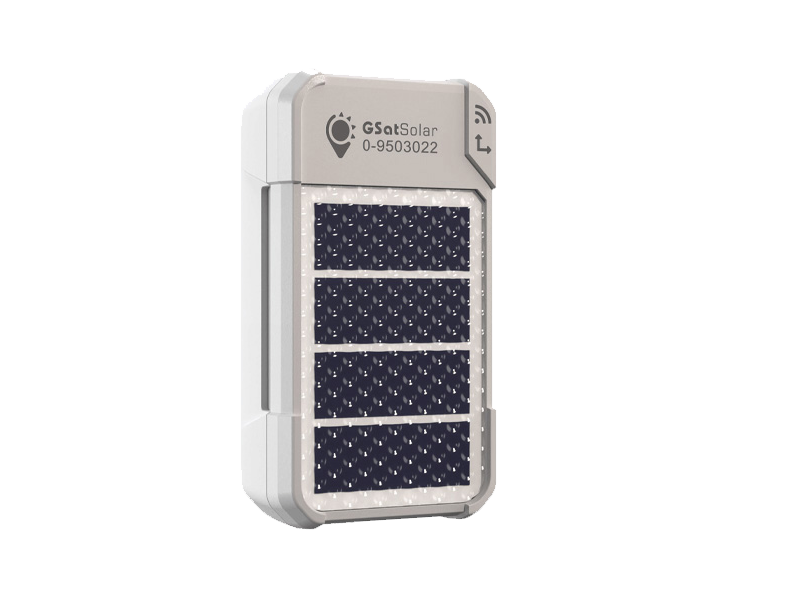
GSat Solar
GSat Solar is an ultra-low power, solar powered tracking device designed to provide long term asset visibility with minimal maintenance. With its solar-powered operation, GSat Solar ensures extended battery life, reducing the need for manual intervention and making it a reliable choice for long term deployments. Its compact and rugged design enhances durability, allowing it to withstand harsh environmental conditions while continuing to deliver accurate location data. The device operates on a scheduled reporting system, providing periodic updates on asset movements, ensuring that businesses can efficiently monitor and manage their assets with ease.
It is an ideal solution for tracking equipment, livestock, and other mobile assets in remote locations, offering a cost-effective option for asset managers who require periodic location updates without the need for constant oversight.
SmartOne C
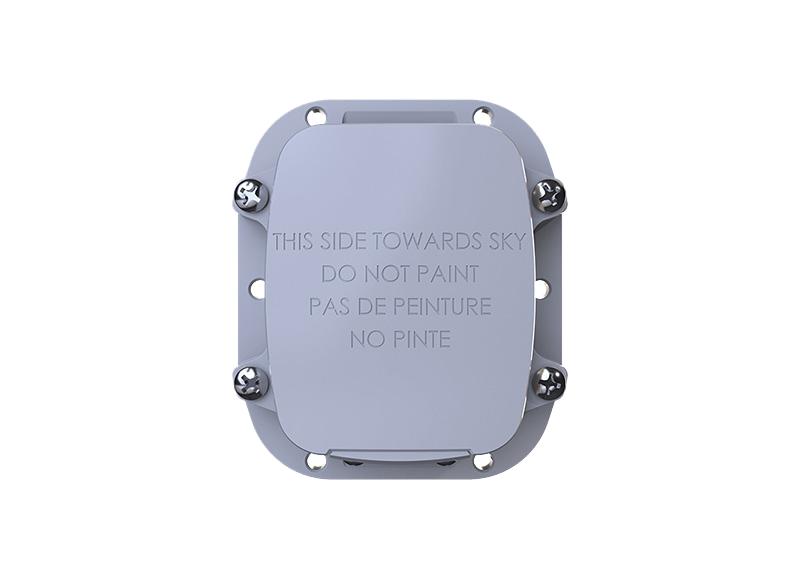
SmartOne C is a versatile, battery powered tracking device designed for reliable asset monitoring and is an excellent solution for tracking equipment, trailers, and other valuable assets that require periodic location updates without the need for a wired power source. The device supports configurable reporting intervals, enabling businesses to balance tracking frequency with battery life, ensuring efficient and cost effective asset management.
With its user replaceable batteries, SmartOne C offers flexibility for deployments where solar charging may not be practical, ensuring long-lasting performance in the field. Its durable and rugged design also allows it to withstand tough environmental conditions, making it suitable for use in remote or harsh locations.

Transport & Logistics
Logistics companies often prioritize cost efficiency, and a device that delivers scheduled location updates is sufficient to confirm that cargo is moving along its intended route. Globalstar trackers are especially valuable for monitoring shipments that traverse remote areas or international borders where terrestrial coverage may be unreliable or unavailable.

Construction
Theft and unauthorized use are common concerns, making periodic tracking an effective way to ensure assets remain where they should be. Since Globalstar devices operate on long life battery power or solar energy, they provide an ideal solution for tracking assets that lack an onboard power source, reducing maintenance requirements while maintaining visibility.

Agriculture
Farmers rely on mobile infrastructure such as irrigation pumps, fencing, and storage tanks, which are often placed in remote fields or rotational grazing areas. As this type of equipment is rarely moved but remains valuable, periodic tracking provides an affordable alternative to high end, real time tracking solutions.

Rental Equipment
Businesses that lease out assets such as portable lighting, sanitation units, storage containers, or temporary fencing, need a way to ensure their equipment remains in designated locations. A tracking device helps mitigate asset loss and facilitates billing verification by providing periodic location reports, ensuring that rented equipment is where it is supposed to be throughout the rental period.

Seasonal Vehicles
For snowplows, ATVs, or specialized agricultural machinery, continuous tracking is rarely required, making a low cost, long battery-life tracking solution more practical than traditional GPS systems that require frequent recharging. Globalstar devices allow asset owners to periodically check in on vehicle locations, ensuring they have not been moved or stolen during off-seasons.
Animal Tracking
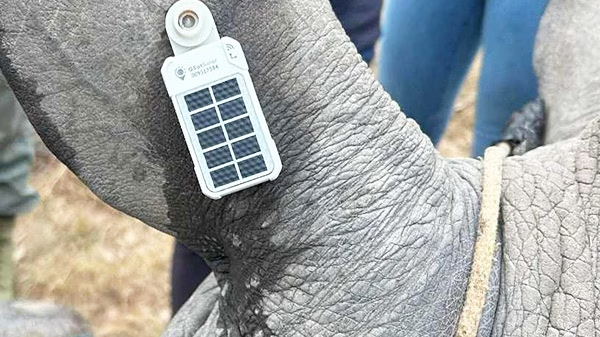
Ranchers can deploy these devices on cattle to verify herd locations and grazing patterns. Conservationists and researchers can gather movement data. As the devices are built for rugged environments and have extended battery life, they can remain operational for long periods, making them particularly useful for tracking animals in remote or ecologically sensitive areas.
Simplifying Globalstar Tracking & Data Management
Cloudloop Tracking offers a centralized and intuitive interface that streamlines the monitoring and analysis of Globalstar’s location data. Cloudloop Tracking consolidates tracking information from one, or multiple devices, into a single view, allowing for effortless oversight of asset locations at any time.
The platform enables users to configure customizable alerts and reports, ensuring immediate notifications for asset movements, unauthorized relocations, or scheduled status updates. Its secure, scalable cloud storage guarantees that historical records and analytics remain accessible whenever needed, providing valuable insights for long term asset management.
By combining Globalstar’s cost-effective tracking devices with Cloudloop’s robust, cloud-based ecosystem, businesses gain an advanced tool for data visualization, alerting, and reporting. Whether monitoring shipping containers, rental equipment, or livestock, Cloudloop Tracking ensures users have the right insights at their fingertips to make informed decisions.

A Smart Choice for Cost-Effective Tracking
Globalstar tracking devices offer a powerful and economical solution for businesses and organizations requiring scheduled asset monitoring without the overhead of real time tracking. While Globalstar tracking solutions are not ideal for critical, high value assets or applications that demand real time global coverage, the devices offer an excellent balance of affordability and reliability for periodic tracking needs. Whether used for logistics, construction, agriculture, rental services, seasonal asset management, or wildlife monitoring, the Globalstar GSat Solar and SmartOne C devices provide a dependable and efficient way to enhance asset visibility while keeping costs under control.
Low-Cost Asset Tracking and Monitoring
If your business needs a cost-effective way to keep tabs on shipping containers, rental equipment, agricultural assets, or even livestock, Globalstar’s GSat Solar and SmartOne C trackers could be the perfect fit.
Equip your assets with reliable, cost-effective tracking solutions powered by Globalstar and seamlessly integrated with Cloudloop. Contact us today to discover how our technology can enhance your asset visibility and security. Complete the form, or email hello@groundcontrol.com.
Exploring the New Iridium Certus 9704: Compact, Low Power, and Built for IoT
Iridium have just launched their latest satellite transceiver, the Iridium Certus 9704. In this post we’re going to explore how this module compares with other satellite IoT modems, the Iridium 9603 and Certus 9770. We’ll look at ideal use cases for the new transceiver, how to get the best out of the device, and how to get started.
What is the Iridium Certus 9704?
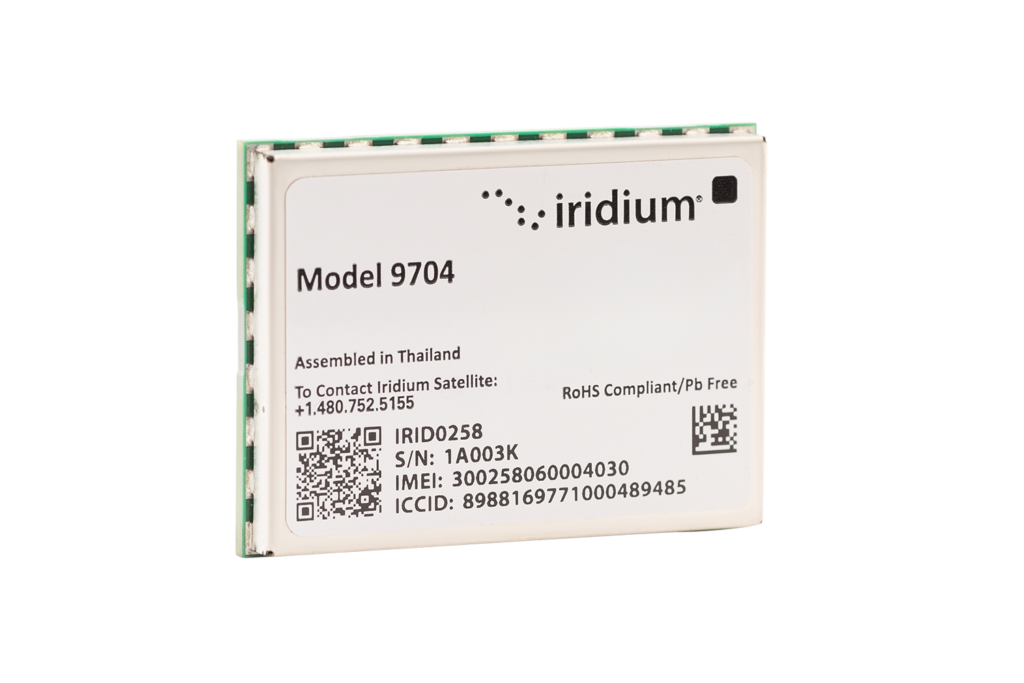
The 9704 is a small, lightweight and low power satellite IoT transceiver that connects to the globally available Iridium satellite constellation.
It leverages Iridium Messaging Transport (IMT), a message-based service which allows users to transmit data packets of up to 100 kB. What is IMT?
What Applications are Suited to the 9704?
The 9704 has been designed to consume very little power, so it’s ideal for remote, battery-powered applications. For example, telemetry from heavy machinery; SCADA readings from unmanned substations or infrastructure; aggregated gateway / hub data; data logger transmissions.
It can also be used for simple UxV commands; stop, start, return etc.
How Does the 9704 Differ from the 9603 Transceiver?
The 9704 module is 34% smaller than the 9603N modem: 31.5 x 42 x 3.8 mm vs. 31.5 x 29.6 x 8.1 mm, and 12 g vs. 11.4 g respectively*.
The 9704 also boasts an 83% reduction in idle power consumption compared to the 9603. The message size for the 9603 is considerably smaller compared to the 9704; 340 / 270 bytes (Short Burst Data) vs. 100 kB (Iridium Messaging Transport). The link speed is also doubled with the 9704; from 2.4 Kbps to 4.8 Kbps.
Applications best suited to the 9603 include asset tracking, environmental monitoring and fleet management; it remains the most cost-effective way to move very small volumes of data using the Iridium satellite constellation. But for many applications, IMT will be a more cost-effective means of transmitting IoT data.
View 9603-Based Products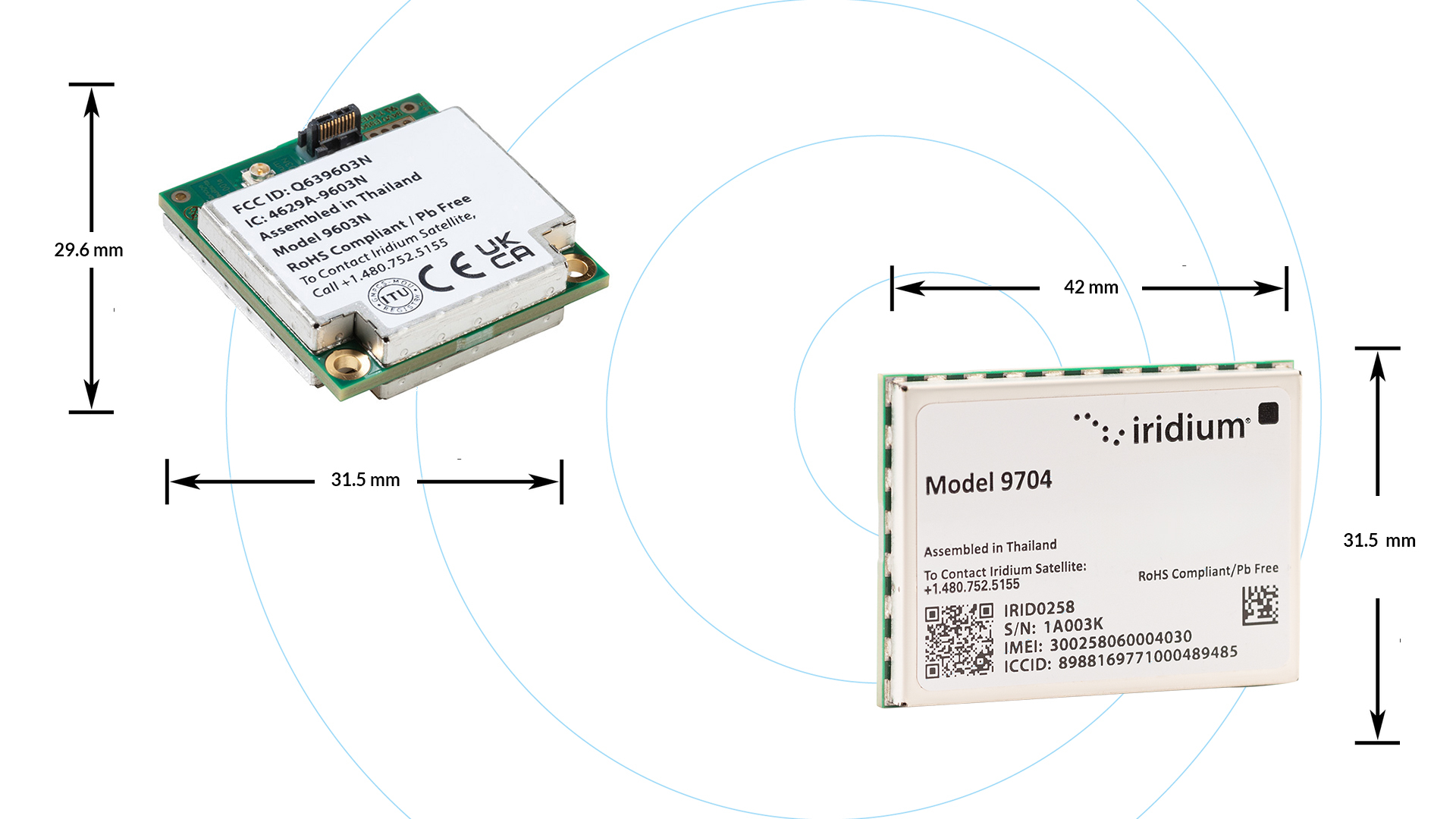
How Does the 9704 Differ From the 9770 Transceiver?
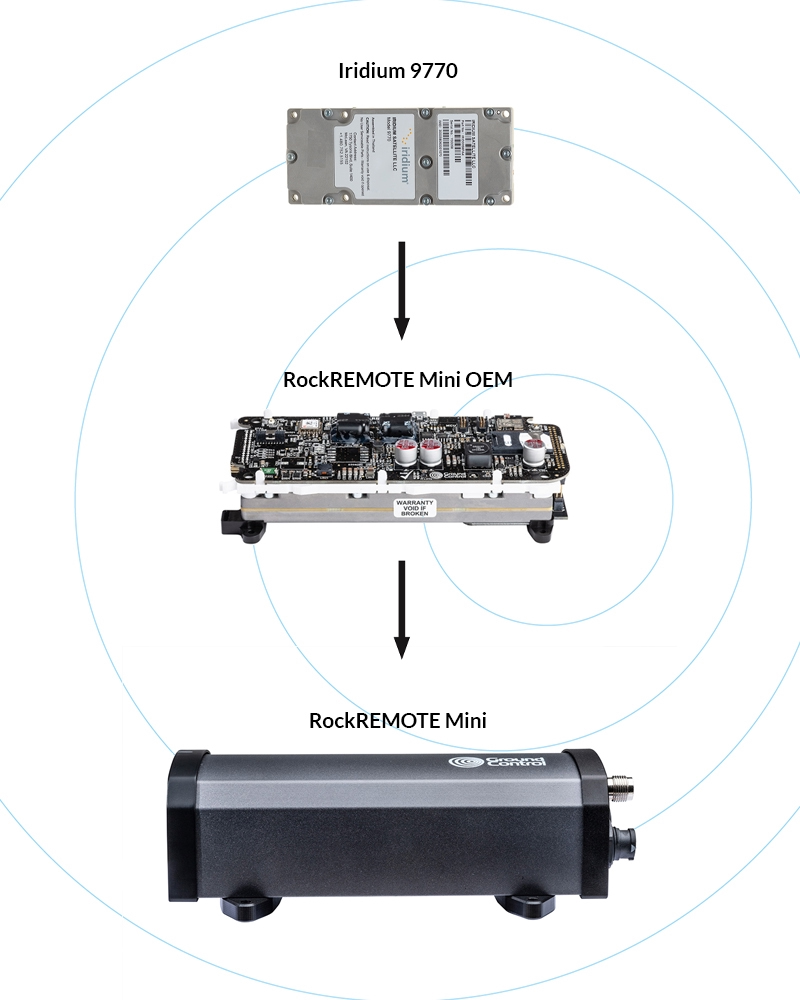
The Iridium Certus 9770 modem is a more powerful device. It can send data over IMT, but also over IP, creating greater flexibility and making it more suitable for applications where real-time command and control is required – for example, piloting a drone BVLOS.
The 9770 sends data far more quickly; 22 / 88 Kbps vs the 9704’s 4.8 Kbps (Tx/Rx). But this comes with a greater power draw; the 9770 requires 3.5 W to transmit/receive, whereas the 9704 requires roughly 0.9 W.
The 9770 is also larger and heavier than the 9704; 140 x 60 x 16 mm and 185 g vs. 31.5 x 42 x 3.8 mm and 12 g respectively.
The Certus 9770 can be used for voice communication, and the 9704 is data only.
Devices utilizing the 9770 transceiver are ideal for remote control of assets such as UAVs and USVs; or when it’s important that data is moved quickly, so any form of alerting mechanism such as remote security or systems failure alarms. They will also be the preferred choice of systems integrators who want the flexibility to switch between IP and message-based transmissions depending on the type of data being moved.
View 9770-Based ProductsWhich Devices Utilize the 9704 Transceiver?
At the time of writing, you can purchase an Iridium 9704 Developer Kit, which is a great way to evaluate Iridium Messaging Transport (IMT) in the lab and explore what the technology can do. We are IMT and Iridium experts, having worked with the Iridium development team for decades, and we are here to help you get the best out of Iridium Messaging Transport, whether you start with the Iridium kit or our own hardware.
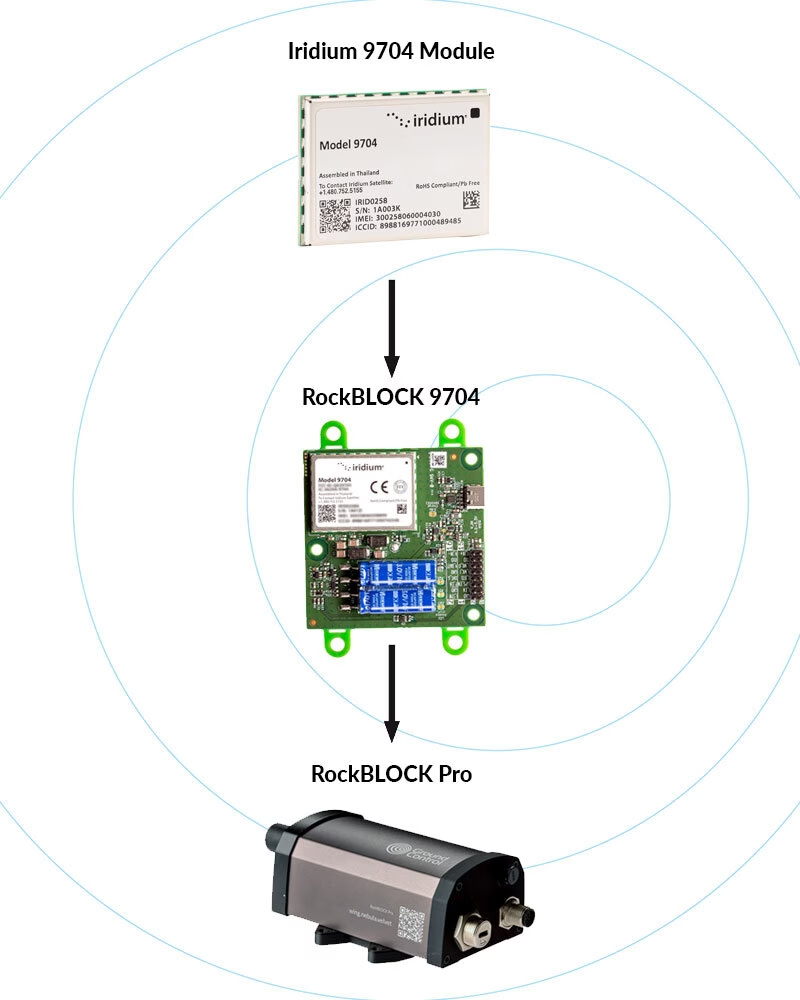
For projects that are likely to move beyond proof of concept into field deployment, we generally recommend looking at our RockBLOCK range as early as possible. RockBLOCK 9704 is designed specifically for integration into IoT products, with a production ready form factor, a lower unit cost than the Iridium developer kit, and a straightforward path from prototype to volume deployment. We’ve also built C, Python and Arduino libraries around the 9704 transceiver, so you can focus on your application logic rather than on low level protocol implementation.
We offer several devices that leverage the new technology, among them RockBLOCK 9704, for IoT applications, and RockBLOCK Pro, which is our multi-purpose, all-weather tracking and IoT device. If you’re unsure which route is best for your project, we’re always happy to talk through the options and trade-offs.
What is Iridium Messaging Transport (IMT)?
Launched in late 2022, IMT is Iridium’s most recent satellite IoT service. It is message-based, which is the most cost-effective and power-economical way to communicate with satellite networks (vs. an IP connection which has a substantial overhead).
With a message-based service, you pay only for the data you choose to transmit, and only when it’s successfully transmitted. However, a drawback of message-based services is that the data has to be reformatted before it reaches your preferred destination; unlike IP-based communication, it isn’t a commonly utilized format.
We built Cloudloop Data to address this challenge. This delivers simplified store and forward IoT messaging between your devices and cloud-based services. Messages can be fanned to multiple endpoints, from cloud providers like Azure and AWS, to IoT dashboards including ThingsBoard and ThingSpeak. You also have the option to consume the decoded data in your own system, through delivery methods including email, MQTT and HTTP webhook.
How to Get Started With the Iridium Certus 9704
We encourage you to contact us to discuss your application; we are Iridium experts, and will provide you with impartial advice on the best airtime, service and hardware to best meet your needs.
We’re responsive, friendly and helpful, and we genuinely love helping people solve their remote connectivity problems, so please get in touch!
*Information on the 9704 is subject to change.
Get in Touch
To get in touch with our team of Iridium experts, please complete the form, email hello@groundcontrol.com, or call us on one of the below numbers.
We will respond to your message within one working day.
UK: +44 (0) 1452 751940
USA: +1.805.783.4600
Ground Control Partners with Locate Global to Boost Workforce Safety and Incident Management
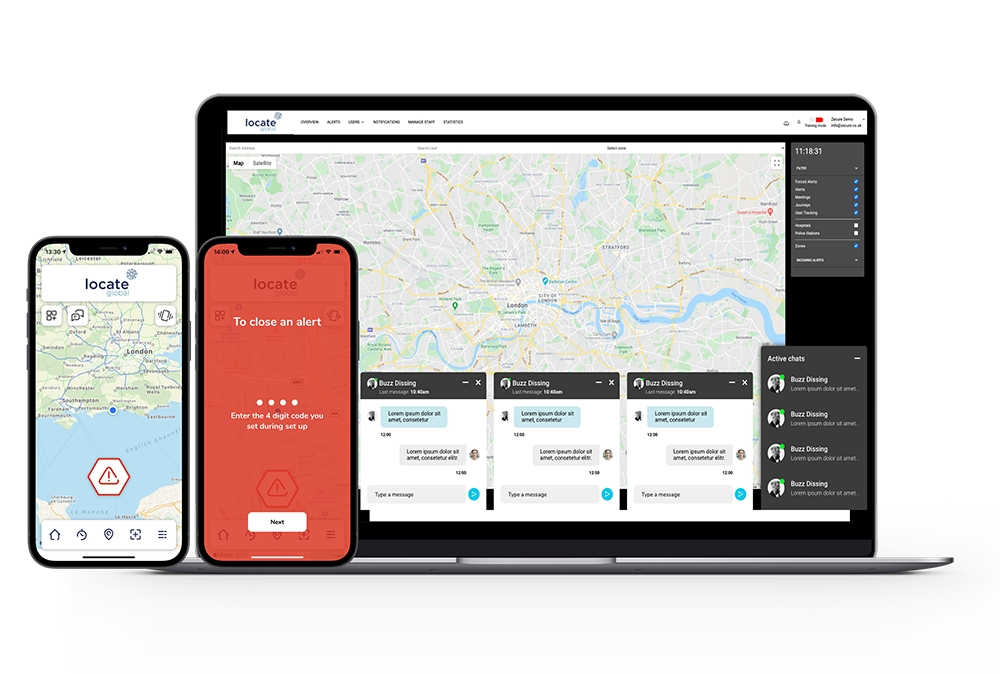
We’re excited to announce our strategic partnership with Locate Global, a prominent provider of incident management and workforce safety technology. This collaboration enhances workforce safety and incident response capabilities by integrating Ground Control’s high-speed satellite communication into Locate Global’s platform.
Locate Global’s platform enhances workforce safety and incident management through real-time location tracking, geofencing, and multi-channel communication tools.
It offers shake-triggered alerts, peer reporting, and immediate location data with video and audio to streamline emergency responses.
The system’s centralized dashboard also provides insights via heat maps and supports audit analysis, promoting a proactive safety culture.
The platform is designed for diverse applications, from protecting lone and remote workers to supporting global teams, with flexible integrations for any industry.
By incorporating Ground Control’s reliable satellite connectivity, Locate Global can provide consistent, secure communication even in remote or challenging environments where standard networks fall short.
“We are excited to partner with Ground Control, whose expertise in satellite communications complements our mission of ensuring safety and efficiency in the workplace. This partnership will allow us to provide our users with unparalleled connectivity, enabling them to communicate seamlessly and respond swiftly during emergencies.”
Raphael Polt, Head of Global Partnerships
RockSTAR is a handheld satellite device that provides global messaging and tracking in real time, designed for professionals working in remote or extreme locations.
It utilizes the Iridium satellite network, which is global and extremely reliable; as long as your team members have a view of the sky, they will be able to communicate with your base of operations.
RockSTAR features two-way messaging, an emergency alert button, hyper-accurate GPS tracking, and geofencing capabilities. It can be used instead of a cell phone, or linked via Bluetooth to allow usage of the Locate Global app.
The device is ruggedized for durability, waterproof, and has an extremely long battery life, making it viable for extended outdoor use.

Partnering with Locate Global aligns with our commitment to delivering robust communication solutions for industries where connectivity is paramount. Together, we are enhancing the ability for organizations to manage incidents effectively, ensuring that teams can maintain communication and safety in any environment.
Can we help you?
Our partnership with Locate Global empowers teams to communicate and respond effectively, even in the most remote environments.
If you’d like to know more, please complete the form, or email hello@groundcontrol.com.
Viasat Unveils New Product Portfolio
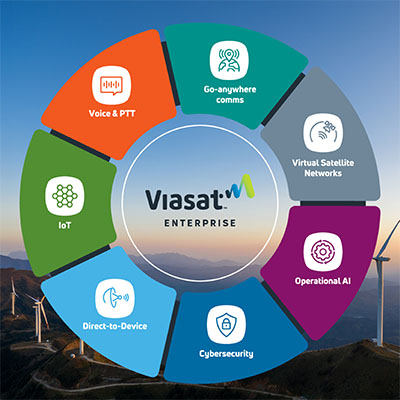
Viasat has officially launched a redefined and expanded product portfolio following its recent acquisition of Inmarsat. The new lineup is designed to simplify their satellite IoT and asset tracking solutions, combining the technical expertise and global reach of both companies. With the consolidation of services, Viasat aims to deliver a more integrated, customer-centric suite of solutions for businesses in industries ranging from logistics to energy, all while streamlining its product range.
What’s New in Viasat’s Product Portfolio?
With the reimagined suite of services, Viasat has focused on making it easier for companies to navigate their satellite communication needs. The new portfolio has been carefully organized around key industry applications, including satellite IoT, asset tracking, remote surveillance, and mission-critical communications.
By simplifying its offerings, Viasat allows businesses to quickly identify the right solution, whether it’s for fleet management, environmental monitoring, or operations in remote, hard-to-reach areas. While the shift may feel like a departure from Inmarsat’s familiar product names, the rebrand is geared toward enhancing the user experience with more clarity and convenience.
Key Changes to Viasat’s Product Series
Viasat’s rebranded product suite is built with a focus on usability and modern industry demands. Here’s a look at the most significant changes:
IsatData Pro (IDP) → IoT Nano
Connection Type: Message-based
Transmit: 6400 bytes, Receive: 10,000 bytes
Previously a flagship service under Inmarsat, IsatData Pro has been rebranded as IoT Nano. This solution offers low-power, long-life monitoring for remote assets, particularly useful in industrial IoT, fleet tracking, and environmental monitoring sectors. IoT Nano is optimized for minimal data transmission and is ideal for applications that require reliable connectivity in areas with limited infrastructure.
BGAN M2M → IoT Pro
Connection Type: IP-based
Transmit: 448Kbps Receive: 464 Kbps
BGAN M2M, known for delivering high-reliability machine-to-machine (M2M) or direct-to-device (D2D) communications via satellite, is now known as IoT Pro. This rebranded service provides businesses in industries such as oil and gas, utilities, and transportation with uninterrupted connectivity, even in the most extreme conditions. IoT Pro is perfect for enabling critical data flows between remote devices and centralized systems.

BGAN → Go-anywhere Pro
Connection Type: IP-based
Transmit: 492Kbps up and down (Standard), 800Kbps for video
The Broadband Global Area Network (BGAN), a trusted service for providing high-speed broadband from virtually any location on Earth, is now renamed Go-anywhere Pro. This solution is tailored for mobile teams, emergency response units, and industries requiring reliable internet connectivity in areas lacking terrestrial networks. Whether you’re in a disaster zone, on an offshore platform, or in remote wilderness, Go-anywhere Pro ensures you’re always connected.

What Does This Mean for Existing Customers?
These changes reflect Viasat’s commitment to delivering a more intuitive and cohesive satellite communication experience. By integrating Inmarsat’s renowned services with Viasat’s cutting-edge technologies, the company provides more powerful, streamlined solutions to meet the needs of various industries.
For businesses currently using Inmarsat services, the transition will be smooth and seamless. Existing services will automatically migrate to the new Viasat-branded solutions without service interruptions, ensuring that all operations remain unaffected.
Ground Control: Your Trusted Partner in Satellite Communications
As an Inmarsat/Viasat Elevate Partner with over 20 years of experience, Ground Control is uniquely positioned to offer customers the best in satellite communication solutions. We provide unmatched flexibility and access to the most competitive rates for airtime and service plans.

Get in touch
Whether you’re managing a fleet, monitoring assets in remote locations, or supporting a critical communications mission, Ground Control can help you find the right package of airtime to suit your unique requirements.
Get in touch to discuss how we can support your satellite communication needs and find the right airtime package for your project.
Attitudes Towards Commercial & Military Drone Applications
The drone market is expected to surpass $101.1 Billion by 2032, and while military applications continue to dominate, commercial applications – parcel deliveries, remote safety inspections, environmental monitoring etc. – will make up a substantial part of that revenue.
In light of this anticipated growth in drone usage, we wanted to discover if people felt more or less comfortable about commercial vs. military applications, and whether the benefits outweighed their reservations. In March 2024, we surveyed 500+ American adults, and compiled the results in this eBook.
Download eBook For Free
What surprised us about the data
Two surveys from 2021 which engaged European audiences suggested that we could anticipate a broadly positive response. These surveys indicate that 68% of British citizens believe that drones will positively impact their lives, and 83% of EU-based respondents are positive about the use of drones in cities.
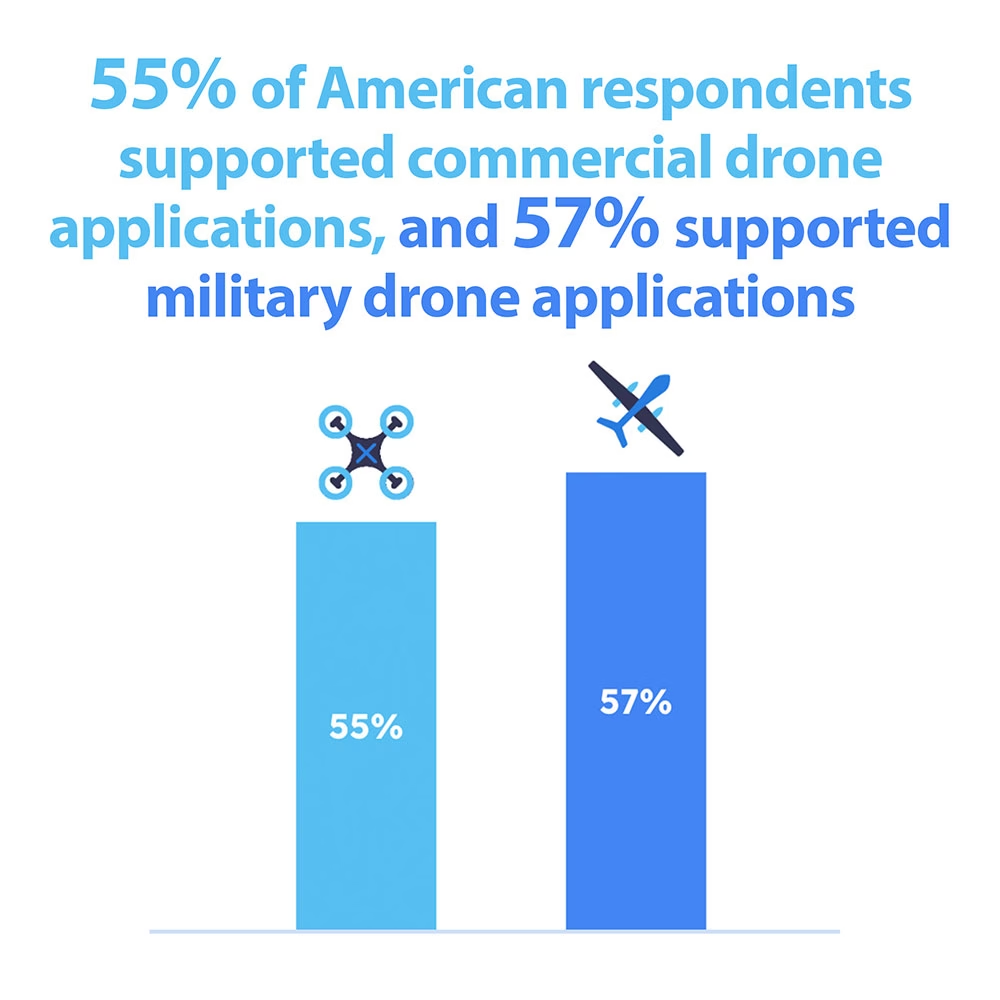
Our survey was more nuanced. Overall, 55% of respondents supported commercial drone applications, and 57% supported military drone applications. This is a more conversative response than previous studies, but what was particularly interesting was how much variation there was in the results. People in different household income, age, and industry groups held, in some cases, quite dramatically different views.
Which demographics are most likely to support military applications?
We offered two options for military applications: “passive”, which we defined as surveying and monitoring, and “active”, defined as identifying and destroying targets. The average result was 59% in favor of passive military drone applications, and 54% in favor of active applications.
This materially differed when the data was refined by demographic. Those in with household incomes over $100,000 p/a were more likely to approve of both passive (72% approval) and active (69% approval) military applications. Men were also more likely than women to support these use cases, with 63% approval for both from men, vs. 55% and 48% from women.
The larger deviations from the norm came from people working in Education & Research and Healthcare, and the under 30s, all of whom were less likely to support military drone applications – particularly active.
Who is most likely to support commercial applications?
We divided commercial drone applications into five: Parcel Deliveries, Prescription Medicine Deliveries, Remote Safety Inspections, Environmental Monitoring, and Emergencies.
Opinions ranged from just 37% in favor (medicine deliveries) to 72% in favor (emergencies). Departing substantially from the average results were people working in Technology, who were more comfortable with drones being used across all commercial applications listed, but particularly positive about remote safety inspections – 72% in favor vs. 58% average.
People working in Healthcare were the most opposed to drones being used for prescription medicine deliveries, at just 18% in favor, and 58% opposed.
What concerns do Americans have about drone usage?
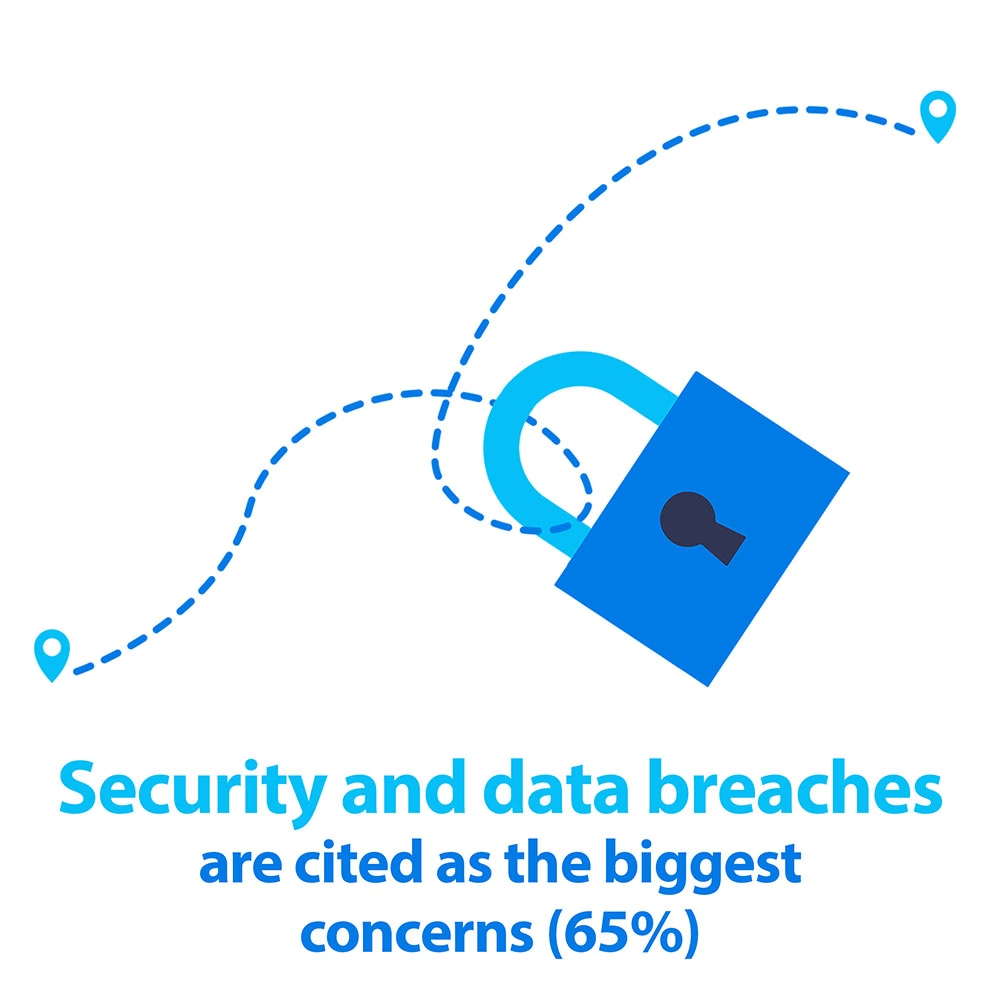
The biggest concern our respondents had was security – the possibility that drones can be hacked or intercepted. This view was most strongly supported by people working in Technology, of whom 76% cited this as a concern.
54% of respondents cited privacy – concerns about the information drones can capture and store – as a concern, and this rose to 62% for people working in Education & Research.
Fewer respondents were concerned about the potential for job losses – just 27% – but this rose to 38% for people working in Healthcare, possibly correlated with their discomfort around prescription medicine deliveries.
What benefits do Americans perceive can be derived from drone usage?
People were pretty reserved in their responses to this question, with no single option getting selected by more than half of respondents. The most popular response was ‘Faster Deliveries’, at 49%, followed by ‘Lower Cost’ at 38%.
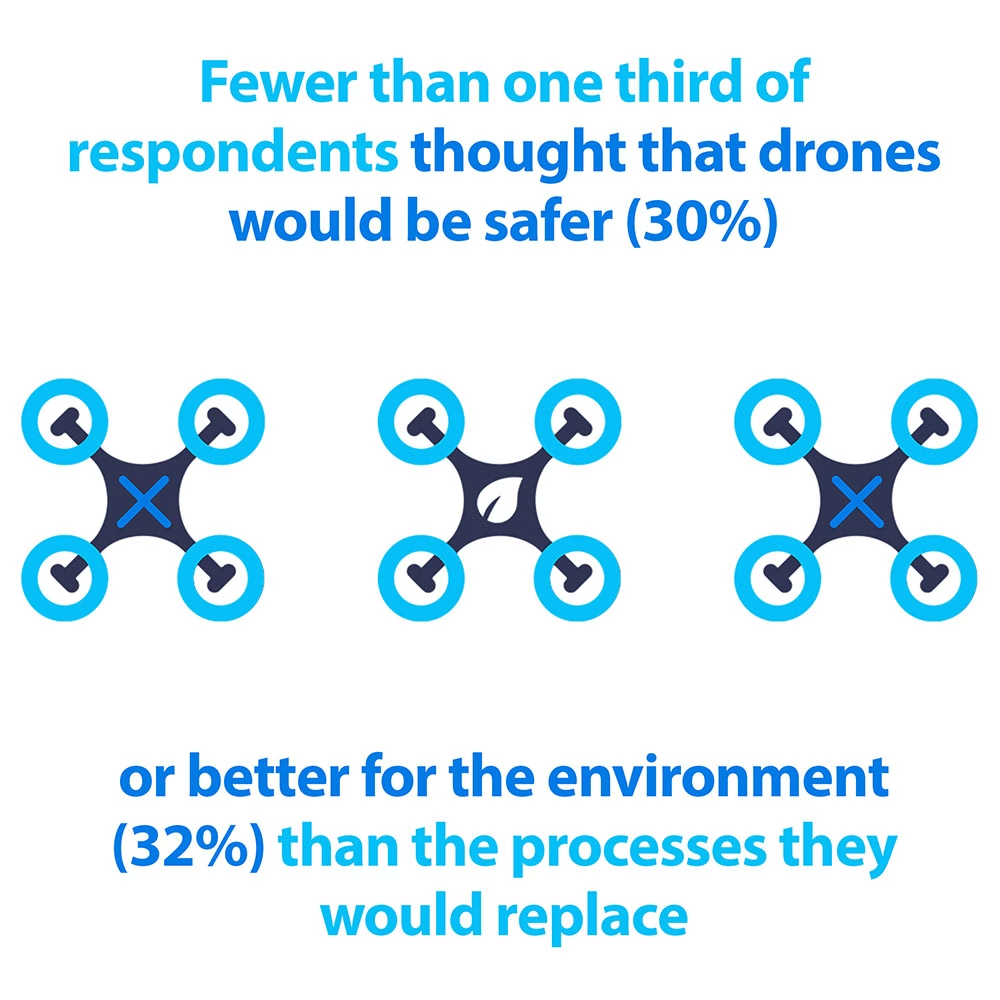
The over 60s departed from the average here; slightly more saw the cost-saving benefit (42%) but only 38% thought deliveries would be faster, and only 22% thought that using drones would be safer than the processes they replaced (vs. 30% average).
Fewer than a third of respondents thought that drone usage was better for the environment, which was a surprise; analysts have reported that drone-based applications could reduce global greenhouse gas emissions by as much as 2.4 gigatons by 2030.
Leading us neatly on to…
What can the drone industry learn from these results?
While regulation remains a significant barrier for wider adoption of commercial drone applications, it will be overcome: market forces demand it. Solutions for the challenges of communication and collision avoidance already exist, and the industry received $4.8 billion in investment in 2022 alone. And at least from the operators’ perspective, the benefits, both projected and empirically demonstrated, outweigh the drawbacks.
But our respondents were, for the most part, cautious in their responses, particularly the over 60s, people in lower income households, and people working in Healthcare and Education and Research. Put simply, companies planning to deploy drones should consider how they communicate the benefits and address the concerns of citizens – particularly in applications that could directly affect their day to day lives.
How Can We Help?
Ground Control delivers satellite IoT modems that allow drone operators to remotely command and control UAVs, USVs and UGVs. We use the global Iridium satellite constellation, which is well suited to mobile, low latency, high-reliability use cases.
If you’re a drone manufacturer and would like to know more about our connectivity options, please complete the form, or email hello@groundcontrol.com; we’d love to talk.
Introducing Ground Control’s Satellite IoT Gateway
Imagine you’re the manufacturer of industrial equipment — perhaps you supply power generators to war zones, or monster excavators to mining projects, or perhaps you make sensors for monitoring pipelines.
The equipment that you produce is inherently big and complex — which means that it’ll be packed with gizmos and sensors to monitor its health, performance and to detect faults/errors.
If a sensor fails in the forest, and nobody is around, does it make a sound?
Herein lies the problem. Your equipment isn’t around the corner — you can’t just pop over to check it’s ok. If it’s truly remotely deployed, it may require several days travel and a helicopter to check!
Clearly this isn’t a sustainable or practical solution — so what about remote monitoring? It’s unlikely that you’ll be within cellular coverage, and if you are it’s likely to be patchy and unreliable (it’s like that even in the middle of London sometimes)!
In this instance, the only viable option you have for remotely monitoring your equipment is via satellite. Today, there’s a multitude of satellite operators and terminals available, each with their respective pros/cons in respect of physical size, operating cost, power requirements, communication speed and bandwidth etc.
For our hypothetical scenario, let’s assume we make monster excavators used to extract lithium from remote Australian mines. They’re super-computers on wheels and are packed with sensors, measuring things like: temperature, pressure, vibration, movement and location. There’s a ready supply of power but physical space is limited. Being able to monitor this data in real-time is invaluable for things like performance and safety monitoring.
Introducing Ground Control’s RockREMOTE
The RockREMOTE is an Iridium Certus IoT terminal, providing both IP connectivity and IMT-based messaging from anywhere on the planet. Its IoT Gateway enables easy integration with other equipment and applications through the lingua-franca of the IoT industry — MQTT.
How do we connect the RockREMOTE to a monster excavator?
In our scenario, we’ve got an onboard network connecting all the sensors to a central data logger which stores the sensor readings. The sensors themselves speak to the data-logger via the industry-standard CAN bus protocol as is commonly used in the automotive industry.
The data logger is simply connected to the RockREMOTE via Ethernet cable.
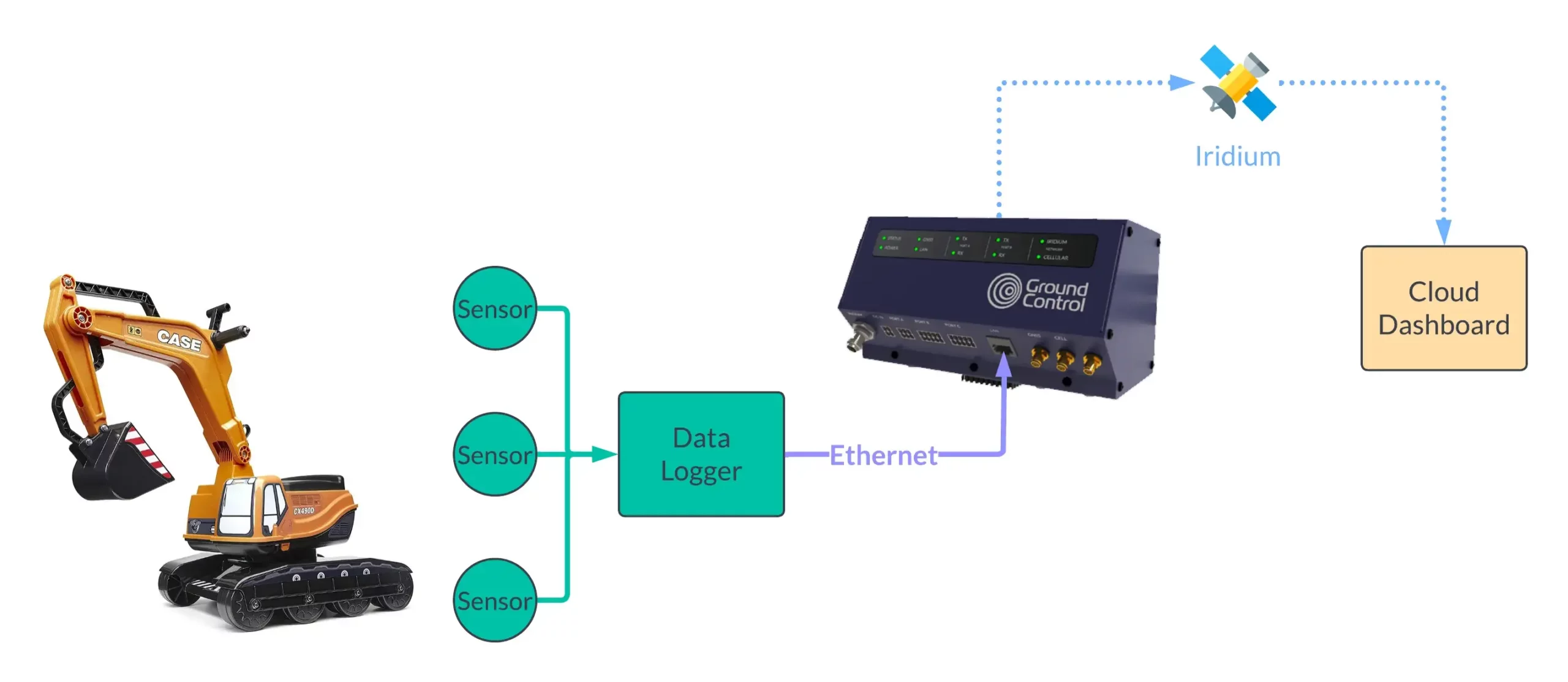
Yes that’s a child’s toy — no expense spared artist’s impression showing the system end-to-end
Data Logger > MQTT > RockREMOTE (IoT Gateway)
So we’ve got our readings gleaned from the onboard sensors; they’re currently stored in a simple database on our data-logger. This is a proprietary system developed in-house, so we’ll need some developer-smarts to send the data to the IoT Gateway on the RockREMOTE.
Side note: it’s at this point that everyone’s system will vary. In the event that you’re not already utilising MQTT, some development work will be unavoidable. Fear not: due to the ubiquity of MQTT, it’s very widely supported and there’s established libraries for most platforms and programming languages.
Our data-logger runs Linux so we have a multitude of tools at our disposal; the simplest and easiest being a basic Python script (as shown below):
This snippet will diligently send the sensor readings to the IoT Gateway every 60 seconds. That’s it — pretty cool 😎
What do you mean that’s it — we’ve not even mentioned Satellites?
This is where the RockREMOTE IoT Gateway comes into its own!
RockREMOTE x IoT Gateway
So let’s pop the proverbial hood and let’s see what’s actually going on here.
On the surface, IoT Gateway exposes a standard MQTT broker — nothing special or proprietary — this means any existing MQTT client/library can connect and publish messages.
Security specialists: on this interface it utilises basic username/password authentication; so there’s no certificate authentication with which to concern yourself. No one wants to charter a helicopter to update an expired certificate, and if the monster excavator is physically compromised – well, you’ve got bigger problems to worry about…
There’s no restriction to the message payload that you publish — you can send text or binary; anything you like — most popular for IoT applications is JSON or Protobufs. The only limitation is that the total message size must not exceed 100 Kb — more on this in a second.
Not sure what MQTT is?
It’s pretty straightforward. MQTT is an industry standard which describes a simple Pub-Sub protocol whereby: clients connect to a broker and PUBLISH messages — other clients connect to said broker and SUBSCRIBE to receive the messages when published — that’s pretty much it!
To keep things organised it utilises the concept of TOPICS — whereby a message is published to a named topic — typically these take the form of a directory structure (e.g. /site01/sensor10/temperature) but you can use anything you like.
It does a few other things, but that’s all you need to know for now!
In the same way there’s no restriction to the message payloads, there’s also no restriction to the topics that you use. This is super convenient if you’re migrating from an existing MQTT solution — no need to change your topics!
So to recap: you can use any MQTT client/library, send any message payload to any topic you like. It’s almost as if Ground Control have taken a monster excavator to any possible barriers or hurdles to using this!
C’mon — what about the satellites?
So we’ve PUBLISH’d our inaugural “Hello World” message to IoT Gateway — what happens next? How do I get hold of these beautiful ones and zeros?
It’s magic. Or it may as well be, we don’t actually need to do anything more — the IoT Gateway takes care of all the heavy lifting. But since you’ve come this far — let’s dig into the wizardry…
The RockREMOTE is an Iridium Certus 100 IoT terminal. This means that it can talk to the Iridium satellite network to send/receive data. It has truly global coverage and works anywhere on the planet at any time of the day.
Zeroing in further, the IoT Gateway makes use of the brand new Iridium Message Transport (IMT) service. Read the deep-dive into how IMT works and how it differs from other IP Connection-based services.
In essence, this is a message-based service for sending/receiving messages up to 100 Kb. You’re only charged for the data you successfully transmit, so you’re not charged for protocol overhead, handshaking or bloat 😎
Sending the Message
Anything you PUBLISH will be automatically packaged and sent to space. IoT Gateway takes care of managing the connection, message queuing, retries etc — truly fire-and-forget!
Thud!
That’s the sound of your “Hello World” message landing down to earth.
This time instead of being in a remote Australian lithium mine; it’s in sunny Tempe, Arizona (where Iridium’s ground station resides). From here it’s whisked to Ground Control’s omnipresent platform, Cloudloop.
Your message, still cold from its brief stint in space, is reconstituted and published to their secure cloud-based MQTT broker (not to be confused, with the broker mentioned earlier, that resides on the RockREMOTE).
Again, this completely standard MQTT interface can be securely connected to with any MQTT client or library, allowing your cloud-application to consume the messages published from IoT Gateway.
Back to the monster excavator…
Recap: we’ve used a Python script running on our data-logger to relay sensor data (via MQTT) to the IoT Gateway every 60 seconds. For the alert readers, you’ll recall this data was published to the lithium/truck01 topic. The data has gone via satellite and has now been re-published to the MQTT broker residing in Cloudloop.
We’d now like to present the sensor data in real-time on a dashboard screen we’ve got setup in the office. For this, we’ll need to SUBSCRIBE to the relevant topics to get this information automatically pushed to it.
We’ve got two options — use an existing IoT Dashboard (e.g. Thingsboard) or create something ourselves. We’ll take a look at how we might get the data ourselves here.
To consume the messages from Cloudloop MQTT:
Side note: the message was technically published to iot/ACCOUNT-ID/lithium/truck01 — this is because it’s a multi-tenanted environment and the prefixing nicely provides account-segregation.
In this scenario, we’ve been working with a single excavator — but there’s nothing stopping this working with multiple. You can easily see by changing the topic name (e.g. cobalt/truck32) we could support multiple sites and multiple excavators 😎
What about sending messages to the monster excavator?
So far, we’ve only spoken about data originating from the monster excavators (Mobile Originated in satcom parlance) — but what about sending messages to the excavator (i.e. Mobile Terminated)?
No problem, it works in exactly the same way — just in reverse.
Simply PUBLISH a message to Cloudloop MQTT and it will be sent via space and picked up by the IoT Gateway; the data-logger would just need to SUBSCRIBE to that particular topic to receive the message.
Would you like to know more?
Whether you’re an engineer or you’re interested in learning more about IMT, the IoT Gateway, or the RockREMOTE, please call or email us, or complete the form, and we’ll make sure you’re connected.
Introducing Iridium Messaging Transport (IMT)
Taking full advantage of IMT, the latest Iridium network service evolution, Ground Control is proud to announce the development of a new Satellite IoT delivery network. This ultra-efficient solution is designed to meet the needs of IoT applications that require transmission of larger data payloads from very remote locations.
What is Iridium Messaging Transport (IMT)?
The new IMT service from Iridium is designed for IoT / M2M applications, and joins several other satellite airtime services in this space. So what makes IMT different?
| Iridium SBD | Viasat IoT Nano (IDP) | IMT | Iridium Certus 100 | |
|---|---|---|---|---|
| Connection Type | Message Based | Message Based | Message Based | IP Based |
| Data Volume / Speed | 270 / 340 bytes per Message | 10 KB per Message | 100 KB per Message | 22 / 88 Kbps |
| Satellite Orbit | Low Earth Orbit (LEO) | Geostationery (GEO) | Low Earth Orbit (LEO) | Low Earth Orbit (LEO) |
| Latency | Very Low | Low | Very Low | Very Low |
| Cost at 1,000 Bytes Per Month | $10.50 | $8.75 | $17.50 | $25.00 |
| Cost at 10 KB Per Month | $21.00 | $23.75 | $21.00 | $25.20 |
| Cost at 25 KB Per Month | $36.80 | $36.25 | $21.00 | $25.50 |
| Cost at 100 KB Per Month | $89.30 | $90.00 | $30.00 | $26.90 |
| Power Usage During Transmit | 0.8 W | 750 mW | 400 mW | 3.5 W |
This table compares these satellite services to each other, not to the broader ecosystem of connectivity options.
Message Based vs IP Based
The simplest distinction between these two means of communication is that message-based services send discrete data packets at intervals determined by the owner / operator; IP-based services can send and receive data continuously. An advantage of IP-based connections is that many, particularly legacy, applications, use TCP/IP protocols, and so data can pass seamlessly between different systems. The major benefit of utilising message-based connections is that they are far lower cost, because you’re only billed for the data payload and not for any communication overhead (e.g. TCP).
Connection Speeds
Iridium already has a message-based airtime service called Short Burst Data, or SBD; Inmarsat has a similar service called IDP (IsatData Pro) – now known as Viasat IoT Nano. Both are designed for very small amounts of data: environmental monitoring and asset tracking for example.
Iridium introduced Certus 100 which offers the ability to send more data, more frequently, and is ideal for legacy installations and telemetry streaming applications.
IMT sits in between these two services; with the ability to send 100 KB per message, far more data can be transmitted than via the SBD or IDP services, but because it’s message-based, it remains a lower cost solution than Certus 100. If you’re sending over 10KB of data per month, it’s also lower cost than SBD or IDP.
Cost
In our assessment, SBD or IDP is lower cost if you’re sending less than 7-10 KB of data per month. IMT via the 9704 module is best if you’re sending up to 55-60 KB of data per month, and IMT via the 9770 module is most economical if you’re sending over 60 KB of data per month.
This is a little over-simplified, and doesn’t take into account commitment, pools, hardware cost, power consumption, physical size, antennas etc., but serves as a guide.
Power Usage
A device leveraging the IMT service will generally use less power than a device using Certus 100, because the data is sent and received on demand, and data packets can be optimized. However, there are two modules that can access IMT, and they have very different power requirements. The 9770 module leverages both Certus 100 and IMT, whereas the new 9704 module only accesses IMT. This has enabled Iridium’s engineers to optimize the 9704 for extremely low power use, better even than IDP and SBD.
Which Devices Utilize IMT?
Ground Control’s RockREMOTE devices are based around the 9770 module, making them extremely versatile; they can access IMT and Certus 100 (and in some cases, also cellular). Users configure the device to use the airtime that is most economical for their particular use case; Ground Control will consult and assist with this exercise if needed.
Devices Using the Iridium 9704 Module
The RockBLOCK 9704, RockBLOCK Pro and Pro OEM devices are based around the 9704 module; for data volumes between 10-50 KB per month, they’re extremely cost effective and ideal for very low power applications.
When Would You Use IMT?
| Iridium SBD | Viasat IoT Nano (IDP) | IMT | Iridium Certus 100 | Viasat IoT Pro (BGAN M2M) | |
|---|---|---|---|---|---|
| Great For | Very small amounts of data from individual sensors | Very small amounts of data from individual sensors | IoT applications with larger data transmission requirements | Fixed or mobile IoT applications which require IP connection | Fixed IoT applications with larger amounts of data to transfer via an IP connection |
| Examples | Small amounts of telemetry data | Small amounts of telemetry data | Larger amounts of telemetry data; compressed images | Connected M2M protocols e.g. Modbus RTU, WITS DPN3 | Connected M2M protocols e.g. Modbus RTU, WITS DPN3 |
| Use Cases | SCADA, Agritech, Basic asset tracking | SCADA, Agritech, Basic asset tracking | Remote camera traps preventing poaching / trespassing; Remote surveillance capabilities for on-the-move assets | Visibility and control of assets spread over a wide area; Extending the reach of telemetry applications | Visibility and control of assets spread over a wide area; Extending the reach of telemetry applications |
How Does Ground Control’s Satellite IoT Delivery Network Work?
The IoT delivery network is designed to deliver large message payloads for a wide range of IoT applications in a highly cost effective way. It leverages the new IMT satellite service, the RockREMOTE or RockREMOTE Rugged terminals, and the MQTT messaging transport.
It provides an end-to-end solution comprised of:
- An MQTT application deployed on the RockREMOTE or RockREMOTE Rugged terminal; this provides the interface for your remote application to submit and receive data payloads
- The Iridium IMT satellite service
- An MQTT server application, delivered via Ground Control’s Cloudloop platform, which enables your IoT service application to submit and receive data payloads.
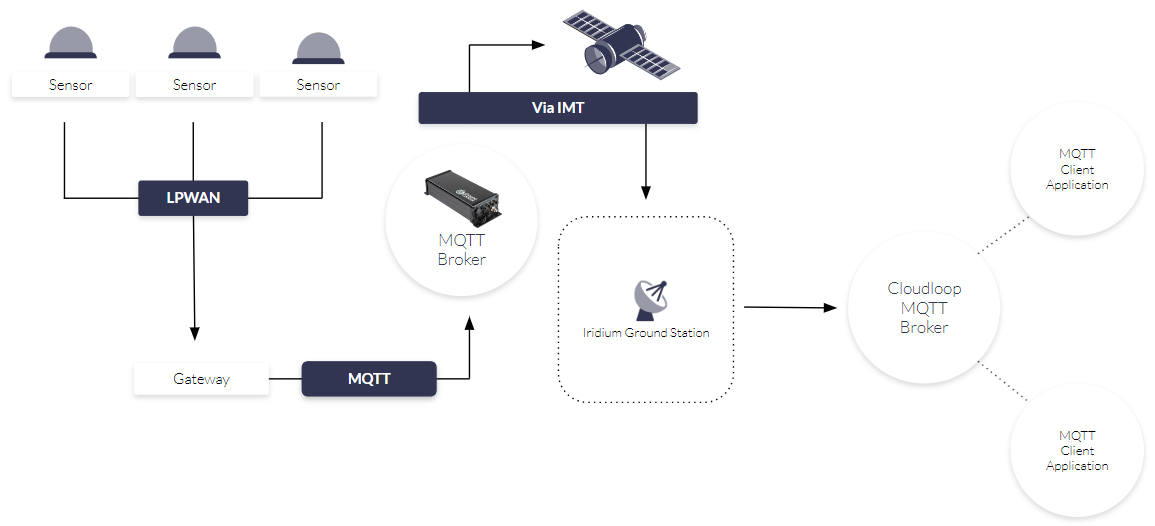
A 2021 research paper found that 75% of businesses experienced connectivity challenges when trialing IoT projects, ranging from coverage to interoperability to cost. Ground Control’s IoT Gateway is designed to address each of these challenges, providing global coverage, industry standard interfaces, and cost efficiency.
What is MQTT?
MQTT is a messaging protocol – a structured way for applications to exchange payloads of data between applications – designed for IoT. TCP / IP is another messaging (or communication) protocol, used to connect network devices on the internet, and in private computer networks.
MQTT was designed specifically for IoT, where the data transmission requirements are usually small, and the microcontrollers that host the code are also very small (physically and in terms of the amount of instructions they can support). So MQTT is very lightweight and efficient.
Another advantage of MQTT is that it has small message headers; this is the initial portion of a data packet, and contains control information such as addressing and version. In IP messaging protocols this is (relatively speaking) quite a large amount of information which makes sending data via IP more resource intensive. MQTT’s small message headers ensure that the network bandwidth is optimised.
It has become the industry standard for newer IoT projects because of its many advantages, including reliable message delivery, security, and scalability.
For more information on MQTT, visit https://mqtt.org/.
Talk to us about IMT
If you have an IoT connectivity challenge which satellite can solve, and you’d like expert, impartial advice on the best airtime and delivery network for your requirements, email or call us, or complete the form.
We’ve been delivering satellite and cellular connectivity services for over 20 years, and our partnerships with leading satellite operators means we can offer great pricing and a robust, reliable service, in addition to our commitment to delivering innovative, customer-driven data and device management solutions.
The “Short” Story of Ground Control
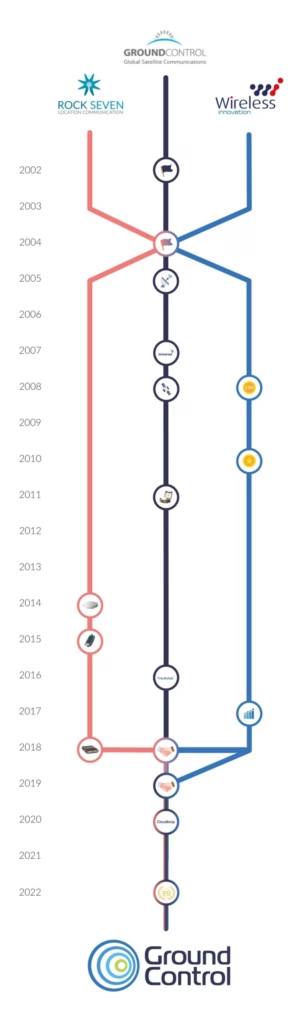
2022 marks the official 20th anniversary of Ground Control. Ground Control as we know it today, is formed from the merger of three companies – US-based Ground Control, and UK-based Wireless Innovation and Rock Seven. The result? A best-in-class IoT, M2M and critical communications service and technology provider, we service 4,500 customers across 120 countries worldwide.
We’re in a somewhat unique position at Ground Control, in that founding members from each business still consult and work within the company today. So to celebrate this impressive milestone, particularly in the fast-paced industry of satellite communications, we have amalgamated the “short” story of Ground Control.
Mark Wright, Founder of Ground Control in North America
Following the sale of his highly successful dial-up internet services business, ‘The Grid’, Mark went out on the open road with a newly purchased RV. In 1999, cellular data service didn’t yet exist and as Mark puts it – “as an internet guy, I wasn’t going to go without, so…”.
After some digging, Mark discovered Direcway satellite service for fixed home installations. It was wonderful new internet technology, but not a technology that could be taken on the road. Undeterred, Mark researched and found a company in Salt Lake City that manufactured RV TV antennas and commissioned them to develop a mobile solution for the Direcway dish in 2001. The result? DataStorm. The first affordable mobile satellite system in North America. The product was a huge success, meeting the needs of RVers and professionals across North America.
However, Mark felt that although the product was a great success, it was really lacking a quality service provider. So he founded Ground Control in 2002 to be that provider.
Mark’s background in internet services rapidly propelled Ground Control to become a leader in mobile satellite-driven internet services in North America. As Mark states – “the key to growth was always quality customer service, quality hardware and a bit of good marketing. Word of mouth is what really propelled Ground Control.”
Phil Rouse, Founder of Wireless Innovation in the UK
Around this time, in 2004, there were some exciting developments in the UK. Phil Rouse wanted to transform the business he worked for into one solely focused on satellite, radio and WiFi. Given his proposal was based on a Management Buy Out, he also had to pitch Wireless Innovation to potential employees he wished to move across. Phil states – “I was really humbled by their response. There is always an element of risk and these people had families to support, burgeoning careers. But they trusted me. And they were completely onboard for the vision I had for Wireless Innovation from the very beginning.”
Phil already had great relationships with TSAT, an expert SCADA device manufacturer, and Iridium, a satellite network provider specializing in global, low latency M2M connectivity. These enabled a strong sales proposition, and within just six weeks, Phil’s team had brokered a sale with large Italian utility company Telespatio. Even with the experienced team, given how new the company was, this was no small feat.
Ric Searle, Co-Founder of Rock Seven in the UK
Meanwhile, also in 2004, Ric Searle and Nick Farrell started Rock Seven, developing solutions based on cellular location services which were emerging at the time. Early applications tracked the location of engineers for electricity companies, so they could deploy the nearest, appropriately skilled engineer to attend to faults in the network.
As time progressed, Ric explains – “I stumbled across an opportunity to deliver a tracking system for offshore yacht racing, which led to us finding an Iridium tracking product and developing a race management system and viewer, that became YB Tracking. We eventually decided that we could develop better hardware ourselves… So we did.”
This ultimately led to Rock Seven’s reputation for reliable, accurate global tracking of personnel and/or assets via relatively small devices. More commercial applications, including fisheries, emerged later on. Due to their early experience in offshore yacht racing, maritime is still a large focus for Ground Control today.
Since then, there have been multiple milestones for all three companies. To mention just a few, Jeff Staples (current President of North America) joined Ground Control in 2008 and in the same year, launched Ground Control’s flagship VSAT solution, the Toughsat XP. Through a program of continuous improvement, it remains a best-seller today. In 2008, Wireless Innovation landed their first £1 million deal and in 2010 were awarded the Queen’s Award for Enterprise. Not to be outdone, Rock Seven designed, engineered and manufactured the RockFLEET, an improved RockSTAR device and the RockAIR.
The new era: Private equity
2017 would mark the next significant moment in Ground Control’s journey. The founders of Wireless Innovation wanted to sell, Phil Rouse wanted to continue his journey with Wireless Innovation. So Phil set out to seek further financial investment, leading him to then Lyceum Capital, now Horizon – a UK-based private equity firm.
Horizon tasked Phil with creating a group of companies within the satellite and cellular space, which would enable each to expand their product lines and knowledge base and ultimately, bring new compelling solutions to the market.
Rock Seven, while serving a different customer base, had clear synergies through their use of Iridium’s short burst data (SBD) service, and their design and build capabilities made for a great fit. Similarly, the engineering capabilities of Ground Control, in addition to the US foothold, made the company a valuable addition to the newly formed group. The company benefited from the collective experience of its expert staff, supplier relationships, manufacturing capabilities, and a truly global customer base.
Phil explains – “I’ve always seen the key value-add of Wireless Innovation, now Ground Control, as a company capable and willing to take full ownership of the overall solution. There are a lot of players who offer plug-and-play communication systems, but ultimately Ground Control takes the time to understand how, what and why our customers applications work; the data required, frequency of communication needed and the utter importance of the customers application data. Ground Control uniquely positions itself to fully understand both ends of the data communications equation with our customers. And in my opinion, this understanding leads to better solutions for our customers and has been the differentiator between us and competitors.”
Celebrating 20 years of innovation
Shortly after the merger, Mark Wright retired and Phil Rouse stepped down in 2020, though both remain highly valued mentors for individuals and teams across the business. Alastair MacLeod was then appointed CEO of the Group and has made significant strides to amalgamate, while being careful to not lose sight of the relative, individual strengths of each business. Alastair often describes Ground Control as a large company that feels small. All three companies were founder-led. That entrepreneurial spirit, creativity and additional care taken with customers when they are dealing with a smaller firm, is something all teams work hard to maintain, despite the increasing headcount.
As Alastair puts it – “we start by listening… a lot of the time the real problem that needs solving isn’t necessarily the one they brought to us in the first place and we’re very good at figuring out the underlying issue.”
When talking of the anniversary, Alastair states – “It says a lot about a business, that you stay in business for 20 years; the company is obviously good at what it does. But we’re also fresh; we bring the best of both worlds. Money can’t buy twenty years’ experience, but at the same time we’re fully focused on changing ourselves up, all the time, every year, something new, something better. How can we do a better job next year than we did this year? I think that’s what’s great for customers.”
Looking to the future, Alastair credits Horizon Capital with empowering the company to build new things, grow the team, bring in new skills, as well as retaining and protecting existing experience and expertise. Alastair concludes, – “we’ve been able to leverage our history, our existing resources and investment to build new things, and what comes out of that is something which is genuinely great for the market, and great for customers.”

Can We Help?
With 20 years of experience, we can help you make the best choices for your critical communication infrastructure.
We’re not invested in selling you a specific product or connections, just the best solution for your needs.
Complete the form, email hello@groundcontrol.com, or call us on +44 (0) 1452 751940 (UK, serving Europe, Asia, Africa and Oceania) or 800 773 7168 (North and South America).