Topic: IoT & M2M
Military Satellite Communications: From IDSCS to Space Force and Beyond
With their reliable, secure and global connectivity, satellites have been instrumental in military communications for over half a century. Applications have covered everything from surveillance to operation support, and monitoring personnel to facilitating mobile command centers. A 2022 report revealed that the government and defense sector accounted for a staggering 42% of the $78.22 billion global satellite communication market. Looking ahead, the global military communication market is projected to reach $54.11 billion by 2029, driven by advancing technologies, including the Military Internet of Things (MIoT).
Throughout history, military personnel have relied on secure and dependable channels to transmit vital information across vast distances. Satellites have played a transformative role in revolutionizing military communications, empowering rapid data transfer, real-time intelligence gathering, and precise targeting. To fully grasp the significance and influence of military satellite communications on the defense industry, it’s essential to delve into its evolutionary journey.
Initial Defense Communications Satellite Program (IDCSP)
Official efforts to create a military communications satellite started in 1960 and since then, the United States has relied largely on four different satellite constellations to deliver timely, reliable communications. The Initial Defense Communications Satellite Program (IDCSP) created the Pentagon’s first near-geosynchronous communications system – the Initial Defense Satellite Communication System (IDSCS). The first satellite of this constellation was launched in 1966, and by July 1967 consisted of 19 satellites in total. These satellites enabled the transfer of high-resolution photographs during the Vietnam War, allowing for near real-time battlefield analysis.
Defense Satellite Communications System II (DSCS II) and DSCS III
Subsequently, constellations Defense Satellite Communications System II (DSCS II) and DSCS III, were launched between 1971 and 2003. The constellations comprised 16 and 14 satellites respectively. The transition from IDCSP to DSCS II and DSCS III marked a significant modernization of military satellite communication systems. Advantages included increased communications privacy and better compatibility with ground-portable units, enabling satellite communications in more dynamic environments.
Wideband Global SATCOM (WGS) Network
Initiated in 2002 by the Department of Defense, the Wideband Global SATCOM (WGS) network holds a significant position within military satellite communications today – welcoming a new era of capabilities and flexibility. First, each WGS satellite offers more SATCOM capacity than the entire DSCS constellation, providing a quantum leap in communications capacity.
Recognizing the system’s potential, in 2012 the WGS network expanded internationally, attracting partner countries including Canada, Denmark, Luxembourg, the Netherlands, and New Zealand. According to Heidi Grant, Deputy Under Secretary of the Air Force for International Affairs, these collaborations aimed to enhance interoperability, bolster trust, and increase capabilities and capacity for all partners.
The WGS system operates through three principal segments: Space (satellites), Control (operators), and Terminal (users). The space segment consists of 10 cost-effective, high-throughput Ka- and X-band satellites; controlled and managed by the USSF Space Delta 8’s 4th Space Operations Squadron and 53rd Space Operations Squadron. The ground segment boasts thousands of tactical SATCOM terminals. Today the system provides worldwide, high-capacity communications for various government agencies, the Department of Defense (DOD), international partners, and NATO.
The WGS network is a critical part of the US military’s communications infrastructure, but it’s important to note that it is not the only network they use. The US military utilizes a variety of other networks, including the Defense Information Systems Network (DISN) and the Joint Tactical Radio System (JTRS).
Satellite Military Communications Today: Introducing United States Space Force
The United States Space Force (USSF) was officially established in December 2019, when President Trump signed the National Defense Authorization Act for Fiscal Year 2020 into law. With a mission to “secure our Nation’s interests in, from, and to space”, the USSF became the sixth branch of the U.S. military.
The establishment of the United States Space Force had been proposed and discussed for several years prior, with many recognizing the growing importance of space within the larger context of military and national security concerns. Its creation consolidated satellite acquisition, budget and workforce, across more than 60 organizations enabling a more efficient, effective service for space operations.
One of the early successes of the Space Force was its role in providing early warnings of missile strikes against U.S. troops. Most recently, in August 2023, the USSF formed a new combative unit the 75th Intelligence, Surveillance and Reconnaissance Squadron (ISRS). The ISRS unit was formed with a clear mission: targeting adversary satellites, ground stations, and counter-space forces that can disrupt satellite systems during conflicts.
Russia and China, possessing ground-based anti-satellite weaponry, both pose significant threats to the WGS. Additionally, they’re developing a “peaceful” spacecraft, designed to reduce orbital debris. However, this “peaceful” spacecraft could, in theory, dismantle U.S. satellites, siphon fuel, and damage components including antennae and solar panels, raising concerns regarding the true intentions and implications for space security.
The Future of Military Satellite Communications
In the ever-evolving landscape of military satellite communications, the demand for robust and widespread connectivity is surging. As Mike Tierney, industry analyst at Velos puts it – “the one thing that is always needed is more comm… We never have enough comm to get after what we need to do. We need more comm to support the fight.” Notably, the government and defense sector’s increasing reliance on satellite communications, driven by the transformation of operational environments and a growing dependence on sensor data and ISR platforms, further propels this growth. This shift is evident in the escalating demand for High Throughput Satellite (HTS) capacity to meet the evolving requirements of government and military applications.
Charting the Course of Military Satellite Communications
- Security: Safeguarding the Final Frontier
- The Future Hub of Space Operations
- Combination of Commercial and Owned Communications
Security: Safeguarding the Final Frontier
As satellite reliance grows, security becomes not only paramount but also twofold. First, the war in Ukraine underscored satellite systems’ vulnerability to cyber warfare. In February 2022, a cyberattack disrupting Viasat’s satellite communications network was attributed to Russia’s military. Using wiper malware, the attack “bricked” KA-SAT modems across Europe, impacting tens of thousands of users, including Ukraine’s military. With cyber attacks becoming integral to military arsenals, the imperative for a robust defense strategy intensifies.
Second, the physical security of satellites demands attention. China’s pursuit of satellites with on-orbit repair capabilities raises concerns, as some could double as weapons. Similarly, Russia is developing laser weapons to target adversary satellites. DARPA’s (Defense Advanced Research Projects Agency) robotic arm, set to launch in 2024, aims to repair satellites in geosynchronous orbit and could serve as “bodyguards” against threats. Safeguarding satellites requires a comprehensive approach, addressing both cyber vulnerabilities and physical defense mechanisms.
The Future Hub of Space Operations
Beyond Space Force, plans for a military space station are underway. The Defense Innovation Unit (DIU) is soliciting proposals for an autonomous orbital outpost, laying the foundation for potential human habitation and docking with manned spacecraft. The DIU envisions the outpost supporting diverse functions, from microgravity experimentation to logistics and training. While its primary goal is currently experimentation, the solicitation hints at broader ambitions, including a military presence in geosynchronous orbit.
Combination of commercial and owned communications
The war in Ukraine also highlighted the agility and responsiveness of commercial satellites, particularly in critical infrastructure support and imaging during conflict. Commercial providers like SpaceX’s Starlink played pivotal roles. Lt. Gen. Michael Guetlein emphasizes a pragmatic approach: “buy what we can and only build what we must.”
However, in allocating nearly $13 billion over the next five years, the Pentagon signals a continued commitment to the importance of government-owned capabilities. As Mike Tierney from Velos notes: “this budget doesn’t reflect a pivot to a greater adoption of commercial capabilities in lieu of government-owned and operated capabilities.” Suggesting that the delicate balance between security, innovation, and pragmatic resource utilization is steering the future trajectory of military satellite communications.
Need a Defense Communications Solution?
At Ground Control our dedication to supporting defense and government organizations reflects our ongoing efforts to evolve with the dynamic landscape of the defense sector. As a trusted partner, we are committed to offering the highest level of service, straightforward procurement processes, and around-the-clock support.
So if you’re looking for reliable and cutting-edge satellite communication solutions tailored to the unique requirements of the defense industry, contact our team today to explore how our solutions can enhance your communication capabilities and contribute to the success of your mission.
Satellite Asset Tracking for Construction Projects
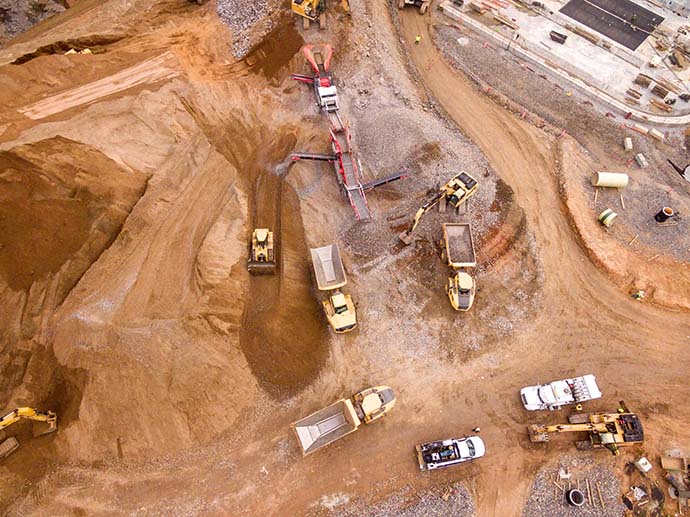
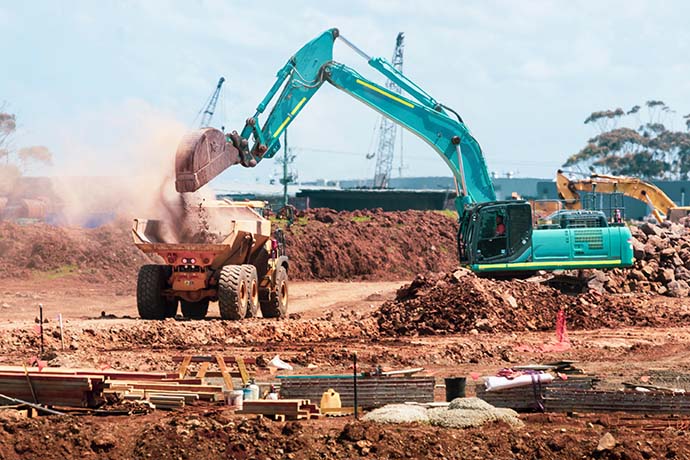
Construction companies operate a diverse range of costly machinery and tools crucial for project success. Delays in locating or maintaining these assets can lead to disruptions, missed deadlines, and tripled costs due to unplanned maintenance.
LoJack’s recent study pinpoints the most stolen equipment as wheeled or tracked loaders, towables, excavators, trailers, and utility vehicles. The National Equipment Register underscores the financial impact, averaging $30,000 per theft incident. In short, asset tracking is integral for risk mitigation in construction.
However, traditional asset tracking methods often prove inadequate for the demands of the construction industry, which, according to McKinsey, has historically lagged in digitization. Relying on manual record-keeping and periodic inspections, firms have limited real-time visibility into assets’ location and their status. Manual tracking, often paper-based or spreadsheet-driven, becomes time-consuming and error-prone in the fast-paced construction environment, where assets frequently relocate. Inaccurate, untimely tracking data then challenges resource optimization, leading to under-utilization, and increased inefficiencies, and leaves construction sites vulnerable to theft and unauthorized usage.
Satellite connectivity emerges as a crucial solution for construction asset tracking, particularly considering the diverse and often remote locations of building projects. Only about 15% of the Earth’s surface is covered by terrestrial networks, and construction sites are notorious for poor cellular service. In remote or challenging terrains, where theft and accidents are exacerbated, satellite connectivity becomes key for effective asset tracking and monitoring.
Benefits of Satellite Asset Tracking
PROMOTING WORKER SAFETY
Satellite asset tracking is crucial for ensuring safety on construction sites, where inherent risks demand proactive measures. By offering real-time location insights, this technology acts as a guardian, facilitating swift responses in emergencies. Improved safety is evident as satellite tracking provides constant information about the location of workers and equipment, preventing accidents and ensuring a secure environment. So much so, that a recent study revealed a remarkable 14% reduction in accident costs for construction companies after implementing asset tracking solutions.
Moreover, specialized alerts on personal tracking devices, such as the RockSTAR, contribute to enhanced worker safety. For instance, the timer alert allows workers to set a specific time interval. If there is no further interaction with the device within that time, the RockSTAR automatically sends a ‘timer alert’ to the server or first responders. This feature adds an extra layer of protection by ensuring timely response in situations where immediate action might be required.


COUNTERING EQUIPMENT THEFT
The construction industry faces a substantial issue — equipment theft, costing an estimated $1 billion annually. A recent survey underscores the severity, with 21% of industry professionals reporting weekly incidents of theft. Beyond financial losses, these thefts lead to project delays, shutdowns, and pilferage of raw materials.
Fleet tracking emerges as a powerful deterrent against the risk of asset theft and unauthorized use. Any unauthorized movement can trigger immediate alerts, facilitating prompt intervention, and enabling teams to alert authorities to the location of stolen assets. This also increases the chances of recovery.
STREAMLINING OPERATIONS
Investments in heavy machinery and fleet vehicles constitute a substantial portion of operational costs. Satellite fleet tracking software serves as a powerful tool, centralising data and offering nearly real-time insights into asset utilization from any location. This efficiency translates to precise payroll and cost projections, providing construction companies with accurate work times and utilization reports.
Moreover, asset tracking facilitates efficient inventory management by supplying accurate data on tool and material availability and usage. Additionally, asset tracking systems aid construction firms in regulatory compliance by maintaining precise records of equipment usage, maintenance, and inspections — a crucial aspect for audits and compliance adherence.
EQUIPMENT UTILIZATION MONITORING
Satellite fleet tracking plays a pivotal role in Equipment Utilization Monitoring (EUM) for the construction sector. With 45% of construction businesses identifying resource management as a challenge, real-time visibility through satellite tracking could prove valuable. Project managers gain instant insights into the location and status of construction assets, facilitating optimal deployment and utilization across various worksites.
This not only enhances worksite productivity but also addresses the challenges of delivering projects on time and within budget, making satellite fleet tracking a key component for effective equipment utilization monitoring in the construction industry.
PROACTIVE MAINTENANCE
Satellite tracking enables firms to conduct proactive maintenance, offering substantial benefits such as cost savings from reduced unplanned equipment breakdowns and minimized repair expenses.
The high adoption rate, with 76% of construction companies utilising fleet tracking and 73% deeming it extremely valuable, underscores its efficacy. The advantages include reduced downtime, improved equipment reliability and availability, lowered long-term maintenance costs, enhanced safety, and increased equipment longevity. This technology facilitates a proactive approach to maintenance, ensuring construction companies achieve optimal performance, mitigate risks, and realize substantial financial savings in the long run.

Satellite Trackers for the Construction Industry
Meet the Iridium Edge Solar
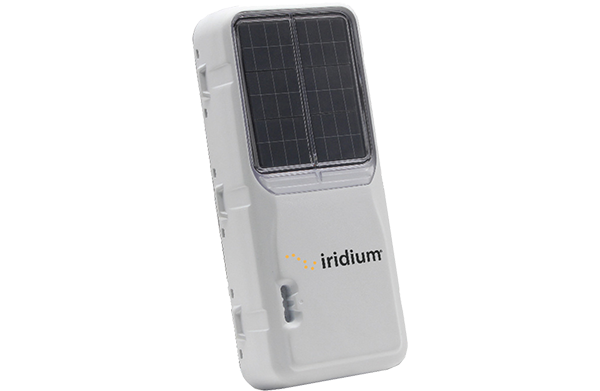
The Iridium Edge Solar is a great choice for those in the construction sector due to its ruggedized, solar-powered, and two-way communications capabilities. Specifically designed for long-term deployment in remote areas, it boasts remote configuration capabilities and military-grade packaging, making it an ideal solution for asset management in challenging construction environments. With real-time GPS tracking and local wireless sensor and communication capabilities via Bluetooth, it provides comprehensive visibility into the location and performance of construction equipment.
Its 10-year deployable lifespan aligns perfectly with the extended timelines often associated with construction projects. By utilising Iridium Edge Solar, construction companies can optimize the efficiency, safety, and productivity of their sites. The device facilitates real-time tracking of equipment locations, proactive monitoring of performance to identify potential issues, and immediate alerts to operators if the equipment is being used in a risky manner. Additionally, it enables data collection for refining safety procedures and training.
Introducing the RockREMOTE range
For larger data requirements, Ground Control’s RockREMOTE delivers real-time power generation reporting, prevents production stoppage by issuing alerts on machinery failure, and facilitates measurements at potential new sites lacking power.
The waterproof RockREMOTE Rugged, boasting an IP67 rating, enables firms to monitor and manage remote assets like mobile generators, ideal for critical communication in remote scenarios. Customers have flexibility, choosing between Ethernet, Wi-Fi, or Serial RS232/485 for communication interfaces.
Both devices support dual-mode Iridium Certus satellite connectivity combined with LTE, providing the construction industry with robust and globally accessible asset tracking capabilities.

Ready to Build Smarter?
Gain real-time visibility, enhance security, and streamline resource management in any location, even beyond terrestrial networks. Our proven devices empower construction workers with reliable and efficient tracking capabilities.
Ready to transform your construction operations? Explore Ground Control’s satellite asset tracking solutions today.
RUDICS vs Certus 100: Is it time to make the switch?
Iridium RUDICS (Router-Based Unrestricted Digital Internetworking Connectivity) was devised in the early 2000s as a means of allowing remote devices to connect to internet-connected servers using TCP/IP. The previous system, dial-up data, had a hefty overhead every time the service was activated, as a series of checks needed to take place before data could be transmitted.
RUDICS improved upon this by connecting the call to a predefined IP address, dispensing with the checks, and making connection almost instantaneously. This had the advantage of requiring less power at the remote transmitter end, lowering latency, and generally being a more efficient means of accessing the Iridium system.
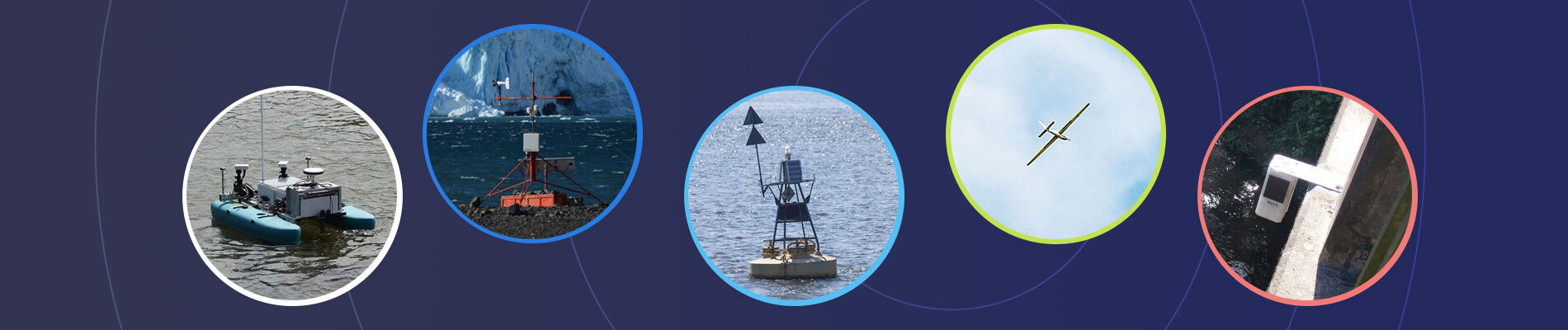
RUDICS was – and still is – used for solutions that have multiple remote units in the field reporting back to an end point. Data buoys, water level stations, Unmanned Autonomous Vessels (UAVs), geotechnical and structural monitoring solutions, weather stations and many more applications have relied upon RUDICS for two-way communication for close to two decades.
In 2019, Iridium launched its (at the time of writing) newest satellite capability, Iridium Certus. Leveraging the advanced technology on the latest generation of Iridium satellites, Iridium Certus is available in three speed classes: Certus 100, which is intended for IoT applications; Certus 200, which is good for basic internet and voice, and Certus 700, which delivers the fastest L-band internet broadband speeds currently available, up to 704 kbps.
When we’re comparing RUDICS to Certus, we’re exclusively talking about Iridium Certus 100. They’re both aimed at the same use case of connecting remote devices to servers using TCP/IP (although Certus 100 has an alternative option here – more on that later).
What are the key differences between RUDICS and Certus 100?

Certus 100 has faster data speeds
RUDICS transmits data at 2.4 Kbps; Certus 100 transmits data at 22 Kbps, and the downlink is 88 Kbps – almost 40 times faster. This means that you can transmit more data, more frequently.
Costs / billing mechanism
RUDICS is charged per minute, rather than the Certus 100 charging model of per byte of data transmitted. This makes RUDICS more expensive than Certus 100 for many applications; it’s possible, even probable, that you’re paying for connectivity time you don’t need.

RUDICS is circuit-switched
RUDICS is circuit-switched, which means the ‘call’ between the remote device and the server has to be maintained. It’s not fault tolerant if your view of the satellite is temporarily obscured, or the server goes offline.

Certus 100 is packet-switched
Certus 100 is a packet-switched network, sending data in small and optimized packets which are much less likely to be ‘dropped’ mid-transmission.
In our view, there are very few instances where Certus 100 will not present a more reliable, cost-effective and scalable solution for remote data transfer than RUDICS.
It doesn’t stop there: while Certus 100 supports TCP/IP-based connectivity, it also offers users the ability to send data via Iridium Messaging Transport (IMT). This is a message-based transmission protocol which allows you to send and receive messages of up to 100,000 bytes.
This could facilitate additional sensor readings, greater data resolution, photographs or even low-resolution video. Just as importantly, sending data via IMT will substantially lower the cost of data transmission because there’s no TCP/IP overhead in a message-based service; you’re only billed for your (successfully delivered) data payload.
Get in touch
If you’re currently using RUDICS, let’s talk: based on your current data usage we’ll be able to advise if you can save money by switching to Certus 100, and we can work through any technical implications of doing so.
We’ve been Iridium partners since 2005, so we’re well placed to provide you with an experienced, objective perspective on the right connectivity solution for you.
Harnessing Water, Defending Data: Cybersecurity in Hydropower and Dam Facilities
Dams and hydropower facilities have long been attack targets, with a history that spans wartime conflicts. During World War II, the British Royal Air Force formed a group of pilots known as the Dambusters. Their mission: to destroy critical dams in Germany; considered ideal targets due to the significant disruption they could inflict on both water and power supplies.
In 2023 however, the landscape has somewhat shifted. The global cost of cybercrime is projected to soar to $8 trillion. Due to the immense value of data and the potential for widespread disruption, energy and utility companies continue to be prime targets.
Today, the hydropower and dam industries, like many others, stand at a crossroads where innovation and cybersecurity converge. Even a seemingly minor misstep, for instance, untimely dam operations, can unleash havoc upon nearby towns, significantly hampering supply chains and inflicting widespread destruction upon adjacent regions.
Types of cyber threats: State-sponsored and hobby
Cyber threats can be split into two main types. The first is state-sponsored cyber attacks. Those that are planned and funded by governments or nation-states. Kevin Curran, professor of cyber security at Ulster University, recently described cyberattacks by the UK’s enemies as becoming “relentless”. As an example, the Cozy Bear and LockBit hacker groups are believed to be associated with one or more intelligence agencies of Russia, the latter having known links to Russian nationals.
Secondly, hobby-hacker attacks. These hackers are usually motivated by either monetary gain or a wish to cause mischief. One of the most notorious examples is the Colonial Pipeline attack. The company paid the hacker group known as DarkSide 75 bitcoin ($4.4 million) to obtain a decryption key which enabled the company’s IT staff to regain control of its systems.
Growing intricacies of infrastructure create more vulnerabilities
The rising integration of Internet of Things (IoT) devices and sensors within the hydropower and dam sector has brought greater infrastructure complexity, creating more vulnerabilities for several reasons:
- Increasing number of attack surfaces: Every device connected to the network becomes a potential target for attackers. The more IoT devices, sensors and so on that are introduced, the further the range for potential attacks is increased.
- Device security: The substantial volume and often remote location of IoT devices increases the difficulty of keeping firmware and software up-to-date. Moreover, their physical dispersion can expose them to theft and tampering.
- Lack of standardization: Different manufacturers exercise varying levels of security. The lack of standardisation can make it challenging to implement consistent security practices across all devices.
- Legacy systems: Many critical infrastructure systems still rely on older, legacy technology that may not have been designed with modern cybersecurity standards in mind. These systems are often more vulnerable to attacks.
- Interoperability challenges: Ensuring that different IoT devices and systems work together can be challenging. This can lead to security compromises to enable connectivity, potentially weakening overall security.
- Network visibility: Depending on the network’s connectivity and device location, a 360 view can be difficult to achieve and maintain, making it more difficult to detect and respond to cyber attacks.
- Data privacy: IoT devices often collect and transmit sensitive data. Inadequate data protection measures can lead to data breaches, compromising privacy and potentially providing valuable information to attackers.
The convergence of operation and information technology
Traditionally operational technology (OT) and information technology (IT) data streams remained distinct, which had the benefit of keeping OT systems ‘air gapped’ from the internet, and therefore at limited risk from hacking. As technology unifies OT and IT, it brings both efficiencies and risks. The efficiencies are numerous: by combining SCADA data with the systems that manage physical infrastructure, you can autonomously optimise performance.
But because OT systems haven’t been targets in the past, they’re not always built with security in mind. Passwords are often left at the default character string; remote monitoring for suspicious behaviour hasn’t been implemented; patches are not implemented as frequently as they should be.
In this evolving landscape, it’s critical that security teams are aware of these vulnerabilities and take steps to address them, safeguarding critical infrastructure in the hydropower and dam sector.
Lessons from successful cyber attacks
A successful cyber attack involved Queensland’s Sunwater, a water supplier targeted in a nine-month-long breach. The breach, occurring between August 2020 and May 2021, exploited vulnerabilities in an older system version, granting unauthorised access to customer information stored on their web server. While the hackers didn’t compromise financial or customer data, they left behind suspicious files, redirecting visitor traffic to an online platform.
The subsequent Water 2021 report underscored the importance of immediate action to rectify ongoing security weaknesses, emphasising software updates, stronger passwords, and vigilant network traffic monitoring as crucial safeguards.

In another notable case, the LockerGoga ransomware group inflicted significant damage upon Norsk Hydro. Norsk Hydro was forced to shut down multiple production facilities, impacting 35,000 employees, across 40 countries and resulting in approximately $71 million in financial losses. The cyberattack stemmed from an employee unknowingly opening an infected email three months prior.
Norsk Hydro’s response, however, garnered accolades. The company chose not to pay the ransom, instead engaging with Microsoft’s cybersecurity team to restore operations and remained committed to transparency throughout the ordeal. As Torstein Gimnes, Corporate Information Security Officer emphasised – “You need to rebuild your infrastructure to be safe and be sure that the attacker is not still part of it.”
An immediate IT shutdown was implemented to prevent further spread and only trusted backups facilitated by Microsoft’s team were used. Following the attack, a commitment to employee training, multi-factor authentication, regular updates, and resilient backup solutions were introduced to bolster security.
These cyber attacks underscore the importance of proactive measures and resilience in the face of evolving threats and crucially, they highlight the importance of engaging and sharing knowledge between peers. As Eric Doerr, General Manager of the Microsoft Security Response Center puts it – “When companies do this, it makes us all better and makes the attackers work harder.”
Ensuring the security of critical components in hydropower and dam facilities
Assess cyber risks
- Identify critical assets: Which assets are most important within the facility/network?
- Assess potential risks: What are the potential threats to the identified critical assets? Data breaches, malware attacks, etc.
- Prioritise risks: Which potential risks are more likely to occur and which would have the most significant impact? By prioritising risks, companies can focus resources accordingly.
Mitigate cyber risks
1. Safeguard data
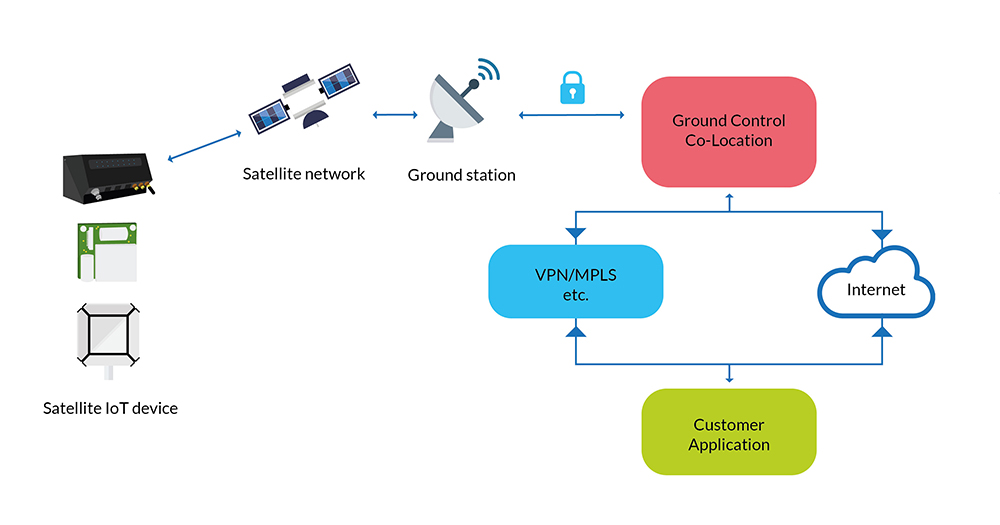
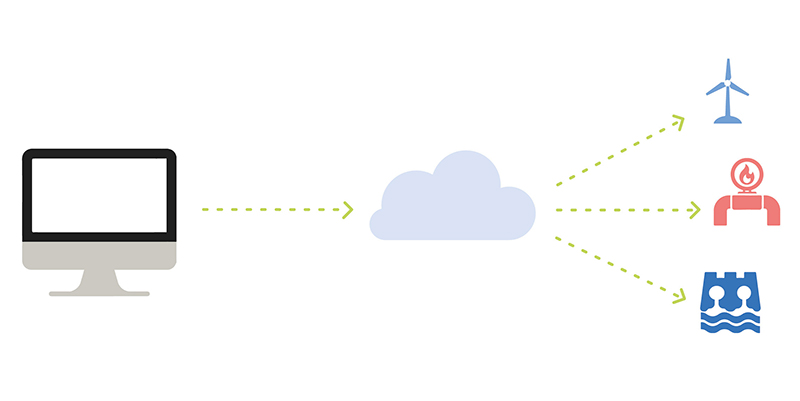
Ensuring data security encompasses data encryption and authentication protocols, coupled with monitoring and restricting physical access to facilities. While firewalls and VPNs serve as effective safeguards when data traverses public internet infrastructure, companies can mitigate these risks entirely with the deployment of private lines or a secure private satellite network like TSAT – designed specifically for SCADA data.
In addition, as mentioned above, recent trends show organisations gravitating toward a unified data stream for both IT and OT. Companies wishing to do this must ensure they have appropriate control system boundary protection to prevent unauthorised access, for example, SD-WAN coupled with a next generation firewall.
2. Secure physical access
Physical security measures not only deter potential threats but also serve as the first line of defence against cyberattacks. By strictly limiting and monitoring who can physically access a facility, organisations can significantly reduce the risk of malicious actors gaining direct entry to sensitive systems and data.
Further, when physical access is under surveillance, companies can identify unauthorised access or unusual activity, allowing them to swiftly intervene and halt a hacker’s progress.
3. Prioritize firmware and software updates
Software and firmware updates are essential tools in addressing known vulnerabilities, strengthening system resilience, and ensuring the integrity of critical software components. By regularly applying updates, organisations stay ahead of cyber threats that often exploit outdated software to breach systems and steal sensitive information.
Firmware updates for hardware devices, on the other hand, enhance device functionality and bolster security by patching potential vulnerabilities. Emphasising the importance of prompt updates and establishing a structured update management process is key. If your dam or hydropower facility is in a remote, unmanned location, ensure that you have the ability to remotely protect your infrastructure with over-the-air (OTA) firmware updates.
4. Staff training
Human errors often open the door to cyber incidents, so it’s crucial organisations equip their employees with the latest cybersecurity knowledge. Early detection and response, facilitated by well-informed and vigilant employees, can prove instrumental in preventing breaches. A prime example is a vigilant staff member who thwarted an attempt to tamper with sodium hydroxide levels in Florida’s water supply last year.
Moreover, robust incident response plans are essential. Employees must know how to contain incidents, restore systems, and investigate root causes. Ultimately organisations need to be confident that if their facility does experience a cyber attack, staff can react efficiently and effectively. Bolstered by continuous training, workshops, webinars, and the cultivation of a security-conscious culture, enhances cybersecurity resilience. It also promotes information sharing among peers, strengthening collective efforts to combat cyber threats.
5. Redundancy and backup
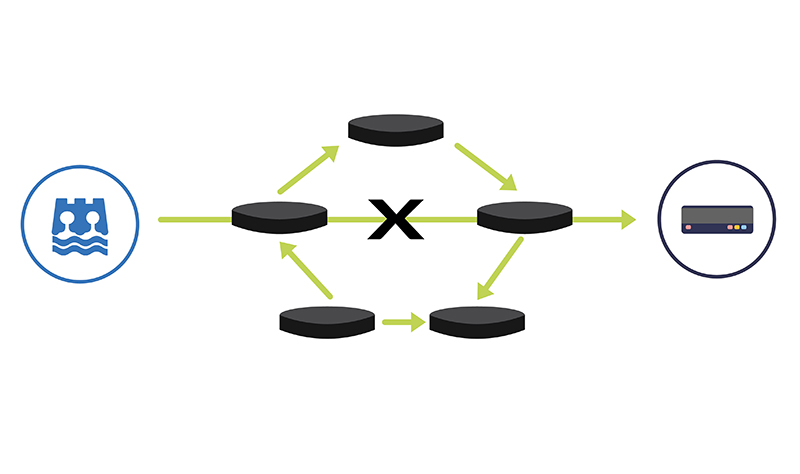
Redundancy and backup systems serve as critical safeguards against unforeseen vulnerabilities and disruptions within network infrastructure. By creating duplicate or alternative pathways for data transmission and network operations, redundancy measures ensure that even if a primary system or connection fails, there’s an immediate and seamless switch to a secondary, secure option. This not only mitigates the risk of single points of failure but also enhances the overall reliability of the system.
One of our largest clients has satellite implemented as their third connectivity failover (cellular first, fibre second). Their satellite setup hasn’t failed once in 27 years and is the system they consider the most reliable. With the hydropower and dam sector increasingly reliant on interconnected digital systems, redundancy and backup solutions stand as formidable defences, ensuring continuous operations and protecting against potential cyber threats and disruptions.
The above list is by no means exhaustive, but it does highlight a fundamental truth: In the constantly evolving landscape of cybersecurity, proactive measures are a necessity. Anticipating and addressing vulnerabilities before they become threats is pivotal to achieving and maintaining robust cybersecurity practices. If you would like to explore your connectivity and/or data security options with our experienced team, don’t hesitate to get in touch by emailing hello@groundcontrol.com.
Secure Your Infrastructure
Our team are experts in getting data from hard-to-reach places – so you don’t have to be.
To talk to the team about your connectivity options, challenges and associated data security, simply fill in the form.
Wireless connectivity for offshore wind farms: why it matters, & how to get started
Offshore wind is growing. Pioneered by countries bordering the North Sea – the UK, Germany and the Netherlands – China now leads the world in offshore wind energy production, with 23.9GW of capacity. The United States has started to take an interest, with President Biden committing to building 30 gigawatts of offshore wind projects by 2030 – which will power more than 10 million homes with clean energy. And Brazil has an ambitious programme to build 72.2GW of capacity, dwarfed only by the UK’s planned additional 78.5GW.
The benefits of offshore wind are clear: higher and more consistent wind speeds, unhampered by mountains or buildings, ensures consistent and high energy output. But the costs are substantial. The harsh marine environment means that the turbines are at far higher risk of damage from corrosion and oxidation. Plus, making repairs is harder, more expensive, and more dangerous than onshore wind. As a result, the cost of offshore wind production is far higher than solar or onshore wind: $133 per MegaWatt hour for floating turbines and $78 for fixed-bottom turbines, compared to $34 per MegaWatt hour for onshore wind (source).
We believe satellite IoT has a role to play in both lowering the cost of production, and improving the safety of workers. Here’s how.
Why is offshore wind production relatively expensive?
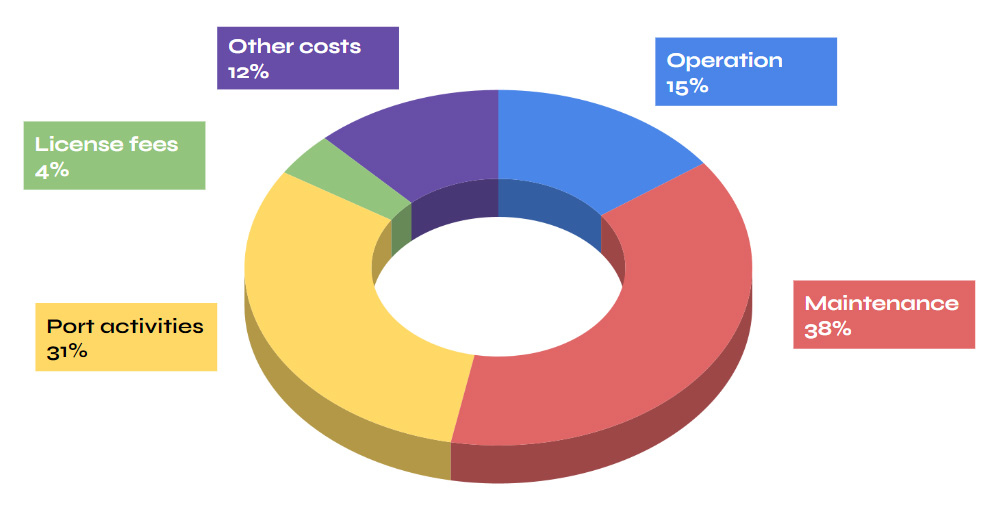
A chunky 38% of the operating costs of offshore wind farms is allocated to maintenance. What’s contributing to that cost?
- Equipment failure: on average, each turbine will experience 8.3 failures every year, comprising 6.2 minor repairs, 1.1 major repairs, and 0.3 major replacements
- Manpower: on average, it takes 116 days and 9 technicians to undertake a major replacement, and 7 days and 3 technicians for a minor repair. Delays are frequent, due to ‘no access days’ caused by bad weather
- Ageing equipment: some analysts project that opex costs increase from £184,000 per MegaWatt per year when the turbine is new, to £426,000 per MW/Year when the turbine is 15 years old.
What can be done to reduce these costs?
The best answer is predictive maintenance. Supervisory Control and Data Acquisition (SCADA) systems allow operators to monitor and act upon failures or poor performance, and more advanced data collection and analysis allows maintenance tasks to be predicted.
Predictive technologies include Condition Monitoring Systems (CMS). These capture and analyse as much as 250 physical data points, including torque and force measurements, acoustic emissions, electrical strain gauges, oil particle counters and main bearing damage. Sensors capture the data, then AI or machine learning is used to improve the accuracy of the predictions and reduce false alarms as the system is embedded, and the installation base grows.
The benefits for utilising CMS are clear to see, with one monitoring system provider claiming that 90% of developing faults are detected 5 months before failure, driving 175% annual ROI from greater uptime, and reducing emergency maintenance trips by up to 50%.
Predictive maintenance drives 175% annual ROI for offshore wind farms
Further, improving quality control reduces the risk of accidents, which could then reduce insurance premiums.
A key part of this process is the transmission of the sensor data to the cloud, and from there to the client’s IT system, where the data is collected, stored and analysed.
Sensor data is often transmitted through underwater cables, which offers many benefits: it’s fast, secure, and can carry a large amount of data cost-effectively. However wired communication does have drawbacks that can be resolved by co-locating a wireless solution.
Wired vs. wireless or wired plus wireless?
If you already have a wired connection to your wind farm, it’s worth considering a wireless system to complement it, because the ease of adding new sensors to a wireless network is far greater than trying to wire in additional points into a legacy system. You simply need to place your sensors where they need to be to capture the required data, and switch them on. With no need to run cabling, you’re saving time and money, and benefitting from the additional sensor data faster.
Further, because you’re creating a dedicated wireless network for your SCADA data, its findings can be transmitted independently of other data sources. This provides both resilience in the event that your wired connection is disrupted, and allows you, if you choose, to put bespoke security measures around your OT data stream.
In addition to which, you can speed up the rate of data transmission from the industry standard of every 10 minutes, to virtually real time. In turn, this ensures that your maintenance teams get close to real-time information to help inform decisions on what issue to address, when. In fact, Turbit estimates that you can increase output by up to 5% by applying corrective measures faster.
If you were building a new offshore wind farm and decided to use only wireless connectivity to connect your assets, it can cost as little as 10% of the wired alternative, as well as being faster to implement. That said, while the cost of installation is far less, satellite and cellular connections generally come with a monthly usage fee, and they’re only suitable for relatively small amounts of data. For this reason, in our experience, most operators are exploring hybrid wired and wireless setups.
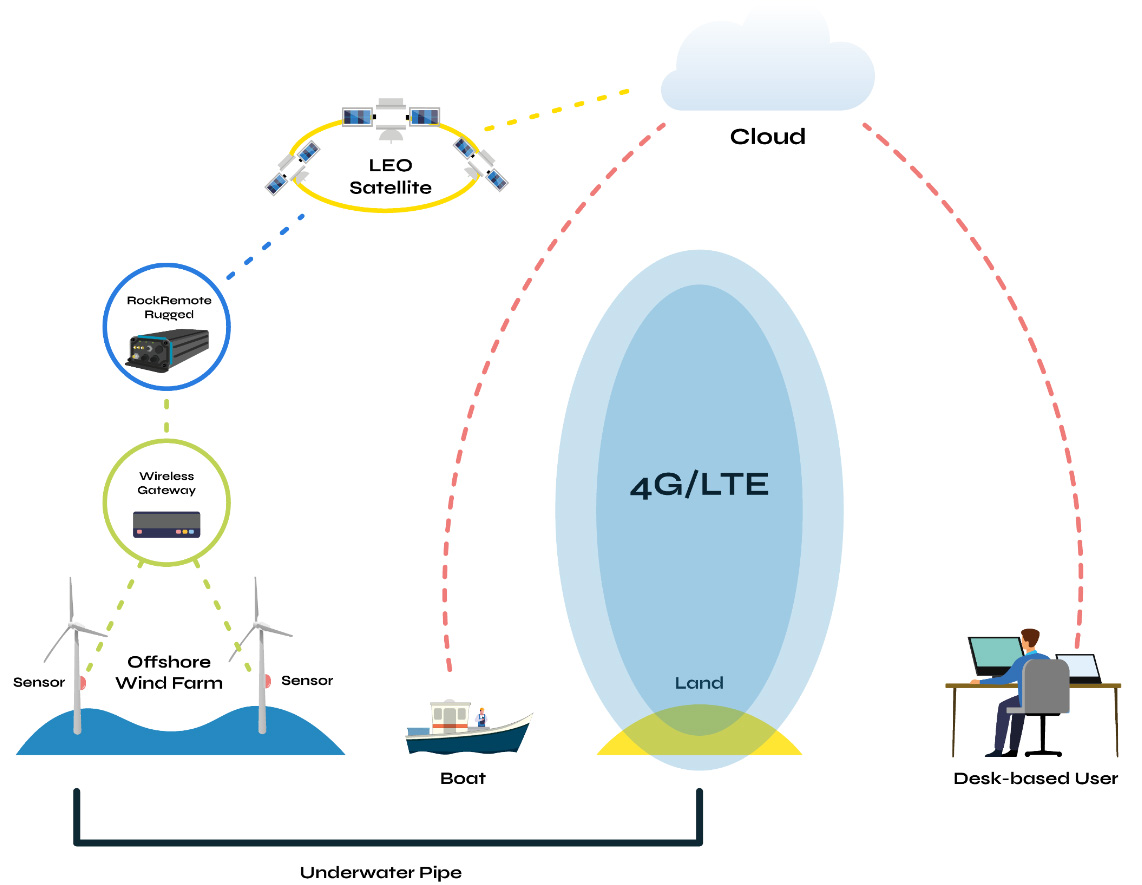
But adding a wireless network isn’t always straightforward for offshore wind farms, as they may fall outside the reach of cellular networks. 4G/LTE services typically extend to around 12 nautical miles from the coast, and wind farms can be built up to 43 miles offshore, which leaves a gap.
That gap can be bridged with a private cellular network, which offers great throughput and tight data security, but this is expensive and time consuming to set up.
Wireless connectivity options for transmitting IoT data from offshore wind farms
LoRaWAN coupled with satellite connectivity is getting an increasing amount of attention for this application. LoRa networks are very easy to set up, and have a wireless range of approximately 16km. They’re specifically designed for IoT data so LoRa-enabled sensors have very long battery lives, but very small data-throughput.
Aggregate each turbine’s sensor data in a LoRaWAN gateway, and then use a single satellite transceiver to transmit the data into the cloud. This is easily achieved with technology that’s widely available today. For example, a device like the RockREMOTE Rugged can be placed almost anywhere on a turbine, as its omni-directional antenna connects with the Iridium satellite network: if the turbine moves, there’s no loss of connection.
This combination of a Wide Area Network and satellite means that most turbines don’t need a specific piece of hardware to communicate to the satellite network: only one, the ‘master’ turbine, needs this, along with the gateway. The gateway can help to lower the cost of data transmission by providing edge computing capabilities: reporting on exception, for example, ensures that only data points falling out of agreed parameters is transmitted.
Is satellite data transmission expensive?
Because of the recent proliferation of satellite network operators, including Starlink and the soon-to-be-launched Amazon Kuiper Project, the cost of sending your data via satellite has substantially decreased. Existing network operators who have proven their reliability over many years have diversified their product offering to ensure that they can remain competitive with the new entrants (read more about satellite connectivity costs).
As an aside, another great benefit of working with established network operators like Iridium and Inmarsat is that their data transfer mechanisms are trusted by governments and militaries worldwide. As wind farms can be considered critical national infrastructure, and are expected to become more attractive targets for cyber-crime in the near future, knowing that you have access to highly secure data transfer options is very important.
Who else benefits from wireless sensor data transmission?
In addition to the operations team receiving, interpreting and actioning the CMS’ recommendations, another ‘customer’ of wireless sensor data and analysis are the maintenance crews. Frequently located onboard offshore support vessels (OSVs), these people are indispensable for the smooth running of offshore projects.
The same data being captured from sensors and transmitted via satellite to the cloud can also be transmitted to the OSVs. By receiving the data directly, they’ll benefit from being able to effectively triage tasks, without having to wait for instructions from an on-shore team. Real-time wind, humidity, wave height and weather pattern measurements are also essential for maintenance workers’ safety. This sensor data doesn’t need to travel through a fibre connection, as the main requirement comes from the maintenance teams for whom this is critical information.
Recommended OSV satellite IoT hardware
While OSVs usually have a heavyweight VSAT system for crew communication, we’d recommend a separate, lighter-weight system for the transmission of IoT and tracking data, both as a failsafe and to use the bandwidth more efficiently.
The Thales VesseLINK is an ideal for solution for this purpose. It utilises the Iridium satellite network which has 100% global coverage, and the antennas are omni-directional, meaning there’s no need to re-point the device when the OSV moves. Because the network is in Low Earth Orbit (LEO), the latency is low – less than one second. Coupled with the fact that it uses the L-band frequency to transmit data, which is unaffected by weather conditions, Iridium-enabled devices are ideal for mission-critical data.
The Thales VesseLINK is available in two versions: the VesseLINK 200 and VesseLINK 700. The difference between them is the data speeds: the former is designed for IoT data and basic voice / internet access, with data speeds of 176 Kbps. The latter delivers high-speed internet with speeds of 700 Kbps, and creates a WiFi hotspot for any device within a 300 metre range. So it’s capable of far more than transmitting IoT data, but will do so under any conditions.
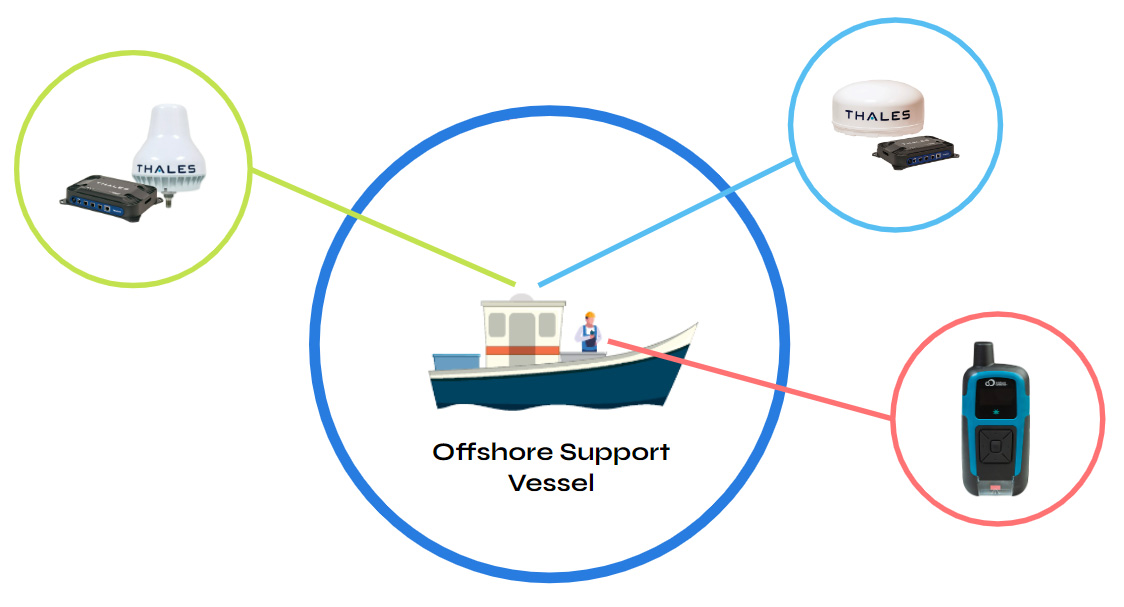
Another satellite transceiver we’d suggest exploring is the RockSTAR. This handheld device can connect to wearables sensors like heart rate and body temperature monitors. It also features two-way messaging and an SOS feature. Again using the Iridium satellite network, this data can be transmitted to safety teams to allow for timely inventions, where needed.
Primary, secondary or failover communication
A final note regarding satellite connectivity for your offshore wind farm: it’s highly effective as a back-up communications mechanism should anything happen to your primary means of connecting with the turbines. Underwater cables can be damaged by trawlers, the environment or even malicious intent. With satellite as a back-up, you can still shut down or kickstart your turbines as needed, and communicate with your workers. It’s instant infrastructure that isn’t affected by weather, has no dependency on terrestrial networks, and is highly secure.
Talk to the experts
We’ve worked with renewables companies and instrumentation manufacturers for decades, and have seen satellite IoT transform over the years; but never more rapidly than it is right now.
We can help you make sense of a changing ecosystem and make choices that will continue to deliver for you well into the next decade. Get in touch, and we’ll provide you with objective, expert advice.
Private Satellite Network: TSAT’s Game-Changing Solution For Utilities
Remote ‘off-grid’ utilities sites play a crucial role in bringing reliable power to remote and challenging regions. But ensuring seamless communication at these remote power utility sites is no easy task. While traditional mobile and fiber connections are a great solution in cities, they fall short when it comes to the unique communication challenges of off-grid locations such national parks, mountainous regions, and permanent, poorly inhabited, grasslands.
Most power utility and water management companies have around 10% of their sites located in ‘off-grid’ areas. These sites often lack reliable access to mobile networks and terrestrial fibre infrastructure, making it impractical and costly to use conventional connectivity solutions. To make matters more challenging, these remote sites might be in environmentally sensitive areas or rough terrains, making it even harder to set up extensive communication networks.
In such situations, getting customer data back from these sites requires innovative solutions that go beyond the typical terrestrial and cellular options. It’s also crucial to distinguish between customer data backhaul and SCADA (Supervisory Control and Data Acquisition) and telemetry data backhaul. Mixing the two could lead to serious cybersecurity issues, which is why a specialized solution designed exclusively for SCADA and telemetry data is essential.
In this blog, we’ll delve into the main data connectivity and backhaul challenges faced by remote power utility providers. Additionally, we’ll discuss how TSAT offers a reliable and robust communication solution specifically tailored to meet the unique requirements of these remote power utility sites.
How TSAT overcomes the key data challenges for power utilities
1. Instant communication infrastructure
Remote areas often lack reliable communication infrastructure, such as wired internet or cellular networks. TSAT utilizes satellite communication to overcome this limitation, ensuring that data can be transmitted to and from the remote sites even in areas with no or limited terrestrial connectivity.
2. Real-time monitoring and control
Remote power utility sites might be unmanned or difficult to access regularly due to their remote site situation, but any downtime or loss of energy production can be costly. TSAT enables real-time monitoring and control of critical assets, such as generators, switchgear, and substations, from a central control center, allowing operators to respond quickly to any issues or anomalies, optimising power output and maximizing power generation.
3. Enhanced grid reliability
By continuously monitoring the remote power sites, TSAT helps identify potential problems and weaknesses in the grid, as they occur in real-time, enabling proactive maintenance and repairs. This proactive approach enhances overall grid reliability and minimises the risk of large-scale outages. Satellite is also highly reliable and unlike terrestrial and fiber, is unaffected by coverage, weather events and ground infrastructure.
4. Robustness against extreme weather events
The United Nations Office for Disaster Risk Reduction reports that over the last 20 years, there has been a “staggering rise” in the number of extreme weather events. Floods, fires, storms and earthquakes, all risk the stability, reliability and telemetry data delivery of sites reliant on cellular and fiber. As TSAT is satellite-based, connectivity is much more reliable and stable.
5. Highly secure
Cyber-attacks are on the rise around the world and utility powerhouses have been targets. TSAT ensures encrypted and authenticated data transmission between remote power sites and the central control center. The dedicated satellite network provides a private and isolated communication channel, safeguarding against cyber threats and unauthorized access; making for a trusted and effective solution for power utilities’ communication needs in remote locations.
A detailed look at TSAT
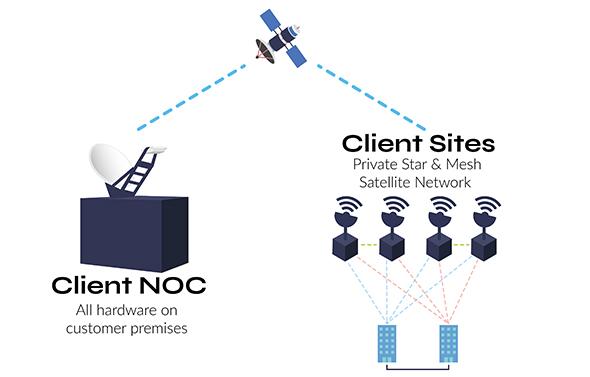
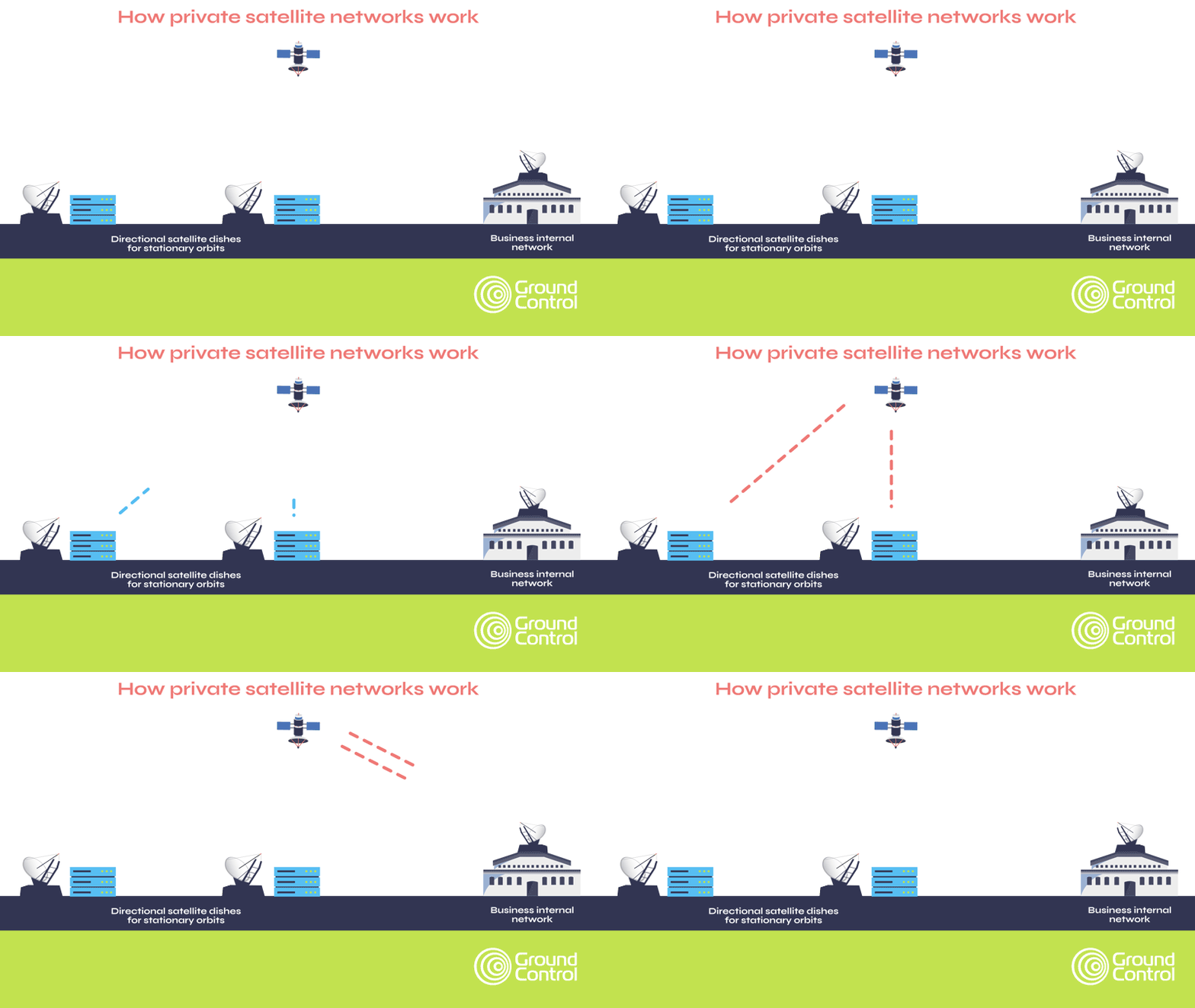
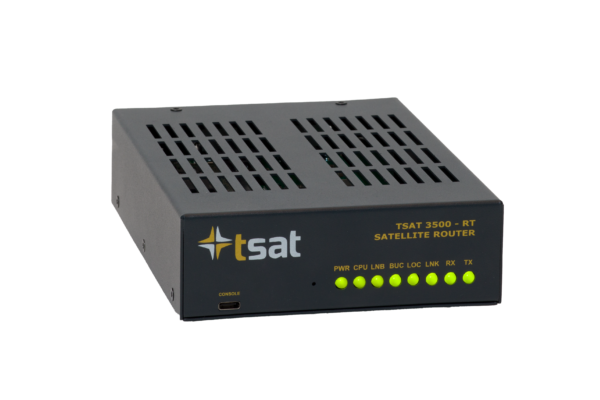
TSAT offers a narrowband private satellite network that provides an ideal solution for monitoring and controlling smart power grids in even the most remote locations. Power utilities in the UK can now benefit from this cost-effective and reliable platform, connecting distant assets to crucial utility applications like SCADA transmission, telemetry, and M2M, all within a secure network.
Designed to accommodate the needs of both small and medium-sized networks, TSAT boasts scalability with lower operating costs compared to installing and maintaining fiber connectivity. It supports both IP and legacy serial devices and operates independently from terrestrial communication systems. This not only complements existing terrestrial networks but also offers an alternative solution, ensuring continuous transmission at all times.
The hardware is purpose-built to withstand harsh environments, providing years of reliable operation, making it the most robust choice in adverse weather conditions, unlike mobile and fiber alternatives. Additionally, TSAT adheres to the IEC-61850 global standard for utility and industrial communication and automation, ensuring seamless integration with existing systems.
Through rigorous testing, Ground Control solutions have received certifications in the Worldwide Industrial Telemetry Standards (WITS) DNP3 protocol, setting the global standard for utility industry telemetry control and monitoring requirements. This ensures interoperability between equipment from different manufacturers, guaranteeing a smooth and efficient power utility system.
Save costs and be secure
The equivalent statistic for Euros regarding the average cost of laying fiber can be found in the United States Department of Transportation’s “Fiber Optic Installation Cost Survey” report. According to the report, the average cost of laying fiber is estimated to be around €23,000 per kilometer. Additionally, there’s the ongoing expense of sending experienced Field Engineers to manage installations and maintenance. Over a 10-year hardware lifespan, this this total is significant.
TSAT offers a practical solution to mitigate these costs almost entirely, as its terminal can be remotely managed. This means no more costly truck rolls, and with TSAT being always-on and relaying data in real-time, prompt and guaranteed servicing is assured.
The TSAT HUB stands out as the most cost-effective VSAT HUB available. By efficiently utilizing the satellite spectrum and tailoring satellite bandwidth to meet specific application needs, annual communication expenses are significantly reduced. This makes TSAT an ideal primary or backup option for existing terrestrial communications, providing reliable and affordable connectivity for remote utility sites.
Unlock the potential of your data
With over 40 years of combined knowledge of satellite experience, the Ground Control team is well placed to help keep you connected when it matters the most with complete satellite connectivity solutions for any situation and application.
Whatever your communication or connectivity needs, we can help.
Unleashing Precision Forestry: how Satellites Facilitate Decision-Making and Automation
While the Mining industry has been applying advanced analytics and AI to its operational technology for some time, Forestry has lagged behind in terms of digital data capture, automated operations and optimised decision-making made possible through advanced analytics. But the times are changing.
As McKinsey identified in a 2018 article, the increasing technical sophistication of Forestry’s main customers – pulp, paper, transportation, sawmills, timber traders etc. – has driven the adoption of precision farming technologies. Further, early adopters have used their greater yields and reduced costs as a competitive advantage.
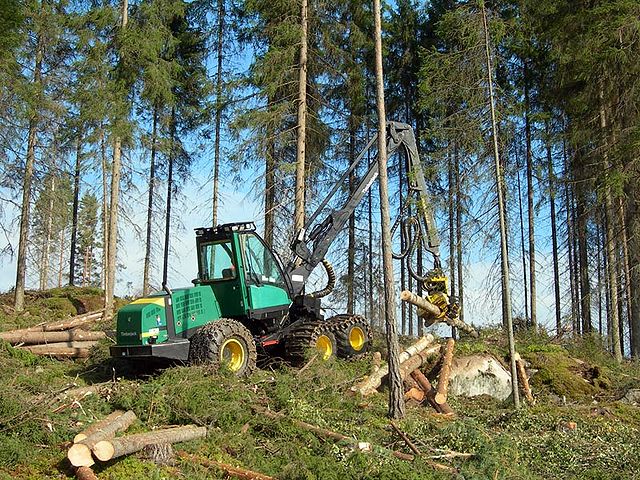
An example of the value of real-time data capture is seen in the mechanised harvesting cut-to-length (CTL) system, evolving in Scandinavia. Traditionally, tree felling and log manufacture are carried out by an operator with a chainsaw; tree trunks are extracted with wheeled skidders or cable systems to the roadside, and then sawn, in situ, into logs. Trunks are connected to cable systems by operators, navigating debris and potential runaway trunks; a manual, dangerous job. Decisions on what log grades to make from each tree trunk are made by the chainsaw operators, guided by a few basic log specifications and prices. There is little automation.
New CTL technology is fully mechanised with a harvester that fells trees and makes logs in one process, paired with a forwarder that moves these logs roadside. The system relies on digital data: cutting instructions are relayed in real-time to the harvesters, where onboard computers optimise the mix of log grades made from each tree, using sensors mounted on the harvester to measure trunk shape and quality. Production data, together with data on machine productivity, and other performance indicators such as fuel efficiency, can be visualised in real-time.
This level of automation and digitalisation increases operational safety while speeding up precision felling and productivity. It gives greater management control, an optimised supply chain, fast value recovery and planning for the next crop. Data on grade outturn from a specific site can inform decisions on what tree species to plant for the next crop, what fertiliser regimen to employ, and at what age to best harvest a crop. Effectively, optimised decision-making via advanced analytics and insight.
Connectivity: why it’s holding Forestry back
The problem with utilising smart industrial equipment is that it’s not that smart without a means of passing data between machines, people, or back-to-base. According to FPInnovations, 60% of forestry operations have no cellular coverage, which “prevents the timely flow of information between the forest and the data centre… we cannot use the productivity tracking technology that’s being used in other sections, such as agriculture.”
Cellular coverage in remote locations, especially covering woodland, mine pits or agricultural fields is often patchy or unavailable and this leaves remote teams and machines disconnected. Recent forestry development has overcome this, to some extent, using geostationary (GEO) satellite technology.
In their 2021 trial project, FPInnovations and partners tested the use of a mobile, private LTE (cellular) network in the forest. An LTE base station was set up at the edge of a cut block, utilising a 30-metre portable cell tower, omnidirectional antenna and tower-mounted amplifier (TMA) to increase signal strength for extended coverage. A satellite terminal was then used to connect the LTE system to the internet.
In this trial, one cell tower covered a 10-kilometre radius. Devices within this radius, including cell phones, tablets and telematics, communicated with the cell tower even while in motion. The GEO satellite service provided the essential backhaul of data. You can read more about the trial here, where the learnings from the project are available.
But this type of solution comes with high initial investment costs, and the use of geostationary satellites can create limitations over more rugged terrain, where a view of the sky is restricted. Devices that connect with geostationary satellites – in orbit 35,786 km above Earth – need to have a clear line of sight to their satellite, which can prove difficult in mountainous and wooded areas. The evolution of the project is to use a satellite transceiver that speaks to satellites in Low Earth Orbit (LEO).
The role of LEO satellites in bridging the gaps
Low Earth Orbit (LEO) satellite networks benefit from lower latency (because of their relative proximity to Earth), and can provide more reliable coverage if there are line-of-sight challenges, or the operation is mobile.
Iridium utilises a mesh of LEO satellites able to communicate with one another, passing data from one satellite to another, until the final destination is reached. Antennas communicating with the mesh network don’t need to be ‘pointed’ towards a single satellite, as data can be picked up by any satellite within the constellation and passed through the network, to the ground station.
This makes this network ideal for mobile IoT applications, and perfect for heavy machinery, or operations that shift in location, such as transitory logger camps. Iridium Certus 100 service can provide ubiquitous connectivity in very remote, forest areas.

Implications for developing precision forestry technologies
Reliable satellite connectivity, be that as the primary form of data connectivity or as a data backhaul for cellular or LoRa networks, creates the foundations for smart precision forestry technology, bringing several exciting digital operational capabilities.
The guaranteed connectivity is essential to the constant stream of data that passes between high-precision heavy machinery and the controller. It may be simple sensory data, such as sudden movements, or hazardous objects detected in the logging zone; a block in the workflow or a major mechanical malfunction. Remote heavy machine monitoring, diagnostics and troubleshooting can also provide advance warning on machine maintenance, saving downtime and redundancy, creating operational efficiency and reducing costs.
Steps towards Forestry digitisation
One obvious consideration for implementing precision forestry technology is the scale of investment relative to the size of the logger operation. For a forestry operation curious to see if the benefits of automation can be realised, satellite IoT devices present a very rapid and low cost means of backhauling data from individual machines, and can be rapidly scaled up or down. They can help logging operations evolve from analogue to digital in incremental ways, depending on the volume of data that needs to be transferred, and the critical nature of what’s being communicated back to base, or between man and machinery.
Automated machinery requires constant data connectivity for safety and autonomous decision-making, whereas maintenance alerts may only be necessary on a report-by-exception basis. For each use case, our technical team is able to advise on the best satellite service to support the operational needs and budget.
The RockREMOTE Rugged provides a fertile opportunity for trialling the benefits of satellite connectivity in a forestry setting. It’s aluminium cased, and built to withstand the roughest of environments. Fixed to a remote asset, like a Forester or Harvester, the device enables satellite data transfer of predictive and preventative maintenance analytics, for example.
Customers with small to moderate-sized Industrial IoT data requirements can utilise Iridium’s IMT message-based service for cost-effective data transfer. For more data-heavy applications and real-time monitoring, the device connects TCP/IP-related data, via the Iridium Certus 100 Airtime service. Certus 100 enables data transfer of up to 200 MB per month with speeds of 22 Kbps up and 88 Kbps down.
As mentioned earlier, it will maintain a reliable connection on the move, and transmit from anywhere with a clear view of the sky. If your devices and assets are already connected to an LTE Cat 1 or Cat 4 cellular network, the Rock Remote Rugged device also offers automatic WAN to satellite failover.
Digitising Forestry offers more opportunities for data insight and application: from advanced forest mapping, sensor-controlled environments and forest nurseries, to the use of drones/UAVs for fire monitoring and precision forestry inventory. Satellite provides the instant infrastructure needed to test and scale projects like these.
Unlock the potential of your data
If you would like help unlocking the potential of data for your next precision forestry project, get in touch. Our technical team would be happy to assist, no matter how big the project or whatever the question…
SmallSats, Big Impact, and the Future of Connectivity in Water and Waste Water Processing
Satellite IoT is exploding right now, with new entrants left, right and centre, and some huge names throwing their hats into the ring: Starlink for one, and Amazon’s Kuiper for another. This incredible proliferation of satellite network operators is driving innovation at an unprecedented speed, but there’s also a lot of hype. In this post, aimed at sensor manufacturers supporting the water and waste water industry, we’re going to explore what’s currently available, what’s coming soon, and what we think the next five to 10 years looks like – with some myth-busting along the way.
Satellite networks launched between 1965 and 2011
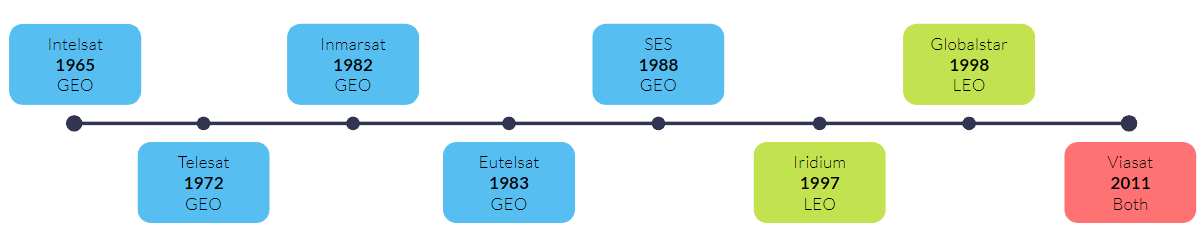
This timeline shows the launch dates of the “old guard” of satellite network operators; and while they’re unquestionably well established, don’t take old as meaning redundant here. These companies have stood the test of time; their services are highly reliable, and they’ve repeatedly updated their networks over the decades. Between them they serve the gamut of satellite internet applications, from Iridium’s Short Burst Data, designed for tiny amounts of IoT data, through to Viasat’s broadband internet service with speeds of up to 100 Mbps.
Satellite networks launched between 2018 and 2024
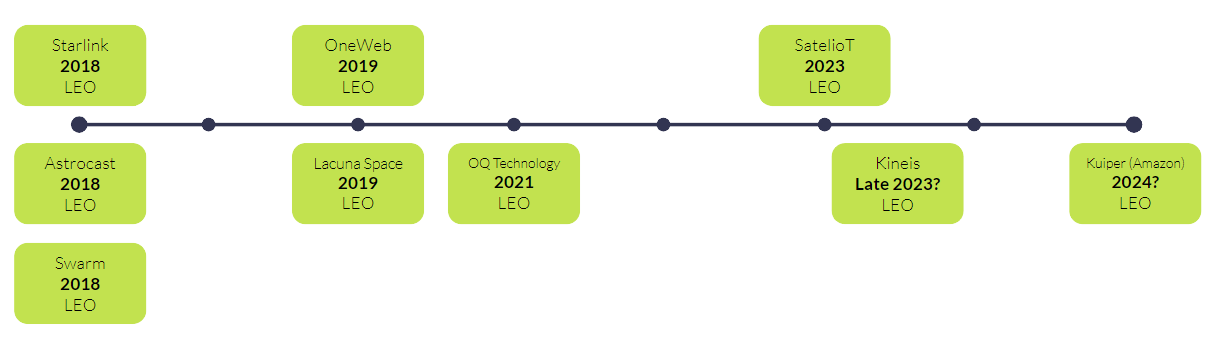
As mentioned, in recent years, more and more companies have started to build satellite networks; all are in Low Earth Orbit (LEO), and almost all are using what are called “SmallSats”. Here we’re using the term for any satellite weighing less than 180 kg and measuring between the size of a kitchen fridge and a Rubik’s cube. It’s this smaller size that has, in part, allowed for this growth – it’s much cheaper to put a SmallSat into Low Earth Orbit than it is to put a large satellite (over 1,000 kg) into Geostationary orbit.
Coupled with the trend for SmallSats and Low Earth Orbit, the other major reason for the increased number of new entrants is the lowered cost of putting satellites into space. From $85,000 per KG in the 1980s, to just $1,000 per KG in 2020 (source); for that you can largely thank SpaceX.
About satellite orbit heights
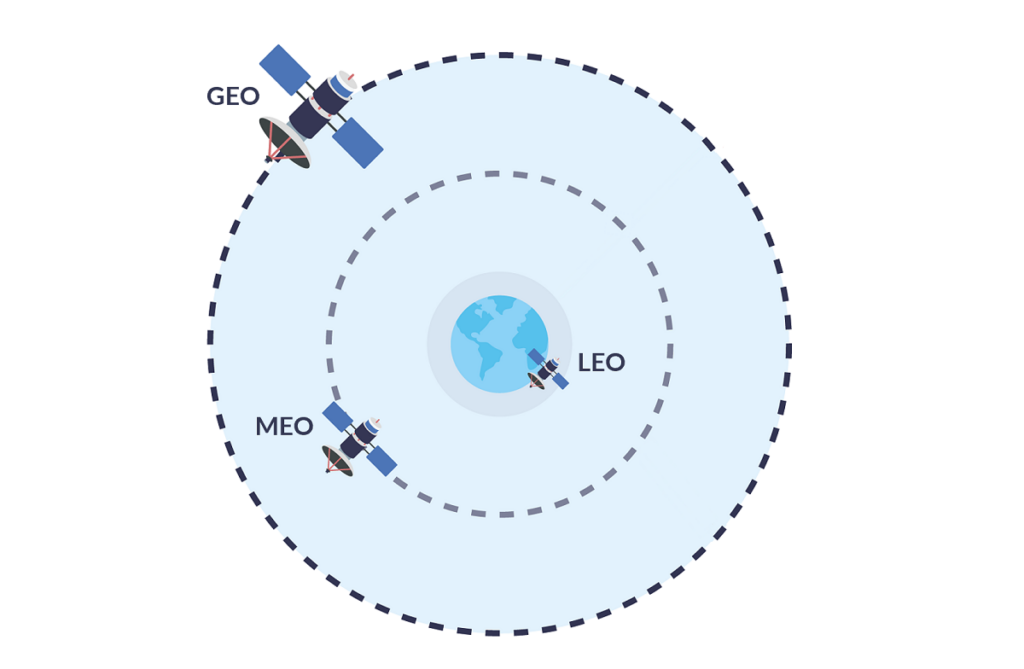
A quick explanation about the significance of orbit heights in satellite connectivity. Satellites in Low Earth Orbit (or LEO) are much closer to Earth than Geostationary satellites, which means that the time it takes to send data to the satellite and back to Earth is reduced – usually less than 1 second.
If you need real-time data transmission for your systems to operate smoothly, this is a welcome and necessary benefit. However, for this to be realized in practice, there needs to be a satellite overhead at the point at which you transmit; we’ll touch on the challenges new entrants have in this respect shortly.
What are the implications for water sensor manufacturers?
1. Lower cost
Firstly, cost: these networks cost less to establish, so the operators have less costs to recoup! That in turn has forced the established players to diversify their services to compete. This is great news as the relatively high cost of sending data over satellite previously made some use cases non-viable – but no longer. If you need to capture data from your remotely deployed sensors, cost is rarely, if ever, a prohibiting factor now.

Reservoirs
Water levels, precipitation, air and water temperature, relative humidity

Pipelines
Leak detection, Third Party Intrusion, broken wires, storm water ingress

Treatment Plants
Water levels and flows, energy consumption, water quality, equipment status
2. Smaller antenna size
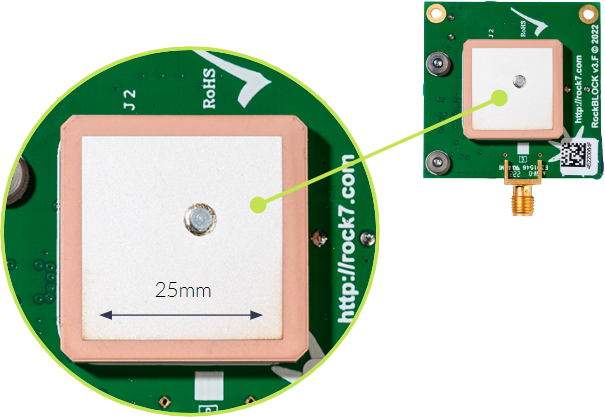
Secondly, antenna size and power. This has always been variable depending on the amount of data needing to be transmitted: a large amount needs a large antenna and a decent amount of power. Small amounts of sensor data, however, can be sent to satellites in Low Earth Orbit using absolutely tiny antennas such as the patch antenna included with the RockBLOCK 9603.
This connects to the Iridium network, which was one of the first LEO networks launched. This low-power-by-design modem can be powered by a battery for many years, and the same is true for many of the devices which connect to the new space entrants.
3. The convergence of satellite and 5G
The next step in the evolution of Satellite IoT is the convergence of cellular and satellite networks. The telecommunications industry is working on several ideas that will enable seamless data transfer between these networks. A key application of this convergence is to extend the reach of 5G which in comparison to its predecessors, provides limited coverage. If satellites can function as “cell towers” in space, it would unlock the full potential of 5G, providing global coverage from anywhere on the planet. 3GPP’s latest release – Release 17 – included technical specifications for direct-to-device 5G over satellite. This release also extended interoperability, Integrated Access and Backhaul (IAB), and network slicing to support Non-Terrestrial Networks (NTNs). Read more about 5G and satellite technology.
Things to be aware of
It’s not all good news, though. It takes time and money to build a reliable satellite constellation, and every one of the new entrants is still in the process of establishing their network – including Starlink and Swarm.
That means that you can suffer from high latency – i.e. there simply isn’t a satellite overhead for your device to send data to, so you will need to wait until there is. To give you a real-life example, if you connect your sensor to the Swarm network from North America, it can take from 2 minutes to 2 hours for your data to be intercepted by a satellite, and then delivered back to Earth. For Iridium, those parameters are 10 seconds to 15 minutes. And bear in mind Swarm (acquired by SpaceX in 2021) is one of the best established of the new entrants; newer and less well funded companies will have much longer delays.
Similarly coverage can be spotty; there is still only one satellite company that delivers 100% global coverage, and that’s Iridium. The established geostationary satellite operators usually have great coverage, and just miss out the polar regions.
The new networks also suffer from congestion: demand can outstrip supply, leading to failed transmissions and higher costs as data packets are re-sent; plus slower speeds when the network is busy. That’s plaguing Starlink right now – they’ll fix it, for sure, but just now it could be problematic.
However, if your instruments or sensors are within the coverage of one of these networks, and you can cope with receiving data once or twice a day, with the promise that this will speed up as they launch more satellites, then there is a huge amount of choice available to you, and the cost is really very low.
Our recommendations for water sensor satellite connectivity
For critical national infrastructure like water utilities, we continue to recommend established networks like Eutelsat, Iridium and Viasat with millions of subscribers, who’ve proven they can manage spikes in demand; who’ve got redundancy services baked in; who have very high levels of coverage and still benefit from very low latency.
What about data security?
“Water utilities are the third most targeted sector for hackers in the United States”
– Journal of Environmental Engineering
Water terrorism is on the rise and is likely to get worse as clean, safe water becomes an increasingly scarce resource. In 2022, hackers claimed to have access to the SCADA data of Thames Water (oddly, while they thought they’d hacked Thames Water, they’d actually hacked South Staffordshire Water; and in neither case were they actually able to access SCADA systems).
The hackers claimed to have the ability to tamper with the safety of drinking water, a terrifying prospect for the general public (source). While this incident blew over with basically no harm done, there are state-sponsored cyber warfare units who will be vastly more capable, should they be tasked with targeting national infrastructure.
To be clear, sending your data via satellite isn’t risk-free. But it is much harder to intercept data going from a sensor to a satellite, then back to a ground station, than it is to intercept data that’s using public infrastructure like the internet. And if that ground station is physically on your premises – that’s an air-gapped solution that’s about as secure as data transfer gets. This private satellite network is called TSAT and we don’t know of any more secure way to transmit mission critical data.
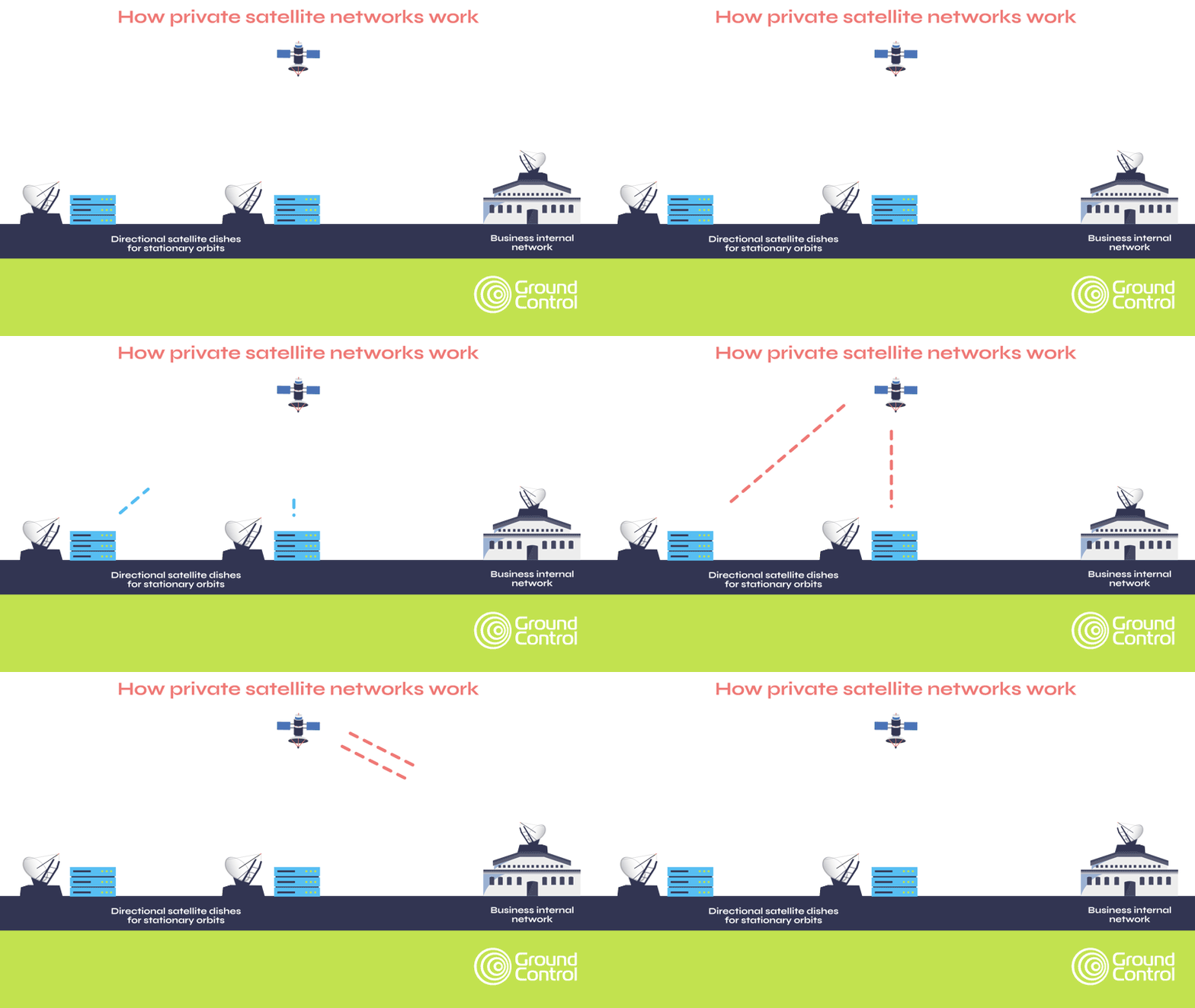
And while TSAT represents the highest tier of security capabilities within satellite IoT, by default, satellite data traffic is relatively secure, meeting most military and government security standards.
Further, at Ground Control, we’ve built Cloudloop, a delivery network for Iridium and Viasat traffic, which allows us to have full control over our certified, cutting-edge data paths, while securely delivering traffic.
We built this because we wanted to deliver additional security for our customers’ data, and offer optional public static IPs and completely configurable firewalls to assist in securely moving your data from A to B.
To summarize: satellite IoT has transformed in the last five years: prices have come down, transceivers are smaller, power requirements have lessened, and security has improved. And with Amazon’s Kuiper satellite network scheduled for launch in 2024, the pace of change is not going to slow.
We’re here to help you make sense of all of this. We keep on top of all of these developments so we can make expert recommendations to you, and ensure that a system you implement today will remain viable 5, 10 or 15 years into the future.
Would you like to know more?
We partner with sensor / instrumentation manufacturers to deliver end to end solutions for water companies across the world. If you design and build sensors, we’d love to hear from you to talk about working together. If you’re a water utilities company and looking for a connectivity bridge for your remote sites, we can help!
Call or email us, or complete the online form, and we’ll come back to you within one working day.
Conquering Infrastructure Obstacles in Sustainable Development Projects
The World Economic Forum’s IoT Guidelines for Sustainability report states that 84% of IoT deployments are addressing, or have the potential to address, the UN’s Sustainable Development Goals. These SDGs include combating climate change, sustainable production patterns and ensuring availability of clean water.
But as the report points out, “No services are possible without the infrastructure in place. Particularly in the case of IoT, at some point in the future revenues may come from the services associated with data, but without addressing the infrastructure solutions first, that day is still far away.”
In this post, we’re exploring challenges that are preventing the roll-out of IoT solutions in the areas that need it most, and offering some ideas to resolve these issues. It’s not a fully comprehensive list of challenges. We’ve left out the issue of national and municipal government buy-in, and conflict / war zones, as while they’re unquestionably barriers, we’re realistic about the ability of a blog post to provide a practical solution to them!
The two barriers to IoT infrastructure we’re addressing are affordability and geography.
Where in the world is the lack of IoT infrastructure most acute?
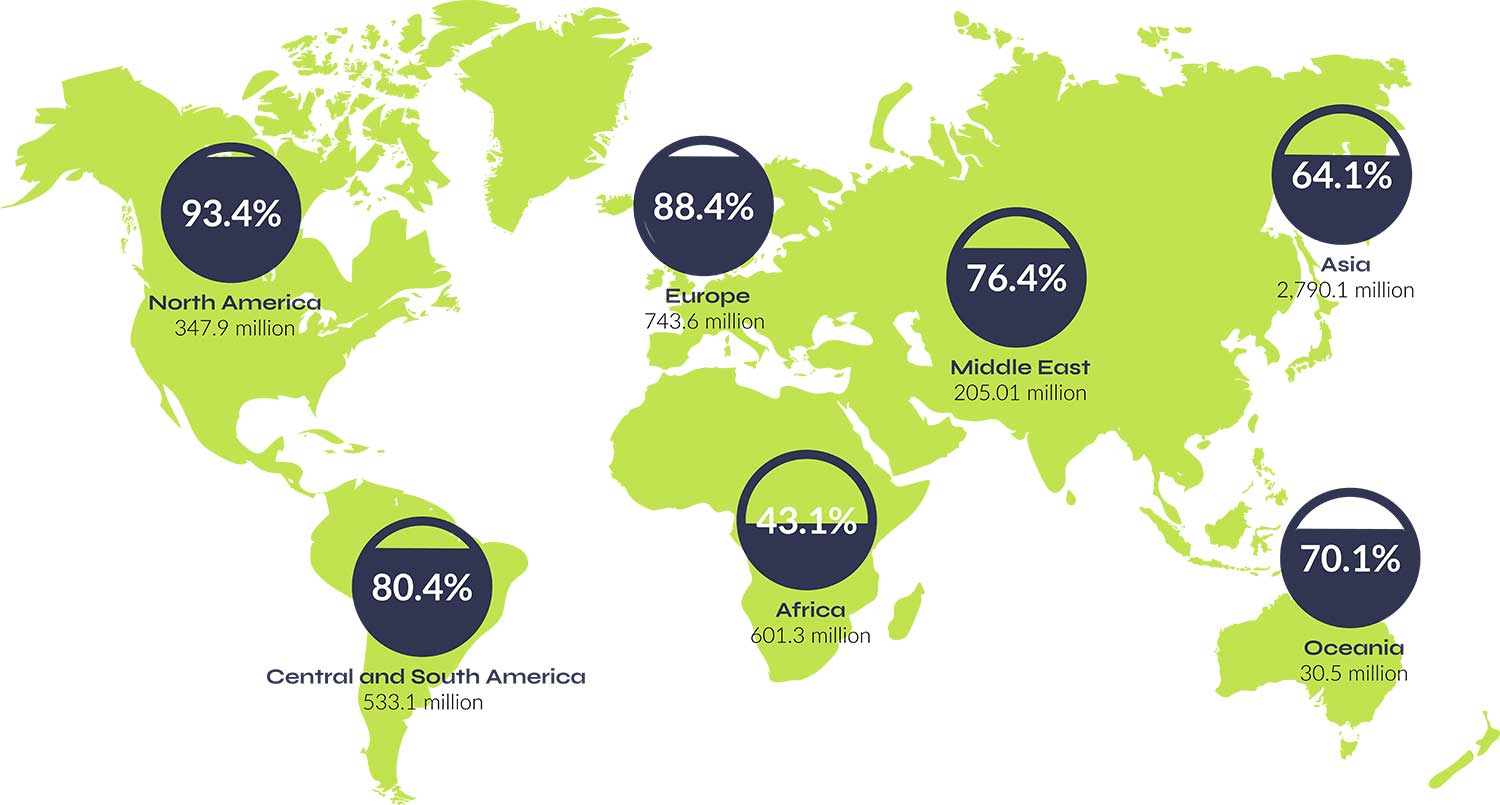
This graphic illustrates the impact of the digital divide. This relates to the gap between demographics and regions that have access to modern information and communications technology, and those that don’t. The statistics are shocking: 43% of Africans can use the internet, compared to 93% of Americans and 88% of Europeans. Even in more developed regions like the Americas, four out of 10 Latin Americans in rural areas have no way to connect to the internet (source) – because terrestrial networks are prohibitively expensive to set up in non-densely populated areas.
And the digital divide doesn’t only affect individuals’ access to the internet. The lack of infrastructure also means businesses and governments can’t deliver the benefits of IoT connectivity: improvements in energy efficiency; healthcare outcomes; public safety; environmental monitoring; transport planning; agriculture sustainability – the list goes on.
As just mentioned, the main reason for this is that cellular networks rely on a dense network of base stations and antennas to provide coverage, which is expensive and challenging to deploy, and there’s limited financial incentive for the private sector to support this outside of urban areas.
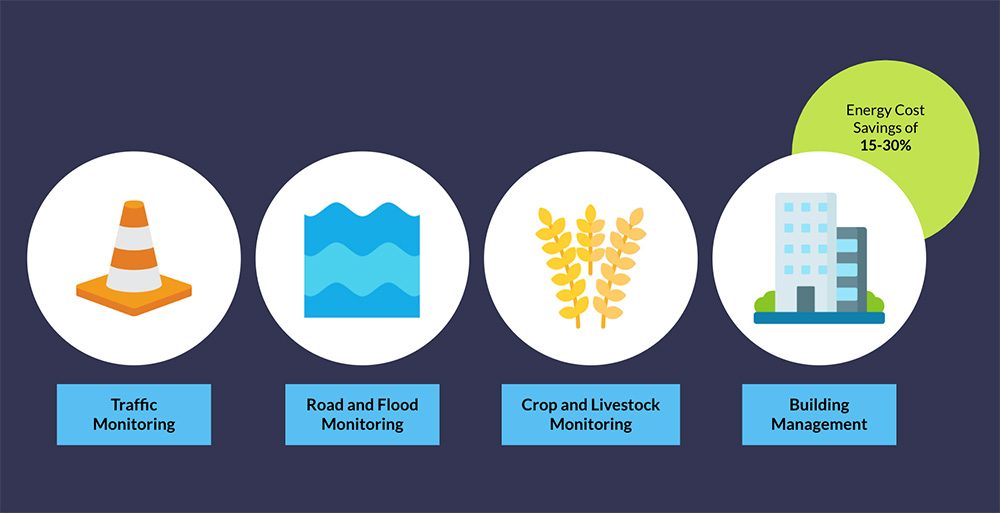
One proposed solution to the IoT connectivity challenge is to create coverage through LPWAN technology. A group of academics in the United States received funding for just such a project in 2021, with the goal of enabling small communities in upstate New York to benefit from IoT applications including remote meter readings for utility firms; traffic monitoring; real-time road and flood monitoring; crop and livestock monitoring for farmers, and building management.
Early returns for the latter indicated energy cost savings of between 15-30%; great news for the bill payer and the environment alike (source).
While there’s a lot to recommend this, there are a couple of additional considerations: firstly, the gateway that controls the network and aggregates the data from the nodes needs to be able to connect to the cloud, and for that it needs another means of connectivity. If you can position your gateway within cellular coverage, adding a cellular modem to your gateway will resolve this challenge. If you are out of cell tower range, a satellite modem such as Ground Control’s RockREMOTE will have the same effect.
The second consideration is mobility: neither of the two most popular LPWAN technologies – NB-IoT and LoRaWAN – were intended for mobile applications such as fleet monitoring or animal tracking. LoRaWAN can be used to connect moving sensors, but there’s a greater risk of transmission interference as a result of signal collision if a large number of nodes are connected (read more). This has an associated effect of increasing the energy consumption as packets are retransmitted, and changes in device location sometimes resulting in a higher spreading factor (SF).
To solve the mobility issue in areas with no terrestrial infrastructure, you may want to explore satellite transceivers, but be sure to look for devices with omni-directional antennas with no requirement to ‘point’ them at the satellite network overhead. The tiny RockBLOCK 9603, which transmits very small packets over the Iridium network, is ideal for sensor data transmission from animal tracking collars, UAVs, and drifting data buoys. If you need to send and receive higher volumes of data, something like the RockREMOTE Rugged works well for heavy machinery monitoring and control, including autonomous tractors and mobile generators.
But isn’t satellite IoT prohibitively expensive?
Satellite IoT has experienced a huge growth in demand and service providers as – largely thanks to Space X – the cost of launching a satellite has decreased from $85K per KG in the 80s to just $1K per KG in 2020 (source). This means plenty of competition and service diversification, which has driven down costs. As an example of this, a customer of ours, Synnefa, facilitates remote farming for smallholders in Kenya.
By providing them with accurate, real-time data on soil moisture, temperature, nutrient levels in the soil, and light intensity, Synnefa enables these remote farmers to optimise productivity while reducing waste, and it’s working:
- 50% Water savings
- 41% reduction in fertiliser usage
- 30% increased production.
Synnefa uses terrestrial connectivity where available, and Kenya is better connected than much of Africa, but as the map shows, there are huge swathes of agricultural land that have no access to cellular networks. So the Synnefa team ship their FarmShield device with a RockBLOCK 9602; if the sensor is out of terrestrial communication range, it can use satellites to send data.
But the critical point here is that Synnefa charge their customers no more for cellular than they do for satellite; there is a difference in cost to Synnefa, but it’s not so significant that they have to pass it on. Synnefa’s customers can benefit from more sustainable and productive farming wherever their farm is located.
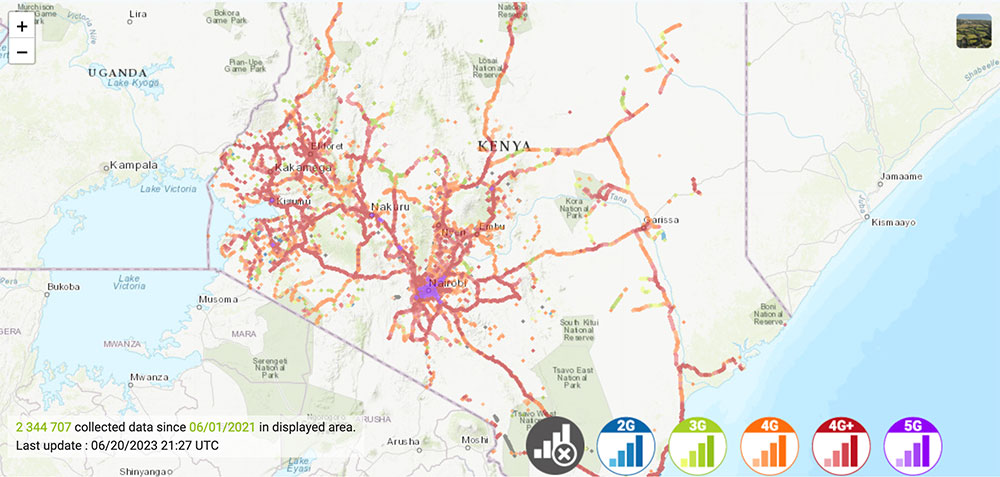
Satellite connectivity continues to get more affordable, and we’re excited to watch the progress of SatelioT who are in the process of launching nanosatellites into Low Earth Orbit just 500 KM above us; that’s so close they don’t even need an antenna to create terrestrial connectivity. The purpose of these nanosatellites is to act as telephone towers in space, extending the reach of 5G NB-IoT connectivity to basically anywhere on Earth. So in principle, and hopefully soon in practice, you’ll be able to connect your IoT device to this Non-Terrestrial-Network (NTN) without needing an additional transceiver or antenna. This would be a huge step forwards for isolated communities, and with no new hardware needed, would greatly speed up the introduction of remote monitoring applications.
As with all of these newer entrants, including Swarm (now owned by SpaceX), who’s probably the best known of the nanosatellite manufacturers, it’s worth noting that for at least the next 2-3 years, the frequency with which your device will be able to send and receive data will be much slower than established satellite constellations like Iridium or Inmarsat. This is because there are simply fewer satellites overhead, so you’ll need to wait longer before your device signal is picked up. And you’ll also need to check if the region you’re aiming to connect is covered by an orbiting satellite, as few satellite operators have truly global coverage. But if you have coverage, and your application can manage with store-and-forward delivery, these are low cost options that may hold the key to unlocking some missing infrastructure and financing challenges.
IoT can help combat climate change – but climate change is making it harder to create IoT infrastructure
Another barrier to leveraging IoT for sustainable development is the increased frequency, duration and magnitude of extreme events, including droughts, flooding and extreme heat. And the countries most likely to be affected by these conditions are often the countries with the least ability to adapt. Projections indicate that Sub-Saharan Africa will bear the brunt of climate change impacts on food security, due to its reliance on rain-fed agriculture. Projects such as solar irrigation, rainwater harvesting and irrigation systems will be essential to enhance water availability, but their efficacy is limited without sensors.
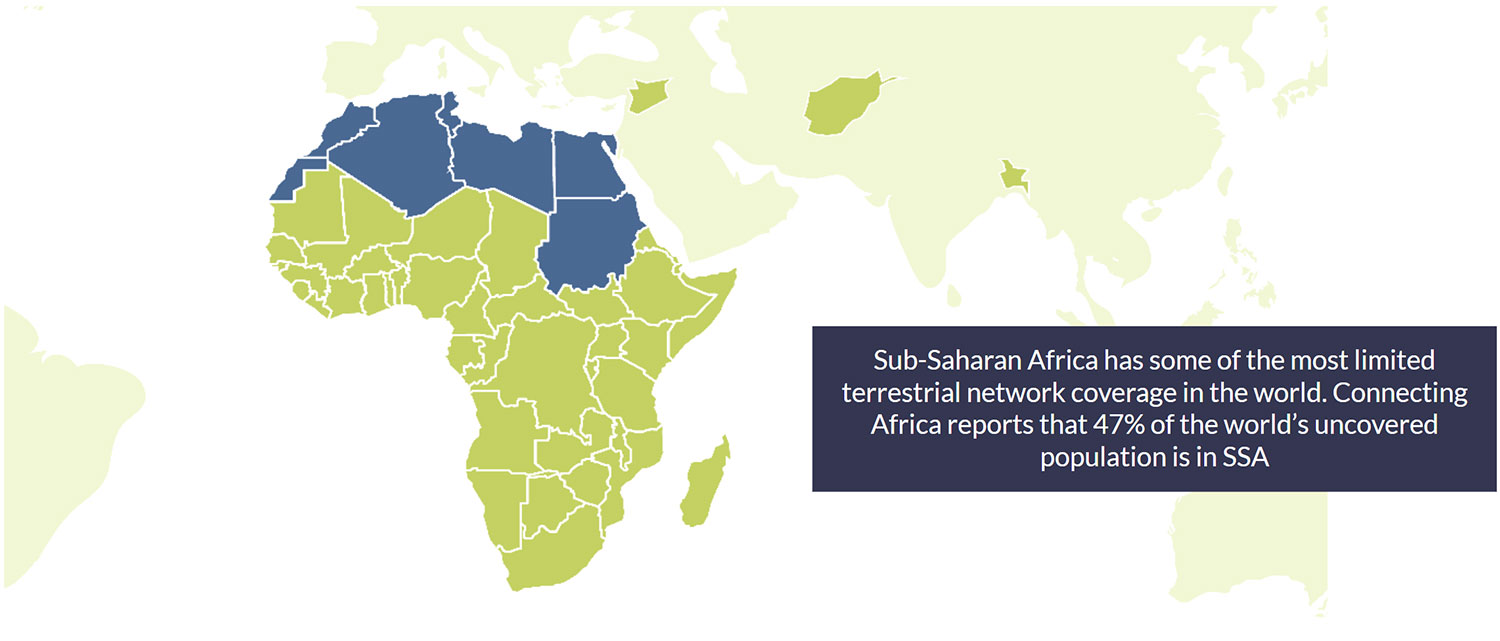
Knowing what resources you have, where they are, and where and when they’re most needed is fundamental to the successful deployment of smart irrigation technology. You can send someone to gather and report sensor data, or you can utilise IoT to get real-time data, and vastly speed up your reaction time to new data, while better modelling future needs. Sub-Saharan Africa, however, has some of the most limited terrestrial network coverage in the world. Connecting Africa reports that 47% of the world’s uncovered population is in SSA (source).
Further, terrestrial networks where they do exist are susceptible to natural disasters; flooding, hurricanes and earthquakes and ensuing landslides can create power outages and damage cell towers; fibre ducts can become waterlogged; repairs can be delayed due to road damage. In 2022, 1,200 cell towers were impacted in South Africa alone due to a prolonged spell of heavy rain and the ensuing flooding and landslides (source). In developing countries, infrastructure such as the electricity grid and piped water are often the responsibility of county-level or national government, and it can take years before damage is rectified. One study in Kenya found that 62% of electrical grid failures caused by floods were never repaired (read more). This presents massive challenges for IoT deployment that relies on terrestrial communication networks like BLE, WiFi and Cellular.
So, we turn again to the twin options of LPWAN – specifically LoRaWAN here, because of its independence from 4G / 5G cellular tower infrastructure – and satellite; sometimes deployed separately but often combined to provide low cost coverage over a wide area, with no dependency on terrestrial networks for data backhaul.
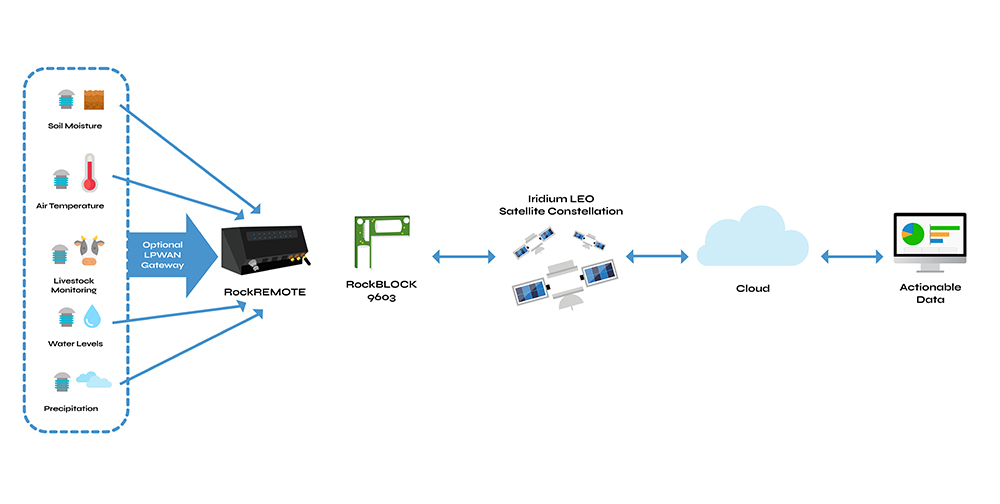
Neither of these options are immune to damage but they are more resilient. LoRaWAN gateways are, of course, much smaller than cell towers, and the signal is largely unaffected by wind and rain. They’re available in IP68 rated enclosures with automated leak detection and remote configuration options – essential if you’re not going to be able to reach the device for long periods of time.
Similarly, satellite transceivers are often built into highly ruggedised enclosures, or are shipped with such enclosures. Some are solar powered; others will work off a single battery for years. Devices like the RockREMOTE Rugged also support Over The Air (OTA) device configuration. Paired with a sensor array or data logger, you’ve got a IoT solution that is highly resilient against adverse weather, as the transmission is going to, or being received from, satellites orbiting far above the Earth (some not as far as they used to be, but still well out of trouble!). The ground stations used by satellite network operators are carefully chosen for their stability and security; it’s why satellite connectivity is so often deployed in emergency situations, when terrestrial networks have failed.
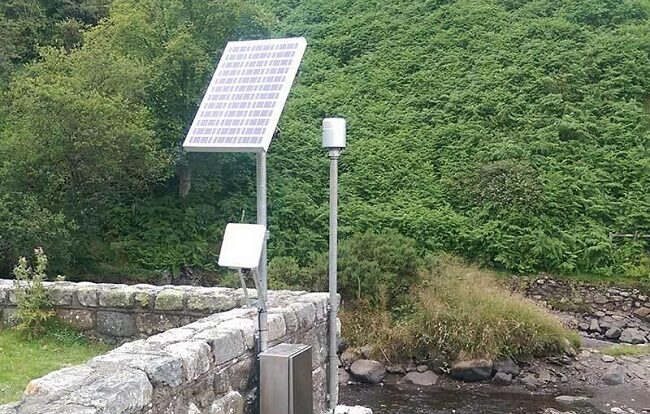
Leading renewable energy provider RWE has installed hydrology stations which monitor water levels, precipitation, air and water temperatures, and relative humidity, to detect excess rainfall in remote parts of Wales, UK. These hydrology stations are located at hydroelectric power stations; reservoirs which pipe water through turbines to supply renewable energy to the grid.
If there’s excessive rainfall, the operators can push more water through the turbines, which provides more green energy; and there’s a huge added benefit in that this also greatly reduces the chances of localised flooding, as the reservoir’s capacity to absorb more water grows.
In the complete absence of cell towers – this being a particularly beautiful and remote part of the UK – these hydrology stations use satellite connectivity, in this case Viasat IoT Pro, to transmit the data in real-time back to the operations centre. The cost is managed through edge computing, which allows the frequency of transmission to be increased to every 15 minutes if data falls outside of normal parameters, but is usually set to transmit every 3 hours.
In summary, the places that would benefit the most from IoT to help with sustainable development goals are often the places most under-served by terrestrial networks – because it’s too difficult, too expensive, or too risky to install them. Outside of urban areas, coverage in Africa, Asia and Oceania is extremely limited, and yet these regions are some of the most at-risk from rising sea levels, drought, flooding and other extreme weather conditions.
In order to bridge the digital divide, we need to look to low cost, resilient and easy to deploy connectivity solutions. Some are available today – LoRaWAN and satellite IoT, both combined and independent of each other, are entirely viable options. And it’s very exciting to see what’s coming in the next few years from innovations which will bring satellite and cellular networks together.
Would you like to know more?
If you have an IoT project with connectivity challenges, you’re absolutely in the right place to get expert help. Call or email us, or complete the form and we’ll be happy to talk through your options.
We design and build our own satellite transceivers, and also work with trusted third parties to offer a wide range of connectivity options and airtime partners.
Infographic: How to unlimit your IoT application with the RockREMOTE Rugged
A surprisingly small amount of the Earth’s total surface is covered by terrestrial networks; it’s reckoned to be between 15-20%. Of course connectivity is centred around people, so populated land masses have the lion’s share of mobile phone masts. If your IoT application is located within or close to a populated area, you’ll have several choices to connect your devices: cellular, LPWAN, WiFi, BLE etc.
However if your application is in a remote area, or travels in and out of remote areas, terrestrial networks may be unavailable or unreliable. This often affects oil and gas pipelines; farms; mining operations; almost anything that’s at sea; offshore wind farms; reservoirs; solar plants; forestry – the list goes on.
Satellite IoT connectivity, once the last resort due to cost, has come of age. With a large number of new entrants to the market, incumbents have diversified their offerings, and prices have come right down. One example of this is the new Iridium Certus 100 service, designed for IoT. The RockREMOTE Rugged satellite IoT device leverages this service, which we’ve made available with both its IP-based connectivity option, and Iridium Messaging Transport (IMT), a message-based service allowing for relatively large (for IoT!) amounts of data to be transmitted using the MQTT protocol.
Our infographic draws out some of the key benefits of the new RockREMOTE Rugged; if you’d like to know more, just contact us and we’ll be happy to help.
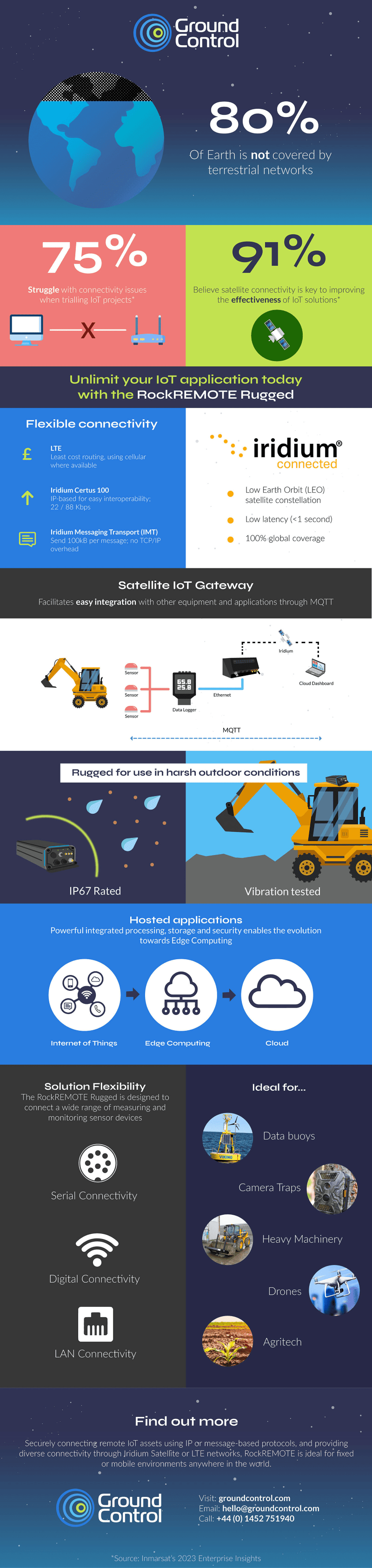
Find out more
If you have a remote connectivity challenge, we can help. We design and build our own hardware, like the RockREMOTE, but we also partner with companies like Thales, Cobham and Hughes, to ensure that we can offer our customers the best possible product for your particular requirement.
With over 20 years’ experience, we’ll provide you with impartial, expert advice. Call or email us, or complete the form; we’re standing by to help.
Navigating Obstacles: Tips for Successful Satellite IoT Implementation
Consulting firm McKinsey has projected that the Internet of Things (IoT) could enable global value between $5.5 trillion – $12.6 trillion by 2030. This estimation encompasses the value derived by consumers using IoT products and services. However, it is predicted that around 65% of this value will come from business-to-business (B2B) applications. And within the B2B sector, the primary drivers of value projected are operation optimisation (41%) and condition-based maintenance (12%).
2030 is still some time away, but how close are we to realising this value?
The IoT has already connected over 14 billion devices worldwide, but being a relatively new technology, it faces its share of challenges and obstacles. According to a recent survey on IoT deployments, only 42% of companies considered their projects successful. However, it’s important to consider that 50% of those surveyed were in the trial or pilot phase, which provides valuable insights into identifying barriers to success. Encouragingly, when compared to the 2020 survey results, the 2023 survey indicates a notable 28% increase in success rates. Additionally, research from ABI reveals that satellite IoT projects have a comparable but increased success rate, with approximately 50% of participants considering their projects successful.
As the adoption and success of IoT continues to accelerate, demonstrating a positive return on investment (ROI) becomes increasingly essential. Here at Ground Control, we are privileged to work on a wide range of IoT deployments every day. Our projects span various industries, from operators seeking to minimise downtime in the Oil and Gas sector, to those in Utilities handling mission-critical data, and even those facilitating telehealth via medical drone deliveries and remote nurse tracking. Drawing on these experiences, we’ve created this article to highlight the challenges we most commonly see and potential solutions to guide you on the path to success. But first…
How to define IoT project success
Defining IoT project success involves aligning project goals with overall objectives, setting specific and measurable KPIs, and quantifying expected benefits and ROI. Establishing baselines and targets, tracking progress, and analysing data against the defined metrics are crucial. In our experience, customers often focus on immediate challenges and short-term gains and this can lead to issues regarding scalability and the ability to adapt to future needs further down the line. When embarking on an IoT installation, regular iteration and improvement can mark the difference between success or not. In short, for many IoT projects success is dependent on companies being proactive.
5 common IoT deployment challenges and potential solutions to overcome them
- Security and privacy concerns
- Connectivity reliability
- Interoperability and integration
- Data management and analytics
- Scalability
1. Challenge: Security and privacy concerns
Within the vast IoT ecosystem, the extensive network of interconnected devices creates numerous potential entry points for cyberattacks. Each connected device becomes a potential vulnerability that malicious actors can exploit. The sheer volume of data generated and transmitted by IoT devices raises significant concerns about privacy. Safeguarding personal information and ensuring data protection become of paramount importance in this interconnected landscape.
From a technical perspective, security emerges as the foremost obstacle in IoT deployments. As IoT solutions continue to evolve, security measures must also advance. It is an ongoing and dynamic process that requires continuous improvement and this inherent characteristic poses significant challenges.
These concerns are further emphasised by notable cyberattacks that have made headlines. In 2021, a cyberattack on Colonial Pipeline forced a temporary shutdown of 5,500 miles of pipeline, impacting critical infrastructure. In another instance, an attempt was made to tamper with the levels of sodium hydroxide in Oldsmar, Florida’s water supply. Additionally, the ‘AcidRain‘ malware attack in 2022 caused severe and prolonged disruptions on a mass scale. This attack targeted and disabled Viasat’s KA-SAT broadband service’s satellite modems, affecting thousands of users in Ukraine and across Europe.
Potential solutions: Secure network design and data encryption
Addressing the security concerns in IoT deployments requires a multi-layered approach to IoT security. Implementing secure network architectures, employing data encryption, practicing best access control practices, and leveraging private network solutions, all strengthen organizations overall security posture in IoT deployments.
- Secure Network Architecture: A robust and secure network architecture is crucial in addressing IoT security concerns. Companies should design their networks with measures such as network segmentation, firewalls, and intrusion detection systems. By dividing the network into segments and implementing firewalls and intrusion detection systems, the impact of potential breaches can be contained, and real-time threat identification and mitigation can be achieved.
- Data Encryption: Protecting IoT data through encryption is paramount. Strong encryption algorithms and secure key management practices should be employed to ensure the confidentiality of sensitive information. By encrypting data at rest and in transit, organizations can significantly enhance the security of their IoT deployments.
- Best Practice Access Control: Implementing best practices for access control and identity management is a simple yet effective way to strengthen IoT security. Regularly reviewing access privileges, promptly revoking access for former employees or compromised accounts, and monitoring for suspicious activities all contribute to an enhanced security posture, mitigating potential risks.
- Private and Secure Networks: Depending on the nature of the data handled by an IoT application, a completely secure and private network may be necessary. Solutions like SCADASat provide secure, private networks for handling sensitive data, ensuring end-to-end security and protecting against unauthorized access.
2. Challenge: Connectivity reliability
The success of IoT relies heavily on reliable connectivity. Without a consistent means of transmitting data, the value of IoT is diminished. Obtaining a comprehensive view of operations is crucial for making informed business decisions. Fragmented data can lead to inaccurate insights, resulting in suboptimal business decisions.
Currently, only 25% of the world’s landmass is covered by cell towers. While 5G deployment is underway and will be able to support a much larger volume of devices, the shorter wavelengths mean 5G has a much shorter range than its predecessor. For some deployments, cellular coverage will be sufficient. But for those with assets in remote locations whereby cellular may be intermittent or unavailable, challenges arise; and a staggering 75% of businesses reported struggling with connectivity issues when trialling IoT projects.
Potential solutions: diversify connectivity portfolio, implement redundant network architectures and regular maintenance
Diversifying your connectivity portfolio involves adopting multiple connectivity technologies, including cellular, satellite, and LPWAN, to create a more resilient network infrastructure. By leveraging diverse connectivity options, organisations can minimise the impact of network outages, ensure continuous data transmission and balance costs. Just one example and one we’re increasingly seeing is satellite alongside LoRaWAN. Typically, sensors connected via LoRaWAN transmit data to a hub; the hub then optimises the data payload to reduce transmission costs, and from there transmits the data packet via cellular where and when available, and satellite when LTE is unavailable.
Implementing redundant network architectures is another effective strategy. This entails establishing backup systems and redundant connections to provide alternate pathways for data transmission. Redundancy mitigates the risk of single points of failure and enhances the reliability of the IoT network, ensuring uninterrupted connectivity even during network disruptions. One of our largest clients actually have satellite implemented as their third failover (cellular first, fibre second). Their satellite setup hasn’t failed once in 27 years and is the system they consider the most reliable.
What’s more, regular maintenance is vital for sustaining reliable connectivity. Conducting regular inspections, monitoring network performance, and performing necessary updates and maintenance tasks help identify and resolve potential issues proactively.
3. Challenge: Interoperability and integration
IoT projects encounter hurdles in achieving interoperability and integration across devices and systems. Inconsistent protocols, standards, and proprietary technologies create barriers to seamless data exchange and collaboration. These challenges result in data fragmentation, scalability limitations, and increased complexity in managing integrated IoT environments.
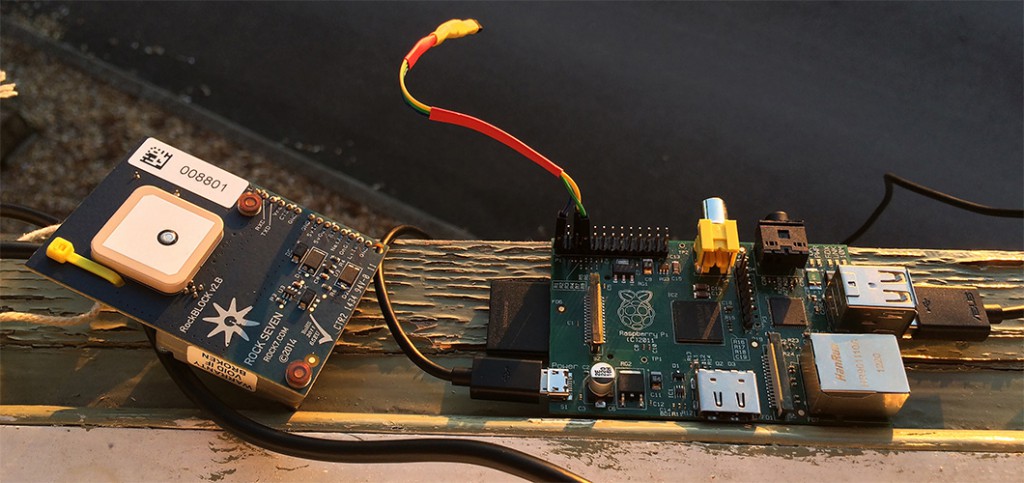
Potential solutions: APIs, middleware and gateway devices
Despite some really promising and exciting developments, it’s likely that widespread, tried and tested, and truly seamless interoperability – including device and connectivity – is a few years away. So many companies will still need to either utilize multiple SIM cards, and/or devices to make their network work for their IoT deployment. But open standards and protocols play a crucial role in addressing interoperability and integration challenges. By adopting open standards, organizations can ensure compatibility and seamless communication between different IoT devices and systems.
Additionally implementing robust APIs facilitates smooth integration and interoperation, enabling data exchange and interoperability across diverse components. Moreover, leveraging middleware solutions and gateway devices helps bridge the gap between incompatible technologies, enhancing interoperability and integration capabilities.
4. Challenge: Data management and analytics
Data management and analytics pose critical challenges in IoT projects. The sheer volume and diversity of data generated by connected devices make it daunting to collect, store, process, and derive meaningful insights. Organisations struggle to handle the velocity and real-time processing requirements of IoT data. Ensuring data quality, integrity, and security across heterogeneous data sources is another significant challenge. Furthermore, scalability issues arise as the number of devices and data sources increases.
Potential Solutions: Data management platforms, analytics tools and machine learning algorithms
Organisations can address data management and analytics challenges in IoT projects by adopting comprehensive data management platforms. These platforms facilitate efficient data collection, integration, and storage from diverse sources, ensuring data quality and reliability. Advanced analytics tools empower organisations to process and analyse IoT data efficiently and effectively, extracting valuable insights for informed decision-making.
What’s more, machine learning algorithms and predictive analytics can be used to identify patterns and drive actionable intelligence. When used appropriately, these can ensure companies can drive true value from their data and thus IoT deployment.
5. Challenge: Scalability
When scaling an IoT project, various challenges become more pronounced. The costs associated with scaling can be significant, including expenses for hardware, connectivity, data storage, and maintenance. Managing and maintaining the project also becomes more complex and expensive as the number of devices and systems increases.
Battery life and power consumption pose significant challenges in scaled IoT projects. With more devices consuming more power, effectively managing power consumption and extending battery lives becomes crucial.
Scaling also intensifies challenges in data interoperability, security, and management. Ensuring interoperability and compatibility between devices and systems becomes more complex as numbers increase. Robust security measures must be implemented to protect against the growing risks of security breaches. Additionally, managing and processing the vast amounts of data generated by IoT devices becomes a significant challenge that requires suitable infrastructure and tools.
Potential Solutions: Prioritize scalable architecture, carefully consider device choices and leverage edge computing
Often scale is where in-house server infrastructure falls short for IoT applications. Cloud infrastructure for IoT applications encompasses not only traditional data processing and storage services but also gateway services that facilitate data collection and device interaction. These include HTTP/MQTT servers and WebSocket servers. Scalability is a crucial factor when designing cloud infrastructure for IoT. As your device count increases, your cloud infrastructure must seamlessly scale alongside it. IoT cloud platforms offer superior scalability compared to physical servers maintained in-house. Leading cloud service providers including AWS, Azure, GCP, or Macrometa can all provide robust and scalable solutions.
Implementing edge computing can also alleviate the burden on centralised cloud infrastructure and enhance scalability. By performing data processing and analysis at the edge of the network, closer to the IoT devices, you can reduce latency, minimise bandwidth requirements, and improve overall system performance.
Additionally, it’s important to evaluate network providers that can support your scaling requirements and ensure seamless connectivity across your IoT ecosystem. We’d recommend considering solutions such as low power, wide area networks (LPWAN) or satellite as both offer extended range and scalability.
To address challenges of increased power consumption, companies can explore energy-efficient IoT devices, implement power-saving features such as sleep modes, and utilise power management techniques to prolong battery life. Moreover, alternative power sources, such as solar or kinetic energy, can prove key for long-term sustainability.
Security should always be a top priority, but as mentioned, when scaling this is even more crucial. Companies can strengthen security by adopting a multi-layered approach. Incorporate encryption techniques, secure authentication protocols, and regular security audits. Implement secure coding practices and provide ongoing training to your team to enhance security awareness and ensure compliance with industry best practices.
The above list is by no means exhaustive, but we hope it highlights the importance of staying proactive. By acknowledging the evolving nature of IoT, the improving success rates, and the valuable insights gained during pilot phases, organisations can overcome hurdles and capitalise on the immense potential offered by IoT deployments.
Want some advice on your IoT project?
Navigate to IoT success with Ground Control’s expertise and global support.
As a trusted partner for IoT projects worldwide, we have helped businesses across diverse industries achieve their goals. Complete the form below to start your journey with us.
Unlocking the Full Potential of IoT: How Satellite Modules are Redefining Connectivity
Satellite IoT modules are transforming the way companies interact with their customers, increase operational efficiency, and gain insights into their business operations. Delivering truly global, reliable coverage, these modules enable organisations to unlock the full potential of the Internet of Things (IoT).
The latest research from IoT Analytics estimates that by the end of 2023, the IoT will be responsible for 16 billion active devices. But given the importance of reliable connectivity, how many of these devices will be satellite-enabled?
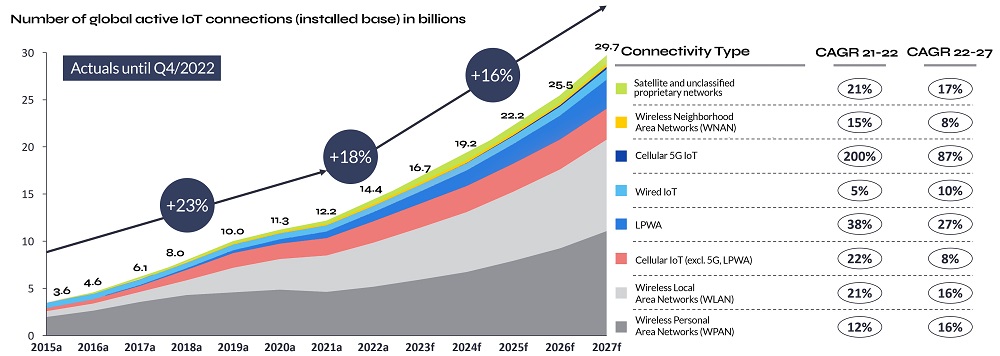
Source: IoT Analytics Research, State of IoT 2023
Note from authors: IoT connections do not include any computers, laptops, fixed phone, cellphones, or consumers’ tablets. Counted are active nodes/devices or gateways that concentrate the end-sensors, not every sensor/actuator. Simple one-directional communications technology not considered (e.g. RFID, NFC). Wired includes ethernet and fieldbuses (e.g. connected industrial PLCs or I/O modules); Cellular includes 2G, 3G, 4G, 5G; LPWA includes unlicensed low-power networks; WPAN includes Bluetooth, Zigbee, Z-Wave or similar, WLAN includes Wi-Fi and related protocols; WNAN includes non-short-range mesh, such as Wi-SUN; Unclassified proprietary networks include any range.
As you might expect, IoT connectivity continues to be dominated by Wi-Fi, Bluetooth and cellular IoT. But interestingly, the CAGR for each of these is predicted to decrease, in some cases significantly (cellular from 200% to 87%) by 2027. In contrast, satellite IoT connections are projected to grow from 6 million to 22 million (at a CAGR of 25%).
What are satellite IoT modules?
Satellite IoT modules or modems are specialised hardware components that enable devices to communicate with satellites and access global connectivity. These modules are designed to be power-efficient, compact, and compatible with existing IoT device architectures. Typically they are used in areas of IoT networks where traditional cellular networks or other forms of terrestrial connectivity are either unavailable or unreliable, such as remote or rural areas.
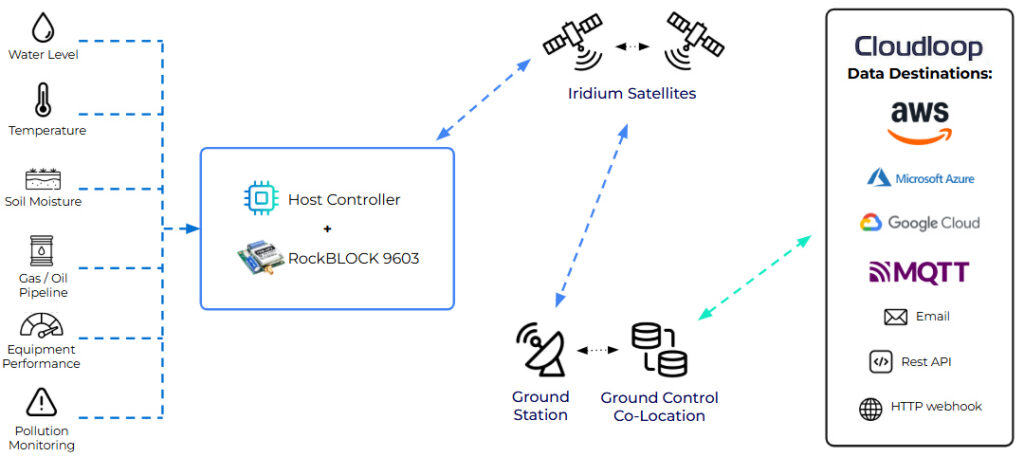
How do they work?
Simply, satellite IoT modules work by leveraging satellite networks to establish communication between IoT devices and the central infrastructure.
IoT devices such as sensors or trackers are equipped with satellite modems (e.g. the RockBLOCK) that transmit data to satellites orbiting the Earth. Data is sent to a satellite, in this case a satellite within Iridium’s constellation, the satellite then relays the received data down to the ground station.
The ground station serves as a gateway to bridge the communication between the satellite and the Network Operations Centre (NOC), forwarding the data on to the appropriate destination. This can be a cloud platform, a server, or any designated system that collects and manages the IoT data.
How do satellite and terrestrial IoT modules compare?
Terrestrial and satellite IoT modules share many similarities. They both offer the necessary connectivity and processing power for devices to exchange data and come in multiple form factors depending on the deployment requirements. From PCBs intended to be built-in to the sensor array, to fully ruggedised and waterproof devices with integrated processing, storage and security features.
What’s more, all IoT modems require an antenna, the size of which will depend on the signal strength needed. Satellite IoT devices can have surprisingly small antennas if the orbiting satellite service operates in a high frequency, like Iridium (see the patch antenna on the RockBLOCK 9603, which measures just 25 x 25 x 4mm). Other satellite network operators leverage lower frequencies, which require larger, external antennas – Swarm, for example, needs a 20cm antenna to communicate with its satellites.
Terrestrial and satellite IoT modules also exhibit distinct differences that set them apart:

Connectivity Coverage
Satellite IoT modules use satellite networks to provide connectivity, whereas other IoT modules typically rely on cellular networks, Wi-Fi, or other forms of terrestrial connectivity. This allows devices equipped with satellite IoT modules to communicate from virtually anywhere on the planet, even in areas with limited or no cellular coverage.
Module Cost
Satellite IoT modules can be more expensive than other IoT modules due to the specialized hardware and software required to enable satellite connectivity. However, as the technology matures and the demand for satellite IoT applications grows, costs have already, and are likely to continue to, come down.
Communication Latency
Due to the time taken for signals to travel to and from satellites in space, satellite IoT modules can experience higher latency than their terrestrial counterparts. However with Low Earth Orbit (LEO) satellite constellations, for example Iridium, latency can be less than one second, providing high-quality, low-latency communication.
Further benefits to Satellite IoT
Security and Data Privacy
Satellite IoT networks employ robust security measures to protect data transmission and ensure privacy. Encryption and authentication protocols are implemented to safeguard data integrity and prevent unauthorised access. Firewalls and VPNs are leveraged when data travels over public infrastructure like the internet, but this can be completely circumnavigated with either private lines or a private satellite network like TSAT.

Reliable and Resilient
Satellite networks are designed to be highly reliable and resilient. They are less susceptible to environmental factors, natural disasters, or infrastructure failures that can disrupt terrestrial networks. Typically offering high reliability and uptime, satellite IoT ensures consistent data transmission and device communication even in challenging and remote environments.
Scalability
Satellite IoT networks offer scalability to accommodate a large number of connected devices. Businesses can scale their IoT deployments without concerns about network capacity limitations or infrastructure upgrades. This scalability is crucial for projects that require the connection of a large number of sensors, devices, or assets spread across vast areas.

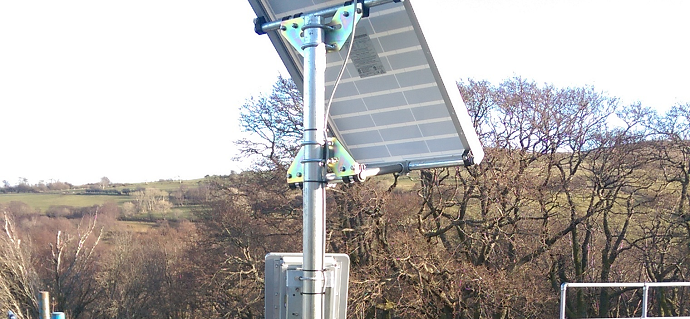
Rapid Deployment
Satellite IoT modules enable rapid deployment, especially in remote or temporary setups. They eliminate the need for building new terrestrial infrastructure or relying on existing networks. Companies can quickly establish IoT connectivity in remote or disaster-stricken areas, facilitating faster response times and data collection.
The Future of IoT modules
The previously mentioned research from IoT Analytics, also noted that the integration of satellite connectivity options into LPWA chipsets, spearheaded by companies like Qualcomm, has the potential to accelerate the adoption of hybrid IoT devices. Sony Semiconductor has already introduced ALT1350, the first cellular IoT LPWA chipset with satellite connectivity, expanding the communication capabilities of IoT devices beyond conventional network limitations. This significant development paves the way for new possibilities in the IoT landscape. By incorporating satellite connectivity into LPWA chipsets, further innovation and growth are projected. Until then however, the combination of satellite and terrestrial networks still delivers organisations the flexibility to realise the full potential of their IoT deployments.
Choosing the right Satellite IoT modules
The majority of satellite IoT modules are proprietary technology. Simply, they are designed to leverage a specific satellite network, for example, Viasat, and often a specific airtime service, for instance, IoT Pro. As each satellite network offers different coverage, reliability, latency and so on, and each service allows different data rates, message sizes and more, its key companies evaluate their connectivity needs thoroughly. Satellite connectivity can be expensive (see our post on how to reduce satellite connectivity costs), so typically businesses will only use this for areas of their IoT network where they are struggling with connectivity, or for the purposes of failover or backhaul. In any case, businesses should assess their data transmission requirements and select the most appropriate satellite airtime service for their application, before considering their hardware options.
If you do have any specific queries related to airtime, please don’t hesitate to get in touch. We’ve been doing this for over 20 years and though we have significant relationships with both Iridium and Viasat we’re not tied to any one provider, just helping you find the best solution for your project and budget.
Once companies have selected their preferred airtime service, it’s important to consider the interfaces and integration options provided by the satellite IoT modules. It is important to determine if the modules support the necessary interfaces (e.g., UART, SPI, I2C) for seamless connectivity with IoT devices or sensors. Additionally, assessing compatibility with standard IoT protocols (e.g., MQTT, HTTP) is vital to ensure smooth integration within your existing IoT infrastructure.
Another aspect that businesses need to assess is the size and form factor of the satellite IoT modules. Consider any space limitations, weight restrictions, and physical constraints that may be relevant. For instance, if your application requires burying sensors or housing them within an enclosure, antenna options must be considered. Depending on factors such as the enclosure material, an external antenna may be required to enhance signal strength. This improves communication reliability and can help facilitate clear line-of-sight with geostationary satellite networks.
Moreover, companies must verify that the satellite IoT modems comply with relevant certifications and regulatory standards applicable to their target markets. Compliance with certifications like FCC, CE, and RoHS ensures adherence to quality, safety, and environmental standards. For those with deployments spanning larger geographical areas, it’s prudent to ensure that there are no local restrictions for satellite connectivity; some countries such as India restrict use without prior government approval.
Additionally, it is important to assess the cost considerations associated with the satellite IoT modules. This includes evaluating module pricing, airtime costs, and any additional fees or licensing requirements. Considering the total cost of ownership over the desired lifespan of the IoT project will provide a comprehensive understanding of the financial implications.
Finally, though satellite IoT modules are designed to be power efficient, it is necessary to evaluate power consumption. Depending on the deployment scenario, it might be worthwhile to consider modules that can leverage alternative power sources such as solar power, like the Iridium Edge Solar.
By carefully considering these factors, companies can make informed decisions when selecting satellite IoT modules, ensuring optimal integration, performance, and cost-effectiveness for their specific IoT projects.
Overall, satellite connectivity is a game-changer for IoT, enabling devices to operate in previously unreachable areas and opening up new possibilities for businesses and industries. By choosing the right satellite IoT module and airtime service, businesses can unlock the full potential of IoT and drive innovation in their respective fields.
Unlimit your IoT deployment today
As industry leaders that have been designing and manufacturing satellite devices for over 20 years, with strong partnerships with top satellite providers like Inmarsat and Iridium, we have the expertise, experience, and access to competitive satellite airtime rates to make your IoT initiatives a success.
Don’t let geographical limitations hold back your IoT ambitions. Let our team of experts guide you towards achieving your goals. Fill in the form below and take the next step towards unlocking the full potential of your IoT project.