Topic: Oil & Gas
How Satellite IoT Keeps Pipeline Infrastructure Safe in Remote Environments
Pipelines stretch thousands of miles, transporting oil, gas, water, and chemicals across diverse terrains, including mountainous areas, deserts, and offshore waters. They are essential infrastructure, but monitoring such vast and inaccessible pipeline networks presents a unique challenge and when leaks or failures go undetected, the consequences can be severe to both the pipeline operators and the environment.
Satellite-enabled IoT is an increasingly viable solution. By linking sensors directly to a global network of satellites, operators can achieve 24/7 data monitoring with zero dependance on terrestrial networks. With satellite IoT, pipeline operators can continuously monitor pipeline health, detect anomalies in real time, predict maintenance needs, and even act remotely to prevent minor issues from becoming costly disasters. Pipelines will always cross remote places, but with satellite IoT, those places no longer have to be blind spots.
Here’s why pipeline health monitoring is critical, and how selecting the right satellite IoT network and device – from low power sensors to real time control systems – can help operators protect remote infrastructure and prevent costly failures.
Why Remote Pipelines Need Satellite IoT
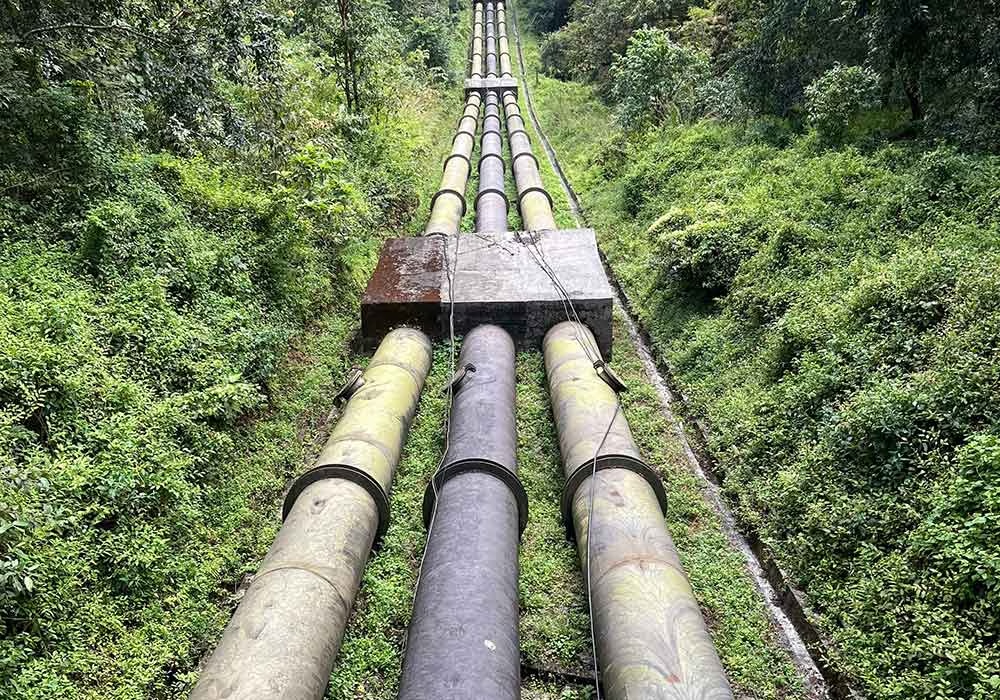
Traditional pipeline monitoring methods rely heavily on cellular networks or fixed wired systems. Both approaches work well where infrastructure is dense and coverage is consistent, but pipelines rarely follow such convenient paths. They cross deserts, mountain ranges, wetlands, and offshore environments where terrestrial coverage is patchy at best and, in many cases, does not exist at all. Wired systems, meanwhile, are expensive to install and maintain over long distances, particularly where terrain is unstable or hostile.
Coverage gaps create serious risks, as even a small leak in an isolated section of pipeline can go undetected for days, releasing oil, gas, or chemicals into the surrounding environment. In many cases, this not only carries the cost of remediation but also heavy regulatory penalties and reputational damage. Even when problems are eventually identified, the time lost between the first failure and the response often magnifies the scale of the incident.
Unplanned downtime is another consequence of limited pipeline monitoring. When equipment fails without warning, operators are forced to take entire sections of pipeline offline while they diagnose and repair the issue. This is disruptive and costly, especially in industries where margins depend on continuous flow. Coverage gaps also limit the effectiveness of predictive maintenance, forcing operators to rely on scheduled inspections or reactive repairs that drive up costs and increase vulnerability.
Further, there are safety implications. When a fault occurs in a remote environment, personnel are dispatched into difficult and sometimes hazardous conditions with limited information about what awaits them. This not only puts people at risk, but it also slows the time to resolution. Ultimately, terrestrial connectivity is not sufficient to monitor, manage, and ensure pipeline and personnel health in the mostremote areas.
The Cost of Connectivity Gaps in Pipeline Monitoring
In March 2006, more than 200,000 gallons of crude oil spilled onto the Alaskan tundra from BP’s Prudhoe Bay pipeline; the largest oil spill ever recorded on the North Slope at the time. Investigators traced the leak to a ¼-inch hole caused by internal corrosion in a section of pipeline that had not been inspected for years. With limited monitoring in this remote environment, the corrosion went undetected until it caused a catastrophic failure. The consequences were immediate: U.S. domestic oil production dropped by nearly eight percent, cleanup costs ran into the hundreds of millions, and regulators imposed heavy fines.
A similar pattern has played out elsewhere. In 2017, a crude oil pipeline in India ruptured along a hidden seam defect despite having undergone periodic inline inspections. Without continuous monitoring, the defect went unnoticed between inspection intervals, ultimately leading to a major spill and disruption to local communities and infrastructure.
These cases illustrate how gaps in visibility – whether caused by lack of network coverage or the limits of periodic inspections – can turn slow-building problems into headline-grabbing disasters. In remote areas where traditional cellular or wired networks simply don’t reach, operators are left to rely on sporadic checks, leaving too much room for failure.
How Satellite IoT Bridges The Connectivity Gap
Satellite IoT bridges the connectivity gap in pipeline monitoring, eliminates blind spots, and addresses pipeline vulnerabilities. Here’s how:
1. Detecting Anomalies Before They Escalate
The earliest signs of issues within a pipeline can be subtle – a slight pressure drop, a shift in temperature, or a vibration outside normal range can all indicate the beginning of a leak, corrosion, or interference. Continuous sensing makes these small deviations visible, but visibility is only useful if the data can reach operators without delay.
In regions with reliable terrestrial networks, that flow of data is relatively straightforward. In remote terrain, a sensor may detect a problem, but without connectivity, the information stays in the field. By the time operators and inspectors reach the pipeline, days may have passed and a minor leak may have spread into soil, waterways, or communities. The result is a much larger clean-up, higher costs, and often regulatory scrutiny. This is where satellite IoT changes the equation. Data from remote sensors is transmitted securely from any location on Earth with a clear view of the sky. Operators have complete visibility in near real time and can act on the first sign of irregularity.
2. Predictive Maintenance with Data Intelligence
Pipelines and their supporting equipment degrade gradually over time; bearings loosen, pumps vibrate, and valves begin to stick. If these changes go undetected, the first sign of trouble may be a breakdown, forcing operators to react after the fact by dispatching crews to remote locations at short notice and losing valuable supply time. Research shows that failures in critical components like bearings and pumps are among the leading causes of unplanned downtime in industrial systems, particularly when early warning data are scarce.
In areas without reliable connectivity, operators often rely on fixed inspection schedules, replacing components whether they need it or not, or worse, leaving them in place too long, which raises the risk of failure. This approach means maintenance decisions are based on limited information rather than real time insights into the pipeline’s actual condition, a problem well documented in studies of condition-based maintenance and industrial IoT. As a result, organizations remain stuck in a reactive cycle, facing higher costs and greater operational vulnerability.
Satellite-enabled predictive maintenance works differently. By streaming live sensor data into analytical systems, operators can recognize patterns that signal when a component is beginning to deteriorate. A pump running hotter than usual, or a valve that opens more slowly than before, triggers an automated early warning. Pipeline maintenance teams can then be dispatched to service the specific section of pipeline that needs maintenance, at the right time, rather than covering hundreds of miles in search of faults that may or may not exist.
Satellite IoT makes this approach viable even in the most remote environments. Reliable, global satellite coverage ensures that predictive platforms always receive the data they require, so operators are no longer forced to choose between over-servicing their pipelines and risking unexpected failure. They can maintain only what requires intervention, extend the lifespan of their assets, and minimise downtime. This leads to safer operations, more cost-effective maintenance, and fewer unexpected failures.
3. Monitoring and Control from Afar
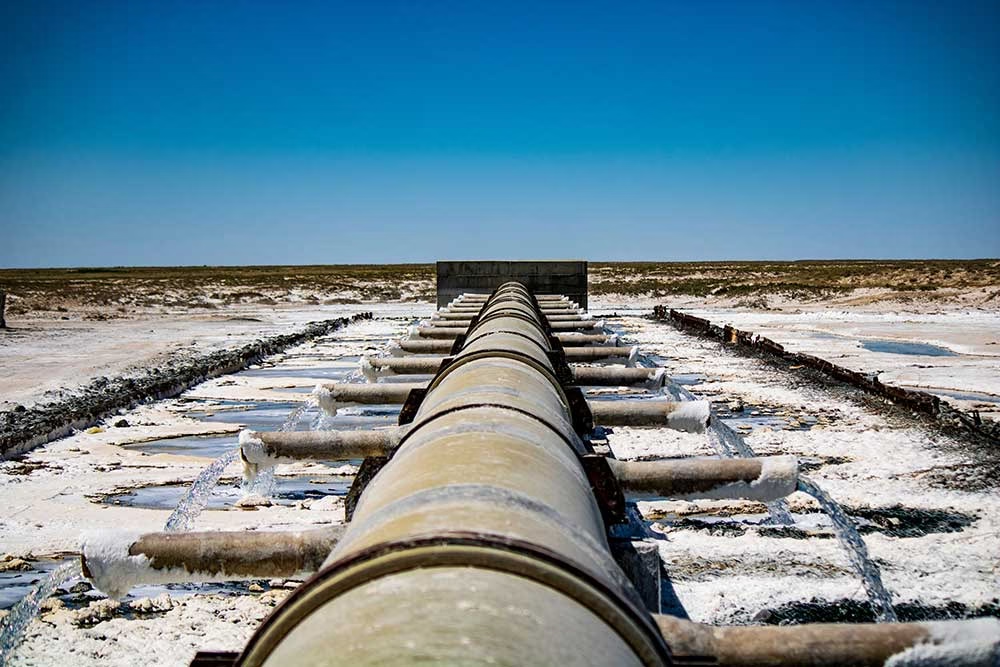
Detecting issues in pipeline health is only half the battle. As most pipelines stretch across some of the most inaccessible terrain on earth and beyond cellular reach, operators are forced to rely on field teams reaching the site before remedial action can take place, and that delay can be costly. A leak may continue unchecked for hours or days and valuable time can be lost while crews travel long distances with limited information about any issues.
Satellite IoT enables remote actuation, allowing pipeline operators to send commands instantly to equipment in the field, closing valves, adjusting pumps, or isolating sections of pipe as soon as a problem is detected. A pressure sensor signalling a sudden drop can trigger an immediate response from the control room, instead of waiting for a maintenance team to drive or fly to a remote location. The technology not only directly reduces the scale of spills but also shortens downtime and improves safety for field personnel. Pipeline engineers are no longer dispatched into hazardous conditions to perform urgent manual interventions and instead, they can attend the site to carry out targeted repairs under safer, more controlled circumstances.
Without satellite-enabled actuation, pipeline operators remain vulnerable to longer response times and escalating incidents in remote regions. With it, they gain the ability to contain risks immediately, keeping both pipeline infrastructure and the surrounding environment safer.
Choosing the Right Satellite IoT Solution
Every pipeline is different. The right connectivity depends on how much data you need to transmit, how often you need to send it, and how critical it is to have immediate, two way communication. Here’s a quick guide to help you decide where to start.
For Low Data Volumes and Periodic Updates: NTN NB-IoT
If your sensors only need to send small packets of data, and the problem won’t escalate if readings are sent a few times per day (e.g., 8-12 transmissions), NTN NB-IoT is a cost-effective option.
Best for environmental monitoring, slow changing metrics like temperature, pressure, or flow trends, and non-critical maintenance data.
It’s important to remember that this is emerging technology, and coverage is still expanding, so availability varies by region. Further, because the service is currently delivered by Viasat, whose satellites are in Geostationary orbit, sensors need direct line of sight to the satellite, which can be a challenge in heavily forested or mountainous terrain.
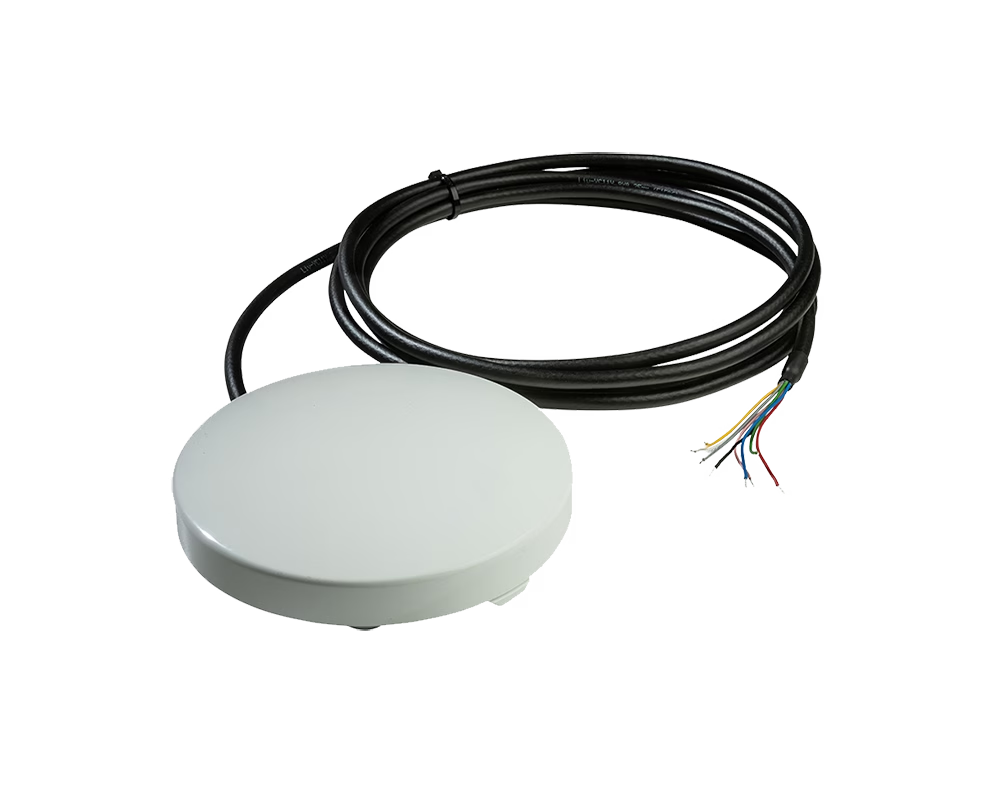
Our recommendation is RockBLOCK RTU; designed for ultra-low power consumption and long term field deployments, making it an ideal choice for pipelines using NTN NB-IoT connectivity. It’s a flexible device that can also operate on cellular where available, and can be shipped with Iridium Short Burst Data (SBD) as an alternative satellite network, if your pipeline is not within the coverage area of the NTN NB-IoT service.
For Higher Data Volumes or More Frequent Reporting: Iridium Messaging Transport (IMT)
When your pipeline monitoring requires more frequent updates or larger data volumes, Iridium Messaging Transport (IMT) is the better fit. Its truly global coverage ensures connectivity even in the most remote environments, while its sub-10-second round-trip time makes it suitable for near real-time applications.
This is ideal for continuous health monitoring of pumps, valves, and sensors, early warning systems where immediate alerts are crucial, and remote assets that are inaccessible for long periods.
IMT supports more frequent transmissions than NTN NB-IoT and can handle a higher data load, making it ideal for situations where small, periodic updates simply aren’t enough.
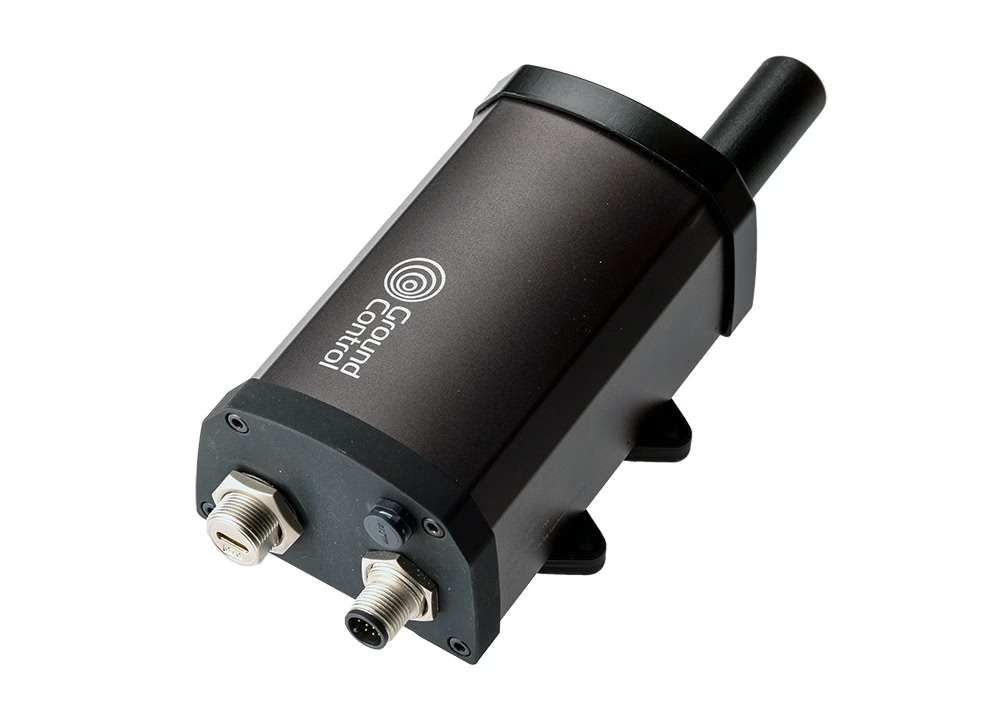
Our device recommendations would be RockBLOCK Pro or RockBLOCK Plus 9704 – rugged, field-ready devices built to withstand extreme conditions and provide reliable, low power operation for continuous monitoring.
For Real Time Monitoring and Remote Control: IP-Based Solutions
For mission-critical sites where you need to both monitor and act instantly, an IP-based solution is essential. These systems enable real time, two way communication, so operators can remotely command equipment, such as closing valves or isolating sections of pipe the moment a fault is detected.
Best for critical infrastructure nodes, emergency response situations, and high value assets where downtime costs are severe.
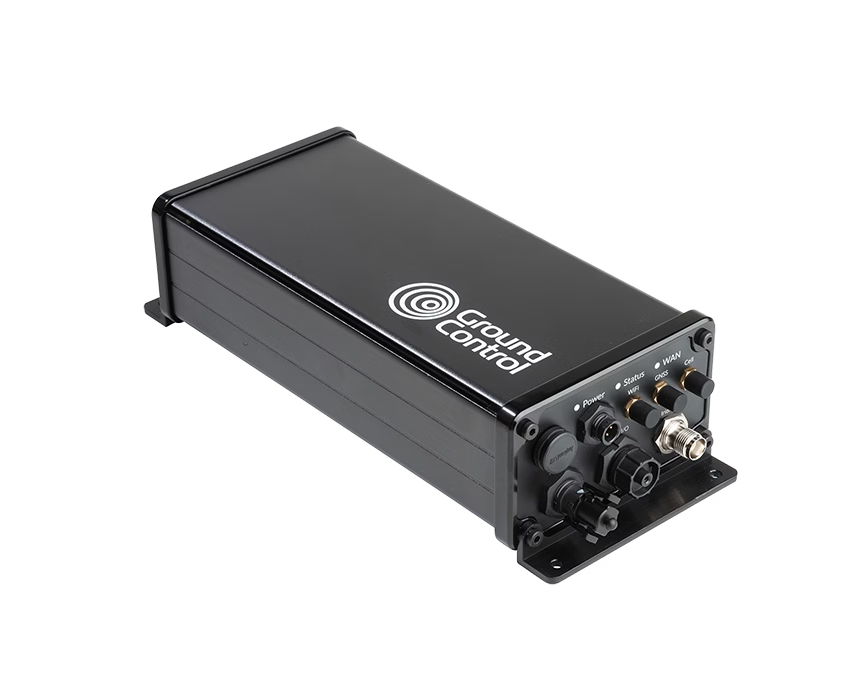
Powered by Iridium Certus 100, these solutions deliver global coverage with very low latency, enabling near-instant response. Choose RockREMOTE Mini for a rugged tough, IP-based device which is optimized for low power draw, or RockREMOTE Rugged to take advantage of its sophisticated edge processing capabilities, and MQTT / FTP facades.
Satellite IoT gives pipeline operators the tools to see, predict, and act, even in the most remote environments. By matching the right technology to each monitoring challenge, operators can prevent minor issues from becoming disasters, safeguard their teams, and protect the environment. With the right strategy, every mile of pipeline can be monitored and managed with confidence, no matter how far it stretches.
Can we help?
Partner with us to implement satellite IoT technology that safeguards your critical infrastructure and pipeline operations.
Complete the form or email us at hello@groundcontrol.com and we’ll get back to you within one working day.
How Satellite IoT Makes Predictive Maintenance Possible Anywhere
Manufacturing and Heavy Industry operations around the world rely on their machinery to get the job done, efficiently and effectively. The cost of equipment failure and the resulting unplanned downtime has serious consequences for the bottom line, with medium unplanned downtime costs approximately $125,000 per hour. When inflationary pressures, supply chain demands and raw material costs are factored in, unplanned downtime costs for Heavy Industry were calculated as $59 million per year in 2023.
Faced with the need to minimize the business impact of unplanned downtime for critical equipment, industries with heavy assets and significant downtime costs, such as oil & gas and mining, are leading the way in adopting Predictive Maintenance solutions.
By incorporating satellite connected IoT sensors, Heavy Industries operating in remote locations can reliably monitor machinery in real time and react quickly to avoid equipment failures and keep assets operational. The data from satellite-connected sensors on equipment forms a vital component of deploying Predictive Maintenance programs in industries with high asset costs.
What is Predictive Maintenance?
Predictive Maintenance (PdM) is a proactive, data-driven approach that uses advanced technologies – such as condition monitoring, machine learning (ML) and IoT devices – to anticipate equipment failures and schedule maintenance before disruptions occur. By analyzing real-time data from sensors installed on machinery, PdM identifies early signs of wear, faults, or deterioration, enabling timely intervention to prevent costly downtime.
Unlike time-based or reactive maintenance, PdM optimizes equipment performance by triggering maintenance tasks only when specific conditions indicate a need. This approach improves equipment reliability, reduces maintenance expenses, and extends the lifespan of assets. AI-powered analytics and IoT-enabled sensors track key metrics like temperature, pressure or vibration, providing continuous insights into machine performance. When thresholds are exceeded, PdM systems issue alerts or initiate maintenance work orders.
The goal of PdM is to enhance operational efficiency by minimizing unplanned downtime, lowering maintenance costs, and ensuring asset reliability. Industries such as manufacturing, energy, and transportation rely on PdM to align maintenance activities with actual equipment conditions, maximizing productivity and supporting cost-effective, sustainable operations.
What is the Difference between Predictive and Preventive Maintenance?
Although often used interchangeably, Predictive Maintenance (PdM) and Preventive Maintenance (PM) are distinct approaches to equipment upkeep, each suited to different operational needs.
Preventive Maintenance follows a scheduled approach, performing maintenance at regular intervals based on time or measurable usage units, such as engine hours or production cycles. This method ensures equipment is inspected and maintained before issues arise, but it does not consider the actual condition of the asset.
For instance, a Mining operation may replace drill components every six months, regardless of whether those components show signs of wear. While this minimizes the chance of failure, it may result in premature replacements or unnecessary downtime.
Predictive Maintenance leverages real-time data from IoT sensors and advanced analytics to monitor the actual condition of assets. Maintenance is performed only when necessary, based on insights into potential failures or performance degradation.
For example, IoT sensors on a Combine Harvester may detect rising temperatures or irregular vibrations, indicating wear and tear. Predictive maintenance enables technicians to address the issue before a failure occurs, minimizing downtime and repair costs.
Comparing the Two Approaches
| Preventative Maintenance | Predictive Maintenance | |
|---|---|---|
| Basis for Maintenance | Time or Usage Intervals | Real Time Condition Monitoring and Analysis |
| Frequency | Regular, Fixed Schedule | As Needed, Based on Data Insights |
| Costs | Lower Initial Costs, Higher Cumulative Costs | Higher Initial Investment, Lower Long Term Costs |
| Downtime | May Require Equipment Stoppage | Often Avoids Downtime by Scheduling During Low Impact Periods |
| Efficiency | May Result in Unnecessary Maintenance | Targets Specific Issues, Optimizing Resources |
Types of Predictive Maintenance
There are three distinct types of Predictive Maintenance: Indirect Failure Prediction, Anomaly Detection, and Remaining Useful Life (RUL). Each approach differs in its desired objectives, the analytical methods used, and the type of information output provided.
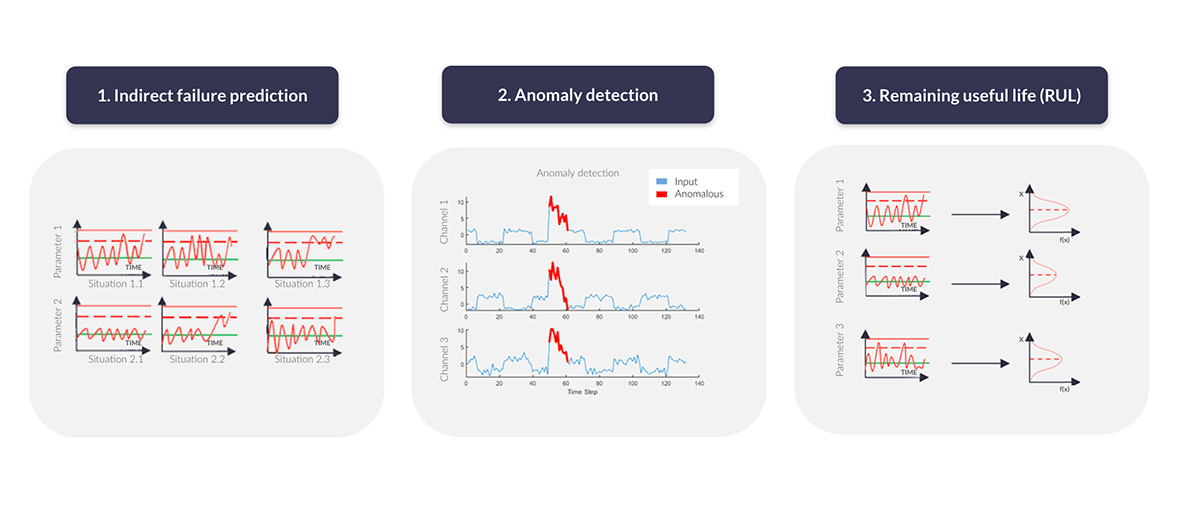
Image adapted from the IoT Analytics Asset Performance & Predictive Maintenance Market Report 2023–2028
Indirect Failure Prediction
Estimates equipment health by calculating a ‘health score’ based on known maintenance requirements, operating conditions and historical performance data. When sufficient data is available, supervised machine learning can be applied to refine the predictions. This approach is scalable since it relies on manufacturer specifications, and it is cost-effective because it uses existing sensors.
Its dependence on large volumes of historical data may render it unsuitable for industries like heavy machinery, where high downtime costs necessitate more immediate and accurate insights.
Anomaly Detection
Identifies potential failures by detecting deviations from normal operating conditions in real time. Unlike methods that require historical data, it relies on current sensor data, making it particularly suited to organizations without extensive machinery usage records. This approach improves predictive accuracy by considering real-time environmental and operational factors rather than predefined maintenance parameters set by the manufacturers.
The risk of false positives can pose challenges, as unnecessary alerts may disrupt operations and complicate machine learning algorithm performance.
Remaining Useful Life (RUL)
Focuses on predicting the time left before equipment failure based on specific machine metrics such as operational hours, distance traveled, or activity cycles. By analyzing sensor data, this method identifies condition indicators that highlight whether the equipment is performing as expected or if faults have accelerated its degradation. RUL models are trained using system data collected under known conditions and applied to predict outcomes under new or variable circumstances.
While this method is highly robust and reliable, it requires detailed, high-quality data for accurate predictions, making it particularly effective for critical equipment in complex environments.
The Benefits of Predictive Maintenance
Predictive Maintenance brings many benefits to organizations through its advanced approach to equipment upkeep, using technology and data analysis to improve asset reliability and efficiency. By identifying potential issues before they lead to failures, PdM helps organizations reduce downtime, optimize resources, and maintain safer working environments.
Research, including findings from the US Department of Energy, highlights the tangible impact of Predictive Maintenance. Compared to preventive maintenance programs, it offers cost savings of 8% to 12%, and when compared to reactive maintenance, cost savings increase to 30% to 40%. These programs also enable a reduction in maintenance costs by 25% to 30% and minimize equipment breakdowns by 70% to 75%.
In addition to cost savings, PdM improves operational efficiency by reducing downtime by 35% to 45% and increasing production capacity by 20% to 25%.
How to Implement Predictive Maintenance
1. Establish Baselines and Data Collection
Baseline performance metrics are identified for the assets by monitoring its condition to set the normal performance benchmarks. Once the baseline is established, sensors are installed to capture real-time data, enabling continuous performance monitoring.
2. Install IoT Sensors on Equipment
IoT sensors are installed on critical equipment to monitor various parameters such as vibration, temperature, pressure, and noise. These sensors continuously collect data on the equipment’s condition and the data gathered is then transmitted to a centralized system for analysis.
3. Data Integration and System Setup
The data collected from the IoT sensors needs to be integrated with the PdM system. This involves connecting the sensors to a computerized maintenance management system (CMMS) or a remote dashboard which allows for real-time monitoring and data analysis.
4. Set Maintenance Thresholds and Automate Alerts
Organizations need to define thresholds for acceptable performance levels. When these thresholds are exceeded, the system automatically triggers maintenance alerts, enabling timely interventions before equipment failure occurs.
5. Select and Implement the Right Analytics Tools
An analytics platform is required to handle the large volumes of data, apply predictive models, and generate actionable insights. Machine learning and AI algorithms are crucial for analyzing sensor data and predicting future equipment failures based on historical data.
6. Develop Predictive Models and Train the System
Predictive models are developed using historical data, maintenance logs and sensor data to forecast future equipment behavior. These models are trained to identify patterns in the data that may signal the onset of failure.
7. Integration with Existing Maintenance Systems
The PdM system is integrated with existing workflows, maintenance management systems, and enterprise resource planning (ERP) systems. This enables seamless communication across platforms and allows for data-driven decision-making.
8. Monitor and Optimize the Program
After implementation, the PdM program should be monitored to evaluate its effectiveness. Continuous data collection and model refinement will help improve prediction accuracy over time.
Industrial Applications of Predictive Maintenance
Predictive Maintenance is becoming increasingly common practice in asset-intensive industries that depend on their large, complex machinery. For industries with assets in remote locations or critical communication requirements, satellite connected IoT devices can transmit real-time sensor data for PdM programs.

Energy and Utilities
The risk of equipment failure in energy production and utilities management can lead to significant financial losses and customer dissatisfaction. Power plants, wind farms, and utility grids employ PdM programs to ensure the continuous operation of critical assets like turbines, generators, and transformers. IoT sensors monitoring parameters such as vibration, temperature, and pressure are used to detect early signs of failure.
By analyzing these data points in real time with advanced predictive models, utility providers can prevent catastrophic failures, optimize energy production, and ensure compliance with regulatory standards. This is particularly important in industries where unexpected downtime can have widespread consequences on both financial performance and customer trust.
Railways and Transportation
PdM is crucial in the transportation industry for ensuring the safety and reliability of infrastructure such as railway tracks, trains, and airport ground equipment. IoT sensors on trains and other critical assets monitor parameters like pressure, temperature, and vibration to detect early signs of wear or failure.
For example, PdM can be used to monitor brake systems or detect track deformations, preventing accidents and service interruptions. By integrating sensors with automated maintenance management systems (CMMS), transportation companies can schedule repairs before a component fails, enhancing passenger safety and reducing operational disruptions.
Oil and Gas
In remote locations such as offshore platforms or desert pipelines, Oil and gas operations face unique challenges in maintaining equipment. PdM is highly beneficial in these situations, as it helps companies remotely monitor the condition of critical machinery like pumps, compressors, and valves.
Satellite-connected IoT sensors track parameters such as pressure, temperature, and vibration to detect signs of imminent failure. Real-time data is sent to cloud-based platforms for analysis, and predictive algorithms generate alerts to maintenance teams, allowing them to address issues before they result in costly downtime or safety hazards.

Mining
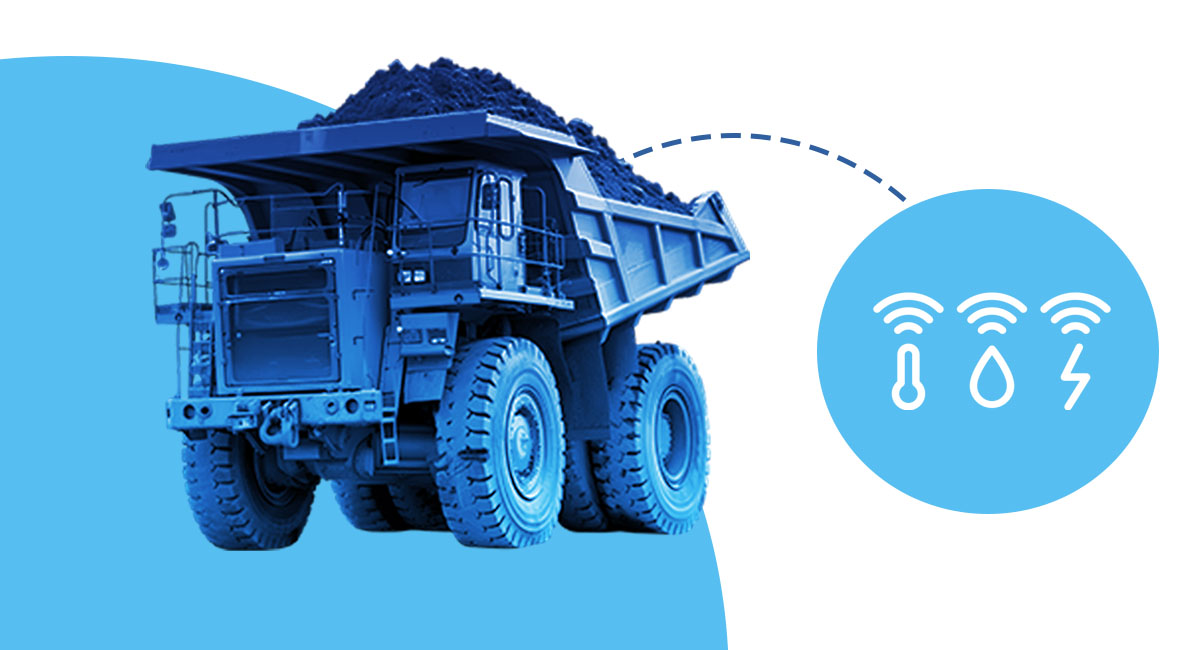
With Mining machinery operating in harsh conditions, the risk of unexpected breakdowns can lead to costly delays and safety hazards. Predictive maintenance helps to monitor heavy equipment such as crushers, drills, and loaders, which are critical to mining operations.
Satellite-enabled IoT sensors measure variables like temperature, pressure, and vibration, providing continuous health checks of the machinery. Predictive models analyze these data streams to identify wear patterns and predict when maintenance is required.
Sensor Technologies in Predictive Maintenance
Predictive Maintenance utilizes a range of sensor technologies to monitor the condition of equipment and to detect and address potential failures before they lead to unplanned downtime.
Infrared Thermography
Also known as thermal imaging, infrared cameras identify heat spots which can indicate issues such as friction, electrical resistance, or misalignment in mechanical systems. It is particularly valuable in identifying worn-out components or malfunctioning circuits that tend to overheat.
Infrared thermography allows for real-time monitoring without disrupting machine operation and is frequently used in industries like power generation to track turbine blade conditions and ensure equipment runs efficiently.
Acoustic Monitoring
Using specialized equipment, maintenance personnel can detect ultrasonic or sonic emissions from machinery, which may indicate leaks, electrical discharges, or mechanical wear. Sonic monitoring is typically applied to lower-speed equipment, while ultrasonic analysis is more accurate and applicable to both low- and high-speed machinery.
Ultrasonic analysis is widely used in industries like construction and heavy equipment operations, where hydraulic systems and machinery require constant monitoring to ensure seamless operation and prevent project delays.
Vibration Analysis
Sensors track vibration patterns that help technicians identify potential issues like misalignment, unbalanced components or bearing failures in high-speed rotating equipment, such as motors, drills and fans.
Each machine has a unique vibration signature, and deviations from this pattern can be a strong indicator of mechanical problems. The ability to monitor vibration in real-time allows for early intervention, preventing costly repairs and downtime.
Oil Analysis
By analyzing oil for contaminants, viscosity changes, and particle counts, technicians can pinpoint wear and tear in machine components. Chemical analysis of oil can also reveal overheating or chemical degradation, providing early warnings of issues that could lead to failure.
This technology is often used in heavy industries, such as energy production or oil drilling, where machinery components are subject to extreme operating conditions.
Current and Voltage Sensors
These sensors track electrical characteristics like overloads, short circuits, and failing components. In industries such as mining or energy, where electrical systems are critical, monitoring these parameters ensures safety and minimizes downtime caused by electrical failures.
For example, real time analysis of electrical data in mining operations can help identify potential issues in equipment like excavators or conveyors, allowing operators to address problems before they cause equipment failure and disrupt production.
Predictive Maintenance and Satellite IoT
For remote operations, such as those found in mining or offshore environments, Satellite IoT becomes a crucial part of the Predictive Maintenance Program. When assets are located in areas with unreliable or no cellular connectivity, traditional IoT solutions relying on cellular networks may fail to transmit vital data. Satellite IoT solutions overcome this challenge by enabling real-time data transmission via satellite, ensuring that assets can be monitored regardless of their location or environment.
Beyond just sensor data collection, Satellite IoT can enable remote control of assets. If an asset is detected to be operating in an unsafe condition, it can be remotely shut down to prevent catastrophic damage or safety incidents. This combination of real-time monitoring and remote intervention significantly enhances worker safety and helps avert equipment breakdowns before they escalate into more serious issues.
Get in Touch
At Ground Control, we design and build Satellite IoT devices leveraging the Iridium global network, providing reliable real-time data transfer from anywhere on Earth. Our feature-rich IoT platform, Cloudloop, can monitor and analyse sensor data and offers a simplified and well-documented API to connect to your existing Predictive Maintenance and Asset Performance Management (APM) toolkits.
With over 20 years of experience, we can help you make the best choices based on your requirements.
Monitoring Heavy Equipment Fleets with Satellite IoT Connectivity
Heavy industrial sectors have continued to push the boundaries of what is possible in some of the most remote and challenging locations on the planet. Industry 4.0 has been a transformative technological leap for the traditional industries of mining, agriculture, forestry and construction, bringing new monitoring and automation capabilities to the heavy equipment that these sectors rely on.
In remote mining, farming, forestry or construction sites, an equipment breakdown can cost thousands in downtime. For industries operating far from cellular coverage, ensuring machinery stays operational is a challenge that Satellite IoT is solving with real-time data and monitoring. In this blog, we’ll explore how IoT can enable the transformation of heavy machinery operations, tackling issues like maximizing cost of ownership, preventing downtime, and safety and environmental compliance.
 Heavy Equipment Total Cost of Ownership (TCO)
Purchasing specialized heavy equipment is a significant investment, and in recent years those costs have been steadily climbing as manufacturers pass on their increased raw material and labor costs. The Capital Expenditure (CapEx) involved means that each machine must be operated effectively, efficiently and within agreed tolerance limits to reduce maintenance costs and prevent costly downtime.
The theft of heavy equipment is also commonplace, with over 11,000 incidents of construction theft reported annually in the US and an average average loss of $35,000 to $45,000 per machine. Theft also has a considerable impact on operational timescales, as well as increased costs to replace or lease equipment.

Hazardous Work Environments
With heavy industry recognised as one of the most hazardous places to work (accounting for 63 per cent of all fatal occupational injuries) worksite safety requirements have, quite rightly, been improving on a global scale as Governments enforce a duty of care on industry operators.
However, it remains that despite these improvements, a diminishing workforce is entering these physically challenging industries based in remote locations. This has led to increased Operational Expenditure (OpEx) to attract high quality skilled candidates.

Environmental and Sustainability Targets
Heavy industry accounts for around a third of global energy consumption and emits a quarter of global Greenhouse Gas emissions. Pressures from Governments to hold businesses to account for their carbon emissions and environmental impacts particularly affect these industries.
To meet agreed environmental commitments, operations may need to invest in technology to analyse the worksite’s impact on the surrounding area and consider upgrading heavy machinery to meet emissions targets.

Operational Complexity
Keeping to contractual timescales on any large project involving heavy machinery is ultimately reliant on the equipment being reliable. Delays in specialist heavy equipment arriving on-site and unexpected breakdowns can lead to extensive project delays and wasted resources, all of which lead to an increased OpEx.
Without clearly-defined logistical operation data to coordinate fuel deliveries and material transport, an entire site could come to a standstill.
Connectivity Limitations
Mining, forestry, farming and construction operations often take place in remote locations with limited or no mobile or cable internet coverage. The cost of connecting fixed or cellular telco equipment or laying cables for site connectivity is often very expensive, especially when real-time communication is required for equipment operations or emergency protocols.
The return on investment for installing a dedicated network on a site which may only be operational for 10-15 years is often poor and can become a negative cost.
Six Innovations in Heavy Machinery Operations
Many of the issues facing industries using heavy machinery can be mitigated against by using technology, data and connectivity.
With satellite connectivity more reliable than cellular in remote locations and increasingly more competitively priced, the cost-effectiveness and profitability of mining, forestry, construction and agriculture operations can be significantly improved and many of the key issues facing the industry can be resolved.
1. Predictive Maintenance
Predictive maintenance is a data-driven approach to keeping heavy machinery operating at peak performance and efficiency. By continuously monitoring on-board sensors for feedback on tire wear, oil and fuel consumption, engine temperatures, hydraulic pressures, vibrations, stability and acceleration, machinery can be proactively inspected and maintained according to usage, rather than reactively when a breakdown occurs.
Satellite IoT devices can transmit real time data on machine usage and even enable a shutdown of equipment if thresholds are exceeded. By planning machine maintenance downtime, preventing failures that could lead to accidents, and monitoring machinery operatives driving behaviour, the operation expenditure of the site can be effectively managed and optimized.
The 2021 McKinsey & Company ‘The Internet of Things’ Report highlighted that in the construction sector, employing IoT applications can improve uptime by 30 to 50 percent and increase throughput by 1 to 5 percent.
An additional benefit of monitoring machinery usage is to provide a better return on the CapEx of the machinery when the equipment is sold at the end of the project.
2. Remote Monitoring
Remote monitoring of site personnel and equipment can enable the operational efficiency of worksites, as well as ensure the safety of all workers on-site. With satellite-connected asset trackers on equipment and team members, remote operations centres can use geo-fencing capabilities to keep personnel and heavy machinery apart using safety zone alerts. Should a team member stray into the path of an oncoming vehicle, both the individual and the driver can be alerted to the potential risk.
Satellite IoT enabled sensors can detect worksite ambient conditions to ensure staff and machinery are not exposed to extreme working temperatures, strong winds, excessive rainfall or poor air quality. By encouraging and demonstrating a commitment to site safety, labor recruitment can be improved.
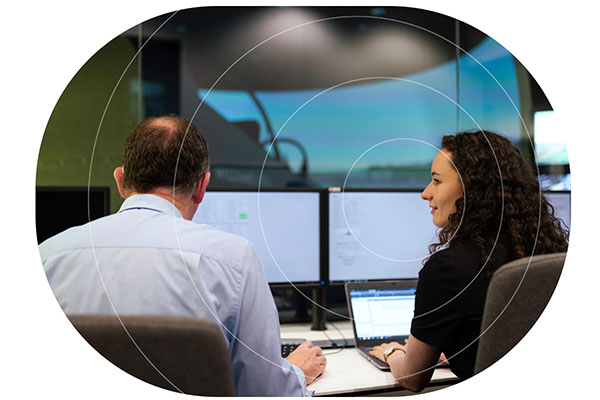
Site operations can be further optimized through monitoring of raw material tanks and silos (e.g. concrete and chemical reagents), machinery fuel consumption, generator fuel levels and final product storage and collection (e.g. metal ores, timber, grain). By integrating satellite IoT sensors across the work site, logistics managers can ensure fuel and raw material deliveries and product collections are planned according to site requirements, reducing bottlenecks and improving operational efficiency.
According to McKinsey and Company, operators which have more than 50% of their vehicle fleet connected to the internet have 23% better financial performance than peers with less than 50% connected. Companies with more than 75% of their fleet connected have 51% better financial performance.
3. Telematics
Monitoring heavy equipment on-site is integral to operational performance, and can also ensure the worksite is remaining committed to its safety, sustainability and environmental goals.
Aside from monitoring onboard sensors for predictive and reactive maintenance, telematics can also improve driver behavior, which in turn can reduce fuel consumption and carbon emissions. Heavy industry equipment by its nature burns fossil fuels and emits greenhouse gases during operation, but there are opportunities to limit these effects.
In the construction industry alone, machinery idle time averages 36% which increases fuel consumption by up to 5%. The biggest operational opportunity for reducing the potential for idling is ensuring vehicles are dispatched to their collection or drop-off locations according to requirements rather than on a continuous cycle, thereby preventing fleet waiting times.
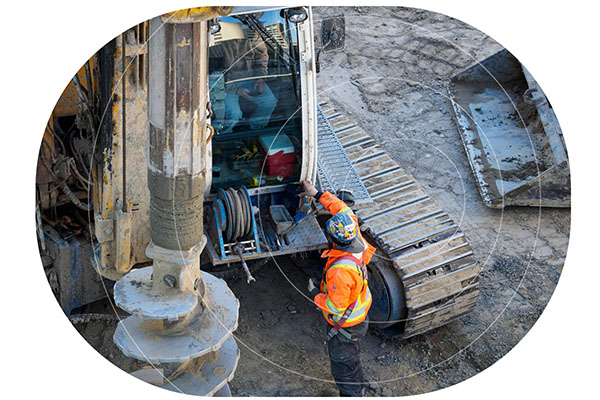
There is also driver behavior to consider, with some operators leaving machinery idling during their break periods. Using real-time telematics, Site Managers can address the machinery operator actions immediately and encourage them to turn the machine off when not in use.
Through these two simple actions it is possible to reduce fuel costs, decrease carbon emissions, limit noise pollution and improve worksite air quality. When industry profit margins are challenging, evidence has shown that operators who lag behind their peers in reducing downtime are losing future business, wasting time and money, and increasing their ecological impact on the environment.
4. Theft Prevention
Heavy equipment theft costs the USA construction and agricultural industry an estimated $300 million to $1 billion annually, and is especially prevalent during the National Holidays of Labor Day, Memorial Day, Independence Day and Thanksgiving when worksites are closed and machinery is left unattended.
Satellite-connected video surveillance can enable real-time monitoring and recording of remote worksites and storage areas to protect both staff and equipment from unauthorized access.
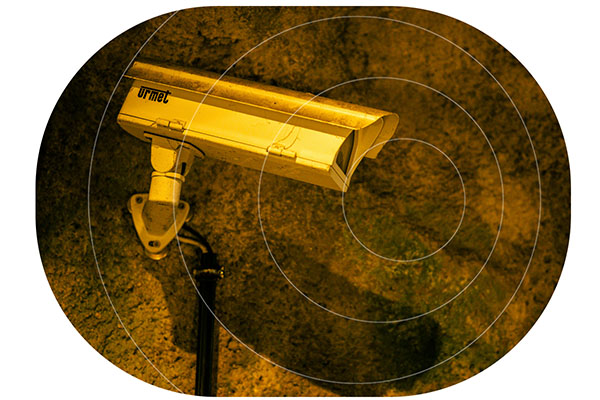
Heavy equipment can be fitted with discreet satellite asset trackers which can alert the operations team when equipment has moved out of a geofenced area or the machinery is being operated outside of normal worksite hours. Satellite assets trackers are especially effective at tracking stolen heavy machinery as they can keep connected across borders, and in the case of the Iridium network anywhere on Earth. Improvement in asset tracking capabilities has led to an increase in machinery recovery rates from 5% to 20% in the last 15 years.
5. Machine Learning and AI
Incorporating AI and machine learning capabilities into the mining, forestry, agriculture and construction industry has the potential to transform how these sectors address the challenges of CapEx and OpEx, as well as their environmental impacts. By leveraging data-driven analysis, businesses can optimize workforce and heavy machinery productivity, identify opportunities for fuel savings and emission reduction, limit raw material wastage and improve final product quality and volumes. Insights from these analyses can be replicated across multiple work site locations and integrated into cost projections for future projects, driving efficiency and sustainability.
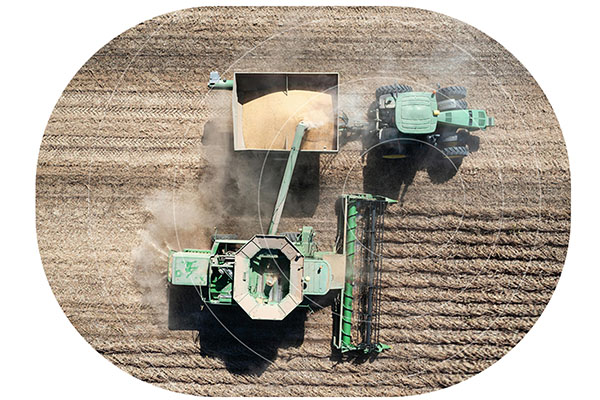
Heavy equipment can be fitted with discreet satellite asset trackers which can alert the operations team when equipment has moved out of a geofenced area or the machinery is being operated outside of normal worksite hours. Satellite assets trackers are especially effective at tracking stolen heavy machinery as they can keep connected across borders, and in the case of the Iridium network anywhere on Earth. Improvement in asset tracking capabilities has led to an increase in machinery recovery rates from 5% to 20% in the last 15 years.
6. Autonomous and Remote Control Heavy Machinery
One of the most significant challenges facing the mining, agriculture, construction, and forestry industries is an aging workforce, with many skilled workers nearing retirement and fewer new recruits stepping into these roles. Technological advancements in developing and implementing autonomous and remote operation of heavy equipment are helping to manage labor shortages while enhancing productivity and safety.
Autonomous Haulage Systems (AHS) are already in use across large-scale mining operations, enabling unmanned dump trucks to optimize hauling cycles, improve payload accuracy, and increase operational efficiency. However, not all scenarios are suitable for full automation, which is where remote control solutions come into play.
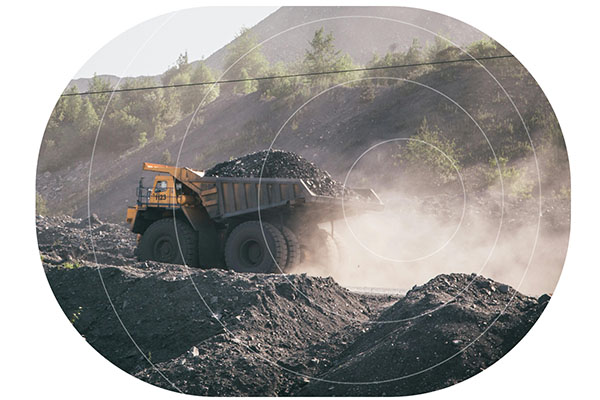
In hazardous environmental conditions or working on difficult or sloping terrain, controlling heavy machinery via remote control allows operators to manage equipment from a safe distance nearby or within a central operations hub. This minimizes risks to personnel while maintaining operational efficiency.
Both autonomous and remote-controlled systems rely on a continuous flow of real-time data, including video feeds and telemetry data, to ensure precise operation and avoid collisions. Satellite connectivity provides reliable and seamless data exchanges in remote locations, enabling the integration of automation and remote operation of heavy machinery in complex environments.
Satellite IoT Solutions for Heavy Machinery Monitoring
Satellite IoT is supporting innovation within the heavy machinery industry, addressing critical challenges such as remote connectivity, safety, and operational efficiency. By leveraging real-time data through predictive maintenance, telematics and remote monitoring, businesses can reduce costs, improve productivity, and meet stringent environmental goals. As automation and AI continue to transform the sector, embracing satellite-enabled solutions is essential for staying competitive in an increasingly connected world.
Get in Touch
Contact us to discover how our satellite IoT solutions can drive efficiency and profitability for your heavy machinery fleet.
With 20 years of experience, we can help you make the best choices based on your requirements.
Please call us on us on +44 (0) 1452 751940 (Europe, Asia, Africa, Oceania) or +1.805.783.4600 (North and South America); email hello@groundcontrol.com, or complete the form.
Private Satellite Network: TSAT’s Game-Changing Solution For Utilities
Remote ‘off-grid’ utilities sites play a crucial role in bringing reliable power to remote and challenging regions. But ensuring seamless communication at these remote power utility sites is no easy task. While traditional mobile and fiber connections are a great solution in cities, they fall short when it comes to the unique communication challenges of off-grid locations such national parks, mountainous regions, and permanent, poorly inhabited, grasslands.
Most power utility and water management companies have around 10% of their sites located in ‘off-grid’ areas. These sites often lack reliable access to mobile networks and terrestrial fibre infrastructure, making it impractical and costly to use conventional connectivity solutions. To make matters more challenging, these remote sites might be in environmentally sensitive areas or rough terrains, making it even harder to set up extensive communication networks.
In such situations, getting customer data back from these sites requires innovative solutions that go beyond the typical terrestrial and cellular options. It’s also crucial to distinguish between customer data backhaul and SCADA (Supervisory Control and Data Acquisition) and telemetry data backhaul. Mixing the two could lead to serious cybersecurity issues, which is why a specialized solution designed exclusively for SCADA and telemetry data is essential.
In this blog, we’ll delve into the main data connectivity and backhaul challenges faced by remote power utility providers. Additionally, we’ll discuss how TSAT offers a reliable and robust communication solution specifically tailored to meet the unique requirements of these remote power utility sites.
How TSAT overcomes the key data challenges for power utilities
1. Instant communication infrastructure
Remote areas often lack reliable communication infrastructure, such as wired internet or cellular networks. TSAT utilizes satellite communication to overcome this limitation, ensuring that data can be transmitted to and from the remote sites even in areas with no or limited terrestrial connectivity.
2. Real-time monitoring and control
Remote power utility sites might be unmanned or difficult to access regularly due to their remote site situation, but any downtime or loss of energy production can be costly. TSAT enables real-time monitoring and control of critical assets, such as generators, switchgear, and substations, from a central control center, allowing operators to respond quickly to any issues or anomalies, optimising power output and maximizing power generation.
3. Enhanced grid reliability
By continuously monitoring the remote power sites, TSAT helps identify potential problems and weaknesses in the grid, as they occur in real-time, enabling proactive maintenance and repairs. This proactive approach enhances overall grid reliability and minimises the risk of large-scale outages. Satellite is also highly reliable and unlike terrestrial and fiber, is unaffected by coverage, weather events and ground infrastructure.
4. Robustness against extreme weather events
The United Nations Office for Disaster Risk Reduction reports that over the last 20 years, there has been a “staggering rise” in the number of extreme weather events. Floods, fires, storms and earthquakes, all risk the stability, reliability and telemetry data delivery of sites reliant on cellular and fiber. As TSAT is satellite-based, connectivity is much more reliable and stable.
5. Highly secure
Cyber-attacks are on the rise around the world and utility powerhouses have been targets. TSAT ensures encrypted and authenticated data transmission between remote power sites and the central control center. The dedicated satellite network provides a private and isolated communication channel, safeguarding against cyber threats and unauthorized access; making for a trusted and effective solution for power utilities’ communication needs in remote locations.
A detailed look at TSAT
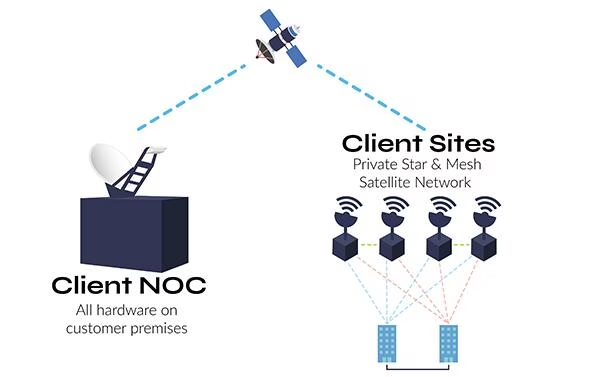
TSAT offers a narrowband private satellite network that provides an ideal solution for monitoring and controlling smart power grids in even the most remote locations. Power utilities in the UK can now benefit from this cost-effective and reliable platform, connecting distant assets to crucial utility applications like SCADA transmission, telemetry, and M2M, all within a secure network.
Designed to accommodate the needs of both small and medium-sized networks, TSAT boasts scalability with lower operating costs compared to installing and maintaining fiber connectivity. It supports both IP and legacy serial devices and operates independently from terrestrial communication systems. This not only complements existing terrestrial networks but also offers an alternative solution, ensuring continuous transmission at all times.
The hardware is purpose-built to withstand harsh environments, providing years of reliable operation, making it the most robust choice in adverse weather conditions, unlike mobile and fiber alternatives. Additionally, TSAT adheres to the IEC-61850 global standard for utility and industrial communication and automation, ensuring seamless integration with existing systems.
Through rigorous testing, Ground Control solutions have received certifications in the Worldwide Industrial Telemetry Standards (WITS) DNP3 protocol, setting the global standard for utility industry telemetry control and monitoring requirements. This ensures interoperability between equipment from different manufacturers, guaranteeing a smooth and efficient power utility system.
Save costs and be secure
The equivalent statistic for Euros regarding the average cost of laying fiber can be found in the United States Department of Transportation’s “Fiber Optic Installation Cost Survey” report. According to the report, the average cost of laying fiber is estimated to be around €23,000 per kilometer. Additionally, there’s the ongoing expense of sending experienced Field Engineers to manage installations and maintenance. Over a 10-year hardware lifespan, this this total is significant.
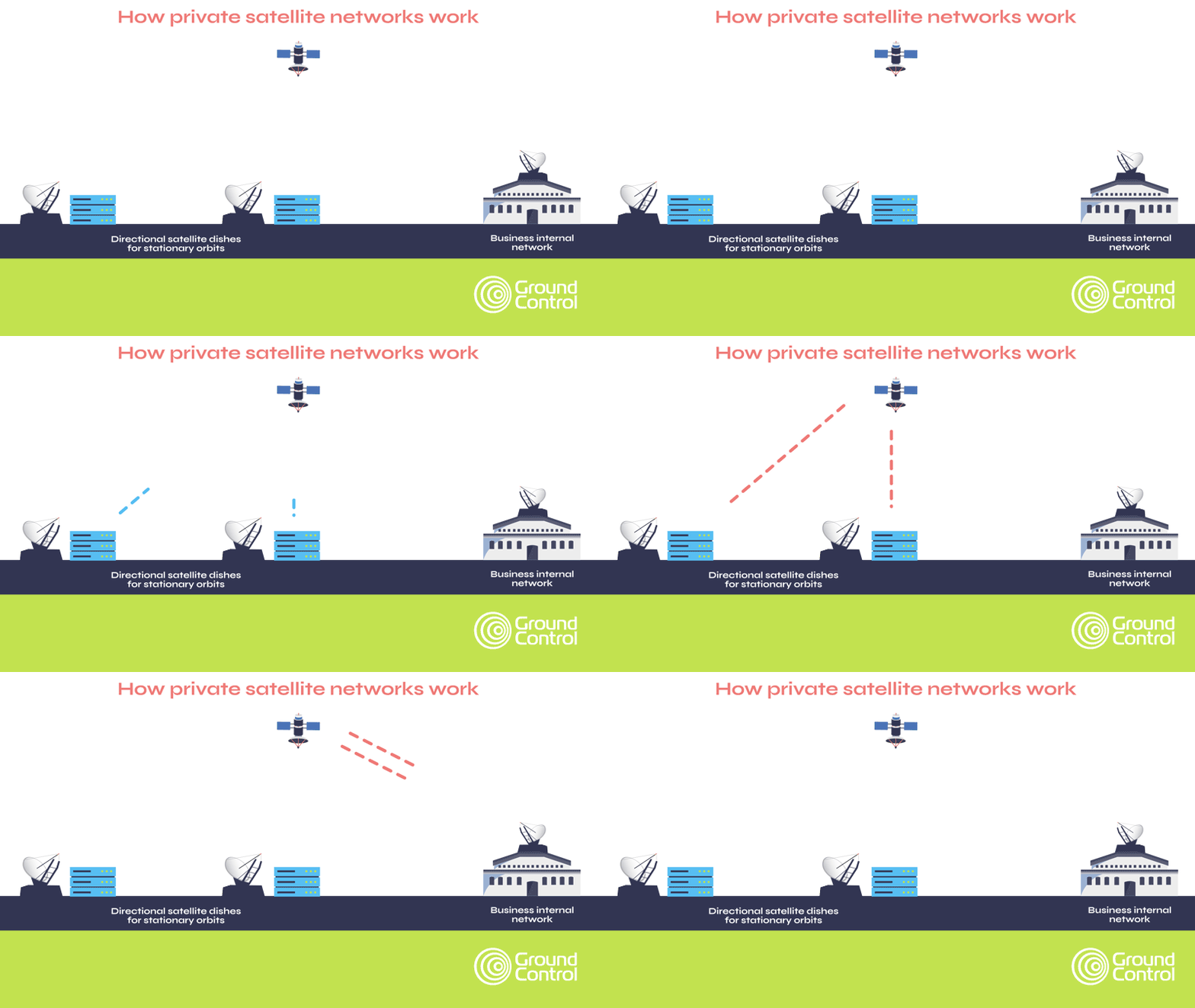
TSAT offers a practical solution to mitigate these costs almost entirely, as its terminal can be remotely managed. This means no more costly truck rolls, and with TSAT being always-on and relaying data in real-time, prompt and guaranteed servicing is assured.
The TSAT HUB stands out as the most cost-effective VSAT HUB available. By efficiently utilizing the satellite spectrum and tailoring satellite bandwidth to meet specific application needs, annual communication expenses are significantly reduced. This makes TSAT an ideal primary or backup option for existing terrestrial communications, providing reliable and affordable connectivity for remote utility sites.
Unlock the potential of your data
With over 40 years of combined knowledge of satellite experience, the Ground Control team is well placed to help keep you connected when it matters the most with complete satellite connectivity solutions for any situation and application.
Whatever your communication or connectivity needs, we can help.
Infographic: How to unlimit your IoT application with the RockREMOTE Rugged
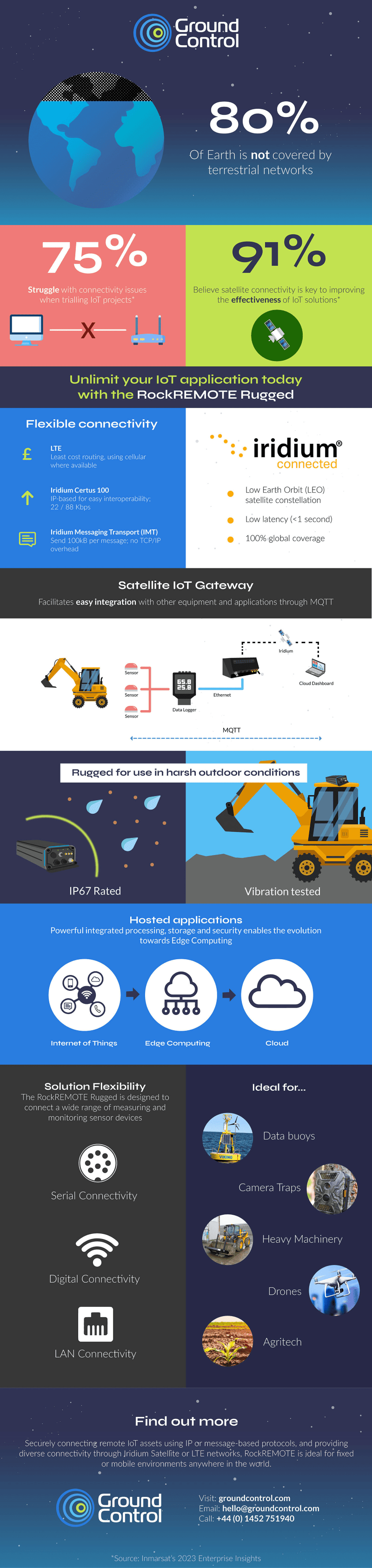
A surprisingly small amount of the Earth’s total surface is covered by terrestrial networks; it’s reckoned to be between 15-20%. Of course connectivity is centred around people, so populated land masses have the lion’s share of mobile phone masts. If your IoT application is located within or close to a populated area, you’ll have several choices to connect your devices: cellular, LPWAN, WiFi, BLE etc.
However if your application is in a remote area, or travels in and out of remote areas, terrestrial networks may be unavailable or unreliable. This often affects oil and gas pipelines; farms; mining operations; almost anything that’s at sea; offshore wind farms; reservoirs; solar plants; forestry – the list goes on.
Satellite IoT connectivity, once the last resort due to cost, has come of age. With a large number of new entrants to the market, incumbents have diversified their offerings, and prices have come right down. One example of this is the new Iridium Certus 100 service, designed for IoT. The RockREMOTE Rugged satellite IoT device leverages this service, which we’ve made available with both its IP-based connectivity option, and Iridium Messaging Transport (IMT), a message-based service allowing for relatively large (for IoT!) amounts of data to be transmitted using the MQTT protocol.
Our infographic draws out some of the key benefits of the new RockREMOTE Rugged; if you’d like to know more, just contact us and we’ll be happy to help.
Find out more
If you have a remote connectivity challenge, we can help. We design and build our own hardware, like the RockREMOTE, but we also partner with companies like Thales, Cobham and Hughes, to ensure that we can offer our customers the best possible product for your particular requirement.
With over 20 years’ experience, we’ll provide you with impartial, expert advice. Call or email us, or complete the form; we’re standing by to help.
Ground Control Recognized as Top 10 Oil & Gas Solution Provider
We’re delighted to announce that Ground Control has been recognised as one of the Top 10 Oil & Gas Solution Providers in 2022.
We have always taken pride in being a partner that truly understands both ends of data communications. Taking ownership of the overall solution and working with our customers to identify not just required volume and frequency of data transmission, but what device compatibility is required and how the data is to be used; to achieve operational goals. We have been creating and delivering advanced connectivity solutions to the Oil & Gas industry for over 20 years.
Solutions for the Oil & Gas sector
We deliver remote connectivity solutions to power Oil & Gas IIoT applications and support global, off-grid operations. Simply put, our solutions help to deliver more reliable data, better safety, cost management and enhanced security.
Popular use cases include remote monitoring and control, pipeline management, asset tracking and lone worker enablement and safety; and facilitating each, is robust, advanced connectivity.
The real value of connectivity
From asset management through to remote performance monitoring and maintenance, the IIoT ecosystem is delivering efficiencies and productivity to meet the demands of an ever-evolving energy landscape.
McKinsey & Company project that advanced connectivity to optimise drilling and production throughput and improve maintenance and field operations, could add $250 billion to the industry’s upstream operations by 2030.
This focus on connectivity, as opposed to IIoT more generally, is key. Despite the myriad of measurable benefits IIoT offers, everything will fall at the first hurdle if connectivity isn’t addressed as a priority. Data enables smarter and faster decisions, but data gaps and interruptions can lead to poor, costly business decisions. To truly harness the value of digitalisation in the field, operators must maintain near real-time, reliable data delivery from all assets within the Oil & Gas supply chain, at all times.
Given the often hostile and remote nature of the environments in which Oil & Gas plants are situated, terrestrial connectivity is not always available, nor reliable. This is where Ground Control really adds value. Using cellular and satellite networks, we specialise in connecting hard-to-reach people, machines and things.
Introducing Iridium Certus® 100
Ideal for IoT and M2M applications, the Iridium Certus® 100 service is facilitated by Iridium’s constellation of 66 LEO satellites. Providing pole-to-pole coverage, with the benefit of lower latency.
Offering IP data speeds of up to 88 Kbps, antennas can be small and lightweight, and do not have to be pointed to pick up Iridium satellites. This enables faultless connectivity to be achieved – even in mountainous or wooded areas.
The Certus-Enabled RockREMOTE
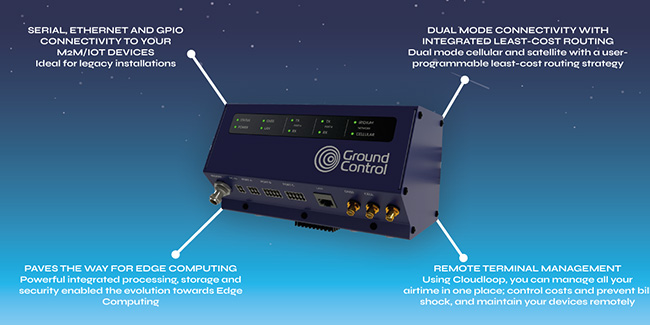
Designed for Industrial IoT, the RockREMOTE leverages the Iridium Certus network and LTE cellular connectivity, end-to-end networking and the powerful Cloudloop platform, to solve remote M2M / IoT connectivity challenges for Oil & Gas. It can be tailored to address a variety of fixed and mobile communications challenges within the Oil & Gas sector.
With serial, Ethernet, and GPIO connectivity to any IoT / M2M devices, it’s ideal for legacy installations; but equally has powerful integrated processing, storage and security features that pave the way for edge computing.
RockREMOTE is a particularly interesting solution for Oil & Gas as its exception reporting capabilities open up a whole new world for optimisation, while significantly reducing costs. By setting parameters to send data only if values change, clients are in a much stronger position to manage their data footprint and thus connectivity costs.
The RockREMOTE is a great solution for:
- Monitoring the performance of pressure pumps in the hydraulic fracturing process
- Capturing the data from flowback well tests
- Capturing production data
Also popular with the Oil & Gas sector
RockSTAR
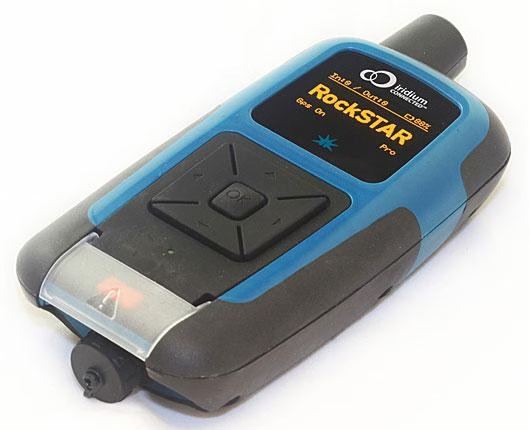
Promoting better lone worker safety, the RockSTAR is a Two-Way Messenger global communication device and tracking system. Working far beyond the reach of Wi-Fi and GSM networks, companies can deliver peace of mind, with location updates, up to every 15 seconds.
RockFLEET
With the RockFLEET organisations know where their vehicles are, at all times and can visualise asset location on an easy-to-use web-based viewer. Additionally devices can be used to measure payload, optimise delivery routes and even capture early warnings of required maintenance.
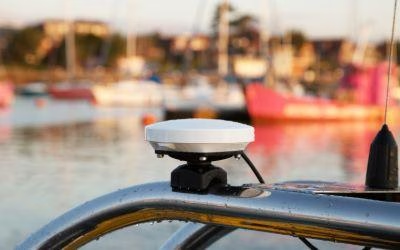
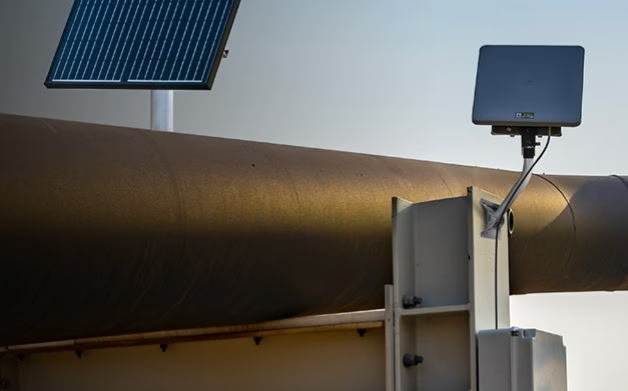
Hughes 9502
BGAN M2M-capable terminals like the Hughes 9502, are low cost – typically with billable unit costs of 1 to 2 cents per kilobyte, and low power (.01 to 4 watts). Offered in one-piece or two-piece form factors, there is also a variant compliant for operation in Hazardous environments.
Discover the value add of better connectivity
Going digital in the Oil & Gas sector is getting easier. But many companies still fall at the first hurdle – connectivity. We have supported our Oil & Gas customers’ digital projects, IIoT applications and connectivity requirements for 20 years. So, truly – we’ve got you covered.
Interested to see what value better connectivity could deliver for your operations? Contact us today to book a no obligation discovery call.
Lone worker safety: a snapshot of operations in North America
In its most basic term, lone workers are defined as employees who perform an activity in isolation from other workers, without close or direct supervision. Working in numerous industries, there are an estimated 53 million lone workers across the globe, with almost half (25 million) operating within North America.
In addition to safety concerns faced by lone workers simply as a result of being alone, many also work in remote areas. Communication plans and tracking can reduce the chance of accidents when lone working and ensure swift response times in the case of an emergency. While there are regulatory and contractual standards in place for lone workers, procedures surrounding lone worker safety are very much evolving.
With rapidly changing needs and increasingly challenging environments, it’s imperative organisations continually evaluate their strategies, hardware and software to ensure they are able to maintain worker safety and operational efficiency.
To better understand how lone workers in North America currently remain safe and connected when out of cellular range, Ground Control in partnership with TracPlus, surveyed almost 250 lone workers and individuals responsible for the safety and supervision of lone workers.
Lone worker operations in North America today
How often do lone workers travel out of mobile phone range?
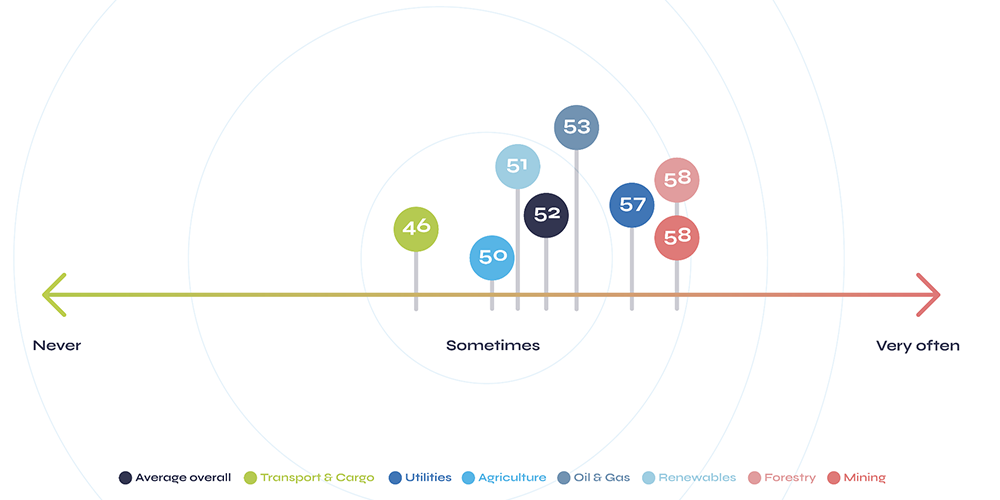
Lone workers and lone worker supervisors were asked to indicate on a scale from 0 – 100, whether they ever travelled out of mobile phone range. As can be seen in the above graph, on average, lone workers sometimes travel out of mobile phone range. It’s also worth noting that lone workers actually responded with a lower than average figure than those responsible for them (52 vs 58).
Our data also indicates that 10% of respondents are quite often out of mobile phone range, as these reported a figure of 75 or above.
When analysing the data grouped by industry, recipients from the Mining, Forestry and Utilities sectors provided the highest average scores, and those within Transport & Cargo, the lowest. This indicates that those working within Mining, Forestry and Utilities, are more likely to travel out of mobile phone range than those in the Transport & Cargo sector.
How many lone workers have experienced the following situations?
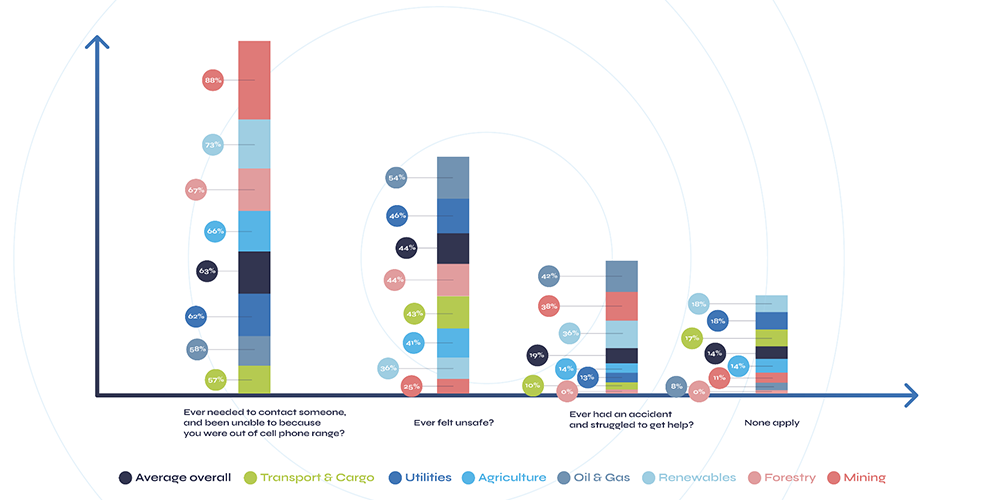
Results show over 60% of lone workers surveyed have been in a situation where they have needed to contact someone and were unable to, due to lack of mobile phone reception. Comparatively, for those within the Mining and Renewables industries, this figure rose to 88% and 73% respectively.
Further, almost one fifth (19%) of those surveyed reported having an accident, and struggling to get help. Encouragingly, none of the lone workers from the Forestry sector indicated having an accident when lone working, but this increased to over 40% within the Oil and Gas industry. Subsequently, workers within Oil and Gas were also most likely to report having felt unsafe (54%); 10% above the overall average.
How frequently do those responsible for lone workers check in with them?
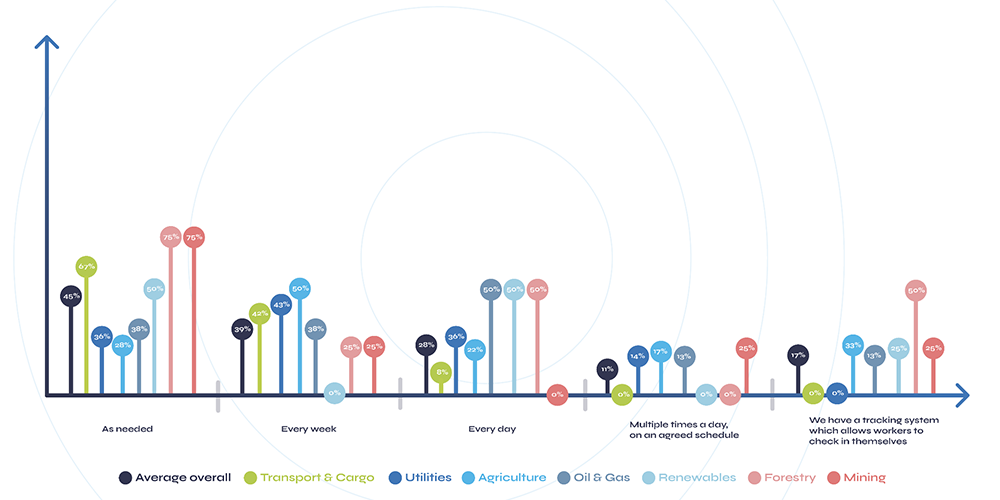
Overall 28% of respondents reported daily check-ins with their lone workers, 39% weekly and 45% as needed on a demand basis. Just 17% confirmed having a tracking system which allows lone workers to check in themselves, and over 10% disclosed checking in multiple times per day.
Interestingly, those within the Forestry sector were most likely to report more frequent check-ins – 75% indicating as needed and 50% every day. Additionally, 50% of those within Forestry also confirmed having a tracking system whereby their workers could check themselves in. This is particularly significant, considering the overall average reported was just 17%. In contrast, none of the respondents within the Transport & Cargo nor Utilities industries, indicated having a tracking system lone workers could use. Given the operational efficiency benefits these types of systems can deliver, this is quite surprising.
How robust are current lone worker communication strategies?
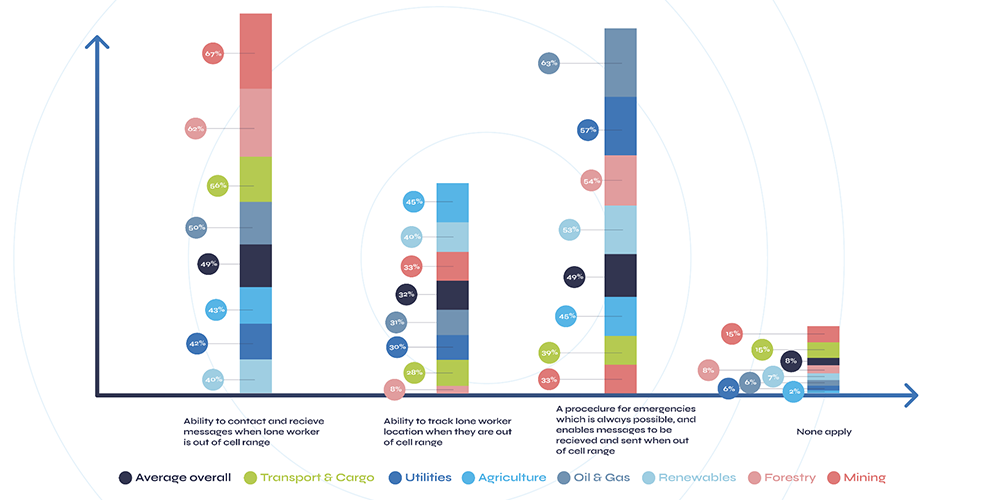
As illustrated above, only 49% of respondents reported having the ability to both send and receive messages while lone workers were out of mobile phone range. This figure remained the same when recipients were asked whether they had a procedure which could always be followed (even if there had been an accident or equipment failure), that enabled messages to be sent and received without mobile phone reception. Interestingly for those within the Mining industry, despite 67% reporting the ability to send and receive messages while out of mobile range, just 33% confirmed the ability to do this under all circumstances, for example in the event of an accident or equipment failure.
Additionally, less than one third (32%) of respondents overall confirmed they were able to track the location of a lone worker out of mobile phone range. This fell to just 8% in the Forestry industry.
Finally, 8% of respondents overall and 15% of those within the Transport & Cargo and Forestry sectors, indicated that they were unable to support any of these communication scenarios.
In summary, although our research represents just a snapshot of lone worker operations in North America, it does highlight that organisations still have some way to go in terms of safeguarding lone workers; a sentiment which holds true across all surveyed industries.
The future of lone worker safety: The RockSTAR
Communication plans and tracking are imperative to lone worker safety and increasing operational efficiency. With this in mind, it would be remiss of us to not talk about the RockSTAR device by Rock Seven (now trading as Ground Control). This powerful, handheld device allows the user to send and receive short messages from anywhere on Earth with a clear view of the sky. The unit is waterproof, ruggedized, and built to withstand the most challenging environments. And perhaps most importantly, the RockSTAR is able to transmit every minute with 15-second updates, ensuring teams know the whereabouts and safety of their lone workers at all times.
What is TracPlus?
TracPlus is a trusted real-time tracking and communication platform of first responders, government agencies, militaries, and other critical operators around the world. It has been developed to deliver situational awareness to first responders, irrespective of who owns the asset, what the asset is, who provides the tracking, or what the platform or signal type is – be it radio, cellular or satellite.
Get in touch
Ground Control and TracPlus have worked in partnership for over eight years, developing essential, cost-effective solutions for organisations and their remote field workers all over the world.
If you’d like to get in touch with our expert team, simply complete our online form, or you can email sales@groundcontrol.com or phone us on +1.805.783.4600 (USA) or +44 (0) 1452 751940 (UK).
Selecting the Right Satellite Connectivity for the Oil & Gas Industry
For Oil and Gas companies, selecting the right satellite connectivity to connect people or machines can be complex. We’ve built a simple decision tree to help you determine the best satellite solutions to connect people or machines, whether your throughput requirements are low or high, fixed or mobile.
*Mobile can also be fixed
These products are of course not your only options for these requirements, but they are our top picks, and here’s why.
Iridium Extreme 9575 PTT
The Extreme 9575 PTT is Iridium’s top-of-the-line push-to-talk satellite phone. It offers superior PTT, voice, SMS texting, GPS, low-speed Internet, SOS button, and real-time web-tracking. This ruggedized satellite phone works in all weather conditions and is an ideal communications tool for remote Oil and Gas sites, and for total connectivity wherever engineers travel.
Toughsat XP
Toughsat XP is Ground Control’s flagship professional series mobile satellite system, incorporating a powerful feature set that operates both normal and extreme remote site environments. The quick one-button deployment provides high-speed WiFi for up to 256 devices from any well site in less than 3.5 minutes.
MCD-4800
The MCD-4800 (“The Football”) is an auto-pointing Viasat satellite terminal that requires no user training to operate. Simply place the weatherproof case anywhere on site, turn it on and then close the lid – no pointing necessary. Within a minute the MCD-4800 becomes a powerful WiFi hotspot accessible by any wireless device within a 100-meter range for up to 5 hours on internal battery power.
RockBLOCK 9602
Perfect for M2M / IoT low throughput well site requirements, the RockBLOCK 9602 satellite modem utilizes the power of the Iridium® Satellite Network. The versatile and reliable RockBLOCK delivers plug-and-play satellite connectivity, from any point on Earth including the polar regions.
Hughes 9502
The 9502 terminal delivers affordable, global, end-to-end IP data connectivity and is an ideal choice for Oil and Gas companies. The exceptional low power consumption (1W idle) of the Hughes 9502 makes it possible to provide end-to-end IP connectivity to sites that are off-grid. This breakthrough provides end-to-end IP connectivity to any power-challenged Oil and Gas locations that involve sensitive power budgets.
RockREMOTE
RockREMOTE delivers a reliable and flexible, all IP-based, dual-mode LTE-Satellite communications solution for fixed, semi-fixed or mobile M2M / IoT applications worldwide. Customers select between Ethernet, Wi-Fi or Serial RS232/485 for their communications interface requirements. The solution combines the RockREMOTE terminal, the Iridium Certus network and LTE cellular connectivity, end-to-end networking and the powerful Cloudloop platform. It can be tailored to address a variety of fixed and mobile communications challenges faced by Oil and Gas engineers.
SCADASat
The SCADASat by TSAT satellite system is designed to meet the demanding requirements of the Oil & Gas industry. SCADASat provides a private satellite network operating a direct communication channel between a process control centre and these often remote locations. By locating a private TSAT3000 HUB at a control centre, complete independence of any public infrastructure is obtained, and secure and reliable communication between Oil and Gas sites is assured.
Can We Help You?
With 20 years of experience, we can help you make the best choices for your remote connectivity, whether you need one or several thousand devices!
We’re not invested in selling you a specific product or connections, just the best solution for your needs.
Call us on +44 (0) 1452 751940 (Europe, Asia, Africa, Oceania) or 800 773 7168 (North and South America), complete the form, or email hello@groundcontrol.com.
Comparing the Cost of BGAN Satellite Connectivity with Field Engineers
Nobody questions the value of data extracted from oil well sites. From exploration to flowback testing, and drilling to recovery, there is both routine and failure data to be captured, stored, shared and analyzed.
In many cases, this data is out of reach of terrestrial communication networks, giving production companies two choices: send someone to retrieve the data, or set up a satellite communications network.
In this blog post we’re comparing the pros and cons of both options. Full disclosure: we believe satellite connectivity is the more scalable, cost-effective and safe approach, but we’ll be as objective as a satellite communications company can be!
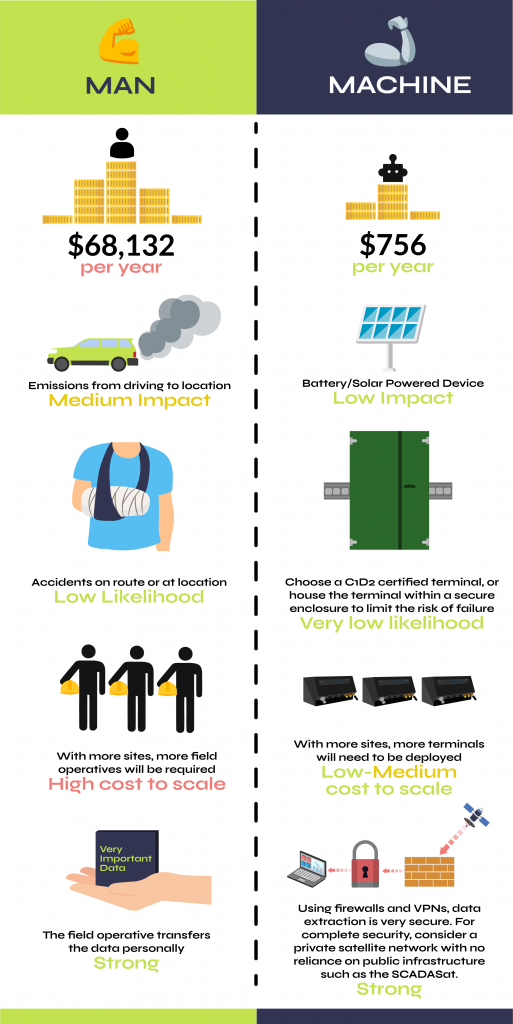
Field Engineer vs. BGAN machine
Here’s a full breakdown of the relative costs of operation
An experienced Field Engineer costs on average $68,132 per year. Plus expenses and other benefits including company vehicles and overtime charge out rates.
The cost of operating a BGAN satellite connectivity terminal can be as little as $63 per month for up to 20MB – a saving of $68,069 annually and $680,690 over the typical 10 years lifetime of a BGAN terminal.
Gas is an ever-increasing expense and the cost of fuel has increased around the world. The average Field Engineer will travel on average 25,000 miles per year. With the average gas price currently $3.34, this amounts to almost $3,500 in fuel costs alone; with insurance and taxable miles on top, and of course chargeable time.
Time is money. Onsite maintenance of traditional connectivity devices can take several hours to service – with on-site visits taking place on average once per week. Even then, there is no guarantee of the issues being resolved without further callbacks. Installation of a BGAN device mitigates the need for on-site Engineers. With a reliable uptime of 99.9%, BGAN requires minimal servicing, maintenance or ongoing equipment checks.
A single weekly call-out based on the average Field Engineer’s salary is a day rate of $272.52. With expenses, it is likely to be around $500, each time the system fails and on the basis that the fault can be rectified the same day. BGAN is highly reliable – even when installed in the most remote locations. Installation of one BGAN satellite connectivity device across the oil well network of ten pumps could save tens of thousands of dollars each year.
Servicing, ongoing maintenance and fault checking is costly work. In addition, equipment required to measure and transmit data from oil well sites often costs hundreds, if not thousands, of dollars per month. Installation of a BGAN satellite connectivity device mitigates these costs completely. Reporting on exception, the costs to transmit and measure data are as little as $2 a day.
BGAN satellite connectivity devices are incredibly cost-efficient. The typical hardware and airtime requirements for a remote oil site are just $2 a day, or $756 per year. Compared with the average cost of a Field Engineer, the savings to your business are in excess of $67,376 every, single, year.
Want to know how you can reduce your call out costs?
We’re a preferred Iridium and Inmarsat partner and can help you to reduce your daily, annual and ongoing connectivity costs. It’s what we do best and we’re always here to help. Email us on hello@groundcontrol.com or call:
UK and RoW +44 (0) 1452 751940
USA +1.805.783.4600
5 Ways to Reduce Data Transmission Costs in the Oil Well Lifecycle
Consulting firm McKinsey projected that the Oil and Gas industry could add up to $250 billion of value to their upstream operations by 2030. How? By leveraging technology to improve connectivity, optimising drilling and production output, and improving maintenance and field operations.
In this webinar, hosted by Ben Travers and Liz Wilson of Ground Control, we explore five ways in which this optimised connectivity can be achieved – whether that’s through lowering costs through better device monitoring, choosing the best communications strategy for each application, or by implementing emerging technology such as edge computing.
Satellite connectivity is already widely used in the Oil well lifecycle, because there’s no more reliable and secure way of getting your data from remote locations back to your engineering or HSE team. But it’s fair to say that it’s viewed by some as expensive and a necessary evil.
However, as more and more satellite companies have started offering commercial services, competition has expedited both the diversification of airtime services, and lowered the cost. It’s time for Oil companies to revisit their current set up and see if they could save money by adopting different forms of connectivity at different stages of the oil well lifecycle.
If it sounds complicated and expensive to review your current connectivity infrastructure, there’s good news here, too; devices are available now which will integrate with your legacy set up, extending their lifecycle, while conferring you the benefits of better connectivity at a lower price.
If you’d like to learn more about Ground Control’s satellite connectivity solutions for Oil and Gas companies, check out our Oil & Gas overview page or get in touch via the form below.
We’ve got you covered
We have over 20 years’ experience in helping companies like yours get the optimal combination of airtime, hardware and services.
For a no pressure call, simply fill in the form and one of our expert team will get back to you.
How Better Connectivity Can Add Value for Oil Production Companies (eBook)
From edge computing devices to artificial intelligence and machine learning, the oil industry has never had more sophisticated capabilities to optimise data capture and automate processes. But for operators planning to enhance their digital infrastructure, there are obstacles to overcome throughout the well lifecycle. That’s why we wrote this eBook.
Consulting with industry experts with over two decades of experience, we’ve looked at the well lifecycle – from exploration to flowback testing and drilling to recovery – to see how better connectivity can optimize your operations at each stage.
A central message is that satellite connectivity has diversified, and it’s highly probable that you’re over-paying for the data you need by using a service that’s not tailored to your requirements.
Read eBookGround Control has supported Oil and Gas production for decades, and we’ve never been more excited about the potential of new IoT-based satellite services, technologies such as edge computing, and messaging protocols such as MQTT, to transform this industry. We believe – and have first-hand evidence to prove – that these services will enable you to operate more efficiently, increasing production while reducing costs, and improving the safety of your field workers by limiting unnecessary travel and manual monitoring.
Introducing the RockREMOTE
Designed for easy remote industrial site deployment, the RockREMOTE combines a small form factor, industry-standard DIN rail mounting, and an omnidirectional antenna. The device is specifically designed for ease of installation and operation in remote industrial environments.
Its integrated processing, storage and security also enable the evolution towards Edge Computing. This facilitates the development of applications that communicate over industry-standard protocols such as MQTT into commonly used cloud services from Amazon, Google and Microsoft.
The RockREMOTE is a great solution for:
- Monitoring the performance of pressure pumps in the hydraulic fracturing process
- Capturing the data from flowback well tests
- Capturing production data
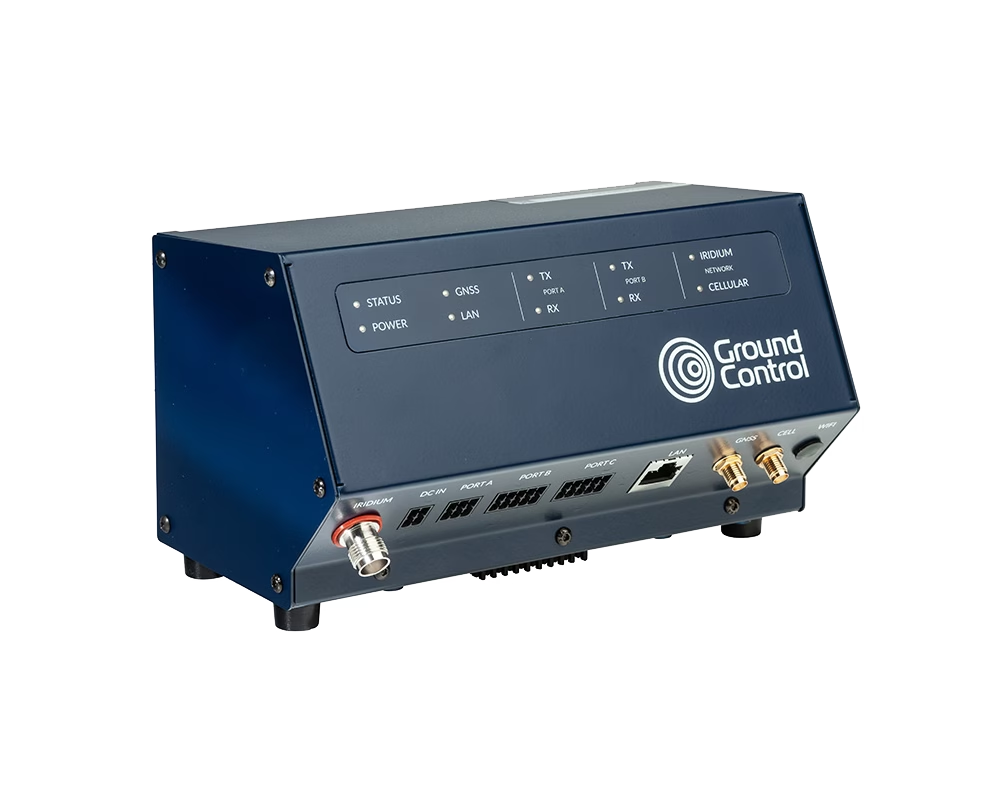
In addition, as the RockREMOTE can report on exception, this can have a significant impact on battery and cost.
We have twenty years experience helping customers at every stage of the oil well lifecycle, and would love to talk to you about your Oil and Gas connectivity requirements. Simply contact us; and you’ll be connected with someone who understands your industry, and will offer you objective advice on the best devices, airtime and services to meet your needs.
Can we help?
The RockREMOTE is ideal for remote IoT connectivity, boasting low power requirements and Iridium Certus 100 connectivity. Ground Control is among the select few manufacturers chosen to build hardware utilizing this cutting-edge airtime service, which enables increased data transfer rates.
Start a chat with our expert team today to see whether the RockREMOTE could revolutionize your Industrial IoT operations. Complete the form or call us on +44 (0) 1452 751940 (Europe, Asia, Africa) or +1.805.783.4600 (North and South America).