Topic: Utilities & Renewables
Will Non-Terrestrial Networks (NTN) Change Offshore Wind Connectivity?
Offshore wind farms represent the frontier of clean energy, located far from shore where the winds are strongest and most consistent. However, these remote locations present significant challenges for connectivity.
While wired connections to wind farms are frequently in place, integrating a wireless system alongside an existing wired connection for wind farms offers significant benefits, including easier sensor deployment, cost savings, and faster data acquisition.
Indeed, according to Turbit, a dedicated wireless SCADA network enhances data resilience, security, and transmission speed, allowing near real-time updates that can boost output by up to 5%.
Wireless Networking Options for Offshore Wind Farms
Adding a wireless network, though, isn’t always straightforward. If your wind farm is within 12 nautical miles of the mainland, you can use appropriately secured 4G/LTE. Over 12 miles, and you’re looking at either a private cellular network, or a satellite-enabled Low Power Wide Area Network (LPWAN).
Private cellular networks, although very cost-effective once set up, are expensive and time-consuming to get started with. A more agile option is to explore LPWAN technologies, and this is where the advent of standards-based networks has the potential to unlock new applications.
To start with, the current options for setting up an LPWAN for your offshore wind farm (this also applies to the Offshore Support Vessels, USVs and buoys that support your operation) are:
1. Use an LPWAN such as LoRa to locally network your sensors, aggregate the data in a gateway, then use a satellite IoT transceiver to transmit the aggregated data.
Pros of a LoRa-Based LPWAN
- No cellular connectivity is required for a LoRa network
- Most turbines don’t need a dedicated transceiver to communicate with the satellite network; only the turbine hosting the gateway needs this. This reduces the hardware costs
- Moving data within a LoRaWAN is very low cost
- Either the gateway or the transceiver should have edge computing capabilities, so that the aggregated data can be processed, and only the necessary information transmitted. This ensures that costs are minimized.
Cons of a LoRa-Based LPWAN
- The data rate for LoRaWAN is limited to 50 Kbps, which may constrain applications
- If you have the option of using a commercial operated LoRaWAN, it’s more expensive to transmit data than if you set up a private LoRa network
- Setting up a private LoRa network is resource-hungry: you’ll need to purchase the gateway(s) and a network server, write the firmware, and create the connections.
2. Individually connect your sensors to a satellite IoT transceiver to form a satellite LPWAN.
Pros of a Satellite-Based LPWAN
- No cellular infrastructure is required for satellite IoT connectivity
- There’s no limitation in the distance between your sensors; your OSVs, USVs and data buoys can all be connected, even if they’re many miles apart
- There is no impact on the reliability of transmissions in extreme weather conditions
- It’s very secure: data is hard to intercept while in space, and firewalls, VPNs and private lines protect your data once it’s earth-bound again
- Depending on your choice of transceiver, data rates can be as high as 464 Kbps
- It’s fast and easy to get started with – satellite modems can communicate with most programming languages.
Cons of a Satellite-Based LPWAN
- Cost. Both the transceivers and the airtime are higher cost than purchasing LoRa transceiver radio modules, and using a LoRa network.
So, network engineers have a choice: commit the time, effort and money to build a LoRa network paired with a single satellite IoT transceiver, and enjoy long-term low costs. Or, accept that the operating expenditure will be higher, and move more quickly with a satellite LPWAN.
What we tend to find is that the selection depends on the number of sensors: if there are relatively few, engineers like the speed, ease and flexibility of a satellite LPWAN. If there are many, the long-term cost-saving benefits of a LoRa network coupled with a satellite transceiver win out.
But what if the cost of each satellite IoT transceiver was lower? This would mean that more sensors could be individually paired with a transceiver, while costs remained within budget.
Lower module costs is one of the benefits expected to materialize from 3GPP standards-based technology, so let’s get into it.
What is 3GPP?
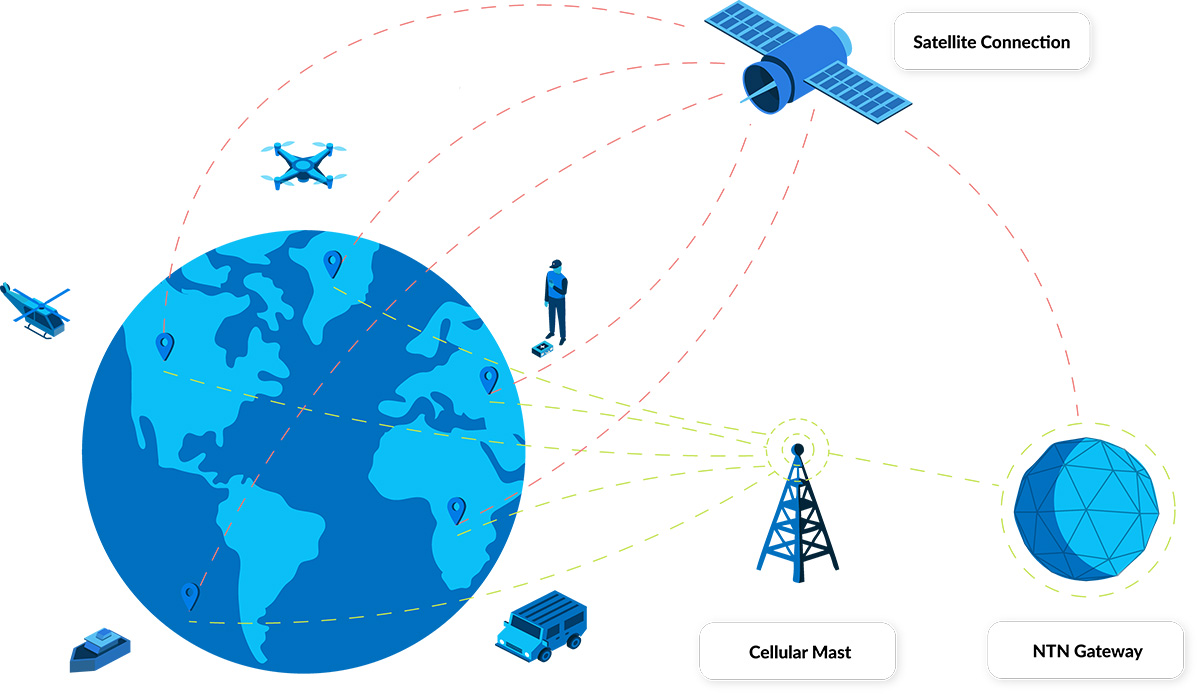
3GPP (3rd Generation Partnership Project) is a global collaboration aimed at standardizing telecommunications infrastructure. Established in 1998, it ensures that developers worldwide follow a unified approach in cellular technology development. One of its key achievements, “Release 17” in 2021, introduced satellite connectivity into the mix.
If a satellite network complies with 3GPP standards, a device – which could be a cellphone or an IoT device – equipped with a compatible 3GPP modem can seamlessly switch from cell tower coverage to satellite connectivity without any service interruption or the need for additional hardware. This is usually referred to as direct to cell (in the context of cellphones), or direct to device (in the context of everything else).
How Will 3GPP Standards-Based Technology Impact IoT Connectivity?
1. Lower Cost of Modems
There are millions more cellular-based IoT connections than there are satellite connections. So if you only need to buy one modem to communicate with your device, many more dual-function modems will be manufactured than satellite-only modems. Customers should, therefore, benefit from economies of scale, and a lower cost modem.
An important adjacent effect of 3GPP here is that incumbent satellite network operations like Iridium and Viasat have begun enabling chip manufacturers to incorporate their proprietary standards into mass production chips. That means that the cost of proprietary satellite modems is coming down too, again because of economies of scale.
2. Supplier Switching
Today’s satellite-only modems each talk to a specific satellite network. The ST6100, for example, talks to Viasat’s geostationary satellites. RockBLOCK 9603 communicates with the Iridium Low Earth Orbit satellite constellation. GSatSolar talks to the Globalstar network. If you want to change your satellite network, you’ll need a new modem – these are proprietary systems.
Conversely, the 3GPP standards-based modems will, in principle, talk to any satellite network that’s 3GPP-compatible. Meaning you could switch your airtime supplier without needing to replace any hardware. This may have the effect of making airtime rates more predictable, as competition to retain customers’ business will force greater pricing transparency.
Which Satellite Networks Will Support 3GPP Standards-Based Modules?
In this context, it’s helpful to structure the satellite network operators (SNOs) into three ‘classes’:
1. Established SNOs, which include Viasat and Iridium.
These operators have an advantage in that they have licensed radio spectrum in the L-Band frequency (perfect for IoT data transmissions), and global landing rights. This means their services are very widely available, and are extremely reliable, as their bandwidth is not heavily contested.
However, they need to retro-fit their satellites to support this new technology, and that’s not trivial. Viasat, via their partnership with Skylo, can connect with NB-IoT modems in North America and Europe, but have work to do to make their services more widely available. Iridium are working towards a release date of 2027 (anticipated to also be NB-IoT compatible).
2. Well-funded new constellations; chief among them Starlink.
Starlink’s best-known service is, of course, broadband internet for residential purposes. The satellites that serve these requirements are not the same as the satellites Starlink has launched since January 2024 to serve direct to cell.
The new Starlink direct to cell satellites are compatible with LTE devices back on Earth – specifically CAT-1, CAT-1 Bis, and CAT-4 modems – and service is expected at some point in 2025. Starlink does, however, have a challenge that the longer-established satellite network operators don’t have; it doesn’t have licensed radio spectrum. So Starlink partners with mobile network operators like T-Mobile in the USA and Optus in Australia to lease some of their licensed radio spectrum. Service is restricted to where these partnerships exist.
3. Innovative start-ups like Sateliot and OQ Technologies.
These companies were founded to capitalize on standards-based technology, and their satellites have been designed for this purpose. Currently, these start-ups are limited by the number of satellites they have in orbit; according to NewSpace Index, Sateliot have five, and OQ have 10 in Low Earth Orbit. This means that your sensor will need to wait for a satellite to pass overhead, perhaps once or twice a day, before it can send its data.
It’s early days, however, and both are planning to launch more satellites over the coming years. In the meantime, they are inviting people to join their early adopters program, and building partnerships with mobile network operators in much the same vein as Starlink; to leverage their licensed spectrum in areas not served by terrestrial infrastructure.
When Will Standards-Based Modems be Available?
Non-Terrestrial Network (NTN) NB-IoT modems are available now, but with limitations on coverage and bandwidth. The full promise of these advancements will be realized when there are multiple global providers, but there are issues to work out – for example, the power drain on a satellite that previously had 50,000 devices talking to it at any given time, now needing to move the data for 10, even 100 times, the number of devices.
There’s also the need for partnerships between the new satellite network and terrestrial network operators to establish global coverage – so we estimate that 2027 onwards is when we’ll see widespread adoption.
That said, as mentioned above, we’re already experiencing some of the benefits of this innovation, in that SNOs like Iridium and Viasat are set to both adopt the standards but more importantly enable their proprietary modems to be made by mass chip manufacturers, enabling price reductions from their scale.
So the shift, in some respects, is already here; you can more economically connect individual sensors using proprietary systems. As airtime and device pricing for standards-based modems becomes clearer in the coming years, you’ll have to make a choice about the best technology for your project; but the impact of standards on affordability is being felt today.
What are the Advantages of Proprietary Systems?
Proprietary systems – e.g. where an Iridium modem talks to an Iridium satellite only – are likely to remain, as they will retain advantages over standards-based systems.
“From a technical perspective, there is no definitive conclusion as to which protocol strategy is better – using proprietary systems, 3GPP standards, or other standards-based systems such as LoRa. All have their advantages and disadvantages.” – Analysys Mason
The main advantages of a proprietary system are capacity and reliability. As any cell phone user knows, when there’s a lot of traffic in the system, cell phone service slows down or even stops. Managing substantial additional demand through a finite number of solar-powered satellites is likely to present similar challenges. Conversely, licensed waveforms will not be overwhelmed by traffic, which means that when you need complete confidence that your data will be transmitted, in as close to real-time as possible, they’ll remain the preferred choice.
For Offshore Wind companies, and indeed in most cases, some data are more critical than others. You need to know if a turbine has developed a fault in real-time; but you may be able to wait a few hours to find out what your data buoys are reporting in the respect of location, wave height, temperature, salinity etc. You need to be able to communicate in real-time with a UAV / unmanned vessel, but you can probably cope with receiving data from your vibration sensors a couple of times a day.
How to Choose the Best Satellite IoT Network
This is where a trusted IoT connectivity partner comes in. Companies like Ground Control, who work with multiple satellite network operators and networking protocols, can help you choose the most appropriate solution based on data rates, criticality, security, device mobility, and location.
We are on the beta test programs for several standards-based modems, and we’re constantly exploring new partnerships from both standards-based and proprietary system providers. We test every modem in-house so we can provide our customers with objective, expert advice.
Satellite IoT is exploding with new choices; it’s our role to simplify those choices so that you benefit from the most cost-effective, easy to implement and reliable connectivity for your application.
Get in Touch
We don’t operate a satellite network ourselves, but we do design, build and test satellite IoT hardware and supporting software solutions. This gives us an expert and objective view on the best networks and networking technology for your application.
Email us at hello@groundcontrol.com or complete the form, and we’ll be in touch within one working day.
Harnessing Water, Defending Data: Cybersecurity in Hydropower and Dam Facilities
Dams and hydropower facilities have long been attack targets, with a history that spans wartime conflicts. During World War II, the British Royal Air Force formed a group of pilots known as the Dambusters. Their mission: to destroy critical dams in Germany; considered ideal targets due to the significant disruption they could inflict on both water and power supplies.
In 2023 however, the landscape has somewhat shifted. The global cost of cybercrime is projected to soar to $8 trillion. Due to the immense value of data and the potential for widespread disruption, energy and utility companies continue to be prime targets.
Today, the hydropower and dam industries, like many others, stand at a crossroads where innovation and cybersecurity converge. Even a seemingly minor misstep, for instance, untimely dam operations, can unleash havoc upon nearby towns, significantly hampering supply chains and inflicting widespread destruction upon adjacent regions.
Types of cyber threats: State-sponsored and hobby
Cyber threats can be split into two main types. The first is state-sponsored cyber attacks. Those that are planned and funded by governments or nation-states. Kevin Curran, professor of cyber security at Ulster University, recently described cyberattacks by the UK’s enemies as becoming “relentless”. As an example, the Cozy Bear and LockBit hacker groups are believed to be associated with one or more intelligence agencies of Russia, the latter having known links to Russian nationals.
Secondly, hobby-hacker attacks. These hackers are usually motivated by either monetary gain or a wish to cause mischief. One of the most notorious examples is the Colonial Pipeline attack. The company paid the hacker group known as DarkSide 75 bitcoin ($4.4 million) to obtain a decryption key which enabled the company’s IT staff to regain control of its systems.
Growing intricacies of infrastructure create more vulnerabilities
The rising integration of Internet of Things (IoT) devices and sensors within the hydropower and dam sector has brought greater infrastructure complexity, creating more vulnerabilities for several reasons:
- Increasing number of attack surfaces: Every device connected to the network becomes a potential target for attackers. The more IoT devices, sensors and so on that are introduced, the further the range for potential attacks is increased.
- Device security: The substantial volume and often remote location of IoT devices increases the difficulty of keeping firmware and software up-to-date. Moreover, their physical dispersion can expose them to theft and tampering.
- Lack of standardization: Different manufacturers exercise varying levels of security. The lack of standardisation can make it challenging to implement consistent security practices across all devices.
- Legacy systems: Many critical infrastructure systems still rely on older, legacy technology that may not have been designed with modern cybersecurity standards in mind. These systems are often more vulnerable to attacks.
- Interoperability challenges: Ensuring that different IoT devices and systems work together can be challenging. This can lead to security compromises to enable connectivity, potentially weakening overall security.
- Network visibility: Depending on the network’s connectivity and device location, a 360 view can be difficult to achieve and maintain, making it more difficult to detect and respond to cyber attacks.
- Data privacy: IoT devices often collect and transmit sensitive data. Inadequate data protection measures can lead to data breaches, compromising privacy and potentially providing valuable information to attackers.
The convergence of operation and information technology
Traditionally operational technology (OT) and information technology (IT) data streams remained distinct, which had the benefit of keeping OT systems ‘air gapped’ from the internet, and therefore at limited risk from hacking. As technology unifies OT and IT, it brings both efficiencies and risks. The efficiencies are numerous: by combining SCADA data with the systems that manage physical infrastructure, you can autonomously optimise performance.
But because OT systems haven’t been targets in the past, they’re not always built with security in mind. Passwords are often left at the default character string; remote monitoring for suspicious behaviour hasn’t been implemented; patches are not implemented as frequently as they should be.
In this evolving landscape, it’s critical that security teams are aware of these vulnerabilities and take steps to address them, safeguarding critical infrastructure in the hydropower and dam sector.
Lessons from successful cyber attacks
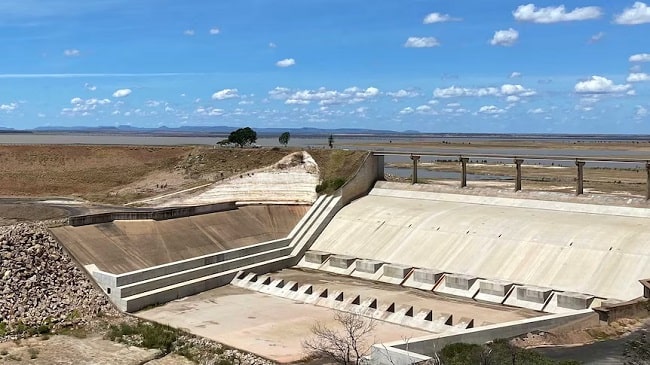
A successful cyber attack involved Queensland’s Sunwater, a water supplier targeted in a nine-month-long breach. The breach, occurring between August 2020 and May 2021, exploited vulnerabilities in an older system version, granting unauthorised access to customer information stored on their web server. While the hackers didn’t compromise financial or customer data, they left behind suspicious files, redirecting visitor traffic to an online platform.
The subsequent Water 2021 report underscored the importance of immediate action to rectify ongoing security weaknesses, emphasising software updates, stronger passwords, and vigilant network traffic monitoring as crucial safeguards.
In another notable case, the LockerGoga ransomware group inflicted significant damage upon Norsk Hydro. Norsk Hydro was forced to shut down multiple production facilities, impacting 35,000 employees, across 40 countries and resulting in approximately $71 million in financial losses. The cyberattack stemmed from an employee unknowingly opening an infected email three months prior.
Norsk Hydro’s response, however, garnered accolades. The company chose not to pay the ransom, instead engaging with Microsoft’s cybersecurity team to restore operations and remained committed to transparency throughout the ordeal. As Torstein Gimnes, Corporate Information Security Officer emphasised – “You need to rebuild your infrastructure to be safe and be sure that the attacker is not still part of it.”
An immediate IT shutdown was implemented to prevent further spread and only trusted backups facilitated by Microsoft’s team were used. Following the attack, a commitment to employee training, multi-factor authentication, regular updates, and resilient backup solutions were introduced to bolster security.
These cyber attacks underscore the importance of proactive measures and resilience in the face of evolving threats and crucially, they highlight the importance of engaging and sharing knowledge between peers. As Eric Doerr, General Manager of the Microsoft Security Response Center puts it – “When companies do this, it makes us all better and makes the attackers work harder.”
Ensuring the security of critical components in hydropower and dam facilities
Assess cyber risks
- Identify critical assets: Which assets are most important within the facility/network?
- Assess potential risks: What are the potential threats to the identified critical assets? Data breaches, malware attacks, etc.
- Prioritise risks: Which potential risks are more likely to occur and which would have the most significant impact? By prioritising risks, companies can focus resources accordingly.
Mitigate cyber risks
1. Safeguard data
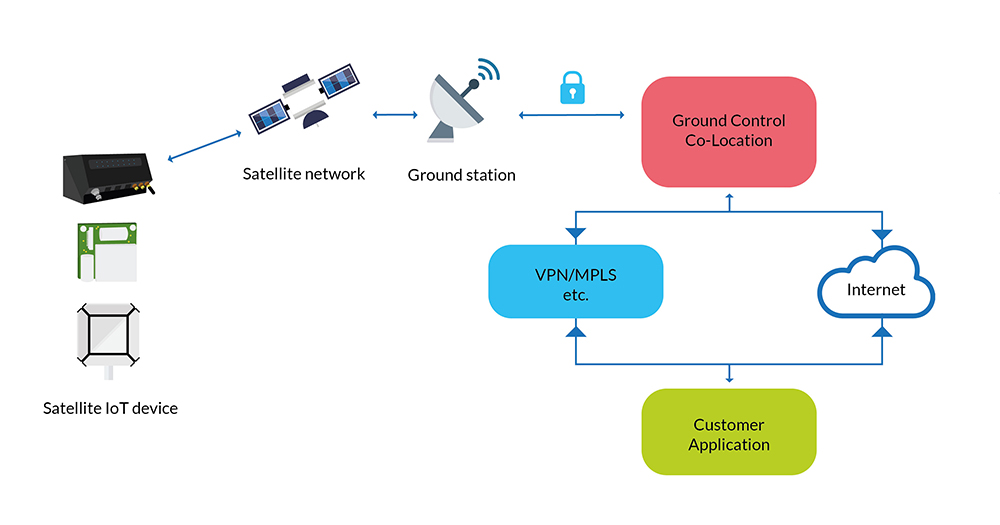
Ensuring data security encompasses data encryption and authentication protocols, coupled with monitoring and restricting physical access to facilities. While firewalls and VPNs serve as effective safeguards when data traverses public internet infrastructure, companies can mitigate these risks entirely with the deployment of private lines or a secure private satellite network like TSAT – designed specifically for SCADA data.
In addition, as mentioned above, recent trends show organisations gravitating toward a unified data stream for both IT and OT. Companies wishing to do this must ensure they have appropriate control system boundary protection to prevent unauthorised access, for example, SD-WAN coupled with a next generation firewall.
2. Secure physical access
Physical security measures not only deter potential threats but also serve as the first line of defence against cyberattacks. By strictly limiting and monitoring who can physically access a facility, organisations can significantly reduce the risk of malicious actors gaining direct entry to sensitive systems and data.
Further, when physical access is under surveillance, companies can identify unauthorised access or unusual activity, allowing them to swiftly intervene and halt a hacker’s progress.
3. Prioritize firmware and software updates
Software and firmware updates are essential tools in addressing known vulnerabilities, strengthening system resilience, and ensuring the integrity of critical software components. By regularly applying updates, organisations stay ahead of cyber threats that often exploit outdated software to breach systems and steal sensitive information.
Firmware updates for hardware devices, on the other hand, enhance device functionality and bolster security by patching potential vulnerabilities. Emphasising the importance of prompt updates and establishing a structured update management process is key. If your dam or hydropower facility is in a remote, unmanned location, ensure that you have the ability to remotely protect your infrastructure with over-the-air (OTA) firmware updates.
4. Staff training
Human errors often open the door to cyber incidents, so it’s crucial organisations equip their employees with the latest cybersecurity knowledge. Early detection and response, facilitated by well-informed and vigilant employees, can prove instrumental in preventing breaches. A prime example is a vigilant staff member who thwarted an attempt to tamper with sodium hydroxide levels in Florida’s water supply last year.
Moreover, robust incident response plans are essential. Employees must know how to contain incidents, restore systems, and investigate root causes. Ultimately organisations need to be confident that if their facility does experience a cyber attack, staff can react efficiently and effectively. Bolstered by continuous training, workshops, webinars, and the cultivation of a security-conscious culture, enhances cybersecurity resilience. It also promotes information sharing among peers, strengthening collective efforts to combat cyber threats.
5. Redundancy and backup
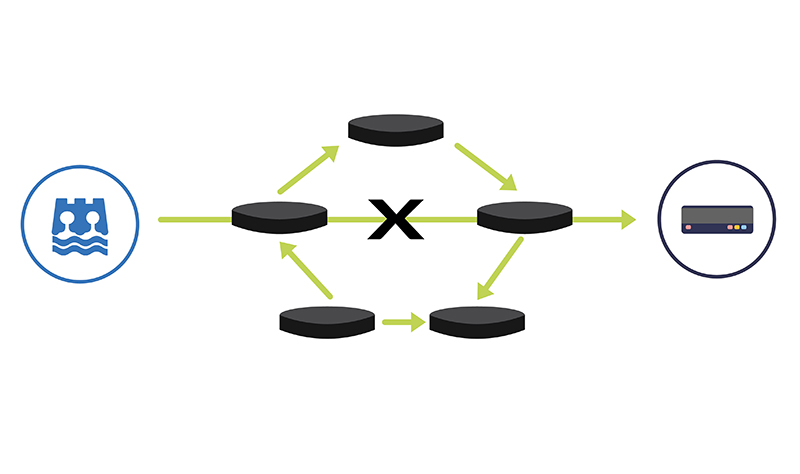
Redundancy and backup systems serve as critical safeguards against unforeseen vulnerabilities and disruptions within network infrastructure. By creating duplicate or alternative pathways for data transmission and network operations, redundancy measures ensure that even if a primary system or connection fails, there’s an immediate and seamless switch to a secondary, secure option. This not only mitigates the risk of single points of failure but also enhances the overall reliability of the system.
One of our largest clients has satellite implemented as their third connectivity failover (cellular first, fibre second). Their satellite setup hasn’t failed once in 27 years and is the system they consider the most reliable. With the hydropower and dam sector increasingly reliant on interconnected digital systems, redundancy and backup solutions stand as formidable defences, ensuring continuous operations and protecting against potential cyber threats and disruptions.
The above list is by no means exhaustive, but it does highlight a fundamental truth: In the constantly evolving landscape of cybersecurity, proactive measures are a necessity. Anticipating and addressing vulnerabilities before they become threats is pivotal to achieving and maintaining robust cybersecurity practices. If you would like to explore your connectivity and/or data security options with our experienced team, don’t hesitate to get in touch by emailing hello@groundcontrol.com.
Secure Your Infrastructure
Our team are experts in getting data from hard-to-reach places – so you don’t have to be.
To talk to the team about your connectivity options, challenges and associated data security, simply fill in the form.
Wireless connectivity for offshore wind farms: why it matters, & how to get started
Offshore wind is growing. Pioneered by countries bordering the North Sea – the UK, Germany and the Netherlands – China now leads the world in offshore wind energy production, with 23.9GW of capacity. The United States has started to take an interest, with President Biden committing to building 30 gigawatts of offshore wind projects by 2030 – which will power more than 10 million homes with clean energy. And Brazil has an ambitious programme to build 72.2GW of capacity, dwarfed only by the UK’s planned additional 78.5GW.
The benefits of offshore wind are clear: higher and more consistent wind speeds, unhampered by mountains or buildings, ensures consistent and high energy output. But the costs are substantial. The harsh marine environment means that the turbines are at far higher risk of damage from corrosion and oxidation. Plus, making repairs is harder, more expensive, and more dangerous than onshore wind. As a result, the cost of offshore wind production is far higher than solar or onshore wind: $133 per MegaWatt hour for floating turbines and $78 for fixed-bottom turbines, compared to $34 per MegaWatt hour for onshore wind (source).
We believe satellite IoT has a role to play in both lowering the cost of production, and improving the safety of workers. Here’s how.
Why is offshore wind production relatively expensive?
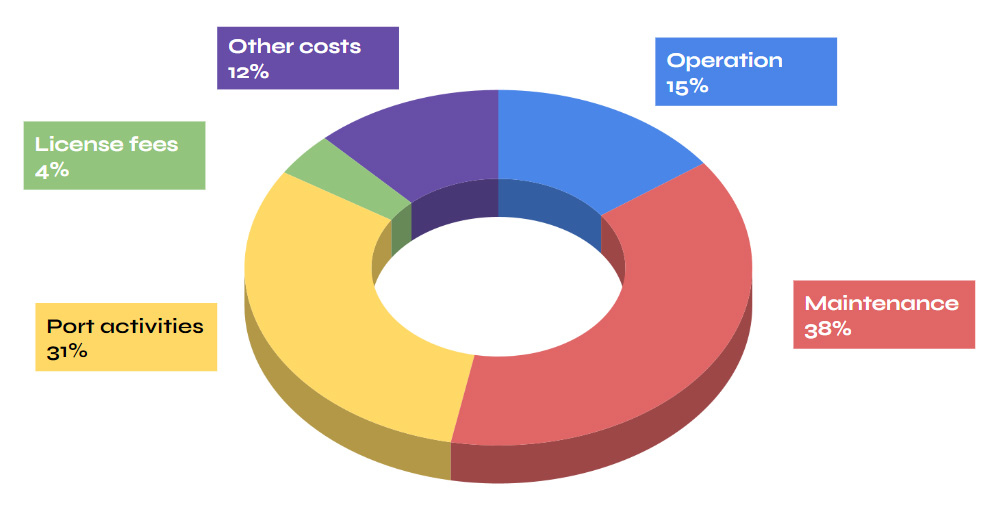
A chunky 38% of the operating costs of offshore wind farms is allocated to maintenance. What’s contributing to that cost?
- Equipment failure: on average, each turbine will experience 8.3 failures every year, comprising 6.2 minor repairs, 1.1 major repairs, and 0.3 major replacements
- Manpower: on average, it takes 116 days and 9 technicians to undertake a major replacement, and 7 days and 3 technicians for a minor repair. Delays are frequent, due to ‘no access days’ caused by bad weather
- Ageing equipment: some analysts project that opex costs increase from £184,000 per MegaWatt per year when the turbine is new, to £426,000 per MW/Year when the turbine is 15 years old.
What can be done to reduce these costs?
The best answer is predictive maintenance. Supervisory Control and Data Acquisition (SCADA) systems allow operators to monitor and act upon failures or poor performance, and more advanced data collection and analysis allows maintenance tasks to be predicted.
Predictive technologies include Condition Monitoring Systems (CMS). These capture and analyse as much as 250 physical data points, including torque and force measurements, acoustic emissions, electrical strain gauges, oil particle counters and main bearing damage. Sensors capture the data, then AI or machine learning is used to improve the accuracy of the predictions and reduce false alarms as the system is embedded, and the installation base grows.
The benefits for utilising CMS are clear to see, with one monitoring system provider claiming that 90% of developing faults are detected 5 months before failure, driving 175% annual ROI from greater uptime, and reducing emergency maintenance trips by up to 50%.
Predictive maintenance drives 175% annual ROI for offshore wind farms
Further, improving quality control reduces the risk of accidents, which could then reduce insurance premiums.
A key part of this process is the transmission of the sensor data to the cloud, and from there to the client’s IT system, where the data is collected, stored and analysed.
Sensor data is often transmitted through underwater cables, which offers many benefits: it’s fast, secure, and can carry a large amount of data cost-effectively. However wired communication does have drawbacks that can be resolved by co-locating a wireless solution.
Wired vs. wireless or wired plus wireless?
If you already have a wired connection to your wind farm, it’s worth considering a wireless system to complement it, because the ease of adding new sensors to a wireless network is far greater than trying to wire in additional points into a legacy system. You simply need to place your sensors where they need to be to capture the required data, and switch them on. With no need to run cabling, you’re saving time and money, and benefitting from the additional sensor data faster.
Further, because you’re creating a dedicated wireless network for your SCADA data, its findings can be transmitted independently of other data sources. This provides both resilience in the event that your wired connection is disrupted, and allows you, if you choose, to put bespoke security measures around your OT data stream.
In addition to which, you can speed up the rate of data transmission from the industry standard of every 10 minutes, to virtually real time. In turn, this ensures that your maintenance teams get close to real-time information to help inform decisions on what issue to address, when. In fact, Turbit estimates that you can increase output by up to 5% by applying corrective measures faster.
If you were building a new offshore wind farm and decided to use only wireless connectivity to connect your assets, it can cost as little as 10% of the wired alternative, as well as being faster to implement. That said, while the cost of installation is far less, satellite and cellular connections generally come with a monthly usage fee, and they’re only suitable for relatively small amounts of data. For this reason, in our experience, most operators are exploring hybrid wired and wireless setups.
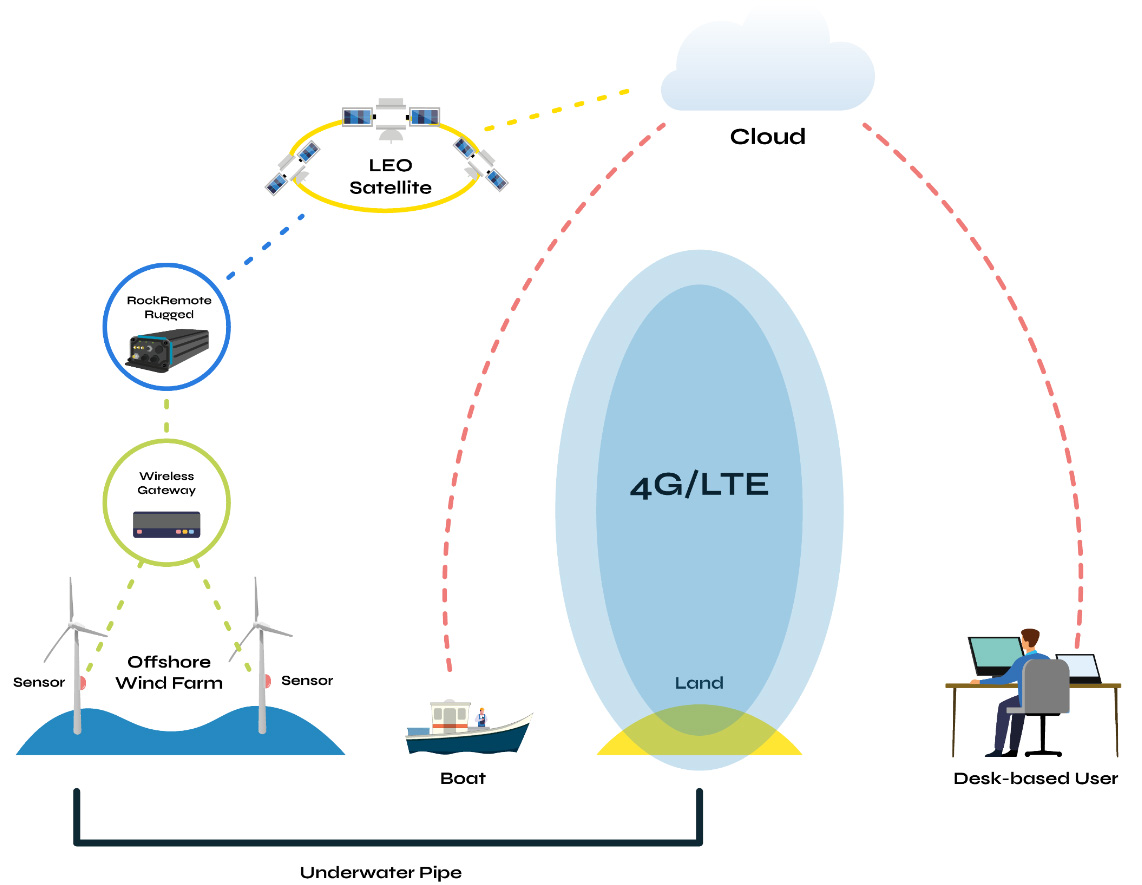
But adding a wireless network isn’t always straightforward for offshore wind farms, as they may fall outside the reach of cellular networks. 4G/LTE services typically extend to around 12 nautical miles from the coast, and wind farms can be built up to 43 miles offshore, which leaves a gap.
That gap can be bridged with a private cellular network, which offers great throughput and tight data security, but this is expensive and time consuming to set up.
Wireless connectivity options for transmitting IoT data from offshore wind farms
LoRaWAN coupled with satellite connectivity is getting an increasing amount of attention for this application. LoRa networks are very easy to set up, and have a wireless range of approximately 16km. They’re specifically designed for IoT data so LoRa-enabled sensors have very long battery lives, but very small data-throughput.
Aggregate each turbine’s sensor data in a LoRaWAN gateway, and then use a single satellite transceiver to transmit the data into the cloud. This is easily achieved with technology that’s widely available today. For example, a device like the RockREMOTE Rugged can be placed almost anywhere on a turbine, as its omni-directional antenna connects with the Iridium satellite network: if the turbine moves, there’s no loss of connection.
This combination of a Wide Area Network and satellite means that most turbines don’t need a specific piece of hardware to communicate to the satellite network: only one, the ‘master’ turbine, needs this, along with the gateway. The gateway can help to lower the cost of data transmission by providing edge computing capabilities: reporting on exception, for example, ensures that only data points falling out of agreed parameters is transmitted.
Is satellite data transmission expensive?
Because of the recent proliferation of satellite network operators, including Starlink and the soon-to-be-launched Amazon Kuiper Project, the cost of sending your data via satellite has substantially decreased. Existing network operators who have proven their reliability over many years have diversified their product offering to ensure that they can remain competitive with the new entrants (read more about satellite connectivity costs).
As an aside, another great benefit of working with established network operators like Iridium and Inmarsat is that their data transfer mechanisms are trusted by governments and militaries worldwide. As wind farms can be considered critical national infrastructure, and are expected to become more attractive targets for cyber-crime in the near future, knowing that you have access to highly secure data transfer options is very important.
Who else benefits from wireless sensor data transmission?
In addition to the operations team receiving, interpreting and actioning the CMS’ recommendations, another ‘customer’ of wireless sensor data and analysis are the maintenance crews. Frequently located onboard offshore support vessels (OSVs), these people are indispensable for the smooth running of offshore projects.
The same data being captured from sensors and transmitted via satellite to the cloud can also be transmitted to the OSVs. By receiving the data directly, they’ll benefit from being able to effectively triage tasks, without having to wait for instructions from an on-shore team. Real-time wind, humidity, wave height and weather pattern measurements are also essential for maintenance workers’ safety. This sensor data doesn’t need to travel through a fibre connection, as the main requirement comes from the maintenance teams for whom this is critical information.
Recommended OSV satellite IoT hardware
While OSVs usually have a heavyweight VSAT system for crew communication, we’d recommend a separate, lighter-weight system for the transmission of IoT and tracking data, both as a failsafe and to use the bandwidth more efficiently.
The Thales VesseLINK is an ideal for solution for this purpose. It utilises the Iridium satellite network which has 100% global coverage, and the antennas are omni-directional, meaning there’s no need to re-point the device when the OSV moves. Because the network is in Low Earth Orbit (LEO), the latency is low – less than one second. Coupled with the fact that it uses the L-band frequency to transmit data, which is unaffected by weather conditions, Iridium-enabled devices are ideal for mission-critical data.
The Thales VesseLINK is available in two versions: the VesseLINK 200 and VesseLINK 700. The difference between them is the data speeds: the former is designed for IoT data and basic voice / internet access, with data speeds of 176 Kbps. The latter delivers high-speed internet with speeds of 700 Kbps, and creates a WiFi hotspot for any device within a 300 metre range. So it’s capable of far more than transmitting IoT data, but will do so under any conditions.
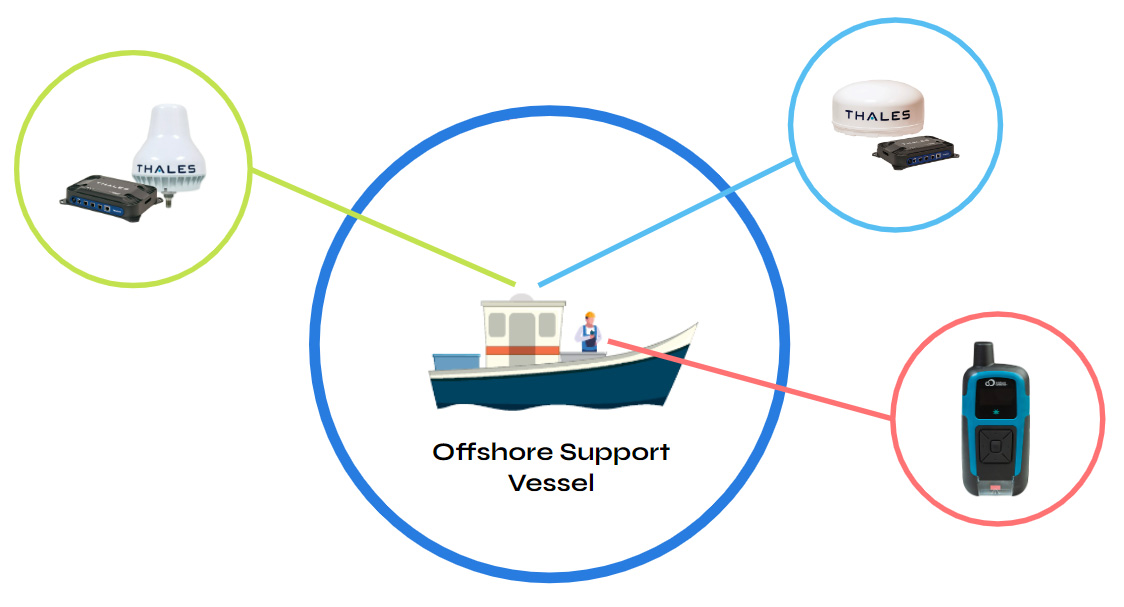
Another satellite transceiver we’d suggest exploring is the RockSTAR. This handheld device can connect to wearables sensors like heart rate and body temperature monitors. It also features two-way messaging and an SOS feature. Again using the Iridium satellite network, this data can be transmitted to safety teams to allow for timely inventions, where needed.
Primary, secondary or failover communication
A final note regarding satellite connectivity for your offshore wind farm: it’s highly effective as a back-up communications mechanism should anything happen to your primary means of connecting with the turbines. Underwater cables can be damaged by trawlers, the environment or even malicious intent. With satellite as a back-up, you can still shut down or kickstart your turbines as needed, and communicate with your workers. It’s instant infrastructure that isn’t affected by weather, has no dependency on terrestrial networks, and is highly secure.
Talk to the experts
We’ve worked with renewables companies and instrumentation manufacturers for decades, and have seen satellite IoT transform over the years; but never more rapidly than it is right now.
We can help you make sense of a changing ecosystem and make choices that will continue to deliver for you well into the next decade. Get in touch, and we’ll provide you with objective, expert advice.
Private Satellite Network: TSAT’s Game-Changing Solution For Utilities
Remote ‘off-grid’ utilities sites play a crucial role in bringing reliable power to remote and challenging regions. But ensuring seamless communication at these remote power utility sites is no easy task. While traditional mobile and fiber connections are a great solution in cities, they fall short when it comes to the unique communication challenges of off-grid locations such national parks, mountainous regions, and permanent, poorly inhabited, grasslands.
Most power utility and water management companies have around 10% of their sites located in ‘off-grid’ areas. These sites often lack reliable access to mobile networks and terrestrial fibre infrastructure, making it impractical and costly to use conventional connectivity solutions. To make matters more challenging, these remote sites might be in environmentally sensitive areas or rough terrains, making it even harder to set up extensive communication networks.
In such situations, getting customer data back from these sites requires innovative solutions that go beyond the typical terrestrial and cellular options. It’s also crucial to distinguish between customer data backhaul and SCADA (Supervisory Control and Data Acquisition) and telemetry data backhaul. Mixing the two could lead to serious cybersecurity issues, which is why a specialized solution designed exclusively for SCADA and telemetry data is essential.
In this blog, we’ll delve into the main data connectivity and backhaul challenges faced by remote power utility providers. Additionally, we’ll discuss how TSAT offers a reliable and robust communication solution specifically tailored to meet the unique requirements of these remote power utility sites.
How TSAT overcomes the key data challenges for power utilities
1. Instant communication infrastructure
Remote areas often lack reliable communication infrastructure, such as wired internet or cellular networks. TSAT utilizes satellite communication to overcome this limitation, ensuring that data can be transmitted to and from the remote sites even in areas with no or limited terrestrial connectivity.
2. Real-time monitoring and control
Remote power utility sites might be unmanned or difficult to access regularly due to their remote site situation, but any downtime or loss of energy production can be costly. TSAT enables real-time monitoring and control of critical assets, such as generators, switchgear, and substations, from a central control center, allowing operators to respond quickly to any issues or anomalies, optimising power output and maximizing power generation.
3. Enhanced grid reliability
By continuously monitoring the remote power sites, TSAT helps identify potential problems and weaknesses in the grid, as they occur in real-time, enabling proactive maintenance and repairs. This proactive approach enhances overall grid reliability and minimises the risk of large-scale outages. Satellite is also highly reliable and unlike terrestrial and fiber, is unaffected by coverage, weather events and ground infrastructure.
4. Robustness against extreme weather events
The United Nations Office for Disaster Risk Reduction reports that over the last 20 years, there has been a “staggering rise” in the number of extreme weather events. Floods, fires, storms and earthquakes, all risk the stability, reliability and telemetry data delivery of sites reliant on cellular and fiber. As TSAT is satellite-based, connectivity is much more reliable and stable.
5. Highly secure
Cyber-attacks are on the rise around the world and utility powerhouses have been targets. TSAT ensures encrypted and authenticated data transmission between remote power sites and the central control center. The dedicated satellite network provides a private and isolated communication channel, safeguarding against cyber threats and unauthorized access; making for a trusted and effective solution for power utilities’ communication needs in remote locations.
A detailed look at TSAT
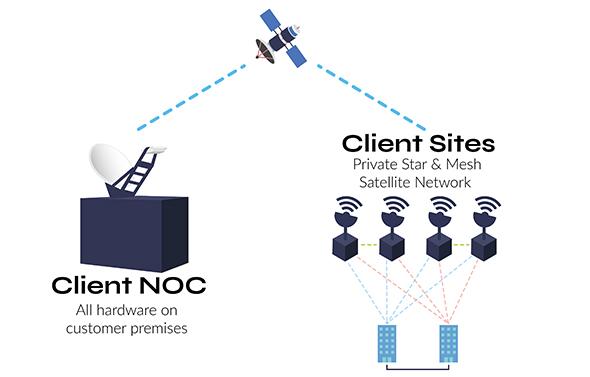
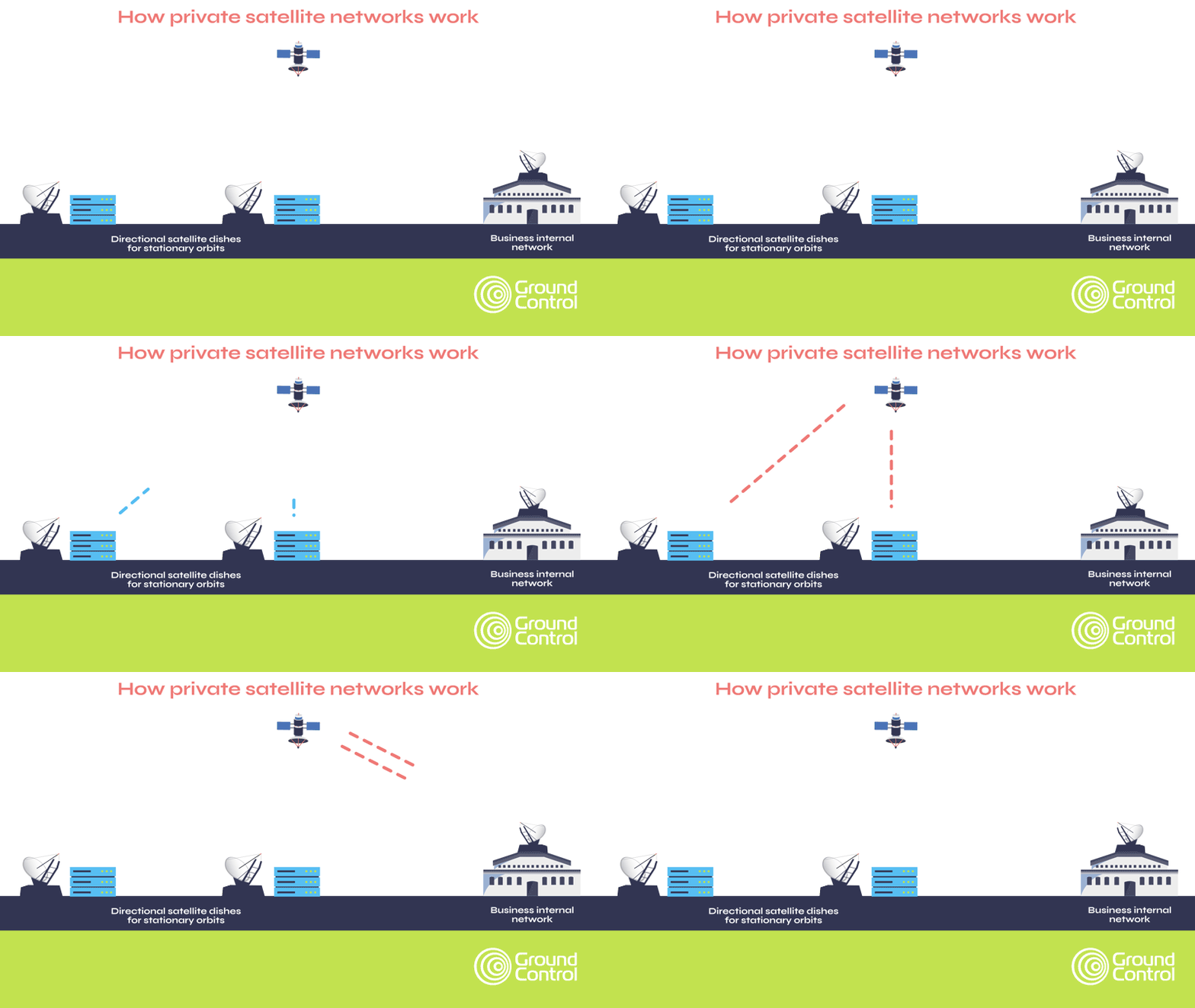
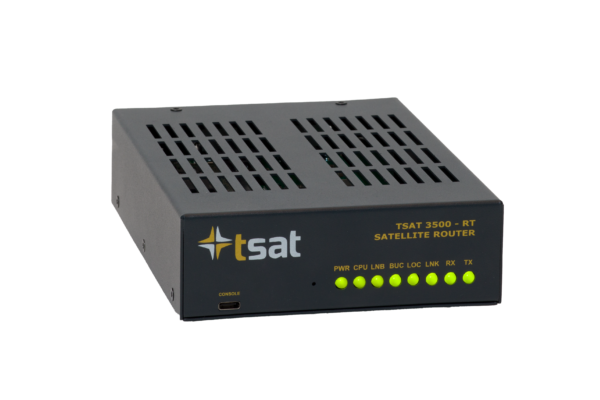
TSAT offers a narrowband private satellite network that provides an ideal solution for monitoring and controlling smart power grids in even the most remote locations. Power utilities in the UK can now benefit from this cost-effective and reliable platform, connecting distant assets to crucial utility applications like SCADA transmission, telemetry, and M2M, all within a secure network.
Designed to accommodate the needs of both small and medium-sized networks, TSAT boasts scalability with lower operating costs compared to installing and maintaining fiber connectivity. It supports both IP and legacy serial devices and operates independently from terrestrial communication systems. This not only complements existing terrestrial networks but also offers an alternative solution, ensuring continuous transmission at all times.
The hardware is purpose-built to withstand harsh environments, providing years of reliable operation, making it the most robust choice in adverse weather conditions, unlike mobile and fiber alternatives. Additionally, TSAT adheres to the IEC-61850 global standard for utility and industrial communication and automation, ensuring seamless integration with existing systems.
Through rigorous testing, Ground Control solutions have received certifications in the Worldwide Industrial Telemetry Standards (WITS) DNP3 protocol, setting the global standard for utility industry telemetry control and monitoring requirements. This ensures interoperability between equipment from different manufacturers, guaranteeing a smooth and efficient power utility system.
Save costs and be secure
The equivalent statistic for Euros regarding the average cost of laying fiber can be found in the United States Department of Transportation’s “Fiber Optic Installation Cost Survey” report. According to the report, the average cost of laying fiber is estimated to be around €23,000 per kilometer. Additionally, there’s the ongoing expense of sending experienced Field Engineers to manage installations and maintenance. Over a 10-year hardware lifespan, this this total is significant.
TSAT offers a practical solution to mitigate these costs almost entirely, as its terminal can be remotely managed. This means no more costly truck rolls, and with TSAT being always-on and relaying data in real-time, prompt and guaranteed servicing is assured.
The TSAT HUB stands out as the most cost-effective VSAT HUB available. By efficiently utilizing the satellite spectrum and tailoring satellite bandwidth to meet specific application needs, annual communication expenses are significantly reduced. This makes TSAT an ideal primary or backup option for existing terrestrial communications, providing reliable and affordable connectivity for remote utility sites.
Unlock the potential of your data
With over 40 years of combined knowledge of satellite experience, the Ground Control team is well placed to help keep you connected when it matters the most with complete satellite connectivity solutions for any situation and application.
Whatever your communication or connectivity needs, we can help.
SmallSats, Big Impact, and the Future of Connectivity in Water and Waste Water Processing
Satellite IoT is exploding right now, with new entrants left, right and centre, and some huge names throwing their hats into the ring: Starlink for one, and Amazon’s Kuiper for another. This incredible proliferation of satellite network operators is driving innovation at an unprecedented speed, but there’s also a lot of hype. In this post, aimed at sensor manufacturers supporting the water and waste water industry, we’re going to explore what’s currently available, what’s coming soon, and what we think the next five to 10 years looks like – with some myth-busting along the way.
Satellite networks launched between 1965 and 2011
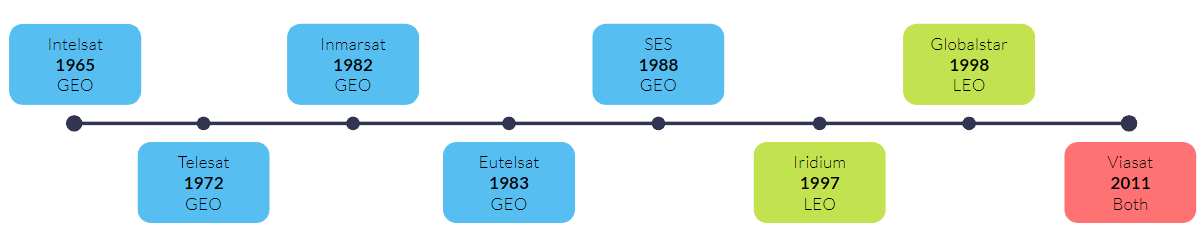
This timeline shows the launch dates of the “old guard” of satellite network operators; and while they’re unquestionably well established, don’t take old as meaning redundant here. These companies have stood the test of time; their services are highly reliable, and they’ve repeatedly updated their networks over the decades. Between them they serve the gamut of satellite internet applications, from Iridium’s Short Burst Data, designed for tiny amounts of IoT data, through to Viasat’s broadband internet service with speeds of up to 100 Mbps.
Satellite networks launched between 2018 and 2024
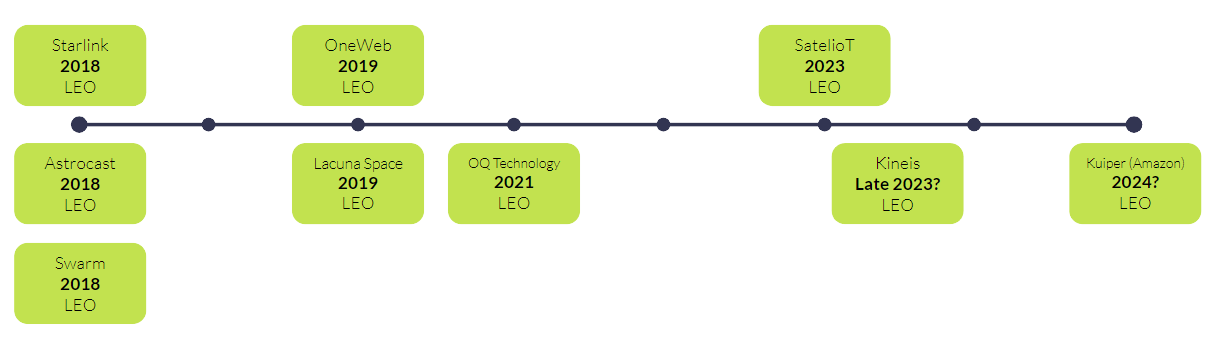
As mentioned, in recent years, more and more companies have started to build satellite networks; all are in Low Earth Orbit (LEO), and almost all are using what are called “SmallSats”. Here we’re using the term for any satellite weighing less than 180 kg and measuring between the size of a kitchen fridge and a Rubik’s cube. It’s this smaller size that has, in part, allowed for this growth – it’s much cheaper to put a SmallSat into Low Earth Orbit than it is to put a large satellite (over 1,000 kg) into Geostationary orbit.
Coupled with the trend for SmallSats and Low Earth Orbit, the other major reason for the increased number of new entrants is the lowered cost of putting satellites into space. From $85,000 per KG in the 1980s, to just $1,000 per KG in 2020 (source); for that you can largely thank SpaceX.
About satellite orbit heights
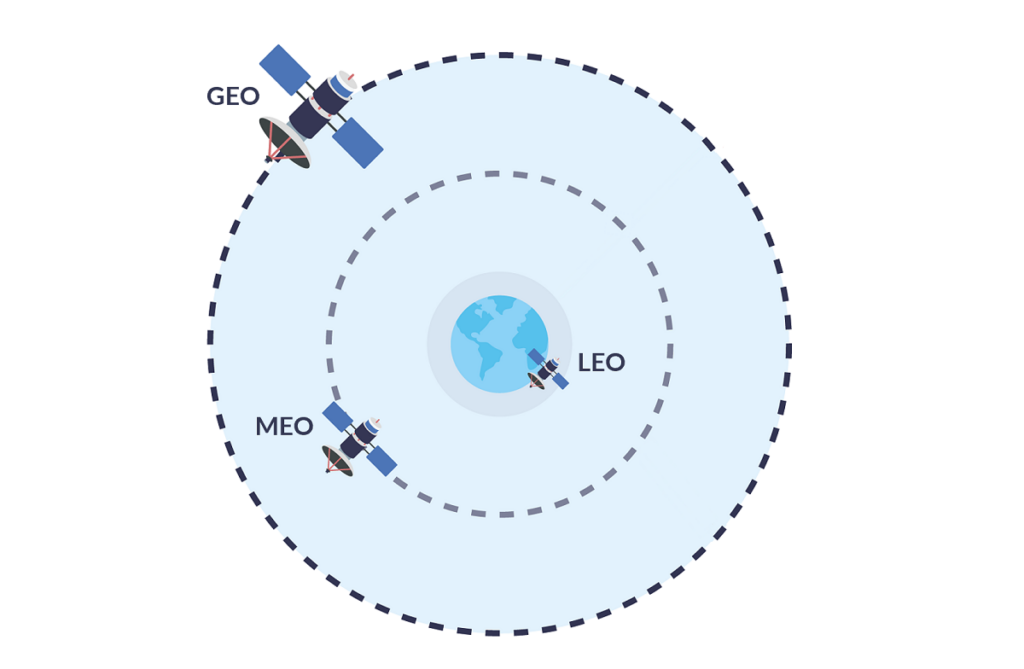
A quick explanation about the significance of orbit heights in satellite connectivity. Satellites in Low Earth Orbit (or LEO) are much closer to Earth than Geostationary satellites, which means that the time it takes to send data to the satellite and back to Earth is reduced – usually less than 1 second.
If you need real-time data transmission for your systems to operate smoothly, this is a welcome and necessary benefit. However, for this to be realized in practice, there needs to be a satellite overhead at the point at which you transmit; we’ll touch on the challenges new entrants have in this respect shortly.
What are the implications for water sensor manufacturers?
1. Lower cost
Firstly, cost: these networks cost less to establish, so the operators have less costs to recoup! That in turn has forced the established players to diversify their services to compete. This is great news as the relatively high cost of sending data over satellite previously made some use cases non-viable – but no longer. If you need to capture data from your remotely deployed sensors, cost is rarely, if ever, a prohibiting factor now.

Reservoirs
Water levels, precipitation, air and water temperature, relative humidity

Pipelines
Leak detection, Third Party Intrusion, broken wires, storm water ingress

Treatment Plants
Water levels and flows, energy consumption, water quality, equipment status
2. Smaller antenna size
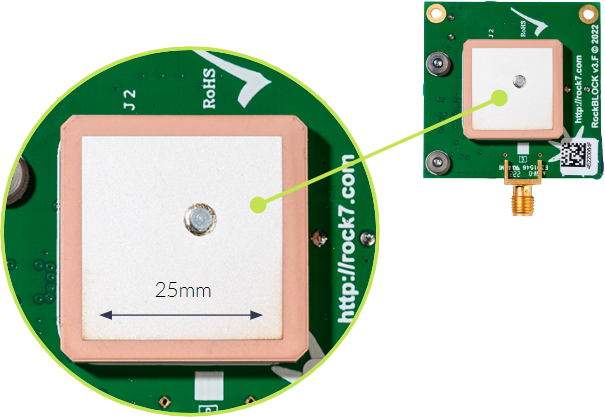
Secondly, antenna size and power. This has always been variable depending on the amount of data needing to be transmitted: a large amount needs a large antenna and a decent amount of power. Small amounts of sensor data, however, can be sent to satellites in Low Earth Orbit using absolutely tiny antennas such as the patch antenna included with the RockBLOCK 9603.
This connects to the Iridium network, which was one of the first LEO networks launched. This low-power-by-design modem can be powered by a battery for many years, and the same is true for many of the devices which connect to the new space entrants.
3. The convergence of satellite and 5G
The next step in the evolution of Satellite IoT is the convergence of cellular and satellite networks. The telecommunications industry is working on several ideas that will enable seamless data transfer between these networks. A key application of this convergence is to extend the reach of 5G which in comparison to its predecessors, provides limited coverage. If satellites can function as “cell towers” in space, it would unlock the full potential of 5G, providing global coverage from anywhere on the planet. 3GPP’s latest release – Release 17 – included technical specifications for direct-to-device 5G over satellite. This release also extended interoperability, Integrated Access and Backhaul (IAB), and network slicing to support Non-Terrestrial Networks (NTNs). Read more about 5G and satellite technology.
Things to be aware of
It’s not all good news, though. It takes time and money to build a reliable satellite constellation, and every one of the new entrants is still in the process of establishing their network – including Starlink and Swarm.
That means that you can suffer from high latency – i.e. there simply isn’t a satellite overhead for your device to send data to, so you will need to wait until there is. To give you a real-life example, if you connect your sensor to the Swarm network from North America, it can take from 2 minutes to 2 hours for your data to be intercepted by a satellite, and then delivered back to Earth. For Iridium, those parameters are 10 seconds to 15 minutes. And bear in mind Swarm (acquired by SpaceX in 2021) is one of the best established of the new entrants; newer and less well funded companies will have much longer delays.
Similarly coverage can be spotty; there is still only one satellite company that delivers 100% global coverage, and that’s Iridium. The established geostationary satellite operators usually have great coverage, and just miss out the polar regions.
The new networks also suffer from congestion: demand can outstrip supply, leading to failed transmissions and higher costs as data packets are re-sent; plus slower speeds when the network is busy. That’s plaguing Starlink right now – they’ll fix it, for sure, but just now it could be problematic.
However, if your instruments or sensors are within the coverage of one of these networks, and you can cope with receiving data once or twice a day, with the promise that this will speed up as they launch more satellites, then there is a huge amount of choice available to you, and the cost is really very low.
Our recommendations for water sensor satellite connectivity
For critical national infrastructure like water utilities, we continue to recommend established networks like Eutelsat, Iridium and Viasat with millions of subscribers, who’ve proven they can manage spikes in demand; who’ve got redundancy services baked in; who have very high levels of coverage and still benefit from very low latency.
What about data security?
“Water utilities are the third most targeted sector for hackers in the United States”
– Journal of Environmental Engineering
Water terrorism is on the rise and is likely to get worse as clean, safe water becomes an increasingly scarce resource. In 2022, hackers claimed to have access to the SCADA data of Thames Water (oddly, while they thought they’d hacked Thames Water, they’d actually hacked South Staffordshire Water; and in neither case were they actually able to access SCADA systems).
The hackers claimed to have the ability to tamper with the safety of drinking water, a terrifying prospect for the general public (source). While this incident blew over with basically no harm done, there are state-sponsored cyber warfare units who will be vastly more capable, should they be tasked with targeting national infrastructure.
To be clear, sending your data via satellite isn’t risk-free. But it is much harder to intercept data going from a sensor to a satellite, then back to a ground station, than it is to intercept data that’s using public infrastructure like the internet. And if that ground station is physically on your premises – that’s an air-gapped solution that’s about as secure as data transfer gets. This private satellite network is called TSAT and we don’t know of any more secure way to transmit mission critical data.
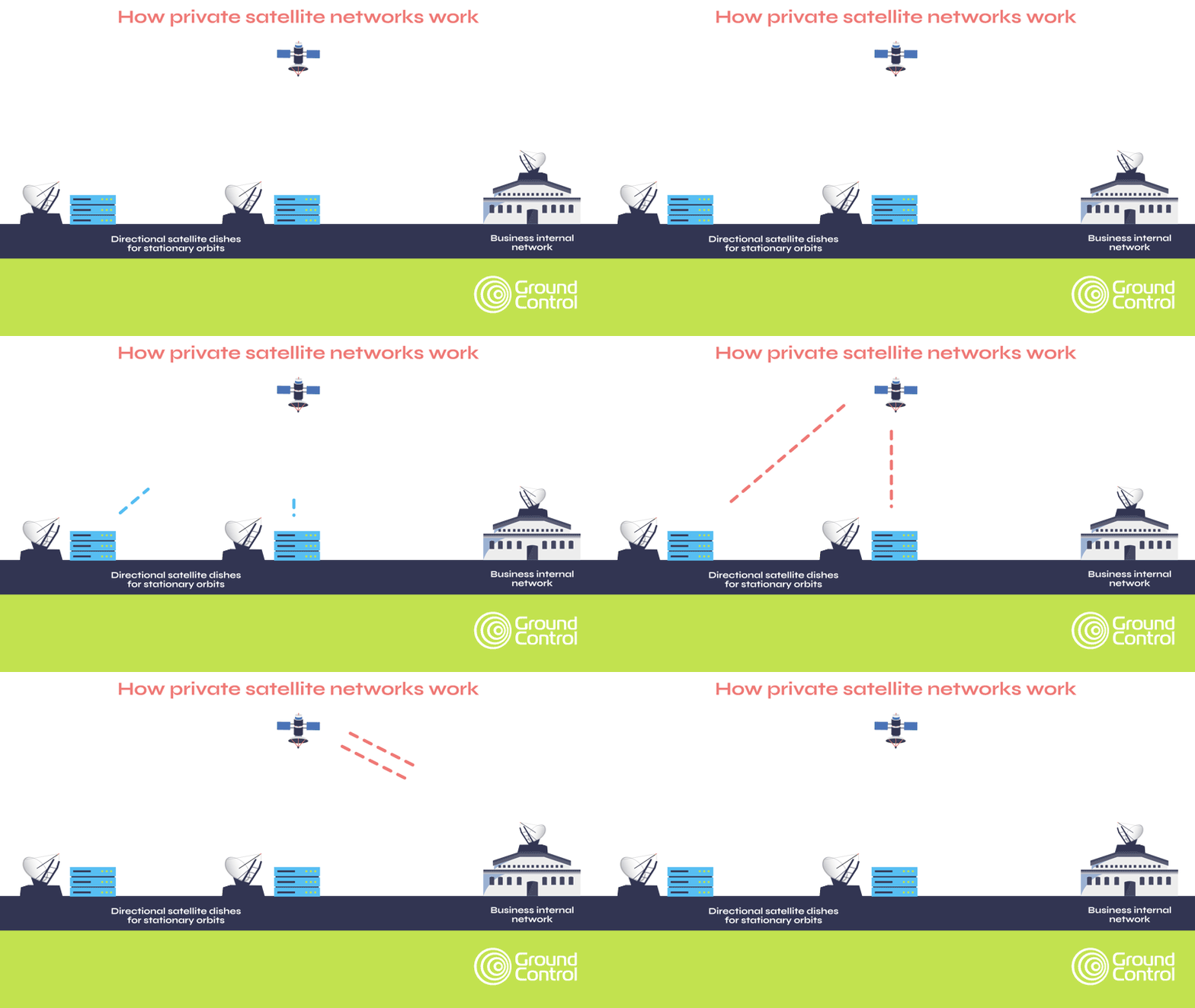
And while TSAT represents the highest tier of security capabilities within satellite IoT, by default, satellite data traffic is relatively secure, meeting most military and government security standards.
Further, at Ground Control, we’ve built Cloudloop, a delivery network for Iridium and Viasat traffic, which allows us to have full control over our certified, cutting-edge data paths, while securely delivering traffic.
We built this because we wanted to deliver additional security for our customers’ data, and offer optional public static IPs and completely configurable firewalls to assist in securely moving your data from A to B.
To summarize: satellite IoT has transformed in the last five years: prices have come down, transceivers are smaller, power requirements have lessened, and security has improved. And with Amazon’s Kuiper satellite network scheduled for launch in 2024, the pace of change is not going to slow.
We’re here to help you make sense of all of this. We keep on top of all of these developments so we can make expert recommendations to you, and ensure that a system you implement today will remain viable 5, 10 or 15 years into the future.
Would you like to know more?
We partner with sensor / instrumentation manufacturers to deliver end to end solutions for water companies across the world. If you design and build sensors, we’d love to hear from you to talk about working together. If you’re a water utilities company and looking for a connectivity bridge for your remote sites, we can help!
Call or email us, or complete the online form, and we’ll come back to you within one working day.
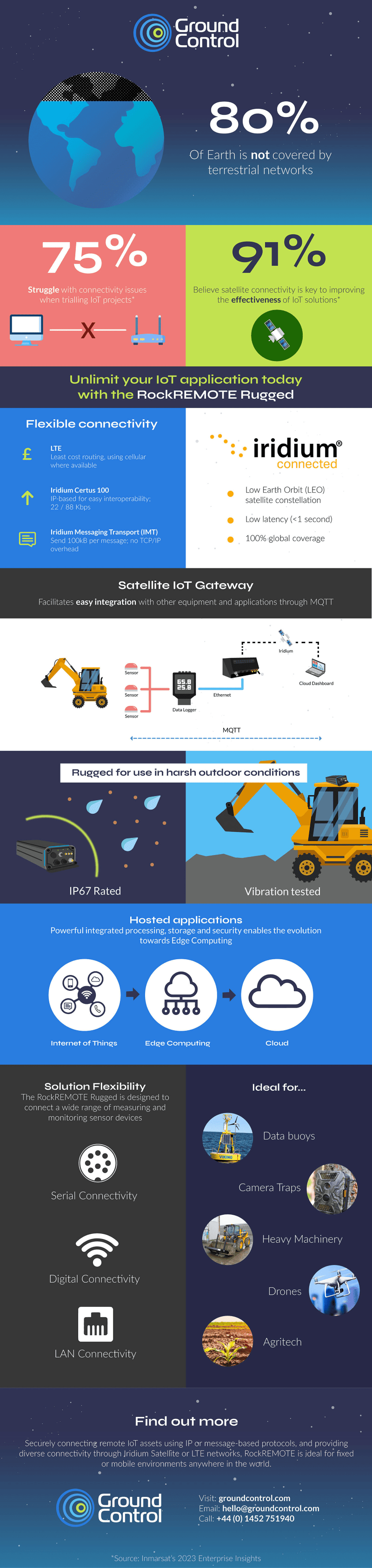
Infographic: How to unlimit your IoT application with the RockREMOTE Rugged
A surprisingly small amount of the Earth’s total surface is covered by terrestrial networks; it’s reckoned to be between 15-20%. Of course connectivity is centred around people, so populated land masses have the lion’s share of mobile phone masts. If your IoT application is located within or close to a populated area, you’ll have several choices to connect your devices: cellular, LPWAN, WiFi, BLE etc.
However if your application is in a remote area, or travels in and out of remote areas, terrestrial networks may be unavailable or unreliable. This often affects oil and gas pipelines; farms; mining operations; almost anything that’s at sea; offshore wind farms; reservoirs; solar plants; forestry – the list goes on.
Satellite IoT connectivity, once the last resort due to cost, has come of age. With a large number of new entrants to the market, incumbents have diversified their offerings, and prices have come right down. One example of this is the new Iridium Certus 100 service, designed for IoT. The RockREMOTE Rugged satellite IoT device leverages this service, which we’ve made available with both its IP-based connectivity option, and Iridium Messaging Transport (IMT), a message-based service allowing for relatively large (for IoT!) amounts of data to be transmitted using the MQTT protocol.
Our infographic draws out some of the key benefits of the new RockREMOTE Rugged; if you’d like to know more, just contact us and we’ll be happy to help.
Find out more
If you have a remote connectivity challenge, we can help. We design and build our own hardware, like the RockREMOTE, but we also partner with companies like Thales, Cobham and Hughes, to ensure that we can offer our customers the best possible product for your particular requirement.
With over 20 years’ experience, we’ll provide you with impartial, expert advice. Call or email us, or complete the form; we’re standing by to help.
Smart Water Management: How Massive IoT is transforming the Water sector
The Internet of Things (IoT) describes connecting any device to other connected devices and the internet, or other communications networks. This allows all devices to collect and share data about their environment and how they are used. In short, IoT makes things smart.
Massive IoT then, is simply IoT on a massive scale; multitudes of sensors, connectivity and data processing to create new solutions. Many businesses have already adopted Massive IoT technology, citing reduced costs and wastage, and improved operational efficiency among the benefits.
Given its obvious applications to the Water industry – including smart metering and remote equipment monitoring – it’s unsurprising that sensors in the water and wastewater treatment industries are forecast to grow to $2 billion by 2030. But why is this so important?
Water is a finite, essential resource. In the UK alone, it’s estimated that by 2040 we’ll see between 50-80% less water in rivers during the summer months, and by 2050, the population will have risen from 67 million to 75 million. To put this in perspective, the Environment Agency has predicted England will run short of water within 25 years, with Sir James Bevan describing the country as facing the “jaws of death”.
Though total leakage across England and Wales has decreased over the last five years, Ofwat has estimated that currently, one fifth of all running water through pipes is lost to leakage. To even contemplate meeting increases in demand while navigating challenges such as urbanisation and climate change, suppliers must look to processes and infrastructure, across entire networks, to ensure these are as efficient as possible.
Technology advances have a history of providing the solutions we need, and thankfully, there are many ways Massive IoT is already and will continue to optimise operations for the Water and Wastewater treatment industries.
Factors driving Massive IoT adoption in the Water industry
The Water sector has already implemented a variety of sensors to monitor water quality, manage smart meters and optimise distribution. Traditionally infrastructure including pumps and reservoirs have been monitored using SCADA systems. However, the final segment of pipeline responsible for delivering water to a customer’s premises, has always remained somewhat unknown to suppliers. For information here, Water companies have relied heavily on feedback from customers; for example, calling to report a leak or fault.
As Jat Brainch, Chief Commercial and Product Officer at Inmarsat puts it – “you can’t manage what you can’t measure, and automation and digitalisation of the data capture process to collect granular, real-time results, is becoming increasingly essential”. In short, to be able to get a better handle on water management, companies need data, delivered consistently and reliably to inform decisions.
Moreover, as the risks and realities associated with climate change become better understood, so does the requirement for all organisations to reduce their overall environmental impact. This boils down to improving water optimisation and wastewater treatment so water can safely be recycled. Both of which can be better facilitated with IoT technologies.
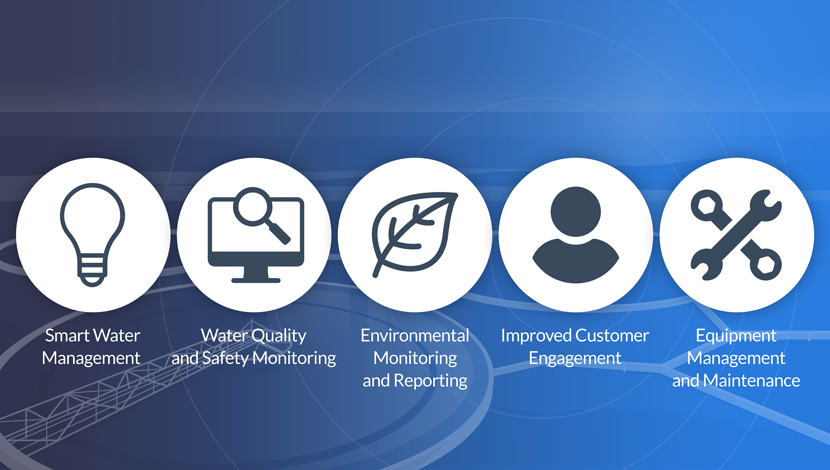
5 ways Massive IoT can benefit Water and Wastewater companies
- Smart water management
- Water quality and safety monitoring
- Improved customer engagement
- Environmental monitoring and reporting
- Equipment management and maintenance
1. Smart water management
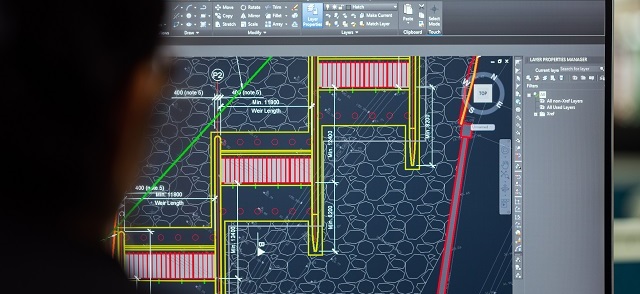
Utilising IoT technologies such as sensors, geospatial mapping, and big data analytics, companies can efficiently plan, develop, distribute, and manage water resources. Real-time monitoring and predictive analytics enable transparent pipeline management, water conservation, leak detection, and optimised service planning.
2. Water quality and safety monitoring
Monitoring water quality is crucial to ensure that suitable quality standards are maintained at every stage of the water cycle, from collection through treatment and distribution.
Despite laws that require water companies to treat and dispose of wastewater, raw sewage and contaminants from factories are still legally and illegally dumped in waterways in much higher concentrations than are safe for human and animal health. Estimates reveal that in 2020, there were more than 400,000 instances of discharged raw sewage into English and Welsh rivers.
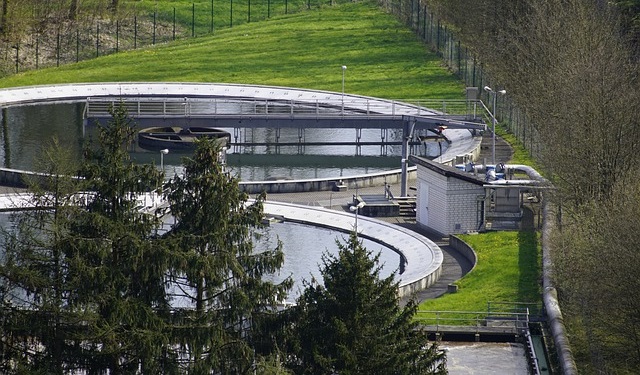
Real-time monitoring systems with sensors provide data on various parameters, including pH level, dissolved oxygen level, and turbidity. This data helps identify contamination sources faster and prevent further spread, ensuring suitable water quality standards are maintained throughout the water cycle.
3. Improved customer engagement
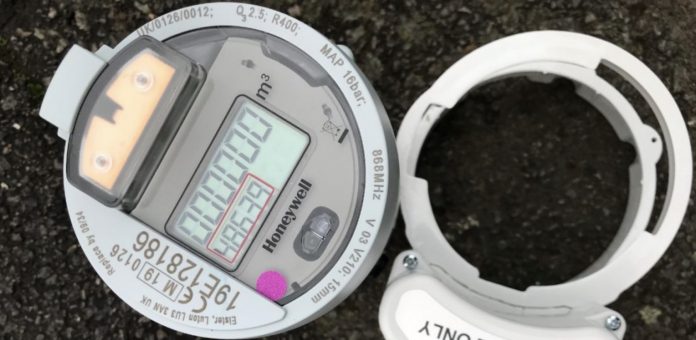
Advanced Metering Infrastructure (AMI) technology enables real-time data collection and evaluation of water consumption. Water companies can provide customers with real-time alerts about network damage, leaks, and adjust pricing based on insights. This empowers customers to make conscious decisions, leading to improved customer satisfaction, engagement, and reduced water consumption.
4. Environmental monitoring and reporting
Blocked, overflowing systems can cause flooding, erosion, turbidity, storm and sanitary sewer system overflow, and infrastructure damage. While most businesses have some form of environmental monitoring system in place, there are many challenges associated with measuring and reporting on water usage. For example, remote locations can be difficult to access and monitor; pipes can become blocked or damaged; and heavy rainfall can cause flooding and damage equipment.
By combining data from sensors within Powered Telemetry Modules (PTM), companies can monitor and forecast events such as flooding, erosion, and infrastructure damage. Utilizing a variety of monitoring tools, proactive measures can be implemented to prevent and mitigate damage in areas most at risk.
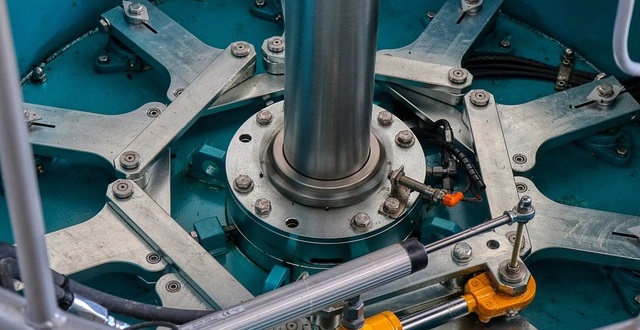
5. Equipment management and maintenance
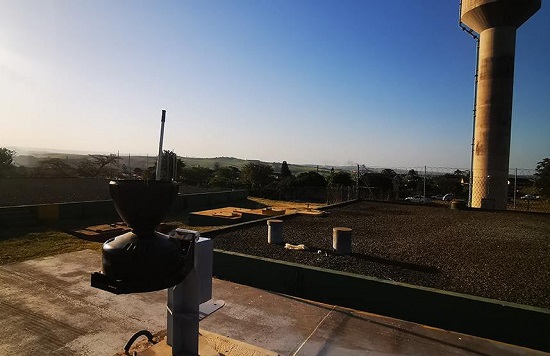
Remote monitoring and analytics help identify deviations in asset performance, allowing companies to troubleshoot and address problems before they cause damage or disruption. Predictive maintenance software alerts technicians about necessary repairs, reducing maintenance costs and preventing larger repairs or outages.
Challenges to Massive IoT deployment success: Cost, cybersecurity and connectivity
Water infrastructure is vast. Due to the volumes required, the cost of modernisation and installation of new hardware is substantial. So much so that installation is often cited as the largest cost challenge when deploying IoT solutions at scale.
In addition, legacy systems and ageing infrastructures common to businesses within the Water and Wastewater sector means that adding devices may not be quite as simple as just installing. Often some level of customisation will be required to ensure newly introduced devices work well within existing operations.
However, IoT sensors, specifically those which are battery powered, have become increasingly cost-effective and providers don’t need to light up all pipelines within a network to reap benefits. When working with smart meters for example, even relatively small numbers can be used to affect change. After all, any increase in data and operation visibility can help water companies make smarter decisions and reduce maintenance costs.
Next, cybersecurity. Though Water companies must and do ensure processes require the very minimum of customer data in each instance, with increased data and data transmission, keeping this information secure from the reach of hostile parties becomes more difficult.
In 2021, a cyberattack attempt was made to tamper with the levels of sodium hydroxide in Oldsmar, Florida’s water supply. Thankfully the plant operator observed what was going on and the attack was blocked in time, but the incident does serve as a reminder of national infrastructure vulnerabilities.
Addressing this challenge requires companies and organisations to build security through every layer of the stack, and is essential to successful IoT deployment.
Finally, connectivity. It would be remiss to not highlight that the ability to quickly adapt to surges, peaks, and troughs is dependent on reliable, consistent data. Ultimately your decisions can only be as fast and as smart, as the data at hand allows. As water company networks tend to span over large areas, it’s likely some of your network will fall outside terrestrial coverage. It’s estimated that just 15% of the Earth’s surface is supported by cellular, whereas Satellite networks like Iridium cover everywhere and anywhere – including both poles.
What’s more, a recent paper found 75% of decision makers struggled to deploy their IoT projects because of connectivity issues. So it’s important companies consider connectivity options early on in IoT planning, opting for a connectivity strategy able to consistently support all assets within a network.
In addition, it’s key companies in Water and Wastewater industries ensure connectivity strategies include alternate connectivity options for backup and backhaul. This way, should there be a problem with the terrestrial networks due to e.g. bad weather or natural disasters, your IoT application isn’t negatively affected by long delays or gaps in data.
Simply, the benefits of Massive IoT are massive. Unlocking the power of smart devices and data analytics, through Massive IoT and AI, is key to ensure a more resilient, optimised and secure water network for the environment today and into the future.
Want to discuss your connectivity options?
With our extensive experience partnering with satellite network providers like Iridium and Inmarsat, we offer competitive pricing and flexible data bundles.
If you’re looking for objective advice and support for your IoT project, fill in the form below. Our expert team is here to assist you.
Satellite IoT use cases: truly global connectivity for real world applications
Satellite IoT is growing in popularity, providing reliable connectivity to remote locations that would otherwise be challenging or even impossible to reach with terrestrial networks. As the world becomes more connected, the demand for real-time data from even the most remote locations has increased. Satellite IoT provides the solution to this need by offering truly global connectivity for real-world applications.
Satellite IoT is being used in a variety of industries, including healthcare, agriculture, workforce safety, and more. Let’s dive into just some of the most prominent use cases for satellite IoT…
1: Healthcare
IoT has revolutionised the healthcare industry by providing innovative solutions to improve patient care, reduce costs, and increase efficiency. IoT in healthcare refers to the use of connected devices, sensors, and data analytics to collect and analyse patient health data in real-time. This could include remote patient monitoring, smart medical devices and wearable technology like fitness trackers and smart watches.
Satellite IoT can also facilitate medical and healthcare accessibility to patients in remote areas who are unable to travel. For example, utilising the RockBLOCK 9603 technology, satellite IoT has enabled the transportation and delivery of emergency and essential medical supplies to vulnerable people who are at high risk if they travel.
Read Healthcare By Drone
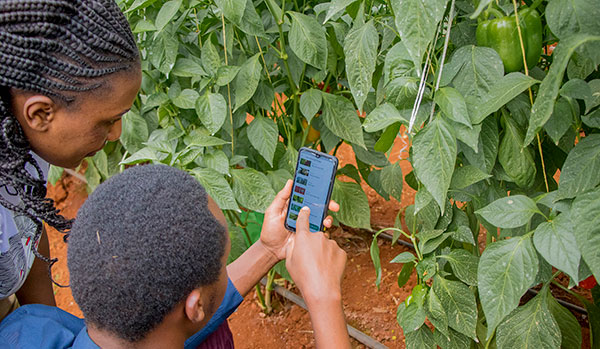
2: Agriculture
The agriculture industry is utilising satellite IoT to enhance productivity and lower expenses. By monitoring soil moisture, temperature, and other environmental factors, farmers can optimise their crop yield and reduce waste. This is sometimes referred to as Smart Farming. Satellite IoT can also be used to track livestock and monitor their health – improving overall animal welfare and reducing losses.
COSMOS-UK has installed Viasat IoT Pro terminals at remote soil moisture monitoring locations, to help combat climate change. The soil moisture data intelligence delivered by the Hughes 9502 specifically, to agricultural and environmental scientists, has the potential to transform the way we understand and model the natural environment.
Furthermore, satellite IoT has supported Synnefa in Kenya, to operate outside of terrestrial infrastructure by transmitting sensor data to enable smarter predictions for optimum harvesting times. The introduction of precision farming has been so successful, Synnefa has been able to help farmers:
- Save water by over 50%
- Reduce fertiliser application rates by 41%
- Increase production by 30% when compared to yields prior to the use of their devices.
3: Asset Tracking and Monitoring
Tracking and managing assets in real-time, providing valuable data on asset location at any given time is made possible with IoT technology. With satellite-enabled tracking devices, businesses can keep track of their assets no matter where they are in the world, even in the most remote locations. But here, it’s not just vessels, wind turbines and remote workers who can be tracked – animals can be too!
Illegal poaching is a big problem in Gabon, Africa. RockREMOTE with IMT enablement has equipped the rangers in Gabon with the latest in AI-powered camera trap technology to effectively monitor and prevent illegal poaching in the forest. With this advanced technology, endangered African species and iconic African wildlife have greater protection from poachers for this generation and the next.
Read More About Poaching in Gabon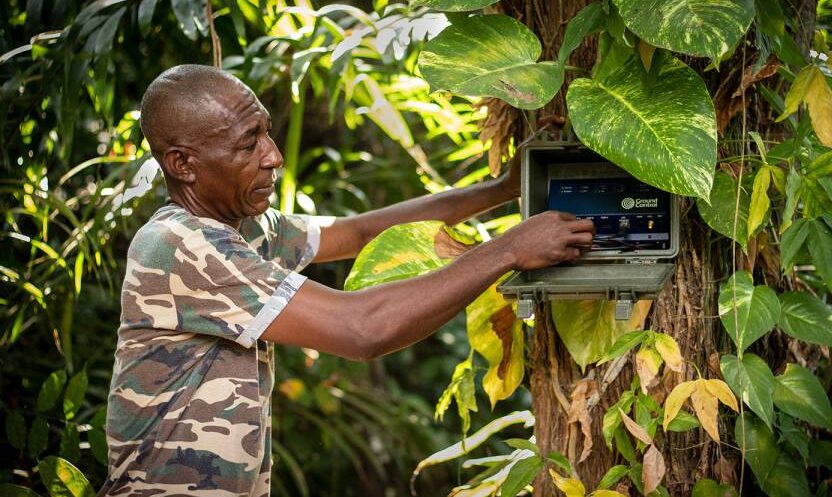

4: Workforce and Personnel Safety
Satellite IoT can be harnessed to monitor the safety of lone or remote workers in hazardous environments. By providing real-time alerts in the event of an incident or emergency, companies can respond quickly and potentially save lives. For example, workers in mining or oil and gas operations can wear wearable devices that monitor their location and vital signs, alerting supervisors in the event of an accident or injury. In addition, monitoring remote military personnel and natural disaster response teams is critical to their safety and well-being.
For example, the RockSTAR device has been used by the Ministry of Defence in their training. The RockSTAR was paired with bluetooth heart rate monitors, meaning biometrics could be monitored throughout with the added benefit of worldwide tracking and two-way communications. As well as critical monitoring, satellite IoT can also be leveraged for more leisure-based tracking and monitoring applications – including ultra-marathon runners via the RockSTAR tracking and two-way communications device.
See Tracking in Action5: Energy and Renewables
The energy sector is also seeing the benefits of satellite IoT. The technology enables remote monitoring of renewable energy infrastructure in real-time, allowing for early identification of any faults or issues, thus preventing downtime and maximising energy output. The performance of renewable energy assets is also optimised by collecting and analysing data on weather patterns, energy production, and equipment performance. This data can be used to improve efficiency, reduce costs, and even enhance the lifespan of renewable energy assets.
With five hydroelectric power stations in Snowdonia, North Wales, RWE maximises its renewable energy output from the reservoirs with a remote IoT solution – the Hughes 9502.
Read About Facilitating Renewable Energy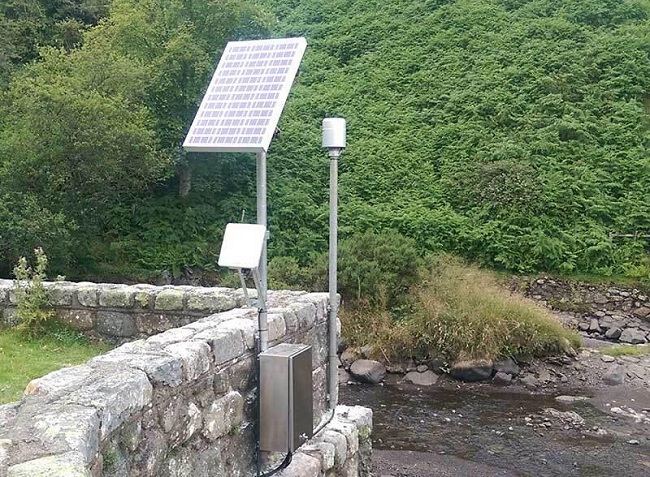
Satellite IoT vs. Traditional Cellular Networks
While traditional cellular networks are sufficient for many use cases, they have limitations when it comes to remote locations.
One of the biggest advantages of satellite IoT is that it provides truly global connectivity, even in the most remote and inaccessible locations. Unlike traditional cellular or Wi-Fi networks, satellite signals can reach anywhere on the planet, making it ideal for industries where assets are remote or located in harsh environments.
With satellite IoT, data can be transmitted from quite literally anywhere in the world, making it ideal for applications where cellular coverage is limited or even non-existent. Satellite IoT is also more reliable than cellular networks in many cases, as it is resilient to interference or disruption from extreme weather events.
However, it’s not necessary to choose either terrestrial or satellite connectivity. Satellite networks can be deployed quickly and easily, using the same messaging protocols as terrestrial networks, allowing businesses to scale their operations up or down as needed without having to worry about the limitations of traditional networks. What’s more, for businesses and industries that require global connectivity, the cost of deploying and maintaining satellite IoT devices can often be less expensive than building and maintaining traditional terrestrial networks from scratch. It can also be cheaper than deploying remote field engineers to remote sites.
In Summary…
Satellite IoT provides reliable connectivity to remote locations; bridging the connectivity gap that would otherwise be difficult or impossible to achieve with traditional cellular networks alone.
From reliable communication to real-time data collection and analysis, satellite IoT is changing the game for businesses and entire industries that need to stay connected no matter where their assets are located. Furthermore, as satellite technology continues to evolve and become more affordable, we can expect to see even more innovative use cases emerge in the coming years.
Unlock the Full Potential of Your IoT Project
Incorporating satellite IoT into your existing business operations can revolutionise what you can achieve. With satellite IoT, you can access data and insights that were previously unavailable or difficult to obtain with traditional networks and connectivity options.
Contact us to discover the added value of satellite IoT to your business today. We’re here to help and provide solutions to your connectivity challenges.
How Satellite IoT Closes The Gap in Remote Wind Turbine Data Monitoring Challenges
The renewables landscape is changing. The International Energy Agency (IEA) reports that the ‘global energy crisis has triggered unprecedented momentum behind renewables, with the world set to add as much renewable power in the next 5 years as it did in the past 20’.
The rise of renewable energy and the pitfalls of unplanned maintenance
Partially due to Russia’s invasion of Ukraine, countries are increasingly motivated to invest in renewable energy technologies to reduce reliance on imported fuels. Wind and solar energy in particular will account for over 90% of the renewable power capacity that is added globally over the next five years, according to the IEA.
So what does this mean for wind power in Europe?
Solar and wind power generated more than a fifth (22%) of its electricity in 2022, pulling ahead of fossil gas (20%) for the first time, according to the European Electricity Review 2023. However, many wind farms are located in remote areas and have limited resilience against severe weather, power outages and downtime due to unplanned maintenance.
In the case of the latter, often, renewable energy providers rely on physical onsite maintenance to restore energy production, requiring significant resources, time and cost. It presents energy providers with a big challenge. Research by Wood Mackenzie Power into renewables in 2019 found that $8.5 billion was spent on unplanned repairs and corrections caused by component failures in wind operations.
This cost could be lowered and potentially avoided if sensors for predictive maintenance were operable, and the data generated is available consistently and in close to real-time. It’s an area where satellite IoT connectivity makes economic sense.

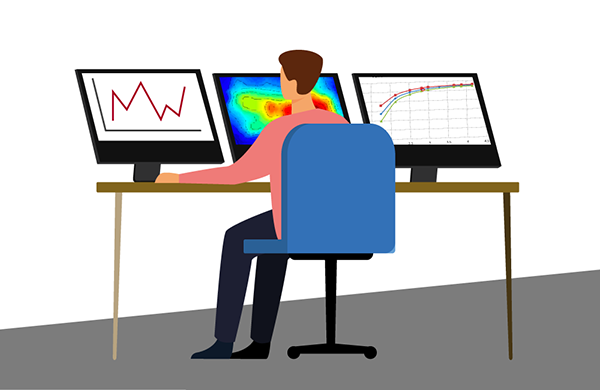
How SCADA data helps keep the turbines turning
For each wind farm – onshore or offshore – SCADA (supervisory control and data acquisition) data is reported. This includes weather data such as wind direction, various turbine parameters, and errors encountered by the system, normally at 10-minute intervals.
It’s this historical SCADA data that provides invaluable insights to generate a robust approach to monitoring turbine performance, identifying patterns and predicting failures for better predictive maintenance planning and less downtime. Via satellite-driven data monitoring, renewable data intelligence is delivered in seconds. This enables engineers, maintenance managers and data scientists the ability to plan, predict and act to close the gap in remote wind turbine data monitoring challenges.
Why there’s a better way than cellular, fiber and onsite personnel
Unlike cellular and fiber connectivity – which in many cases is not a feasible solution due to the remote locations of wind farms – satellite IoT is truly global. Satellite connectivity ensures reliable remote data monitoring from individual turbines to entire wind farms allowing optimization and ongoing performance assurance of wind energy output.
IoT Pro terminals (previously known as BGAN M2M) are designed to connect monitoring and control applications in remote, unmanned locations like wind farms, to provide visibility and management of those assets. Remote management of the terminal can be achieved via SMS, eliminating the reliance on on-site maintenance crews, mitigating unplanned downtime and saving costs.
As an example, an experienced Field Engineer has a day rate of approx. 350 euros plus fuel, company vehicle maintenance and overtime. In contrast, the cost of operating a Viasat-enabled satellite connectivity terminal can be as little as 60 euros per month for up to 20MB; not only is this a clear saving over physically sending an engineer into the field, the data is available in close to real-time, all the time.
SCADASat by TSAT enables renewable providers to cost-effectively and reliably transmit remote SCADA, telemetry and M2M data – all in a secure network. The platform is highly scalable with low operating costs compared to the new installation and maintenance of fiber connectivity. It is compatible with both IP and legacy serial devices and operates independently from terrestrial communications systems, both complementing and offering an alternative solution to terrestrial networks, ensuring transmission at all times.

How satellite IoT closes the gap with IoT Pro
Operating on both Viasat IoT Pro and cellular 2G/3G/LTE networks, these devices keep data flowing to enable predictive maintenance.
While wind farm resilience against severe weather will continue to be tested, the challenges of power outage predictions and production downtime due to unplanned maintenance can be solved via the adoption of IoT Pro solutions.
How we can help overcome your data monitoring challenges
Ground Control can solve renewable energy monitoring challenges with satellite IoT. We help our customers achieve an accurate, real-time, 360 view of their data and operations; anywhere and everywhere. If you’d like some impartial advice on the best device and airtime for your data monitoring requirements, get in touch. With 20 years’ of experience, we’re confident we can help.
Would you like to know more?
We’re here to help. With highly experienced staff based in the UK and USA, we’re here to talk through your most challenging remote connectivity requirements.
Complete the form, or if you prefer to speak to someone directly, call us on +44 (0) 1452 751940 (Europe, Asia, Africa) or +1.805.783.4600 (North and South America).
5 Ways Satellite IoT Can Solve Renewables’ Connectivity Challenges
The renewables industry is growing. The operations required to generate power are expanding and the number of sites in remote on- and offshore areas is increasing.
In late 2022, analysts at McKinsey estimated that in less than ten years, global renewable electricity capacity will rise more than 80% from 2020 levels to more than 5,022 gigawatts (source). Further, McKinsey predicts that of this growth, two thirds will be generated by wind and solar power – an increase of 150%. By 2035, it estimates that renewables will generate 60% of the world’s electricity.
While the demand for renewable energy is growing rapidly, there are a number of challenges faced by the industry, from connectivity to security. It’s critically important that remote industrial IoT devices are connected to operations at the head office, as without this data, power outages could occur without real-time knowledge, maintenance monitoring cannot be anything but reactive, and performance could fall short of potential optimized output.
Satellite IoT communications and monitoring can solve these challenges. And it’s genuinely not as expensive as you might think…
CHALLENGE 1 – Connectivity for remote sites
The solution – RockBLOCK Plus
Renewable energy generation sites for hydro, wind and solar farms can often be in remote and even hostile locations. With terrestrial networks only covering 15% of the Earth’s surface (or 50% of the available landmass), and focused on highly populated and urban areas, renewables sites are often out of reach of cellular and fibre connectivity.
There are numerous challenges in providing data backhaul from such remote sites, whether they’re in the development or deployment stages. Unconnected sites are siloed and leave operators unable to reach their assets unless deploying a lone worker to site – with the safety, time delays and additional costs all key considerations.
Ground Control has deployed full end-to-end solutions for renewable providers to retrieve their data from the field in over 100 countries, recommending the best solution for their operational needs. For remote site data retrieval, the RockBLOCK Plus is rugged and waterproof – ideal for remote and exposed sites – and is designed specifically to transmit sensor data from IoT applications. RockBLOCK Plus sends and receives short messages from anywhere on Earth with a view of the sky, via Iridium SBD, as frequently as every 10 seconds, making the device ideal for remote performance monitoring and pre-empting maintenance requirements.
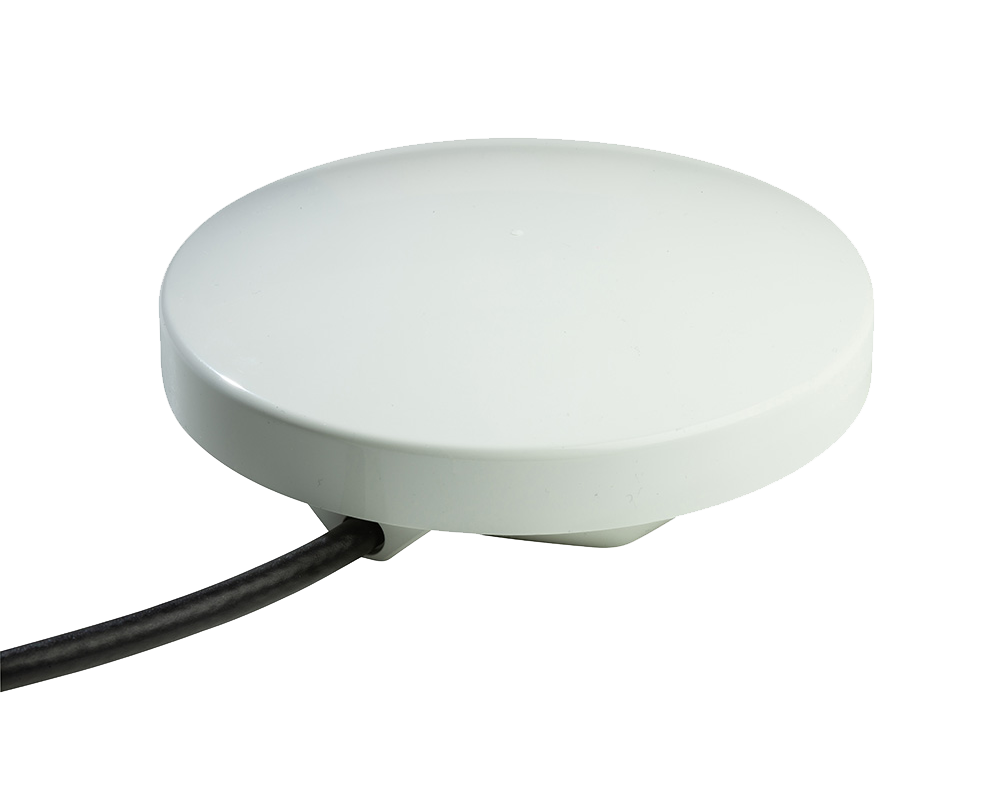
CHALLENGE 2 – Combining distributed site data
The solution – Cloudloop
To enable renewable energy providers to balance supply and demand on the power grid, they must determine how much renewable energy is being generated at any given time. This can be challenging and even impossible to achieve without the use of satellite communication due to the size, scale and remote locations of renewable energy resources.
Cloudloop is Ground Control’s cloud-based software platform for subscription and device management. The software enables renewable providers to combine multiple and widely distributed sensor data into a singular entity to provide a complete visualisation of their energy-generating operations.
All satellite device activations and deactivations, airtime management and troubleshooting can be achieved remotely via the Cloudloop platform. Monitoring in real-time, historical data usage and alerts enable proactive cost management, with diagnostics reporting significantly reducing field maintenance costs, regardless of the scale or distribution of the data loggers.
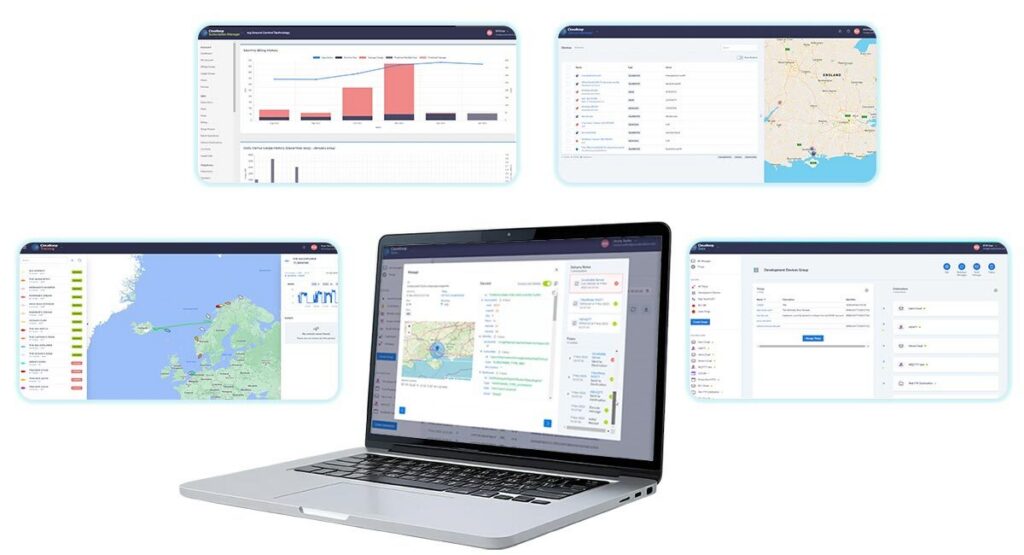
CHALLENGE 3 – Security and cybercrime
The solution – SCADASat
The Colonial Pipeline hack in the USA proved beyond doubt that the renewables industry is at risk of cyber attacks, yet a key data transfer requirement exists between on-site RTUs and SCADA systems to extract mission-critical sensor data, however remote, to prevent and mitigate outages and disruption to energy supply.
Some satellite networks have the advantage of not needing any publicly available terrestrial infrastructure in order to extract data from RTUs. So if wind farms, reservoirs or solar sites don’t receive reliable cellular coverage, satellite is the best option, either as primary or failover. For maximum data security, the SCADASat by TSAT is a narrowband private satellite network that avoids utilising the internet and is the optimally secure solution for remote monitoring, controlling, and surveillance of renewable energy grids.
SCADASat enables renewable providers to cost-effectively and reliably transmit remote SCADA, telemetry and M2M data – all in a secure network. The platform is highly scalable with low operating costs compared to the new installation and maintenance of fibre connectivity. It is compatible with both IP and legacy serial devices and operates independently from terrestrial communications systems, both complementing and offering an alternative solution to terrestrial networks, ensuring transmission at all times.
CHALLENGE 4 – Energy wastage
The solution – RockREMOTE Rugged
Wind farms are a good example of where the power generated could become surplus and potentially wasted. The nature of these remote and expansive sites presents a challenge for renewable energy providers. They must be efficiently managed and monitored to ensure maximum energy utilisation and minimum energy wastage – which is otherwise costly to energy providers.
Cloud-based remote monitoring solutions are therefore essential to help operators monitor multiple wind farm locations at any one time, collecting all, or exceptional data, on wind turbine speed, torque, power, wind speed, wind direction and so on.
RockREMOTE Rugged is a reliable solution for remote IoT challenges. It securely connects remote IoT assets using IP or message-based protocols and provides diverse connectivity through Iridium Satellite or LTE networks. The device is powered by a sophisticated Linux-based operating system that offers containerised hosting for edge-computing applications.
For renewable energy sites, this means complete visibility and control – even if assets are spread over a wide area. The RockREMOTE Rugged solution extends the reach of telemetry applications and enables real-time reporting on power generation to prevent saturation and wastage.
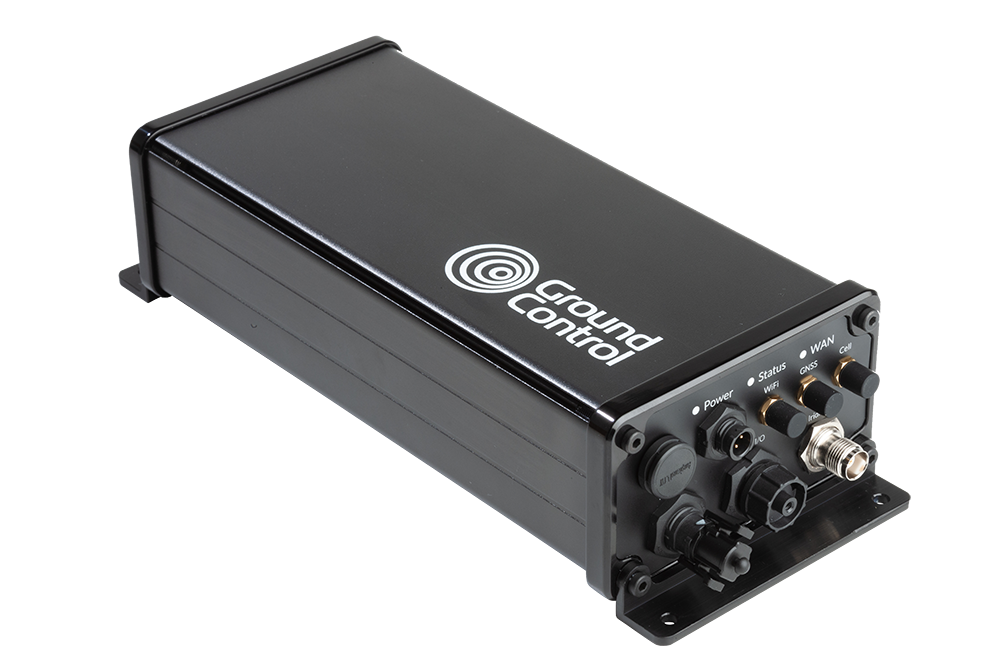
CHALLENGE 5 – Costly data retrieval
The solution – Cobham EXPLORER 540
We know that many renewable energy sites are located in remote areas. Where cellular and fibre connectivity already exists, this will be the most cost-effective option to retrieve sensor data. However, The US Department of Transportation put the average cost of laying new fibre at $27,000 per mile. Further to the costly installation, there’s the ongoing costs to consider with an experienced Field Engineer costing, on average, $68,132 per year (hardware lifetime is typically around 10 years). Utilising remote satellite IoT communication and monitoring solutions mitigates this cost almost entirely as the terminals are remotely managed.
As the world’s first IoT Pro terminal designed to operate on both Viasat Satellite network and cellular 2G/3G/LTE networks, the Cobham Explorer 540 delivers always-available connectivity for critical monitoring and control applications where cellular and fiber are out of reach.
The IoT Pro Service uses Viasat to provide a reliable, global, two-way IP data service. It’s designed to connect monitoring and control applications in remote, unmanned locations, providing visibility and management of those assets. By combining IoT Pro with cellular connectivity in the same terminal, the Explorer 540 gives users the opportunity to choose the best carrier for any location, or to switch seamlessly between cellular and satellite using lowest cost routing logic.
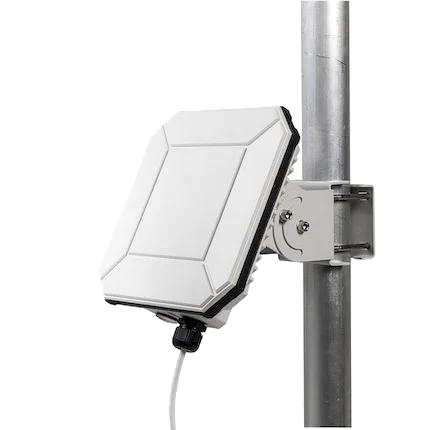
Here, now and the future
Satellite-powered communication and monitoring solutions equip renewable energy providers with multiple ways to overcome the challenges of remote device monitoring, cyber security, power storage, and combining distributed site data.
A suite of satellite-based solutions from Ground Control enables the renewables industry to harness the efficiencies of satellite communication to advance troubleshooting and improve response times, implement predictive maintenance monitoring, automate manual tasks, and optimize energy utilization. With 60% of the world’s energy anticipated to be renewable within the next 12 years, the demand for satellite connectivity is only set to increase.
Ground Control is very well placed to support renewables connectivity, as it’s our mission to make sure data reaches its destination by the most reliable and cost-effective means possible. Whether using cellular or satellite connectivity, Ground Control can recommend the best solutions, airtime and services.
Would you like to know more?
If you’d like some impartial, expert advice on the best solution for your renewables connectivity challenge, please call or email us, or complete the form, and we’ll be happy to help.
We’re not invested in selling you a specific product or connections, just the best solution for your needs. Europe, Oceania, Asia and Africa: +44 (0) 1452 751940; North and South America: 800 773 7168.
“0 to 1 in Sixty Seconds” – Data’s Journey in Shaping Digital Transformation in Utilities
First coined around 2011, digital transformation according to Salesforce is the – “process of using digital technologies to create new — or modify existing — business processes, culture, and customer experiences to meet changing business and market requirements.”
With global spending on digital transformation set to double to $2.8 trillion by 2025, digital evolution and smart technology continue to gain significant traction, especially within Utilities and Renewables. Described as at the center of a massive global shift, the Utilities sector is under considerable pressure. With global energy demand expected to increase by 37% by 2040 and surges in demand for renewable energy resources and sustainability; more Utility companies are turning to digital strategies to become more agile, competitive and resilient.
The challenges and opportunities of digital transformation in Utilities are very well documented. However, having served Utilities for over 20 years, we know the role data has played in shaping this transformation. We’ve created a paper covering how far Utilities companies have come in terms of collecting and analysing data to streamline their operations, and how data is likely to shape digitalisation in the future.
Electrical grids and gas distribution systems are critical infrastructure. Outages and supply interruptions result in huge financial burden and penalties for the supplier, and severe (often prolonged) disruption for consumers. With increasing pressure for renewable energy and from customers seeking to generate their own power, digital transformation could be the catalyst Utilities need to boost consumer interest.
The UK Department of Energy and Climate Change has invested heavily into its smart grid vision and route map – building a smart grid across the UK. Smart meters and sensors along grid lines transmit usage data to providers, enabling them to match supply with demand. Likewise, smart appliances can alter the times of electricity usage, avoiding peak times when pressure on the grid is high, resulting in lower costs and reduced risk of outages.
It is these detailed insights into customer habits that does and will allow Utilities to achieve maximum efficiency and customer satisfaction. And at a time of expensive grid updates, usage trends could prove invaluable to planning and prioritising engineering work, and the most efficient means of distributing utility supply.
Big data, machine-to-machine technology, and dependable connectivity provide the means to understand consumer trends and predict future utility usage. Companies failing to incorporate a robust data strategy into their business plan are likely to find themselves at a major competitive disadvantage, if not already, in the very near future.
The future of connectivity
Although not covered in the paper directly, data retrieval is dependent on connectivity. Inmarsat reports that 58% of electrical Utility providers are unable to implement IoT projects due to availability of reliable connectivity in required areas. Data gaps and delays can lead to inaccurate pictures of infrastructure and supply. With Mobile Network Operators (MNOs) sunsetting their 2G and 3G networks, and PTSN set to be switched off in 2025, it is becoming even more difficult for Utility providers to secure reliable, consistent connectivity throughout their supply chain.
Cellular connectivity continues to advance and a recent survey by Deloitte highlighted that 26% of respondents within Utilities had included 5G within their strategy, with a further 36% stating they planned to. However, while cellular connectivity provides a viable alternative, some sites are so remote that there is no cellular coverage. 8% of the UK’s landmass remains uncovered by mobile networks. What’s more, it will be many years before fibre finds its way to these remote locations – if indeed it ever does – and it’s cost-prohibitive for most companies to fund this privately. Satellite is already used by a third of Utility companies and given the challenges ahead, satellite could prove pivotal to creating a more resilient grid.
Data security
Data security continues to be top of mind for Utility providers, with cybersecurity breaches on the rise. IBM reported a 10% increase, from $3.86 million to $4.24 million per incident, in data breach costs between 2020 and 2021. And the energy industry ranked fifth in data breach costs, surpassed only by Healthcare, Financial, Pharmaceutical and technology verticals.
Arguably, security is also becoming more of a focus for consumers. According to our survey of utility users, hackers bringing down internal systems (as was done in the Colonial pipeline attack), was identified as a potential risk to utility supply by 46.9% of recipients. Given that almost half (46.7%) of March’s survey respondents stated there was a slightly higher cybersecurity risk to Utility supply due to the war in Ukraine, and 20.3%, a substantially increased risk, this is clearly a growing concern.
Is satellite connectivity secure?
Satellite communications are as secure as any IP connection. Cybersecurity can be enhanced by securing data paths with encryption, and where appropriate, creating systems completely redundant from public networks and infrastructure. What’s more, any security protocols already in place will operate over a satellite network.
When working with companies within the Utilities and Renewables industry, one of the first questions we’ll ask is which communications they are most concerned about from a security point of view. And often, we’ll advise TSAT. TSAT provides a private satellite network operating a direct communication channel between a process control center and remote locations, specifically designed to meet the demanding requirements of the SCADA and utility industries. TSAT complies with AES-256 encryption and authentication. Furthermore, it’s completely isolated from the Internet or any other network, riding over a dedicated space segment of one or more satellites for redundant fail-over reliability, in multiple topologies.
Cyber security features include: VLAN (Virtual LAN) support, file system encryption, secure Linux login to avoid unauthorised access, and SW/FW upgrade over-satellite authentication.
For more information regarding security and connectivity more generally, take a look at our recent eBook.
Secure data transmission: the key to unlocking Utilities’ operational success?
The key to operational success in Utilities is to collect accurate, real-time data throughout the supply chain. But data collection is increasingly fraught with risk as cyber-criminals target infrastructure. Our eBook explores three main challenges facing Utility providers: security, ageing infrastructure and climate change, and explores the role of connectivity in overcoming these.
Get in touch
We are proud to have provided one of our utility customers 27 years uninterrupted service, making satellite that company’s most reliable system.
To learn more about our solutions and how these can help you consistently provide better for your customers, contact hello@groundcontrol.com.
Empowering Utility Providers to Better Align With Consumer Priorities
The Utilities sector is in the midst of rapid change. Humans are consuming more energy than ever before, so much so, that the International Energy Agency expects global energy demand to increase by 37% by 2040. Utilities companies are increasing production and distribution capacity to fulfil consumer supply, while navigating a surge in demand for advanced technology, electric mobility and smart cities.
Concurrently, Utility providers are facing a number of challenges, including: ageing infrastructure, climate change and cybersecurity. All of which threaten supply and providers’ ability to cope with increased demand.
To better enable energy providers to respond to this changing, increasing demand, Ground Control surveyed 1,250 Utilities customers based in the UK and the US. We asked consumers direct questions about what they view as some of the largest risks to their energy supply and what would prompt them to change suppliers. Moreover, respondents were surveyed in groups, with some participating in early February, and others in early March. The impact of Russia’s invasion of Ukraine upon consumer outlook is significant, and something Utilities companies really should be aware of. We hope this insight will empower Utility providers to make decisions better aligned with consumer priorities and concerns.
The consumer view of the current Utilities landscape
In comparison to 10 years ago, do consumers feel there has been more service interruptions today?
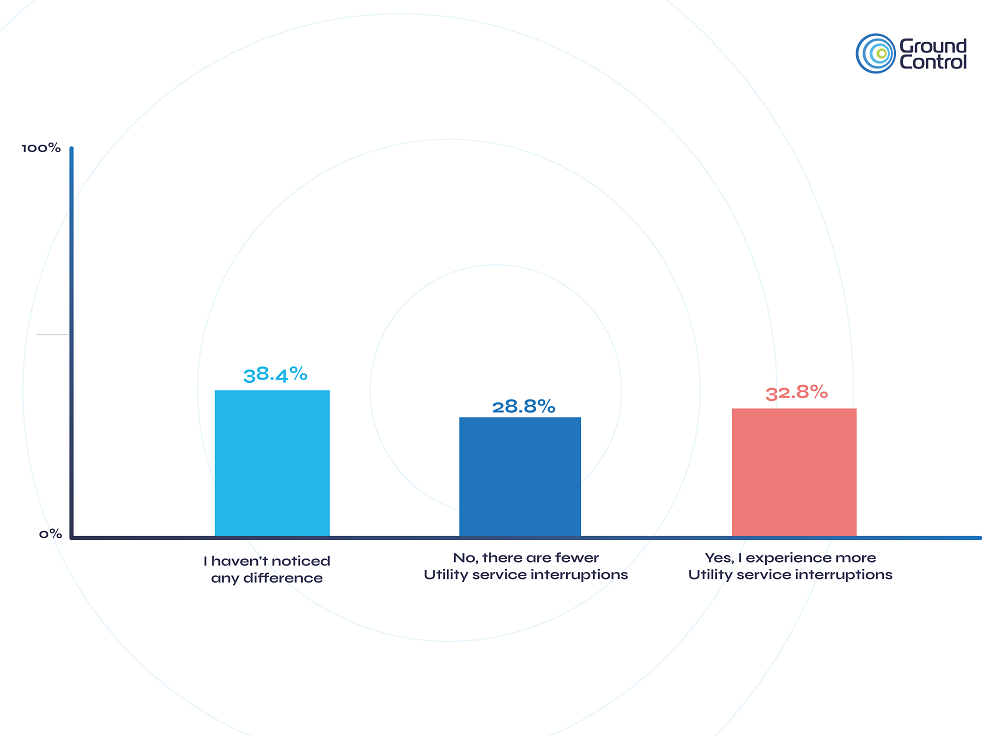
Overall, survey results show that around a third of recipients (32.8%), feel they experience more service interruptions (outages) now, than they did 10 years ago. 28.8% reported fewer Utility service interruptions, and the majority (38.4%), responded to say they hadn’t noticed a difference. Interestingly, UK survey participants were more likely than their US counterparts to respond saying they felt the number of Utility service interruptions had increased, at 35.5% vs 30.2%.
When you consider the number of US power outages in comparison to those in Western Europe, the above is quite surprising. The US government has reported that the average American can expect to lose power for an average of five and a half hours in 2022 and in Western Europe this figure is just once per year, for a lower average of 58 minutes.
There was very little difference when comparing groups who were surveyed in February, to those surveyed in March. With just a slight increase from 32.8% to 34.3% of respondents reporting they felt there has been an increase in the number of Utility interruptions.
What do consumers view as a threat to their Utilities supply?
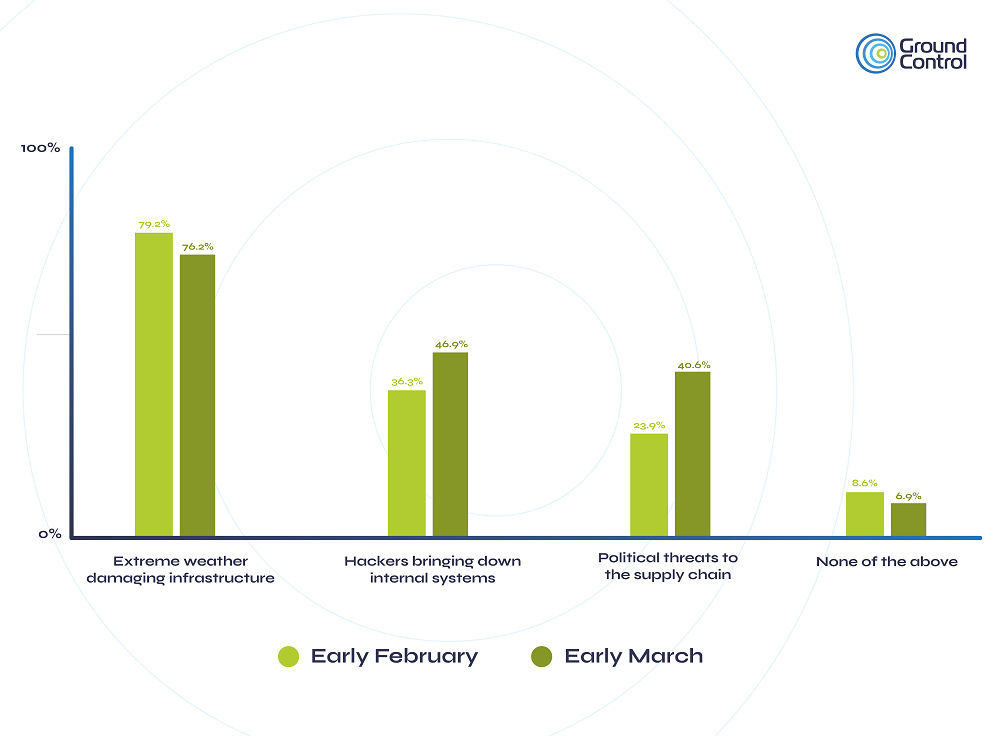
As illustrated above, the majority of consumers (79.2%) surveyed in early February indicated that extreme weather damaging infrastructure was a threat to supply. And a very similar figure of 76.16%, was reported by those surveyed in March. Comparatively, hackers bringing down internal systems (as was done in the Colonial pipeline attack), was selected by 36.3% of those in February, and 46.9% in March. Given that almost half (46.7%) of March’s survey respondents stated they believed there was a slightly higher cybersecurity risk to Utility supply due to the war in Ukraine, and 20.3%, a substantially increased risk, this 10% increase is significant.
Similarly, the number of respondents indicating that they viewed political threats as a risk to the Utility supply chain almost doubled when comparing the February and March survey groups (23.9% vs 40.6%). Again, this is particularly noteworthy as 44.1% of respondents surveyed in March, stated they felt the political risk to Utility supply had slightly increased as a result of the war in Ukraine, and nearly one third (31.3%), that this risk had increased substantially.
Do consumers feel Utility providers are well prepared to manage current risks?
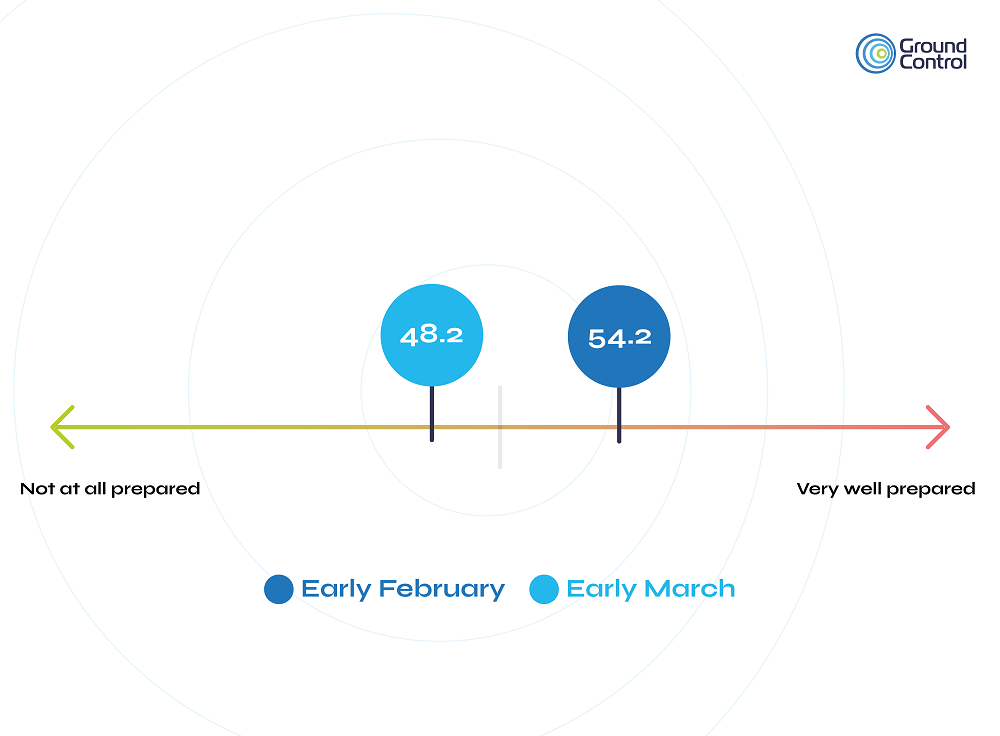
Consumers were asked to indicate on a scale from 0 – 100, how prepared they felt their Utility suppliers were able to manage previously mentioned risks. As can be seen in the above graph, those surveyed in early February responded with an average of 54.21. In contrast, consumers who were surveyed in early March, reported an average of 48.21.
This reduction in confidence is arguably due to consumers becoming more aware of the risks to supply, as a result of the war. Which is certainly understandable, given Europe’s dependence on Russian supplies of natural gas and ongoing sanctions of Russian oil.
What would prompt customers to change Utility suppliers?
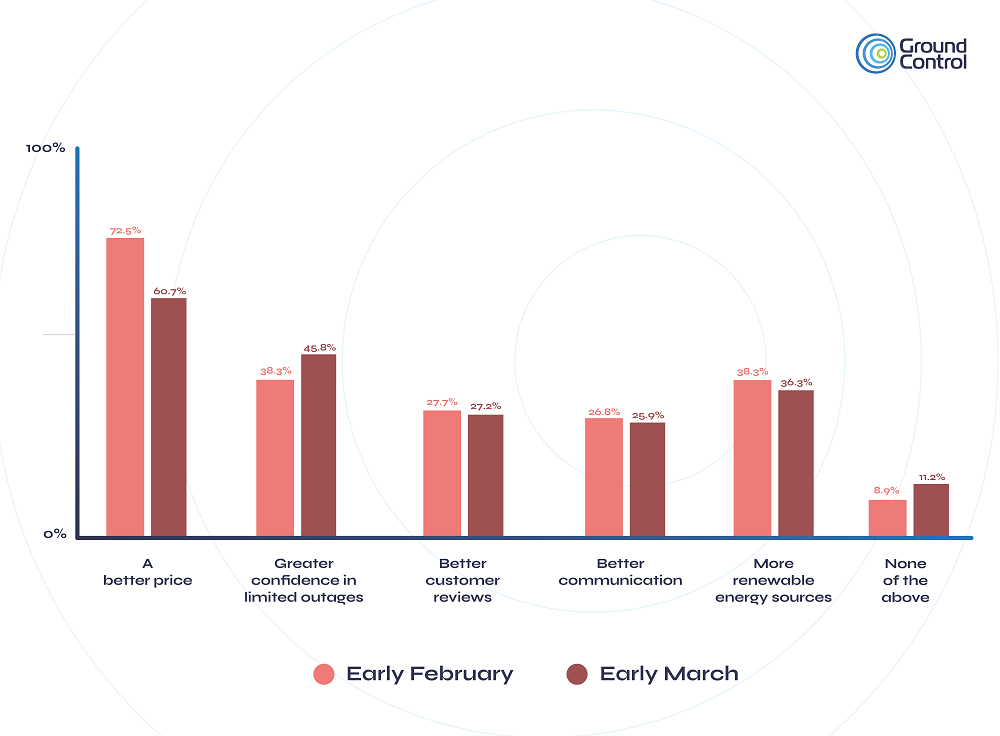
As you might expect, nearly three quarters (72.5%) of survey recipients stated a better price would prompt them to change Utility supplier. However, in March’s survey group responses, this decreased to 60.7%, and greater confidence to limit outages rose from 38.3% to 45.8% comparatively. Which suggests that following the events of the war, customers have become marginally less price sensitive and place a higher priority on steady Utility supply.
Consumers reporting more renewable energy sources, a potential reason to change Utility suppliers, stayed relatively stable across both survey groups at 38.3% and 36.3%. Likewise, 27.8% and 27.2% of each group respectively, stated better customer reviews may prompt them to change energy providers.
Finally, just over a quarter of recipients for both the February (26.7%) and March (25.9%) groups reported better communication as a potential prompt to switch providers. The fact that this figure has remained steady implies that simply improving communications with customers may not be enough to restore the pre-war confidence consumers held with regards to Utility companies ability to manage risks to supply.
In summary, the survey highlights that consumers are relatively clued up on the challenges facing the Utilities industry and that the war has impacted concerns regarding Utility supply.
So, what can Utility providers do?
All Utility suppliers and energy network operators must strive to develop intelligent solutions and energy efficient operations, while ensuring secure infrastructure for the environment today and in the future. Ultimately, the key to success in Utilities is to collect accurate, real-time data from infrastructure and assets, at every point in the supply chain – from networks, plants, to treatment environments and customers. Many companies are already ramping up their development of IoT solutions in order to help them cope with the strain on energy demand. However there are connectivity linkages to each of the previously mentioned challenges of: ageing infrastructure, cybersecurity and climate change.
Why is connectivity so important in the Utilities sector?
Energy providers need to be able to determine the most efficient way to distribute Utility supply while also minimising waste, and distribution is what makes SCADA special. The orchestration of power, water and gas loads, all being reliably routed, monitored and controlled to deliver these resources. This is the centre of the critical infrastructure for every Utility company; and for this to take place, frequent, accurate, reliable data from all sites is required.
TSAT – Ubiquitous connectivity for energy providers
The TSAT satellite system is specifically designed to meet the demanding requirements of the SCADA and Utility industries. TSAT provides a private satellite network operating a direct communication channel between a process control centre and remote locations.
TSAT’s unique private satellite network solution features an industry leading mini VSAT hub that is specifically engineered to support mission critical applications (SCADA / Telemetry) in the energy and utility markets. The ruggedized and utility toughened-hardware is designed to provide years of reliable operation in remote locations and harsh environments.
Get in touch
Our expert team has delivered reliable, secure data transmission solutions to the Utilities sector for 20 years.
We’d be happy to talk to you about your project and offer impartial advice on the best antenna and satellite service for your particular requirements. Call or email us, or complete the form.