Topic: Utilities & Renewables
Reliable Grid Automation Starts With Reliable Links
In November 2021, Storm Arwen swept across the United Kingdom, causing three fatalities, felling millions of trees, and leaving almost one million homes without power. More than 100,000 homes were without electricity for several days.
In February 2023, Cyclone Gabrielle devastated New Zealand’s North Island, driving severe flooding and landslides, leaving about 225,000 homes without power, and costing 11 lives. It remains New Zealand’s most costly non‑earthquake disaster, with an estimated economic impact of ~NZ$14.5 billion (≈US$8.2 billion).
In February 2024, a windstorm in Victoria, Australia, significantly damaged transmission and distribution networks, leading to more than one million customers losing power. After three days, tens of thousands were still without supply.
As well as the devastating impact on industrial, commercial, and residential customers, sustained outages carry major penalty costs for operators. For example, on a single rural circuit, a 12 hour outage affecting 20,000 customers could trigger roughly US$2.0 million in automatic customer credits before any annual reliability penalties or reputational redress – and that’s just one feeder on one night.
The Rural Failure Loop – What Keeps Going Wrong
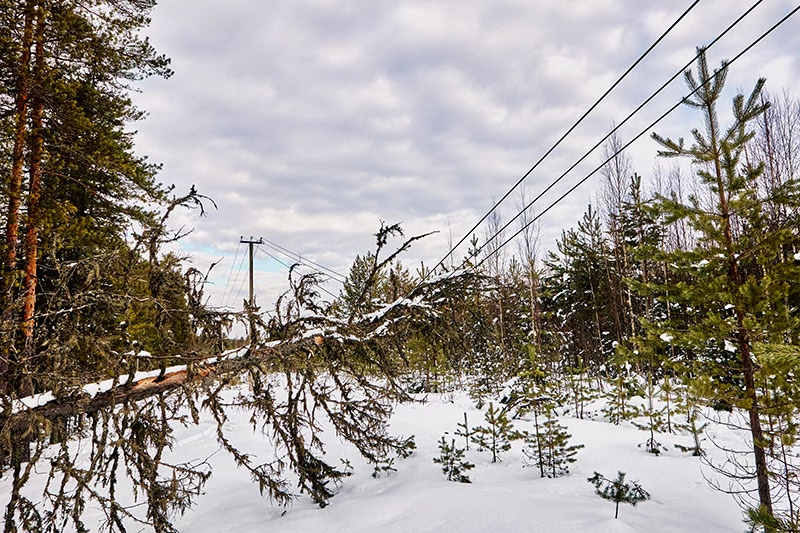
In each of the events above, power outages and physical damage in rural areas knocked out portions of the fixed and mobile telecom networks. Cell sites ran out of backup power and fiber backhaul was cut, leading to reduced or, in some districts, no telemetry or remote control from field devices. That loss of communications degraded situational awareness and coordination, lengthening restoration.
Extreme weather is increasing in frequency and severity, so we can expect more of the same. A wildfire, wind, ice, or landslip causes a fault to hit the feeder. Telecom sites at the edge flip to battery, then go dark. As terrestrial backhaul – poles, towers, ducts, and fiber – shares the same geography and hazards, the event that takes down the feeder often takes down the comms, too.
Operators then fly blind: no live status from switches or IEDs; no remote commands; FLISR (Fault Location, Isolation, and Service Restoration) slows or stalls. This in turn slows down restoration, with more truck rolls, access delays, longer isolation and switching sequences. The impact on the customer grows; minutes become hours, and penalty clocks keep ticking.
Rural environments are particularly problematic because of the sparse infrastructure; often a single tower every many kilometers, and one fiber route serving an entire valley. When weather hits, you don’t just lose a path, you lose the path. Getting back online is slower too, as closed roads and washed out bridges delay generator drops, refuelling runs and fiber repairs, stretching restoration timelines.
True Path Diversity Needs Satellite Backhaul
The main defenses against sustained outages – reclosers, switches, sectionalizers, and the RTUs and IEDs that control them – often include edge logic, but operators still need status reports and command authority. For centralized, SCADA/DMS‑directed switching, the control room needs continuous situational awareness and safe, auditable operations. Both modes depend on connectivity, which is not straightforward in rural territory.
Private VHF/UHF, Wi‑SUN FAN (an IP‑based 802.15.4g/e mesh), microwave, and private LTE all have their place, but they frequently inherit the same poles, towers, ducts, and power feeds that storms take out. Satellite connectivity provides true path diversity and coverage where nothing else exists, without requiring you to build and maintain more terrestrial infrastructure.
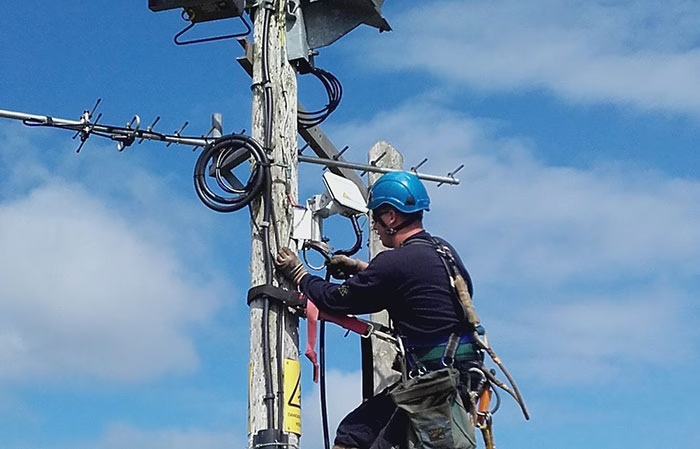
This isn’t new. In 2015, Ergon Energy used BGAN M2M (now called Viasat IoT Pro) to connect hundreds of reclosers across Queensland, Australia. This is a proprietary satellite IoT service that delivers an IP‑grade link capable of carrying DNP3 / IEC‑104 cleanly, including command and acknowledgement workflows.
However, using satellite IoT for DA/SCADA remained niche because the trade-offs used to be unappealing. The satellites through which services like Viasat IoT Pro are delivered are in geostationary orbit (GEO), some 35,786 km above Earth.
This has two implications; one is that the round trip time for data (called latency) is around ~0.6 – 1.5 seconds; acceptable for event‑driven SCADA and supervised switching, but potentially an issue if you have a system architecture that expects real time data transmission.
The second is that antennas paired with GEO networks need to have line of sight to the satellite, which requires careful positioning, and it may not be possible to get a reliable link in forested or mountainous areas. There’s also a pervasive myth that satellite means dishes, trucks and big OPEX, meaning that many teams defaulted to building more terrestrial coverage or living with rural blind spots.
Why This Is a “Now” Issue
Things have changed. Low Earth Orbit (LEO) satellite services like Iridium Certus 100 have much lower (sub-second) latency due to their proximity to Earth; their interlinked satellite network means that antennas need only a clear view of the sky, and don’t need to be pointed. Further, antennas can be smaller, and draw less power, as the data doesn’t need to travel as far – you can pole-mount a link where the device actually sits.
Across both LEO and GEO satellite networks, modern message‑based services (e.g., IMT – Iridium Messaging Transport; Viasat IoT Nano) move away from a 24/7 pipe to heartbeat‑plus‑burst with delivery acknowledgements. That’s far more economical (and power efficient) and maps well to grid operations: quiet most days, chatty during incidents.
Ruggedized terminals like RockREMOTE Rugged support both IP and message modes, work with dual‑WAN routers for automatic failover, and provide store‑and‑forward so data and commands are queued and delivered in order with proof of delivery.
Highly capable terminals, again like RockREMOTE Rugged, can also act as field gateways, aggregating low power sensors and fault indicators over LoRaWAN (or Wi‑SUN) and backhauling their data over satellite. With hosted applications at the edge, operators can separate event alarms from periodic telemetry and transmit only when needed.
The result is a pragmatic architecture: put direct satellite at a few control‑deciding points – feeder head, key tie switches, and outgoing feeders at the substation – and aggregate the many sensors / indicators to a satellite-backhauled gateway to manage cost. Combine that with event‑based transmissions, low idle costs, and near‑real time bursts when storms hit, and you have an economical, reliable coverage layer that’s independent of terrestrial networks.
Smart automation only works if it can talk. Satellite at a handful of control‑deciding points gives that automation a path that doesn’t go dark when poles, towers, or ducts do, so FLISR and operator decisions still happen in minutes, not hours.
Securing DA/SCADA Data
Security isn’t just about keeping links up; it’s about keeping DA/SCADA traffic private and accountable. Service providers that specialize in critical national infrastructure, like Ground Control, typically break out satellite traffic at a controlled meet-me point and carry it to the utility OT network over private VPN/MPLS, helping avoid best effort internet paths and keeping routing and auditing clear. At the edge, devices use certificate-based encryption with store-and-forward and acknowledgements, so data and commands are queued and delivered in order even through brief fades. Paired with dual-WAN failover, this approach reduces exposure during storms while preserving a predictable operator experience.
In short, the grid won’t get kinder and the penalties won’t get lighter. What you can change is whether your automation can still talk when the weather arrives. By giving a small number of control-deciding points a path that doesn’t share poles, towers, or ducts, and aggregating the many through a satellite-backhauled gateway, you turn hours of uncertainty into minutes of switching. Start where it matters most: your feeder heads, key ties, and outgoing feeders; measure the restoration minutes you take back, then scale.
Make Comms One Less Thing To Worry About
Ground Control has over 20 years of experience in delivering satellite connectivity for Critical National Infrastructure. We know that every network is different, and we can provide expert advice on getting the right mix of direct satcom and gateways.
Complete the form or email hello@groundcontrol.com, and we’ll be in touch within one working day.
How Standards-Based Satellite IoT Will Transform Renewable Energy Monitoring
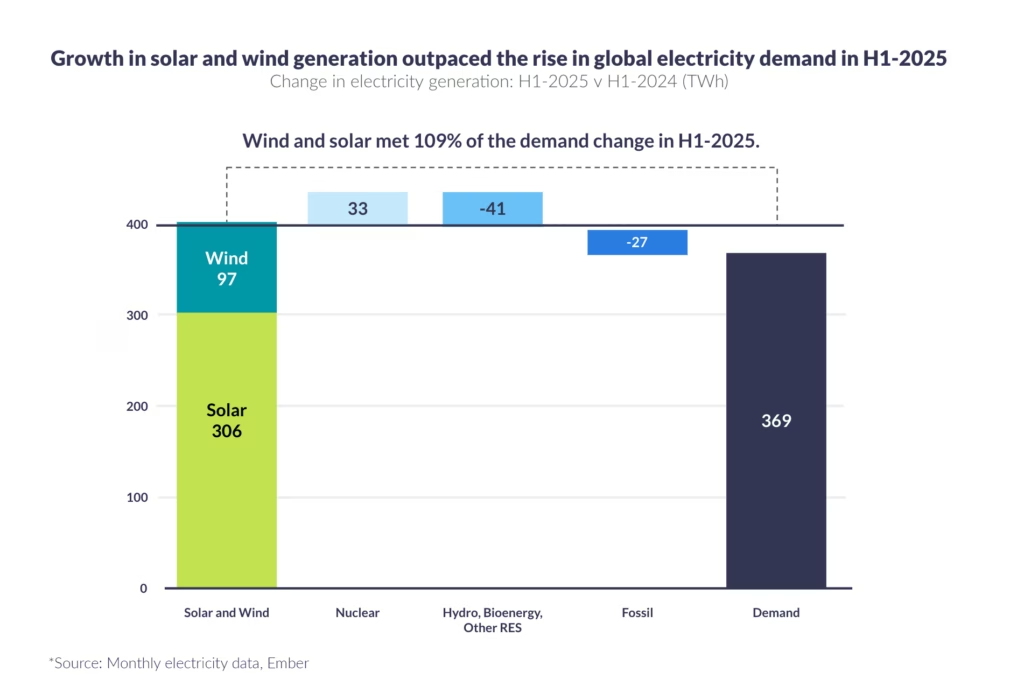
Wind and solar farms are fast becoming the backbone of our green energy future. The first half of 2025 marked a defining moment for global power generation. According to Ember’s Global Electricity Mid-Year Insights Report, global electricity demand rose by around 2.6%, yet renewables grew even faster. Solar output jumped by 31% and wind by 7.7%, helping renewables overtake coal for the first time in history, supplying 34.3% of global electricity compared with coal’s 33.1%.
That growth isn’t slowing either. Ember’s latest report forecasts that global renewable capacity additions will reach almost 793 GW in 2025 (an 11% increase on 2024) driven by 21% growth in wind and 9% in solar. At this pace, the world is within reach of tripling global renewable capacity by 2030, a central COP28 goal.
Yet as the scale of renewable infrastructure expands, new challenges arise: managing millions of connected devices, capturing continuous data, and maintaining visibility across installations that often sit far beyond the reach of terrestrial networks.
It’s not just about generating clean power anymore. It’s about keeping every asset connected, visible, and performing at its best.
The Connectivity Challenge in Renewable Energy
On remote coastlines, in vast deserts, or far offshore, wind and solar farms are typically built where natural resources are strongest. These prime energy locations often sit well beyond the reach of cellular and fiber networks, creating a growing connectivity gap that directly affects operational efficiency.
Without reliable links between assets and control centers, operators face a series of compounding challenges. Performance and fault visibility is limited, fault alerts can take minutes or even hours to arrive, and manual inspections are often required where remote diagnostics should suffice. The result is higher maintenance costs, slower response times, and an incomplete picture of system performance.
For years, proprietary satellite IoT networks, such as Iridium and Viasat, have bridged this gap. These systems provide the ultra reliable, low latency connectivity essential for mission critical operations like SCADA backhaul, emergency shutdown commands, and safety alerts. Their reliability is proven, but it comes at a price. Proprietary networks rely on specialized terminals and dedicated airtime contracts, delivering access to radio spectrum that’s dedicated to critical connections; this can, however, make these cost prohibitive for large scale sensor deployments across thousands of wind turbines or solar panels.
As renewable capacity surges and asset counts multiply, this challenge is only intensifying. Between 2023 and 2025, renewable additions have grown by an average of 29% annually. To connect every turbine, inverter, and panel without escalating operational costs, operators now need a new model for connectivity, one that blends reliability with scalability, and cost efficiency with coverage.
The Next Wave: Standards-Based NTN NB-IoT
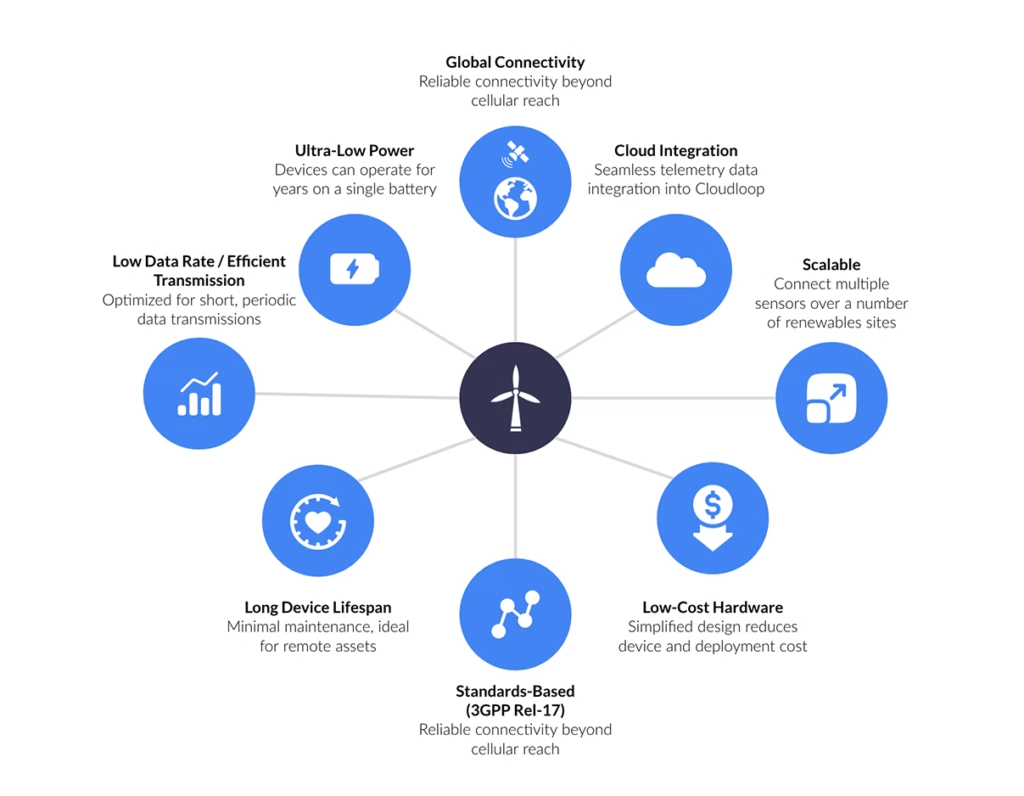
The introduction of standards-based Non-Terrestrial Networks (NTN) by 3GPP has the potential to revolutionize satellite connectivity for renewable energy. By extending Narrowband IoT (NB-IoT), a low power, low cost communication standard already widely deployed in terrestrial networks, into satellite networks, operators can achieve consistent, affordable connectivity across even the most remote wind, solar, or storage sites.
For renewable operators, this evolution opens a new era: from connecting a few critical assets to connecting everything.
Benefits of NTN NB-IoT for Renewable Energy Operators
- No proprietary modem required
Sensors use standardized NB-IoT components instead of bespoke satellite hardware, reducing integration costs. - Lower device and service costs
Shared standards and simpler connectivity models drive down both equipment and airtime expenses. - Future proof infrastructure
Global NB-IoT standards ensure long term interoperability and technology alignment across networks.
- Cost effective scalability
Thousands of low power sensors can be deployed across expansive solar or wind farms without heavy infrastructure investment. - Flexible connectivity options
As multiple satellite operators adopt the standard, service pricing and network choice become more competitive.
Applications for Standards-Based NTN NB-IoT in the Renewable Sector
For renewables, NTN NB-IoT fits best where thousands of low power sensors send small, infrequent updates from remote wind, solar, or storage sites; when reliable reach matters more than real time control.
Wind Energy: Smarter, Predictive Operations
Blade and drivetrain monitoring: Detect anomalies in vibration, strain, or temperature early to enable predictive maintenance before faults escalate.
Structural health: Monitor the integrity of towers and foundations to prevent costly structural damage.
Environmental insight: Collect temperature, humidity, and wind condition data to support condition-based maintenance in remote or offshore installations.
Solar Energy: Panel-Level Performance at Scale
Efficiency tracking: Sensors measure real time output, temperature, and irradiance across thousands of panels.
Environmental optimization: Track dust, shading, and humidity to plan cleaning schedules and maximize efficiency.
Predictive maintenance: Use AI-driven analytics on live panel data to anticipate issues before they affect yield.
Substations and Energy Storage: Always On Visibility
Operational intelligence: Monitoring of non-critical systems such as HVAC, enclosures, and backup units.
Battery and inverter performance: Sensors measure temperature, usage, and degradation to inform maintenance planning.
Local environment tracking: Monitor heat, moisture, and vibration to prevent minor issues from becoming outages.
Where it fits:
NTN NB-IoT is ideal for high volume, low data, latency tolerant applications. It gives operators affordable, long life visibility at scale across their renewable infrastructure.
Proprietary Satellite IoT: Real-Time Insight Where It Matters
While NTN NB-IoT delivers scalable connectivity for thousands of sensors, proprietary satellite IoT systems provide the other half of the equation: real time, high reliability communication for mission critical operations. These networks offer ‘always on’ control, richer data throughput, and the assured latency required for safety and command functions.
Wind Energy: Instant Awareness in Dynamic Environments
Turbine control and fault response: Enable immediate shutdown or restart commands when thresholds are exceeded, ensuring equipment protection and safety in offshore or isolated farms.
Crew safety: Maintain two way communication and emergency alerts for personnel working in remote or hazardous environments.
Data rich diagnostics: Support higher bandwidth uploads of vibration or acoustic data for detailed drivetrain and gearbox analysis.
Solar and Storage: Real Time Control and Reliability
Critical fault alerts: Provide sub-minute notifications for inverter trips, arc faults, or temperature spikes, with confirmed two way acknowledgments.
Grid dispatch and load balancing: Coordinate distributed storage and solar assets for rapid response to grid frequency or demand changes.
Remote updates and control: Push firmware and configuration changes securely to field devices.
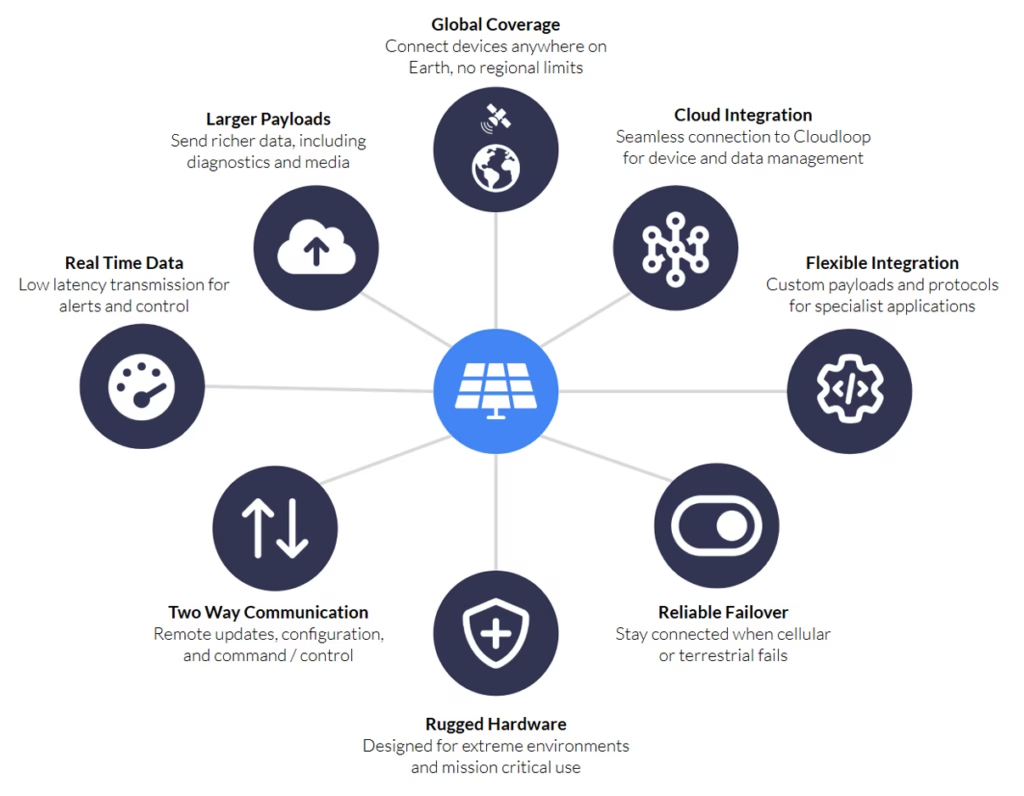
Substations and Microgrids: Control-Plane Resilience
SCADA continuity: Maintain command and telemetry when terrestrial networks fail to ensure operational visibility.
Command assurance: Provide guaranteed message delivery with acknowledgments for critical operational controls.
Local environment tracking: Monitor heat, moisture, and vibration to prevent minor issues from becoming outages.
Where it fits:
Proprietary satellite IoT excels in real time, safety critical, or data rich applications where latency, reliability, and assured control are essential.
Working Together: The Hybrid Model for Connected Renewables
Across the renewable ecosystem, both satellite technologies have distinct but complementary roles. Together, they can create a resilient hybrid connectivity framework: NTN NB-IoT for scalable insight, and proprietary satellite for mission critical control. This combination ensures every renewable asset, from panel to turbine, stays connected and performs at its best.
| Standards-Based NTN NB-IoT* | Proprietary Satellite IoT* | Hybrid Model (NTN NB-IoT + Proprietary Satellite) | |
|---|---|---|---|
| Max Practical Payload | Up to 256 bytes | Up to 100,000 bytes (100 KB) | Mix of both profiles depending on use case |
| Typical Latency | 10–60 seconds (can extend to 2–5 minutes depending on satellite pass) | 10 seconds under optimal conditions | Flexible. Real time via proprietary satellite IoT, scheduled via NTN NB-IoT |
| Best For | Low data, latency tolerant sensing across large asset fleets | Real time, safety critical, or data rich communication | Combining scale with responsiveness |
| Example Applications | Blade or panel monitoring, inverter and battery health, environmental sensing | SCADA backhaul, curtailment commands, crew safety, firmware updates, detailed diagnostics | Wide area condition monitoring plus selective real time control |
| Key Benefits | Ultra low power, long battery life, affordable scaling | Near real time, two way connectivity, proven reliability, supports richer datasets | Delivers cost efficiency and resilience. Low power coverage for mass assets and real time connectivity for critical operations |
*Example service information based on Viasat NB-NTN (Standards-based NTN NB-IoT) and Iridium IMT (Proprietary Satellite IoT)
Hybrid Connectivity Roadmap for Renewables Operators
As renewable energy networks expand, the goal isn’t to replace what works, it’s to build on proven reliability while scaling smarter, standards-based connectivity. Proprietary satellite IoT remains invaluable for mission critical operations and guaranteed uptime, but the arrival of standards-based NTN NB-IoT opens the door to a new class of affordable, low power devices that can extend data collection to every corner of a wind or solar site.
The most effective strategy is hybrid: utilize the robustness of proprietary satellite for control, command, and safety, while using NTN NB-IoT to scale data visibility across assets, sensors, and environmental systems. This staged approach allows operators to evolve without risk, modernizing their infrastructure, reducing costs, and enabling massive IoT integration at their own pace.
Stage 1: Proven Reliability (Today)
Focus on mission critical control and safety using proprietary satellite IoT for SCADA backhaul and alarms.
Stage 2: Scaling Visibility (2026–2027)
Introduce NTN NB-IoT sensors for turbine gearboxes, inverter performance, and solar panel strings. Hybrid solutions use satellite where cellular fails.
Stage 3: Massive IoT Integration (2027–2028)
Deploy thousands of NB-IoT sensors across all assets. Integrate data streams into unified cloud platforms such as Cloudloop for full fleet visibility.
Stage 4: Intelligent Operations (2028 Onwards)
Apply edge analytics and AI for predictive maintenance, automated scheduling, and output optimization. Proprietary satellite remains for safety; NB-IoT drives efficiency at scale.
Building Smarter, Greener, More Connected Energy Systems
As renewable energy capacity continues to expand, the focus is shifting from generation to ensuring every asset, from turbines and inverters to panels and storage systems, remains visible, connected, and performing efficiently. Connectivity is now the foundation that enables data driven operations, predictive maintenance, and long term resilience.
Standards-based satellite IoT is making that connected vision achievable. By combining the reliability of proprietary satellite networks for mission critical control with the scalability of NTN NB-IoT for widespread monitoring, operators can design hybrid systems that balance performance, coverage, and cost. This approach turns isolated assets into part of a cohesive, intelligent network, one capable of supporting the next phase of renewable energy growth.
The transition to hybrid connectivity isn’t just about technology; it’s about creating the operational flexibility to expand confidently. By integrating both proven and emerging IoT standards, renewable energy operators can maintain uptime where it matters most, scale visibility across every site, and continue to build an energy generation system that’s smarter, cleaner, and ready for the future.
Need help building hybrid connectivity?
With over two decades of experience connecting critical infrastructure in some of the world’s most remote environments, Ground Control helps organizations design reliable, scalable satellite and IoT networks.
From mission critical systems to large scale sensor deployments, our team can guide you in combining proprietary and standards-based solutions to keep every renewable asset online and visible.
How Satellite IoT Keeps Pipeline Infrastructure Safe in Remote Environments
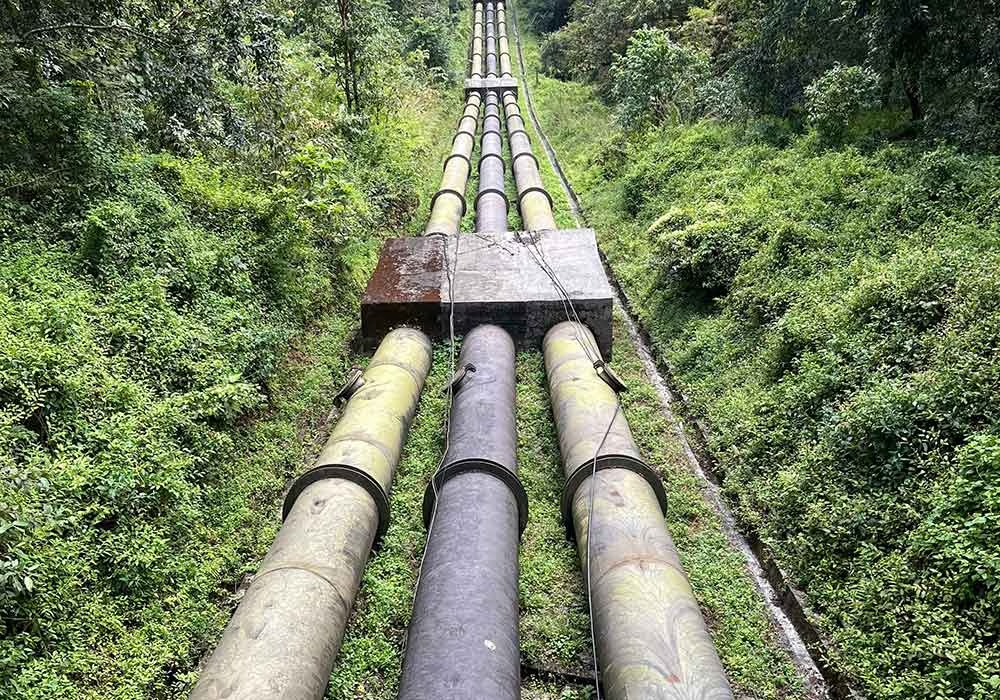
Pipelines stretch thousands of miles, transporting oil, gas, water, and chemicals across diverse terrains, including mountainous areas, deserts, and offshore waters. They are essential infrastructure, but monitoring such vast and inaccessible pipeline networks presents a unique challenge and when leaks or failures go undetected, the consequences can be severe to both the pipeline operators and the environment.
Satellite-enabled IoT is an increasingly viable solution. By linking sensors directly to a global network of satellites, operators can achieve 24/7 data monitoring with zero dependance on terrestrial networks. With satellite IoT, pipeline operators can continuously monitor pipeline health, detect anomalies in real time, predict maintenance needs, and even act remotely to prevent minor issues from becoming costly disasters. Pipelines will always cross remote places, but with satellite IoT, those places no longer have to be blind spots.
Here’s why pipeline health monitoring is critical, and how selecting the right satellite IoT network and device – from low power sensors to real time control systems – can help operators protect remote infrastructure and prevent costly failures.
Why Remote Pipelines Need Satellite IoT
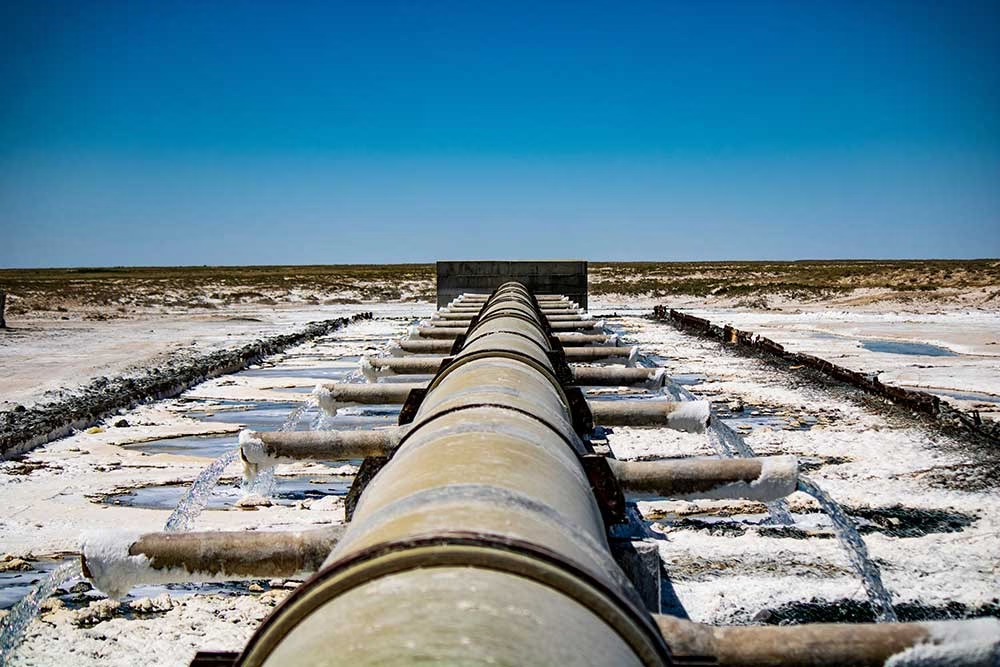
Traditional pipeline monitoring methods rely heavily on cellular networks or fixed wired systems. Both approaches work well where infrastructure is dense and coverage is consistent, but pipelines rarely follow such convenient paths. They cross deserts, mountain ranges, wetlands, and offshore environments where terrestrial coverage is patchy at best and, in many cases, does not exist at all. Wired systems, meanwhile, are expensive to install and maintain over long distances, particularly where terrain is unstable or hostile.
Coverage gaps create serious risks, as even a small leak in an isolated section of pipeline can go undetected for days, releasing oil, gas, or chemicals into the surrounding environment. In many cases, this not only carries the cost of remediation but also heavy regulatory penalties and reputational damage. Even when problems are eventually identified, the time lost between the first failure and the response often magnifies the scale of the incident.
Unplanned downtime is another consequence of limited pipeline monitoring. When equipment fails without warning, operators are forced to take entire sections of pipeline offline while they diagnose and repair the issue. This is disruptive and costly, especially in industries where margins depend on continuous flow. Coverage gaps also limit the effectiveness of predictive maintenance, forcing operators to rely on scheduled inspections or reactive repairs that drive up costs and increase vulnerability.
Further, there are safety implications. When a fault occurs in a remote environment, personnel are dispatched into difficult and sometimes hazardous conditions with limited information about what awaits them. This not only puts people at risk, but it also slows the time to resolution. Ultimately, terrestrial connectivity is not sufficient to monitor, manage, and ensure pipeline and personnel health in the mostremote areas.
The Cost of Connectivity Gaps in Pipeline Monitoring
In March 2006, more than 200,000 gallons of crude oil spilled onto the Alaskan tundra from BP’s Prudhoe Bay pipeline; the largest oil spill ever recorded on the North Slope at the time. Investigators traced the leak to a ¼-inch hole caused by internal corrosion in a section of pipeline that had not been inspected for years. With limited monitoring in this remote environment, the corrosion went undetected until it caused a catastrophic failure. The consequences were immediate: U.S. domestic oil production dropped by nearly eight percent, cleanup costs ran into the hundreds of millions, and regulators imposed heavy fines.
A similar pattern has played out elsewhere. In 2017, a crude oil pipeline in India ruptured along a hidden seam defect despite having undergone periodic inline inspections. Without continuous monitoring, the defect went unnoticed between inspection intervals, ultimately leading to a major spill and disruption to local communities and infrastructure.
These cases illustrate how gaps in visibility – whether caused by lack of network coverage or the limits of periodic inspections – can turn slow-building problems into headline-grabbing disasters. In remote areas where traditional cellular or wired networks simply don’t reach, operators are left to rely on sporadic checks, leaving too much room for failure.
How Satellite IoT Bridges The Connectivity Gap
Satellite IoT bridges the connectivity gap in pipeline monitoring, eliminates blind spots, and addresses pipeline vulnerabilities. Here’s how:
1. Detecting Anomalies Before They Escalate
The earliest signs of issues within a pipeline can be subtle – a slight pressure drop, a shift in temperature, or a vibration outside normal range can all indicate the beginning of a leak, corrosion, or interference. Continuous sensing makes these small deviations visible, but visibility is only useful if the data can reach operators without delay.
In regions with reliable terrestrial networks, that flow of data is relatively straightforward. In remote terrain, a sensor may detect a problem, but without connectivity, the information stays in the field. By the time operators and inspectors reach the pipeline, days may have passed and a minor leak may have spread into soil, waterways, or communities. The result is a much larger clean-up, higher costs, and often regulatory scrutiny. This is where satellite IoT changes the equation. Data from remote sensors is transmitted securely from any location on Earth with a clear view of the sky. Operators have complete visibility in near real time and can act on the first sign of irregularity.
2. Predictive Maintenance with Data Intelligence
Pipelines and their supporting equipment degrade gradually over time; bearings loosen, pumps vibrate, and valves begin to stick. If these changes go undetected, the first sign of trouble may be a breakdown, forcing operators to react after the fact by dispatching crews to remote locations at short notice and losing valuable supply time. Research shows that failures in critical components like bearings and pumps are among the leading causes of unplanned downtime in industrial systems, particularly when early warning data are scarce.
In areas without reliable connectivity, operators often rely on fixed inspection schedules, replacing components whether they need it or not, or worse, leaving them in place too long, which raises the risk of failure. This approach means maintenance decisions are based on limited information rather than real time insights into the pipeline’s actual condition, a problem well documented in studies of condition-based maintenance and industrial IoT. As a result, organizations remain stuck in a reactive cycle, facing higher costs and greater operational vulnerability.
Satellite-enabled predictive maintenance works differently. By streaming live sensor data into analytical systems, operators can recognize patterns that signal when a component is beginning to deteriorate. A pump running hotter than usual, or a valve that opens more slowly than before, triggers an automated early warning. Pipeline maintenance teams can then be dispatched to service the specific section of pipeline that needs maintenance, at the right time, rather than covering hundreds of miles in search of faults that may or may not exist.
Satellite IoT makes this approach viable even in the most remote environments. Reliable, global satellite coverage ensures that predictive platforms always receive the data they require, so operators are no longer forced to choose between over-servicing their pipelines and risking unexpected failure. They can maintain only what requires intervention, extend the lifespan of their assets, and minimise downtime. This leads to safer operations, more cost-effective maintenance, and fewer unexpected failures.
3. Monitoring and Control from Afar
Detecting issues in pipeline health is only half the battle. As most pipelines stretch across some of the most inaccessible terrain on earth and beyond cellular reach, operators are forced to rely on field teams reaching the site before remedial action can take place, and that delay can be costly. A leak may continue unchecked for hours or days and valuable time can be lost while crews travel long distances with limited information about any issues.
Satellite IoT enables remote actuation, allowing pipeline operators to send commands instantly to equipment in the field, closing valves, adjusting pumps, or isolating sections of pipe as soon as a problem is detected. A pressure sensor signalling a sudden drop can trigger an immediate response from the control room, instead of waiting for a maintenance team to drive or fly to a remote location. The technology not only directly reduces the scale of spills but also shortens downtime and improves safety for field personnel. Pipeline engineers are no longer dispatched into hazardous conditions to perform urgent manual interventions and instead, they can attend the site to carry out targeted repairs under safer, more controlled circumstances.
Without satellite-enabled actuation, pipeline operators remain vulnerable to longer response times and escalating incidents in remote regions. With it, they gain the ability to contain risks immediately, keeping both pipeline infrastructure and the surrounding environment safer.
Choosing the Right Satellite IoT Solution
Every pipeline is different. The right connectivity depends on how much data you need to transmit, how often you need to send it, and how critical it is to have immediate, two way communication. Here’s a quick guide to help you decide where to start.
For Low Data Volumes and Periodic Updates: NTN NB-IoT
If your sensors only need to send small packets of data, and the problem won’t escalate if readings are sent a few times per day (e.g., 8-12 transmissions), NTN NB-IoT is a cost-effective option.
Best for environmental monitoring, slow changing metrics like temperature, pressure, or flow trends, and non-critical maintenance data.
It’s important to remember that this is emerging technology, and coverage is still expanding, so availability varies by region. Further, because the service is currently delivered by Viasat, whose satellites are in Geostationary orbit, sensors need direct line of sight to the satellite, which can be a challenge in heavily forested or mountainous terrain.
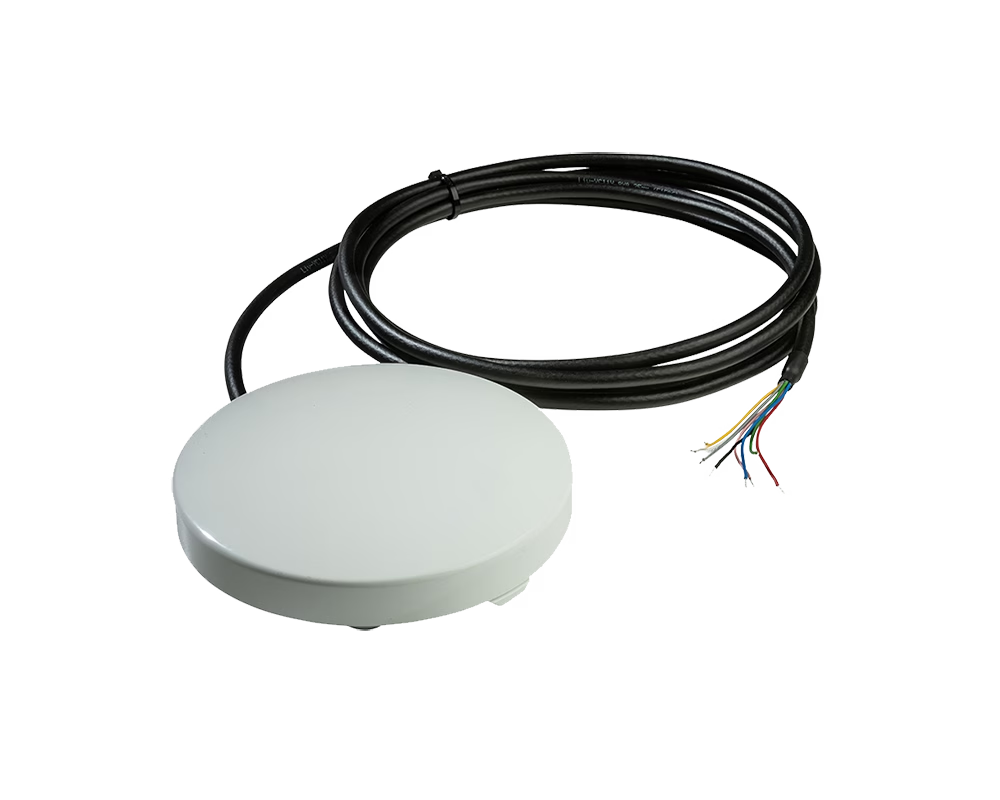
Our recommendation is RockBLOCK RTU; designed for ultra-low power consumption and long term field deployments, making it an ideal choice for pipelines using NTN NB-IoT connectivity. It’s a flexible device that can also operate on cellular where available, and can be shipped with Iridium Short Burst Data (SBD) as an alternative satellite network, if your pipeline is not within the coverage area of the NTN NB-IoT service.
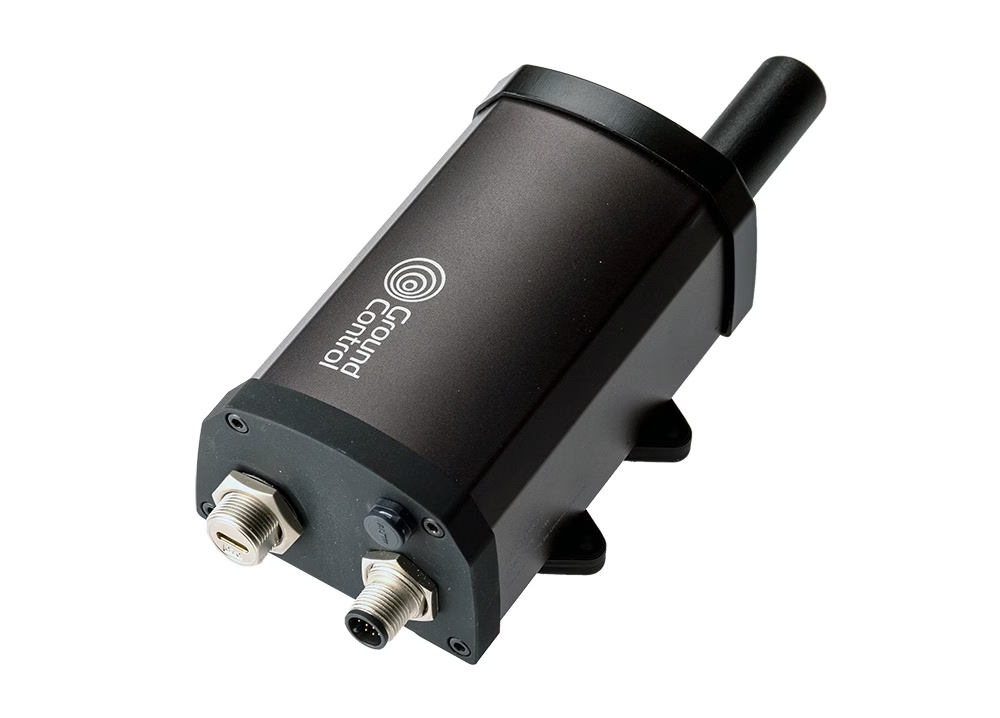
For Higher Data Volumes or More Frequent Reporting: Iridium Messaging Transport (IMT)
When your pipeline monitoring requires more frequent updates or larger data volumes, Iridium Messaging Transport (IMT) is the better fit. Its truly global coverage ensures connectivity even in the most remote environments, while its sub-10-second round-trip time makes it suitable for near real-time applications.
This is ideal for continuous health monitoring of pumps, valves, and sensors, early warning systems where immediate alerts are crucial, and remote assets that are inaccessible for long periods.
IMT supports more frequent transmissions than NTN NB-IoT and can handle a higher data load, making it ideal for situations where small, periodic updates simply aren’t enough.
Our device recommendations would be RockBLOCK Pro or RockBLOCK Plus 9704 – rugged, field-ready devices built to withstand extreme conditions and provide reliable, low power operation for continuous monitoring.
For Real Time Monitoring and Remote Control: IP-Based Solutions
For mission-critical sites where you need to both monitor and act instantly, an IP-based solution is essential. These systems enable real time, two way communication, so operators can remotely command equipment, such as closing valves or isolating sections of pipe the moment a fault is detected.
Best for critical infrastructure nodes, emergency response situations, and high value assets where downtime costs are severe.
Powered by Iridium Certus 100, these solutions deliver global coverage with very low latency, enabling near-instant response. Choose RockREMOTE Mini for a rugged tough, IP-based device which is optimized for low power draw, or RockREMOTE Rugged to take advantage of its sophisticated edge processing capabilities, and MQTT / FTP facades.
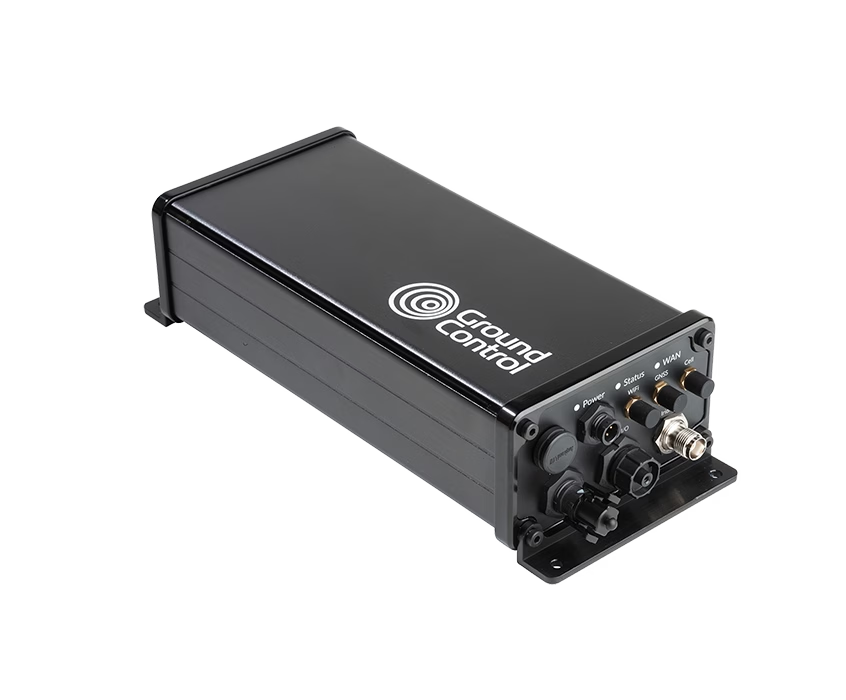
Satellite IoT gives pipeline operators the tools to see, predict, and act, even in the most remote environments. By matching the right technology to each monitoring challenge, operators can prevent minor issues from becoming disasters, safeguard their teams, and protect the environment. With the right strategy, every mile of pipeline can be monitored and managed with confidence, no matter how far it stretches.
Can we help?
Partner with us to implement satellite IoT technology that safeguards your critical infrastructure and pipeline operations.
Complete the form or email us at hello@groundcontrol.com and we’ll get back to you within one working day.
How NTN NB-IoT Unlocks Smarter Water Utility Operations
Water utilities worldwide are under increasing pressure to deliver more with less. Ageing infrastructure, growing demand, environmental challenges, and regulatory compliance all demand smarter, more efficient operations. Yet many of the most critical water assets, including pipelines, reservoirs, pumping stations, and metering points, are located in remote or rural areas where conventional cellular connectivity is either unreliable or unavailable.
This connectivity gap has long been a barrier to digital transformation in the water sector. Without reliable communication between remote assets and central systems, utilities face costly manual inspections, delayed responses, and fragmented data. Satellite IoT is helping to bridge that divide, bringing off-grid infrastructure online and enabling smarter, more efficient operations. While proprietary satellite IoT has served this role for decades, a newer, standards-based alternative is now emerging: NTN NB-IoT (Non-Terrestrial Network Narrowband Internet of Things).
NTN NB-IoT, part of the 3GPP standard for satellite-enabled IoT communications, allows connected sensors to communicate with satellites using the same NB-IoT protocol, and chipset, that they would use to connect to a terrestrial network. Economies of scale means that this drives down the cost of the chipset, delivering lower hardware costs, and potentially lower airtime costs too. For water utilities, this unlocks applications that might have been cost-prohibitive prior to the advent of standards-based satellite IoT.
At Ground Control, we specialize in enabling satellite-based connectivity and telemetry solutions for critical infrastructure. As NTN NB-IoT technology matures, we’re perfectly positioned to help water utilities leverage it to extend smart monitoring and control to the very edges of their networks. Here’s how NTN NB-IoT differs from proprietary satellite IoT and where it adds value to smarter water utility operations.
Rethinking Remote Connectivity
As water utilities continue to extend monitoring and automation efforts in remote and rural environments, satellite communication has been, and remains, critical to bridge connectivity gaps where cellular networks are unreliable or unavailable. Until very recently, the only option for utilizing satellites was to use a proprietary satellite module, e.g. if you wanted to utilize the Iridium satellite constellation, you would need an Iridium module.
These proprietary solutions are are built for purpose; the designers have not had to limit their modules’ capabilities to the 3GPP standard, which of course started as a cellular standard. This means you can send more data, more quickly, through a proprietary solution.
Further, if you’re using a message-based proprietary solution, such as Iridium’s Short Burst Data service, Iridium Messaging Transport (IMT), or Viasat IoT Nano, you also get the benefit of power efficiency.
Proprietary solutions, therefore, have been a trusted option for many years, providing reliable, low bandwidth satellite communication for mission critical data such as flow rates, tank levels, pump status, and alarm notifications. They have proven particularly valuable for applications requiring near real-time data or coverage in truly isolated areas.
However, when it comes to massive IoT deployments, proprietary solutions have limitations. Relatively high device and airtime costs, and proprietary integration requirements can make services like SBD, IMT and IoT Nano challenging to deploy at scale, particularly for low-power sensor networks or distributed metering systems.
Enter NTN NB-IoT (what is NTN NB-IoT?).
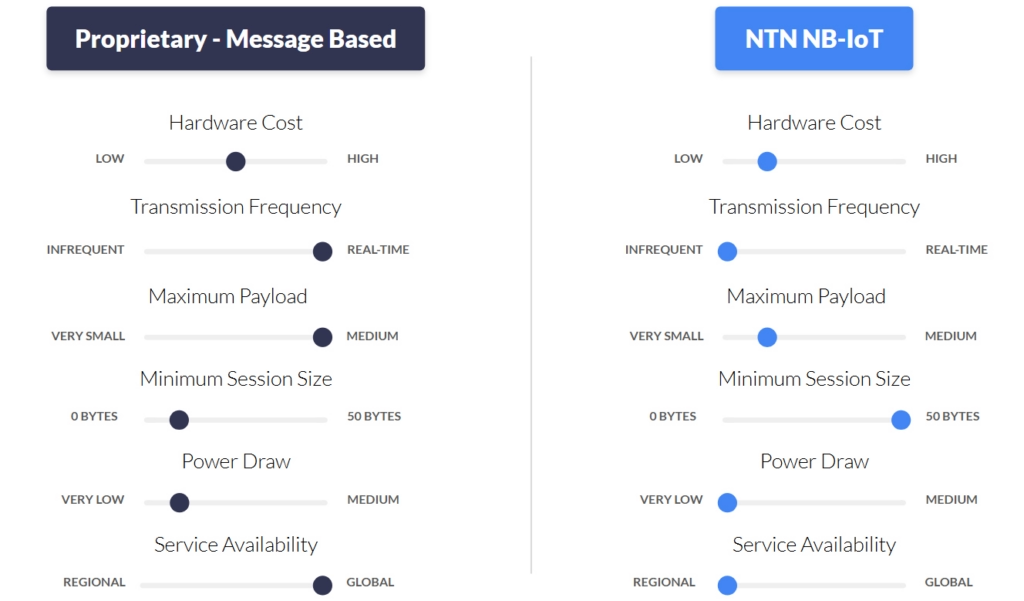
For water utilities, NTN NB-IoT could be a breakthrough. Water utility providers can deploy NTN NB-IoT-enabled sensors, meters, and monitoring equipment in places that were previously cost-prohibitive to connect via proprietary satellite IoT.
What are the Applications for NTN NB-IoT in Water Utilities?
For a water utility weighing NTN NB‑IoT against higher‑bandwidth proprietary satellite links, the sweet spot is infrequent, small payload telemetry where truly global reach (no cell towers) matters more than millisecond alerts. Typical deployments include:
Daily or multi‑hour meter reads
Remote or off‑grid customer meters (flow, volume) that only need to report once or twice a day for billing or usage analysis. A 200 byte payload can easily carry several readings, supporting rural homes, farms, or remote industrial sites.
Tank level and reservoir monitoring
Track water levels, detect overflow risks and monitor usage trends in storage facilities far from population centers. Gravity‑fed storage tanks in remote service areas report level and temperature every few hours – enough to plan refills without real‑time urgency.
Environmental baseline sensing
pH, turbidity, conductivity or chlorine residual sensors on remote intakes or treatment sites. These can trickle in (no pun intended!) once per shift or per day to track long term trends, enabling insight into water quality, and supporting regulatory compliance.
Pump run‑hours and basic status
Hourly or daily “I’m alive” heartbeats plus simple ON/OFF or run‑time counters to track remote booster stations or solar powered pumps, helping to reduce downtime and extend the life of critical infrastructure.
Pipeline integrity logs
Low frequency pressure, flow rate and structural vibration snapshots in isolated, hard to access terrain, allowing early detection of leaks, bursts or blockages to reduce water loss.
Asset inventory and location
Periodic GPS pings and motion/tamper alerts from mobile test vans, valve exercise robots or floating sensors in open canals, optimizing maintenance schedules and improving operational security.
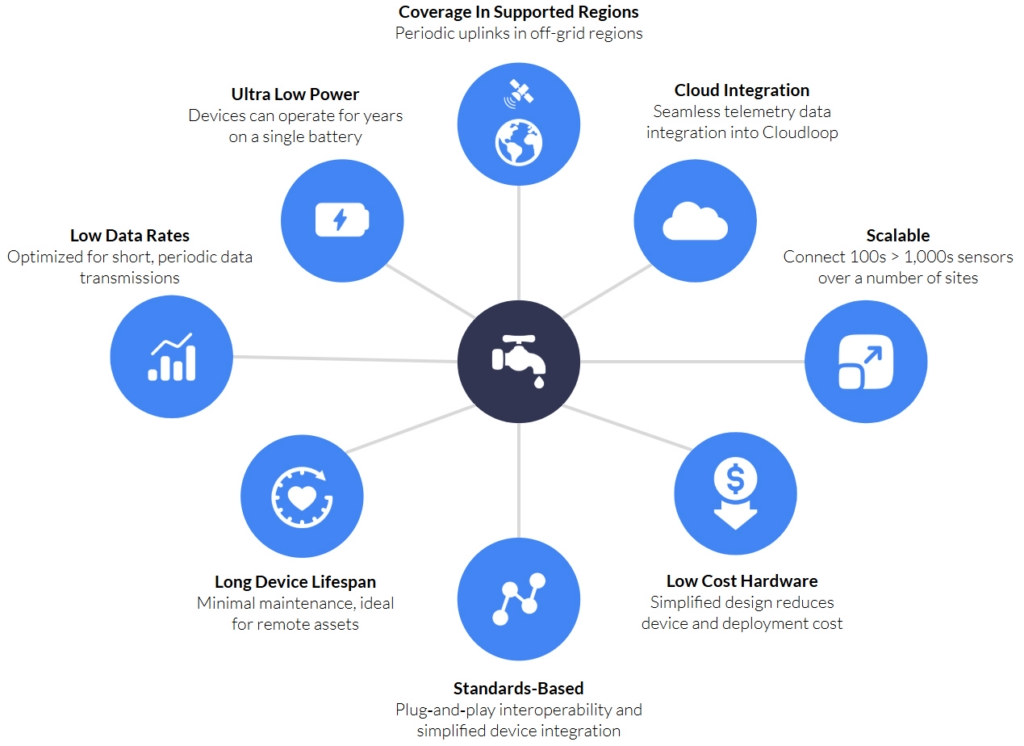
Beyond NTN NB‑IoT: Scenarios Requiring Real Time Satellite Links
Here are the water‑utility applications that really demand real time links and higher data volumes – i.e. where you’d reach for a proprietary satellite IoT service such as SBD, IMT or IoT Nano, rather than NTN NB‑IoT:
Instant leak/failure alerts
Continuous pressure or flow monitoring that must trigger sub‑minute alarms when a burst or major leak occurs.
Remote valve actuation and control
Two‑way commands (open/close, throttling) with confirmation feedback to isolate sections of pipe or adjust flow on demand.
SCADA‑style telemetry
High frequency readings (e.g. every few seconds or minutes) from multiple sensors (pressure, temperature, vibration) at booster stations and treatment plants.
Video or acoustic inspection
Transmitting snapshots, short video clips or high‑resolution acoustic signatures from remote intake structures or pipeline inspection robots.
Predictive maintenance analytics
Bulk uploads of rich sensor datasets (e.g. vibration spectra, pump performance curves) to cloud analytics for failure prediction.
Bi‑directional firmware updates and diagnostics
Pushing larger firmware or configuration payloads OTA (over the air), plus logging back detailed health / status reports in real time.
Event‑driven sampling
Millisecond‑resolution burst data (e.g. transient pressure spikes) that need to be streamed offsite immediately for analysis.
Emergency backup SCADA link
A full‑bandwidth failover channel when terrestrial SCADA lines go down, to keep control room visibility alive.
These use cases all hinge on low latency, two way communication and/or bulk data transfers; capabilities that proprietary satellite IoT is designed to deliver.
What is NTN NB-IoT?
Simply, NTN NB-IoT allows data to travel over satellite using the same standard as terrestrial NB-IoT. This means that the same chipset can be used for satellite or cellular connectivity, leading to lower hardware costs, and potentially, lower airtime costs.
It doesn’t, however, mean that it is identical to terrestrial NB-IoT, and network architects need to bear its limitations in mind. We’ve outlined some of the key differences in the following table:
| Standards-Based NTN NB-IoT* | Cellular NB-IoT | Proprietary Satellite IoT** | |
|---|---|---|---|
| Max Practical Payload | 1,000 bytes | 1,400 – 1,600 bytes | 16,000 bytes |
| Min. Practical Payload | 10-30 bytes | 30-50 bytes | 10 bytes |
| Typical Latency | Medium (10 – 60s); MVNO scheduling could increase this to 2 – 5 mins) | Low (1 – 10s) | 10 seconds under optimal conditions |
| Coverage | United States, Canada, Brazil, Australia, New Zealand and select European markets | Where supported by regional MNOs, and there is terrestrial infrastructure | Global, exc. Polar regions |
| Cost-Optimized Monthly Data Volume | < 50 KB | < 5 MB | < 1 MB |
| Typical Transmissions Per Day | Common MVNO plans: ~1 – 3 uplinks/day (entry tiers) | No strict cap: supports thousands to tens of thousands of uplinks/day (limited only by data plan allowances) | No strict cap; governed by data plan allowances |
In summary, users can anticipate smaller data volumes, and intermittent data transmission (e.g. a few times per day), allowing devices to operate for years on battery and solar power. NTN NB-IoT is, therefore, ideal for low bandwidth, low power, and long life IoT applications.
A Smarter Approach to Connectivity
NTN NB‑IoT shines when you need occasional, small payload uplinks from truly off-grid assets. Its standards based 3GPP Release 17 stack makes integration straightforward, devices run for years on battery, and you can monitor things like daily meter reads, tank levels, water‑quality snapshots or pump “heartbeats” in remote terrain without laying any infrastructure.
Proprietary satellite IoT earns its keep when you need low latency, high volume, two way links, for real time leak/failure alarms, remote valve control, SCADA‑style bursts, video or acoustic inspections, large OTA updates, and emergency failover.
With decades of experience in satellite communications, Ground Control offers more than just connectivity; we deliver complete, integrated solutions from device to cloud. So, whether you’re starting a pilot water management project or scaling a nationwide deployment, we’re here to help you harness the full potential of NTN NB-IoT and build a smarter, more resilient, and efficient water utility network.
Ready to explore your options?
Curious which satellite technology is right for your application? Whether you’re rolling out smart meters in rural areas or need real time alerts from critical infrastructure, we can help you choose the best fit solution.
Talk to our team for a side-by-side comparison of NTN NB-IoT and proprietary satellite IoT, based on your data needs, latency requirements, and power constraints.
Email hello@groundcontrol.com or complete the form, and we’ll be in touch within one working day.
Securing Remote Facilities: Cost-Effective Video Streaming Over Satellite
Critical national infrastructure is an increasingly attractive target for state-sponsored activists and extremist groups. Remote infrastructure – everything from outstations to wind farms, wellheads to pump stations, haul roads to transport hubs – is particularly vulnerable because of the challenges in creating robust security solutions in these locations. This blog post seeks to present a solution to these challenges, but first, let’s dig into the issues in more detail.
The Growing Threat to Remote Infrastructure
The vulnerability of utility and energy production sites to cyber attacks is well documented; from 2023 to 2024, US-based utilities experienced a 70% surge (Reuters). Less frequently reported is that physical attacks on infrastructure also rose 73% from 2020 to 2022 (Axios), with incidents including a gunfire attack on two substations in North Carolina, USA, which left 45,000 customers without power.
In Nigeria, in early 2024, the power sector faced escalating vandalism of high-voltage transmission infrastructure; incidents tripled during a 15 week span, including explosives being used to destroy transmission line towers (The Electricity Hub).
In Australia, thefts from unmanned construction sites reached a 10 year high in September 2024, with a 22% increase in theft-related offences during the same period (Herald Sun). And in the UK, the cost of theft of agricultural equipment escalated to an estimated £52.8 million in 2023, a 4.3% increase from the previous year (NFU).
In addition to a growth in isolated incidents is the underlying strategy to destabilize infrastructure, driven by alliances between state actors like Russia, and organized criminal gangs. These activities include sabotage, arson and cyber attacks, aimed at undermining critical infrastructure (The Guardian).
Attacks are increasing: companies, governments and individuals with hard-to-protect, high value assets are fighting a rising tide of criminal activity.
The Challenge of Traditional Security Measures
The infrastructure we’re describing here – transport, energy production, heavy industry – operates across vast areas, making it impractical to station physical security at every location which could be a target. Assuming a single security guard is stationed at a site for 8 hours a day, 7 days a week; the cost of an unarmed guard would be c. $3,600, and c. $6,000 for an armed guard (Deep Sentinel).
Statistically, most theft takes place after dark, and are more frequent in winter; long weekends and holidays are also attractive (Site Watch Group). Thus, 24 hour cover would be prudent at least over weekends, adding substantially to the cost.
Another option is to use fences coupled with cameras and sensors to detect intruders, and provide real-time alerts to a remote monitoring center. The security personnel there can monitor multiple sites remotely, reducing on-site staffing costs. Upon receiving an alert, they can choose to dispatch security personnel to the affected site, alert local law enforcement or trigger some localized deterrent such as alarms, voice sirens or lights.
The pros of this approach is that it’s lower cost, delivers 24/7 surveillance, and can be rapidly and cost-effectively scaled up. However, it requires a reliable, secure and cost-effective means of transmitting the video stream (and potentially also audio and movement sensors). Within cellular connectivity this is pretty straightforward, but in a remote site, satellite is often the only viable option.
Finding the Right Satellite Connection for Remote Surveillance
Satellite connectivity isn’t a homogenous blob. There are multiple radio frequencies used, and the type used strongly influences the form factor of the satellite transceiver. For example, people seeking broadband internet access over satellite – Starlink, Hughesnet, OneWeb etc. – will be using Ka-band, as this supports higher data rates, and there’s plenty of bandwidth available (i.e. limited congestion issues).
The drawback of Ka-band is that it is both susceptible to rain fade (signal loss in bad weather), and the antenna size is large, power hungry, and needs to be precisely positioned. This is not an issue for home installation, but in a remote outstation, there may be mountains, trees or the outstation itself preventing the ideal siting of the antenna.
The fix to this – phased array antennas which electronically steer themselves to optimal positions – has the drawback of consuming significantly more power. Indeed, it would be challenging to power any Ka-band antenna via a solar-powered battery, particularly for the sorts of continuous operation that a surveillance system requires.
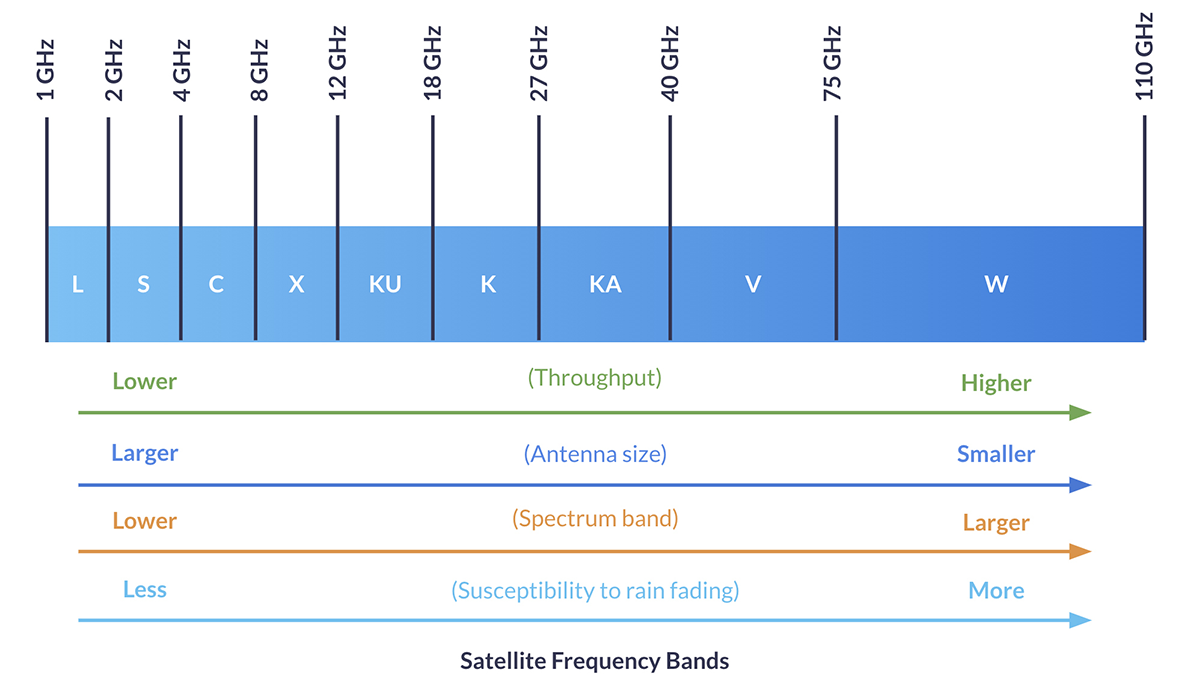
Satellite services that operate in the L-band spectrum, on the other hand, have very small antennae, and low power requirements compared to Ka-band. Iridium and Viasat (previously Inmarsat) utilize L-band for data transmission, which makes them perfect for IoT applications where the data requirements are lower, and a small, discreet, battery-operable antenna is an asset – sometimes a necessity. L-band transmissions are unaffected by weather conditions, and very hard to intercept, making them ideal, in principle, for mission critical applications like remote surveillance.
However, video streaming from remote, potentially unpowered locations, is an awkward fit for both Ka- and L-band. It’s a high bandwidth transmission, but as discussed, high bandwidth satellite services are power hungry, easy to identify (and therefore to put out of action), and difficult to position. L-band fixes all those challenges, but to send video over L-band, which is a much more constrained frequency band, is very expensive.
Until now…
A Breakthrough in Remote Video Surveillance
There have been two key developments that have made it possible to send video over an L-band satellite connection cost-effectively. The first is the advent of low bandwidth video. Our partner Videosoft has developed video compression and transmission technology that delivers real-time, low-bit rate video. They’ve coupled this with an image enhancement feature that lets users specify and download high-res pixels from an area of interest in a scene.
Videosoft’s technology works with most off-the-shelf hardware, including video cameras, CCTV, audio microphones, GPS tracking antennae, and other I/O devices.
The second development is the availability of midband (higher throughput) transmissions in the L-band spectrum; notably Viasat’s IoT Pro service, and Iridium’s Certus 100 service. The latter is particularly well suited to remote surveillance because the satellites are in Low Earth Orbit, which means the latency is very low – critical when you need real-time alerts if a facility has been penetrated, or an asset is moving outside of schedule.
Additionally, Iridium has a cross-linked network of 66 satellites, which means you don’t need to point your antenna at the satellite; if your facility or asset is in a wooded or mountainous area, this could be a critical advantage.
Watch our webinar recording to see a demo of Videosoft.
RockREMOTE Rugged: A Simple and Secure Solution
There are a number of Iridium Certus 100 transceivers available – we design and build several ourselves – but the one we’ve focused on for remote surveillance is the RockREMOTE Rugged. This is because, most importantly, it has the compute power to natively run the Videosoft program without needing any additional hardware. It’s simply a matter of plugging your camera into the RockREMOTE, and working through some simple config steps to get started.
RockREMOTE Rugged is very easy to install; it’s IP67 rated, and designed for permanent outdoor installation in harsh environments. Its omni-directional passive antenna is small and discreet, making it harder to identify by bad actors.

Thus, securing a remote site becomes smarter and more cost effective. Choose from a very wide range of cameras, audio equipment, motion detectors etc., then plug them in to the RockREMOTE Rugged. The onboard Videosoft technology will compress the data so it can be sent cost-effectively over the Iridium Certus 100 network, in real-time, to your remote monitoring center.
A Smarter Approach to Remote Security
Protecting remote infrastructure has never been more critical – or more challenging. While traditional security measures struggle to balance cost and coverage, the combination of low-bit rate video, real time image enhancement, and power efficient satellite connectivity presents a game changing solution.
With RockREMOTE Rugged and Videosoft’s technology, organizations can deploy surveillance systems that are reliable, cost effective, and optimized for remote environments. Whether safeguarding critical national infrastructure or protecting high value assets, this technology ensures security teams have the visibility they need, when they need it most.
Smarter Security for Remote Infrastructure
Protect your critical sites with real-time video surveillance over satellite. Our RockREMOTE Rugged, combined with Videosoft’s low-bandwidth streaming, delivers cost-effective, 24/7 monitoring, even in the most challenging locations.
Complete the form, or email hello@groundcontrol.com to learn more. We’ll reply to your inquiry within one working day.
Is Direct to Device (D2D) Technology the Answer to Lone Worker Safety?
What is D2D?
D2D refers to the ability for an unmodified device – such as a cellphone – to access satellite connectivity. This was pioneered by Apple and Globalstar as they partnered to provide an emergency satellite communication service for iPhone users in 2022.
How Does D2D Work?
There are two ways D2D can be delivered. The first is by building a chipset into the device that allows it to access a specific satellite network. This is the option chosen by Apple, and its satellite network partner Globalstar. The benefit of this approach is that Globalstar has licensed radio spectrum that allows it to provide a service anywhere where it has a satellite overhead. The downside is that the device can only communicate with a single satellite network.
The second way to deliver D2D is to adapt the satellites themselves so that they are compatible with the communication protocols already in use by cellphones and other devices – i.e. 4G, 5G etc. This is the approach chosen by Starlink, AST SpaceMobile and Lynk, all of whom are in the process of launching satellites compatible with terrestrial network communication standards.
The benefit of this approach is that, in theory, all compatible satellite networks are available to the cellphone user as simply another network on which to roam, and they can do so depending on what their commercial agreement is with their usual network service provider (e.g. Vodafone, AT&T etc.).
The downside is that because these are new satellite networks, they do not have licensed radio spectrum through which to deliver their service; this is already distributed among older, more established satellite constellations. So to deliver service, the new satellite network operators need to partner with a terrestrial network operator to ‘borrow’ some of their licensed radio spectrum. Services are only available where these partnerships exist, so they are not global. Starlink, for example, has partnerships in 10 countries; outside of these countries, it cannot provide service.
How Could D2D Benefit Lone Workers?
In 2021, we asked lone workers across multiple industries if, as part of their job, they sometimes or often travelled out of cellular coverage. 51% responded yes. We then asked about the implications of this; did they ever feel unsafe, for example, or been unable to send or receive a message when they needed to.
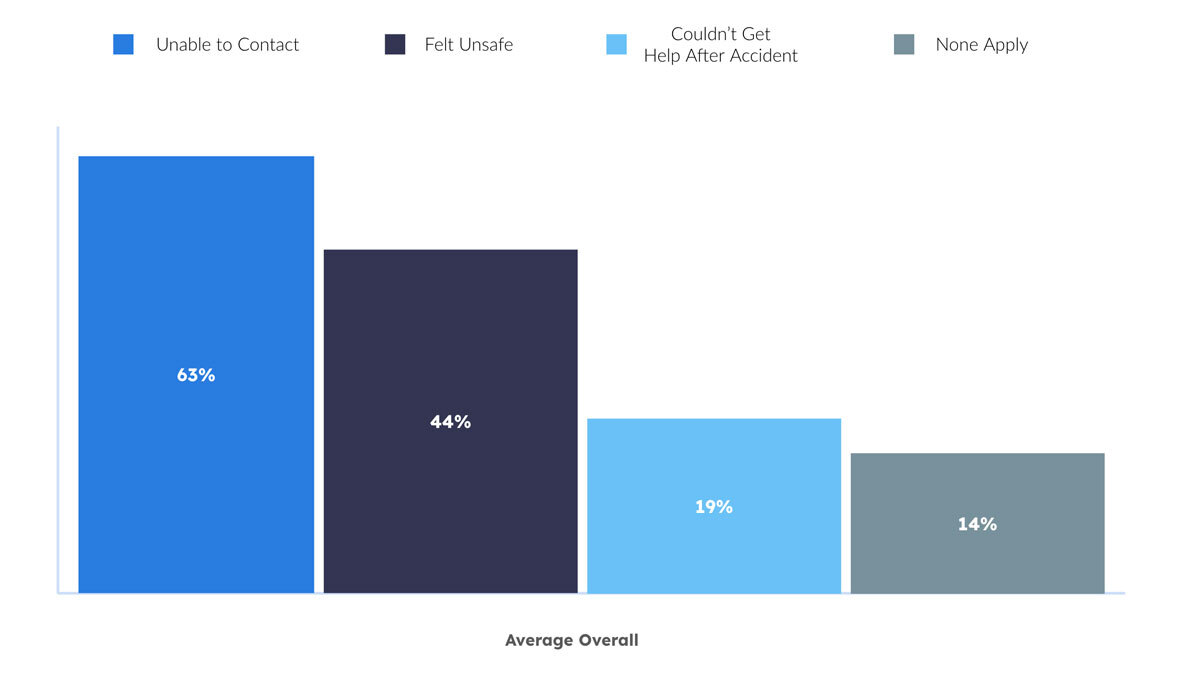
As the graph illustrates, lone workers operating in areas without voice, text or internet services feel – and are – more vulnerable. 15% of the overall workforce are considered lone workers, and NSC data indicates that working alone increases both the likelihood of incidents, and the severity of adverse outcomes.
Although we can’t draw a parallel, it’s striking that industries with a high number of lone workers – Utilities & Renewables, Oil & Gas, Forestry, Emergency Response, Community Healthcare – are also struggling with staff retention.
- 80% of Oil & Gas workers are considering leaving the industry
- The US Forest Service has lost nearly half of its permanent employees in the last three years
- In the UK, 32% of social care workers leave their roles every year – an increase of 9.1% over the last decade.
While it’s not a silver bullet, the benefits of lone worker monitoring technologies are well documented: improved safety outcomes and staff morale, leading to greater staff retention, and saved costs in recruitment and insurance premiums.
An estimated 2.3 million lone workers in Europe, North America, and Australia & New Zealand now have access to a lone worker safety solution, with the market estimated to grow at a rate of 7.1% between 2024 and 2029 – further indication of the value of these platforms.
But if they can’t be accessed because the worker is outside cellular coverage, they fail. D2D with its ability to confer internet access to any compatible cellphone with a relevant commercial agreement, unlocks the ability to access these platforms from very remote locations where cellular coverage is nonexistent.
Overheating and Thermal Shutdowns
Satellite connections require the phone to transmit at higher power levels, which generates more heat than cellular communication. Many phones will automatically shut down when internal temperatures exceed safe limits, leaving users without a means of communication.

Drop and Impact Vulnerability
A cracked screen or internal damage from a fall can render a phone unusable, preventing emergency communication. Even flagship smartphones can shatter from waist-high drops, whereas ruggedized satellite communicators are built to withstand extreme impacts.

Battery Drain and Cold Weather Failure
Phones in satellite mode will often use higher transmission power and spend more time searching for signals, draining the battery faster. Further, cold weather severely affects lithium-ion battery performance.

Lack of Physical Controls for Emergency Use
In emergency situations, speed matters. Unlike dedicated satellite devices, which often feature an SOS button that can be activated instantly, smartphones rely on touchscreen controls that may be difficult to use with wet, cold, or gloved hands.

Weak Antenna and Poor Signal Reception
Smartphones’ internal antennas are optimized for terrestrial networks, meaning signal reception in satellite mode will often be weaker and less reliable. Dedicated satellite communicators feature larger antennas that ensure consistent connectivity even in difficult environments.
The Safer Alternative: Dedicated Satellite Communicators
In life-critical situations, reliable communication is essential. The RockSTAR rugged satellite communicator outperforms standard devices with extended battery life, superior durability, and truly global coverage. Designed for extreme environments, it ensures emergency responders, remote workers, and adventurers stay connected when it matters most. With near-instant messaging and a one-button SOS feature, help is always within reach.
The RockSTAR offers a ≈12-month battery life on a single charge, operates in extreme heat and cold, and withstands rough conditions. With ≈10-second latency, it provides real-time tracking and updates. Its easy-to-reach SOS button ensures immediate distress signals, making it the ultimate safety tool for remote and high-risk environments.
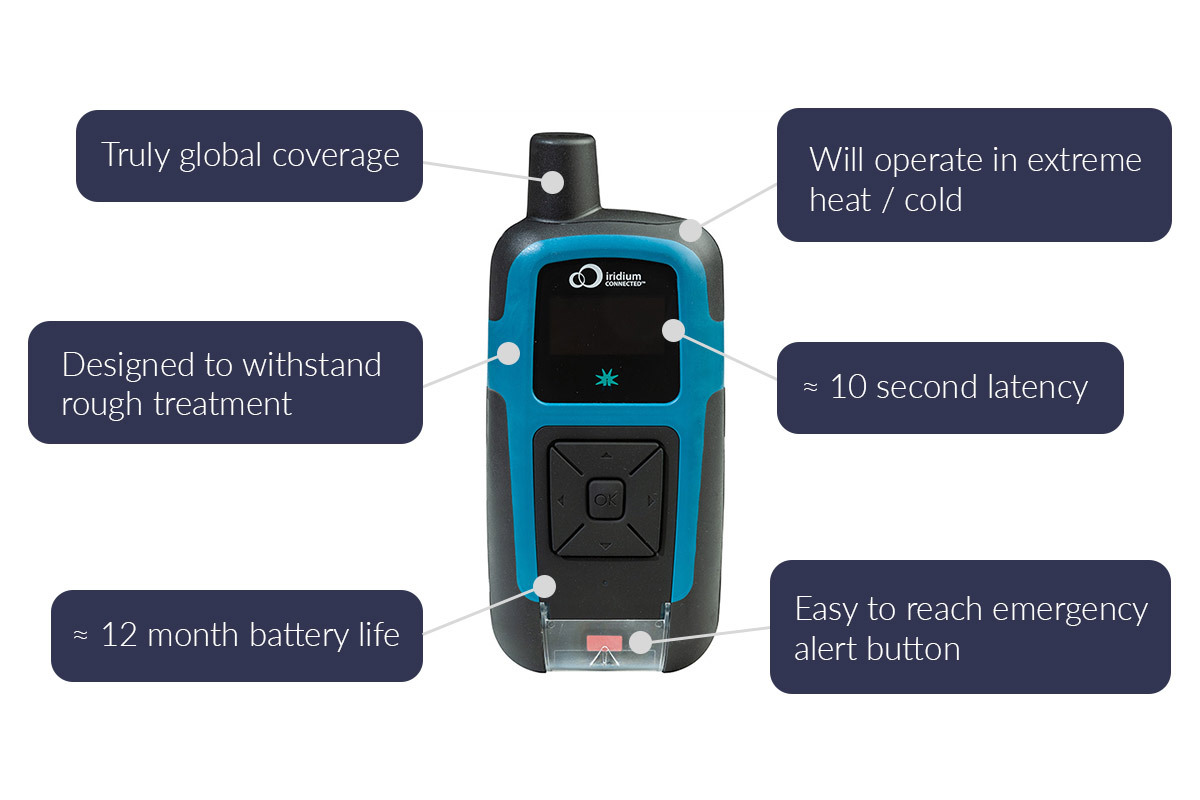
RockSTAR is more than just a rugged satellite tracker; it’s a powerful solution for real-time visibility, safety, and communication in the world’s most remote environments. When paired with Cloudloop Tracking, it offers an intuitive platform for monitoring, messaging, and emergency response, ensuring that lone workers, field teams, and mission-critical personnel remain connected no matter where they operate.
For organizations with specialized requirements, we work with trusted partners like Locate Global and JCSys, who provide advanced functionality for healthcare, emergency response, and military applications.
Additionally, our well-documented API allows operators to seamlessly integrate location, messaging, and event data into their own preferred platforms, giving them complete control over their tracking and communications ecosystem. Whether using Cloudloop Tracking or integrating with an existing system, RockSTAR ensures reliable, global connectivity for those who need it most.
Get In Touch
If we can support your efforts to improve lone worker safety and communication, please get in touch. We have delivered satellite-enabled tracking and messaging services since 2005, and provide support to a diverse set of users – from soldiers to remote site inspectors.
Email hello@groundcontrol.com to tell us about your requirements, or complete the form, and we’ll be in touch within one working day.
Defending Utilities from Cyber Threats with TSAT
In today’s interconnected world, digital threats have reached a scale never seen before.
In 2023, rising global tensions led to a surge in cyber threats and disruptions to critical infrastructure worldwide. Escalating conflicts – such as those involving Ukraine and Russia, Israel and Hamas, and nations in the South China Sea – motivated hackers to exploit critical infrastructure for control and financial gain. Globally, ransomware incidents are increasing across every continent, as the map shows. At the same time, ransomware attacks targeted more industrial organizations, with reported incidents increasing by nearly 50 percent [Dragos report 2023].
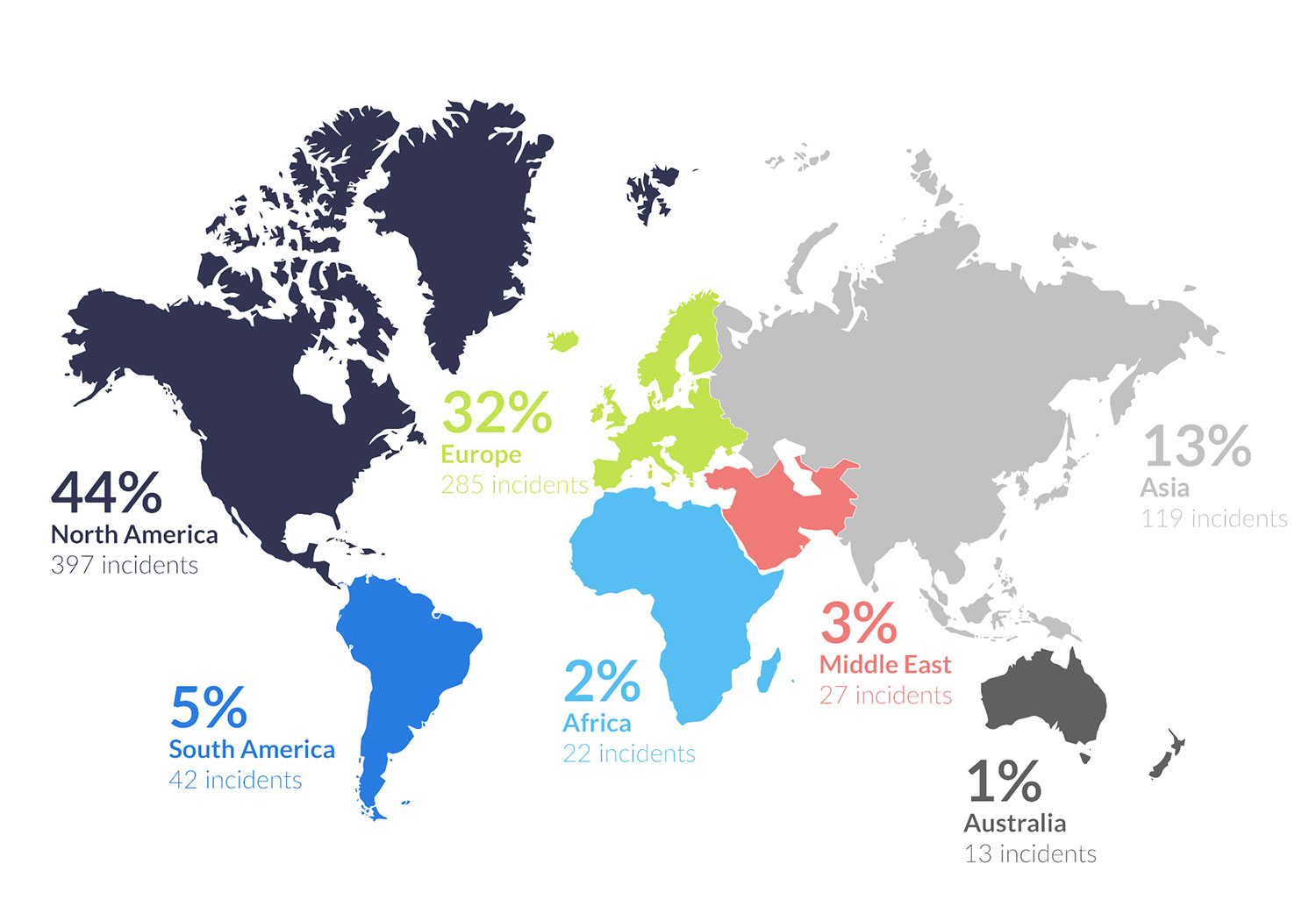 Illustration showing the number of reported ransomware attacks by continent
Cyber attacks can target everything from financial institutions to healthcare systems, transportation networks and power grids – and it’s of increasing concern to the general public. In January 2025, Ground Control conducted a survey of 500 US adults which revealed that over 65% were concerned about cyber attacks on critical national infrastructure, with 70% having limited to no confidence that essential services are protected from cyber attacks.
Utility providers are now facing an alarming new reality where cyber attacks increasingly threaten the safety of their operations. Indeed, Utilities is the second most targeted industry for ransomware attacks, experiencing a 270% increase in data violation cases between 2020 and 2023.
The 2021 Colonial Pipeline Attack
The 2021 Colonial Pipeline attack served as a wake-up call, underscoring the vulnerability of the utility sector to cyber threats. Hackers used a virtual private network (VPN) to infiltrate the pipeline’s control systems, causing widespread fuel shortages across the US East Coast. The incident led to a ransom demand of $5 million, which was ultimately paid to regain control of the pipeline.
The financial costs of data breaches are staggering. According to IBM’s 2021 report, the average cost of a data breach rose to $4.24 million. These costs go beyond the immediate exposure of data and include downtime, loss of revenue, and long-term reputational damage. Utilities must be proactive in defending against such threats to avoid crippling financial losses and operational disruptions.
The Hidden Vulnerabilities in Utility Networks
Utility companies depend heavily on SCADA (Supervisory Control and Data Acquisition) systems to monitor and control infrastructure. These systems collect and transmit data from Remote Terminal Units (RTUs), often located in remote or hard-to-reach areas. However, these RTUs present a significant security vulnerability. With 90% of utility customers reporting “limited to no visibility” into their industrial control systems, once a hacker gains access, they can easily monitor, manipulate, and potentially sabotage critical infrastructure [Dragos report, 2020].
It’s crucial for utilities to address this blind spot and implement solutions that safeguard the data extracted from RTUs and transmitted to SCADA systems.
How Remote Sites Become Prime Targets for Cyber Attack
Remote utility sites, such as offshore wind farms and oil and gas pipelines, are particularly vulnerable to cyber threats. With limited or no access to terrestrial connectivity such as cellular or fiber networks, these remote locations are often the last to receive attention when it comes to cybersecurity. Cybercriminals exploit this vulnerability, targeting sites that lack secure and reliable communications infrastructure. The risk is further compounded by the fact that many utility providers rely on lone workers or contractors to maintain and monitor these remote operations, leaving these sites exposed to cyber threats.
The Role of Satellite Connectivity in Improving Data Security in Utilities
Satellite connectivity has some inherent advantages over cellular networks when it comes to data security; with limited ground infrastructure, it’s less susceptible to physical attacks, and signals are more difficult to intercept. There’s also a reduced risk of infiltration via local Internet Service Providers (ISPs) as these are typically bypassed by satellite communications. But with satellite services diversifying, and more networks being launched, there are now many varying options for data security.
Our Recommended Solution
TSAT is a satellite-based communication system designed specifically for secure, resilient remote monitoring and control of SCADA systems. Unlike traditional ground-based communication networks which can be easily compromised by cyberattacks, the TSAT satellite communication solution provides a more secure and tamper-resistant infrastructure.
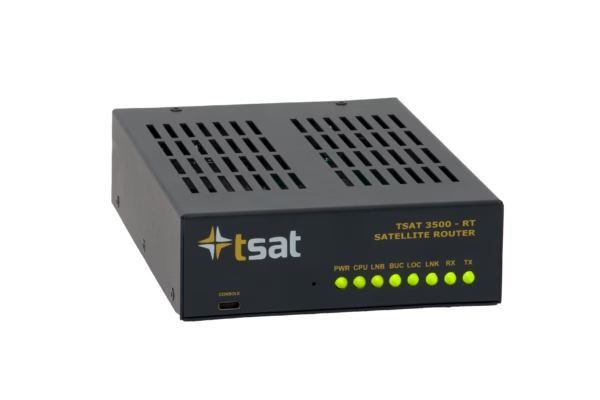
How TSAT Protects Critical National Infrastructure
The ability to remotely monitor and control systems via satellite communication is essential in maintaining the integrity of critical infrastructure. TSAT’s secure transmission capabilities ensure that communication between central control centers and field sites remains uninterrupted, even in the face of large scale cyber threats.
As mentioned earlier, satellite connectivity has several security advantages over terrestrial networks; a reduced attack surface, plus limited reliance on the public internet to move data being two examples. However, most satellite networks, whether in low earth orbit or geostationary orbit, leverage the internet to move data from the ground station to your application. This process is protected via VPNs and firewalls, which, in addition to AES-256 encryption of data, satisfies most organizations’ requirements.
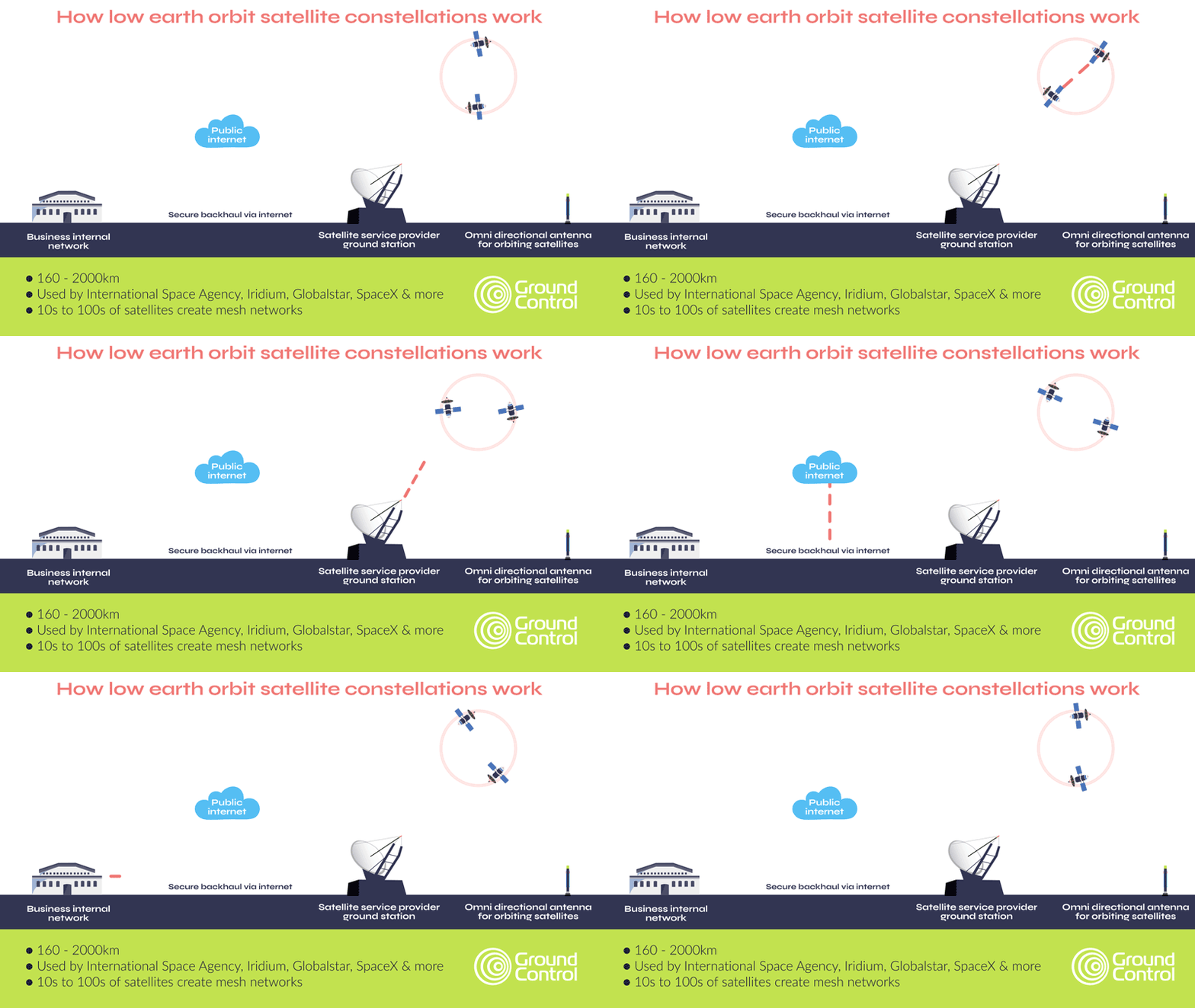

Critical National Infrastructure, however, often benefits from, and may even require, complete independence from public infrastructure, and that’s how private satellite networks like TSAT function. Here, as shown in the diagram below, data from the satellite comes to a ground station on your premises, rather than into the satellite network’s ground station. This means that your data is air gapped from external networks.
Part of the TSAT service is dedicated satellite bandwidth that prevents interference from other users, ensuring consistent and secure connectivity. TSAT also has no reliance on GPS timing, making it immune to GPS jamming. What’s more, its geo-redundant hubs and frequency diversity allow terminals to automatically switch frequencies if interference occurs, ensuring uninterrupted communication.
Real-World Applications of TSAT
A major energy infrastructure operator connects gas markets between the UK and continental Europe, managing a bi-directional gas pipeline with terminals in two key locations.
To maintain operations, a series of pressure and temperature sensors must continuously transmit data to the company’s SCADA system, which authorizes gas transmission.
If this sensor data becomes unavailable, production must halt, and gas venting procedures are required; an expensive process with significant operational and environmental impact.
To ensure real-time, reliable sensor data transmission, the company requires multiple active communication pathways at all times. They maintain a dedicated fiber connection alongside two satellite connections, all tasked with delivering critical data to the SCADA system. To further reduce reliance on public infrastructure, they have implemented TSAT ground stations at each terminal, eliminating the need for internet-based backhaul.
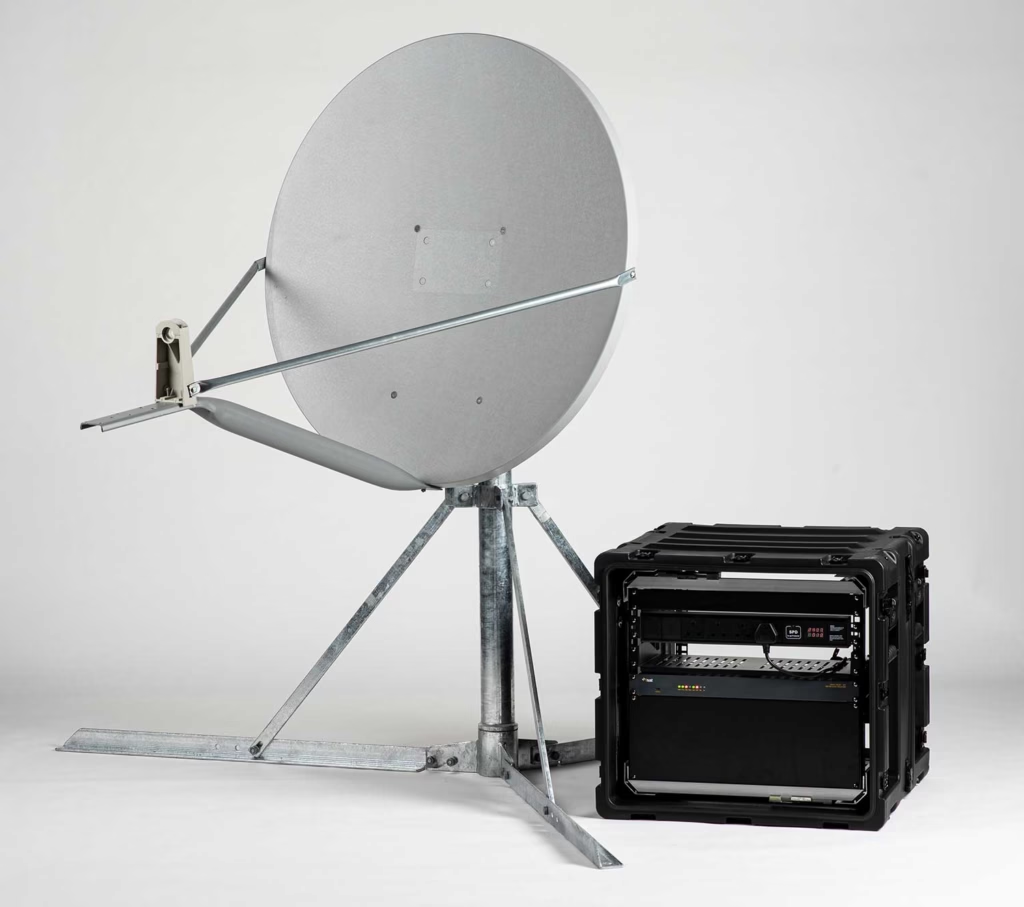
Each satellite link consists of two antennas: a hub and a remote. Typically, the remote antenna is positioned in a more isolated location near the sensors, transmitting data to the hub at the operations center. However, in this case, both satellite dishes are located in close proximity but pointed at different satellites, ensuring redundancy in case of a satellite failure.
Additionally, the company has implemented a unique failsafe: at each terminal, the hub and remote antennas are pointed at opposing satellites relative to the other terminal. This setup provides resilience against localized weather disruptions or signal degradation.
This system has been in place for over 16 years, with hardware upgrades along the way, and in that time, the satellite connectivity has never failed. Ground Control supports the company with a full turnkey service, including setup, training for routine maintenance, and periodic site visits for system health checks.
Embracing Satellite Technology for Cyber Defense
With the growing threats posed by cyber warfare, the time to act is now. TSAT offers a solution that is robust, resilient, and adaptable to the evolving threats of the digital age to utilities. It’s time for utility providers and organizations worldwide to adopt secure satellite enabled technologies, like TSAT, to protect their most vital assets and ensure uninterrupted services to customers. The question isn’t whether you can afford to adopt this technology – it’s whether you can afford not to.
Can we help?
Our satellite-enabled solutions offer robust security features designed to protect your critical data, coupled with reliable connectivity.
Partner with us to explore satellite solutions that safeguard your operations and enhance your secure data transfer capabilities.
Complete the form or email hello@groundcontrol.com and we’ll get back to you within one working day.
Report: How Satellite IoT Connectivity Supports Data Security
Securing IoT Data: Why Satellite Connectivity Matters
As industries become more reliant on IoT technology to monitor and manage remote operations, the security of IoT data has never been more critical. From energy infrastructure to national utilities, Critical National Infrastructure (CNI) organizations handling sensitive data are prime targets for cyberattacks. While cellular and terrestrial networks have long been the backbone of connectivity, their vulnerabilities are increasingly being exposed.
This is where satellite connectivity stands apart. Satellite networks offer global coverage, operate independently of local terrestrial infrastructure, and provide enhanced security features to mitigate cyber threats. However, like any technology, they’re not without risk. Our latest report, How Satellite IoT Connectivity Supports Data Security Measures, delves into the specific security challenges and solutions that satellite connectivity offers for IoT applications.
Read Data Security Report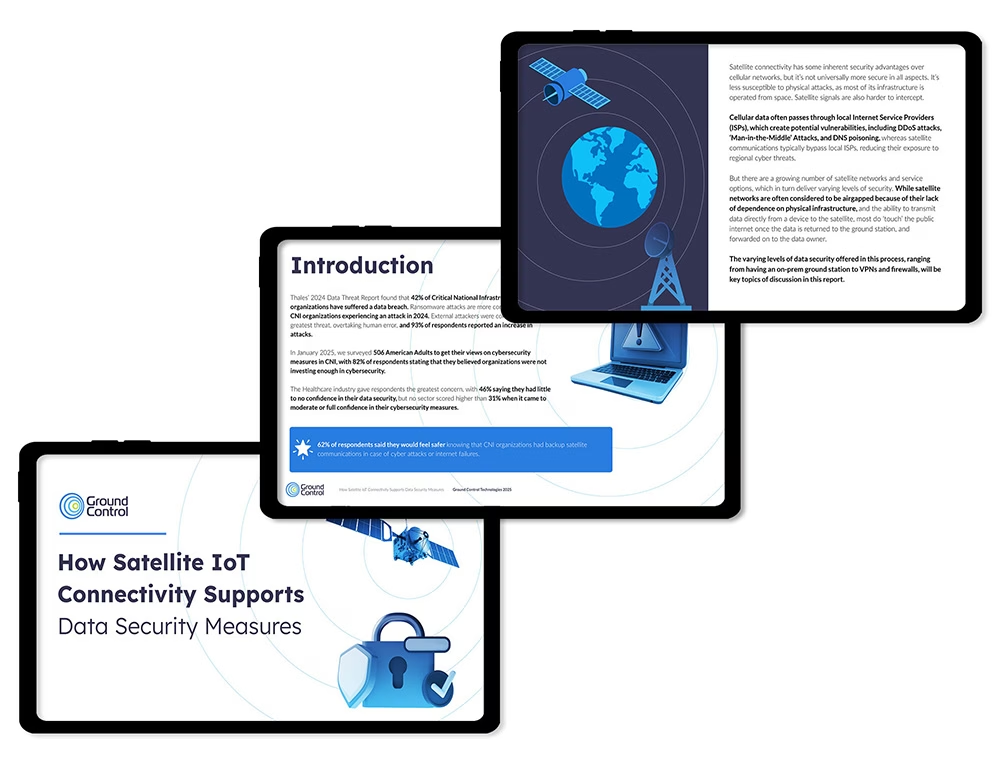
Key Insights from the Report
1. The Growing Cybersecurity Threat to IoT Networks
Critical national infrastructure sectors, including energy, utilities, and transportation, are facing an increasing number of cyber and physical threats. Attacks on property, plus DNS poisoning, DDoS attacks, and Man-in-the-Middle attacks are just a few of the risks that can disrupt operations or compromise data integrity. Organizations must adopt a proactive security strategy to safeguard their IoT deployments.
2. Why Satellite IoT Offers a More Secure Alternative
Unlike terrestrial networks, satellite connectivity does not rely on local ISPs or cellular towers, making it less susceptible to traditional cyberattacks. High encryption standards, private network options, and advanced threat detection make satellite communications a strong choice for securing IoT data.
3. How to Mitigate the Limitations of Satellite Data Security
While satellite networks provide strong security advantages, they are not immune to threats. The report explores best practices, such as end-to-end encryption, network segmentation, and failover protection, that organizations can implement to further strengthen their security posture.
4. Expert Insights from Leading Satellite Providers
The report includes expert perspectives from industry leaders, including Viasat, TSAT, and Iridium, highlighting the measures these providers take to enhance security for IoT applications. From private satellite networks to real-time monitoring and AI-powered threat detection, these insights help organizations make informed decisions about securing their satellite IoT deployments.
If your organization relies on IoT connectivity for critical operations, understanding the security implications of your network choice is essential. Our comprehensive report provides the insights and strategies you need to enhance your security posture and protect your data from emerging threats.
Download the full report now to learn how satellite can be a key component of your IoT security strategy.
- Discover the level of confidence the general public has in CNI organizations’ data security measures
- Learn from industry leaders about best practices for securing critical infrastructure
- See how past attacks have exploited vulnerabilities in terrestrial networks
- Compare security measures across different satellite networks
- Get the knowledge you need to make informed choices about secure connectivity.
Can we help level up data security for your organization?
We’ve delivered connectivity solutions for critical national infrastructure projects for over 20 years. Our expertise in satellite technology, combined with a deep understanding of mission-critical applications, allows us to tailor solutions to meet your specific needs.
By partnering with Ground Control, you gain access to a team that is not only well-versed in the latest satellite technologies but also dedicated to helping you secure your communications, mitigate risks, and ensure that your operations stay connected no matter the challenges.
Complete the form, or email hello@groundcontrol.com to be connected to one of our expert team.
How Satellite IoT Makes Predictive Maintenance Possible Anywhere
Manufacturing and Heavy Industry operations around the world rely on their machinery to get the job done, efficiently and effectively. The cost of equipment failure and the resulting unplanned downtime has serious consequences for the bottom line, with medium unplanned downtime costs approximately $125,000 per hour. When inflationary pressures, supply chain demands and raw material costs are factored in, unplanned downtime costs for Heavy Industry were calculated as $59 million per year in 2023.
Faced with the need to minimize the business impact of unplanned downtime for critical equipment, industries with heavy assets and significant downtime costs, such as oil & gas and mining, are leading the way in adopting Predictive Maintenance solutions.
By incorporating satellite connected IoT sensors, Heavy Industries operating in remote locations can reliably monitor machinery in real time and react quickly to avoid equipment failures and keep assets operational. The data from satellite-connected sensors on equipment forms a vital component of deploying Predictive Maintenance programs in industries with high asset costs.
What is Predictive Maintenance?
Predictive Maintenance (PdM) is a proactive, data-driven approach that uses advanced technologies – such as condition monitoring, machine learning (ML) and IoT devices – to anticipate equipment failures and schedule maintenance before disruptions occur. By analyzing real-time data from sensors installed on machinery, PdM identifies early signs of wear, faults, or deterioration, enabling timely intervention to prevent costly downtime.
Unlike time-based or reactive maintenance, PdM optimizes equipment performance by triggering maintenance tasks only when specific conditions indicate a need. This approach improves equipment reliability, reduces maintenance expenses, and extends the lifespan of assets. AI-powered analytics and IoT-enabled sensors track key metrics like temperature, pressure or vibration, providing continuous insights into machine performance. When thresholds are exceeded, PdM systems issue alerts or initiate maintenance work orders.
The goal of PdM is to enhance operational efficiency by minimizing unplanned downtime, lowering maintenance costs, and ensuring asset reliability. Industries such as manufacturing, energy, and transportation rely on PdM to align maintenance activities with actual equipment conditions, maximizing productivity and supporting cost-effective, sustainable operations.
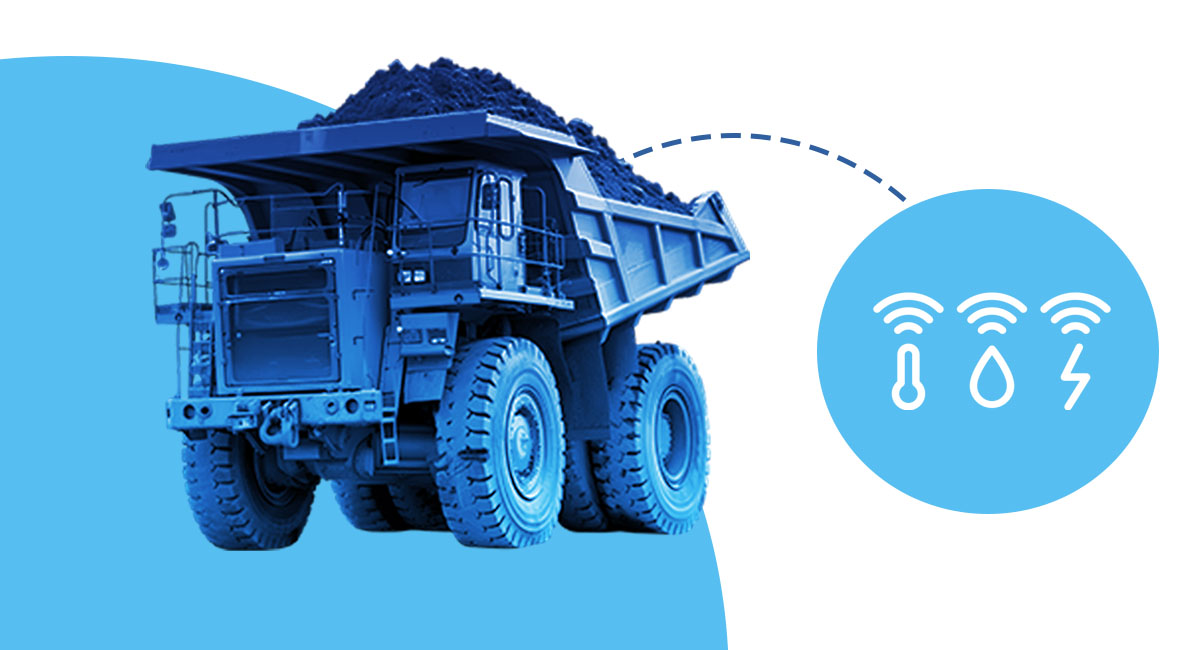
What is the Difference between Predictive and Preventive Maintenance?
Although often used interchangeably, Predictive Maintenance (PdM) and Preventive Maintenance (PM) are distinct approaches to equipment upkeep, each suited to different operational needs.
Preventive Maintenance follows a scheduled approach, performing maintenance at regular intervals based on time or measurable usage units, such as engine hours or production cycles. This method ensures equipment is inspected and maintained before issues arise, but it does not consider the actual condition of the asset.
For instance, a Mining operation may replace drill components every six months, regardless of whether those components show signs of wear. While this minimizes the chance of failure, it may result in premature replacements or unnecessary downtime.
Predictive Maintenance leverages real-time data from IoT sensors and advanced analytics to monitor the actual condition of assets. Maintenance is performed only when necessary, based on insights into potential failures or performance degradation.
For example, IoT sensors on a Combine Harvester may detect rising temperatures or irregular vibrations, indicating wear and tear. Predictive maintenance enables technicians to address the issue before a failure occurs, minimizing downtime and repair costs.
Comparing the Two Approaches
| Preventative Maintenance | Predictive Maintenance | |
|---|---|---|
| Basis for Maintenance | Time or Usage Intervals | Real Time Condition Monitoring and Analysis |
| Frequency | Regular, Fixed Schedule | As Needed, Based on Data Insights |
| Costs | Lower Initial Costs, Higher Cumulative Costs | Higher Initial Investment, Lower Long Term Costs |
| Downtime | May Require Equipment Stoppage | Often Avoids Downtime by Scheduling During Low Impact Periods |
| Efficiency | May Result in Unnecessary Maintenance | Targets Specific Issues, Optimizing Resources |
Types of Predictive Maintenance
There are three distinct types of Predictive Maintenance: Indirect Failure Prediction, Anomaly Detection, and Remaining Useful Life (RUL). Each approach differs in its desired objectives, the analytical methods used, and the type of information output provided.
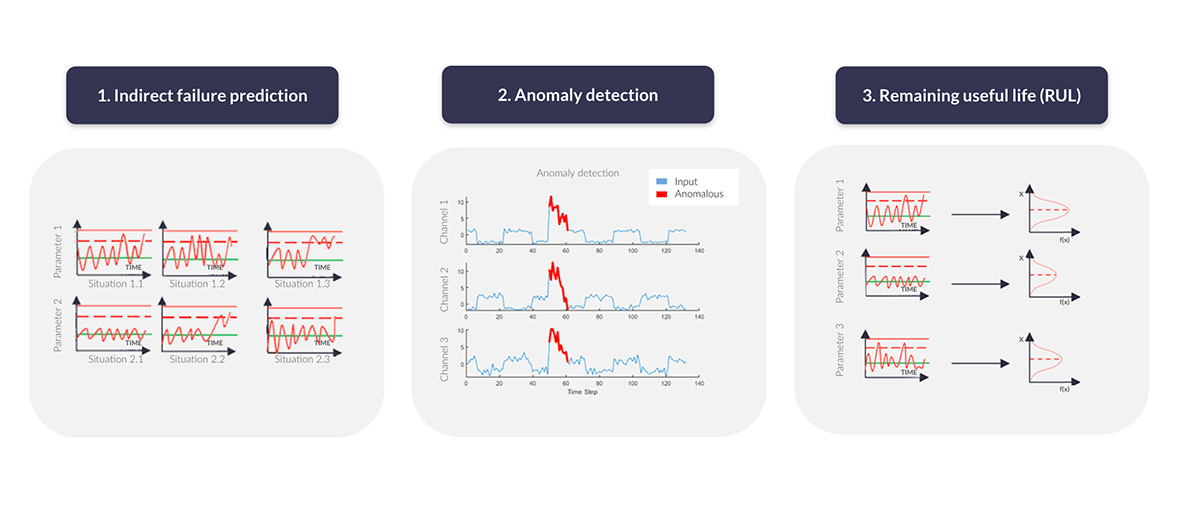
Image adapted from the IoT Analytics Asset Performance & Predictive Maintenance Market Report 2023–2028
Indirect Failure Prediction
Estimates equipment health by calculating a ‘health score’ based on known maintenance requirements, operating conditions and historical performance data. When sufficient data is available, supervised machine learning can be applied to refine the predictions. This approach is scalable since it relies on manufacturer specifications, and it is cost-effective because it uses existing sensors.
Its dependence on large volumes of historical data may render it unsuitable for industries like heavy machinery, where high downtime costs necessitate more immediate and accurate insights.
Anomaly Detection
Identifies potential failures by detecting deviations from normal operating conditions in real time. Unlike methods that require historical data, it relies on current sensor data, making it particularly suited to organizations without extensive machinery usage records. This approach improves predictive accuracy by considering real-time environmental and operational factors rather than predefined maintenance parameters set by the manufacturers.
The risk of false positives can pose challenges, as unnecessary alerts may disrupt operations and complicate machine learning algorithm performance.
Remaining Useful Life (RUL)
Focuses on predicting the time left before equipment failure based on specific machine metrics such as operational hours, distance traveled, or activity cycles. By analyzing sensor data, this method identifies condition indicators that highlight whether the equipment is performing as expected or if faults have accelerated its degradation. RUL models are trained using system data collected under known conditions and applied to predict outcomes under new or variable circumstances.
While this method is highly robust and reliable, it requires detailed, high-quality data for accurate predictions, making it particularly effective for critical equipment in complex environments.
The Benefits of Predictive Maintenance
Predictive Maintenance brings many benefits to organizations through its advanced approach to equipment upkeep, using technology and data analysis to improve asset reliability and efficiency. By identifying potential issues before they lead to failures, PdM helps organizations reduce downtime, optimize resources, and maintain safer working environments.
Research, including findings from the US Department of Energy, highlights the tangible impact of Predictive Maintenance. Compared to preventive maintenance programs, it offers cost savings of 8% to 12%, and when compared to reactive maintenance, cost savings increase to 30% to 40%. These programs also enable a reduction in maintenance costs by 25% to 30% and minimize equipment breakdowns by 70% to 75%.
In addition to cost savings, PdM improves operational efficiency by reducing downtime by 35% to 45% and increasing production capacity by 20% to 25%.
How to Implement Predictive Maintenance
1. Establish Baselines and Data Collection
Baseline performance metrics are identified for the assets by monitoring its condition to set the normal performance benchmarks. Once the baseline is established, sensors are installed to capture real-time data, enabling continuous performance monitoring.
2. Install IoT Sensors on Equipment
IoT sensors are installed on critical equipment to monitor various parameters such as vibration, temperature, pressure, and noise. These sensors continuously collect data on the equipment’s condition and the data gathered is then transmitted to a centralized system for analysis.
3. Data Integration and System Setup
The data collected from the IoT sensors needs to be integrated with the PdM system. This involves connecting the sensors to a computerized maintenance management system (CMMS) or a remote dashboard which allows for real-time monitoring and data analysis.
4. Set Maintenance Thresholds and Automate Alerts
Organizations need to define thresholds for acceptable performance levels. When these thresholds are exceeded, the system automatically triggers maintenance alerts, enabling timely interventions before equipment failure occurs.
5. Select and Implement the Right Analytics Tools
An analytics platform is required to handle the large volumes of data, apply predictive models, and generate actionable insights. Machine learning and AI algorithms are crucial for analyzing sensor data and predicting future equipment failures based on historical data.
6. Develop Predictive Models and Train the System
Predictive models are developed using historical data, maintenance logs and sensor data to forecast future equipment behavior. These models are trained to identify patterns in the data that may signal the onset of failure.
7. Integration with Existing Maintenance Systems
The PdM system is integrated with existing workflows, maintenance management systems, and enterprise resource planning (ERP) systems. This enables seamless communication across platforms and allows for data-driven decision-making.
8. Monitor and Optimize the Program
After implementation, the PdM program should be monitored to evaluate its effectiveness. Continuous data collection and model refinement will help improve prediction accuracy over time.
Industrial Applications of Predictive Maintenance
Predictive Maintenance is becoming increasingly common practice in asset-intensive industries that depend on their large, complex machinery. For industries with assets in remote locations or critical communication requirements, satellite connected IoT devices can transmit real-time sensor data for PdM programs.

Energy and Utilities
The risk of equipment failure in energy production and utilities management can lead to significant financial losses and customer dissatisfaction. Power plants, wind farms, and utility grids employ PdM programs to ensure the continuous operation of critical assets like turbines, generators, and transformers. IoT sensors monitoring parameters such as vibration, temperature, and pressure are used to detect early signs of failure.
By analyzing these data points in real time with advanced predictive models, utility providers can prevent catastrophic failures, optimize energy production, and ensure compliance with regulatory standards. This is particularly important in industries where unexpected downtime can have widespread consequences on both financial performance and customer trust.
Railways and Transportation
PdM is crucial in the transportation industry for ensuring the safety and reliability of infrastructure such as railway tracks, trains, and airport ground equipment. IoT sensors on trains and other critical assets monitor parameters like pressure, temperature, and vibration to detect early signs of wear or failure.
For example, PdM can be used to monitor brake systems or detect track deformations, preventing accidents and service interruptions. By integrating sensors with automated maintenance management systems (CMMS), transportation companies can schedule repairs before a component fails, enhancing passenger safety and reducing operational disruptions.

Oil and Gas
In remote locations such as offshore platforms or desert pipelines, Oil and gas operations face unique challenges in maintaining equipment. PdM is highly beneficial in these situations, as it helps companies remotely monitor the condition of critical machinery like pumps, compressors, and valves.
Satellite-connected IoT sensors track parameters such as pressure, temperature, and vibration to detect signs of imminent failure. Real-time data is sent to cloud-based platforms for analysis, and predictive algorithms generate alerts to maintenance teams, allowing them to address issues before they result in costly downtime or safety hazards.

Mining
With Mining machinery operating in harsh conditions, the risk of unexpected breakdowns can lead to costly delays and safety hazards. Predictive maintenance helps to monitor heavy equipment such as crushers, drills, and loaders, which are critical to mining operations.
Satellite-enabled IoT sensors measure variables like temperature, pressure, and vibration, providing continuous health checks of the machinery. Predictive models analyze these data streams to identify wear patterns and predict when maintenance is required.
Sensor Technologies in Predictive Maintenance
Predictive Maintenance utilizes a range of sensor technologies to monitor the condition of equipment and to detect and address potential failures before they lead to unplanned downtime.
Infrared Thermography
Also known as thermal imaging, infrared cameras identify heat spots which can indicate issues such as friction, electrical resistance, or misalignment in mechanical systems. It is particularly valuable in identifying worn-out components or malfunctioning circuits that tend to overheat.
Infrared thermography allows for real-time monitoring without disrupting machine operation and is frequently used in industries like power generation to track turbine blade conditions and ensure equipment runs efficiently.
Acoustic Monitoring
Using specialized equipment, maintenance personnel can detect ultrasonic or sonic emissions from machinery, which may indicate leaks, electrical discharges, or mechanical wear. Sonic monitoring is typically applied to lower-speed equipment, while ultrasonic analysis is more accurate and applicable to both low- and high-speed machinery.
Ultrasonic analysis is widely used in industries like construction and heavy equipment operations, where hydraulic systems and machinery require constant monitoring to ensure seamless operation and prevent project delays.
Vibration Analysis
Sensors track vibration patterns that help technicians identify potential issues like misalignment, unbalanced components or bearing failures in high-speed rotating equipment, such as motors, drills and fans.
Each machine has a unique vibration signature, and deviations from this pattern can be a strong indicator of mechanical problems. The ability to monitor vibration in real-time allows for early intervention, preventing costly repairs and downtime.
Oil Analysis
By analyzing oil for contaminants, viscosity changes, and particle counts, technicians can pinpoint wear and tear in machine components. Chemical analysis of oil can also reveal overheating or chemical degradation, providing early warnings of issues that could lead to failure.
This technology is often used in heavy industries, such as energy production or oil drilling, where machinery components are subject to extreme operating conditions.
Current and Voltage Sensors
These sensors track electrical characteristics like overloads, short circuits, and failing components. In industries such as mining or energy, where electrical systems are critical, monitoring these parameters ensures safety and minimizes downtime caused by electrical failures.
For example, real time analysis of electrical data in mining operations can help identify potential issues in equipment like excavators or conveyors, allowing operators to address problems before they cause equipment failure and disrupt production.
Predictive Maintenance and Satellite IoT
For remote operations, such as those found in mining or offshore environments, Satellite IoT becomes a crucial part of the Predictive Maintenance Program. When assets are located in areas with unreliable or no cellular connectivity, traditional IoT solutions relying on cellular networks may fail to transmit vital data. Satellite IoT solutions overcome this challenge by enabling real-time data transmission via satellite, ensuring that assets can be monitored regardless of their location or environment.
Beyond just sensor data collection, Satellite IoT can enable remote control of assets. If an asset is detected to be operating in an unsafe condition, it can be remotely shut down to prevent catastrophic damage or safety incidents. This combination of real-time monitoring and remote intervention significantly enhances worker safety and helps avert equipment breakdowns before they escalate into more serious issues.
Get in Touch
At Ground Control, we design and build Satellite IoT devices leveraging the Iridium global network, providing reliable real-time data transfer from anywhere on Earth. Our feature-rich IoT platform, Cloudloop, can monitor and analyse sensor data and offers a simplified and well-documented API to connect to your existing Predictive Maintenance and Asset Performance Management (APM) toolkits.
With over 20 years of experience, we can help you make the best choices based on your requirements.
Monitoring Heavy Equipment Fleets with Satellite IoT Connectivity
Heavy industrial sectors have continued to push the boundaries of what is possible in some of the most remote and challenging locations on the planet. Industry 4.0 has been a transformative technological leap for the traditional industries of mining, agriculture, forestry and construction, bringing new monitoring and automation capabilities to the heavy equipment that these sectors rely on.
In remote mining, farming, forestry or construction sites, an equipment breakdown can cost thousands in downtime. For industries operating far from cellular coverage, ensuring machinery stays operational is a challenge that Satellite IoT is solving with real-time data and monitoring. In this blog, we’ll explore how IoT can enable the transformation of heavy machinery operations, tackling issues like maximizing cost of ownership, preventing downtime, and safety and environmental compliance.
 Heavy Equipment Total Cost of Ownership (TCO)
Purchasing specialized heavy equipment is a significant investment, and in recent years those costs have been steadily climbing as manufacturers pass on their increased raw material and labor costs. The Capital Expenditure (CapEx) involved means that each machine must be operated effectively, efficiently and within agreed tolerance limits to reduce maintenance costs and prevent costly downtime.
The theft of heavy equipment is also commonplace, with over 11,000 incidents of construction theft reported annually in the US and an average average loss of $35,000 to $45,000 per machine. Theft also has a considerable impact on operational timescales, as well as increased costs to replace or lease equipment.

Hazardous Work Environments
With heavy industry recognised as one of the most hazardous places to work (accounting for 63 per cent of all fatal occupational injuries) worksite safety requirements have, quite rightly, been improving on a global scale as Governments enforce a duty of care on industry operators.
However, it remains that despite these improvements, a diminishing workforce is entering these physically challenging industries based in remote locations. This has led to increased Operational Expenditure (OpEx) to attract high quality skilled candidates.

Environmental and Sustainability Targets
Heavy industry accounts for around a third of global energy consumption and emits a quarter of global Greenhouse Gas emissions. Pressures from Governments to hold businesses to account for their carbon emissions and environmental impacts particularly affect these industries.
To meet agreed environmental commitments, operations may need to invest in technology to analyse the worksite’s impact on the surrounding area and consider upgrading heavy machinery to meet emissions targets.

Operational Complexity
Keeping to contractual timescales on any large project involving heavy machinery is ultimately reliant on the equipment being reliable. Delays in specialist heavy equipment arriving on-site and unexpected breakdowns can lead to extensive project delays and wasted resources, all of which lead to an increased OpEx.
Without clearly-defined logistical operation data to coordinate fuel deliveries and material transport, an entire site could come to a standstill.
Connectivity Limitations
Mining, forestry, farming and construction operations often take place in remote locations with limited or no mobile or cable internet coverage. The cost of connecting fixed or cellular telco equipment or laying cables for site connectivity is often very expensive, especially when real-time communication is required for equipment operations or emergency protocols.
The return on investment for installing a dedicated network on a site which may only be operational for 10-15 years is often poor and can become a negative cost.
Six Innovations in Heavy Machinery Operations
Many of the issues facing industries using heavy machinery can be mitigated against by using technology, data and connectivity.
With satellite connectivity more reliable than cellular in remote locations and increasingly more competitively priced, the cost-effectiveness and profitability of mining, forestry, construction and agriculture operations can be significantly improved and many of the key issues facing the industry can be resolved.
1. Predictive Maintenance
Predictive maintenance is a data-driven approach to keeping heavy machinery operating at peak performance and efficiency. By continuously monitoring on-board sensors for feedback on tire wear, oil and fuel consumption, engine temperatures, hydraulic pressures, vibrations, stability and acceleration, machinery can be proactively inspected and maintained according to usage, rather than reactively when a breakdown occurs.
Satellite IoT devices can transmit real time data on machine usage and even enable a shutdown of equipment if thresholds are exceeded. By planning machine maintenance downtime, preventing failures that could lead to accidents, and monitoring machinery operatives driving behaviour, the operation expenditure of the site can be effectively managed and optimized.
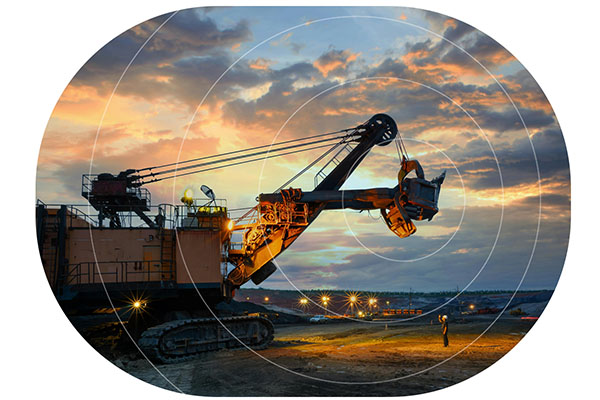
The 2021 McKinsey & Company ‘The Internet of Things’ Report highlighted that in the construction sector, employing IoT applications can improve uptime by 30 to 50 percent and increase throughput by 1 to 5 percent.
An additional benefit of monitoring machinery usage is to provide a better return on the CapEx of the machinery when the equipment is sold at the end of the project.
2. Remote Monitoring
Remote monitoring of site personnel and equipment can enable the operational efficiency of worksites, as well as ensure the safety of all workers on-site. With satellite-connected asset trackers on equipment and team members, remote operations centres can use geo-fencing capabilities to keep personnel and heavy machinery apart using safety zone alerts. Should a team member stray into the path of an oncoming vehicle, both the individual and the driver can be alerted to the potential risk.
Satellite IoT enabled sensors can detect worksite ambient conditions to ensure staff and machinery are not exposed to extreme working temperatures, strong winds, excessive rainfall or poor air quality. By encouraging and demonstrating a commitment to site safety, labor recruitment can be improved.
Site operations can be further optimized through monitoring of raw material tanks and silos (e.g. concrete and chemical reagents), machinery fuel consumption, generator fuel levels and final product storage and collection (e.g. metal ores, timber, grain). By integrating satellite IoT sensors across the work site, logistics managers can ensure fuel and raw material deliveries and product collections are planned according to site requirements, reducing bottlenecks and improving operational efficiency.
According to McKinsey and Company, operators which have more than 50% of their vehicle fleet connected to the internet have 23% better financial performance than peers with less than 50% connected. Companies with more than 75% of their fleet connected have 51% better financial performance.
3. Telematics
Monitoring heavy equipment on-site is integral to operational performance, and can also ensure the worksite is remaining committed to its safety, sustainability and environmental goals.
Aside from monitoring onboard sensors for predictive and reactive maintenance, telematics can also improve driver behavior, which in turn can reduce fuel consumption and carbon emissions. Heavy industry equipment by its nature burns fossil fuels and emits greenhouse gases during operation, but there are opportunities to limit these effects.
In the construction industry alone, machinery idle time averages 36% which increases fuel consumption by up to 5%. The biggest operational opportunity for reducing the potential for idling is ensuring vehicles are dispatched to their collection or drop-off locations according to requirements rather than on a continuous cycle, thereby preventing fleet waiting times.
There is also driver behavior to consider, with some operators leaving machinery idling during their break periods. Using real-time telematics, Site Managers can address the machinery operator actions immediately and encourage them to turn the machine off when not in use.
Through these two simple actions it is possible to reduce fuel costs, decrease carbon emissions, limit noise pollution and improve worksite air quality. When industry profit margins are challenging, evidence has shown that operators who lag behind their peers in reducing downtime are losing future business, wasting time and money, and increasing their ecological impact on the environment.
4. Theft Prevention
Heavy equipment theft costs the USA construction and agricultural industry an estimated $300 million to $1 billion annually, and is especially prevalent during the National Holidays of Labor Day, Memorial Day, Independence Day and Thanksgiving when worksites are closed and machinery is left unattended.
Satellite-connected video surveillance can enable real-time monitoring and recording of remote worksites and storage areas to protect both staff and equipment from unauthorized access.
Heavy equipment can be fitted with discreet satellite asset trackers which can alert the operations team when equipment has moved out of a geofenced area or the machinery is being operated outside of normal worksite hours. Satellite assets trackers are especially effective at tracking stolen heavy machinery as they can keep connected across borders, and in the case of the Iridium network anywhere on Earth. Improvement in asset tracking capabilities has led to an increase in machinery recovery rates from 5% to 20% in the last 15 years.
5. Machine Learning and AI
Incorporating AI and machine learning capabilities into the mining, forestry, agriculture and construction industry has the potential to transform how these sectors address the challenges of CapEx and OpEx, as well as their environmental impacts. By leveraging data-driven analysis, businesses can optimize workforce and heavy machinery productivity, identify opportunities for fuel savings and emission reduction, limit raw material wastage and improve final product quality and volumes. Insights from these analyses can be replicated across multiple work site locations and integrated into cost projections for future projects, driving efficiency and sustainability.
Heavy equipment can be fitted with discreet satellite asset trackers which can alert the operations team when equipment has moved out of a geofenced area or the machinery is being operated outside of normal worksite hours. Satellite assets trackers are especially effective at tracking stolen heavy machinery as they can keep connected across borders, and in the case of the Iridium network anywhere on Earth. Improvement in asset tracking capabilities has led to an increase in machinery recovery rates from 5% to 20% in the last 15 years.
6. Autonomous and Remote Control Heavy Machinery
One of the most significant challenges facing the mining, agriculture, construction, and forestry industries is an aging workforce, with many skilled workers nearing retirement and fewer new recruits stepping into these roles. Technological advancements in developing and implementing autonomous and remote operation of heavy equipment are helping to manage labor shortages while enhancing productivity and safety.
Autonomous Haulage Systems (AHS) are already in use across large-scale mining operations, enabling unmanned dump trucks to optimize hauling cycles, improve payload accuracy, and increase operational efficiency. However, not all scenarios are suitable for full automation, which is where remote control solutions come into play.
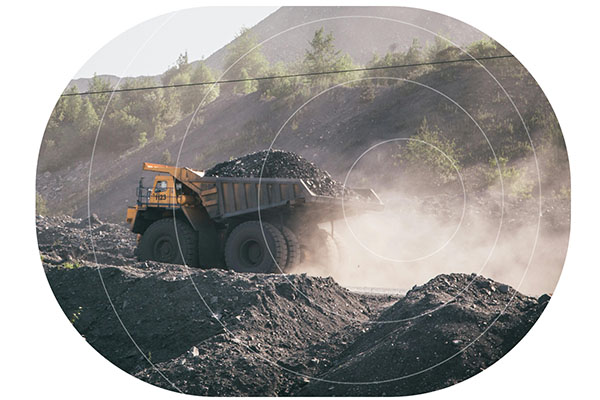
In hazardous environmental conditions or working on difficult or sloping terrain, controlling heavy machinery via remote control allows operators to manage equipment from a safe distance nearby or within a central operations hub. This minimizes risks to personnel while maintaining operational efficiency.
Both autonomous and remote-controlled systems rely on a continuous flow of real-time data, including video feeds and telemetry data, to ensure precise operation and avoid collisions. Satellite connectivity provides reliable and seamless data exchanges in remote locations, enabling the integration of automation and remote operation of heavy machinery in complex environments.
Satellite IoT Solutions for Heavy Machinery Monitoring
Satellite IoT is supporting innovation within the heavy machinery industry, addressing critical challenges such as remote connectivity, safety, and operational efficiency. By leveraging real-time data through predictive maintenance, telematics and remote monitoring, businesses can reduce costs, improve productivity, and meet stringent environmental goals. As automation and AI continue to transform the sector, embracing satellite-enabled solutions is essential for staying competitive in an increasingly connected world.
Get in Touch
Contact us to discover how our satellite IoT solutions can drive efficiency and profitability for your heavy machinery fleet.
With 20 years of experience, we can help you make the best choices based on your requirements.
Please call us on us on +44 (0) 1452 751940 (Europe, Asia, Africa, Oceania) or +1.805.783.4600 (North and South America); email hello@groundcontrol.com, or complete the form.
Protecting Bats at Wind Turbines: How Technology Is Reducing Wildlife Impact [Infographic]
As vital as wind energy is in reducing reliance on fossil fuels, it has created unintended challenges for wildlife, particularly bats. A 2021 survey found that 40% of people fear bats, though they play an essential role in pest control and pollination. By consuming insects, bats save U.S. agriculture billions of dollars in natural pest control each year, a service valued between 3.7 and 53 billion dollars. They also help pollinate crops like bananas, mangoes, and agaves (the central ingredient in tequila!), making them critical to both ecosystems and the economy.
Unfortunately, the growing number of wind turbines poses a real risk to bats. Tens, and possibly hundreds of thousands of bats are estimated to die each year due to wind turbines, with tree bats — species that migrate and roost in trees — being the most affected. These bats may confuse the towering structures with trees, bringing them dangerously close to the blades. While turbines can be temporarily slowed down to protect bats, this approach reduces the amount of clean energy produced, costing operators up to 3.5% of their annual output.
A more sustainable solution involves new technology that deters bats using ultrasound. Bats rely on echolocation to navigate, and the ultrasonic deterrent emits sound waves from the turbine that cause bats to alter their flight path, reducing collisions. The system monitors its own health to ensure reliability, and for remote locations, Satellite IoT transmits status data, ensuring operators can maintain its functionality, and demonstrate performance to regulatory authorities if needed.
Early results from this deterrent system show a 50-67% reduction in bat fatalities, with even greater results when combined with low-level curtailment. With continued innovation, wind farms can operate more harmoniously alongside bat populations, reducing wildlife impact while contributing to a greener energy future.
Enjoy our infographic, and please share to spread the word of this incredible innovation!
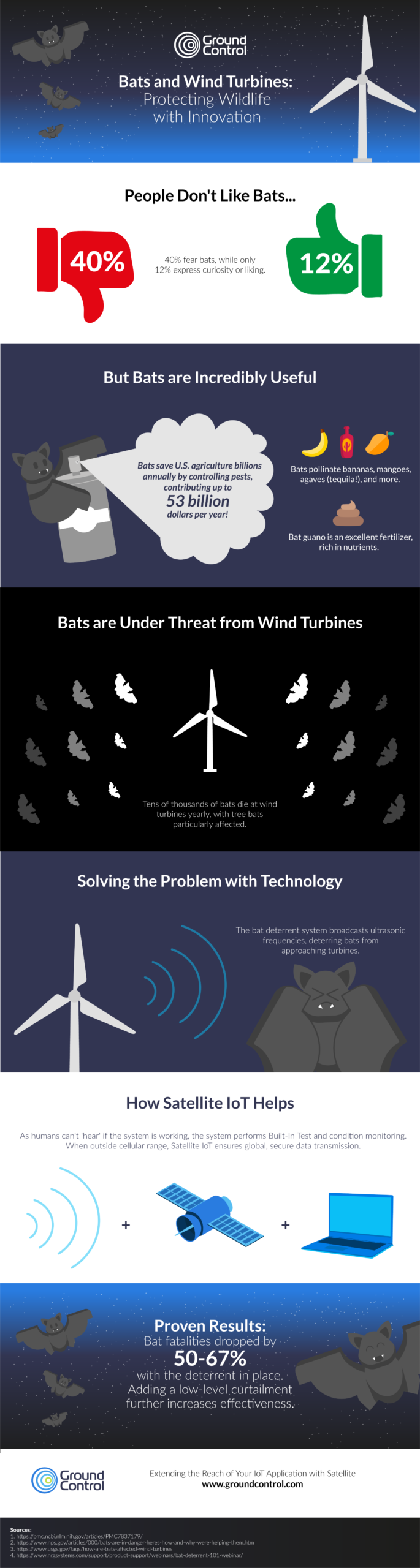
Can we help you with a remote IoT challenge?
We are specialists in remote connectivity. We work with several tried and trusted satellite network operators to deliver our customers with reliable, cost-effective solutions for communicating with your remote assets and sensors.
We’ve been doing this for more than 20 years, so if you’d like expert, impartial help with your IoT application, please email hello@groundcontrol.com, or complete the form.
Unlocking Potential With Remote Video Surveillance
Developing Video Capability
In today’s interconnected world, the ability to monitor and manage assets remotely has become not just a convenience but a necessity. From sprawling agricultural fields and remote unmanned industrial sites, to vast stretches of pipeline and border control areas, the challenges of ensuring security, efficiency, and productivity in remote, often environmentally challenging locations, are ever-present.
Integrating advanced video surveillance technologies with satellite connectivity is revolutionizing how industries approach these challenges. Ground Control’s recent partnership with Videosoft exemplifies this transformation, bringing real-time, low-bandwidth video streaming over satellite to the forefront of remote off-grid operations.
This article delves into the transformative impact of satellite-enabled video surveillance across three critical applications: preventing remote solar panel theft and protecting parked vehicles like quadbikes, all-terrain vehicles (ATV) and heavy vehicles; leveraging aerial video footage over satellite for agricultural and forestry monitoring; and enhancing remote border control operations.
1. Safeguarding Remote Assets
Solar panels are increasingly being deployed in remote, often unmonitored locations as renewable energy installations proliferate. PV installations for solar farms and solar as a power source in remote industries present an increasing global opportunity for crime.
The attractiveness of solar panels to thieves is primarily because of their high value and the perceived ease of theft, especially from remote, poorly secured installations. Europe reports over 5,000 major solar thefts annually, with southern Italy experiencing rates ten times the European average. The problem is global; in Nigeria and South Africa, solar panel theft is stifling renewable energy growth.
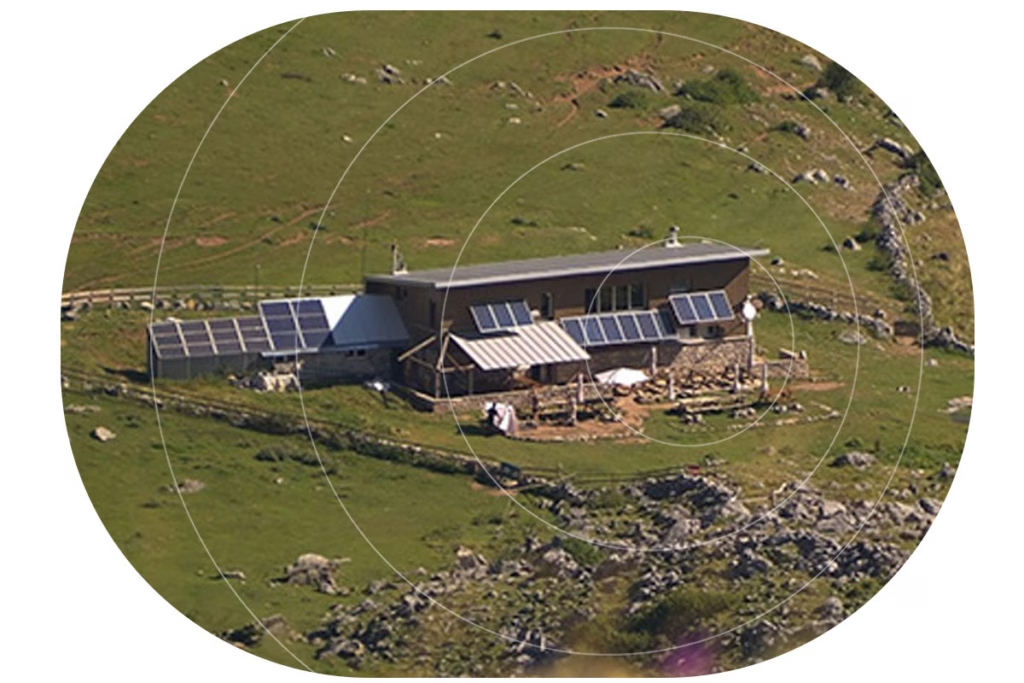
Similarly, in industries like mining, agriculture, and construction, frequently stationed valuable vehicles and equipment, such as ATVs (all-terrain vehicles) or heavy vehicles, in isolated areas are at risk. These assets are prime targets for theft and vandalism due to their high value and minimal on-site security. The UK agricultural sector alone saw an estimated £49.5 million in stolen equipment in 2023.
There are known illicit global markets for farming and technology equipment, where criminals can sell their stolen wares for much higher prices. This specific type of theft has been triggered by soaring values, particularly in relation to metals and machinery and the low supply of farm machinery worldwide.
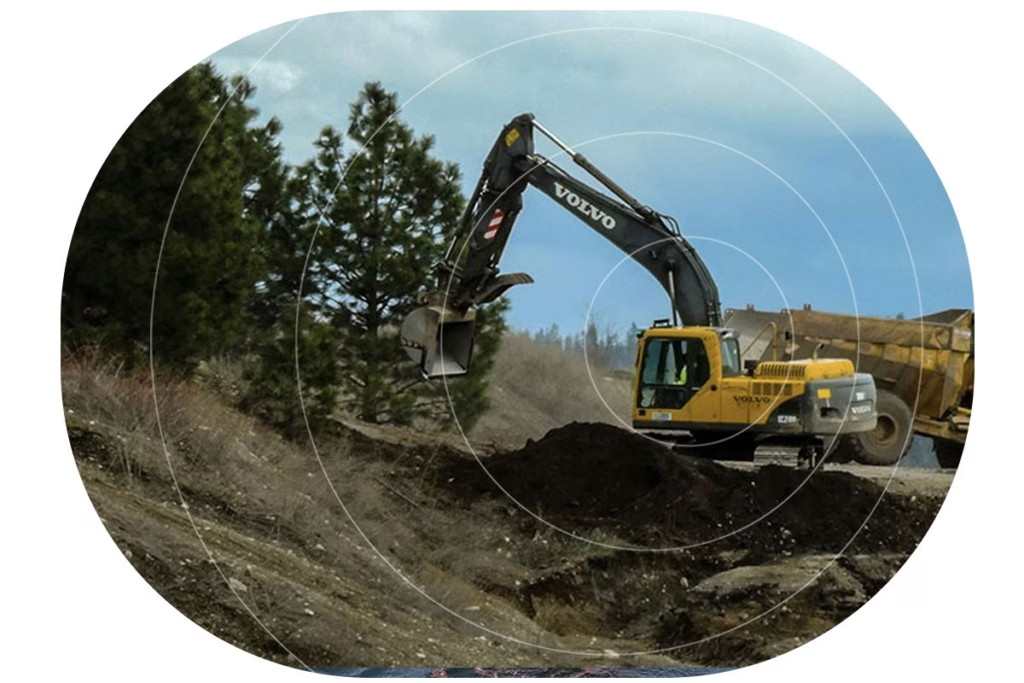
The Problem With Off-Grid Locations
While traditional camera surveillance methods provide a deterrent to criminal activity, they often rely on cellular networks which may not be available in remote locations. The network gap leaves off-grid assets vulnerable, with limited options to monitor and protect investments effectively and cost efficiently.
The Solution: Video Compression Over Satellite
Integrating Videosoft’s high-compression, low-latency, off-grid video streaming technology into Ground Control’s RockREMOTE Rugged device offers a robust solution. This facilitates real-time video surveillance over the Iridium satellite network, ensuring continuous monitoring even when there is zero cellular network availability.
Deploying a remote video monitoring strategy means action can be taken before a crime occurs. Video compression ensures quality image capture, and with RockREMOTE’s powerful edge computing capabilities, multiple sensor connection options, and real-time connectivity, it can detect certain events, like a person loitering after hours or jumping a fence. Follow-on actions can be automated or taken remotely, server-side, to deter a potential criminal’s next steps. By activating specific deterrents, like recorded announcements, alarms, and flashing lights, asset protection management can respond from anywhere in real-time to prevent a potential crime.
The cost-effectiveness of this solution lies in its data efficiency. By compressing video at the edge, data transmission costs are minimized without compromising the quality of the recording, making high-quality real-time surveillance financially viable over the Iridium satellite link.
2. Revolutionizing Forestry Monitoring
Agriculture, environmental and forestry monitoring can often span vast, remote areas, making it challenging to monitor crop health, forest conditions, or illegal logging. Drones have emerged as a powerful tool for aerial surveillance, but their reliance on local storage or cellular networks for data transmission limits their efficacy in remote regions.
Drones are also restricted in the altitude at which they can fly, limiting their coverage for each flight. They are ideal for short-range, lower-altitude video capture, but they have range and battery life constraints, and many do not offer the zoom options available from an aircraft. Aircraft can transmit video over much longer distances and cover vast areas unaffected by obstacles in the terrain.
However, sending video in real-time over satellite has been expensive, often reserved for emergency services and search and rescue operations. Yet, the need for accurate imagery, delivered cost effectively, in real-time, is increasingly critical in remote land surveillance and monitoring.
The Problem of Deforestation
In North America, illegal logging costs over $1 billion annually, with the U.S. Forest Service estimating $100 million in losses from public lands alone. Romania faces similar challenges, losing valuable primeval forests to illegal logging. New technology to combat these types of losses can’t come quick enough. A new report says deforestation globally increased by 4% in 2022 compared with 2021, with the loss of over 6.6 million hectares of forest. Although there was a decrease of 18% in tropical Asian countries, the world is now 21% off track to eliminate deforestation by 2030.
The Solution: Aerial Video Recording Operations
The encouraging part of Ground Control’s collaboration with Videosoft is that aircraft equipped with cameras to stream live footage can drive real-time insight while keeping aerial transmission costs down. RockREMOTE Rugged, combined with Videosoft’s compression technology, ensures efficient transmission of high-definition video over the Iridium Certus IP connection. Operators can remotely adjust camera focus, zoom, and capture high-resolution video for detailed analysis in real time, whether from the plane or the ground. Access to live feeds enables instant assessment, issue identification, and monitoring, facilitating real-time responses.
The RockREMOTE’s LTE failover feature switches between cellular and satellite networks as needed, maintaining the efficient video transfer and minimizing data costs. With aerial video over satellite, monitoring for illegal logging or assessing the health of farmland or forest canopy becomes significantly more manageable.
3. Enhanced Border Security
Border regions, especially those spanning vast and inhospitable terrains, pose significant challenges for security agencies. Monitoring these areas to prevent illegal crossings, trafficking, or other illicit activities is difficult, mainly due to the hostile terrain, remoteness, and sheer expanse. Traditional surveillance infrastructure is often impractical due to the need for cellular connectivity or the high costs of establishing and maintaining such systems.
Many factors influence the off-grid solution: the degree of threat posed by unsanctioned activity, the conditions for monitoring equipment and transportation, the ruggedness of the terrain, local data and available power supply.
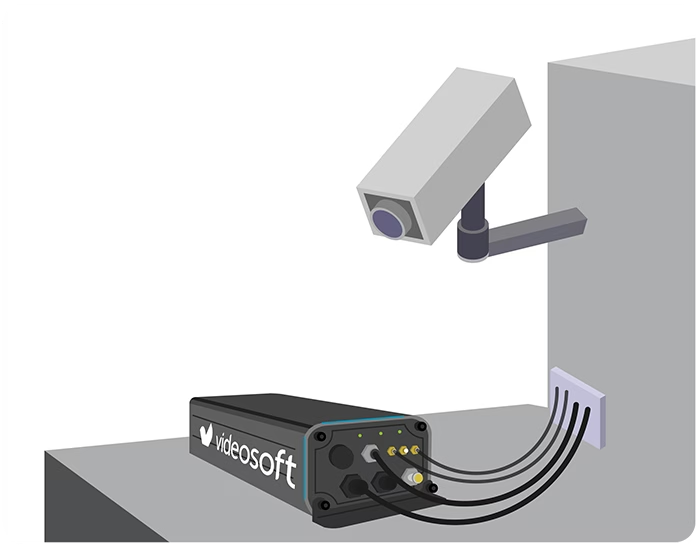
The Solution: Satellite-Enabled Surveillance
From RF spectrum monitoring, to Thermal imaging, RockREMOTE Rugged’s broad range of connection interfaces and containerized edge computing capability enable it to operate with other key security sensors, cameras and applications. The system supports simultaneous live streaming from multiple cameras, providing comprehensive border coverage.
Further, RockREMOTE Rugged’s antenna is omni-directional, with no pointing required; ideal for fixed deployment in hilly or woody locations, or for on-the-move applications. It will also connect from a mobile surveillance unit.
Beyond Surveillance: The Broader Implications
The applications discussed represent a fraction of the potential unlocked by integrating advanced video compression technology with satellite connectivity. From conservation efforts and monitoring endangered species, to reducing remote off-grid crime, the possibilities are vast. Whether it’s safeguarding remote solar installations, leveraging aerial surveillance to protect forests, or enhancing the security of national borders, the ability to transmit real-time, high-quality video over satellite networks is a game-changer. As industries continue to operate in increasingly remote and challenging environments, such innovations are not just advantageous—they are essential.
Would you like to know more?
With over 20 years of satellite experience, the Ground Control team is well placed to help you keep an eye on the things that matter most.
Whatever your remote surveillance needs, we can help. Complete the form to be connected to one of our team to discover more about the innovative video software, RockREMOTE Rugged and how our solutions can support your project.