
The USV market is growing quickly. Allied Market Research says it’s projected to reach $2.7 billion by 2032, growing at an 11.5% CAGR. MarketsandMarkets points in the same direction, forecasting growth from $0.82 billion in 2025 to $1.59 billion by 2030 at a 14.1% CAGR. Behind those forecasts is a simple idea: operators want to do more offshore, for longer, with less risk to crew and a better cost profile.
As missions become longer and more complex, connectivity becomes a bigger part of the operating model. Operators need to know they can maintain oversight of the mission, receive alerts when conditions change, and keep essential data flowing even when the primary link is under pressure.
That matters because offshore environments are rarely forgiving. Sea state affects antenna performance, weather can affect signal quality, and coverage isn’t always consistent across an entire mission. Communications systems need to be designed around those realities, rather than around best case assumptions.
Why connectivity has such a direct impact on the business case
Connectivity affects both operational performance and commercial performance. If a vessel loses its main link but can continue operating safely while still sending health data, position reports, and exception based alerts, the mission may continue with only limited disruption. If the vessel goes dark in a way that removes visibility and confidence, the cost picture changes much more quickly.
Published data on the cost of recovering a USV is limited, but offshore operating cost studies show the broader dynamic clearly. Once a crewed vessel, personnel, mobilisation, and weather related delays are back in the loop, costs rise fast. In one NREL offshore operations model, a relatively modest crew transfer vessel scenario was estimated at around $4,100 per day. That’s not a dedicated USV recovery figure, but it does illustrate why operators want to avoid reintroducing crewed intervention unless they absolutely have to.
That’s why resilient connectivity matters commercially as well as operationally. It helps preserve confidence in the vessel’s status, the payload’s output, and the economics that justified using a USV in the first place.
What operators are actually evaluating
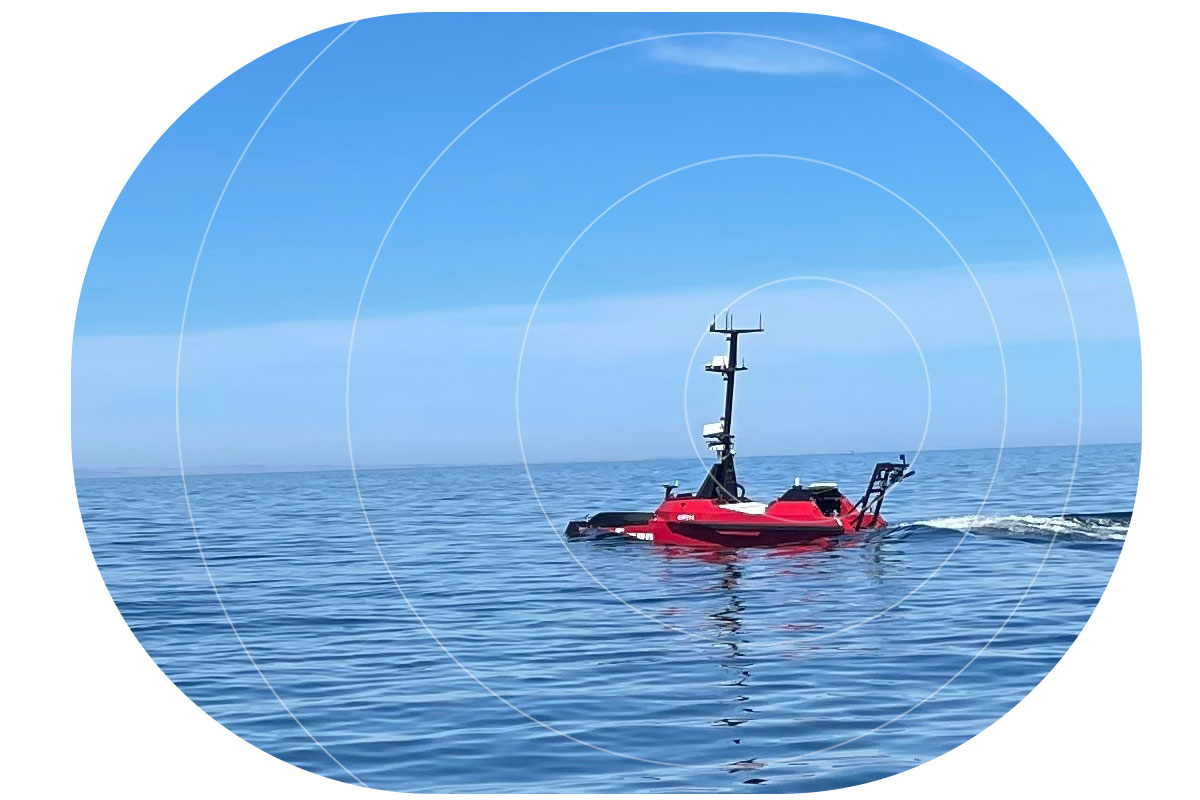
One of the clearest signals in this market comes from the kinds of conversations already happening around offshore connectivity. In our role as a remote connectivity specialist, we receive inquiries from USV operators and manufacturers who are actively evaluating how to keep vessels safe, visible, and manageable when the primary link is under pressure.
Those discussions are often less about maximum throughput in the abstract and more about what needs to keep working when conditions aren’t ideal. The priorities tend to be safety override, basic telemetry, vessel tracking, low rate command traffic, and a backup path that can take over if the main link drops.
We also see strong interest in backup satellite communications and last resort systems that can preserve continuity when a richer link is unavailable. That suggests the market is moving beyond a simple question of whether a USV can connect offshore. The more practical question is which functions need to be protected, and which link is best suited to carrying them.
Why primary and backup links should be treated differently
A useful way to think about offshore USV connectivity is to separate the role of the primary link from the role of the backup. The primary link supports the fuller operating picture. Depending on the mission, that may mean higher rate telemetry, software updates, larger payload files, imagery, video, or more responsive command and control. High bandwidth satellite services have expanded what is possible here and have made remote offshore operations much more practical than they once were.
The backup link has a narrower role, but it’s no less important. It exists to preserve essential functions when the primary link is constrained or unavailable. In practice, that often means vessel health, alarms, mission status, low rate command traffic, and, in some cases, compressed imagery or short bursts of additional data. It doesn’t need to recreate the entire primary link experience; it needs to provide enough continuity for the vessel to remain safe, visible, and manageable until the richer link is available again.
That distinction is reflected in the way these requirements are typically framed. The fallback path is often defined in terms such as safety override, telemetry, tracking, or a “Hail Mary” communications layer.
That tends to lead to better architecture decisions because it matches the way communications are actually used at sea. Not every function needs the richest link, but some do need to keep working almost regardless of conditions. Onboard autonomy has a role here, but operators still need enough visibility and control to stay confident in what’s happening offshore.
Why a single broadband satellite link leaves gaps offshore
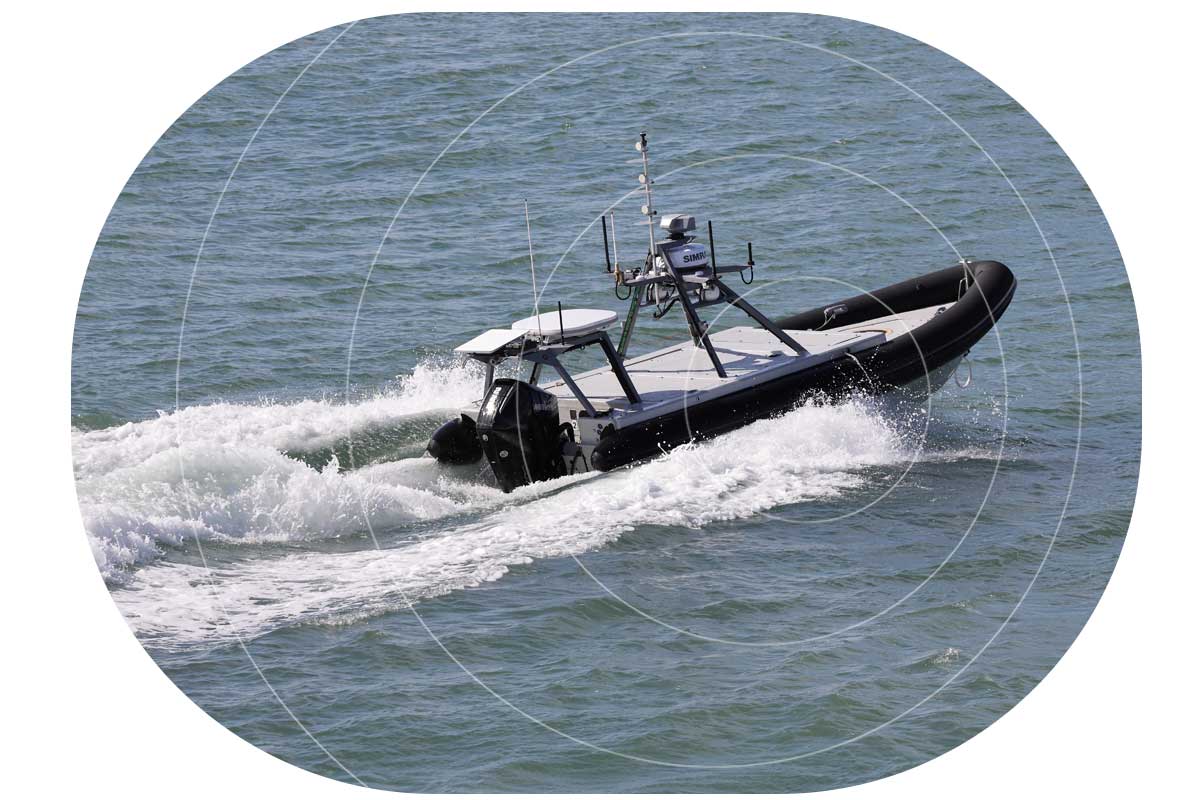
Broadband satellite has changed offshore connectivity for the better; it supports a much richer operating model, and it can make remote operations far more practical for larger USVs. But relying on one broadband service on its own still creates a dependency on a single communications path.
That means one antenna setup, one service profile, one network architecture, and one main route back to shore. If that route is affected by weather, vessel motion, local obstructions, hardware issues, or service constraints, the mission can lose the level of connectivity on which it was relying. Starlink itself notes that significant weather can degrade service, that moderate to heavy rain, snow, and hail can cause momentary dropouts, and that storms near a local ground station can also affect performance. Its maritime service information also says that once Priority Data is exhausted, users fall back to rates of up to 1 Mbps down and 0.5 Mbps up.
That risk is one reason many operators are actively evaluating layered satcoms rather than a single broadband path. In our conversations with USV manufacturers and operators, a recurring theme is the need for backup communications that can preserve control, visibility, and essential status data if the primary service drops, even briefly. A strong primary link is valuable, but resilience usually depends on having a second path for the functions that matter most.
Why layered satcoms make sense for offshore USVs
This is where layered satellite communications start to make sense. A primary link supports the richer operating picture when conditions allow. A secondary link helps preserve the essentials if the main path is constrained. For many offshore USV applications, Iridium Certus 100 is a good example of what that secondary communications layer can look like. It’s well suited to telemetry, alerts, command traffic, and other continuity functions that don’t need broadband throughput.
It also aligns with the way missions behave in practice. Data needs aren’t constant across a deployment. There will be times when high throughput is useful and times when the priority is to maintain visibility of vessel health, mission progress, and any exceptions that require attention. A backup link is well suited to those moments, particularly when the vessel can keep operating in a controlled way while communications are degraded.
That matches what we see in the market, where operators are increasingly focused on which functions need to be protected if the main path is interrupted, rather than on preserving full bandwidth at all times.

What operators should be asking as the market grows
As the USV market expands, connectivity deserves to be discussed with the same realism that is now routinely applied to autonomy, payload design, and endurance. What happens when the primary link is degraded? Which functions are preserved? What information still gets through? Can the vessel continue operating safely? Can the operator remain confident in the mission without immediately considering recovery?
Those questions matter because offshore operations are shaped by constraints, not just capabilities. A communications setup that works well in a demo or a short mission close to shore may not be enough for a longer deployment in more variable conditions. By contrast, a layered approach that combines a richer primary link with a lower bandwidth backup can give operators a more dependable path through the realities of offshore operations.
That’s why resilient connectivity has become such an important consideration in USV design and deployment. It supports visibility, continuity, and operational confidence, and it helps ensure that a temporary link issue doesn’t become a much more expensive problem.

Need help with offshore USV connectivity?
If you’re looking at offshore USV connectivity and weighing up primary and backup options, it’s worth having that conversation early. The right architecture depends on the mission, the data you need to move, and the functions that have to keep working if the main link is interrupted.
At Ground Control, we work with operators and manufacturers on exactly these kinds of remote connectivity challenges. If you’d like to talk through a specific use case, get in touch with us either by completing the form, or emailing hello@groundcontrol.com. We’ll reply within one working day.