
Remote recloser automation depends on continuous communication with field devices. Operators must be able to monitor equipment status, receive fault indications, and issue switching commands when required. However, communications infrastructure is often exposed to the same environmental risks as the power network itself. Distribution poles carrying electrical feeders frequently support fiber routes or cellular backhaul. When storms, falling trees, or other events damage the line, both power and communications infrastructure in the same corridor can fail simultaneously, leaving operators without visibility of key assets during an outage.
A Brazilian electricity distribution utility, expanding its remote automation programme across a growing number of feeder locations, found many of these sites were located along rural or remote distribution lines where terrestrial communications infrastructure was limited or unreliable. To support automation at these locations, they required a communications approach capable of maintaining reliable links between field devices and the control center.
The Challenge
Some remote automation sites had already deployed a satellite communications system operating over a geostationary network. While this provided coverage, the utility experienced network reliability issues with the existing provider, and directional antenna pointing added a further deployment consideration.
As the automation estate expanded, communications resilience, ease of deployment, and scalability became increasingly important. The utility therefore evaluated alternative communications solutions that could provide an independent path separate from terrestrial infrastructure, support DNP3 over IP for SCADA integration, simplify installation for pole-mounted equipment, and scale across a large number of sites.
A Resilient Data Path
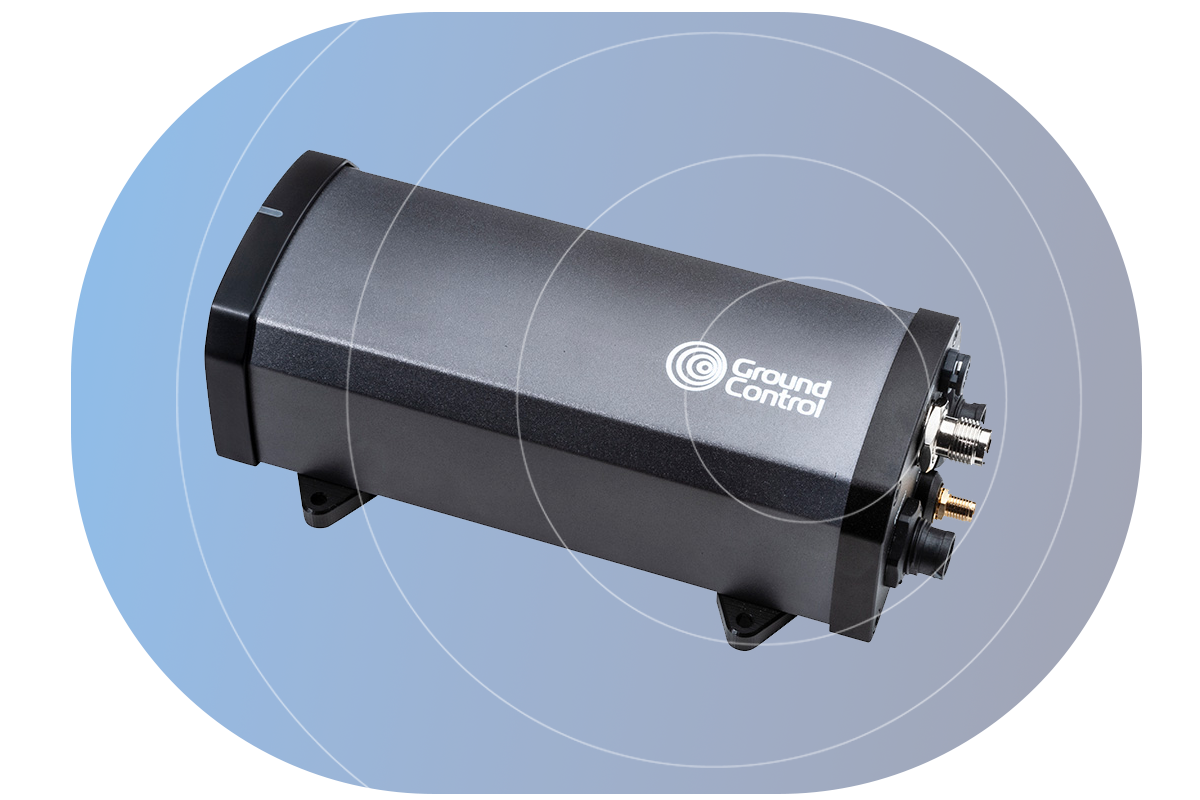
Working with Ground Control, the utility deployed RockREMOTE Mini terminals on the Iridium Certus 100 service to support communications across its remote automation sites.
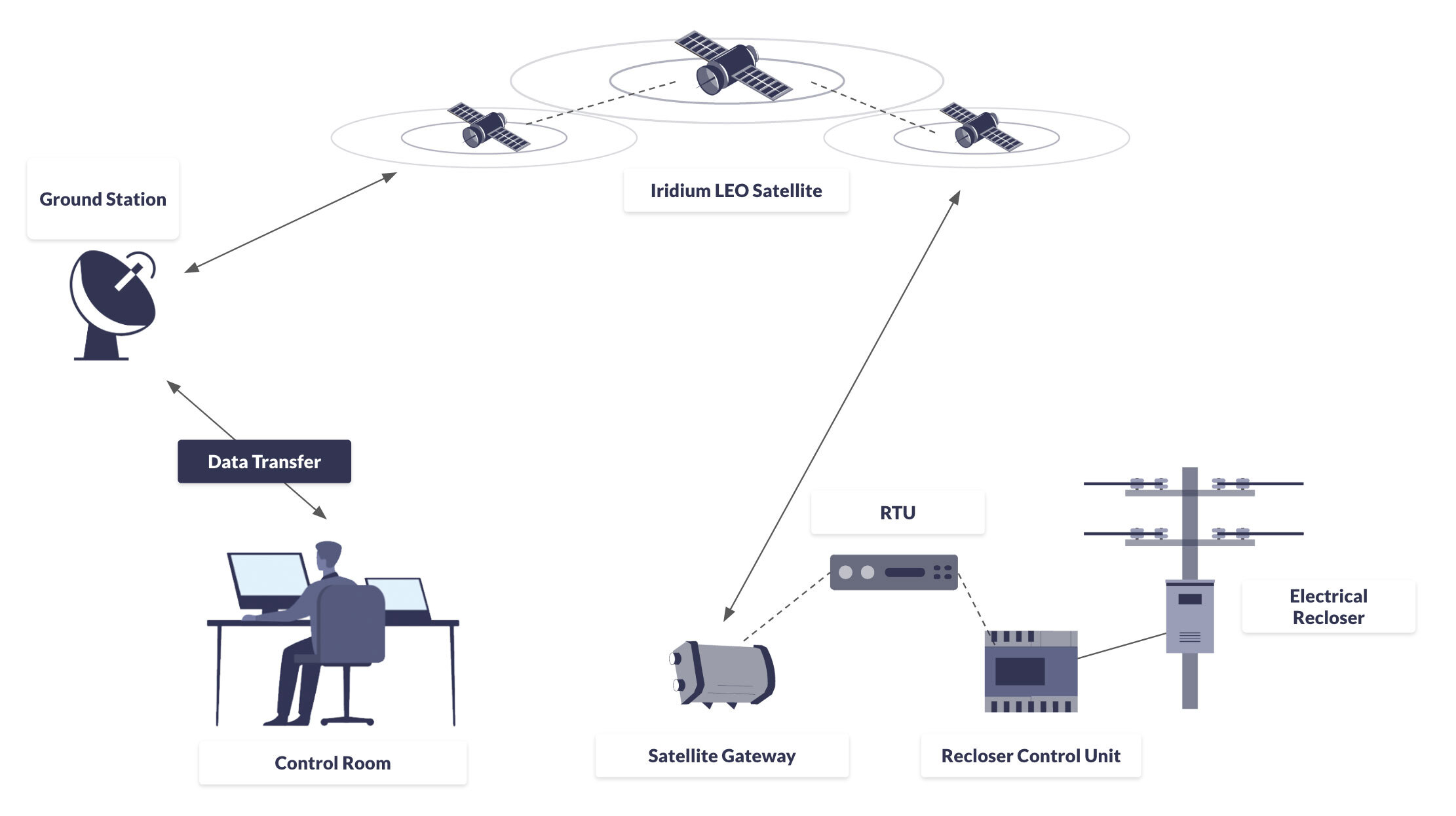
At each location, the terminal was integrated with the existing RTU, enabling SCADA traffic to be transmitted over satellite, without changes to existing control systems or workflows.
The recloser continued to perform switching operations, with the controller managing protection and local control. The RTU handled telemetry and command exchange, while RockREMOTE Mini provided the backhaul link from site to network.
Outcome: Simpler Deployment and More Resilient Communications
The utility selected the RockREMOTE Mini terminal primarily to improve communications reliability for remote automation sites.
Operating over the Iridium network, the solution provided a more dependable satellite communications path than the previous service, helping the utility strengthen connectivity across its expanding automation estate.
The compact terminal also simplified field deployment by removing the need for directional antenna alignment, which reduced installation complexity at pole-mounted sites and supported rollout at scale.
Most importantly, the satellite link provided a communications path independent of local terrestrial infrastructure, improving the resilience of the utility’s critical remote automation communications architecture.
What’s Next?
As the deployment expands, the utility is reviewing how different communication types are applied across its automation estate. In locations where continuous IP connectivity is not required, Iridium Messaging Transport (IMT) is being explored for lower bandwidth, event driven data.
As the project engineer noted, “Not every site needs the same type of connectivity. In some cases, we’re just sending status or event data, so it makes sense to use a simpler approach. It helps reduce cost and complexity while keeping the network resilient where it matters.”

Maintain Visibility and Control
Reliable communications are essential for feeder automation, fault response, and network resilience, especially where terrestrial infrastructure is limited or exposed. We can help to extend SCADA connectivity to remote field equipment, using cost-effective satellite backhaul to maintain visibility and control.
If you tell us more about your network, we’ll help you assess the right approach. Either complete the form, or email hello@groundcontrol.com, and we’ll be in touch within one working day.