
Built for Real World Operations
RockREMOTE UAV OEM gives builders and operators a predictable, always available link for BVLOS missions, combining IMT for efficient routine telemetry with IP for flexible routing when platform size and power budgets allow. IMT supports lean, event-driven telemetry where efficiency and long endurance matter, while IP enables continuous C2 where an uninterrupted command link is essential.
Whether you’re building industrial BVLOS aircraft for inspection, delivery and environmental missions, or developing higher end systems for controlled airspace or government programmes, RockREMOTE UAV solutions give you the choice and design flexibility to match your link architecture to the mission.
Designed for Compact Airframes; Scalable to Advanced RPAS
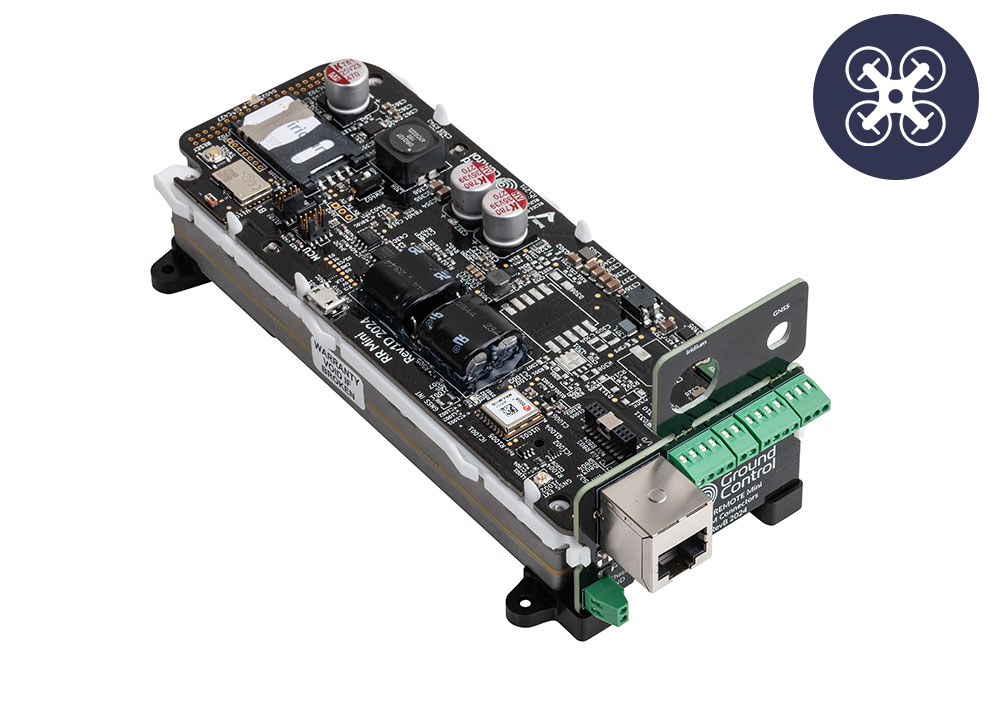
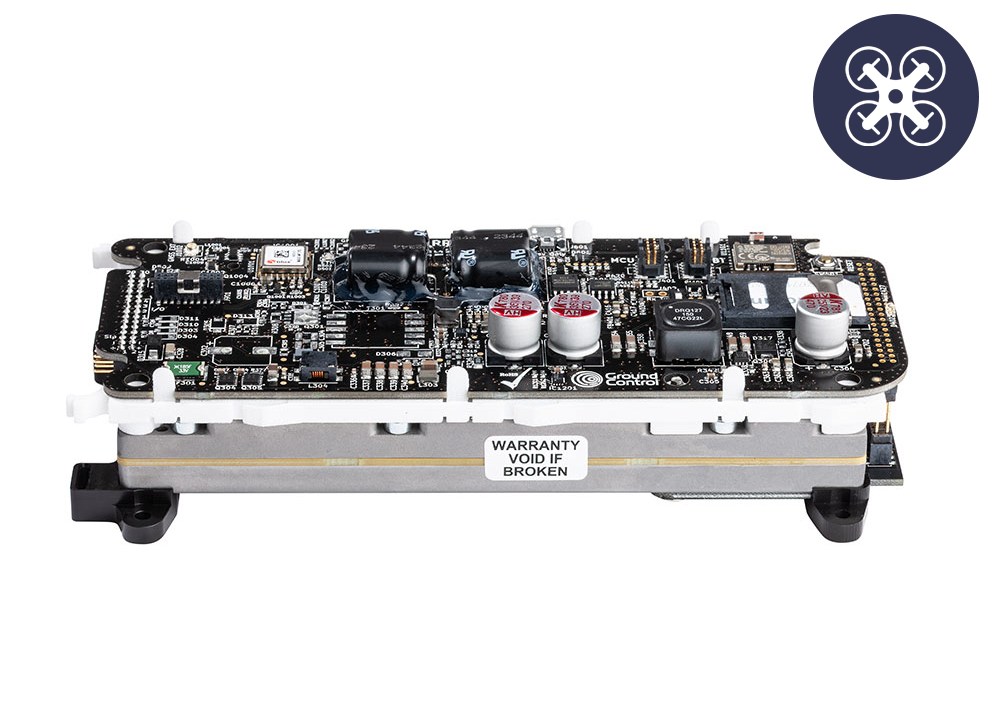
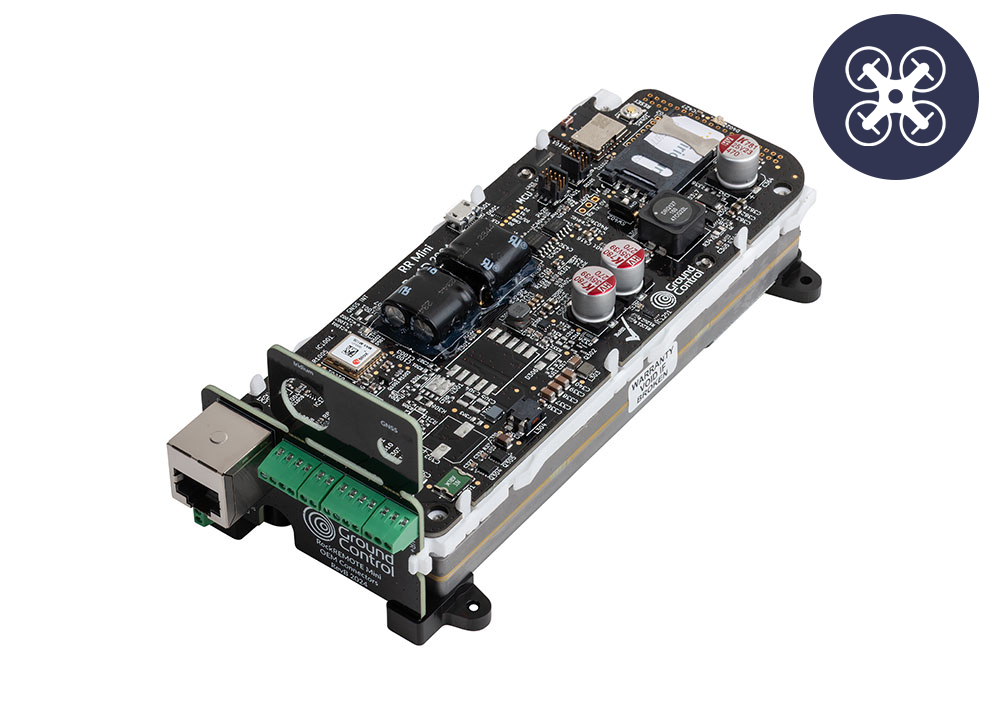
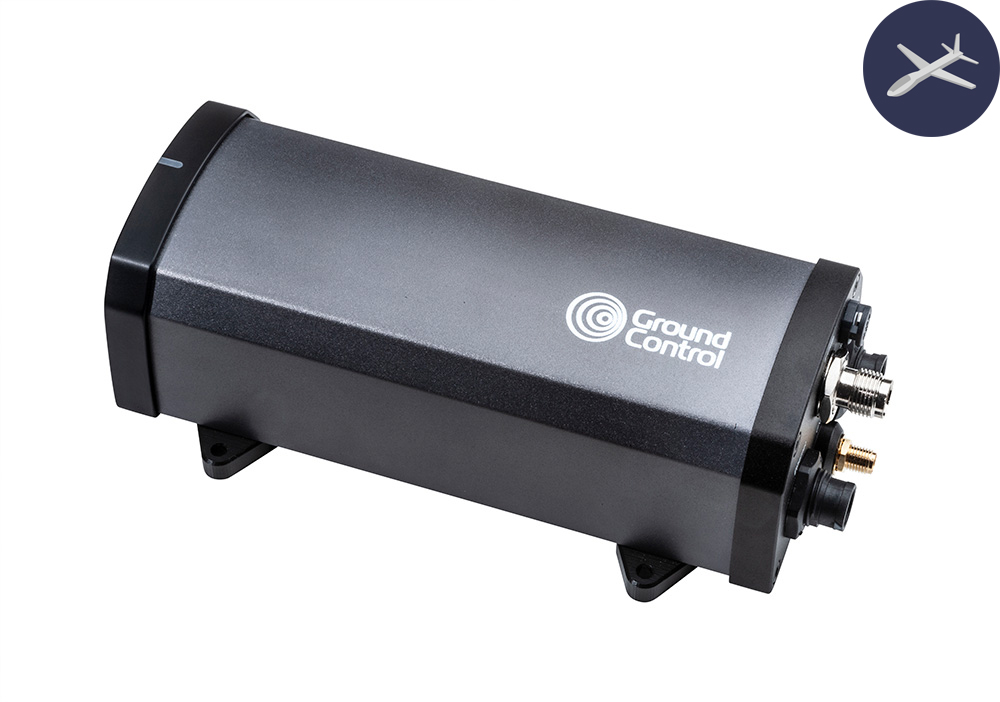
Designed for compact airframes and optimized for small UAVs, RockREMOTE Mini OEM UAV delivers a SWaP-friendly solution in a 175 × 60 × 37 mm footprint and just 287 g. Its low power draw and compact form factor make it ideal for tightly enclosed fuselage spaces, with flexible mounting options for standoffs, rails, and internal bays to suit a wide range of airframe designs.
At the same time, it scales seamlessly to more advanced RPAS platforms. It supports Class II / Group 4–5 UAV architectures and offers optional IP mode for larger power budgets and more demanding data requirements. With suitability for EASA Specific/Certified RPAS, it provides a clear path from small UAV deployments through to higher end, regulated operations.
Compact UAV Integration and low SWaP
- Small, lightweight OEM module with low power consumption
- Flexible mounting for tight avionics bays
- Suitable for enclosed fuselage installations
Satellite Connectivity
- Iridium Certus 100 IP-based connectivity, plus IMT messaging
- Resilient LEO operation during banking, climbing and rotor wash
- Reliable visibility at low elevation angles
Robust Airborne Performance
- Designed for vibration-heavy environments
- Stable electrical performance with UAV-grade cabling
- Compact antenna options suitable for small airframes
Autopilot & System Compatibility
- IP and UART interfaces
- Works with ArduPilot, PX4 (coming soon) and custom stacks
- Fits companion computer and docking architectures
Physical & Environmental
- Size: 175 x 60 x 37 mm / 6.9″ x 2.4″ x 1.5″
- Weight: 287 g / 0.63 lbs
- Pre-drilled fixing holes for secure mechanical fastening
- Operating Temperature: -40C to +70C <95% RH
- EMC Compliance: OEM tested as part of the RockREMOTE Mini. Design guidelines available
- Iridium antenna cable. View antenna options
Communications
- Iridium Certus 100: IP (22/88 Kbps)
- Iridium Messaging Transport (100 KB per message)
- BLE 5.0
Interfaces
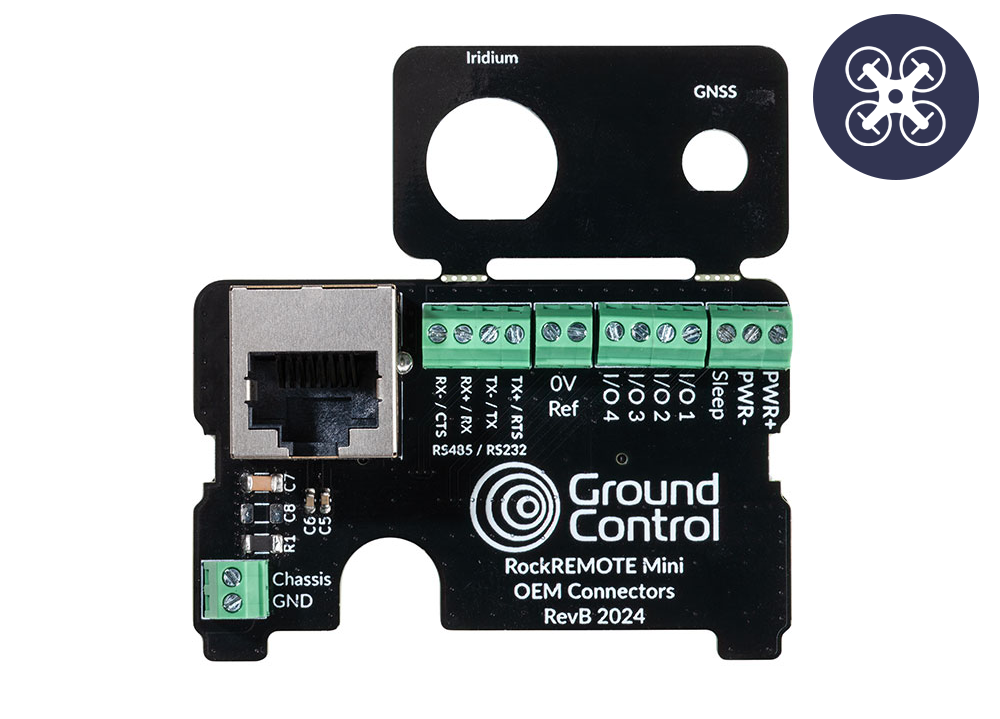
- 30-way multiway pin header for power, serial, Ethernet (customer-supplied magnetics) and GPIO
- Serial: RS-232 / RS-4xx and logic-level UART accessible on the PCB
- Digital I/O: 2-in / 2-out GPIO for triggers and system monitoring on multiway header
- U.FL connector for GNSS antenna and MMCX connector for Certus 100 antenna
- Standard 2FF SIM card slot for satellite service
Electrical
- Voltage required: 10-30V DC
Power consumption
- Sleep <10mW / 30mW (12V/24V)
- Idle-Rx:<250mW (<20.8mA @ 12V, 10.4mA @ 24V)
- Peak: <1.66A @ 12V, <833mA @ 24V
We offer aviation specific airtime, but please note that these plans are only applicable to aircraft weighing in excess of 22 Kg. There are flexible options from shared data bundles billed annually, to monthly service plans and pricing, of which the below is an example. Please get in touch for a quote based on your anticipated usage.
The following items are supplied with your RockREMOTE UAV OEM:
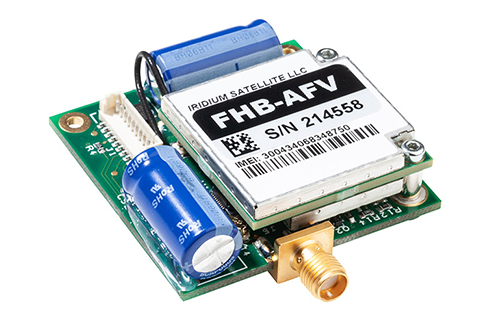
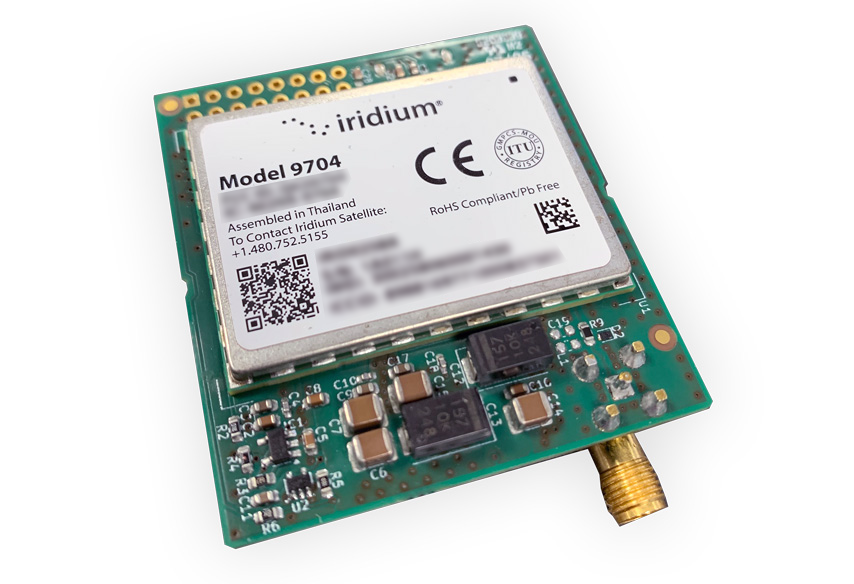
- RockREMOTE UAV OEM module
- Developer kit interface board (for bench testing and early integration; not intended for flight hardware)
- Iridium Certus® stub antenna (SMA; suitable for lab testing – most UAV platforms will use a low-profile external Certus antenna instead)
- 30 cm MMCX–SMA antenna cable (convenient for prototyping; final aircraft installations may require UAV-specific cable lengths).
Not included
- Flight antennas
- Power and data cabling
- External magnetics for Ethernet
Cloudloop sits between your ground station and control centre as a single control plane for your UAV links, managing devices, connectivity and data flows across the fleet. It gives operators real time visibility of link status and aircraft health, while giving integrators a clean API layer to move IMT-based telemetry and messages into their own dashboards, autonomy stacks or fleet systems.
For UAV manufacturers and systems integrators, the key Cloudloop capabilities are:
- Cloudloop Data – route IMT messages (telemetry, sensor data, status) into your systems via REST, MQTT or Webhooks, with secure, reliable delivery
- Cloudloop Device Manager – configure endpoints, push updates, and monitor device health and connectivity across all deployed airframes
- Cloudloop Subscription Manager – manage activations, suspend or adjust plans as missions evolve, so commercial models can scale with your customers’ fleets.
All of this is available via API, so Cloudloop can be embedded directly into your command, control or fleet-management software rather than sitting alongside it.

FAQs About RockREMOTE UAV OEM
It works either way. Many small UAVs connect the module directly to the flight controller over UART, while larger RPAS or docking systems use a companion computer to manage packet formatting, logging or routing over IP. The ideal setup depends on how much control logic you want to run off-board.
For airborne use, integrators typically choose a lightweight, low profile Certus antenna mounted externally. The MMCX port supports these flight antennas. The stub antenna included with some developer kits is intended for bench use and is not recommended for flight, especially on SWaP-constrained airframes.
The unit includes pre-drilled mounting points for secure internal installation. Integrators commonly use vibration-resistant standoffs and ensure strain relief on power and RF cabling. Placement inside composite or carbon fuselages should consider antenna positioning (requires a clear view of the sky) and heat dissipation.
The module does not parse, generate or interpret MAVLink. It transports data via UART or IP exactly as received. MAVLink formatting, routing or telemetry shaping must be performed on the autopilot or companion computer.
Yes. The module passes through any custom format over UART or IP. For routine telemetry, many integrators choose IMT because it avoids continuous IP session overhead and provides more predictable, cost efficient message delivery. IP is typically used when working with companion computers or when larger payloads are required.
The module operates from 10-30 V DC and is designed for UAV electrical systems. UAVs with high-current propulsion or noisy ESCs may benefit from additional filtering or power conditioning to ensure clean supply under load.
Cloudloop Device Manager provides message logs, status information and diagnostics. Early testing is typically done using the developer kit interface board to validate wiring, message flow and power behaviour before installing the module inside the airframe.
For most UAV missions, IMT is the more cost efficient choice. It delivers message-based telemetry without the overhead of maintaining an IP session, making it ideal for routine BVLOS updates, position reporting and system health messages.
IP is typically used when working with a companion computer, sending larger or less frequent payloads, or when you need bidirectional IP-based interactions on the ground. Both interfaces are supported, but IMT generally offers predictable costs and simpler integration for flight telemetry.


Bring Resilient Satcom into Your UAV Design
Tell us what you’re building. We’ll help you determine fit, answer technical questions and support your first steps with RockREMOTE UAV OEM.
If it sounds like it might meet your needs, get in touch. Complete the form, email hello@groundcontrol.com, or if you prefer to speak to someone directly, call us on +44 (0) 1452 751940 (Europe, Asia, Africa) or +1.805.783.4600 (North and South America).